 Instant Savings
 Rebate Claims
 Support
 Find a Dealer
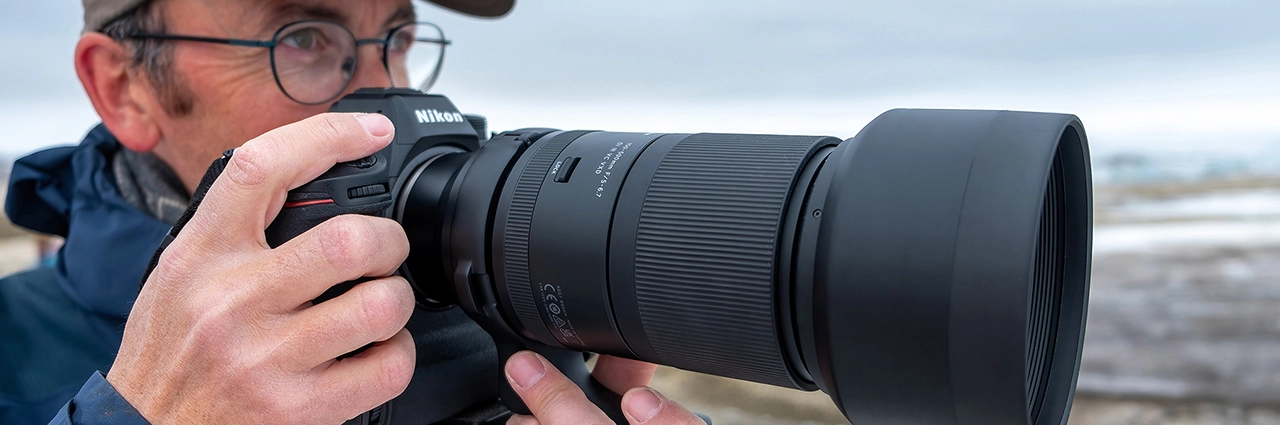
Choosing the right Nikon Z mount lens is an important step toward capturing photographs that reflect your creative vision. Whether you’re purchasing your first lens or expanding your camera kit, understanding focal length, aperture, autofocus, image stabilization, and lens compatibility will help you make the best choice.
Nikon Z mirrorless cameras support a wide variety of lenses, from compact wide-angle zooms to powerful telephoto lenses. The best lens for your needs depends on your camera’s sensor format, the subjects you photograph, and the creative effects you want to achieve.
In this guide, we’ll explain how to choose a Nikon Z mount lens, compare prime and zoom lenses, and explore which types of Tamron lenses work best for landscapes, portraits, travel, wildlife, sports, and video.
What you will learn in this article:
- The differences between Nikon Z mount and F mount lenses and why compatibility matters.
- How Nikon FX (full-frame) and DX (APS-C) camera formats affect lens selection.
- The advantages of prime and zoom lenses.
- Which focal lengths work best for different photography styles.
- How aperture, autofocus, image stabilization, size, and optical performance influence your results.
What is Nikon Z mount?

The lens mount is the part of the camera that connects the lens to the camera body. Camera manufacturers use different mount systems, and lenses must have a compatible mount to attach and operate properly.
Nikon Z mount is Nikon’s lens mount system developed specifically for its mirrorless interchangeable-lens cameras. It features a large 55mm inner diameter and a short flange focal distance, giving lens designers greater flexibility when developing high-performance optics.
Nikon Z mount cameras are available with both full-frame (FX) and APS-C (DX) sensors. Although they use the same physical Z mount, the sensor format affects the angle of view captured with a particular focal length.
Tamron offers a growing lineup of Nikon Z mount lenses, including wide-angle, standard, telephoto, all-in-one, and macro options designed for different photography needs.
When selecting a lens, make sure it is designed for the Nikon Z mount and check its compatibility with your specific camera model.
Nikon Z Mount vs. Nikon F Mount: What’s the Difference?
Nikon Z mount and Nikon F mount are two different lens systems developed for Nikon interchangeable-lens cameras.
- Nikon F mount has been used for decades on Nikon film cameras and digital SLR cameras.
- Nikon Z mount was introduced for Nikon mirrorless cameras and features a different physical design.
Although both systems are made for Nikon cameras, the lenses are not directly interchangeable.
Nikon F mount lenses require a compatible mount adapter, such as a Nikon FTZ adapter, to be used on Nikon Z mirrorless cameras. Depending on the lens, certain functions may be limited when using an adapter.
Lenses developed specifically for Nikon Z mount attach directly to compatible Nikon Z camera bodies without an adapter.
For photographers building a Nikon mirrorless system, choosing native Nikon Z mount lenses provides a straightforward way to take advantage of the camera’s capabilities.
How to Choose the Best Nikon Z Mount Lens for Your Camera
There are several factors to consider when selecting a Nikon Z mount lens. Start by understanding your camera’s sensor format, then decide whether a prime or zoom lens best suits your needs.
Next, consider the subjects you photograph most frequently. A lens that works well for expansive landscapes may not provide enough reach for wildlife, while a powerful telephoto lens may be too restrictive for everyday travel photography.
Understanding these differences will help you select a lens that supports your shooting style..
Nikon FX vs. DX Lenses: Understanding Full-Frame and APS-C Compatibility
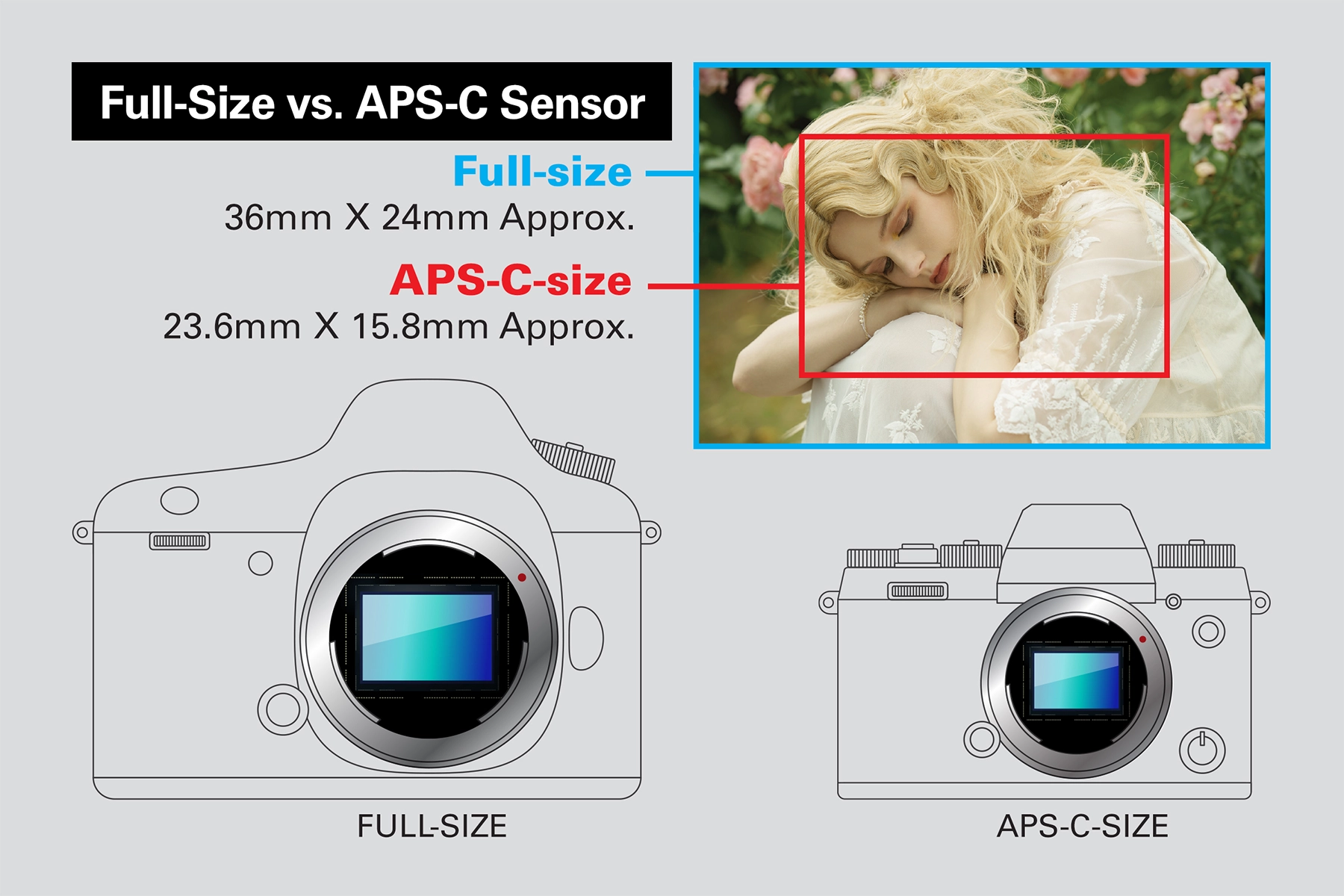
Nikon mirrorless cameras use two primary sensor formats: FX and DX.
- FX format refers to Nikon’s full-frame cameras, which use sensors approximately 36mm x 24mm in size.
- DX format refers to Nikon’s APS-C cameras, which use smaller sensors and have a 1.5x crop factor relative to full-frame.
The sensor size affects the angle of view captured with a particular lens. For example, a 20mm lens on an FX camera captures a wider scene than the same lens mounted on a DX camera.
On a DX camera, a 20mm focal length provides an angle of view equivalent to approximately 30mm on full-frame. Similarly, a 40mm lens provides an angle of view equivalent to approximately 60mm.
Can you use FX lenses on Nikon DX cameras?
Yes. Nikon FX lenses can be used on Nikon DX cameras, making them a useful option for photographers who may eventually upgrade to a full-frame camera.
DX lenses can also be attached to compatible Nikon FX bodies, but the camera generally uses a smaller DX image area, reducing the number of pixels recorded.
For example, the Tamron 20-40mm F/2.8 Di III VXD is designed for full-frame Nikon Z cameras but can also be used on Nikon DX cameras, providing a 30-60mm full-frame equivalent field of view.
Understanding these differences is essential when choosing a lens for your Nikon Z camera.
Prime vs. Zoom Lenses: Which Is Right for You?
Lenses for interchangeable-lens cameras are broadly divided into two types: prime lenses and zoom lenses.
- Prime lenses have a fixed focal length, such as 35mm, 50mm, or 90mm. Because they do not zoom, photographers must adjust their position or shooting distance to change the framing. Prime lenses often feature bright maximum apertures and can produce attractive background blur, or bokeh. They are popular for portraits, low-light photography, and specialized applications such as macro photography.
- Zoom lenses offer a range of focal lengths in a single lens, allowing photographers to change the angle of view without changing lenses. For example, the Tamron 35-150mm F2-2.8 (Model A058) lets photographers move from a moderately wide view at 35mm to a telephoto perspective at 150mm. This flexibility is particularly useful for travel, events, portraits, and situations where subjects or compositions change quickly. meanwhile, a zoom such as the Tamron 20-40mm F2.8 offers a different advantage, combining wide-angle and standard perspectives in a portable lens.
Modern high-performance zoom lenses can also provide excellent image quality and bright constant apertures, making them attractive alternatives to carrying several prime lenses.
For photographers who value flexibility, a zoom lens may be the better starting point. Photographers seeking a particular focal length, very wide aperture, or specialized optical design may prefer a prime lens.
For more information, read our guide to prime lenses and their advantages.
Best Nikon Z Mount Lens Types by Photography Style
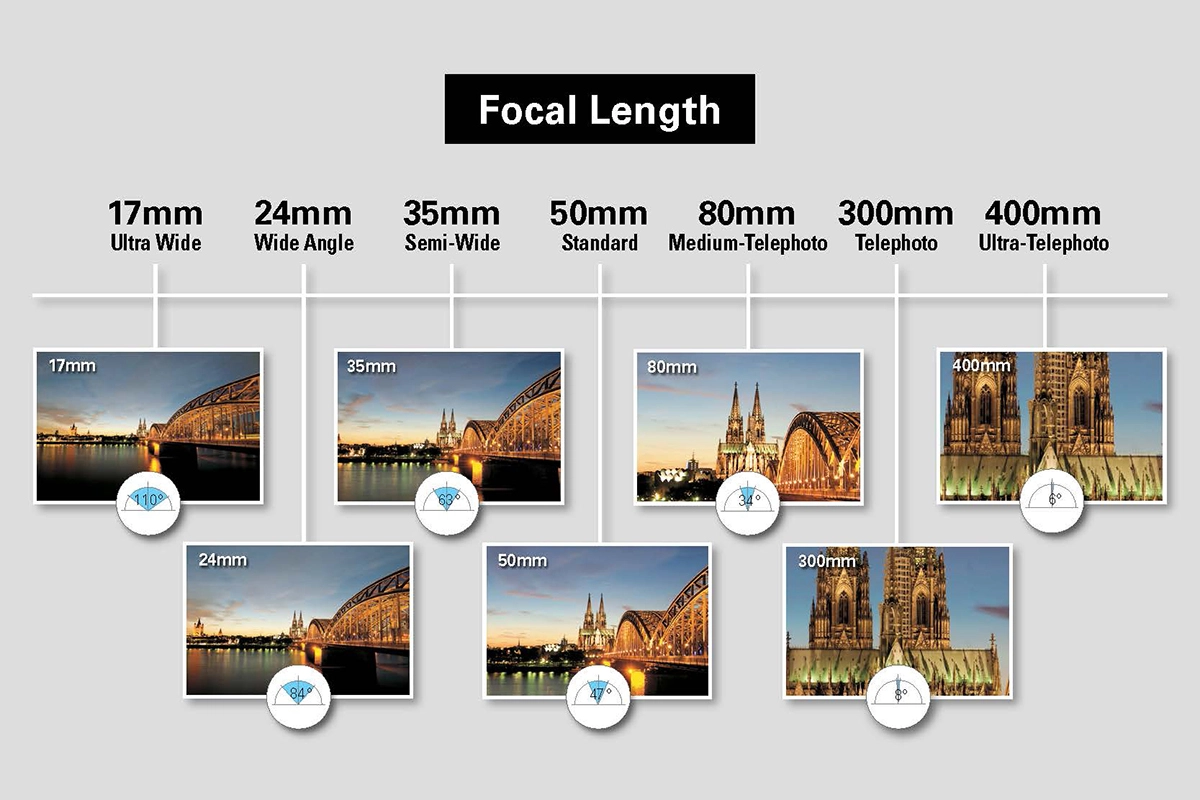
One of the most important considerations when choosing a Nikon Z mount lens is focal length.
Focal length determines the angle of view captured by the lens and influences how subjects appear in your photographs.
Wide-angle lenses capture a larger portion of the scene, standard lenses offer a natural-looking perspective, and telephoto lenses make distant subjects appear larger in the frame.
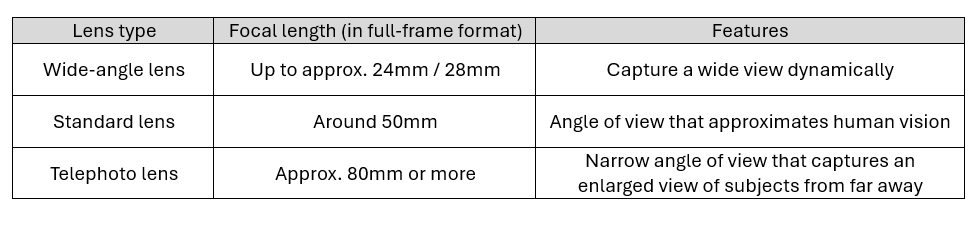
The ideal focal length depends on what you want to photograph.
All-in-One Zoom Lenses for Travel and Everyday Photography

All-in-one zoom lenses combine a broad focal length range into a single, versatile lens, making them ideal for travel, casual photography, and situations where changing lenses is impractical.
These lenses allow you to transition from wide-angle landscapes to distant details without swapping equipment.
A key advantage of an all-in-one zoom is convenience. You can carry one lens and be prepared for a variety of shooting situations, whether photographing a scenic overlook, an outdoor market, or wildlife encountered during a trip.
All-in-one zoom lenses are also excellent choices for beginners who want to explore different focal lengths before investing in more specialized equipment.
For Nikon Z DX cameras, the Tamron 18-300mm VC VXD offers an 18-300mm focal length range, equivalent to approximately 27-450mm on full-frame. This extensive zoom range makes it a practical choice for photographers who prefer to travel light.
Tamron Nikon Z mount all-in-one zoom lens to consider:
Wide-Angle Lenses for Landscape, Architecture, and Astrophotography

Wide-angle lenses capture an expansive angle of view, making them ideal for landscapes, architecture, interiors, and night-sky photography. They are especially effective when you want to emphasize the relationship between a foreground subject and the surrounding environment.
Wide-angle lenses can also create a dramatic sense of depth. Nearby objects appear more prominent in relation to distant elements, allowing photographers to create dynamic compositions.
For landscapes, a wide-angle zoom provides flexibility when photographing sweeping vistas, mountains, coastlines, and dramatic skies.
For astrophotography and nighttime scenes, a bright maximum aperture such as F2.8 is especially useful because it allows more light to reach the camera sensor.
The Tamron 12-20mm F2.8 and 16-30mm F2.8 G2 offer ultra-wide coverage for Nikon Z full-frame cameras, making them excellent choices for expansive landscapes and architectural photography.
The Tamron 20-40mm F2.8 provides a different balance of wide-angle coverage and everyday versatility. At 20mm, photographers can capture broad landscapes, interiors, and environmental portraits. Zooming toward 40mm allows tighter framing of details, street scenes, and people without changing lenses.
Learn more about selecting and using a wide-angle zoom lens.
Tamron Z mount lenses to consider for landscape photography:
- 12-20mm F/2.8 Di III-A RXD (Model A084)
- 16-30mm F/2.8 Di III VXD G2 (Model A064)
- 20-40mm F/2.8 Di III VXD (Model A062)
- 17-70mm F/2.8 Di III-A VC RXD (Model B070) — DX format
- 18-300mm F/3.5-6.3 Di III-A VC VXD (Model B061) — DX format
Standard Zoom Lenses for Portraits, Street, and Everyday Photography

A standard lens provides an angle of view that approximates a natural perspective, making it useful for portraits, everyday snapshots, travel, food photography, and street scenes.
Standard zoom lenses offer the flexibility to photograph different subjects without changing lenses, making them popular with beginners and experienced photographers alike.
The Tamron 28-75mm F2.8 G2 is a versatile choice for everyday photography, combining a useful focal length range with a bright constant F2.8 aperture.
For photographers who want a more compact lens, the Tamron 20-40mm F/2.8 Di III VXD offers a distinctive combination of wide-angle and standard focal lengths. At 20mm, the lens is well suited for environmental portraits, travel scenes, and street photography that incorporates the surrounding environment. At 40mm, it provides a natural-looking perspective for casual portraits, everyday moments, and detailed compositions.
Photographers who prefer a slightly longer focal length range may appreciate the Tamron 35-100mm F2.8, while the 35-150mm F2-2.8 provides additional reach for portrait and event photography.
Learn more about choosing a standard zoom lens.
Tamron Nikon Z mount lenses to consider for portraits and everyday photography:
- 20-40mm F/2.8 Di III VXD (Model A062)
- 28-75mm F/2.8 Di III VXD G2 (Model A063)
- 35-100mm F/2.8 Di III VXD (Model A078)
- 35-150mm F/2-2.8 Di III VXD (Model A058)
- 17-70mm F/2.8 Di III-A VC RXD (Model B070) — DX format
- 18-300mm F/3.5-6.3 Di III-A VC VXD (Model B061) — DX format
Telephoto Lenses for Wildlife, Bird, and Sports Photography

Telephoto lenses allow photographers to capture distant subjects in greater detail, making them essential tools for wildlife, bird, sports, and action photography.
They are particularly useful when you cannot physically approach your subject, such as photographing a bird in a tree, an animal in the wild, or athletes competing at a distance.
Telephoto lenses can also create a compressed perspective, making background elements appear larger in relation to the subject. When combined with a shallow depth of field, this effect can produce portraits and nature photographs with attractive background blur.
For wildlife photographers, focal lengths of 300mm and longer are especially valuable when photographing distant or timid animals.
The Tamron 50-400mm F4.5-6.3 VC provides a versatile range for nature, wildlife, outdoor sports, and even closer subjects, thanks to its broad zoom coverage.
For bird photography or wildlife at greater distances, the Tamron 150-500mm F5-6.7 VC offers additional reach while maintaining a relatively portable design for its focal length range.
Photographers covering indoor sports, portraits, or events may prefer a faster telephoto zoom such as the Tamron 70-180mm F2.8 G2.
For more advice, explore our tips for photographing wild birds.
Tamron Z mount lenses to consider wildlife and sports photography:
- 50-400mm F/4.5-6.3 Di III VC VXD (Model A067)
- 70-180mm F/2.8 Di III VC VXD G2 (Model A065)
- 70-300mm F/4.5-6.3 Di III RXD (Model A047)
- 150-500mm F/5-6.7 Di III VC VXD (Model A057)
- 90mm F/2.8 Di III VXD (Model F072)
- 18-300mm F/3.5-6.3 Di III-A VC VXD (Model B061) — DX format
Nikon Z Mount Lenses for Video and Vlogging
When choosing a Nikon Z mount lens for video, consider focal length, autofocus performance, aperture, and overall size and weight.
A wide-angle lens makes it easier to include yourself and your surroundings when vlogging, while a standard zoom provides greater framing flexibility for interviews, travel videos, and everyday content creation.
The Tamron 20-40mm F2.8 is a compact option for Nikon Z video creators. Its 20mm wide-angle setting allows vloggers to include more of their surroundings, while the 40mm end provides tighter framing for interviews, details, and storytelling. The constant F2.8 aperture supports low-light shooting, and the fast, quiet VXD autofocus is useful when recording moving subjects.
For creators who need additional focal-length flexibility, the Tamron 28-75mm F2.8 G2 is another excellent choice for interviews, documentaries, and general video production.
For Nikon Z DX-format cameras, the Tamron 17-70mm F2.8 VC combines a useful focal length range, constant F2.8 aperture, and built-in image stabilization for handheld shooting.
When selecting a lens for video, remember that stabilization performance depends on both the lens and camera body. Check whether your camera offers in-body stabilization or electronic stabilization, particularly if you plan to record handheld footage.
For more guidance on camera settings, storytelling, and techniques, explore our videography tips for photographers and beginners.
Tamron Nikon Z mount lenses to consider for video and vlogging:
- 20-40mm F/2.8 Di III VXD (Model A062)
- 28-75mm F/2.8 Di III VXD G2 (Model A063)
- 17-70mm F/2.8 Di III-A VC RXD (Model B070) — DX format
Which Nikon Z Mount Lens Is Best for Your Photography Style?
The following table provides a quick comparison of Tamron Nikon Z mount lenses based on common photography needs.
Photography style | Recommended Tamron lens | Key advantage |
Travel and everyday (FX) | 20-40mm F2.8 | Lightweight wide-to-standard zoom |
Portraits and events (FX) | 28-75mm F2.8 G2 | Versatile range and constant F2.8 |
Portraits and travel (FX) | 35-100mm F2.8 | Compact telephoto zoom |
Landscape and architecture (FX) | 16-30mm F2.8 G2 | Ultra-wide coverage |
Astrophotography (FX) | 12-20mm F2.8 | Ultra-wide with excellent pin-point reproduction |
Wildlife and nature (FX) | 50-400mm VC | Wide-to-telephoto versatility |
Bird photography (FX) | 150-500mm VC | Extended telephoto reach |
All-in-one travel (DX) | 18-300mm VC | Broad focal length coverage |
Everyday and video (DX) | 17-70mm F2.8 VC | Constant F2.8 and stabilization |
Vlogging and video (FX) | 20-40mm F2.8 | Compact size and wide-angle coverage |
FX lenses can also be used on Nikon DX cameras, providing a narrower angle of view equivalent to 1.5 times the stated focal length.
Other Important Features to Consider When Choosing a Nikon Z Lens
Beyond focal length and lens type, several additional features can influence how comfortable a lens is to use and how it performs in different shooting conditions.
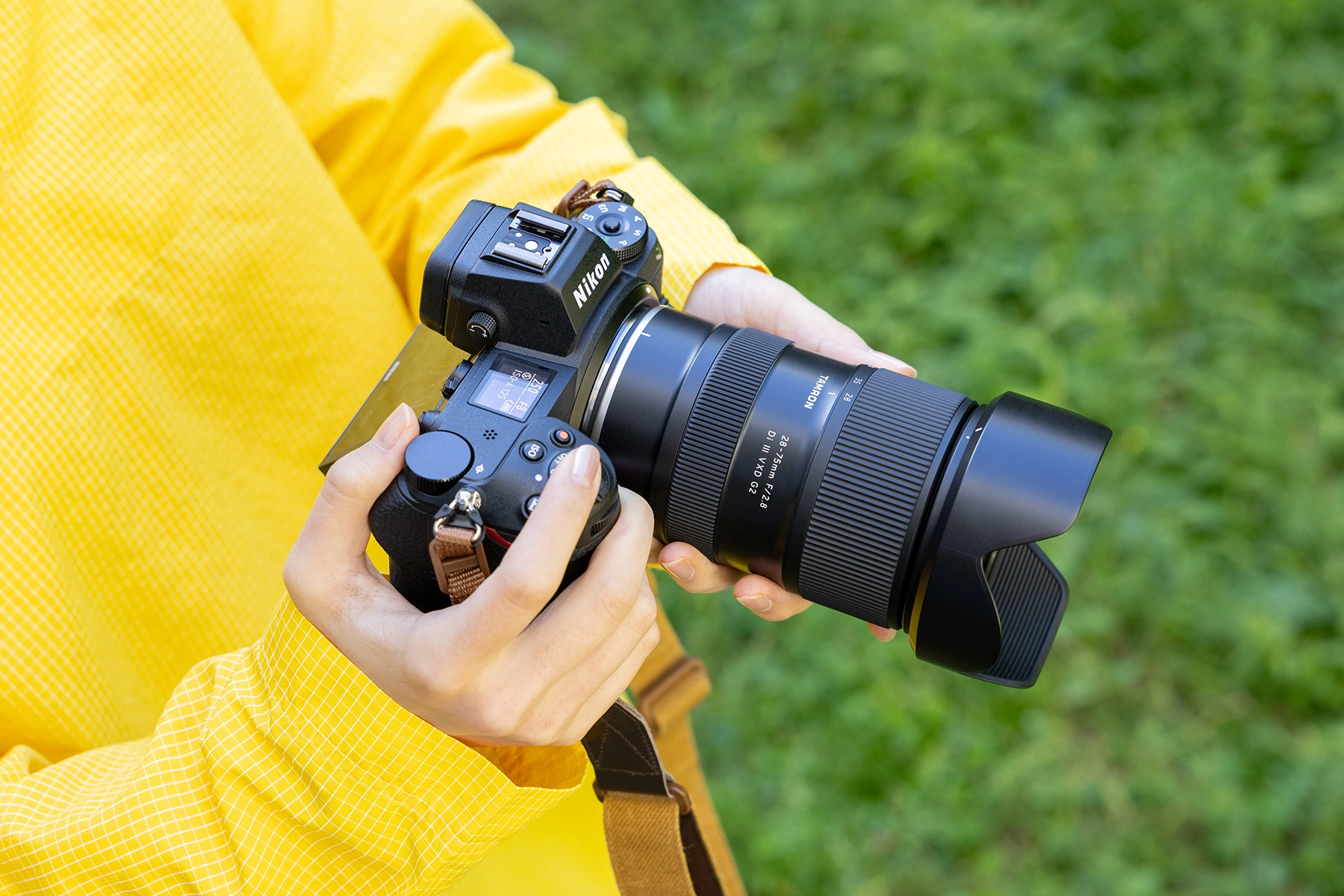
Lens Size and Weight: Why Portability Matters
If you carry your camera throughout the day, lens size and weight are important considerations.
A compact, lightweight lens can make it easier to take your camera everywhere and react quickly when a photographic opportunity appears. This is particularly valuable when traveling, hiking, exploring cities, or photographing events for extended periods.
Larger telephoto lenses provide valuable reach but may require additional support or consideration when traveling.
The best choice is a lens that provides the focal length and performance you need while remaining comfortable to carry and handle.
Maximum Aperture and Bokeh: Understanding F-Numbers
Aperture is expressed as an F-number, such as F2.8, F4, or F5.6. It determines how much light passes through the lens to the camera sensor.
A smaller F-number indicates a larger maximum aperture, allowing more light to enter the camera. A lens with a bright maximum aperture is especially useful when shooting indoors, at night, or in other low-light conditions.
For example, a constant F2.8 zoom lens maintains its maximum aperture throughout the entire zoom range. This gives photographers consistent exposure flexibility when changing focal lengths.
A wide aperture can also create a shallow depth of field, allowing the subject to remain sharp while the background becomes softly blurred. This background blur, commonly called bokeh, is particularly useful for portraits, flowers, and other subjects you want to separate from their surroundings.
However, aperture is not the only factor affecting bokeh. Focal length, shooting distance, background distance, and lens design also influence the appearance of out-of-focus areas.
Learn more in our guide to aperture, F-numbers, and depth of field.
Autofocus and Image Stabilization for Nikon Z Cameras
Autofocus performance is an important factor when choosing a Nikon Z mount lens, especially for moving subjects such as wildlife, athletes, children, and pets. A responsive autofocus system helps photographers capture sharp images as subjects move or shooting distances change.
Quiet autofocus operation is also valuable when recording video or photographing in environments where noise may be distracting.
Many Tamron Nikon Z mount lenses use VXD (Voice-coil eXtreme-torque Drive) linear motor autofocus technology, designed to provide fast, accurate, and quiet focusing.
Image stabilization is another important feature to consider. Tamron’s VC (Vibration Compensation) technology helps reduce the effects of camera shake, particularly when shooting handheld at slower shutter speeds or with telephoto lenses.
Not all Tamron lenses include built-in VC. For example, the Tamron 50-400mm VC, 150-500mm VC, and 17-70mm F2.8 VC feature optical stabilization, while the Tamron 20-40mm F2.8 does not.
Before choosing a lens, check its stabilization features and compatibility with your camera body.
Lens Sharpness, Resolving Power, and Image Quality

The optical performance of a lens influences how accurately it reproduces fine details, colors, contrast, and textures. High-quality lenses use carefully designed combinations of optical elements and coatings to control aberrations, distortion, flare, and ghosting.
Resolving power describes a lens’s ability to reproduce fine details clearly. This is particularly important for landscape, architecture, macro, and wildlife photography, where preserving intricate textures can be essential.
Optical coatings can also improve image quality by reducing unwanted reflections and maintaining contrast when shooting in challenging lighting conditions.
However, lens performance cannot be judged by specifications alone.
When choosing a Nikon Z mount lens, review sample photographs taken at different focal lengths, apertures, and shooting distances. Pay attention to sharpness, background rendering, color reproduction, and overall image quality.
Tamron’s product pages and sample image galleries provide additional opportunities to see how different lenses perform in real-world shooting situations.
You can also review MTF charts and how to interpret them to better understand how lenses reproduce contrast and detail.
Conclusion: Choosing the Right Nikon Z Mount Lens
Choosing the right Nikon Z mount lens starts with understanding your camera’s sensor format, the subjects you enjoy photographing, and the focal lengths and features that support your shooting style.
Whether you prefer a compact wide-angle zoom, a versatile standard zoom, or a powerful telephoto lens, selecting the right lens can help you achieve the images you envision.
Tamron offers a range of Nikon Z mount lenses designed for different photography needs, from the compact 20-40mm F2.8 for travel, street photography, and video to versatile standard zooms and long-reaching telephoto lenses for wildlife and sports.
Before making your decision, compare focal lengths, aperture, autofocus performance, image stabilization, portability, and sample photographs to determine which lens best fits your needs.
For additional recommendations, explore our best lenses for Nikon Z mount cameras or use the Tamron Lens Finder to compare lenses by camera mount and photography style.
Where to Buy Tamron Nikon Z Mount Lenses
Explore Tamron’s lineup of Nikon Z mount lenses at the TAMRON Store or visit an authorized Tamron dealer near you.
Frequently Asked Questions About Nikon Z Mount Lenses
What lenses are compatible with Nikon Z mount cameras?
Nikon Z mount cameras use lenses designed for the Nikon Z mirrorless system. Both Nikon NIKKOR Z lenses and compatible third-party lenses, including Tamron Nikon Z mount lenses, can be used. Nikon F mount DSLR lenses require a compatible mount adapter. Always confirm that a lens supports your camera model and sensor format before purchasing.
What is the difference between Nikon FX and DX lenses?
Nikon FX lenses are designed for full-frame cameras, while DX lenses are designed for APS-C cameras. FX lenses can be used on Nikon DX cameras with a 1.5x crop factor that produces a narrower angle of view. DX lenses can also be attached to compatible FX cameras, but they generally require DX image-area cropping, reducing the effective image resolution.
What is the best Nikon Z mount lens for beginners?
The best Nikon Z mount lens for beginners depends on the camera format and intended subjects. For full-frame cameras, a versatile zoom such as the Tamron 28-75mm F2.8 G2 is a strong starting point for portraits, travel, and everyday photography. The compact Tamron 20-40mm F2.8 is another option for photographers who prefer wider perspectives. For Nikon DX cameras, the Tamron 17-70mm F2.8 VC provides an excellent everyday focal range with image stabilization.
Should I buy a prime lens or zoom lens for my Nikon Z camera?
A prime lens offers a fixed focal length and often provides a wide maximum aperture in a compact design. A zoom lens allows photographers to adjust their framing without changing lenses or repositioning themselves. For travel, events, portraits, and everyday photography, a high-quality zoom lens can offer greater flexibility. The best choice depends on your preferred subjects, shooting conditions, and creative style.
Is the Tamron 20-40mm F2.8 good for Nikon Z cameras?
Yes. The Tamron 20-40mm F2.8 Di III VXD is designed for full-frame Nikon Z mirrorless cameras and offers a versatile wide-angle to standard zoom range. Its constant F2.8 aperture, compact 380g (13.4 oz) design, and fast VXD autofocus make it well suited for travel, street photography, environmental portraits, and video. It can also be used on Nikon DX cameras, providing a 30-60mm full-frame equivalent field of view.
What is the best Nikon Z mount lens for travel photography?
For Nikon Z full-frame cameras, the Tamron 20-40mm F2.8 is a lightweight option for landscapes, street photography, and everyday travel scenes. Photographers who want additional reach may prefer the Tamron 28-75mm F2.8 G2 or 50-400mm VC, depending on their subjects. For Nikon Z DX cameras, the Tamron 18-300mm VC provides a versatile all-in-one option that reduces the need to change lenses while traveling.
What Nikon Z mount lens should I choose for wildlife photography?
For wildlife and bird photography, telephoto reach is an important consideration. The Tamron 50-400mm F4.5-6.3 VC offers a versatile range for wildlife, nature, and outdoor subjects, while the Tamron 150-500mm F5-6.7 VC provides greater reach for more distant animals and birds. Photographers should also consider autofocus performance, image stabilization, and lens weight when selecting a wildlife lens.
What Nikon Z mount lens is best for video and vlogging?
A compact wide-angle or standard zoom lens is often ideal for video and vlogging. The Tamron 20-40mm F2.8 offers a 20mm wide-angle setting for capturing yourself and the surrounding scene, plus 40mm framing for interviews and details. Its quiet VXD autofocus and constant F2.8 aperture support video creation. For Nikon Z DX cameras, the Tamron 17-70mm F2.8 VC provides a versatile zoom range with built-in image stabilization.
Do Tamron Nikon Z mount lenses have image stabilization?
Some Tamron Nikon Z mount lenses feature built-in VC (Vibration Compensation), while others rely on compatible camera-body stabilization or shooting technique. For example, the Tamron 50-400mm VC, 150-500mm VC, and 17-70mm F2.8 VC include optical stabilization. The Tamron 20-40mm F2.8 does not feature built-in VC. Check the specifications of each lens and your Nikon camera before purchasing.