Instant Savings
 Rebate Claims
 Support
 Find a Dealer

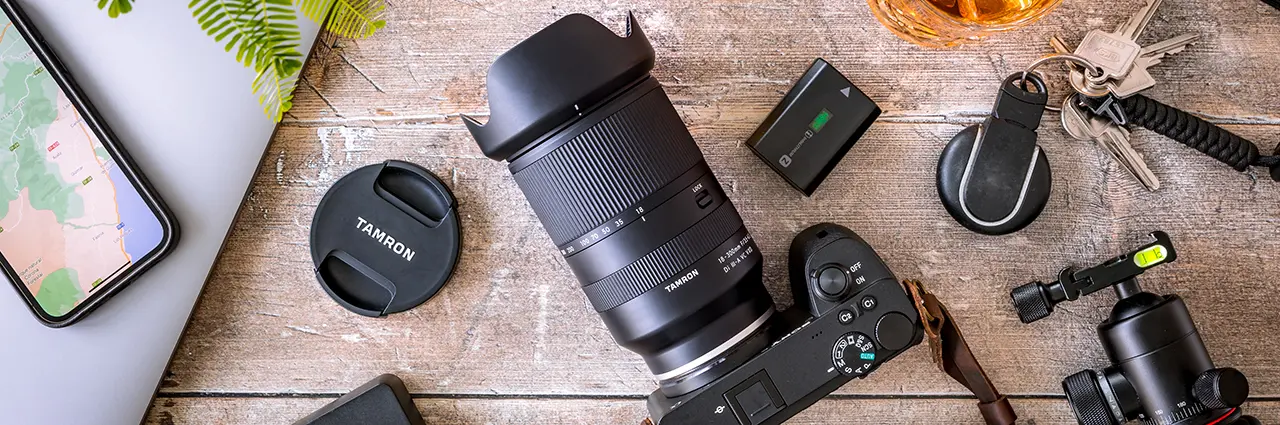
If you’ve ever been on a trip juggling multiple lenses and thought, there’s got to be an easier way, you’ve probably asked yourself, what is an all-in-one zoom lens? This versatile lens type covers a wide range of focal lengths—from wide-angle to telephoto—so you can travel lighter, change lenses less often, and still capture a variety of scenes.
Whether you’re exploring a new city, photographing an event, or shooting everyday moments, an all-in-one zoom lens gives you the flexibility and convenience to get the shot. Also known as a high-magnification zoom or superzoom lens, it is a practical choice for photographers who want maximum versatility from a single lens.
What You’ll Learn In This Article:
- What an all-in-one zoom lens is and how its zoom ratio works
- Four major benefits of using an all-in-one zoom lens
- The best shooting situations for these versatile lenses
- Common drawbacks and how modern lens technology addresses them
- Key features of Tamron’s all-in-one zoom lenses
- How to choose the best Tamron all-in-one zoom lens for your camera
- Answers to frequently asked questions about all-in-one zoom lenses
What Is an All-in-One Zoom Lens and How Does It Work?
An all-in-one zoom lens is a high-magnification zoom lens that covers a broad range of focal lengths, typically from wide-angle to telephoto, in one lens. Unlike standard zooms that cover a more limited range, an all-in-one zoom allows photographers to capture landscapes, portraits, close-ups, and distant subjects without switching lenses.
The zoom ratio is calculated by dividing the telephoto focal length by the wide-angle focal length. The higher the zoom ratio, the greater the range of focal lengths the lens covers, allowing photographers to capture everything from wide-angle scenes to distant subjects with one lens.
For example, if a zoom lens has a wide-angle end of 28mm and a telephoto end of 300mm, the zoom ratio is 300 ÷ 28 = approximately 10.7x.
By adjusting the zoom ring, photographers can quickly change their framing and perspective without moving closer to or farther from the subject. This flexibility is especially useful when shooting conditions change quickly or when carrying multiple lenses is impractical.
4 Benefits of Using an All-in-One Zoom Lens
All-in-one zoom lenses offer several advantages over carrying multiple lenses, particularly for travel, everyday photography, and situations where shooting conditions change quickly. By combining wide-angle and telephoto focal lengths in a single lens, photographers can capture more subjects, respond faster to unexpected moments, and reduce the amount of equipment they carry. Here are four key benefits of using an all-in-one zoom lens.
Wide-Angle to Telephoto Coverage in One Lens
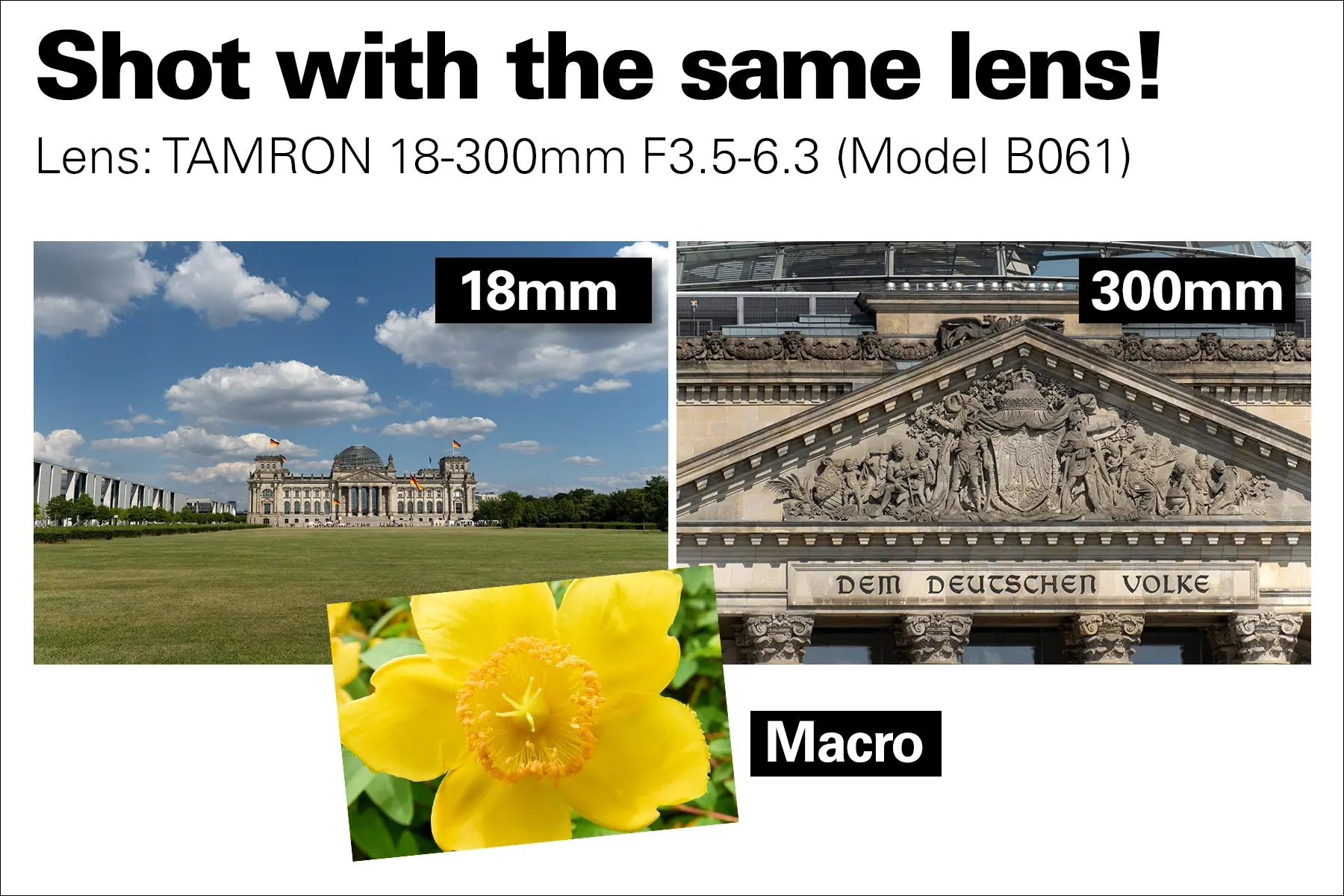
One of the biggest advantages of an all-in-one zoom lens is its extensive focal length range. While standard zoom lenses typically cover wide-angle to standard or standard to telephoto perspectives, all-in-one zooms extend across a much broader range, providing greater flexibility for different subjects and shooting distances.
For example, the Tamron 18-300mm F3.5-6.3 (Model B061) for APS-C mirrorless cameras offers an impressive 16.6x zoom ratio. Its 18-300mm focal range provides the equivalent of approximately 27-450mm on Sony E, Nikon Z, and Fujifilm X APS-C cameras, covering everything from wide-angle landscapes to super-telephoto subjects.
This broad coverage means photographers can move between different compositions without having to carry and switch between separate wide-angle, standard, and telephoto lenses.
Capture Different Subjects Without Changing Lenses

An all-in-one zoom lens makes it easy to adapt to different shooting situations. You can begin with a wide-angle landscape, zoom in to isolate an architectural detail, and then photograph a distant subject without changing lenses.
This flexibility is particularly valuable when photographing unpredictable moments, such as outdoor events, family activities, wildlife, or travel experiences where subjects may be close one moment and far away the next.

Many all-in-one zoom lenses also feature impressive close-focusing capabilities, allowing photographers to capture flowers, food, insects, and other small subjects. This adds another creative dimension to an already versatile lens.
Travel Light with Less Camera Equipment

Another major benefit of an all-in-one zoom lens is the ability to travel with less equipment. Rather than packing separate wide-angle, standard, and telephoto lenses, photographers can cover a broad range of subjects with a single high-magnification zoom.
Reducing the number of lenses in your camera bag makes it easier to explore cities, hike, travel, and photograph events throughout the day. Fewer lens changes also mean less time handling equipment and fewer opportunities for dust to enter the camera during lens changes.
For photographers who prioritize portability and convenience, a compact all-in-one zoom lens can be an excellent everyday companion.
Easy to Use for Beginner Photographers
All-in-one zoom lenses are particularly appealing to beginner photographers because they simplify equipment choices and make it easier to explore different photography styles.
Instead of purchasing separate lenses for landscapes, portraits, and distant subjects, beginners can experiment with a variety of focal lengths using one lens. This provides an opportunity to discover which perspectives and types of photography they enjoy most before investing in additional specialized equipment.
Because there is no need to stop and change lenses, photographers can concentrate on composition, exposure, and capturing the moment rather than managing their gear.
Best Uses for an All-in-One Zoom Lens
All-in-one zoom lenses are ideal for photographers who want the flexibility to capture a wide variety of subjects without frequently changing lenses. From sports events and family activities to travel, landscapes, and videography, these versatile lenses make it easy to switch between wide-angle and telephoto perspectives. Here are four shooting situations where an all-in-one zoom lens is especially useful.
School Events and Sports Photography

An all-in-one zoom lens is a practical choice for photographing children’s school events, outdoor sports, and family activities. These situations often require switching quickly between distant action and wider scenes.
For example, you might use the telephoto end of the lens to photograph a child running across a field, then zoom out to capture a group portrait or the atmosphere of the event.
With one lens covering both perspectives, you can respond to changing action without missing important moments while switching equipment.
For sports played at greater distances or in challenging indoor lighting, a dedicated telephoto lens with a faster maximum aperture may provide additional advantages.
Travel and Vacation Photography

Travel photography is one of the best uses for an all-in-one zoom lens. Whether exploring a new city, visiting a national park, or enjoying a family vacation, photographers often encounter many different subjects within a short period.
An all-in-one zoom allows you to photograph wide cityscapes, architectural details, portraits, distant landmarks, and close-up images of food or local attractions without switching lenses.
This convenience is especially valuable when walking long distances, navigating crowded locations, or traveling with limited luggage space. A single versatile lens can help keep your camera kit compact while providing the flexibility to capture a wide range of memorable experiences.
Nature and Landscape Photography

An all-in-one zoom lens is also a versatile tool for nature and landscape photography. At the wide-angle end, it can capture sweeping scenery, mountain ranges, coastlines, forests, and dramatic skies.
Zooming toward the telephoto end allows photographers to isolate distant landscape details, emphasize patterns, or create compositions using compressed perspective.

Longer focal lengths can also help isolate flowers, plants, and other natural subjects against softly blurred backgrounds. And with one lens covering a broad range, photographers can enjoy hiking and outdoor exploration without carrying several lenses.
Video and Vlogging with an All-in-One Zoom Lens
All-in-one zoom lenses are useful not only for still photography but also for video recording. Their broad focal length ranges allow videographers to create different compositions and perspectives without changing lenses or repositioning the camera.
For travel videos, vlogging, and documentary-style filming, a single lens can capture wide establishing shots, medium compositions, and close-up details. This flexibility helps maintain a more efficient workflow when working with limited equipment.
Modern Tamron all-in-one zoom lenses also feature quiet autofocus systems, including VXD and RXD, that support video recording with minimal focusing noise.
For more information about video techniques, explore our guide to shooting video with a mirrorless camera.
What Are the Drawbacks of an All-in-One Zoom Lens?
While all-in-one zoom lenses offer exceptional versatility, their extensive focal ranges involve certain trade-offs compared with standard zooms, prime lenses, and specialized telephoto lenses. These may include larger dimensions than a typical kit lens, variable maximum apertures, and differences in optical performance under demanding conditions. Understanding these limitations can help photographers decide whether the convenience of an all-in-one zoom lens is the right choice for their shooting needs.
Size and Weight Compared with Kit Lenses
All-in-one zoom lenses may be larger than standard kit lenses because they must accommodate a much broader focal length range within a single optical design.
However, they can also be considerably more convenient than carrying multiple lenses to achieve similar coverage. Modern optical engineering has allowed manufacturers such as Tamron to create compact, lightweight high-magnification zooms that balance portability with extensive focal ranges.
When choosing a lens, consider not only its individual weight but also the total weight and size of the equipment it replaces. Handling the camera and lens together can help determine whether the combination feels comfortable for extended shooting.
Variable Aperture and Low-Light Limitations
Most all-in-one zoom lenses feature a variable maximum aperture, meaning the widest available aperture becomes smaller as the lens is zoomed toward longer focal lengths.
For example, the Tamron 25-200mm F2.8-5.6 G2 offers a bright F2.8 maximum aperture at 25mm but a maximum aperture of F5.6 at 200mm. By comparison, a dedicated 28-75mm F2.8 zoom maintains its F2.8 maximum aperture throughout its focal range.
A smaller maximum aperture at longer focal lengths may require a higher ISO setting or slower shutter speed in low-light conditions. Depending on the camera and lens, image stabilization can help reduce camera shake when photographing stationary subjects.
For photographers who frequently shoot indoor sports, nighttime events, or other demanding low-light subjects, a dedicated fast-aperture zoom may be a better choice. However, an all-in-one zoom offers greater focal range versatility for everyday shooting and travel.
Image Quality Compared with Prime and Dedicated Zoom Lenses
All-in-one zoom lenses must balance optical performance across a considerably wider focal length range than prime lenses or specialized zooms.
While some premium prime lenses and dedicated zooms may provide advantages in maximum aperture, edge-to-edge sharpness, or particular optical characteristics, modern all-in-one zoom lenses are capable of delivering excellent image quality for travel, portraits, landscapes, and everyday photography.
Advanced optical designs and specialized lens elements help minimize aberrations, maintain resolution, and produce attractive background blur.
For photographers who require specialized performance in particular situations, pairing an all-in-one zoom with a prime or dedicated fast-aperture zoom can provide an effective combination of convenience and creative flexibility.
Tamron All-in-One Zoom Lenses: Key Features
Tamron’s all-in-one zoom lenses combine advanced optical technologies with compact, lightweight designs to deliver excellent image quality, versatile focal ranges, and reliable performance. With features such as fast, precise autofocus, impressive close-focusing capabilities, and innovative optical designs, these lenses address many of the traditional limitations of high-magnification zooms while maintaining the convenience of a single lens.
Here are five key features that make Tamron all-in-one zoom lenses a versatile choice for travel, everyday photography, and a wide range of creative shooting situations.
Bright F2.8 Wide-Angle Aperture and Image Quality

Tamron has expanded the creative capabilities of all-in-one zoom lenses by incorporating brighter maximum apertures and advanced optical designs.
The Tamron 28-200mm F2.8-5.6 (Model A071) was a groundbreaking all-in-one zoom that introduced an F2.8 maximum aperture at its 28mm wide-angle end.
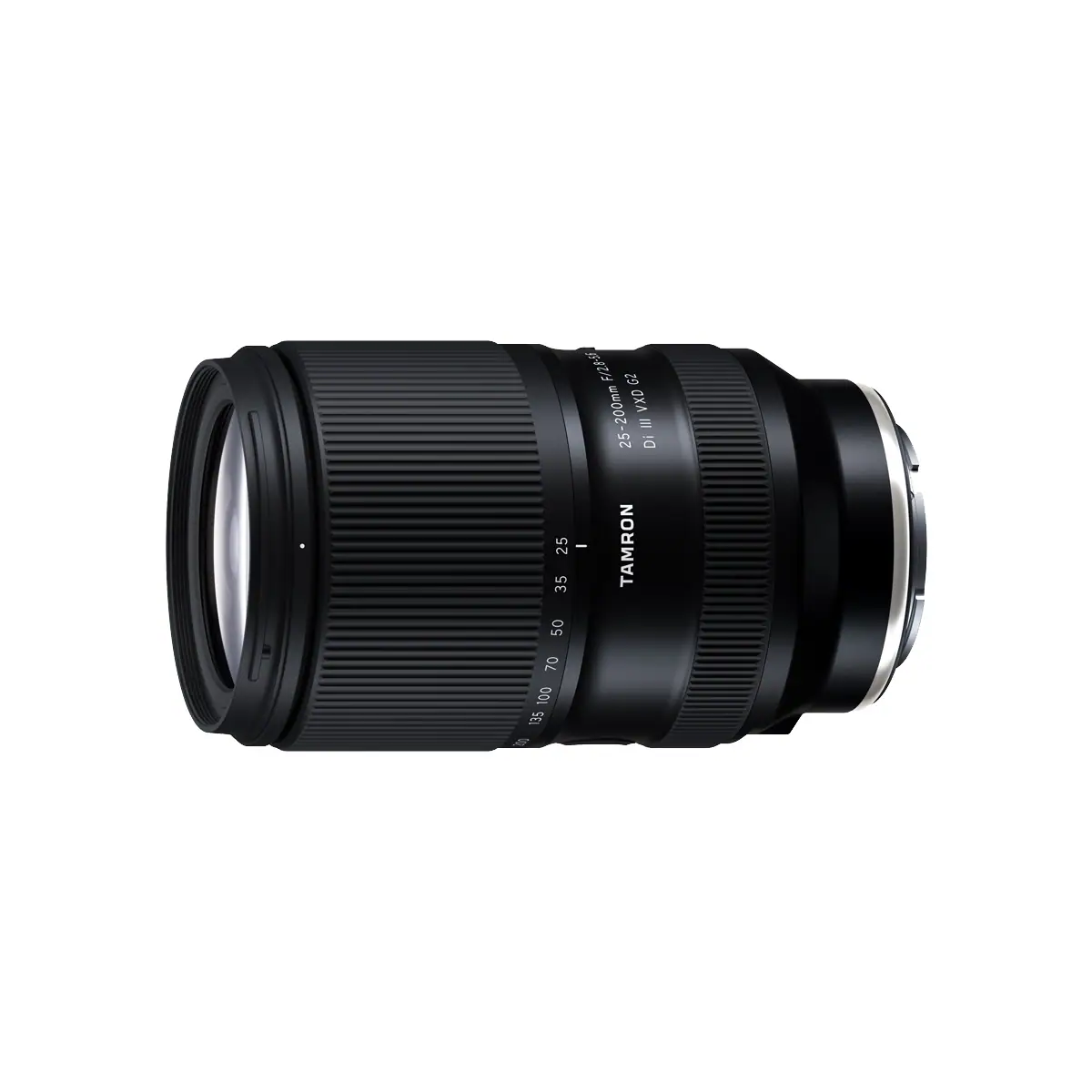
Building on that design, the Tamron 25-200mm F2.8-5.6 G2 (Model A075) extends the wide-angle coverage to 25mm while retaining the bright F2.8 maximum aperture at the wide end and the 200mm telephoto reach.
This wider perspective provides additional flexibility for landscapes, architecture, travel photography, and indoor scenes. The F2.8 maximum aperture at the wide-angle end also supports low-light shooting and creative control over background blur, while the advanced optical design helps deliver sharp, detailed images throughout the zoom range.
Compact, Lightweight Designs for Travel

A major advantage of Tamron’s all-in-one zoom lenses is their compact and lightweight construction. Through advanced optical engineering, Tamron combines extensive focal ranges with designs that remain practical for travel and everyday photography.
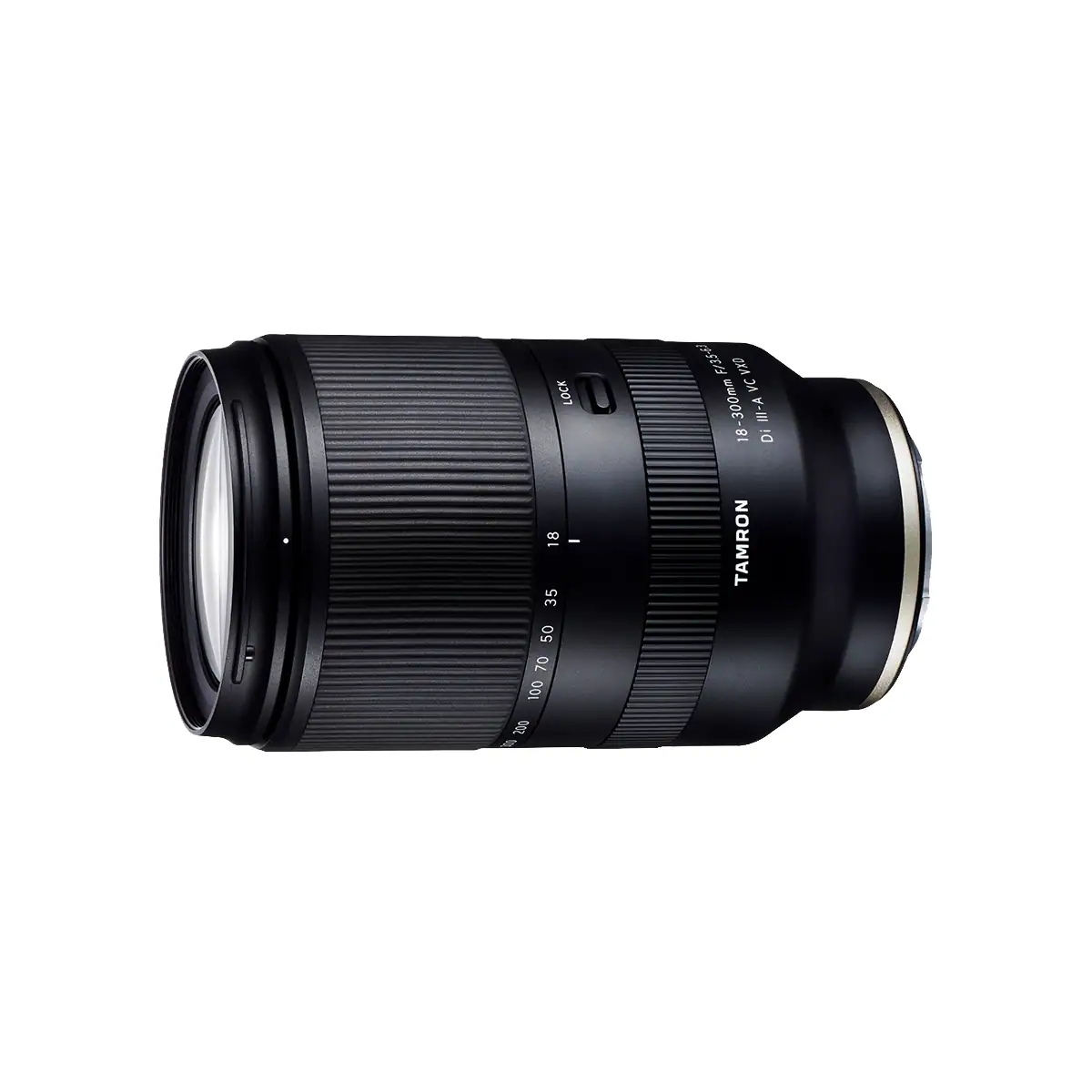
For example, the Tamron 18-300mm F3.5-6.3 weighs just 21.9 oz (620g) and measures 4.9″ (125.6mm) long for the Sony E-mount version, despite offering a substantial 16.6x zoom ratio.
The Tamron 25-200mm F2.8-5.6 G2 for full-frame Sony E-mount cameras is even lighter at 20.3 oz (575g), with a length of just 4.8″ (121.5mm).
These compact designs allow photographers to enjoy extensive focal length coverage while reducing the overall size and weight of their camera equipment.
Close-Focusing and Half-Macro Capabilities

Many Tamron all-in-one zoom lenses offer impressive close-focusing capabilities, making them useful for photographing flowers, food, insects, and small everyday objects.
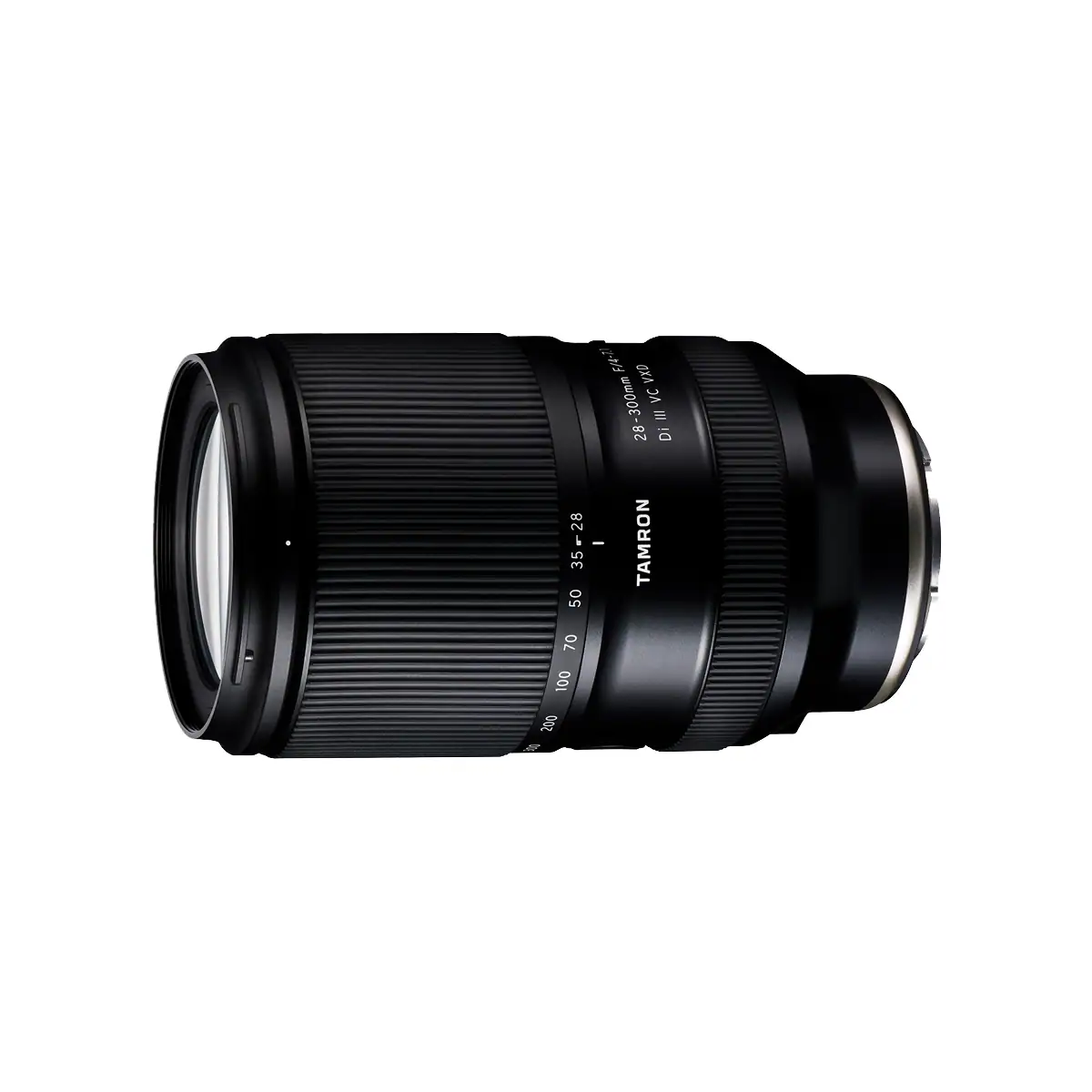
- The Tamron 28-300mm F4-7.1 (Model A074) focuses as close as 7.5″ (0.19m) at the wide-angle end, achieving a maximum magnification ratio of 1:2.8.
- The Tamron 18-300mm F3.5-6.3 (Model B061) offers even greater close-up magnification, reaching a maximum magnification ratio of 1:2 at 18mm with a minimum focusing distance of 5.9″ (0.15m).
- The Tamron 25-200mm F2.8-5.6 G2 (Model A075) provides exceptional close-up flexibility with a minimum focusing distance of 6.3″ (0.16m) and maximum magnification ratio of 1:1.9 at 25mm. With firmware Ver. 3 or later, it can achieve magnification of 1:2 or greater across the 25-70mm range, including 1:1.7 at 35-50mm.
These capabilities allow photographers to explore close-up and half-macro photography without needing a separate macro lens, making an all-in-one zoom even more versatile.
Wide-Angle to Super-Telephoto Coverage

The Tamron 18-300mm F3.5-6.3 (Model B061) offers one of the most extensive focal length ranges in Tamron’s mirrorless all-in-one zoom lineup. Its 16.6x zoom ratio covers 18mm to 300mm, equivalent to approximately 27-450mm on Sony E, Nikon Z, and Fujifilm X APS-C cameras.
This exceptional range makes it possible to capture everything from wide-angle landscapes and architecture to super-telephoto shots of distant subjects with a single lens.

Whether photographing scenery, children at play, airplanes, trains, wildlife, or sporting events, the ability to move quickly between wide-angle and telephoto compositions makes this lens particularly useful when subjects and shooting distances change frequently.
Fast, Quiet Autofocus for Photography and Video
Tamron’s all-in-one zoom lenses incorporate advanced autofocus technologies designed to provide fast, precise, and quiet focusing for still photography and video recording.
Models such as the 18-300mm, 25-200mm G2, and 28-300mm feature Tamron’s VXD (Voice-coil eXtreme-torque Drive) linear motor autofocus system. VXD provides responsive focusing performance and accurate subject tracking, making it especially useful for moving subjects, spontaneous moments, and video recording.
The Tamron 28-200mm uses Tamron’s RXD (Rapid eXtra-silent stepping Drive) autofocus system, which also provides quiet, reliable autofocus for everyday photography and video.
These technologies help photographers respond confidently to changing subjects while minimizing distracting focusing noise during recording.
Which Tamron All-in-One Zoom Lens Should You Choose?
Choosing the best Tamron all-in-one zoom lens depends on your camera’s sensor format and lens mount, the focal range you need, and the types of subjects you photograph most often. APS-C photographers may prioritize an extended zoom range for travel and wildlife, while full-frame photographers may prefer a wider starting focal length, brighter maximum aperture, or longer telephoto reach.
Tamron offers several all-in-one zoom lenses for different needs, including the 18-300mm for APS-C mirrorless cameras and the 25-200mm G2, 28-200mm, and 28-300mm for full-frame Sony E-mount cameras.
The following models offer different combinations of portability, focal range, autofocus performance, and close-up capability.
Tamron All-in-One Zoom Lens Comparison
For a more detailed comparison of focal lengths, specifications, and shooting applications, see our guide to Tamron All-in-One Zoom Lenses Compared.
Tamron 18-300mm F/3.5-6.3 Di III-A VC VXD (Model B061)

Built for APS-C mirrorless cameras, the Tamron 18-300mm F3.5-6.3 offers an impressive 16.6x zoom ratio. Covering a broad range from wide-angle to super-telephoto, this lens is an excellent one-lens solution for travel, landscapes, portraits, wildlife, sports, and everyday photography. Its advanced VXD autofocus, built-in VC image stabilization, and half-macro close-up capability make it one of Tamron’s most versatile APS-C all-in-one zoom lenses.
Available Mounts: Sony E-mount, Canon RF mount, Fujifilm X-mount, and Nikon Z mount (APS-C)
Top Features:
- Expansive 16.6x zoom ratio with 27-450mm full-frame equivalent coverage on Sony E, Nikon Z, and Fujifilm X APS-C cameras*
- VXD linear motor for fast, precise, and quiet autofocus
- Maximum magnification ratio of 1:2 with a minimum focusing distance of just 5.9″ (0.15m) at 18mm
- Built-in VC (Vibration Compensation) image stabilization for steady handheld shooting
- Compact design weighing 21.9 oz (620g) and measuring 4.9″ (125.6mm) long, with a 67mm filter size*
- Moisture-resistant construction and fluorine coating for added protection during outdoor photography
*Focal length equivalence is approximately 28.8-480mm for Canon RF APS-C cameras. Length and weight specifications are for the Sony E-mount model.
Learn more about the Tamron 18-300mm VC >>
Tamron 28-200mm F/2.8-5.6 Di III RXD (Model A071)
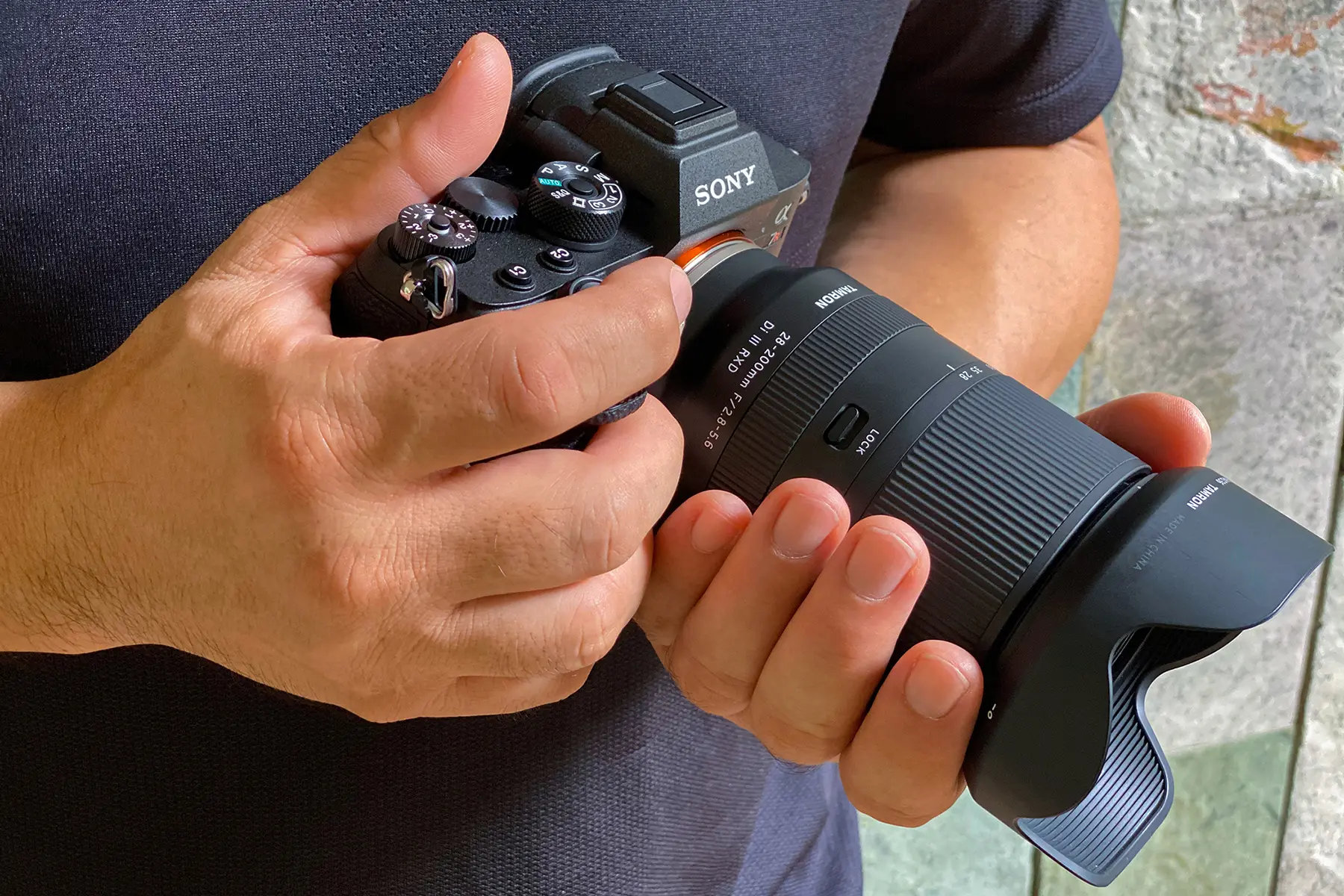
Designed for full-frame mirrorless cameras, the Tamron 28-200mm F2.8-5.6 helped redefine what an all-in-one zoom lens could offer by combining a bright F2.8 maximum aperture at the wide-angle end with an extensive 28-200mm focal range. Its compact, lightweight design and reliable RXD autofocus make it a versatile choice for travel, landscapes, portraits, and everyday photography.
Available Mounts: Sony E-mount (Full-frame)
Top Features:
- Bright F2.8 maximum aperture at the 28mm wide-angle end for low-light photography and attractive background blur
- Minimum focusing distance of 7.5″ (0.19m) at 28mm with a maximum magnification ratio of 1:3.1
- Compact, lightweight design measuring 4.6″ (117mm) long and weighing 20.3 oz (575g)
- Convenient 67mm filter size
- RXD (Rapid eXtra-silent stepping Drive) autofocus system for fast, quiet focusing
- Moisture-resistant construction and fluorine coating for outdoor reliability
Learn more about the Tamron 28-200mm F2.8-5.6 >>
Tamron 25-200mm F/2.8-5.6 Di III VXD G2 (Model A075)

The Tamron 25-200mm F2.8-5.6 G2 is an advanced second-generation all-in-one zoom lens for full-frame mirrorless cameras. Building on the popular 28-200mm F2.8-5.6, the G2 expands the wide-angle end to 25mm while maintaining the 200mm telephoto reach and bright F2.8 maximum aperture at the wide end. With improved optical performance, faster VXD autofocus, and exceptional close-focusing capabilities, this compact 8x zoom is ideal for travel, landscapes, portraits, everyday photography, and close-up shooting.
Available Mounts: Sony E-mount (Full-frame)
Top Features:
- Versatile 8x zoom range from 25mm wide-angle to 200mm telephoto, with a bright F2.8 maximum aperture at the wide end
- VXD (Voice-coil eXtreme-torque Drive) linear motor for fast, precise, and quiet autofocus with improved subject tracking
- Exceptional close-up capability with a minimum focusing distance of just 6.3″ (0.16m) at 25mm and a maximum magnification ratio of 1:1.9
- With firmware Ver. 3 or later, maximum magnification improves to 1:2 or greater throughout 25-70mm, including 1:1.7 at 35-50mm
- Compact and lightweight design measuring just 4.8″ (121.5mm) long and weighing 20.3 oz (575g), with a convenient 67mm filter size
- Compatible with TAMRON Lens Utility™ and TAMRON-LINK for customizable lens functions
- Moisture-resistant construction, fluorine coating, and improved optical design for reliable performance in a variety of shooting conditions
Learn more about the Tamron 25-200mm F2.8-5.6 >>
Tamron 28-300mm F4-7.1 Di III VC VXD (Model A074)

Covering everything from wide-angle to super-telephoto, the Tamron 28-300mm F4-7.1 is a versatile, high-magnification zoom lens for full-frame Sony E-mount cameras. Its extended 300mm reach provides additional flexibility when photographing distant subjects, while its compact construction, VXD autofocus, and built-in VC image stabilization make it a practical choice for travel, portraits, wildlife, and everyday photography.
Available Mounts: Sony E-mount (Full-frame)
Top Features:
- Expansive 10.7x zoom ratio covering 28mm wide-angle to 300mm telephoto
- Minimum focusing distance of 7.5″ (0.19m) at 28mm with a maximum magnification ratio of 1:2.8
- Compact, lightweight design measuring 5″ (126mm) long and weighing 21.5 oz (610g)
- Convenient 67mm filter size
- VXD linear motor for fast, precise, and quiet autofocus
- Built-in VC (Vibration Compensation) image stabilization for handheld shooting
- Moisture-resistant construction and fluorine coating for added protection in varied shooting conditions
Learn more about the Tamron 28-300mm VC >>
Is an All-in-One Zoom Lens Right for You?
An all-in-one zoom lens is an excellent choice for photographers who want to capture a wide variety of subjects without carrying multiple lenses. From landscapes and portraits to sports, wildlife, travel, and everyday moments, these versatile lenses make it easy to move between wide-angle and telephoto perspectives.
With options ranging from the 16.6x Tamron 18-300mm for APS-C cameras to the compact 25-200mm F2.8-5.6 G2 and the extended-reach 28-300mm for full-frame Sony E-mount cameras, Tamron offers all-in-one zoom lenses suited to different photography styles, camera systems, and creative priorities.
While photographers who need a constant fast aperture or specialized performance may prefer dedicated zooms or prime lenses for certain situations, an all-in-one zoom lens offers an outstanding balance of convenience, image quality, and flexibility.
Whether you’re a beginner exploring different types of photography or an experienced photographer looking to simplify your equipment, a Tamron all-in-one zoom lens can be a valuable addition to your camera kit.
Where to Buy Tamron All-In-One Zoom Lenses
Explore Tamron’s all-in-one zoom lens lineup to compare features, focal lengths, and camera compatibility.
Learn more about Tamron all-in-one zoom lenses at an authorized Tamron dealer near you or visit the TAMRON Store.
Frequently Asked Questions About All-in-One Zoom Lenses
What is an all-in-one zoom lens?
An all-in-one zoom lens is a high-magnification zoom lens that covers a broad range of focal lengths, typically from wide-angle to telephoto, in one lens. It allows photographers to capture landscapes, portraits, travel scenes, and distant subjects without frequently changing lenses. For example, the Tamron 25-200mm offers an 8x zoom range, while the Tamron 18-300mm provides a 16.6x zoom range.
What is the difference between an all-in-one zoom lens and a standard zoom lens?
An all-in-one zoom lens offers a significantly wider focal length range than a standard zoom lens. A standard zoom, such as a 28-75mm F2.8, generally provides a shorter range with a constant maximum aperture, while an all-in-one zoom can extend to 200mm or 300mm for greater versatility. The trade-off is typically a variable maximum aperture, but the benefit is capturing more types of subjects without changing lenses.
Are all-in-one zoom lenses good for beginner photographers?
Yes. All-in-one zoom lenses are excellent for beginners because they simplify camera equipment and allow photographers to experiment with different focal lengths using one lens. Beginners can explore landscape, portrait, travel, wildlife, and close-up photography without investing in several specialized lenses. This versatility also helps photographers discover which focal lengths and photography styles they enjoy most.
Are all-in-one zoom lenses good for travel photography?
Yes. An all-in-one zoom lens is one of the most convenient choices for travel photography because it reduces the need to carry and change multiple lenses. Photographers can capture wide landscapes, architectural details, portraits, and distant subjects with a single lens. Compact models such as the Tamron 25-200mm F2.8-5.6 G2 offer a practical balance of wide-angle coverage, telephoto reach, and portability for full-frame Sony E-mount cameras.
Can an all-in-one zoom lens be used for wildlife and sports photography?
Yes. All-in-one zoom lenses with longer telephoto ranges can be useful for photographing wildlife, sports, and other distant or moving subjects. The Tamron 18-300mm for APS-C cameras provides substantial reach, while the Tamron 28-300mm offers a versatile option for full-frame Sony E-mount cameras. For very distant wildlife, small birds, or demanding low-light action, a dedicated telephoto lens may offer additional reach or a faster maximum aperture.
Are all-in-one zoom lenses sharp enough for high-quality photography?
Modern all-in-one zoom lenses can deliver excellent image quality for travel, landscapes, portraits, and everyday photography. Advanced optical designs help maintain sharpness, contrast, and detail across their extensive zoom ranges. Although certain specialized zooms and prime lenses may offer advantages in maximum aperture or specific optical characteristics, an all-in-one zoom provides an excellent balance of image quality, convenience, and versatility.
Can all-in-one zoom lenses take macro or close-up photographs?
Many all-in-one zoom lenses offer impressive close-focusing capabilities, allowing photographers to capture flowers, food, insects, and small objects. The Tamron 25-200mm F2.8-5.6 G2 achieves a maximum magnification ratio of 1:1.9 at 25mm, while the Tamron 18-300mm offers 1:2 magnification at its wide-angle end. These capabilities provide approximately half-macro or greater close-up performance, although they are not equivalent to the 1:1 reproduction of a dedicated true macro lens.
What is the difference between the Tamron 25-200mm G2 and 28-200mm all-in-one zoom lenses?
The Tamron 25-200mm F2.8-5.6 G2 (A075) is the second-generation successor to the 28-200mm F2.8-5.6 (A071). The G2 expands the wide-angle end from 28mm to 25mm while maintaining the 200mm telephoto reach and F2.8 maximum aperture at the wide end. It also upgrades from RXD to faster VXD autofocus, improves optical performance, adds closer focusing capabilities, and supports TAMRON Lens Utility customization.
Can an all-in-one zoom lens be used for video recording?
Yes. All-in-one zoom lenses are useful for video because they allow videographers to change framing from wide-angle to telephoto without switching lenses. This flexibility is especially valuable for travel videos, family events, documentary-style filming, and vlogging. Tamron models equipped with VXD or RXD autofocus systems provide fast, quiet focusing that supports video recording, while compatible models offer additional customization through TAMRON Lens Utility.
About the Author
 Stacie Errera is Vice President of Marketing and Communications for Tamron Americas, where she has been with Tamron for more than 36 years. She is also a photography educator who teaches new camera users how to better understand their cameras and photography basics. She leads weekend photography workshops for women. Read Stacie’s full bio >>