Instant Savings
 Rebate Claims
 Support
 Find a Dealer

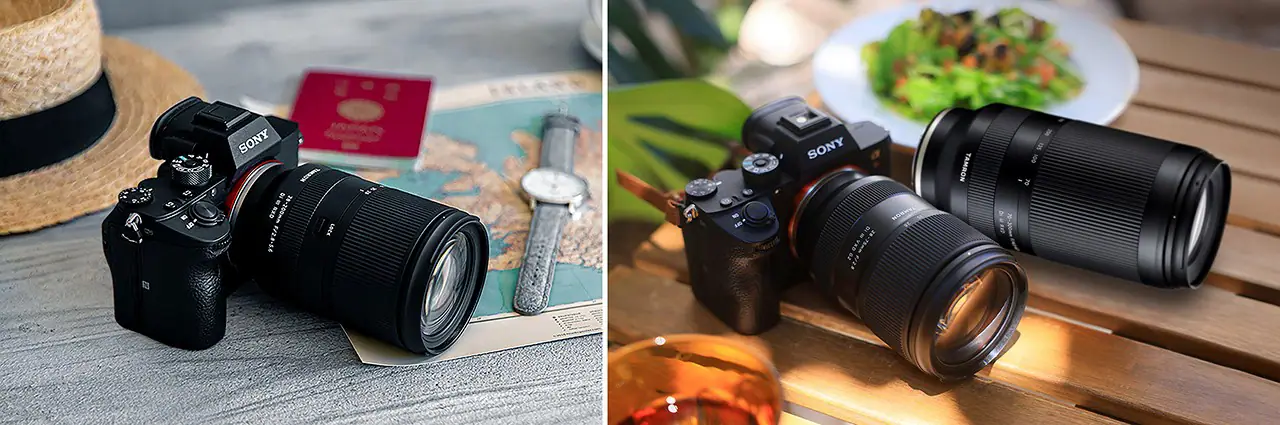
An all-in-one zoom covers wide-angle through telephoto focal lengths in a single lens, with a zoom ratio of 7x to 16.6x. A dedicated zoom covers a narrower range, often with a brighter aperture. This guide compares Tamron’s four all-in-ones, the APS-C 18-300mm and full-frame 25-200mm G2, 28-200mm, and 28-300mm, against seven dedicated zooms: the 17-70mm, 28-75mm G2, 35-150mm, 70-180mm G2, 70-300mm, 50-300mm, and 50-400mm.
An all-in-one zoom typically trades maximum aperture for greater focal-length coverage, not necessarily more weight. Tamron’s 28-200mm weighs only 1.2 oz (35g) more than the constant-F2.8 28-75mm G2 despite providing substantially greater reach. Camera mount also matters: Tamron’s current full-frame all-in-one mirrorless zooms are available exclusively for Sony E-mount cameras.
Choosing between an all-in-one zoom lens and dedicated zooms ultimately comes down to how you photograph. Travel photographers get the most from a single lens that handles everything from landscapes to distant subjects. Event and portrait photographers are better served by the consistent brightness of a fast standard or telephoto zoom.
The differences become clearer when you compare actual specifications, particularly aperture, focal range, close-focusing capability, weight, and camera compatibility.
Table of Contents
- Should You Buy an All-in-One or Dedicated Zooms?
- All-in-One vs Dedicated Zooms: Full Specifications
- Tamron 28-200mm vs 28-75mm G2: What Do You Give Up?
- Tamron 28-200mm vs 35-150mm: Range or Brightness?
- All-in-One vs Dedicated Telephoto Zooms
- On APS-C: Tamron 18-300mm vs 17-70mm
- Which Setup Should You Buy?
Should You Buy an All-in-One or Dedicated Zooms?
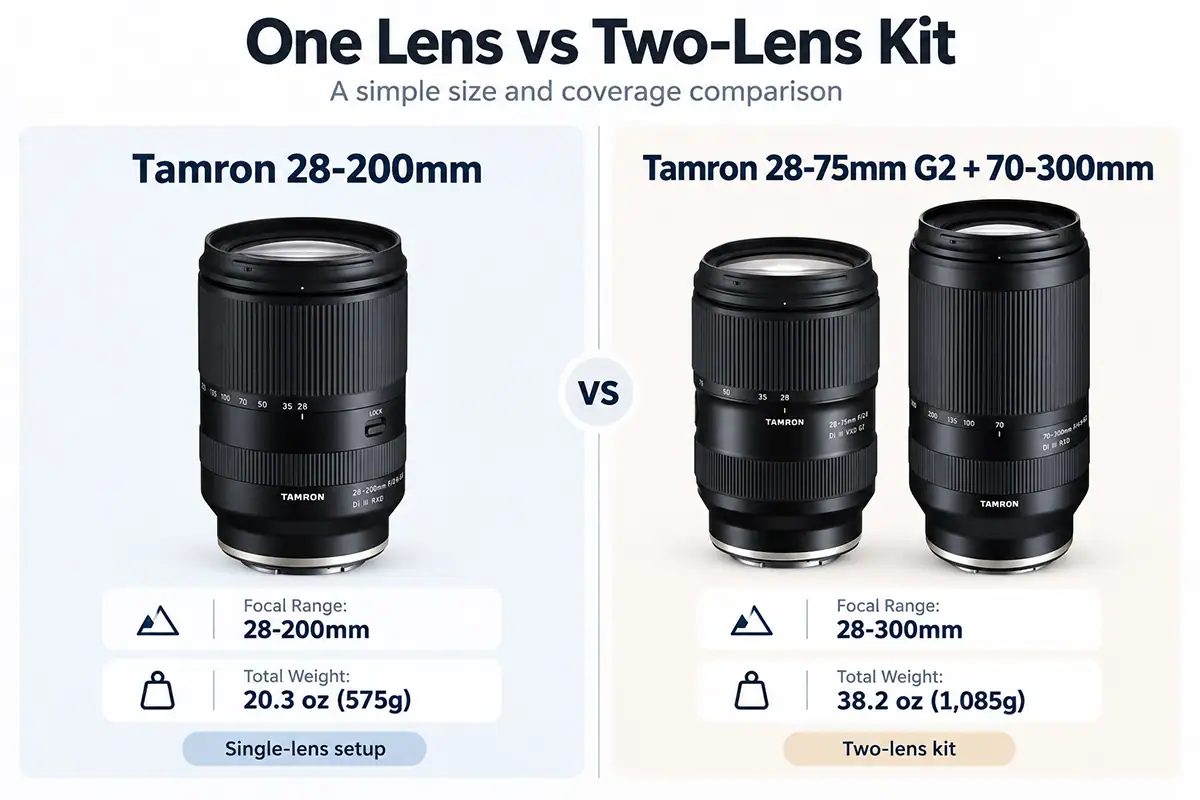
Buy an all-in-one Tamron zoom if you shoot travel, landscapes, and outdoor subjects in good light and want one lens from wide to telephoto. Buy dedicated zooms if you shoot indoor events, portraits, or low-light action and need F2.8 or brighter apertures. On Nikon Z full-frame, dedicated zooms are your only Tamron option.
The important distinction is not simply convenience versus image quality. Modern all-in-one lenses offer sophisticated optical designs, strong close-focusing performance, and responsive autofocus. Dedicated lenses provide advantages when a particular shooting requirement matters more than maximum focal-range flexibility.
What Is an All-in-One Zoom Lens?
An all-in-one zoom lens covers wide-angle through telephoto focal lengths in a single lens, generally offering approximately 7x to 16x zoom magnification. Tamron’s current mirrorless all-in-one lineup includes the 18-300mm for APS-C cameras and the 25-200mm G2, 28-200mm, and 28-300mm for full-frame cameras.
The four options are:
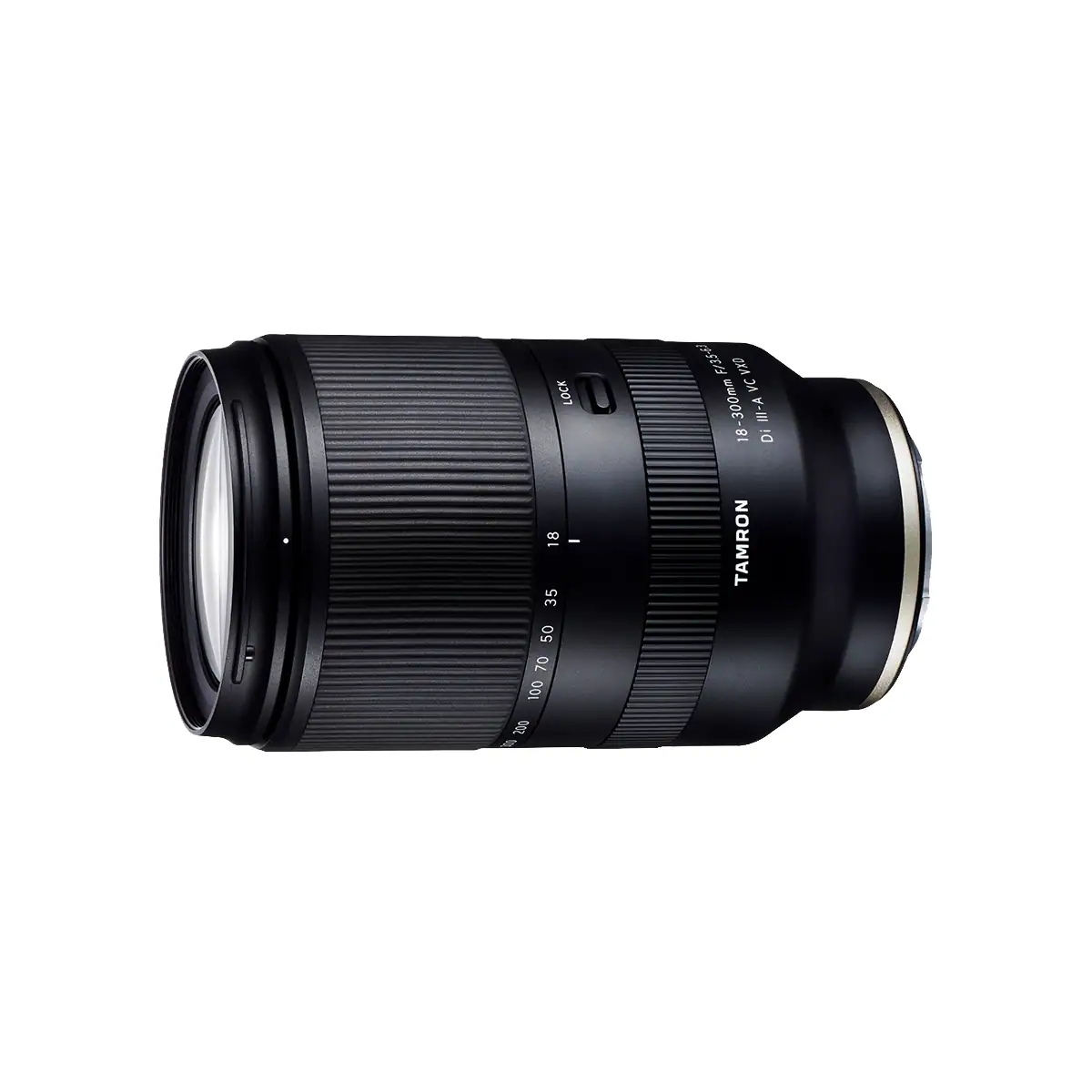
- Tamron 18-300mm F/3.5-6.3 Di III-A VC VXD — A 16.6x APS-C zoom with VC stabilization.
- Tamron 25-200mm F/2.8-5.6 Di III VXD G2 — An 8x full-frame zoom with an expanded wide end and VXD autofocus.
- Tamron 28-200mm F/2.8-5.6 Di III RXD — A compact 7.1x full-frame zoom with an F2.8 maximum aperture at 28mm.
- Tamron 28-300mm F/4-7.1 Di III VC VXD — A 10.7x full-frame zoom offering extended telephoto reach and VC stabilization.
The defining characteristic of an all-in-one is its zoom ratio, rather than its longest focal length alone. For a more detailed comparison within this category, explore how Tamron’s all-in-one zooms compare to each other.
Which Tamron All-in-Ones Does Your Camera System Mount Support?
Camera compatibility can determine whether an all-in-one or dedicated zoom is the better choice before aperture or weight enters the discussion. Tamron’s full-frame 25-200mm G2, 28-200mm, and 28-300mm all-in-one lenses are available only for Sony E-mount. Nikon Z full-frame photographers must therefore consider dedicated Tamron zooms.
For APS-C cameras, the 18-300mm all-in-one zoom is available for four camera systems: Sony E, Canon RF, Fujifilm X, and Nikon Z.
The dedicated lens selection is broader for both Sony E and Nikon Z full-frame and APS-C cameras.
Full-frame dedicated zooms to consider:
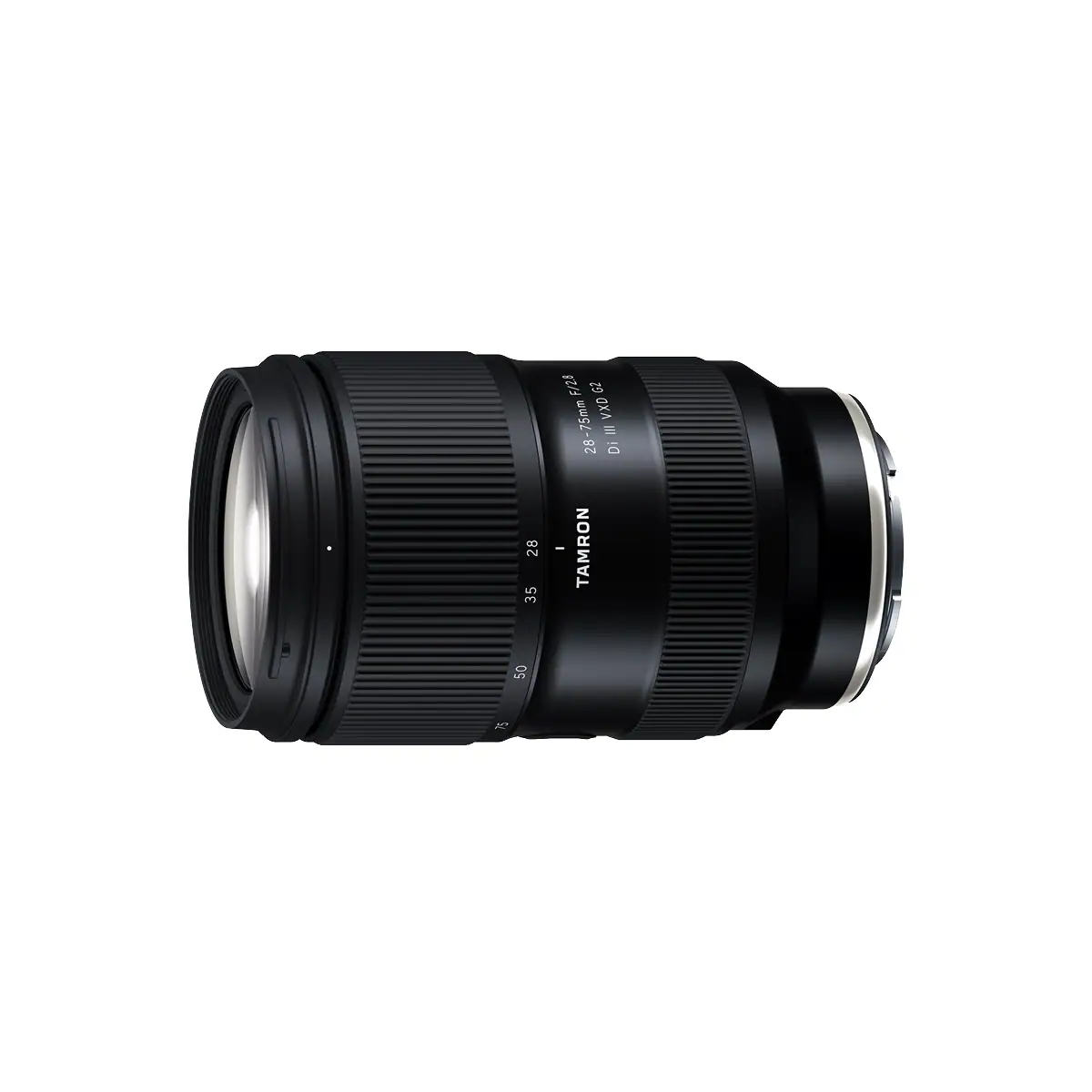
- Tamron 28-75mm F/2.8 Di III VXD G2
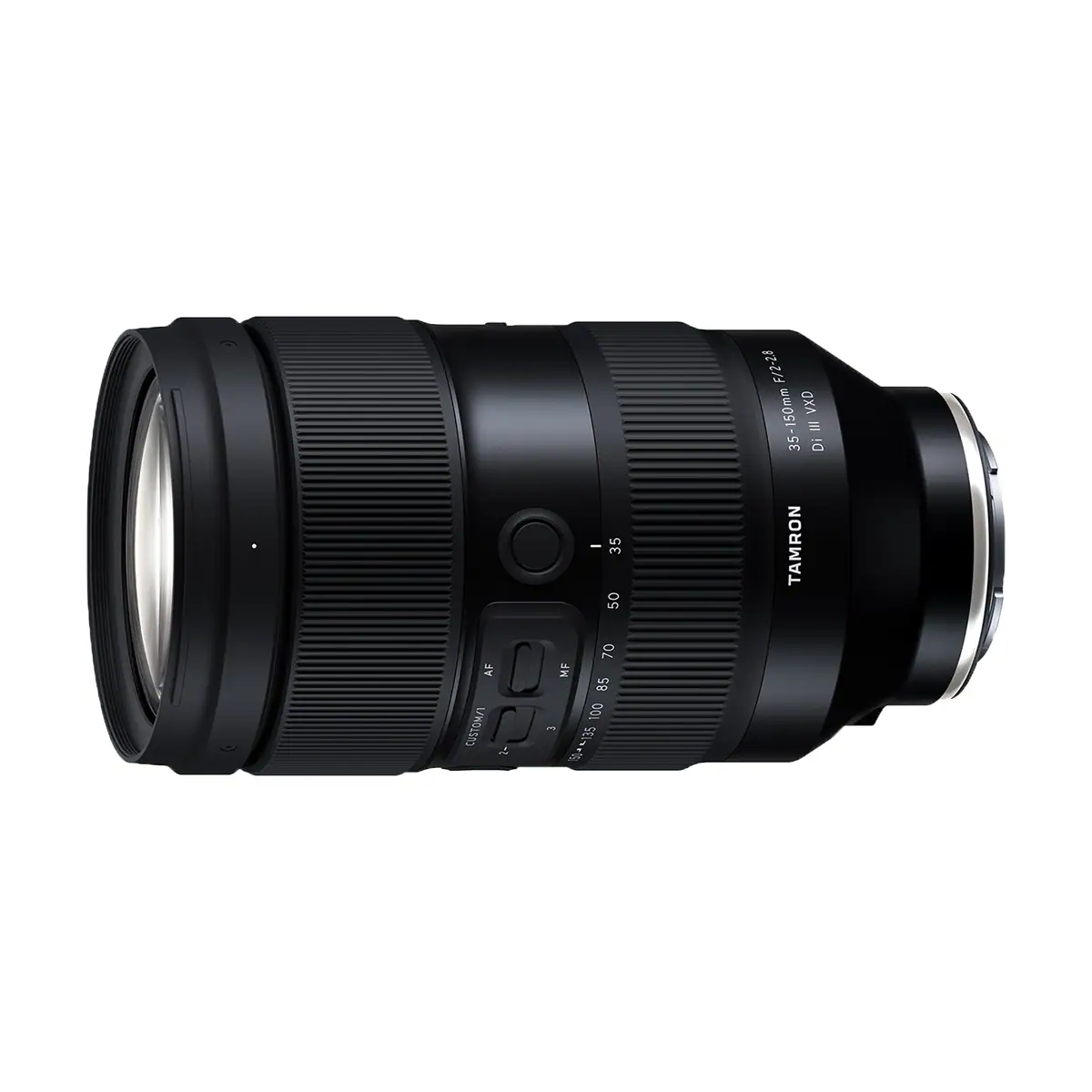
- 35-150mm F/2-2.8 Di III VXD
- 70-180mm F/2.8 Di III VC VXD G2
- 70-300mm F/4.5-6.3 Di III RXD
Sony and Nikon APS-C photographers can also use compatible full-frame lenses, although the smaller sensor changes the effective field of view. Lenses built for APS-C cameras are also available. APS-C dedicated zooms to consider for Sony E, Canon RF, Fujifilm X, and/or Nikon Z :
The Real Trade Is Aperture, Not Weight
The Tamron 28-200mm weighs 20.3 oz (575g), while the 28-75mm G2 weighs 19 oz (540g). That is a difference of just 1.2 oz (35g), despite the all-in-one extending from 28mm to 200mm instead of stopping at 75mm. The substantial difference is how much light each lens can gather as you zoom.
The 28-75mm G2 maintains a constant F2.8 maximum aperture throughout its range.
The 28-200mm has a variable maximum aperture:
*Minimum focus distances are shown at the wide end. Maximum magnification shows the strongest published ratio, which may occur at a different focal length.
The Tamron 17-70mm F/2.8 Di III-A VC RXD, Tamron 50-300mm F/4.5-6.3 Di III VC VXD, and Tamron 50-400mm F/4.5-6.3 Di III VC VXD add further options for photographers who need a specific balance of aperture, reach, and handling.
VXD (Voice-coil eXtreme-torque Drive) uses a linear motor designed for fast, precise autofocus and responsive subject tracking, particularly when photographing moving subjects. RXD (Rapid eXtra-silent stepping Drive) provides fast, quiet autofocus suitable for still photography and video.
What Variable Aperture Actually Costs You
A variable-aperture zoom allows progressively less light through its widest aperture as focal length increases. At 200mm, the Tamron 28-200mm’s F5.6 maximum aperture gathers approximately two stops less light than the 28-75mm G2 does at F2.8. In practical terms, that means using a slower shutter speed, raising ISO, or relying on in-body stabilization for stationary subjects.
When a subject is moving, however, stabilization cannot replace the faster shutter speed needed to freeze action. This is where a bright, constant-aperture zoom has the advantage.
Tamron 28-200mm vs 28-75mm G2: What Do You Give Up?
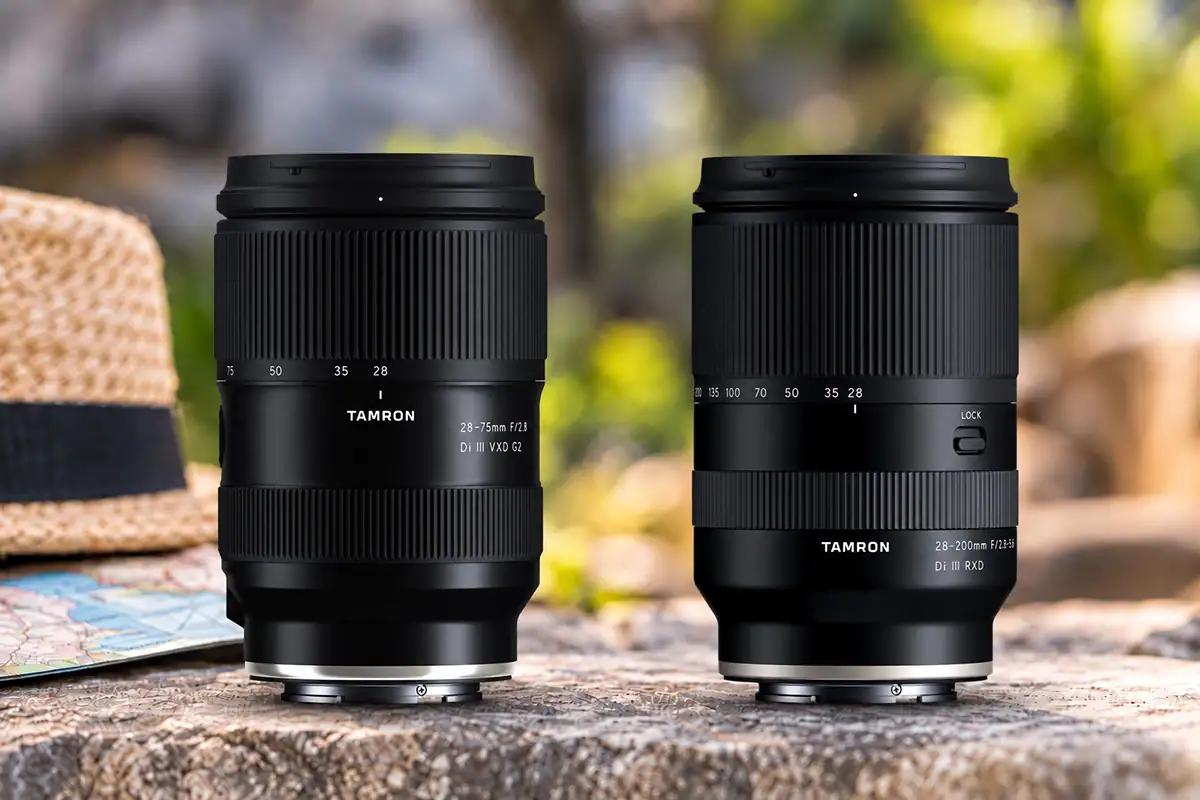
Comparing the Tamron 28-200mm vs 28-75mm G2 reveals a surprisingly small size and weight difference. The 28-200mm provides an additional 125mm of telephoto reach while weighing just 1.2 oz (35g) more. What you give up is the constant F2.8 maximum aperture that makes the 28-75mm G2 particularly useful for low-light and event photography.
How the Two Compare on Paper
The main difference between the Tamron 28-200mm and 28-75mm G2 is aperture consistency versus focal range. The 28-200mm weighs 20.3 oz (575g), measures 4.6″ (117mm), and provides a 7.1x zoom. The 28-75mm G2 weighs 19 oz (540g), measures 4.6″ (117.6mm), and maintains F2.8 throughout its 2.7x range.
Both lenses use 67mm filters and provide strong close-focusing performance.
At 28mm, the 28-200mm focuses as close as 7.5″ (0.19m), achieving a maximum magnification ratio of 1:3.1. The 28-75mm G2 focuses slightly closer at 7.1″ (0.18m), with 1:2.7 magnification.
These lenses feel remarkably similar in size and weight but serve different shooting priorities.
The 28-200mm is ideal when a single lens needs to cover landscapes, street scenes, travel portraits, and distant details. The 28-75mm G2 makes more sense when exposure consistency, background separation, and low-light flexibility are more important than extended reach.
For additional choices in this focal-length category, see Tamron’s wide and standard zooms compared.
When the two-lens kit still wins
A dedicated two-lens kit makes sense when you frequently photograph indoor events, people in motion, or scenes where a constant F2.8 standard zoom is valuable. Pairing the Tamron 28-75mm G2 with the 70-300mm also gives photographers continuous coverage from 28mm to 300mm, extending beyond the 28-200mm’s longest focal length.
The trade-off is carrying more equipment.
The single all-in-one lens saves 18 oz (510g), approximately half the weight of the two-lens combination.
The dedicated kit offers F2.8 throughout the standard range and additional telephoto reach. However, the 70-300mm itself has a variable F4.5-6.3 aperture, so the brightness advantage applies to the standard zoom rather than the entire kit.
For photographers who regularly move between outdoor landscapes and indoor events, carrying two lenses is worth the flexibility.
Tamron 28-200mm vs 35-150mm: Range or Brightness?
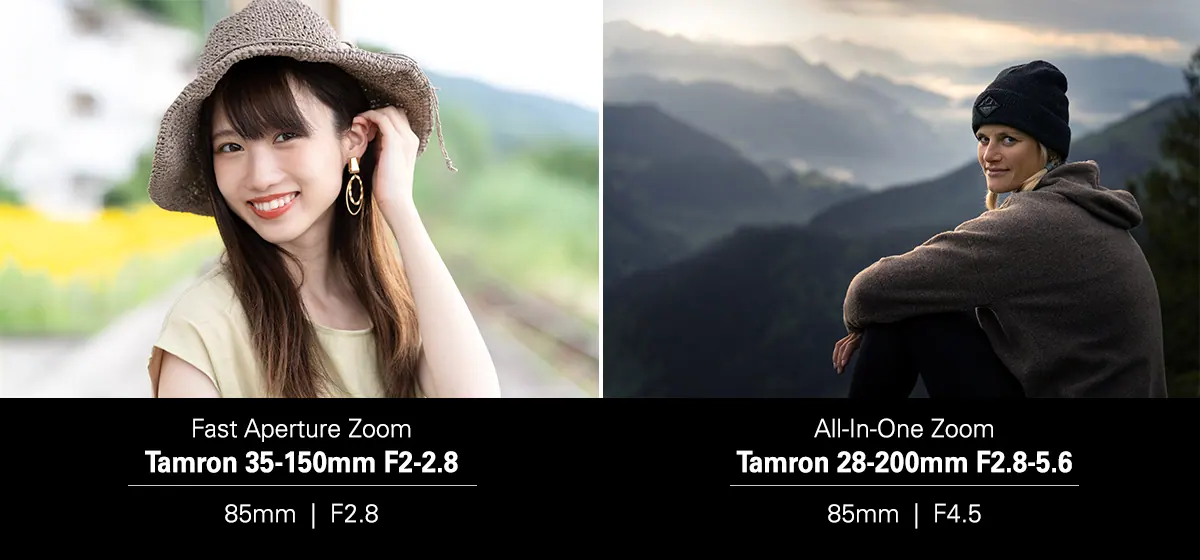
Choose the Tamron 35-150mm F2-2.8 for portraits, weddings, and indoor events where a bright aperture matters most. Choose the 28-200mm for travel and everyday shooting, since it covers 28-200mm at 20.3 oz (575g), about half the 35-150mm’s 41.1 oz (1,165g). Most photographers will pick one rather than buy both.
What f/2-2.8 Changes
The Tamron 35-150mm opens to F2 at 35mm and maintains a maximum aperture of F2.8 at 150mm, providing a substantial low-light advantage over the 28-200mm throughout much of their overlapping range. At the wider end, F2 allows faster shutter speeds or lower ISO settings. At longer focal lengths, F2.8 provides greater control over subject separation.
This makes the 35-150mm especially well-suited for weddings, indoor events, concerts, portraits, and documentary photography.
A wider maximum aperture keeps ISO lower in dim conditions for cleaner images while creating soft background blur that separates people from busy surroundings.
The 35-150mm also features VXD autofocus for fast, precise subject tracking, an advantage when photographing unpredictable movement during events.
For photographers comparing the Tamron 35-150mm vs 28-75mm G2, the 35-150mm provides significantly more telephoto reach and an F2 maximum aperture at its widest setting. The smaller 28-75mm G2 maintains F2.8 across its entire range and offers a lighter, more compact option.
Where the 28-200mm Wins
The Tamron 28-200mm wins on overall focal-length coverage, portability, and close-focusing capability. It starts at 28mm instead of 35mm, extends to 200mm instead of 150mm, and weighs just 20.3 oz (575g), compared with 41.1 oz (1,165g) for the 35-150mm. Its 1:3.1 maximum magnification also exceeds the 35-150mm’s 1:5.7.
That difference makes the 28-200mm attractive for travel, hiking, street photography, family outings, and situations where carrying a heavier lens would become inconvenient.
Its wider starting focal length also provides more flexibility for architecture, landscapes, and environmental photographs in confined spaces.
Neither lens is the universal winner.
For a photographer regularly shooting weddings and indoor portraits, the 35-150mm’s brighter aperture justifies its additional weight. For someone moving between cities, landscapes, and outdoor activities, the 28-200mm covers more situations with less equipment.
All-in-One vs Dedicated Telephoto Zooms
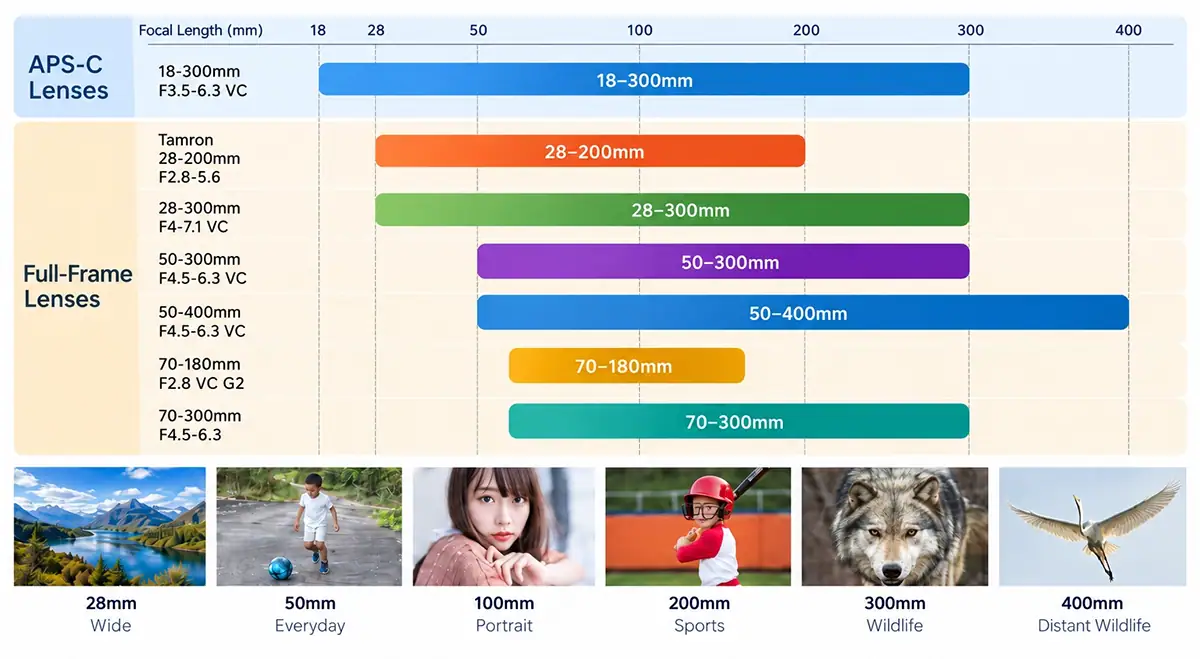
Choose an all-in-one when one lens has to cover wide-angle scenes and distant subjects, as the APS-C 18-300mm does. Choose a dedicated telephoto when you mainly shoot distant or fast-moving subjects. The 70-180mm G2 adds constant F2.8 for indoor sports, and the 70-300mm is the lightest telephoto here at 19.2 oz (545g).
Tamron 18-300mm vs 70-300mm: Which Fits Your Camera?
Choose the Tamron 18-300mm if you shoot APS-C and want one lens for landscapes, portraits, travel, and wildlife, with 27-450mm equivalent coverage on Sony E, Nikon Z, and Fujifilm X. Choose the 70-300mm if you shoot full-frame Sony E or Nikon Z and mainly photograph wildlife or sports. It weighs just 19.2 oz (545g).
On Sony, Nikon, and Fujifilm APS-C cameras, the 18-300mm provides approximately 27-450mm full-frame-equivalent coverage. On Canon RF APS-C cameras, the equivalent range is approximately 28.8-480mm.
The 70-300mm works on Sony E and Nikon Z full-frame cameras and can also be used on compatible APS-C bodies for 105-450mm equivalent coverage. However, it does not offer the wide-angle coverage of the 18-300mm.
For someone who primarily photographs wildlife or sports with a full-frame camera, the 70-300mm is a compact telephoto option. For an APS-C photographer seeking landscapes, portraits, travel, and wildlife in one lens, the 18-300mm provides greater versatility.
Tamron 28-300mm vs 70-300mm and 50-300mm
Choose the Tamron 28-300mm if you want one lens from wide-angle to 300mm, with a 10.7x zoom and VC stabilization. Choose the 50-300mm for close-up work, with 1:2 magnification and VC. Choose the 70-300mm if you want the lightest option at 19.2 oz (545g) or need Nikon Z. All three reach 300mm.
- The 28-300mm weighs 21.5 oz (610g), offers a 10.7x zoom ratio, and includes VC stabilization.
- The 50-300mm weighs 23.5 oz (665g), provides a 6x zoom range, and also includes VC. Its minimum focusing distance of 8.7″ (0.22m) and 1:2 maximum magnification make it especially useful for close-up subjects.
- The 70-300mm is the lightest of the three at 19.2 oz (545g), with a more conventional telephoto range.
Mount compatibility also matters. The 28-300mm and 50-300mm are Sony E-mount lenses, while the 70-300mm is available for Sony E and Nikon Z.
The 28-300mm eliminates more lens changes. The 50-300mm and 70-300mm serve photographers who prefer to pair a telephoto with a separate wide-angle or standard zoom.
Tamron 28-200mm vs 70-180mm G2
The Tamron 70-180mm G2 maintains a constant F2.8 aperture through its telephoto range, but that brightness comes with additional weight. It weighs 30.2 oz (855g), compared with 20.3 oz (575g) for the 28-200mm. The 70-180mm G2 also includes VC stabilization, while the 28-200mm provides broader 28-200mm coverage in one lens.
At longer focal lengths, the 28-200mm approaches its F5.6 maximum aperture, while the 70-180mm G2 remains at F2.8.
That difference makes the dedicated telephoto particularly valuable for indoor sports, stage performances, events, and portraits.
For outdoor travel photography, the 28-200mm is considerably more versatile without requiring a second lens.
Photographers comparing the Tamron 28-200mm vs 50-300mm or 50-400mm face a related decision: the dedicated telephotos provide additional reach, reaching 300mm and 400mm respectively, while the 28-200mm offers wider coverage and a lighter carry.
For additional telephoto choices, see Tamron’s dedicated telephoto zooms compared (coming soon).
On APS-C: Tamron 18-300mm vs 17-70mm
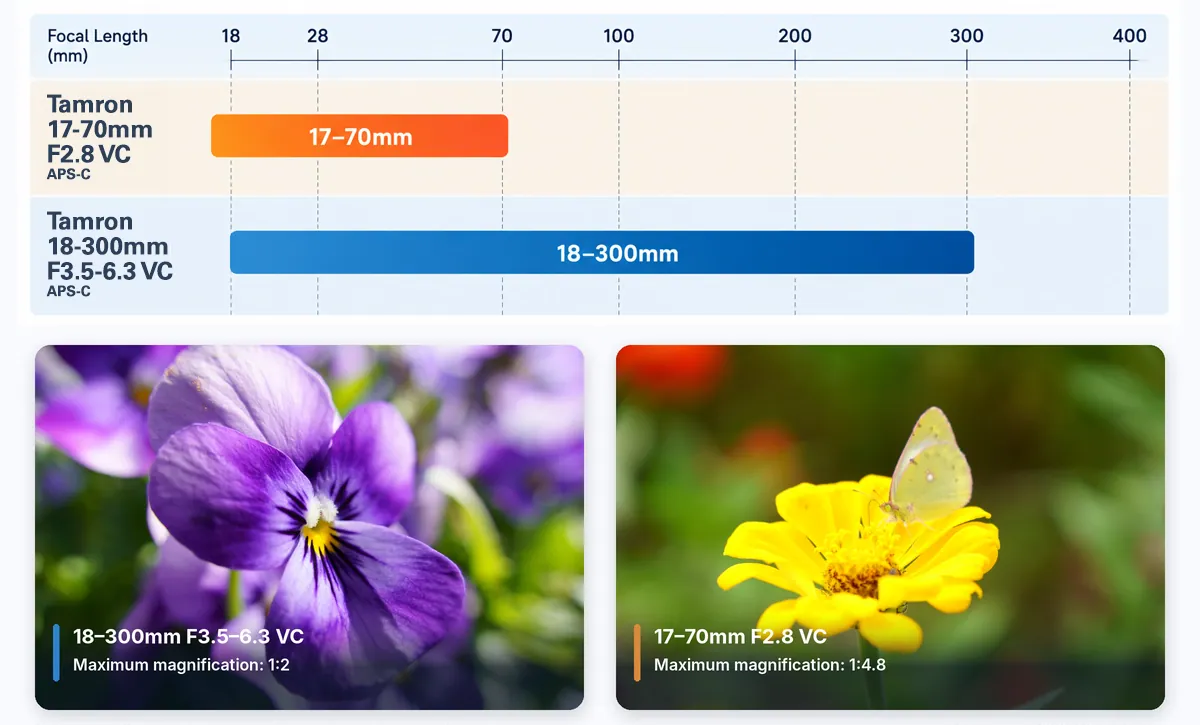
For APS-C photographers, choosing between the Tamron 18-300mm and 17-70mm is primarily a decision between zoom range and aperture. The 18-300mm offers a 16.6x range with an F3.5-6.3 variable aperture, while the 17-70mm provides 4.1x coverage with constant F2.8. Both include VC stabilization and moisture-resistant construction, and both support Sony E, Canon RF, Fujifilm X, and Nikon Z cameras.
What each covers in full-frame terms
On Sony, Nikon, and Fujifilm APS-C cameras, the Tamron 17-70mm provides a field of view equivalent to approximately 25.5-105mm, while the 18-300mm covers approximately 27-450mm. Canon RF APS-C photographers get slightly different equivalents because of the camera’s 1.6x crop factor: 27.2-112mm and 28.8-480mm respectively.
The 17-70mm is slightly wider at the short end, which helps with interiors, architecture, and landscapes.
The 18-300mm reaches significantly farther, making it more versatile for wildlife, distant landscapes, outdoor activities, and travel.
This is the APS-C equivalent of the aforementioned 28-200mm versus 28-75mm G2 comparison: choose extended reach or prioritize consistent aperture. Link back to H2 above: Tamron 28-200mm vs 28-75mm G2: What Do You Give Up? above
Close focus goes to the all-in-one
The Tamron 18-300mm offers stronger close-up magnification than the 17-70mm, challenging the assumption that an all-in-one zoom necessarily compromises on close-focusing performance. At 18mm, it focuses as close as 5.9″ (0.15m) and achieves a maximum magnification ratio of 1:2. The 17-70mm reaches 1:4.8 at its wide end.
That makes the 18-300mm particularly interesting for photographing flowers, food, textures, and small travel details without carrying an additional close-up lens.
The 17-70mm remains the better fit when constant F2.8 matters for low-light photography, portraits, and video.
For APS-C users, the choice is not simply between an everyday lens and a travel lens. Both are highly capable everyday zooms with different creative strengths.
Which Setup Should You Buy?
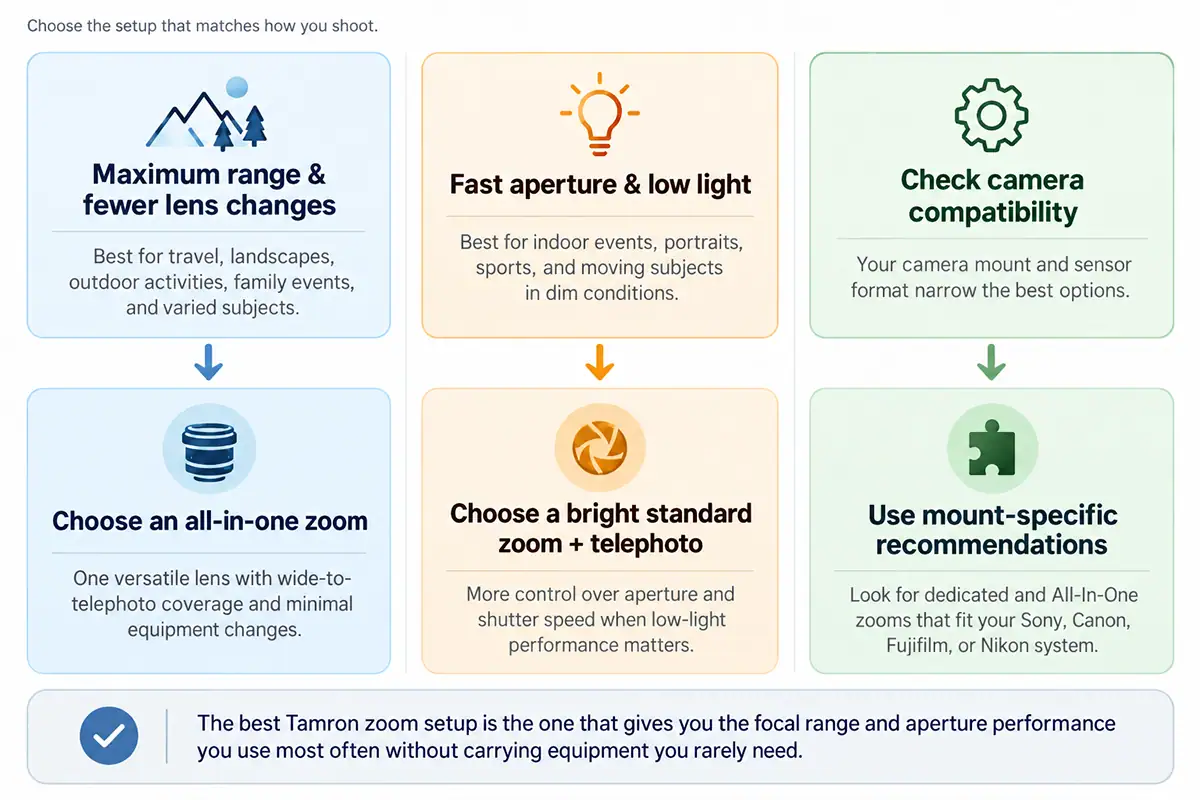
Choose a Tamron all-in-one zoom when wide-to-telephoto coverage, portability, and fewer lens changes are your priorities. Choose dedicated zooms when constant aperture, low-light capability, or specialized telephoto performance matters more. Camera mount and sensor format narrow the available options, while the subjects you photograph determine which trade-offs are worth making.
- Choose an all-in-one zoom if: You primarily photograph travel, landscapes, outdoor activities, family events, and varied subjects, and want one versatile lens with minimal equipment changes.
- Choose a bright standard zoom plus a telephoto if: You frequently photograph indoor events, portraits, sports, or moving subjects in low light and need more control over aperture and shutter speed.
- Let your camera mount guide you if: You use a Nikon Z full-frame camera, where Tamron’s dedicated zoom lineup provides the available choices; or a Canon RF or Fujifilm X APS-C camera, where the 18-300mm and 17-70mm offer two distinct approaches.
The best Tamron zoom setup is the one that delivers the focal range and aperture performance you use most often without requiring you to carry equipment you rarely need.
Find the Right Tamron Setup for How You Shoot
Once you have identified whether focal-range flexibility or a brighter maximum aperture matters most, compare the full specifications for the lenses that fit your camera.
- For a versatile Sony full-frame travel setup, consider the 25-200mm F2.8-5.6 G2 or 28-200mm F2.8-5.6.
- For low-light photography, explore the 28-75mm F2.8 G2, 35-150mm F2-2.8, or 70-180mm F2.8 G2.
- APS-C photographers can compare the 18-300mm F3.5-6.3 VC and 17-70mm F2.8 VC to decide whether reach or brightness better fits their photography.
Where to Buy Tamron Lenses
Learn about these Tamron lenses and more at an authorized Tamron dealer near you or shop directly at the official TAMRON Store.
Frequently Asked Questions About All-in-One vs Dedicated Zoom Lenses
Are all-in-one zoom lenses as sharp as dedicated zoom lenses?
Modern all-in-one zooms can deliver excellent image quality across a broad focal range. Dedicated zoom lenses may offer optical advantages in their intended ranges, particularly when paired with wider apertures or more specialized designs. Actual sharpness depends on the specific lens, focal length, aperture, focusing accuracy, and shooting conditions rather than zoom ratio alone.
Is a constant F2.8 zoom better than an all-in-one for low-light photography?
A constant F2.8 zoom generally offers greater low-light flexibility because it maintains the same maximum aperture throughout its range. This helps photographers use faster shutter speeds or lower ISO settings when zooming in. An all-in-one can still perform well in low light, particularly at its wider focal lengths, but maximum aperture usually becomes smaller toward the telephoto end.
Is it better to carry one zoom lens or two when traveling?
One all-in-one zoom is often preferable when minimizing gear and avoiding lens changes matter most. A two-lens setup may be better if you frequently photograph both low-light scenes and distant subjects. Consider the combined weight of the lenses, the likelihood of changing lenses in the field, and whether the added aperture flexibility will improve the photographs you take.
Can an all-in-one zoom replace a dedicated telephoto lens for wildlife photography?
An all-in-one zoom can be an excellent wildlife option when subjects are reasonably close and lighting is sufficient. Tamron’s 18-300mm, 28-300mm, and other extended-range zooms offer useful reach. Dedicated telephoto lenses may be preferable for distant wildlife, faster shutter speeds in challenging light, or situations where longer focal lengths and specialized handling are priorities.
Do all Tamron all-in-one zoom lenses have image stabilization?
No. Tamron’s 18-300mm F3.5-6.3 VC and 28-300mm F4-7.1 VC include in-lens Vibration Compensation. The 25-200mm F2.8-5.6 G2 and 28-200mm F2.8-5.6 do not include VC. Photographers using lenses without VC may benefit from in-body image stabilization when their camera supports it. Stabilization reduces camera shake but does not freeze moving subjects.
Can I use a Tamron APS-C all-in-one zoom lens on a full-frame camera?
Some full-frame mirrorless cameras can use compatible APS-C lenses in a crop mode, but the lens will not cover the full sensor area in the same way as a full-frame lens. This may reduce usable image resolution. For full-frame photography, choose a lens designed to cover the full-frame sensor and confirm compatibility with the camera mount.
Which Tamron zoom should I choose for both photography and video?
Hybrid creators should consider focal range, aperture consistency, autofocus performance, stabilization, and overall handling. The 17-70mm F2.8 VC offers a constant aperture and stabilization for APS-C cameras, while the 28-75mm F2.8 G2 provides a compact full-frame standard zoom. An all-in-one may be preferable when changing lenses interrupts filming or capturing spontaneous moments.
About the Author
 Stacie Errera is Vice President of Marketing and Communications for Tamron Americas, where she has been with Tamron for more than 36 years. She is also a photography educator who teaches new camera users how to better understand their cameras and photography basics. She leads weekend photography workshops for women. Read Stacie’s full bio >>