Instant Savings
 Rebate Claims
 Support
 Find a Dealer
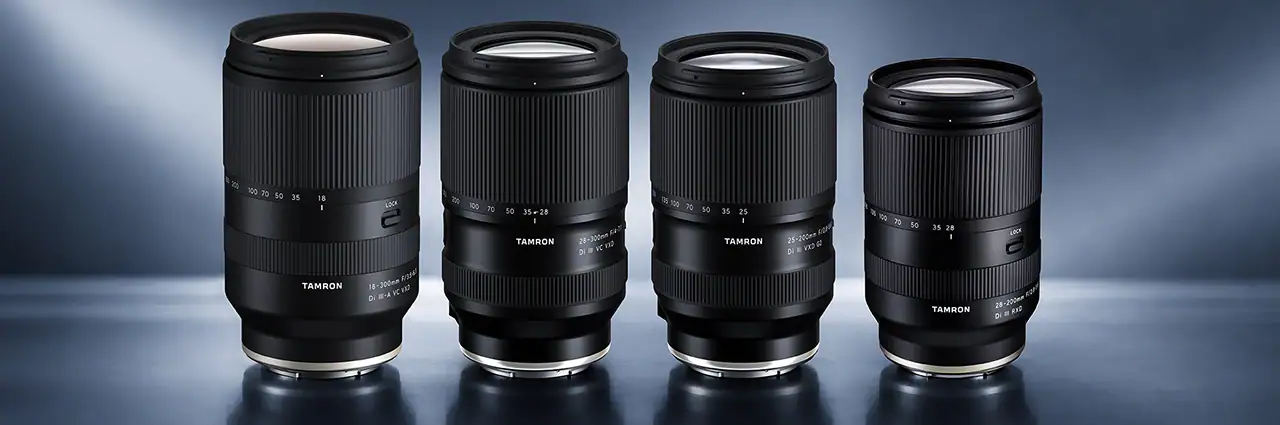
The right Tamron all-in-one zoom depends first on your camera. The 18-300mm is designed for APS-C mirrorless cameras, while the 25-200mm G2, 28-200mm, and 28-300mm are full-frame lenses for Sony E-mount. Compare their wide-angle coverage, telephoto reach, autofocus, and close-focusing capabilities to find the best match for your photography.
An all-in-one zoom is a single lens that covers wide-angle through telephoto focal lengths. You can photograph a landscape, a portrait, and a distant subject without changing lenses. Photographers also call these superzoom or travel zoom lenses.
All four Tamron lenses in this guide share that versatility, but each serves a different photographer. Some emphasize maximum zoom range. Others offer a brighter maximum aperture or stronger close-up performance.
This guide compares the current Tamron all-in-one zoom lineup and explains how newer mirrorless lenses differ from older DSLR superzooms, including the Tamron 18-200mm, 18-270mm, and 18-400mm.
Table of Contents
- Which Tamron All-in-One Zoom Fits Your Camera?
- Tamron All-in-One Zooms Compared: Full Specifications
- Tamron 25-200mm vs 28-200mm: Which Should You Buy?
- Comparing Across the Lineup: 18-300mm, 28-200mm and 28-300mm
- Should You Upgrade From an Older Tamron Superzoom?
- Which Tamron All-in-One Zoom Should You Buy?
Which Tamron All-in-One Zoom Fits Your Camera?
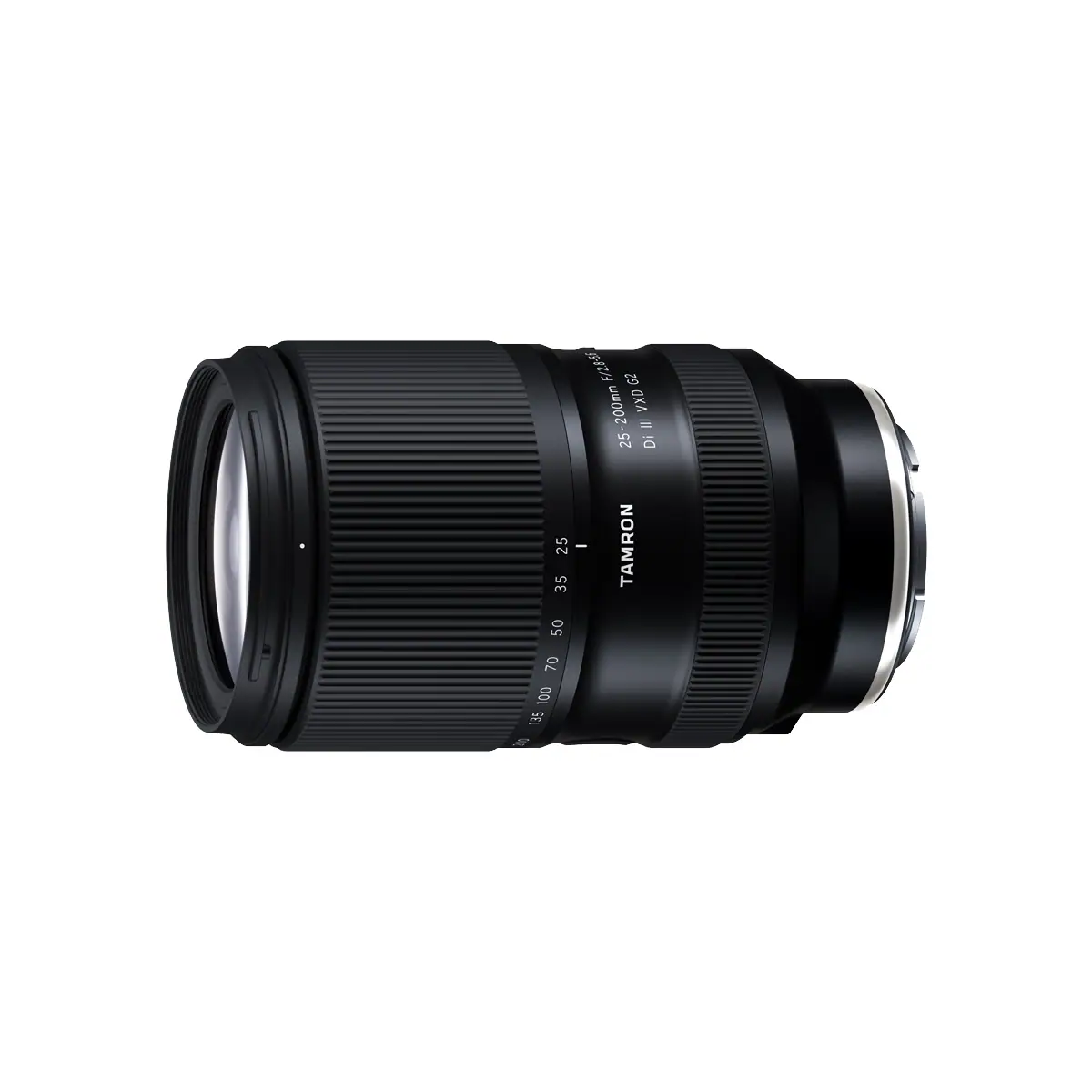
The first step in choosing a Tamron all-in-one zoom is identifying your camera’s sensor format and lens mount. The 18-300mm is designed for APS-C mirrorless systems, while the 25-200mm G2, 28-200mm, and 28-300mm cover full-frame Sony E-mount cameras. Choosing by compatibility first prevents purchasing a lens that does not provide the coverage you expect.
If You Shoot APS-C Mirrorless: Sony E, Canon RF, Fujifilm X, or Nikon Z

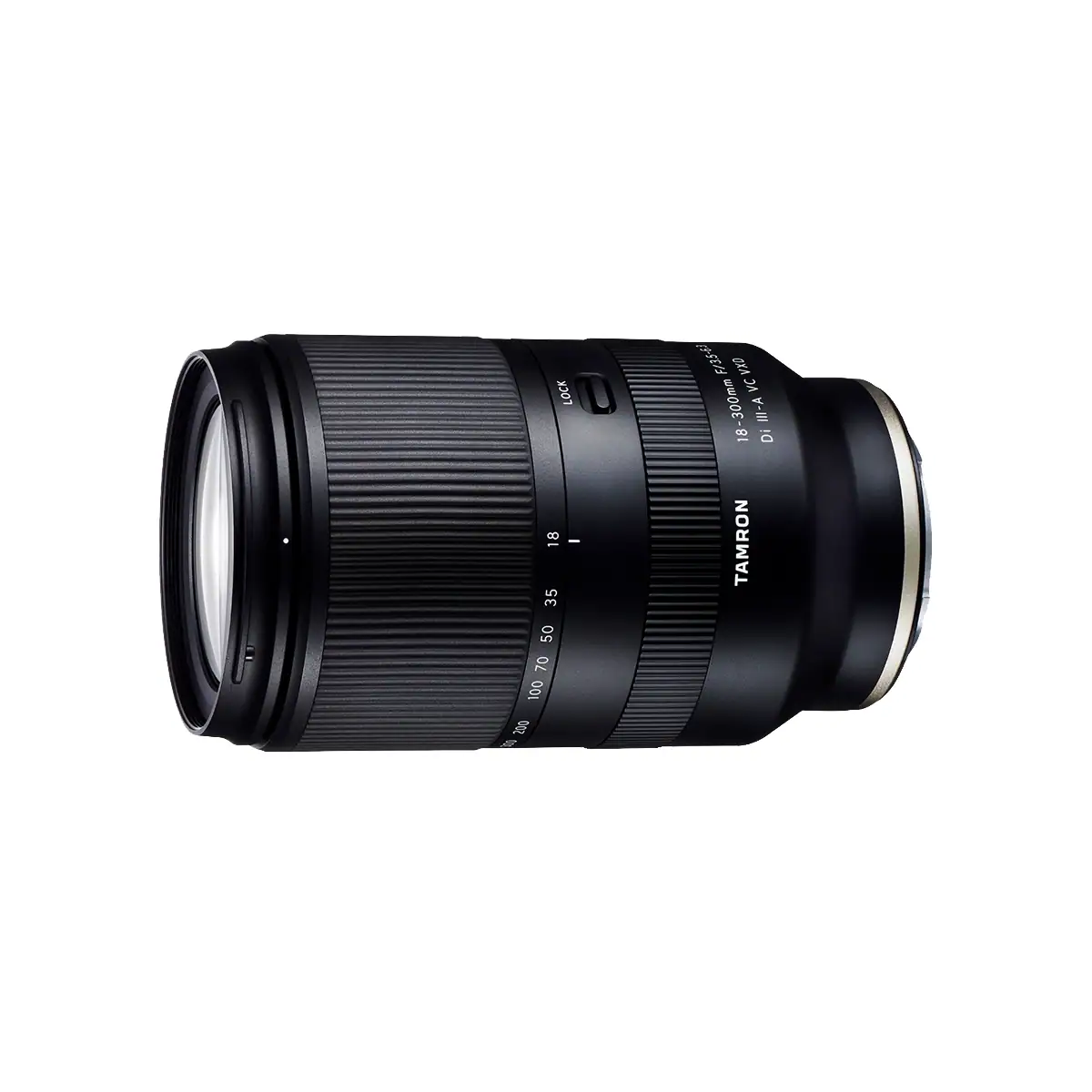
The Tamron 18-300mm F/3.5-6.3 Di III-A VC VXD (Model B061) is Tamron’s all-in-one zoom designed specifically for APS-C mirrorless cameras. Available for Sony E, Canon RF, Fujifilm X, and Nikon Z mounts, it delivers an extensive 16.6x zoom range that covers landscapes, portraits, travel, sports, and distant wildlife.
The equivalent field of view depends on the camera system:
These combinations work well for portraits and telephoto photography, but they start at a much narrower field of view than the APS-C 18-300mm.
For photographers who want one lens to handle wide landscapes, indoor scenes, portraits, and distant subjects, retaining an 18mm starting focal length is often more practical.
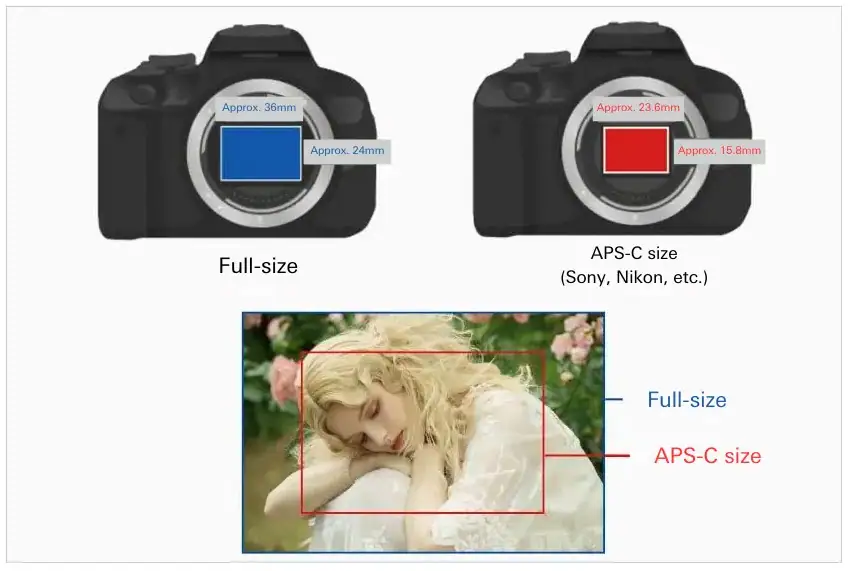
It is also important to understand that a full-frame lens does not change its actual focal length when mounted on an APS-C camera. The narrower framing results from the camera’s smaller sensor.
For more detail, read our guide to wide-angle vs. telephoto lenses.
Tamron All-in-One Zooms Compared: Full Specifications
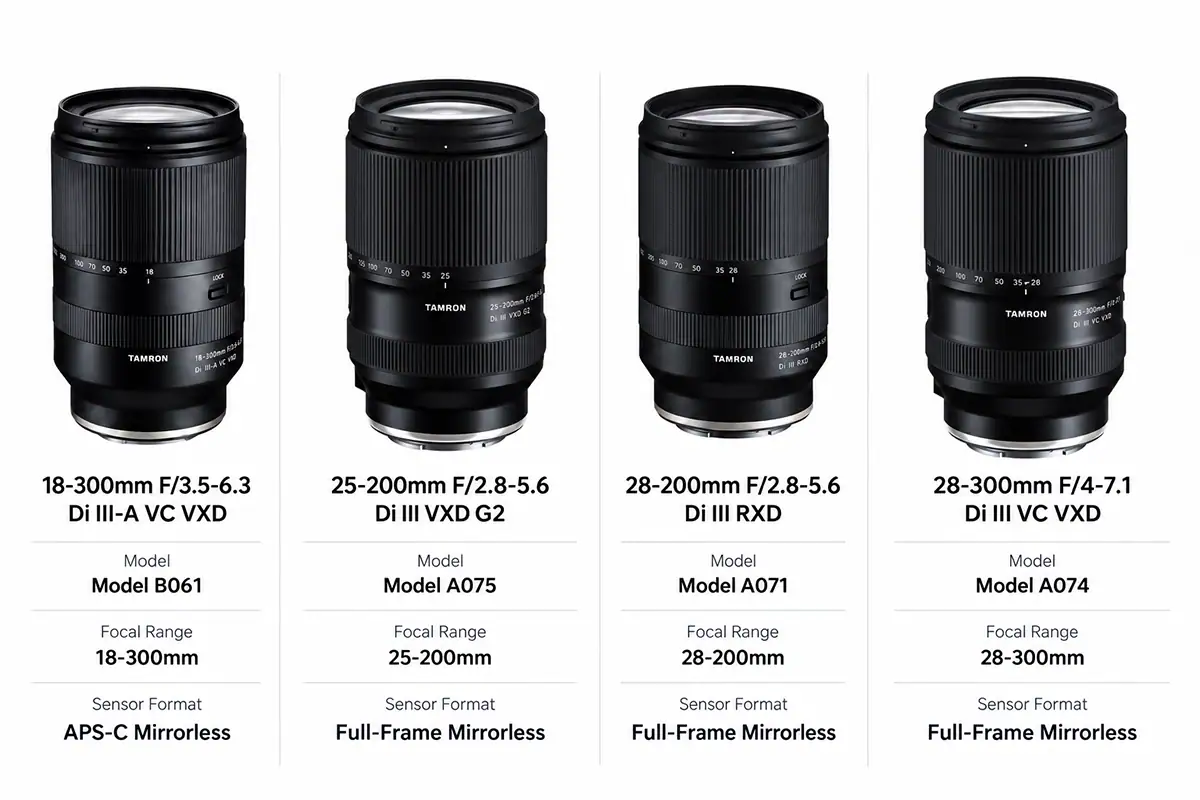
- The 18-300mm provides the largest zoom ratio at 16.6x. This is particularly valuable for APS-C photographers photographing subjects at widely varying distances.
- The 25-200mm G2 and 28-200mm share the same F2.8-5.6 maximum aperture range, 200mm telephoto reach, 67mm filter size, and 20.3oz (575g) weight. Their principal differences involve wide-angle coverage, autofocus design, close-focusing performance, and controls.
- The 28-300mm has the longest telephoto reach among the full-frame options, extending to 300mm. Its VC stabilization reduces camera shake when shooting handheld at longer focal lengths.
- All four lenses feature Moisture-Resistant Construction and a protective fluorine coating, supporting photography in a range of outdoor conditions.
What’s the Difference Between VXD and RXD Autofocus?

Tamron 25-200mm vs 28-200mm: Which Should You Buy?
Buy the Tamron 25-200mm G2 if you want wider 25mm framing, VXD linear motor autofocus, and stronger close-up magnification. Choose the 28-200mm if a shorter barrel matters more. Both lenses reach 200mm, share an F2.8-5.6 aperture range, use 67mm filters, and weigh 20.3oz (575g). These two Sony E-mount full-frame lenses are particularly important to compare because they share much of the same functionality while offering different features and generations of technology.What Does 25mm at the Wide End Actually Change?
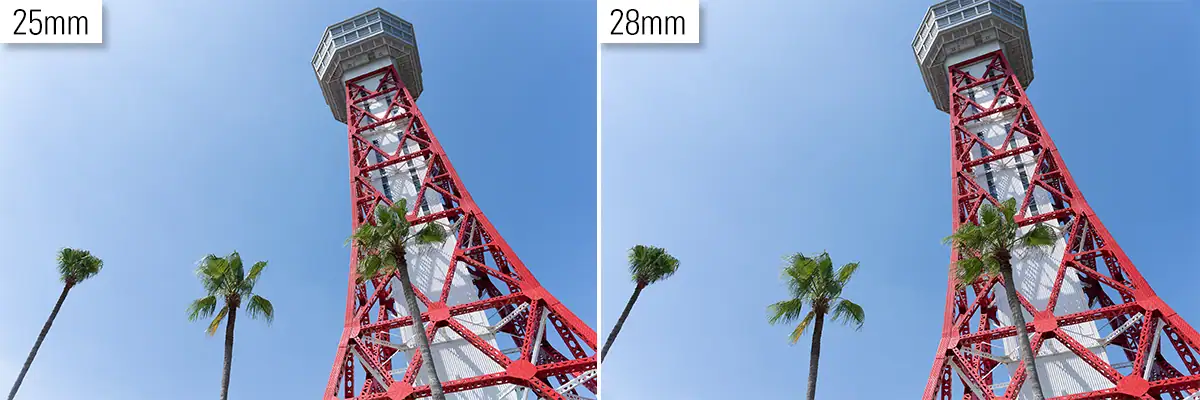
Starting at 25mm instead of 28mm provides a noticeably wider field of view. Although the difference is only 3mm, those millimeters matter most at short focal lengths, where a small change can include substantially more of a landscape, interior, building, or environmental portrait without requiring the photographer to step backward.
On full-frame cameras, the diagonal angle of view increases from approximately 75.4° at 28mm to 81.7° at 25mm.
That difference is useful in several common situations.
- When photographing architecture, 25mm can include more of a building or interior from the same position.
- For travel photography, it provides more flexibility when working on narrow streets, crowded viewpoints, or in spaces where moving backward is impossible.
- For landscapes, the wider framing fits more foreground into the shot without cropping out the surrounding scenery.
At 200mm, however, both lenses provide the same telephoto reach. Photographers shooting portraits, distant architectural details, or wildlife at longer focal lengths retain the same maximum framing capability.
For a broader explanation of field of view, read What Is Focal Length?.
The 25-200mm G2 achieves its wider starting focal length without increasing the weight compared with the original 28-200mm. Both weigh 20.3oz (575g), although the G2 is 0.2” (4.5mm) longer.
How Much Better Are the G2’s Autofocus and Close-Focusing Capabilities?
The 25-200mm G2 introduces Tamron’s VXD linear motor autofocus and increases maximum wide-angle magnification from 1:3.1 to 1:1.9. Its minimum focusing distance is also shorter, improving from 7.5” (0.19m) on the 28-200mm to 6.3” (0.16m). These changes provide additional flexibility for close-up subjects while bringing Tamron’s high-speed, high-precision VXD technology to the all-in-one zoom category.
The differences in close-focusing capability are particularly noteworthy.
At the wide end, the 25-200mm G2 reaches approximately 1:1.9 maximum magnification, allowing subjects to be reproduced at slightly more than half life-size on the camera sensor. The 28-200mm reaches 1:3.1.
Get Even Closer With Firmware Update
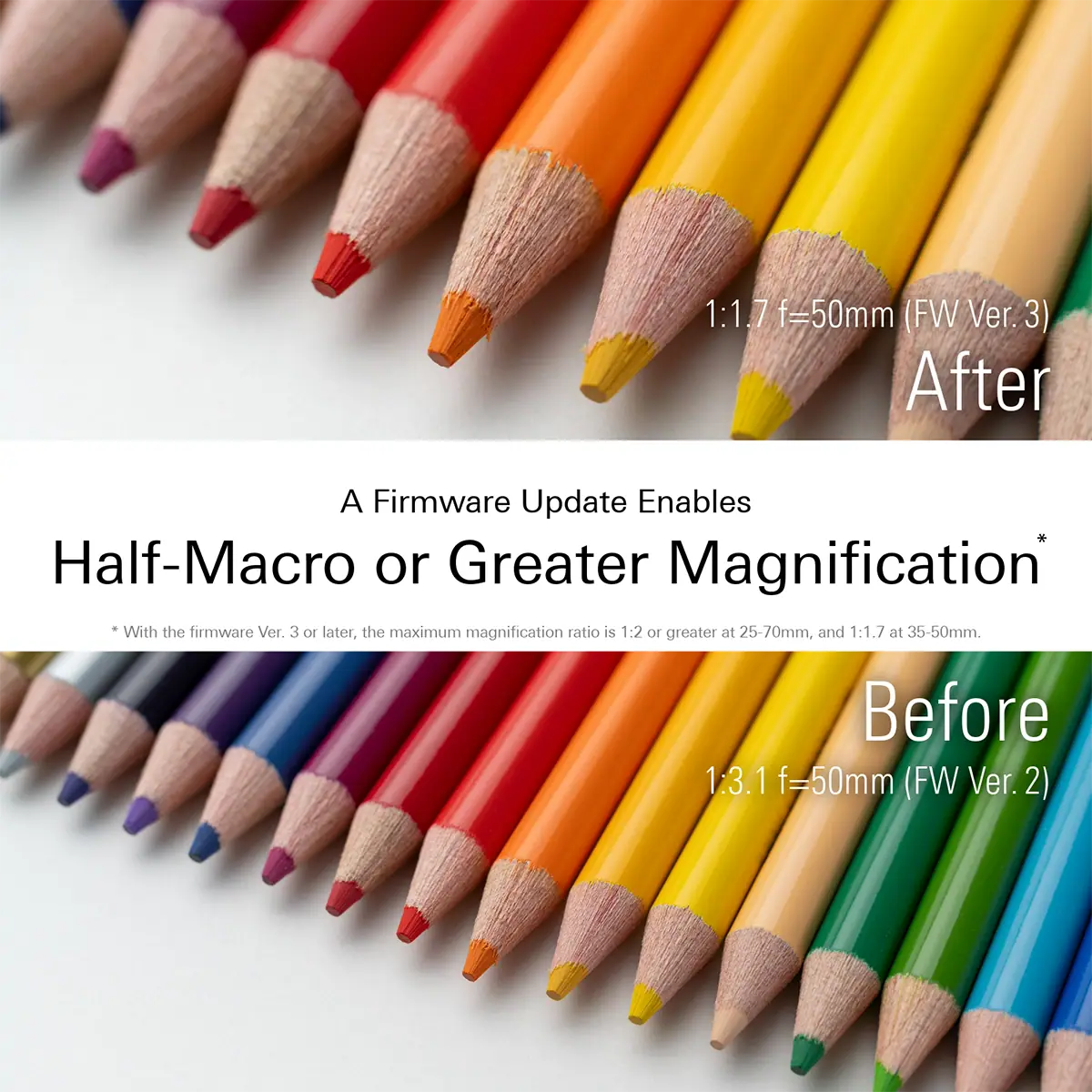
With lens firmware version 3 or later, the 25-200mm G2 can achieve an even greater maximum magnification ratio of 1:1.7 between 35mm and 50mm.
This is especially useful when photographing flowers, small objects, food, textures, and other details encountered during travel or everyday shooting.
Fast Autofocus
The VXD system is designed for responsive focusing and subject tracking, making it well suited for photographing moving subjects such as pets, children, sports, and wildlife.
The original 28-200mm features Tamron’s RXD stepping motor, which provides fast, quiet, and precise autofocus for still photography and video. Both autofocus systems support the versatility expected from an all-in-one lens.
Other updates on the 25-200mm include a nine-blade circular aperture diaphragm, compared with seven blades on the 28-200mm. The G2 also provides additional customization options through Tamron Lens Utility, including a connector port and Focus Set Button.
Both lenses feature Moisture-Resistant Construction and a fluorine coating; the G2 incorporates refinements to its exterior design and construction.
Should Current Tamron 28-200mm Owners Upgrade to the 25-200mm G2?
Upgrade to the 25-200mm G2 if you regularly shoot tight interiors, moving subjects, or close-up details. The G2 adds 25mm wide coverage, VXD linear motor autofocus, and 1:1.9 wide-end magnification. If you rarely shoot those subjects, keep your 28-200mm. It delivers the same 200mm reach, F2.8-5.6 aperture range, and 20.3oz (575g) weight.
The question is whether the features that distinguish the G2 align with how the photographer currently uses the 28-200mm.
- If you often shoot tight interiors or wide landscapes, the 25mm starting focal length gives you more room to compose.
- If you often photograph moving subjects, the VXD autofocus system tracks them more responsively.
- Those who enjoy photographing close-up details can benefit from the G2’s shorter minimum focusing distance and greater magnification.
Meanwhile, the original 28-200mm continues to provide a broad range with F2.8 at the wide end, an RXD autofocus system, and a slightly shorter barrel.
Both remain available as Sony E-mount full-frame all-in-one zoom choices. Reviewing the differences in focal range, autofocus, close focusing, and handling will help existing owners determine which specifications matter most for their photography.
Comparing Across the Lineup: 18-300mm, 28-200mm, and 28-300mm
The Tamron 18-300mm, 28-200mm, and 28-300mm cover different needs despite overlapping focal lengths. The 18-300mm is designed for APS-C mirrorless systems, while the other two are full-frame Sony E-mount lenses. Once compatibility is established, the important differences are maximum telephoto reach, aperture range, stabilization, and close-focusing performance.
Tamron 18-300mm vs 28-300mm: Which Fits Your Sensor?
The Tamron 18-300mm and 28-300mm both reach 300mm, but they are designed for different sensor formats. The 18-300mm is an APS-C lens for Sony E, Canon RF, Fujifilm X, and Nikon Z cameras. The 28-300mm is a full-frame Sony E-mount lens, making camera compatibility the first consideration.
The 18-300mm offers an F3.5-6.3 maximum aperture range and a 16.6x zoom ratio. Its 18mm wide end corresponds to approximately 27mm on Sony, Nikon, and Fujifilm APS-C cameras, while the 300mm end provides the equivalent field of view of 450mm.
The Canon RF version delivers approximately 28.8-480mm equivalent coverage.
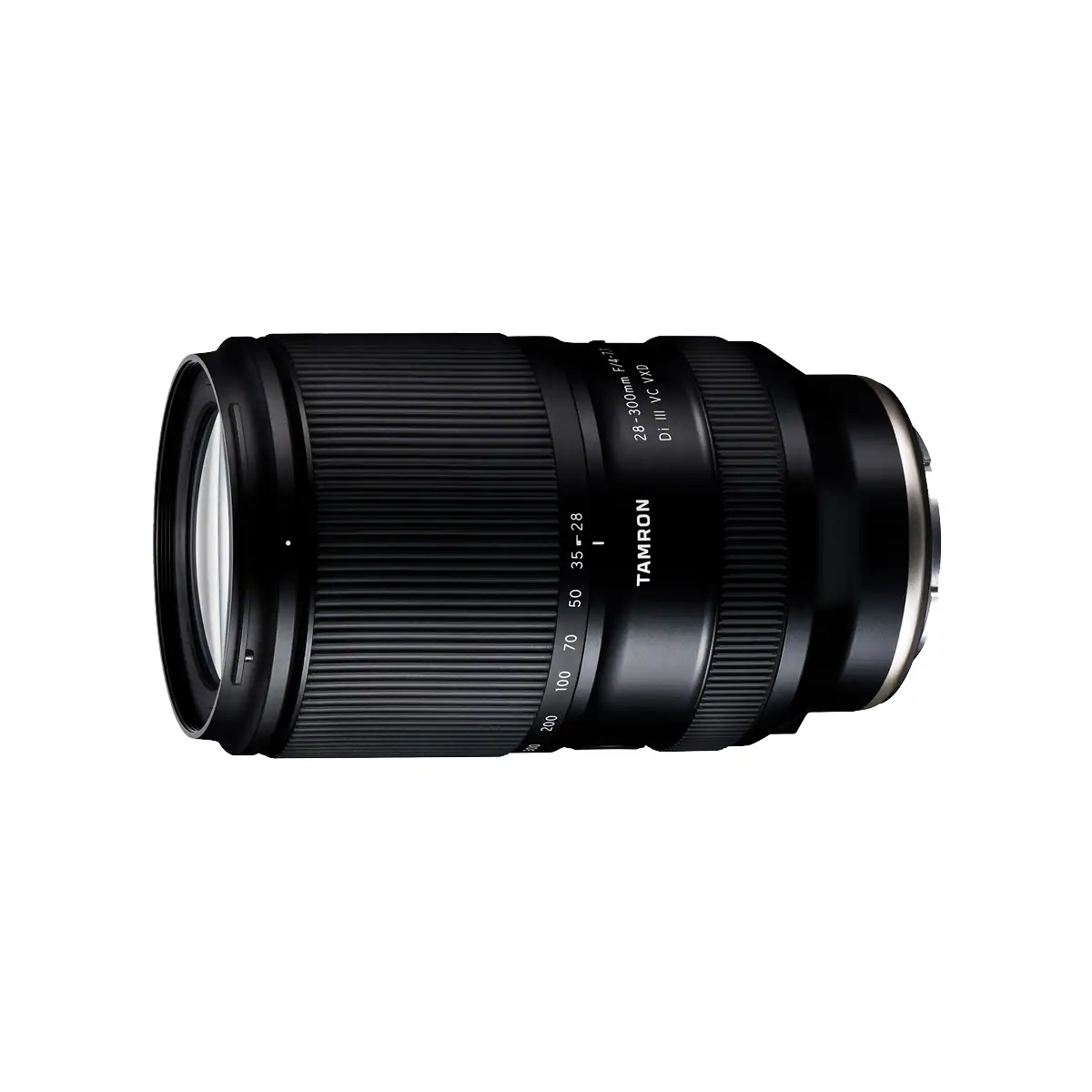
The 28-300mm provides a 10.7x zoom ratio and F4-7.1 maximum aperture on full-frame Sony E-mount cameras. It incorporates VXD autofocus, VC stabilization, a Focus Set Button, and a connector port for Tamron Lens Utility.
Close-focusing performance also differs. The 18-300mm reaches a maximum magnification ratio of 1:2 at its wide end, compared with 1:2.8 for the 28-300mm.
Both provide VC stabilization, Moisture-Resistant Construction, and fluorine coating.
Tamron 18-300mm vs 28-200mm: Comparing Across Sensor Formats
The Tamron 18-300mm and 28-200mm are also designed for different camera formats, so they are not direct alternatives for every photographer. The 18-300mm is an APS-C all-in-one zoom with 16.6x coverage and VC stabilization, while the 28-200mm is a full-frame Sony E-mount lens with an F2.8 maximum aperture at its 28mm wide end.
On Sony APS-C cameras, the 18-300mm provides a field of view equivalent to approximately 27-450mm.
The full-frame 28-200mm can also be mounted on Sony APS-C E-mount bodies, but its effective field of view becomes approximately 42-300mm equivalent.
That means the 18-300mm offers both wider framing and longer equivalent telephoto reach on compatible APS-C systems.
The 28-200mm provides a brighter F2.8 maximum aperture at 28mm, weighs 20.3oz. (575g), and retains full-frame coverage when paired with a full-frame Sony camera.
The better match depends primarily on camera format, followed by the photographer’s priorities for focal range, wide-angle aperture, and portability.
Tamron 28-200mm vs 28-300mm: How Much Reach Do You Need?
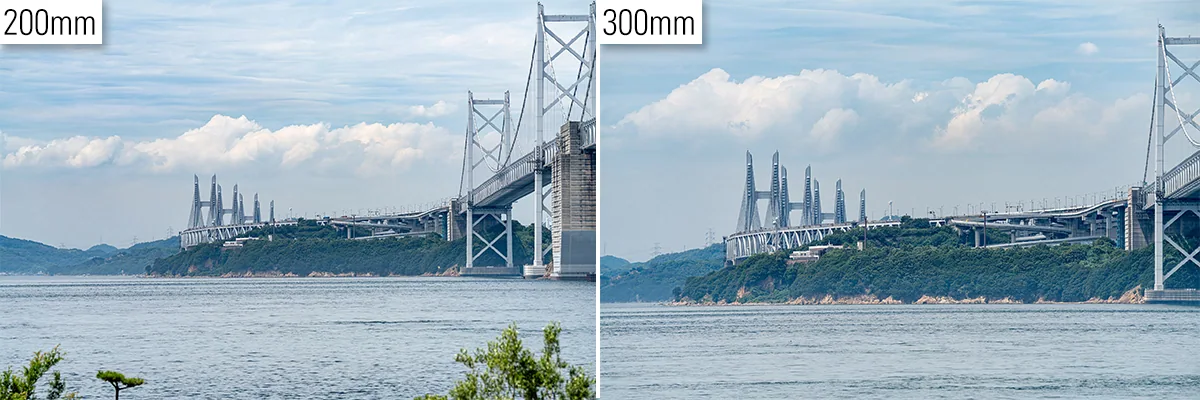
The Tamron 28-200mm and 28-300mm both begin at 28mm on full-frame Sony E-mount cameras, but the 28-300mm extends telephoto reach by another 100mm. The difference comes with a slower maximum aperture of F7.1 at 300mm, compared with F5.6 at 200mm for the 28-200mm.
Both lenses begin at the same wide-angle focal length, making them equally wide when photographing landscapes, architecture, or large groups from the same position.
Their differences become more noticeable when zooming toward distant subjects.
The 28-300mm offers additional flexibility for photographing wildlife, outdoor sports, distant architectural features, and details within a landscape. At 300mm, subjects fill more of the frame than they do at 200mm when photographed from the same position.
The 28-200mm offers an F2.8 maximum aperture at 28mm and F5.6 at 200mm. It weighs 20.3oz (575g) compared with the 28-300mm’s 21.5oz. (610g), and its barrel is shorter.
The 28-300mm includes Tamron VC stabilization and VXD autofocus, while the 28-200mm uses RXD autofocus.
The decision comes down to whether longer telephoto reach and stabilization are more important than the 28-200mm’s brighter maximum aperture and smaller dimensions.
Photographers who spend substantial time photographing distant subjects can also explore Tamron’s telephoto zoom lens options to understand when a dedicated telephoto lens may be beneficial.
Should You Upgrade From an Older Tamron Superzoom?
Photographers moving from an older Tamron DSLR superzoom to a mirrorless camera should compare lens compatibility and design generation before focal length alone. The modern 18-300mm provides a comparable all-in-one experience for APS-C mirrorless systems, with VXD autofocus, close-focusing capability, and broad zoom coverage. Older Tamron DSLR lenses remain relevant for photographers using compatible DSLR cameras.
Tamron has developed all-in-one zoom lenses for decades, with models ranging from compact 18-200mm lenses to the extensive 18-400mm DSLR superzoom. The newer mirrorless designs incorporate technologies developed specifically for modern camera systems.
For an explanation of the differences between all-in-one lenses and more specialized options, see our guide to different types of camera lenses.
Tamron 18-200mm vs 18-300mm: Is the Upgrade Worth It?
Yes, if you are moving to an APS-C mirrorless camera. The 18-300mm adds 100mm of telephoto reach, VXD autofocus, 1:2 close-up magnification, and Moisture-Resistant Construction. If you still shoot a compatible DSLR and prioritize low weight, the 18-200mm remains about 7.8oz (220g) lighter.
The distinction involves more than zoom range. These lenses were developed for different generations of camera systems.
The older Tamron 18-200mm F/3.5-6.3 Di II VC (Model B018) was introduced in 2015 as a lightweight APS-C DSLR zoom. It provided an 11.1x zoom ratio, spanning wide-angle through telephoto in one lens.
The newer Tamron 18-300mm F/3.5-6.3 Di III-A VC VXD (Model B061) was introduced in 2021 for APS-C mirrorless cameras. It expands the zoom ratio to 16.6x while offering updated autofocus technology and much greater close-up capabilities.
One of the most significant differences is telephoto coverage.
On an APS-C camera with a 1.5x crop factor, the 18-200mm provides a field of view equivalent to approximately 27-300mm. The newer 18-300mm extends that equivalent range to approximately 27-450mm.
For photographers capturing wildlife, sports, travel details, or distant subjects, the additional reach offers more opportunities to frame subjects tightly without changing lenses.
The 18-300mm also introduces VXD linear motor autofocus, designed for fast and precise focusing. This is particularly useful when paired with the advanced subject-detection and tracking features available in many mirrorless cameras.
Close-up photography is another distinction.
The 18-300mm focuses as close as 5.9” (0.15m) at 18mm, providing a maximum magnification ratio of 1:2. This allows photographers to explore flower details, textures, food photography, and other small subjects without switching lenses.
However, the 18-200mm remains considerably lighter. If you still shoot a compatible DSLR, its 14.1oz (400g) weight makes it an easy lens to carry for travel and everyday photography.
The older 18-200mm DSLR versions are no longer available from Tamron. Photographers transitioning to mirrorless systems should therefore review current lens compatibility rather than selecting a lens solely because its focal range is familiar.
Tamron 18-300mm vs 18-400mm: Which Has More Reach?
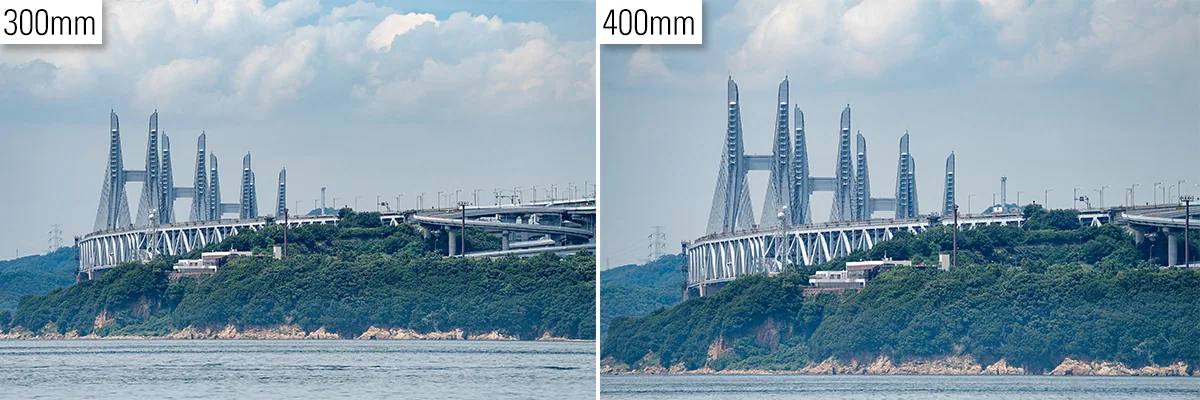
The Tamron 18-400mm F/3.5-6.3 Di II VC HLD provides more telephoto reach than the 18-300mm, extending to 400mm instead of 300mm. However, the 18-400mm is an older APS-C DSLR lens, while the 18-300mm is designed for APS-C mirrorless cameras. Mount compatibility is therefore more important than comparing focal lengths alone.
Introduced in 2017, the Tamron 18-400mm (Model B028) offers an unusually broad 22.2x zoom ratio. On Canon APS-C cameras, its maximum equivalent field of view reaches approximately 640mm, while Nikon APS-C cameras provide approximately 600mm equivalent coverage depending on the camera’s crop factor.
The newer 18-300mm features a 16.6x zoom ratio and provides approximately 450mm equivalent reach on Sony, Fujifilm, and Nikon APS-C mirrorless cameras, or 480mm on Canon RF APS-C.
Both lenses provide VC image stabilization, but their design characteristics differ.