Instant Savings
 Rebate Claims
 Support
 Find a Dealer


Cameras with APS-C sensors are more compact and handy than cameras with full-frame sensors, and they are widely used by both beginners and professionals. On the other hand, there are some surprising differences between APS-C vs full frame cameras—especially when it comes to image quality, lens choices, and shooting situations.
This article explains what is APS-C, the main differences between APS-C and full-frame cameras, the advantages of APS-C, and how to choose the right lenses for your photography style.
What You’ll Learn In This Article:
- The key differences between APS-C and full-frame sensors (size, image quality, depth of field, and more).
- How crop factor affects focal length, telephoto reach, and your choice of lenses.
- The main advantages of APS-C cameras for beginners, travelers, and wildlife photographers.
- Which shooting situations are best suited for APS-C vs full frame (portraits, landscapes, sports, astrophotography).
- How to choose the right lens for an APS-C camera, including 35mm equivalent focal length conversion, aperture, and stabilization.
What is APS-C Sensor Size?

APS-C is one of the most common camera sensor sizes for interchangeable-lens mirrorless cameras. Understanding sensor formats is part of your broader camera fundamentals. For those wondering about APS-C camera meaning, it simply refers to this popular sensor format that originated from the APS-C (Advanced Photo System type-C) film format, which had a similar frame size of about 24mm x 16mm.
However, since there is no strict size standard, APS-C sensor dimensions vary slightly by manufacturer. For example:
- Nikon (DX format) and Sony APS-C sensors are about 23.6mm x 15.8mm.
- Canon APS-C sensors are slightly smaller at about 22.3mm x 14.9mm.
By comparison, a full-frame camera sensor measures about 36mm x 24mm—roughly the size of traditional 35mm film.
APS-C vs Full Frame: Key Differences
Among interchangeable-lens cameras, crop sensor vs full frame dominate the market. Here’s how they compare in important areas like sensor size, angle of view, depth of field, and performance.
Sensor Size
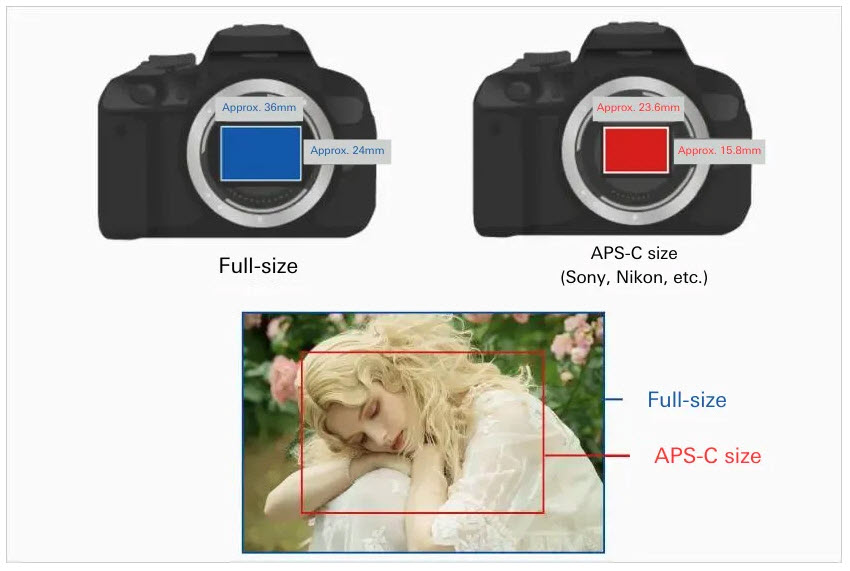
There is a big difference in camera sensor sizes between full-frame and APS-C size cameras.
- Full Frame: ~36 mm x 24 mm
- APS-C: ~23.6 mm x 15.8 mm
This difference impacts angle of view, depth of field, and low-light performance.
Angle of View and Crop Factor

When using the same lens from the same position, an APS-C camera captures a narrower field of view. This is due to the crop factor explained, typically around 1.5x–1.6x. This crop creates a telephoto-like effect, making subjects appear closer.
As a result, using full-frame camera lenses on an APS-C camera can be especially appealing.
Depth of Field and Bokeh
When shooting the same subject at the same angle of view, a full-frame camera produces stronger background blur (bokeh) compared to an APS-C camera. This is because the smaller APS-C sensor creates a deeper depth of field.
- Full-frame cameras produce shallower depth of field and stronger background blur.
- APS-C cameras deliver deeper depth of field, which can help keep more of the scene in focus.
What is depth of field? Depth of field refers to the area that appears to be in focus in a photograph, and since the APS-C size sensor has a wider area in focus than the full-size sensor, the amount of blur in the background appears smaller.
Dynamic Range and Image Quality
Full-frame sensors usually offer a wider dynamic range, capturing smoother transitions between light and shadow. APS-C sensors can still deliver excellent image quality but highlights and shadows may clip more quickly.
What is dynamic range? The range of brightness and darkness that can be recognized by the sensor is called dynamic range. The wider the dynamic range, the less likely it is that whites will be blown out or blacks will be blurred, and the more beautifully and smoothly light/dark differences and gradations (tones) can be expressed in a single photo. Generally, the larger the sensor size, the wider the dynamic range.
Low-Light and High ISO Performance
Because full-frame sensors gather more light, they generally perform better at high ISOs with less noise. APS-C cameras can still achieve good results, especially with modern sensor technology.
What is ISO sensitivity? ISO sensitivity refers to how responsive a camera’s sensor (or film in traditional photography) is to light. A lower ISO value (like 100) means less sensitivity, ideal for bright conditions and producing cleaner images with less noise, while a higher ISO (like 3200 or above) increases sensitivity, useful in low light but often introduces more grain or digital noise.
Size and Weight
APS-C cameras and lenses are usually lighter and more compact than full-frame systems due to their smaller sensor sizes. This makes them a favorite for travel, hiking, and street photography.
However, with recent technological advances, many full-frame cameras are now available in compact and lightweight designs. This means that ‘full-frame camera = large and heavy’ is no longer always true.
Advantages of APS-C Cameras
Despite the reputation of full frame as “professional,” APS-C has unique strengths that appeal to many photographers.
1. Telephoto Reach (Crop Factor Advantage)
As mentioned above, the angle of view of an APS-C size camera is narrower than that of a full-size camera, and the subject appears greatly magnified (when shot from the same position with a lens of the same focal length).
This telephoto lens-like feature has led some professional wildlife photographers to choose APS-C size cameras since the crop factor effectively extends your 35mm equivalent focal length. For example, a 300mm full-frame lens behaves like a 450mm on an APS-C camera—ideal for sports, wildlife, and bird photography.
2. Compact and Lightweight Setup
APS-C bodies and lenses are generally smaller, which means less strain during long shoots and easier packing for travel.
3. Affordable and Beginner-Friendly
APS-C cameras tend to cost less than full-frame models, making them more affordable cameras for beginners without sacrificing quality. APS-C lenses are also tend to be more reasonably priced than their full-size counterparts. This has the advantage of making it easy for people who are new to interchangeable-lens cameras to get started.
Also, as mentioned above, APS-C cameras are compact, lightweight, and easy to handle, making them convenient to carry anywhere.
When to Choose APS-C vs Full Frame
Each sensor type excels in certain scenarios.
Many people assume that APS-C cameras are inferior to full-frame cameras in image quality, but modern APS-C sensors can produce photos of such high quality that the difference is barely noticeable unless you closely examine the details.
Portraits and Street Photography

APS-C cameras make it easy to emphasize the subject thanks to the crop factor, which creates a narrower angle of view or telephoto effect. This makes APS-C cameras especially useful for portraits, street photography, or capturing family and friends at events.
Full-frame cameras excel at creating a shallower depth of field, resulting in stronger and more dramatic background blur (bokeh).
Sports and Action

The telephoto boost of APS-C helps capture sports and fast-moving action. Even from a distant spectator’s seat, you can take a powerful picture of a child that fills the entire frame.
And the compact size of the APS-C size camera and telephoto lens can help reduce fatigue even after long hours of shooting.
Travel and Landscape Photography

APS-C systems are easier to carry and can keep more of the scene in focus with the deeper depth of field it delivers, great for landscapes and travel.
Astrophotography and Night Photography

Full frame has the advantage in extreme low light, but APS-C can still capture moon and astrophotography photos beautifully, especially with the right lens and tripod.
Wildlife and Bird Photography

APS-C cameras paired with full-frame telephoto zoom lenses (like a 150–500mm) offer incredible effective reach without the bulk of full-frame super-telephoto lenses.
Wildlife photography, and specifically bird photography, generally requires an ultra-telephoto lens of approximately 300mm (35mm format equivalent) or more. So, an ultra-telephoto zoom like the Tamron 150-500mm F5-6.7 is required. When this lens is used with an APS-C size camera, it provides a focal length equivalent to 225-750mm (35mm film equivalent).
How to Choose the Best Lens for Your APS-C Camera
Selecting the right lens is just as important as choosing between APS-C vs full frame. Here’s what to consider:
Full Frame vs APS-C Lenses
Lenses are often designed specifically for full-frame or APS-C sensors. Make sure you know which format your lens supports.
Crop Factor and 35mm Equivalent Focal Length
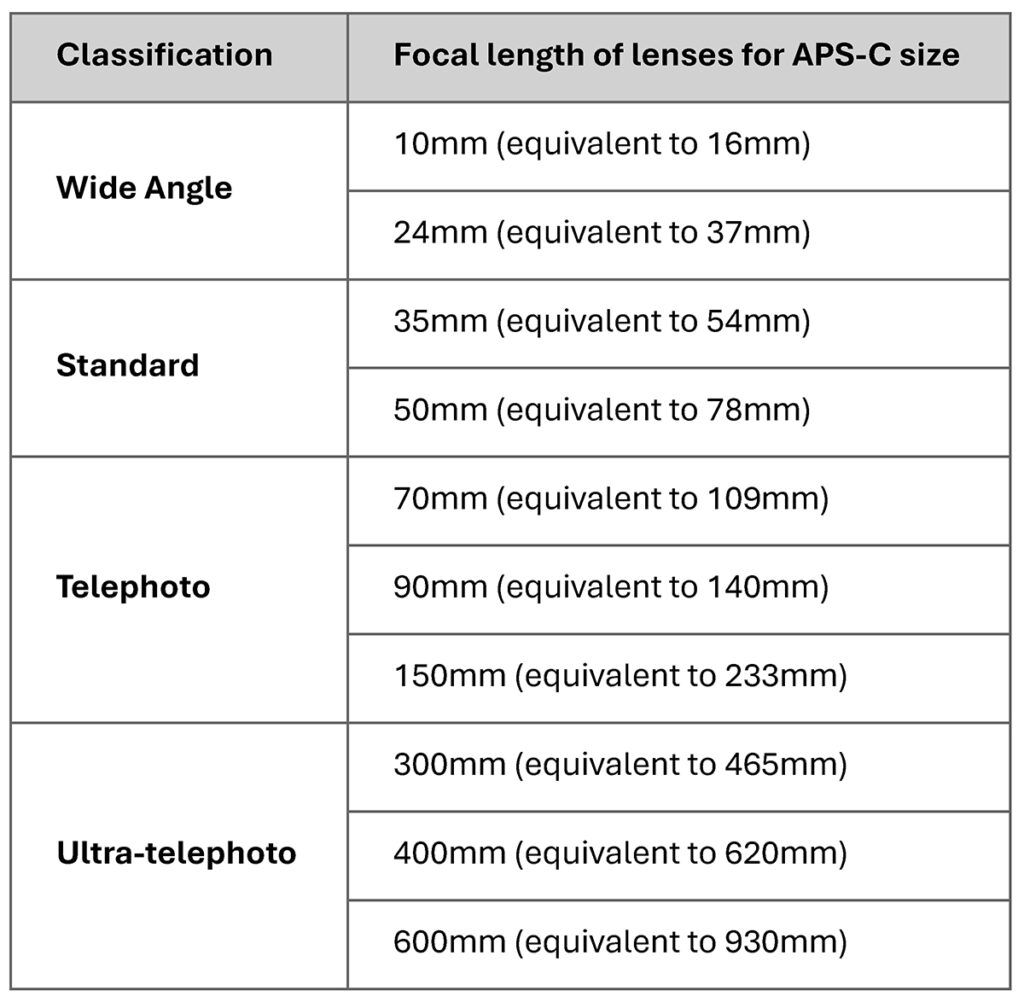
To compare focal lengths across formats, multiply the APS-C focal length by about 1.5x* (called 35mm equivalent focal length).
Example: 50mm APS-C lens = 75mm full-frame equivalent.
The table below shows the typical relationship between the focal length of a lens for the APS-C size and its 35mm format equivalent focal length (figures in parentheses are 35mm format equivalent).
*Since 35mm format equivalent magnification varies by camera manufacturer, the table below shows 1.55x as an example.
Aperture (F-Number)
A wider maximum aperture (like f/2.8) allows more light and helps blur backgrounds—important for portraits and low-light shooting.
What is Aperture (F-Number)? The F-number (aperture value) is an indicator of the amount of light entering the camera’s sensor through the lens, and the smaller the number (like f/2.8), the brighter the aperture of the lens. The F-number at which the aperture is at its widest is called the maximum aperture F-number. Therefore, the smaller the maximum aperture F-number, the easier it is to shoot in dark places, faster subjects, and with a blurred background.
Minimum Object Distance (MOD)

Lenses with a short MOD let you shoot impressive close-ups of flowers, food, and small subjects. Choosing a lens with a short MOD gives you excellent versatility.
What is MOD? The MOD represents the shortest distance at which the camera can focus on a subject. It is measured as the distance from the subject to the camera’s sensor. If you get closer to the subject than the MOD, the camera will not be able to focus on the subject.
Zoom Ratio and Versatility
In a zoom lens, the ratio of the focal length at the telephoto end to the focal length at the wide-angle end is called the zoom ratio. For example, the 18-300mm has a 16.6X zoom ratio (300/18=16.6).
All-in-one zooms (like an 18–300mm) give you wide-angle to telephoto provide a large zoom ratio in one lens—versatility that’s perfect for travel.
Autofocus (AF) and Video Performance
Fast, accurate autofocus is key for sports and wildlife. For video, also check if the AF is quiet and smooth.
Learn about Tamron’s precise, fast and quiet autofocus perfect for low light, close-ups, action and video here.
Vibration Compensation (VC)
Especially useful for telephoto shooting, in-lens stabilization reduces blur from camera shake.
Since APS-C size cameras are often useful for telephoto shooting, and telephoto lenses are prone to camera shake, a lens equipped with an in-lens image stabilization mechanism should be used to suppress camera shake.
Tamron’s VC mechanism is particularly effective when shooting hand-held and in situations where a tripod cannot be used. Learn about Tamron’s VC system here.
Best Tamron APS-C Lenses for Crop Sensor Cameras
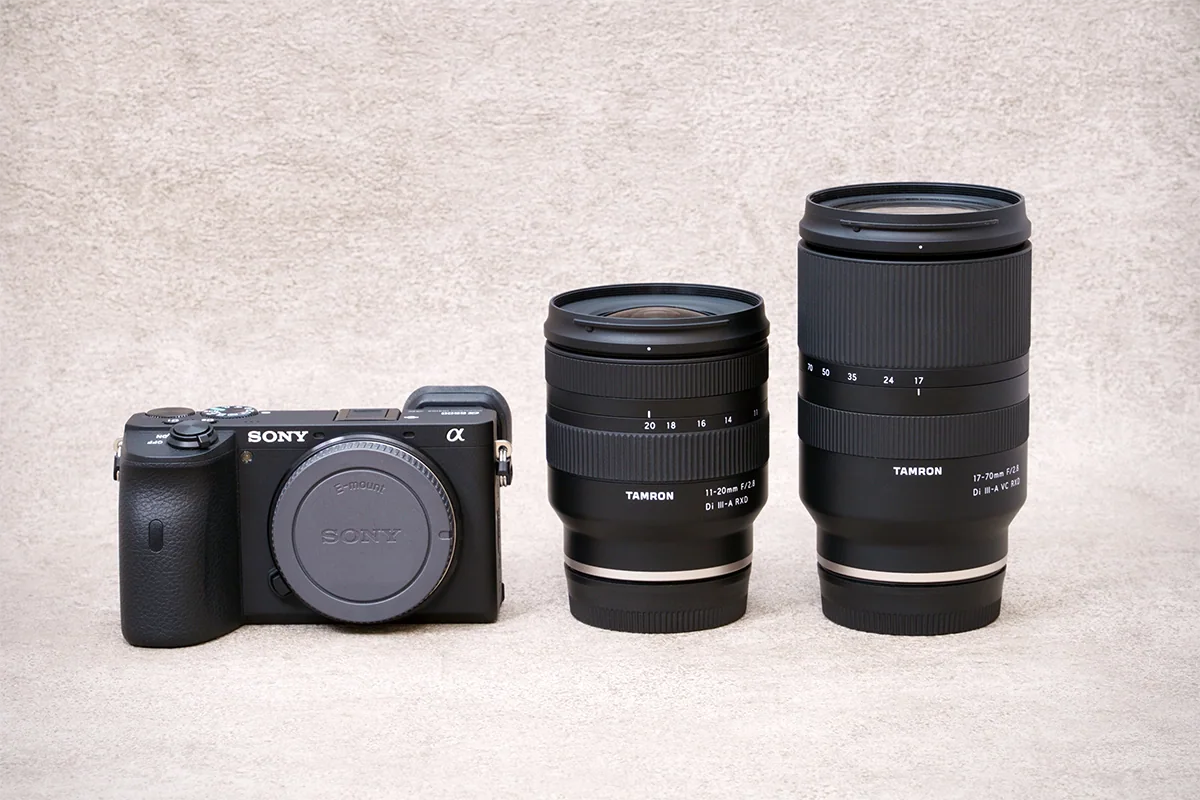
Tamron offers a versatile lineup of lenses designed specifically for APS-C cameras, delivering portability, performance, and outstanding image quality. Whether you shoot travel, portraits, landscapes, or wildlife, these lenses are optimized for crop sensor systems.
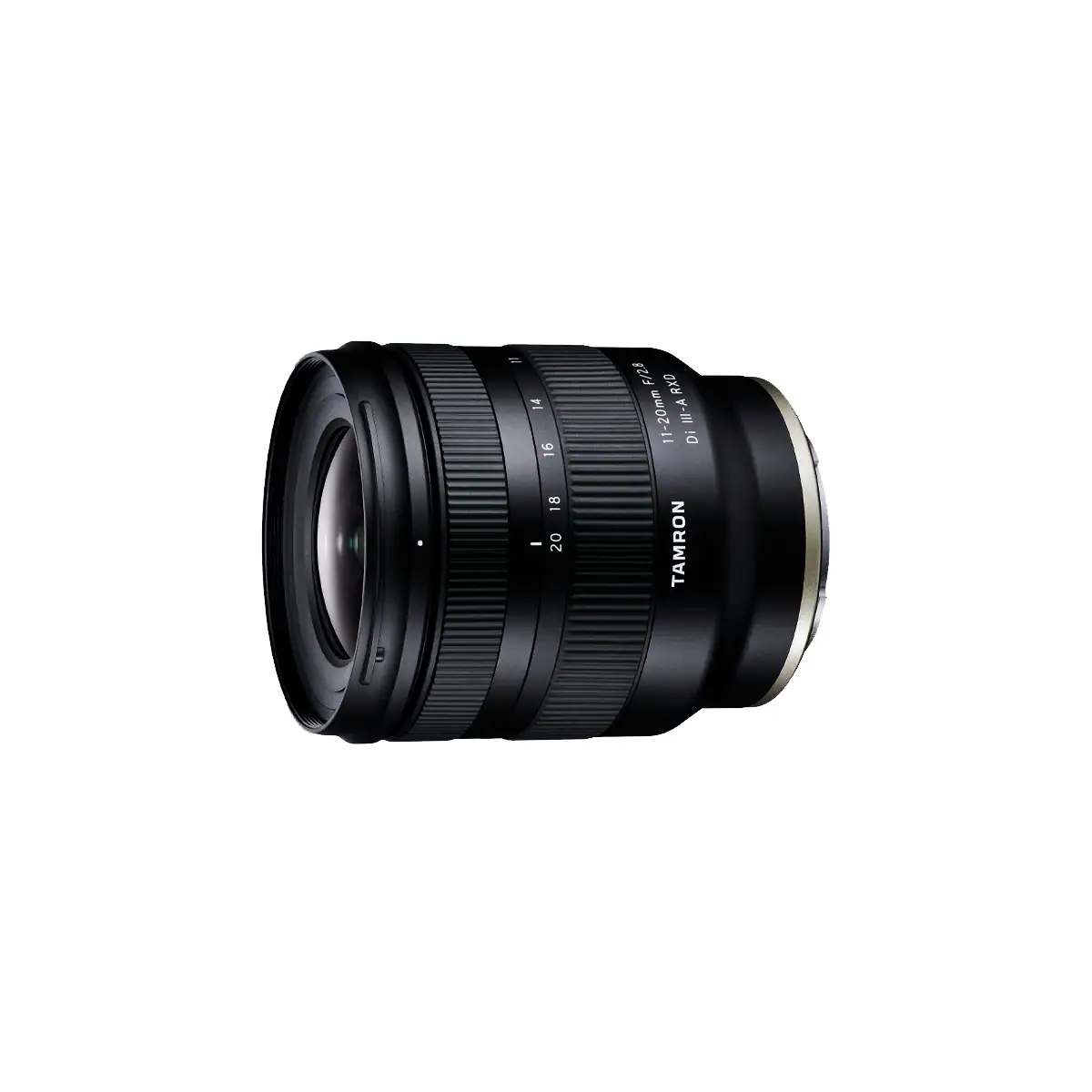
Tamron 11-20mm F2.8 Di III-A RXD (Model B060)
- Ultra-wide zoom for landscapes, interiors, and astrophotography.
- Available for Sony E, Canon RF, and Fujifilm X mounts.
Tamron 16-50mm F2.8 A (Model B091)
- Ultra-compact standard zoom for everyday, travel, and portraits.
- Available for Sony E, Canon RF, Fujifilm X, and Nikon Z mounts.
Tamron 17-70mm F2.8 Di III-A VC RXD (Model B070)
- Fast standard zoom covering wide to short telephoto with constant F2.8 aperture.
- Available for Sony E and Fujifilm X mounts.
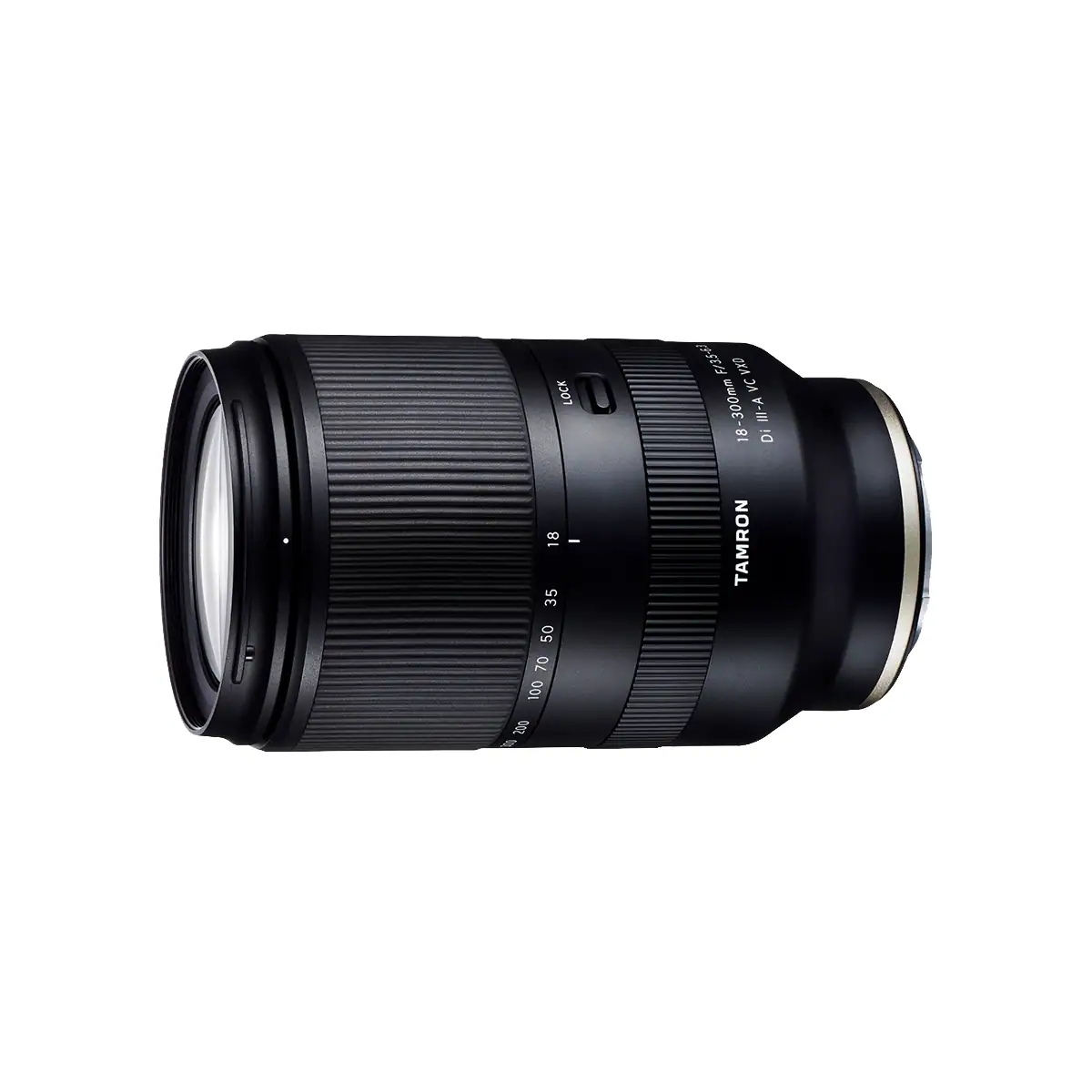
Tamron 18-300mm F3.5-6.3 Di III-A VC VXD (Model B061)
- All-in-one zoom with 16.6X magnification, covering wide-angle to ultra-telephoto.
- Available for Sony E, Canon RF, Fujifilm X, and Nikon Z mounts.
Tamron 150-500mm F5-6.7 Di III VC VXD (Model A057)
- Super-telephoto zoom with VC stabilization, ideal for wildlife and sports.
- Available for Sony E, Fujifilm X mounts, and Nikon Z mounts full frame cameras but when used on APS-C cameras, users gain incredible telephoto power.
With these options, APS-C photographers can access everything from ultra-wide landscapes to extreme telephoto reach, while enjoying compact designs tailored to crop sensor systems.
APS-C vs Full Frame: Pros and Cons at a Glance

Final Thoughts: APS-C vs Full Frame
APS-C cameras are not “inferior” to full frame—they simply serve different needs. With advantages like portability, affordability, and effective telephoto reach, APS-C cameras are an excellent choice for beginners, travelers, and wildlife enthusiasts.
By understanding the differences between APS-C vs full frame and choosing the right lenses, you can unlock the full potential of your photography—whether you’re shooting portraits, landscapes, or the night sky.
Where to Buy Tamron Lenses
Learn more about Tamron APS-C and full-frame lenses at an authorized Tamron dealer near you or shop directly at the official TAMRON Store.
Frequently Asked Questions About APS-C vs. Full-Frame Cameras
What is the main difference between APS-C and full-frame cameras?
The main difference is sensor size. Full-frame cameras use a sensor measuring approximately 36mm × 24mm, while APS-C cameras have smaller sensors with a crop factor of approximately 1.5x or 1.6x. Full-frame cameras generally offer advantages in low-light performance and shallow depth of field, while APS-C cameras are often more compact, affordable, and convenient for telephoto photography.
Is APS-C or full frame better for beginners?
APS-C cameras are often a better starting point for beginners because they typically cost less, weigh less, and offer excellent image quality. They are particularly well suited for travel, portraits, everyday photography, and learning camera fundamentals. Full-frame cameras may be worth considering for photographers who prioritize low-light performance, greater control over depth of field, or specific professional requirements.
Does an APS-C camera increase a lens’s focal length?
No. An APS-C sensor does not physically change a lens’s focal length. Instead, its smaller sensor captures a narrower field of view, creating a crop factor effect. For example, a 200mm lens on a Sony or Nikon APS-C camera provides a field of view equivalent to approximately 300mm on a full-frame camera. On a Canon APS-C camera, the equivalent is approximately 320mm.
Can you use full-frame lenses on APS-C cameras?
Yes. Full-frame lenses can generally be used on APS-C cameras when the lens mount and camera are compatible. The smaller sensor captures the central portion of the lens’s image circle, resulting in a narrower field of view. This makes full-frame telephoto lenses especially useful for wildlife, bird, and sports photography on APS-C cameras.
Can APS-C lenses be used on full-frame cameras?
Some APS-C lenses can be mounted on compatible full-frame cameras, but they do not cover the entire full-frame sensor. Depending on the camera, it may automatically switch to APS-C crop mode, reducing the recorded image resolution. Without crop mode, dark corners or vignetting may appear. Always verify camera and lens compatibility before purchasing.
Is full frame better than APS-C for low-light photography?
Full-frame cameras generally have an advantage in low-light photography because their larger sensors can collect more total light, often producing cleaner images at higher ISO settings. However, APS-C cameras can also deliver excellent low-light results, particularly when paired with a fast-aperture lens such as an F2.8 zoom. Lens aperture, stabilization, and camera sensor technology all influence low-light performance.
Is APS-C better for wildlife and bird photography?
APS-C cameras are excellent for wildlife and bird photography because their crop factor provides a narrower field of view, helping distant subjects fill more of the frame. A 500mm lens provides a field of view equivalent to 750mm on a 1.5x APS-C camera. Full-frame cameras may have advantages in low light, but APS-C systems offer a compelling combination of effective telephoto framing, portability, and affordability.
Can APS-C cameras produce professional-quality photographs?
Absolutely. Modern APS-C cameras can produce sharp, detailed photographs suitable for professional portraits, landscapes, sports, wildlife, and commercial photography. Image quality depends on many factors beyond sensor size, including lens performance, lighting, exposure, and photographic technique. A quality APS-C camera paired with a high-performance lens can deliver exceptional results.
What is the best Tamron lens for an APS-C camera?
The best Tamron APS-C lens depends on your photography style. The 11-20mm F2.8 is ideal for ultra-wide landscapes and architecture, while the 17-70mm F2.8 VC offers versatile everyday coverage with a fast aperture and stabilization. For travel, wildlife, and maximum flexibility without changing lenses, the 18-300mm VC provides an extensive 16.6x zoom range. For ultra compactness for everyday carry, the 16-50mm F2.8 A with its 24-75mm full-frame equivalent range and fast aperture is a great choice. Always select the version compatible with your camera mount..
About the Author
 Stacie Errera is Vice President of Marketing and Communications for Tamron Americas, where she has been with Tamron for more than 36 years. She is also a photography educator who teaches new camera users how to better understand their cameras and photography basics. She leads weekend photography workshops for women. Read Stacie’s full bio >>