Instant Savings
 Rebate Claims
 Support
 Find a Dealer

Hernan Rodriguez: 20 Years With Tamron
A retrospective of the California photographer’s journey with Tamron’s lens lineup.
Author: Jenn Gidman
Images: Hernan Rodriguez
Share Article
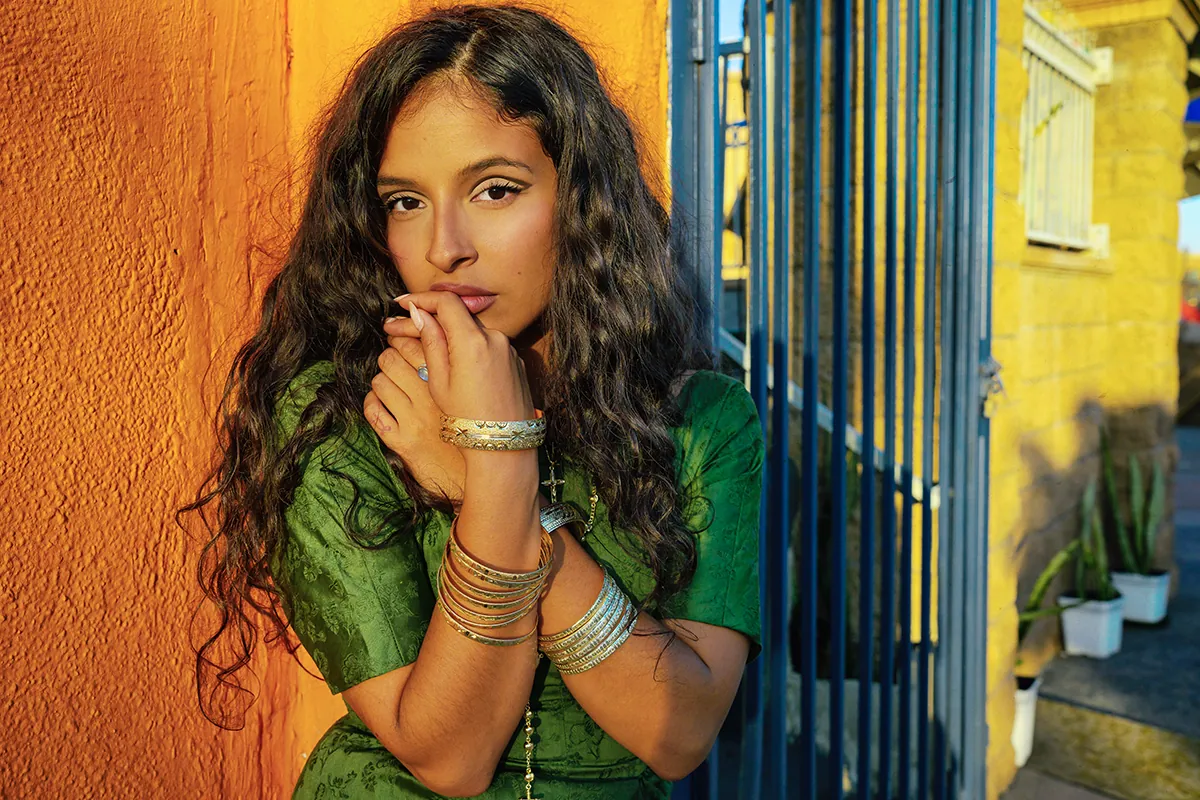
Over the past two decades, Los Angeles commercial and celebrity portrait photographer Hernan Rodriguez has relied on Tamron lenses to bring his creative vision to life. As he reflects on his career using a wide range of Tamron lenses over the years, Hernan shares his thoughts on his most memorable subjects—boxer Evander Holyfield, singer Helen Reddy, comedian Eddie Griffin, and rapper Saweetie are just a few names on his long roster of star clients—evolving techniques, and photographic philosophies that continue to shape his work.
You’re celebrating 20 years of working with Tamron and test-driving the company’s diverse lineup of lenses. How did that relationship begin?
It all started at WPPI. It was my first year speaking at the wedding and portrait photography convention, and they’d requested that I have sponsors. I had no idea what sponsors even were—I just wanted to teach! They told me I needed to find people in the industry who would support me. I contacted Tamron, they responded (they were actually the first company to respond to me), and it all evolved from there.
What was the very first Tamron lens you used?
The first lens I used in the Tamron family was the 28-75mm F2.8 lens for DSLRs—the latest F2.8 G2 incarnation is now available for mirrorless camera systems. My first assignment with that lens was creating images for Tamron’s catalog. They were receiving submissions from portrait photographers, and I was fortunate to be a part of that.
Looking back over two decades of portraiture, are there particular subjects or sessions that stand out or have special meaning to you?
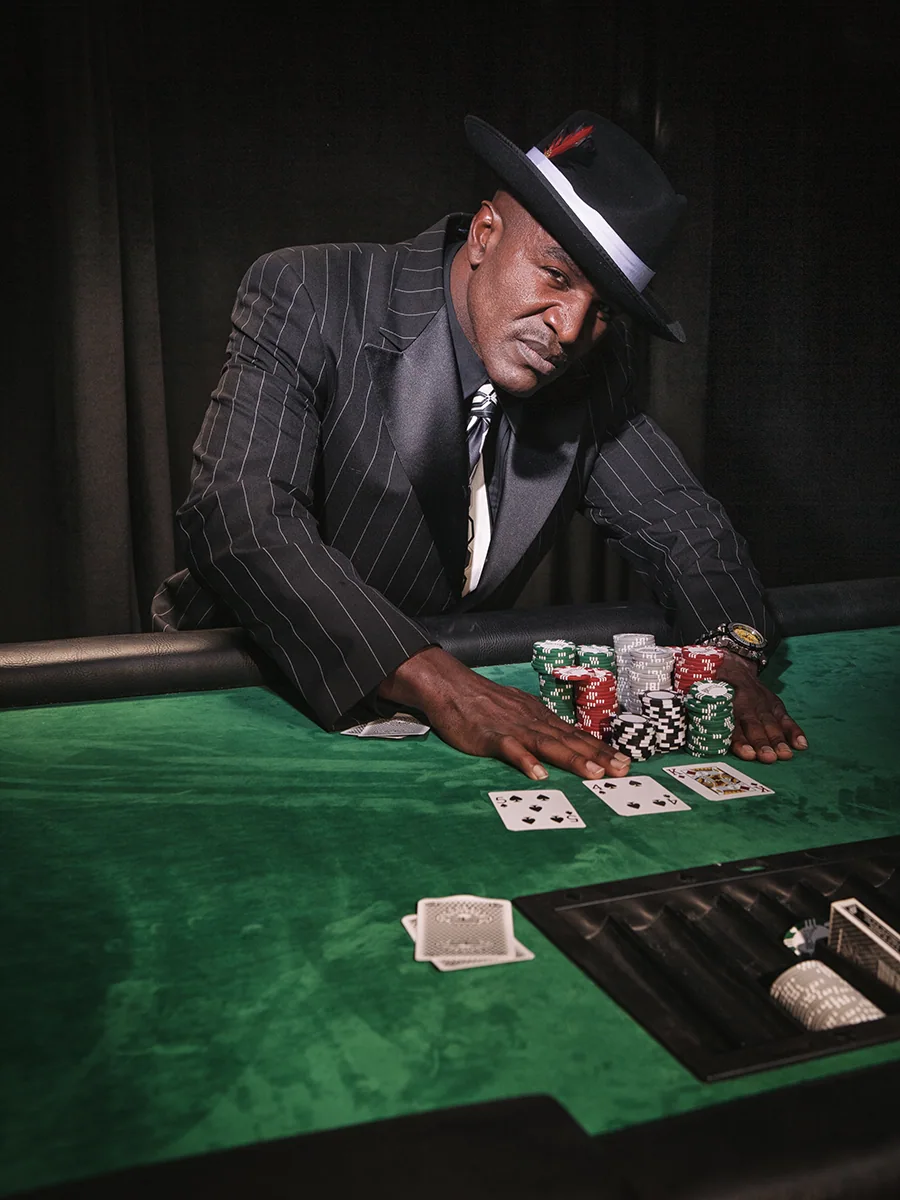
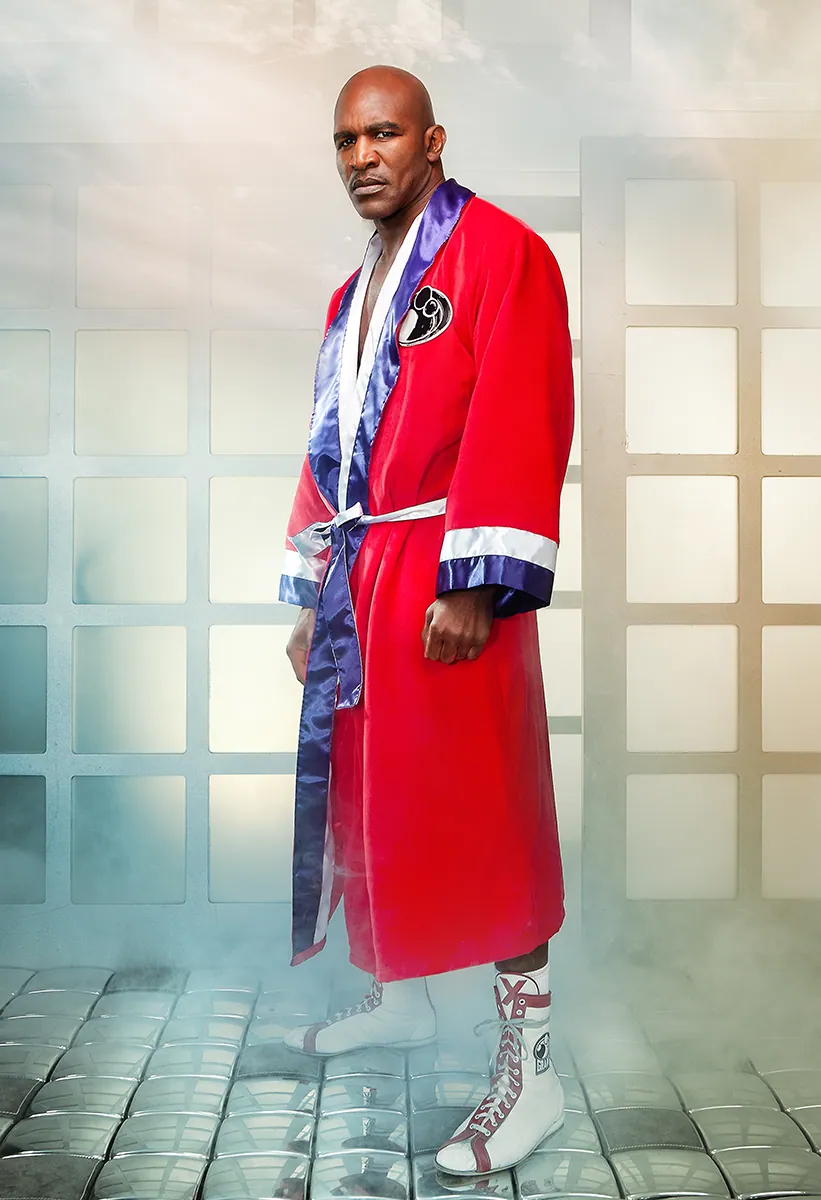
I’d probably say Evander Holyfield (you can see a couple of my photos of him here), mostly because of the relationship I’ve built and nurtured with him over the years and how easy he makes it for me. We’ve had some really fun sessions. In terms of a particular portrait that remains at the top of my mind, I photographed a homeless man during COVID, in front of a Starbucks. It was such a crazy, traumatic time, and I’ll never forget his place in it and taking that photo.
After all these years taking people’s pictures, what do you think makes a portrait timeless?
I think it’s the interaction and the subjects’ expressions that always come through in the photos. In the beginning you’re so hyperfocused on getting the technical part of things right—once you have that down pat, then it’s time to concentrate more on the connection you have with your subjects, so that interaction shines through in your portraits. Now I have those needed skill sets, which allows me to execute and capture what’s truly present.
How has your approach to portraiture changed over the years?
When I started out, I thought an image had to be embellished with props or something “extra.” I thought I needed to create an environment. The more I refined my skills, however, the more I found myself wanting to eliminate distractions. Now, I usually just want it to be just the person in front of my camera and myself. I want my subject to dominate. It’s funny, because as minimal and reductive as that can be, it can also be the most difficult thing to pull off if you don’t practice it enough.
Shooting as wide as 12mm allows you to get much closer physically to your main subject whilst keeping it all in the frame. This gives your subject a commanding presence in the image.
We want our main subject to be the star of the shot, and sure, you can fit your object in with almost any lens but the big difference with wide and close is the expanse of the scene you get to see behind your main subject, in this case a beautifully coloured sunset that really elevates the image. Imagine this shot without the expanse of the sunset!
So go wide and get close – it will open a whole new world of shooting for you.
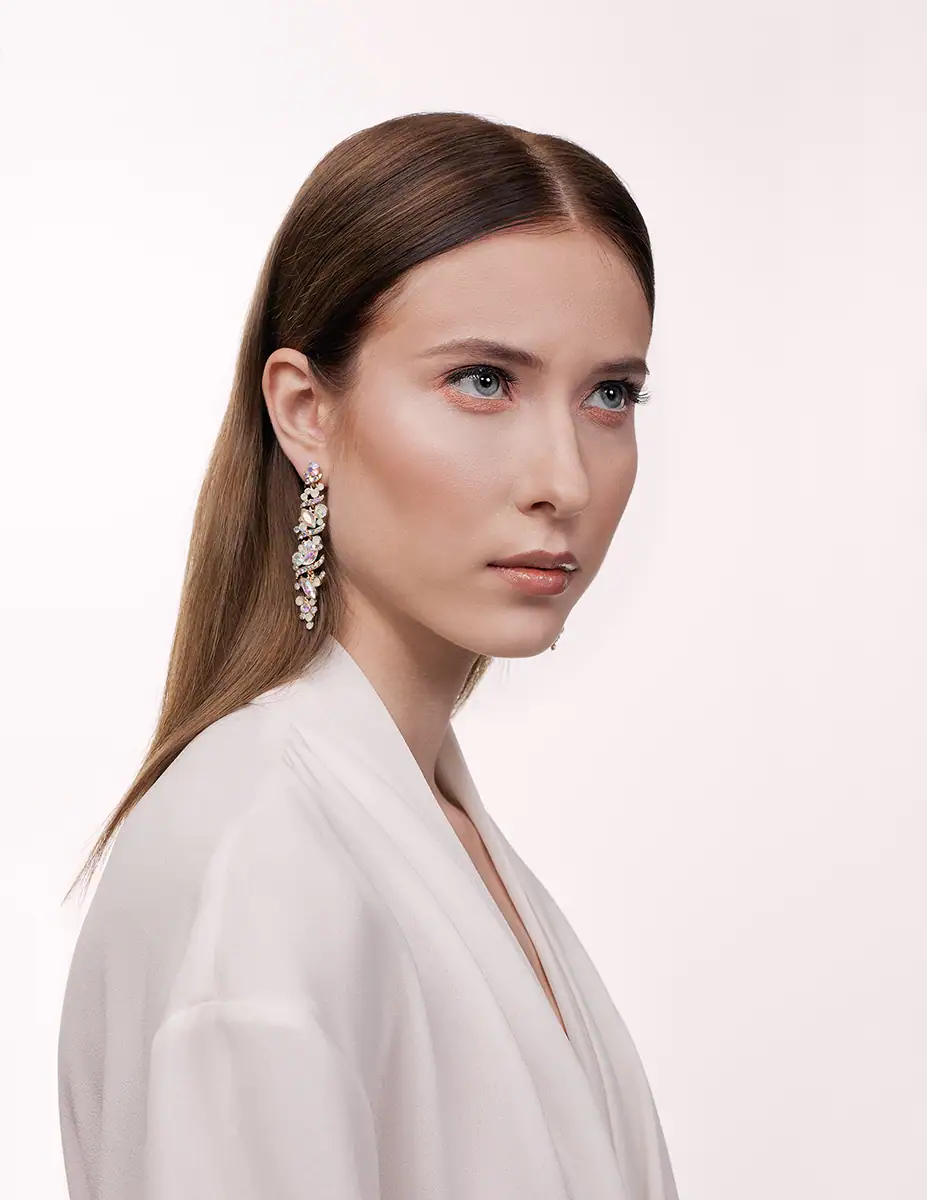
I think every image I take is a self-portrait, in a way. I’m not the one in the actual shot, but my imprint is in that image. There’s a privilege in stripping everything down and photographing my subjects in their true essence, and for a part of me to find its way into every photo.
What lens characteristics matter most to you as a portrait photographer? How have you seen Tamron lenses evolve over the years?
For me, sharpness and accurate perspective are key. When I use a lens, I want to make sure that what I’m seeing is what I’m producing through my camera. A critical demand of my clients is that the images I produce have excellent clarity, whether they’re being printed as wall portraits, going up on billboards, or used for something else entirely. Tamron has come such a long way over the years in that regard, in that they’ve continued to develop lenses that are a great fit for any professional job. It’s a company that really listens to its customers.
Is there a particular focal length you gravitate toward?
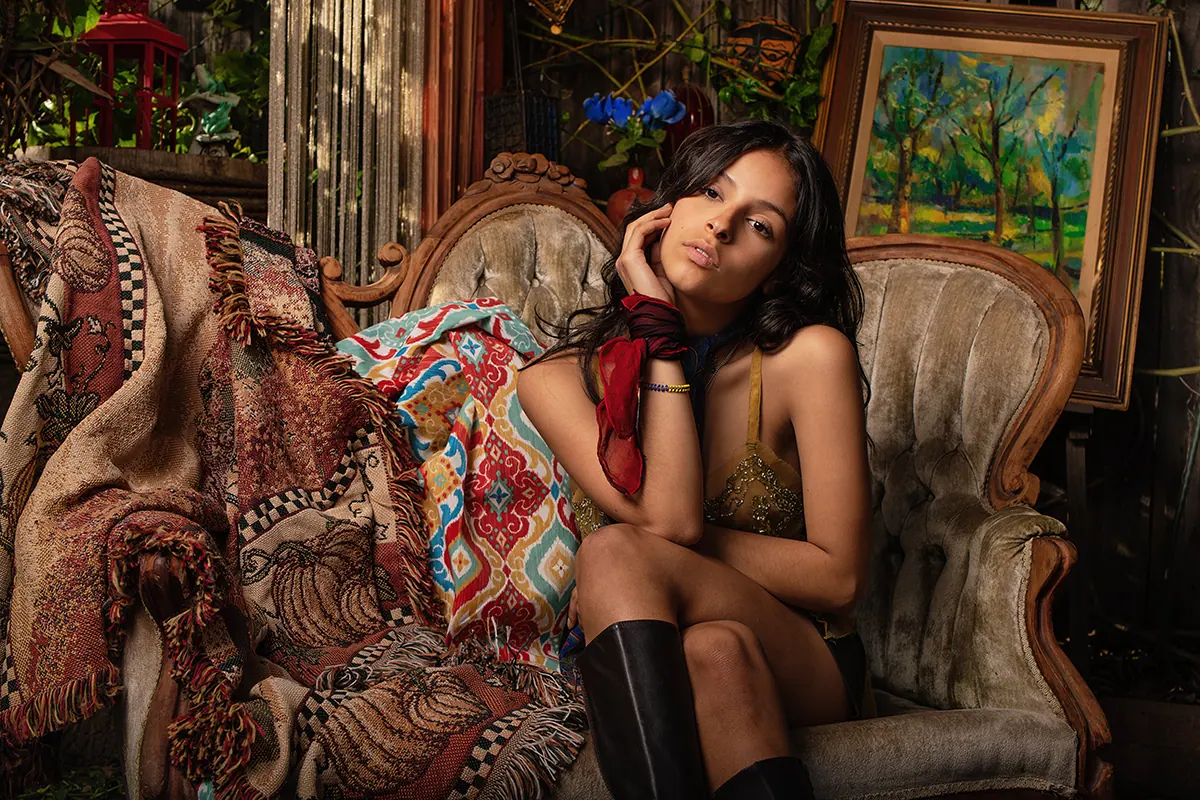
I’d probably say around 60mm. It’s just a natural perspective for me—not too close and not too far. It’s especially great for environmental portraits. Sometimes, when I have an important shoot, I’ll head back into my archives and look at images I really like. I’ll check out the metadata and realize, “Oh, that’s the focal length!” It helps me understand what works for me. I’m still trying to educate myself, even after so many years.
Have you ever used a Tamron lens in what was considered, at the time, an unconventional way?
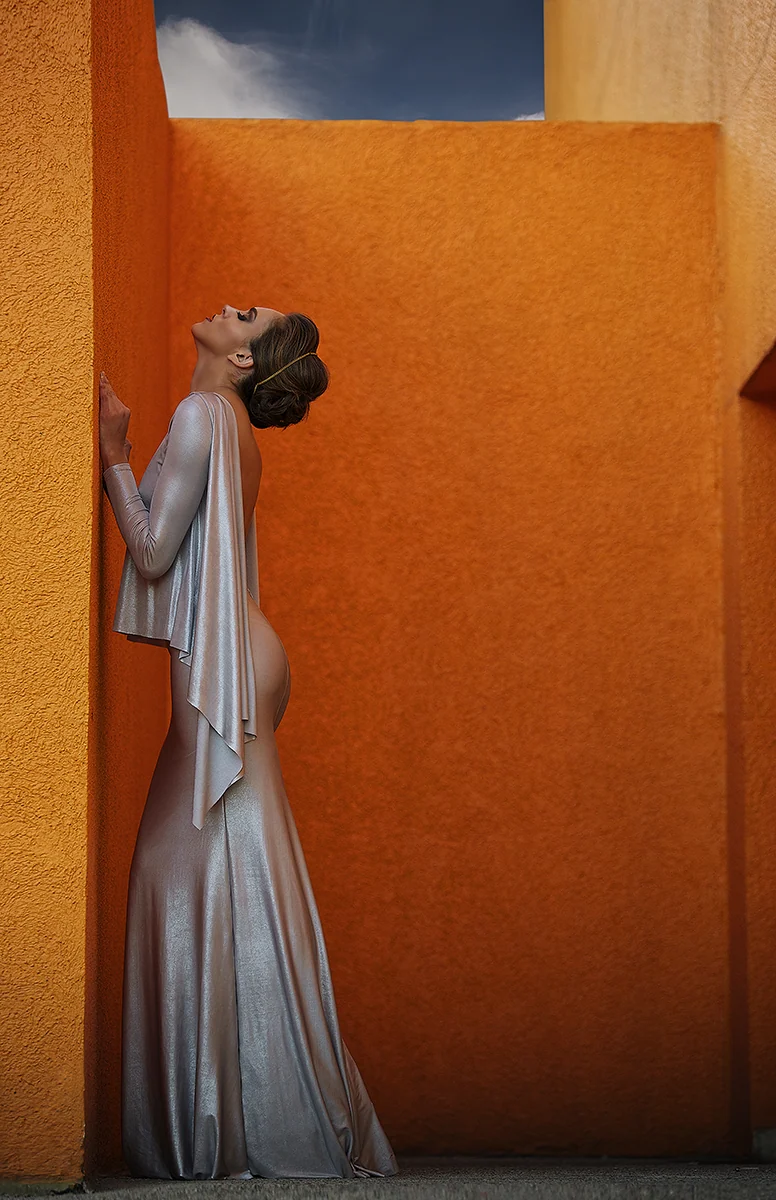
The 90mm macro is a great example of that. When that lens first came out, all the catalog writeups and tutorials were about using the 90mm to photograph insects and flowers. I started using it for portraits. If I got up real close to my subject with it, the eyes would be sharp and everything else would just disappear. I really like that look, and I still use that lens when I want to create that effect. You should never shy away from experimenting to find out what works best for you personally as a photographer.
What advice would you give a younger Hernan Rodriguez just starting out in the photographic industry?
Don’t complicate things. When you first begin taking pictures, you can get so caught up in the technical aspects of creative portraiture. Even now, when I’m sometimes thinking about using a bunch of lights for a shoot, I’ll tell myself to simplify and just go with it. If I could go back in time, I’d tell myself that you can create brilliant images with just the camera you have in your hand. Sometimes it’s just a matter of going out at the right time of day, seeing how the light is behaving, and creating something beautiful.