Learn what camera lenses are, how they work, and how to choose the right lens for your photography goals.
For many photographers and hybrid creators, the camera body often gets the most attention. The lens, however, plays the most critical role in shaping image quality, creative control, and how a photograph ultimately looks. From focal length and aperture to lens design and stabilization, understanding how lenses function is essential to achieving consistent results in both photography and video.
Camera lenses can seem complex, with technical terms, specifications, and countless options across different camera systems. Without a clear framework, it can be difficult to understand types of camera lenses, what features matter most, and how to select the right lens for a specific photography style. Learning the fundamentals behind lens design and behavior helps photographers make confident decisions, improve image quality, and get more out of their gear.
Professional’s Thoughts on Lens Choice

As Ian Plant, Tamron Ambassador, educator, and acclaimed landscape and travel photographer, often emphasizes: “One of the principal ways that a photographer transforms the reality of the scene or subject is through lens choice. Different lenses are used in profoundly different ways, so understanding different types of lenses is necessary to improve your craft. No matter what lens you use, you need to figure out how that lens differs from other lenses, and most importantly, what kinds of subjects or photographic approaches work best with that particular lens.
For photographers, lenses are our windows to the world. Used properly, they are more than just functional tools. Rather, they are expressive instruments that allow us to artistically bend, distort, and shape the reality around us, empowering us to share our creative vision with others.”
A camera lens does more than determine how wide or close a scene appears. It influences light transmission, depth of field, motion control, and overall optical performance. By understanding how lenses work and how key concepts like focal length, aperture, and stabilization interact, photographers can better match their equipment to their creative goals and shooting environments.
What You’ll Learn In This Guide
In this camera lens guide, you’ll learn how camera lenses work, the different types of lenses available, the core concepts that shape image quality, and how to choose the right lens for your photography style—with practical guidance to help you select lenses that support your creative and technical needs.
Table of Contents
- What Is a Camera Lens?
- How Do Camera Lenses Work?
- What Are the Parts of a Camera Lens?
- What Is Focal Length?
- What Is Angle of View?
- What Is the Exposure Triangle?
- What Is ISO?
- What Is Shutter Speed?
- What Is Aperture and Depth of Field?
- What Are the Different Types of Camera Lenses?
- Prime vs. Zoom Lenses
- Lens Size, Weight, and Handling Considerations
- What Is Image Stabilization and How Does It Work?
- Full-Frame vs APS-C: How Sensor Size Affects Lenses
- What Are Camera Lens Mounts and Why Do They Matter?
- How to Choose a Camera Lens for Your Photography Style
- Lens Coatings, Optical Quality, and Distortion Control
- Autofocus, Manual Focus, and Focusing Technologies
- Weather Sealing, Build Quality, and Durability
- Which Tamron Lens Will Meet Your Needs?
What Is a Camera Lens?

A camera lens is an optical device made of multiple glass elements that gathers and focuses light onto the camera sensor so the camera can record an image. The lens determines how wide or close your scene appears, how much light enters the camera, and how sharp your photos look — making it central to image quality and creative expression.
Think of the lens as the “translator” between the real world and your sensor. Two lenses on the same camera body can produce very different images because lenses directly affect:
- Framing and perspective: Wide views versus tight compositions, and how “close” a subject feels.
- Light gathering: The maximum aperture influences low-light ability and exposure choices.
- Depth of field: How much of the image is in focus from front to back.
- Rendering style: Contrast, flare resistance, and the look of out-of-focus backgrounds called bokeh.
That’s why lens knowledge isn’t just technical—it’s practical. Understanding lenses is a mix of optical principles, exposure control, creative intent, and real-world usability (weight, speed, handling). This foundation supports more confident shooting and more informed purchasing decisions across photo and video workflows.
How Do Camera Lenses Work?

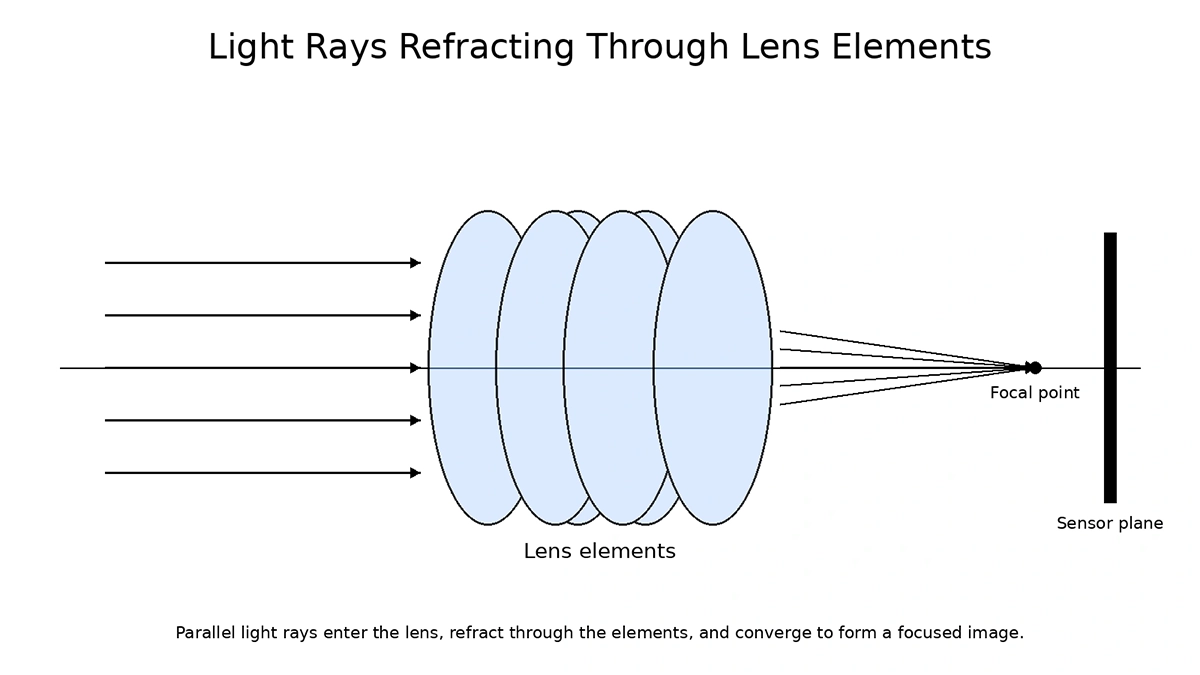
Camera lenses work by bending (refracting) and directing light through a series of precision-engineered glass elements so that light converges on the camera’s sensor. When light rays are properly focused, the sensor captures a sharp image.
Here’s what’s happening in plain language:
- Refraction shapes the image. Each glass element slightly bends light. The lens design stacks these “bends” to form a focused image rather than a blurry projection.
- Focusing groups move to lock sharpness. When you focus, internal lens groups shift position to place the sharpest point exactly where you want it—on a person’s eye, a bird, a product label, or a mountain ridge.
- The aperture diaphragm controls light and depth of field. Inside the lens, adjustable blades form an opening. A wider opening lets in more light and creates more background blur; a smaller opening reduces light but keeps more of the scene sharp.
- Zoom groups change focal length (on zoom lenses). Zooming isn’t “digital cropping”—it’s the lens physically changing optical geometry, which alters magnification and angle of view.
Your lens’s functional outputs—focal length, angle of view, and magnification—are why the same scene can look dramatically different depending on the lens you choose.
What Are the Parts of a Camera Lens?
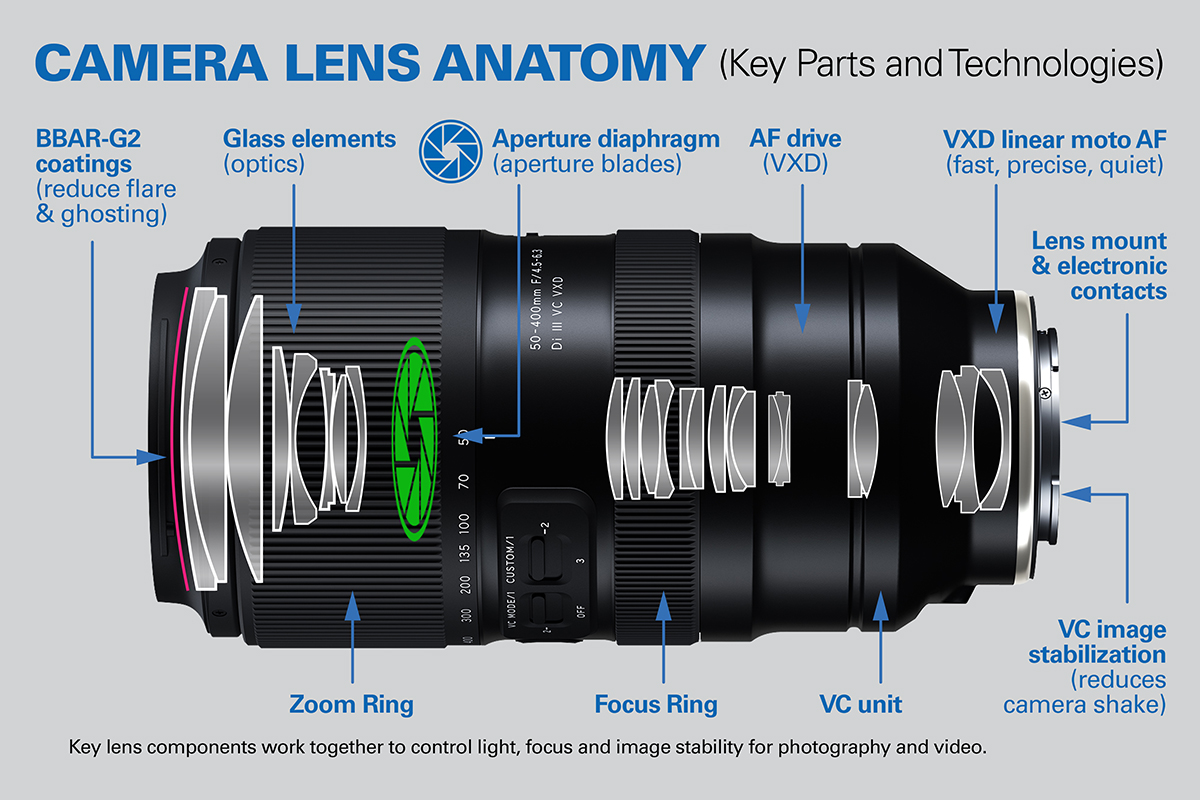
The main parts of a camera lens include the glass elements, aperture diaphragm, focusing and zoom rings, autofocus motor, image stabilization unit and lens mount, each contributing to sharpness, focusing speed and overall performance.
Below is what each part does—and why it matters in the real world:
- Glass elements (optical groups): Correct aberrations, maintain sharpness, and control distortion. More elements don’t automatically mean “better,” but complex zooms often need more optical groups to keep quality consistent across the range.
- Aperture blades (diaphragm): Control exposure and influence bokeh shape. More blades often create rounder highlights and smoother transitions when stopped down.
- Autofocus motor: Impacts speed, accuracy, and noise. For hybrid creators, quieter AF is especially important for video.
- Focus ring: Enables manual focus control—useful for macro precision, low-light, and video focus pulls.
- Zoom ring (on zooms): Determines how quickly you can reframe. Smooth, consistent resistance improves handheld control.
- Stabilization unit (if included): Counters camera shake for sharper handheld shots—especially useful at longer focal lengths or in low light.
- Lens mount (mechanical + electronic contacts): Ensures physical fit and enables autofocus, aperture control, EXIF data, and camera/lens features.
- Coatings: Help reduce flare and ghosting in backlit scenes; also support contrast and clarity.
- Weather sealing (where included): Helps resist dust and moisture—useful for travel, outdoor work, and unpredictable conditions.
Knowing these parts helps you read a spec sheet and predict how a lens will behave in the situations you actually shoot.
What is Focal Length?

Focal length describes how much of a scene a lens captures and how close subjects appear.
It influences three big things:
- How wide or tight your framing looks: Shorter focal lengths show more of the scene, while longer focal lengths narrow the view and magnify your subject.
- Perspective and compression: Wide focal lengths can exaggerate distance between foreground and background, while longer focal lengths compress the scene and make backgrounds feel closer.
- Subject isolation and background appearance: Longer focal lengths often make it easier to separate a subject from the background and simplify distracting elements.
Focal length is measured in millimeters (mm):
- Shorter focal lengths (e.g., 14-35mm): Capture wider scenes and emphasize foreground elements.
- Longer focal lengths (e.g., 70mm and above): Tighten framing and make distant subjects appear closer.
Focal length also shapes the overall feel of an image, influencing how natural or dramatic a scene appears and how strongly the background supports the subject. On APS-C cameras, crop factor narrows the angle of view, making lenses appear more “zoomed-in” than they do on full-frame.
What is Angle of View?

Angle of view is how much of a scene your lens captures, measured in degrees. A wider angle of view includes more of the environment, while a narrower angle of view isolates a smaller portion of the scene.
Angle of view depends on two things:
- Focal length (shorter = wider view, longer = narrower view)
- Sensor size (APS-C = narrower view than full-frame at the same focal length)
This is why a lens can feel “wide” on one camera and more “standard” on another. The focal length of a lens never changes — what changes is the angle of view based on sensor size. Understanding angle of view helps you choose focal lengths intentionally for landscapes, interiors, portraits, and sports.
What is the Exposure Triangle?
The exposure triangle describes how ISO, shutter speed, and aperture work together to control brightness and creative look. When you change one point of the triangle, you often adjust at least one of the others to maintain the exposure you want.
This relationship influences three big outcomes in your photos:
- Overall brightness (exposure)
- Motion appearance (frozen vs blurred)
- Depth of field (background blur vs more in focus)
Understanding the exposure triangle makes lens choices clearer, because your lens’s maximum aperture influences how easily you can shoot in low light, freeze motion, or create background separation.
Stabilization can help you use slower shutter speeds when shooting handheld, reducing the need to raise ISO in dim conditions. And focal length affects the shutter speed you may need to avoid blur, especially at longer telephoto ranges. Together, aperture, stabilization, and focal length shape your exposure tradeoffs — and they’re key specs to consider when choosing the right lens for your photography style.
What Is ISO?
ISO controls how sensitive the camera sensor is to light, Raising ISO makes images brighter in darker conditions, but it can also increase visible noise and reduce fine detail.
- Low ISO = cleaner files, best when there’s plenty of light.
- High ISO = brighter exposure in low light, but typically with more noise.
In real shooting situations, ISO becomes practical quickly: if you need a fast shutter speed to freeze movement and you’re already using a wide aperture, ISO is the setting that helps you maintain exposure — especially indoors, at events, or after sunset.
Camera manufacturers follow internationally recognized International Organization for Standardization (ISO) imaging standards and industry guidance from organizations like the Camera & Imaging Products Association (CIPA) so ISO values behave more consistently across different camera systems. This standardization supports predictable exposure behavior and helps photographers better understand camera ISO across brands and models.
What Is Shutter Speed?
Shutter speed is the duration the camera sensor is exposed to light and directly affects whether motion appears sharp or blurred.
- Fast shutter speeds help freeze action (sports, wildlife, kids, handheld telephoto shooting).
- Slow shutter speeds let in more light but can introduce blur — either as a mistake (camera shake) or as a creative choice (water motion, light trails).
Shutter speed is also where stabilization can provide a real advantage when you’re shooting handheld and the subject isn’t moving quickly.
What is Aperture and Depth of Field?

Aperture is the adjustable opening inside the lens that controls how much light reaches the sensor. It’s measured in f-stops (like f/2.8, f/4, f/8), and it affects both brightness and depth of field.
How f-stops behave:
- Lower f-numbers (wider aperture): More light, shallower depth of field (blurrier backgrounds).
- Higher f-numbers (smaller aperture): Less light, deeper depth of field (more of the scene in focus).
Aperture influences three big things:
- Exposure: Wider apertures brighten the image, helping you shoot in low light without pushing ISO too high.
- Depth of field: Wider apertures isolate subjects; smaller apertures keep more detail sharp front-to-back.
- Creative intent: The aperture you choose shapes the mood — from soft, separated portraits to crisp, detailed landscapes.
Examples:
- For portraits, wider apertures are often used to separate the subject from the background and emphasize facial features.
- For landscapes, smaller apertures are commonly used to keep foreground and background detail in focus.
A constant-aperture zoom (one that maintains the same maximum aperture throughout the zoom range) also makes exposure control more predictable — especially for video and fast-paced shooting where lighting changes quickly.
- Lower f-numbers = brighter exposures, shallower depth of field (blurrier backgrounds)
- Higher f-numbers = darker exposures, greater depth of field (keep more of the scene in focus)
What are the Different Types of Camera Lenses?
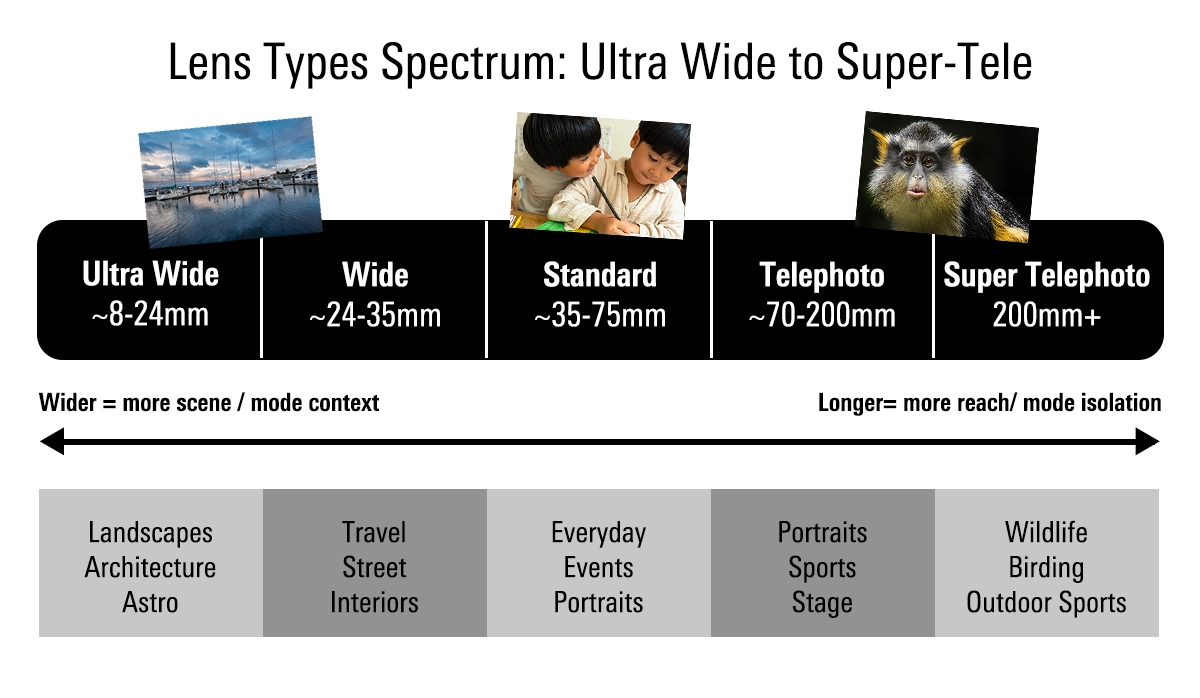
Camera lenses come in several main types, including ultra wide-angle, wide-angle, standard, telephoto, super-telephoto, macro, and specialty lenses. Each lens type is designed to create a different field of view and visual style — which is why understanding lens categories makes lens selection much easier. All-in-one zooms are also worth calling out as a distinct design philosophy, built for convenience and range in a single lens rather than maximum specialization in one category.
Below is a practical breakdown of the most common camera lens types, what they’re used for, and what trade-offs to expect.
Ultra Wide-Angle Lenses

- Focal range: ~8-24mm
- Use cases: Landscapes, architecture, travel, astrophotography, hybrid photo/video
- Pros: Expansive field of view, dramatic perspective, strong foreground emphasis
- Cons: Can introduce distortion or stretched edges if subjects are too close
Ultra wide-angle lenses are designed to capture more of the environment in a single frame. They’re popular for landscapes where you want to show scale, and for architecture/interiors where you physically can’t step back.
This lens type also creates a distinct sense of depth: objects close to the camera feel larger and more dominant, while background elements feel farther away. That can be a powerful creative tool for leading lines, environmental storytelling, and immersive composition — but it also means you need to pay attention to subject placement near the edges of the frame.
Tamron option examples:
- For APS-C cameras: Tamron 11-20mm F/2.8 Di III-A RXD – excellent for landscapes and interiors with consistent brightness.
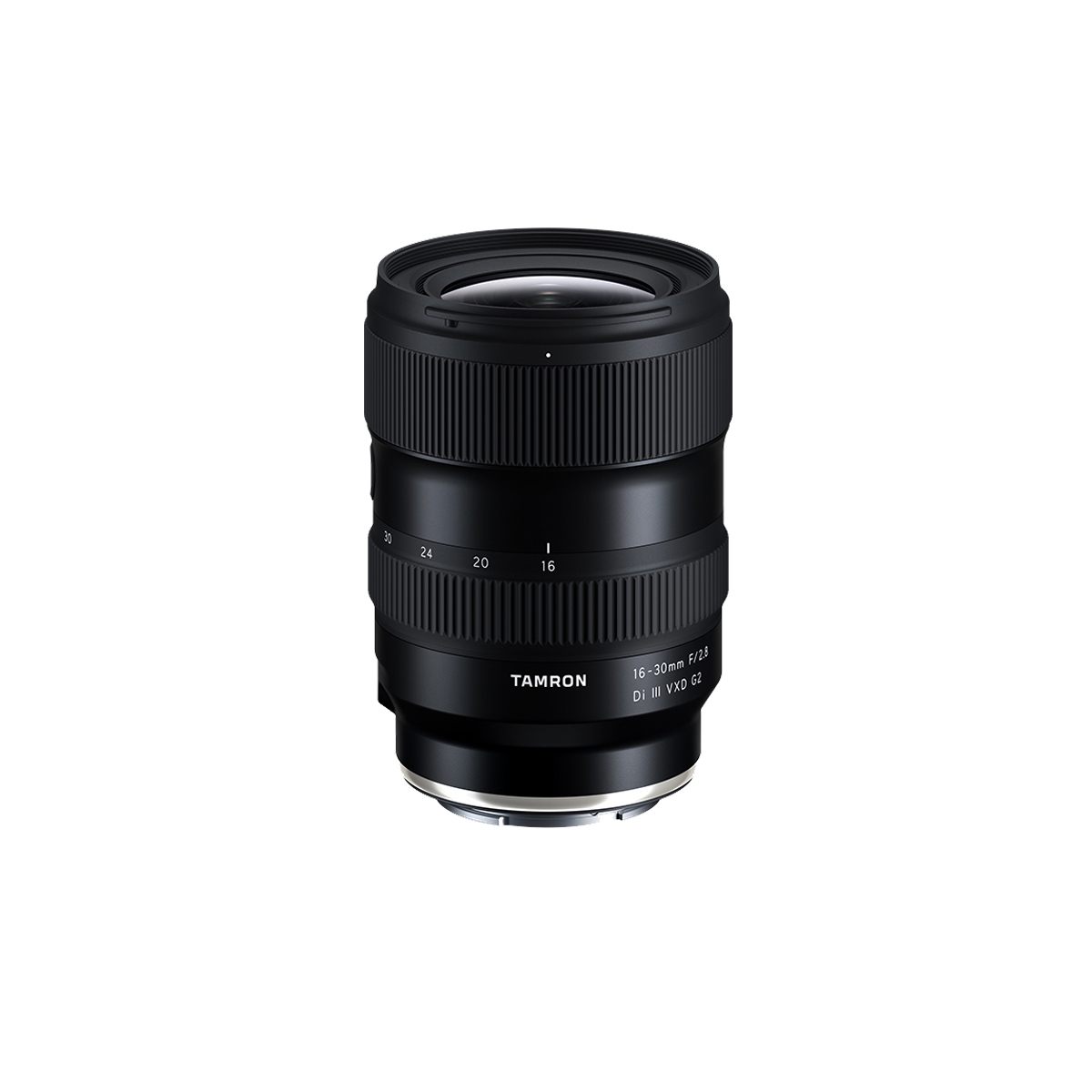
- For full-frame cameras: Tamron 16-30mm F/2.8 Di III VXD G2 – ideal for travel, wide landscapes, astrophotography and hybrid shooting.
Wide-Angle Lenses
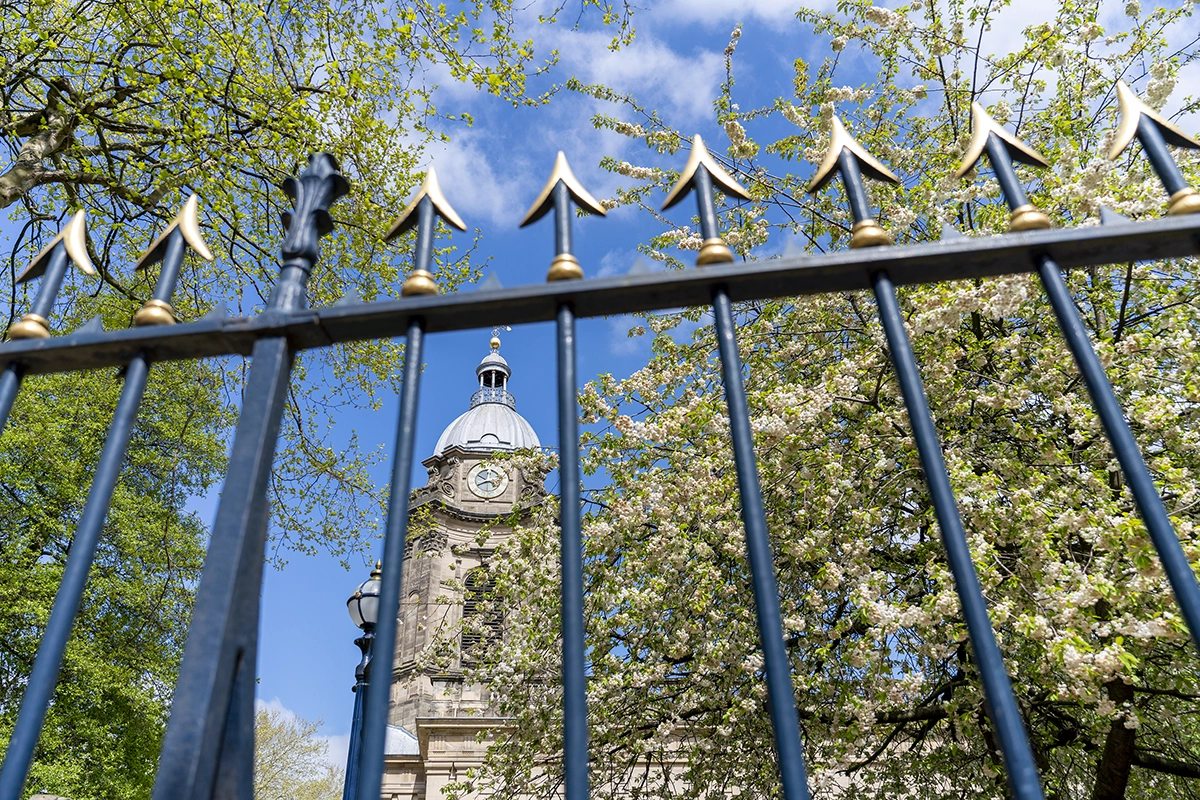
- Focal range: ~24-35mm
- Use cases: Street, landscapes, events
- Pros: Natural wide perspective
- Cons: Not ideal for tight portraits or distant subjects
Wide-angle lenses capture more context than a standard lens while keeping perspective relatively natural. This is one of the most useful ranges for photographers who want images that feel immersive but not exaggerated.
Wide-angle lenses are especially effective for travel and street photography because they help you include the environment and tell a fuller story — whether that’s a city scene, an event space, or a subject interacting with their surroundings.
Tamron option example: Tamron 20-40mm F2.8 – versatile for travel, events, and environmental portraits.
Standard Lenses
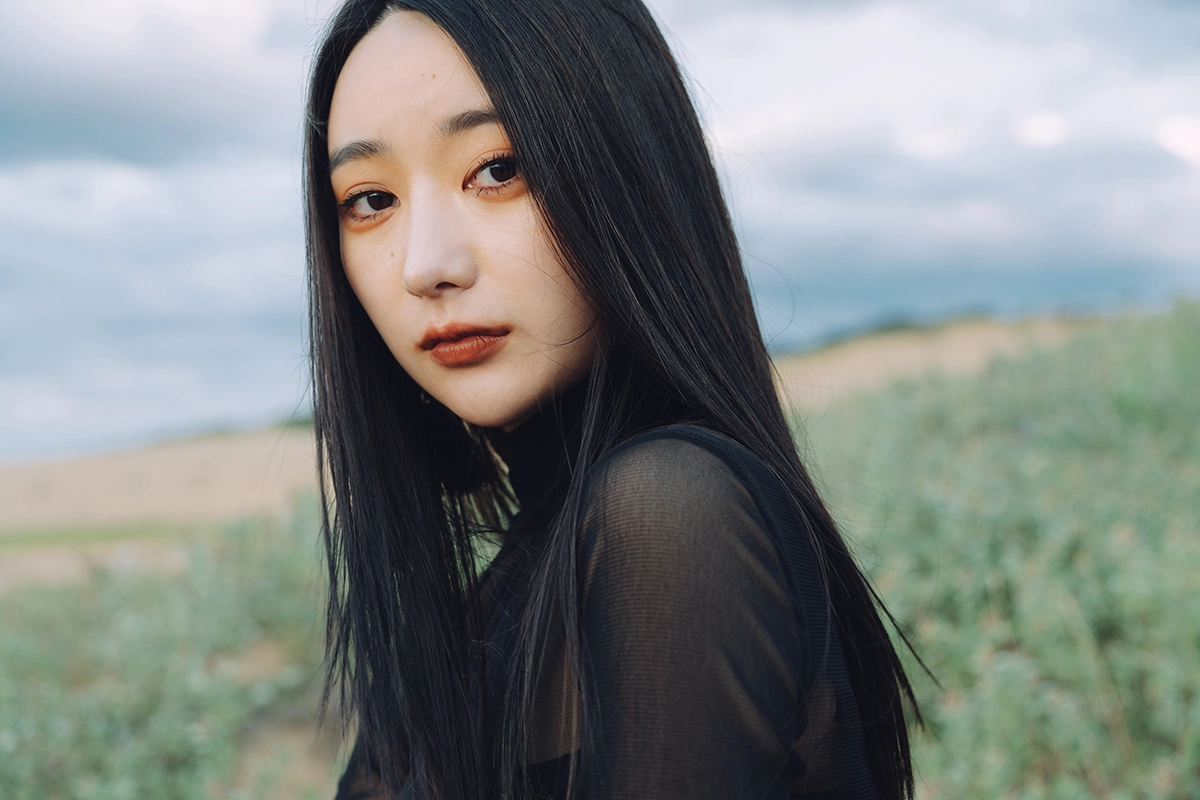
- Focal range: ~35-75mm
- Use cases: Everyday, portraits, events, street, travel
- Pros: Natural perspective, flexible framing, strong general-purpose range
- Cons: Less reach for distant subjects
Standard lenses cover focal lengths that feel familiar and versatile. This range is often the easiest starting point for photographers because it works for so many situations without feeling too wide or too tight.
A standard zoom can cover:
- group photos and everyday scenes at the wide end
- candid portraits and detail shots at the longer end
- quick composition changes without switching lenses
This is also one of the most practical focal ranges for hybrid creators because it supports both photo and video workflows with minimal lens changes.
Tamron option examples:
- For APS-C cameras: Tamron 17-70mm F/2.8 Di III-A VC RXD – strong one-lens solution with stabilization.
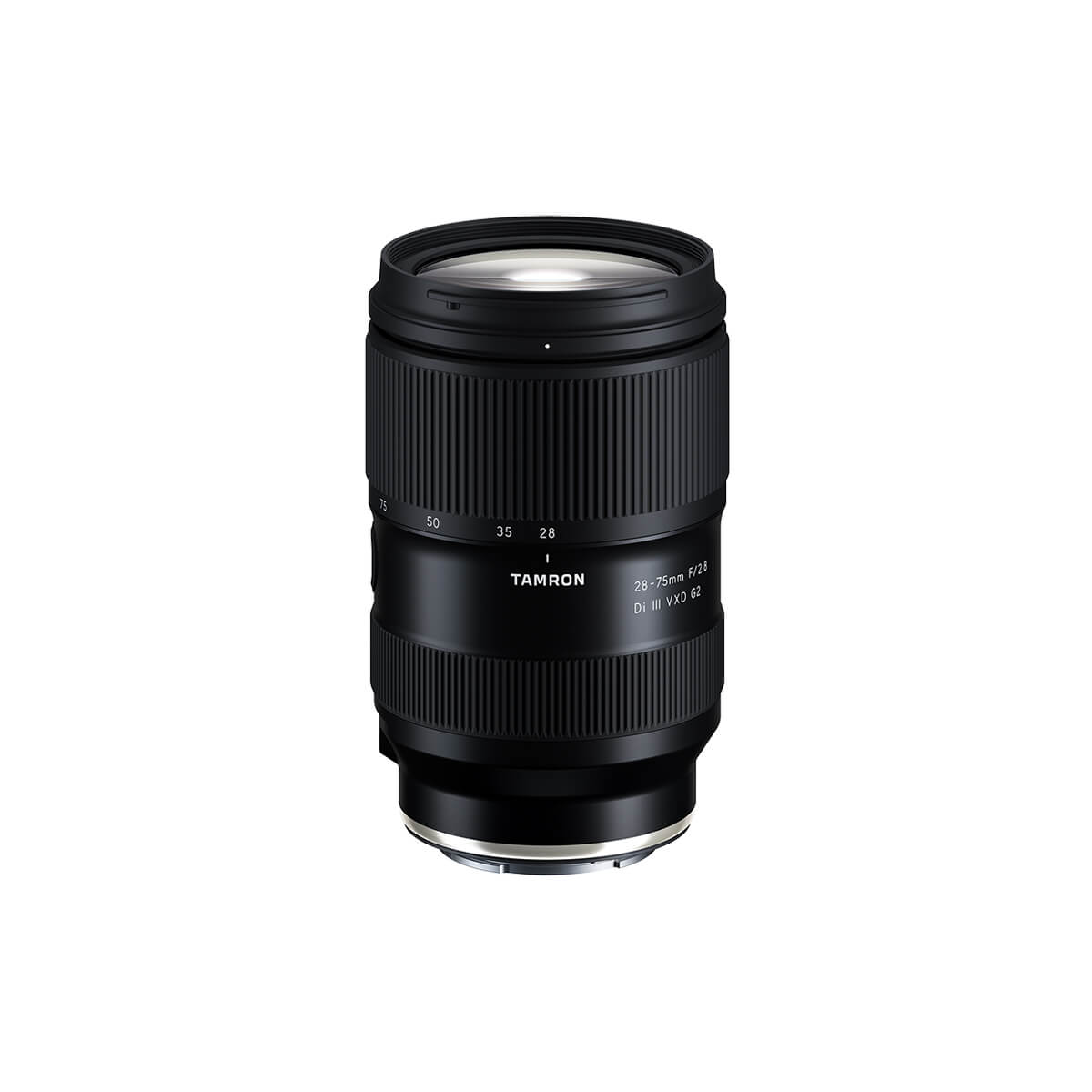
- For full-frame cameras: Tamron 28-75mm F/2.8 Di III VXD G2 – versatile everyday zoom for portraits, travel, and events.
Telephoto Lenses
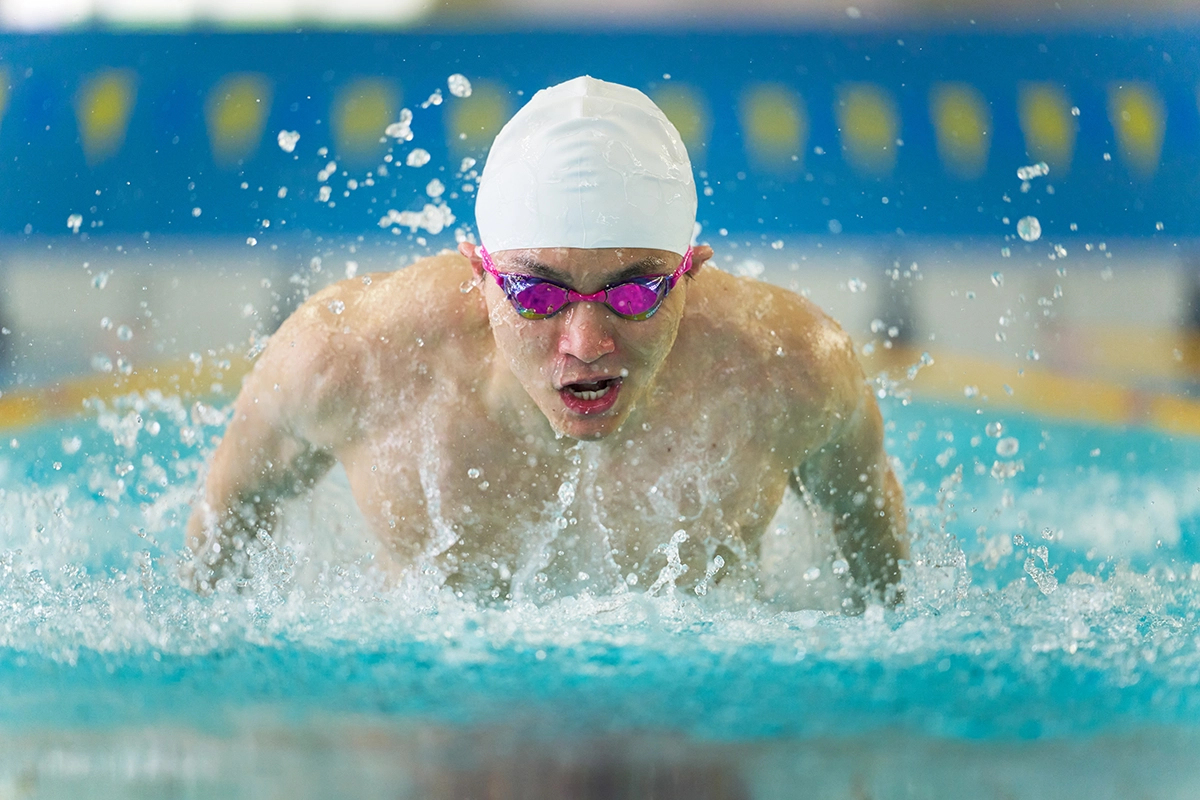
- Focal range: ~70-200mm
- Use cases: Portraits, events, sports, stage performances
- Pros: Strong subject isolation, flattering compression, clean backgrounds
- Cons: Narrower field of view; requires more working distance
Telephoto lenses allow you to frame subjects tightly without needing to be physically close. That’s useful for events and performances where you can’t move freely, and it’s also why telephoto focal lengths are popular for portraits.
The longer focal length compresses perspective, which can make backgrounds feel smoother and less distracting. Telephoto lenses also help you simplify busy scenes by narrowing the field of view and isolating your subject.
Tamron option example: Tamron 70-180mm F2.8 VC VXD G2 – a strong telephoto zoom for portraits and action.
Super-Telephoto Lenses

- Focal range: ~200mm+
- Use cases: Wildlife, birding, outdoor sports, distant action
- Pros: Long reach, tight framing, strong subject separation
- Cons: Can be heavier, more sensitive to camera shake and heat haze
Super-telephoto lenses are built for reach — when you need to capture detail from far away. They’re essential for wildlife and bird photography, where getting physically close isn’t possible or safe.
At longer focal lengths, small movements become more noticeable, which is why stabilization and technique matter more. Super-telephoto lenses are also affected by real-world conditions like atmospheric haze or heat shimmer, especially when shooting across long distances.
Tamron option example: Tamron 150-500mm F/5–6.7 Di III VC VXD – long reach with stabilization for handheld shooting.
All-in-One Zooms

- Focal range: ~18-300mm (varies by model/system)
- Use cases: Travel, walkaround shooting, family moments, casual video
- Pros: Maximum versatility, fewer lens changes, simplified kit
- Cons: Optical compromises compared to specialized lenses
All-in-one zooms are designed for convenience. They’re ideal when you want to cover wide scenes, portraits, and distant subjects without carrying multiple lenses.
They’re especially popular for travel because they reduce the need to change lenses in dusty or unpredictable environments — and they keep your kit light and flexible. The trade-off is that all-in-one lenses may not offer the same low-light performance or edge-to-edge sharpness as more specialized lenses.
Tamron option examples:
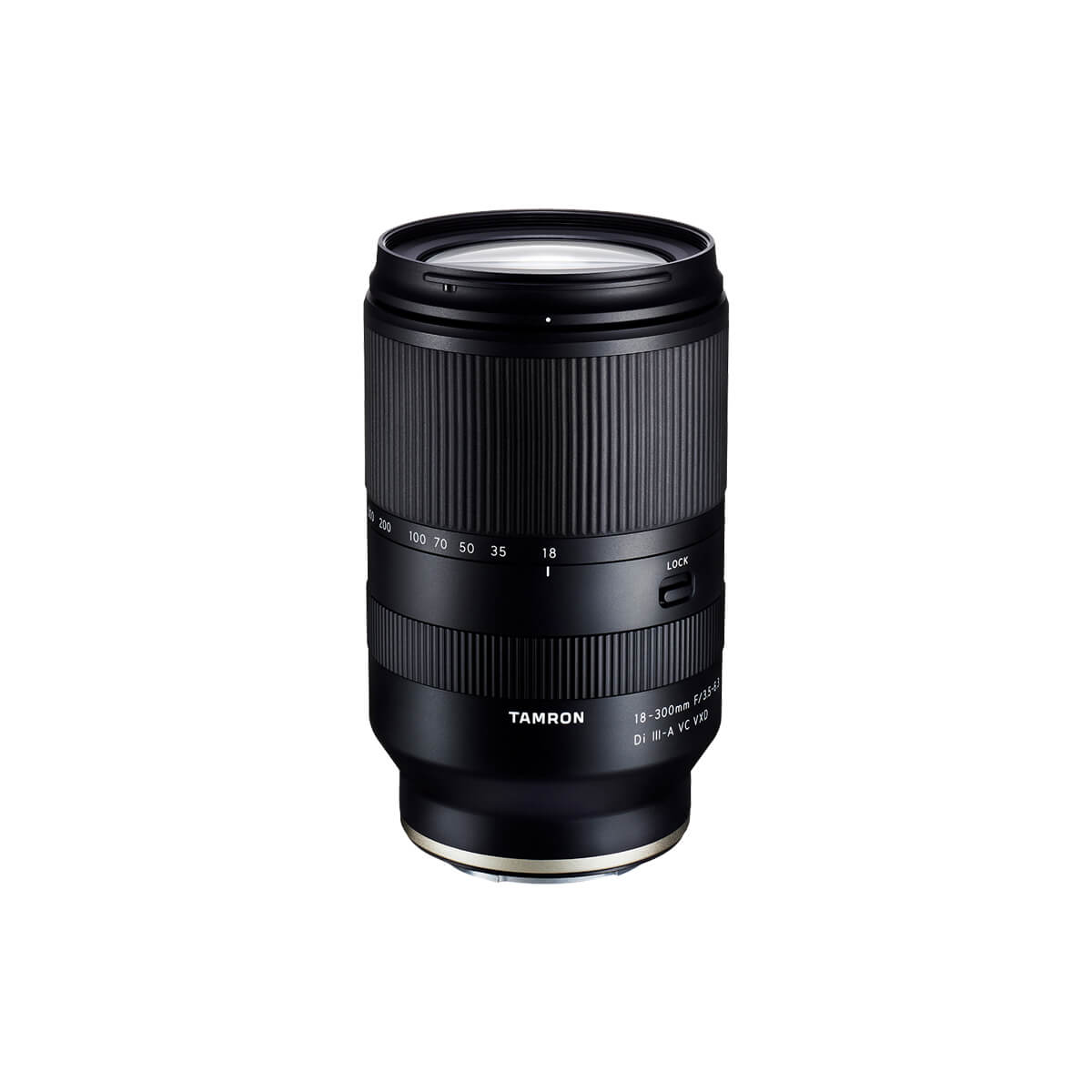
- For APS-C cameras: Tamron 18-300mm F/3.5–6.3 Di III-A VC VXD – versatile travel range with stabilization.
- For full-frame cameras: Tamron 25-200mm F/2.8–5.6 Di III VXD G2 – wide-to-tele flexibility in one lens with a fast aperture at the wide end.
Macro Lenses
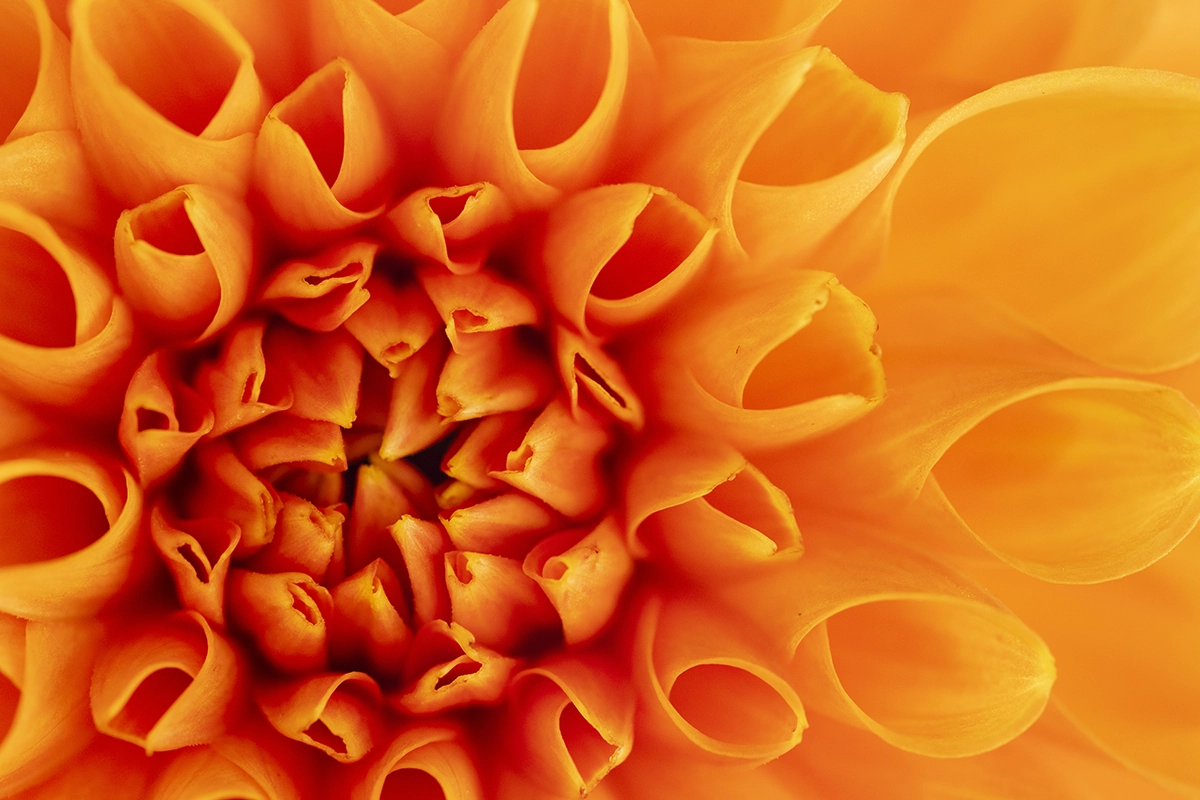
- Use cases: Close-up detail, product photography, food photography, nature
- Pros: True 1:1 magnification, fine detail rendering, creative close-focus looks
- Cons: Narrow field of view, depth of field becomes very thin up close
Macro lenses are designed for close-up photography, allowing you to capture small subjects with high detail. True macro lenses can reach 1:1 magnification, meaning the subject can be reproduced at life-size on the sensor.
Macro lenses are also a favorite for product photography and food photography because they emphasize texture and detail. And many macro lenses double as strong portrait lenses due to their sharpness and pleasing rendering.
Tamron option example: Tamron 90mm F/2.8 Di III VXD 1:1 Macro – built for close-up detail and creative control.
Fisheye Lenses
- Focal range: ~8-16mm
- Use cases: Creative effects, action sports, experimental perspectives
- Pros: Extremely wide view, dramatic curvature
- Cons: Strong distortion, but part of the look
Fisheye lenses are specialty lenses that intentionally curve straight lines and exaggerate perspective. They’re a creative tool rather than an everyday choice, but they can produce dynamic results for action sports, skate photography, and stylized compositions.
Tilt-Shift Lenses
- Use cases: Architecture, product photography, perspective correction
- Pros: Control perspective and plane of focus
- Cons: Specialized workflow, often manual focus, higher learning curve
Tilt-shift lenses allow photographers to correct perspective distortion (keeping vertical lines straight in architecture) and to creatively control the plane of focus. They’re widely used for professional architectural work and studio product photography.
Prime vs. Zoom Lenses

Prime and zoom lenses differ in construction, flexibility, and the way they support your workflow. Choosing between them isn’t about which is “better,” but which is better for the way you shoot.
- Prime lenses have a fixed focal length (like 35mm, 50mm, 85mm, or 90mm). Because they don’t need zoom mechanisms, primes often prioritize optical simplicity and can offer wide maximum apertures for low light and shallow depth of field.
- Zoom lenses have a variable focal length (like 16-30mm or 28-75mm), allowing you to reframe quickly without switching lenses or moving your shooting position.
Key differences photographers consider:
- Flexibility: Zooms adapt quickly to changing scenes, while primes encourage intentional composition and movement.
- Aperture options: Many primes offer very wide apertures, while constant-aperture zooms provide consistent exposure across the range.
- Sharpness and rendering: Primes are often associated with high sharpness and pleasing rendering, but modern zooms can be extremely sharp and reliable.
- Portability and simplicity: One zoom can replace multiple primes in a kit, while a small prime can be an easy lightweight option for daily shooting.
Typical use cases:
- Primes: portraits, low light, street, creative background blur
- Zooms: travel, events, documentary, hybrid photo/video, fast-paced shooting
A common real-world approach is using a zoom as a primary “workhorse” lens and adding a prime for a specific look or low-light advantage. It’s also worth considering aperture consistency and optical complexity when comparing the two: many zooms use variable maximum apertures, while constant-aperture zooms maintain the same brightness across the range for more predictable exposure control. Zoom lenses are also more complex designs because they must stay sharp across multiple focal lengths, but modern optical engineering and coatings have helped close much of the performance gap—making today’s high-quality zooms a strong choice for photographers who want flexibility without sacrificing image quality.
Lens Size, Weight, and Handling Considerations
Lens size and weight affect portability, balance, comfort, and real-world usability — and these factors can matter just as much as sharpness when you’re shooting frequently.
Handling considerations include:
- Portability: Smaller lenses are easier to travel with, hike with, and carry for long sessions.
- Balance on the camera: A heavier lens shifts weight forward, which can increase wrist fatigue during handheld shooting.
- Comfort for long shoots: Event photographers, wildlife shooters, and hybrid creators often shoot for hours at a time, so weight becomes a practical performance factor.
- Stability at longer focal lengths: Longer lenses amplify camera shake, so weight distribution and grip feel can impact sharpness.
- Video workflow: Hybrid creators may need lenses that balance well on gimbals, rigs, or handheld setups.
In general, a lens that feels comfortable and well-balanced helps you shoot longer, react faster, and keep your technique consistent — which often leads to better results than a lens that’s technically excellent but difficult to handle.
What is Image Stabilization and How Does it Work?
Image stabilization is a system designed to reduce blur caused by camera shake — the small movements that happen naturally when you shoot handheld. This is especially important in low light, at longer focal lengths, or when recording video.
Stabilization works by detecting motion and compensating for it, helping keep the image steadier during the exposure. The benefit is that you can often shoot at slower shutter speeds handheld while maintaining sharper results, particularly with static subjects.
Image stabilization is most beneficial when:
- You’re shooting handheld in low light and need slower shutter speeds
- You’re using telephoto focal lengths, where shake is magnified
- You’re photographing still subjects like portraits, architecture, or landscapes
- You’re capturing handheld video, where small movements are more noticeable
It’s important to remember that stabilization helps reduce blur from camera movement — but it does not freeze fast-moving subjects. If your subject is moving quickly, shutter speed is still the primary control..
Full-Frame vs APS-C: How Sensor Size Affects Lenses
Sensor size affects how a lens behaves, especially in terms of angle of view. Full-frame sensors capture a wider view, while APS-C sensors crop into the image, making the scene appear more zoomed-in.
This is often described as crop factor, and it matters in everyday lens selection:
- A lens on APS-C gives a narrower angle of view than it would on full-frame
- This can be helpful for reach (sports, wildlife), but it can make wide-angle shooting harder
Sensor size also affects depth of field and low-light performance in practical ways. While aperture settings work the same mechanically, full-frame cameras often make it easier to achieve stronger background blur and cleaner high-ISO performance — which can influence lens preferences for portraits, events, and low-light shooting.
Compatibility considerations:
- Full-frame lenses can usually be used on APS-C bodies (with a cropped field of view).
- APS-C lenses may not fully cover a full-frame sensor, which can cause vignetting or require crop mode.
Understanding these differences helps you choose lenses more intentionally — especially if you plan to upgrade camera bodies in the future.
What Are Camera Lens Mounts and Why Do They Matter?
A lens mount is the mechanical and electronic interface between a lens and a camera body. For a lens to work properly, it must match the camera’s mount system.
Lens mounts matter because they affect:
- Physical compatibility: The lens must attach securely to the camera.
- Electronic communication: Autofocus, aperture control, EXIF data, and corrections rely on electronic contacts.
- Performance and feature support: Compatibility can influence autofocus speed, stabilization behavior, and overall reliability.
When buying a lens, it’s important to confirm the mount before anything else — even if the lens has the right focal length and features. A lens designed for your camera’s mount will typically provide the most seamless performance.
Adapters can sometimes allow lenses from one mount to work on another, but they may introduce limitations such as slower autofocus, reduced feature support, or handling changes. For most photographers, choosing a lens designed for their native mount is the simplest path to predictable results.
How to Choose a Camera Lens for Your Photography Style
To choose a camera lens for your photography style, start by identifying what you photograph most often, then select a lens with the focal length, aperture, and features that best match those subjects. Wide-angle lenses are ideal for landscapes and architecture, telephoto lenses work best for wildlife and sports, fast lenses suit portraits and low-light shooting, and versatile zoom lenses are well suited for travel and everyday photography.
Below are practical lens recommendations by genre, along with the specifications that matter most in real-world use.
Portrait Photography

Portrait photographers often prioritize flattering perspective, strong subject separation, and reliable autofocus. Short telephoto focal lengths are especially popular because they provide natural-looking facial proportions and a smooth background.
What to look for:
- Short telephoto focal lengths for flattering compression
- A wide maximum aperture for background blur and low light
- Fast, accurate autofocus for eye focus and expressions
Great lens types: Standard zooms, short telephoto zooms, and portrait-friendly primes
Tamron lens suggestions:
- Tamron 28-75mm F/2.8 Di III VXD G2 (A063) for flexible portrait framing from environmental to tighter compositions
- Tamron 17-70mm F/2.8 Di III-A VC RXD (B070) for APS-C cameras (equivalent to 25-105mm)
- Tamron 70-180mm F/2.8 Di II VC VXD G2 (A065) for stronger background separation and candid distance
- Tamron 35-150mm F/2-2.8 Di III VXD (A058) for portrait versatility that covers classic focal lengths in one lens, from natural-looking 35mm scenes to flattering 85–150mm compression
Landscape Photography
Landscape photography often benefits from wide or ultra wide focal lengths to capture expansive scenes, strong leading lines, and foreground-to-background depth. Many landscape photographers also prioritize edge-to-edge sharpness and flare resistance for sunrise/sunset shooting.
What to look for:
- Wide to ultra wide focal lengths
- Strong corner sharpness and contrast
- Weather sealing for outdoor conditions
- Flare resistance for shooting into the light
Great lens types: Ultra wide-angle zooms and wide-angle zooms for flexibility in framing
Tamron lens suggestions:
- Tamron 16-30mm F/2.8 Di III VXD G2 (A064) for wide landscape coverage with a constant aperture for low light and consistent exposure
- Tamron 17-50mm F/4 Di III VXD (A068) for lightweight wide-to-standard versatility when hiking, traveling, or shooting handheld
- Tamron 11-20mm F/2.8 Di III-A RXD (B060) for ultra wide APS-C landscapes with dramatic perspective and strong foreground emphasis
Wildlife Photography
Wildlife photography requires reach, speed, and stability. Because subjects can move quickly and unpredictably, autofocus performance and stabilization become key specifications—not just focal length.
What to look for:
- Longer focal lengths (200mm+) for reach
- Fast autofocus for tracking movement
- Stabilization for handheld shooting
- Comfortable handling for long sessions
Great lens types: Super-telephoto zooms options with stabilization for wildlife and bird photography
Tamron lens suggestions:
- Tamron 50-400mm F/4.5-6.3 Di III VC VXD (A067) for flexible reach from mid-telephoto to long telephoto in one lens for wildlife and birding
- Tamron 150-500mm F/5-6.7 Di III VC VXD (A057) for extended reach to capture distant wildlife with stabilization support for handheld shooting
Sports Photography
Sports photography is fast-paced and often unpredictable. Telephoto zooms are popular because they let you adjust framing quickly as the action moves closer or farther away.
What to look for:
- Telephoto zoom range for changing subject distance
- Fast autofocus response and tracking
- A usable maximum aperture for indoor or evening sports
- Stable handling for long shooting sessions
Great lens types: Telephoto zooms and super-telephoto zooms for indoor and outdoor sports coverage
Tamron lens suggestions:
- Tamron 70-180mm F/2.8 Di III VC VXD G2 (A065) for fast action coverage with a bright aperture and quick telephoto framing
- Tamron 70-300mm F/4.5-6.3 Di III RXD (A047) for lightweight reach when you need extra distance without a heavy kit
- Tamron 50-400mm F/4.5-6.3 Di III VC VXD (A067) for multi-sport versatility that adapts quickly from near-field moments to distant plays
Travel Photography
Travel photography rewards versatility, portability, and speed. Many travelers prefer a lens that covers wide scenes, portraits, and details without needing constant lens changes.
What to look for:
- Lightweight size and comfortable handling
- Versatile zoom range
- Stabilization for handheld shooting in variable light
- Practical focal lengths for people + places
Great lens types: Standard zooms and all-in-one zooms
Tamron lens suggestions:
- Tamron 17-70mm F/2.8 Di III-A VC RXD (B070) for an APS-C travel kit staple that balances versatility, low light performance, and stabilization
- Tamron 18-300mm F/3.5-6.3 Di III-A VC VXD (B061) for APS-C all-in-one convenience that covers wide scenes through distant details without lens changes
- Tamron 25-200mm F/2.8-5.6 Di III VXD G2 (A075) for lightweight full-frame range with a bright wide end for everyday travel storytelling
- Tamron 28-300mm F/4-7.1 Di III VC VXD (A074) for full-frame travel flexibility that handles wide, portrait, and telephoto moments in one lens
Astrophotography and Night Skies
Astrophotography typically benefits from wide focal lengths and bright maximum apertures, helping you capture more sky while gathering more light in dark environments.
What to look for:
- Wide to ultra wide focal lengths for sky coverage
- Bright maximum aperture to gather light
- Strong optical performance to keep stars clean and defined
- Flare control for bright light sources in frame
Great lens types: Ultra wide-angle zooms and wide primes/zooms
Tamron lens suggestion:
- Tamron 16-30mm F/2.8 Di III VXD G2 (A064) for wide sky coverage and strong low-light flexibility for night landscapes and star scenes
Macro Photography
Macro photography is designed around detail. A true macro lens lets you focus close enough for life-size reproduction and gives you control over how texture and small subjects are rendered.
What to look for:
- 1:1 magnification for true macro capability
- Comfortable working distance (space between lens and subject)
- Smooth manual focus control for precision
- Strong sharpness and contrast for detail rendering
Great lens types: Dedicated macro lenses for close-up detail, product photography, and creative textures
Tamron lens suggestions:
- Tamron 90mm F/2.8 Di III VXD 1:1 Macro (F072) for true 1:1 macro detail with comfortable working distance for close-up subjects
- Tamron 35mm F/2.8 Di III OSD M1:2 (F053) for everyday wide-angle shooting with 1:2 macro capability for close-up creativity
Lens Coatings, Optical Quality and Distortion Control

Lens coatings and optical design help reduce flare, ghosting, chromatic aberration, and distortion so your images stay sharp, contrasty, and clean in challenging conditions.
Even when two lenses share similar focal lengths, optical engineering can create noticeable differences in real-world results. Common optical issues photographers pay attention to include:
- Flare: A haze or loss of contrast caused by strong light sources
- Ghosting: Reflections or artifacts that appear when bright lights hit the lens
- Chromatic aberration: Color fringing along high-contrast edges
- Distortion: Straight lines appearing curved (especially in wide-angle lenses)
- Vignetting: Darkened corners, often more visible at wider apertures
High-quality coatings are especially important for landscapes, travel, and event shooting where you may be working in mixed lighting, backlight, or high-contrast environments.
Tamron lenses incorporate advanced optical engineering and coating technologies such as BBAR-G2 (Broad-Band Anti-Reflection Generation 2) to help maintain contrast and reduce reflections—supporting clearer images when shooting into bright light sources.
Autofocus, Manual Focus and Focusing Technologies

Modern lenses use advanced autofocus motors for fast, quiet focusing, but still allow manual control when precision is needed.
Autofocus performance is influenced by both the camera and the lens, but lens technology plays a major role in how quickly focus locks, how smoothly it transitions, and how confidently it tracks movement. For example, Tamron’s VXD (Voice-coil eXtreme-torque Drive) linear motor autofocus system is designed to deliver fast, precise, and quiet focusing, making it especially useful for action, wildlife, portraits, and video work.
Key focusing terms and specs to understand include:
- Autofocus motor type: Different motor designs affect speed and noise. Fast, quiet autofocus is especially valuable for wildlife, sports, portraits, and video.
- Manual focus control: Useful for macro work, low light, and situations where autofocus may hunt.
- Minimum Object Distance (MOD): The closest distance a lens can focus. A shorter MOD enables more dramatic close-ups and detail shots, even with non-macro lenses.
- Focus breathing: A change in framing while focusing. This is most noticeable in video and can affect the look of focus pulls.
- Focus limiter switches (when available): Can improve autofocus speed by limiting the focusing range, especially for telephoto work.
For hybrid creators, focusing isn’t only about speed — it’s also about how stable and natural focus transitions look during video recording.
Weather Sealing, Build Quality and Durability

Weather sealing and strong build quality help protect a lens from dust, moisture, and challenging environments, making it easier to shoot with confidence outdoors.
Durability matters for photographers who work in real-world conditions like:
- rain or snow
- dust and sand
- coastal environments with salt spray
- long hiking or travel sessions
- frequent lens changes in unpredictable weather
Build quality also affects the everyday shooting experience. Smooth rings, stable barrel construction, and dependable performance help photographers stay focused on composition instead of worrying about gear limitations.
When evaluating durability, look for features like:
- protective seals and gaskets
- strong exterior construction
- fluorine coating on the front element for easy lens cleaning maintenance
- reliable ring feel and control
- long-term usability for travel and outdoor work
Which Tamron Lens Will Meet Your Needs?
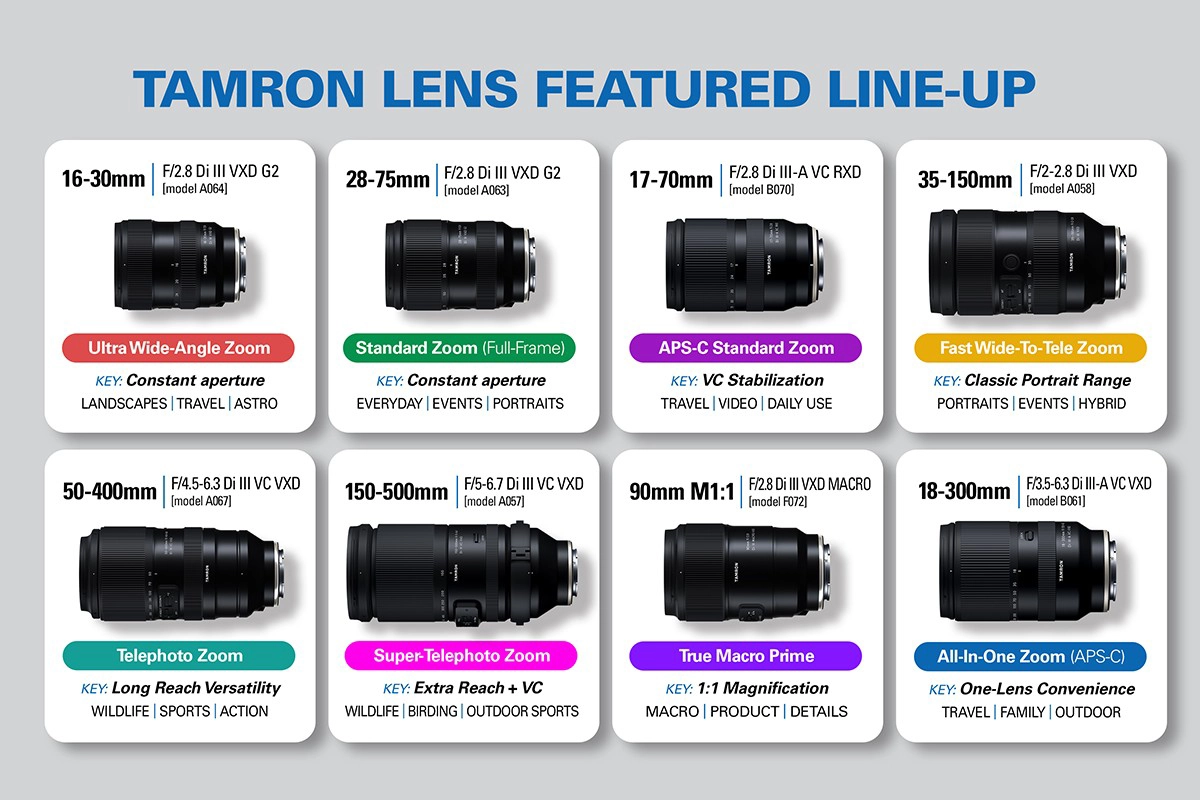
Tamron offers lenses designed for every photography style, from wide-angle zooms for landscapes to versatile standard zooms for everyday shooting. After learning the fundamentals of lens behavior and selection, the next step is choosing a lens that matches your most common subjects and shooting conditions.
Below are recommendations based on popular photography goals.
Best Wide-Angle Zoom for Landscapes, Travel, and Hybrid Creators
Tamron 16-30mm F/2.8 Di III VXD G2 (Model B061)
A fast, ultra wide-angle zoom that supports expansive composition, low-light flexibility, and consistent exposure across the zoom range. A strong fit for landscapes, architecture, interiors, and night scenes.
Quick view:
- Ultra wide-angle zoom range for immersive framing
- Constant maximum aperture for exposure consistency
- Built for wide storytelling and hybrid workflows
Best Standard Zoom for Everyday Photography, Events, and Portraits
Tamron 28-75mm F/2.8 Di III VXD G2 (Model A063)
A versatile full-frame standard zoom designed to cover wide-to-portrait focal lengths in one lens. Ideal for travel, portraits, events, and everyday shooting where flexibility matters.
Quick view:
- Standard zoom range for daily use
- Constant maximum aperture for depth of field control
- Built for fast-paced shooting and consistent results
Best APS-C Standard Zoom for One-Lens Versatility
Tamron 17-70mm F/2.8 Di III-A VC RXD (Model A064)
A constant-aperture standard zoom built for APS-C shooters who want a flexible range for everyday photography, travel, and video. Stabilization support makes it especially practical for handheld shooting.
Quick view:
- Standard zoom range optimized for APS-C
- Constant maximum aperture for consistent exposure
- Stabilization support for handheld shooting and hybrid use
Best Wide-to-Telephoto Zoom for Portraits, Events, and One-Lens Coverage
Tamron 35-150mm F2-2.8 Di III VXD (Model A058)
A bright wide-to-telephoto zoom that spans the core portrait focal lengths in one lens. Its fast aperture range and flexible reach make it ideal for portrait sessions, event coverage, and everyday use when you want versatile framing without swapping lenses.
Quick view:
- Wide-to-telephoto zoom range that covers classic portrait focal lengths in one lens
- Bright F2-2.8 aperture for strong subject separation and low-light performance
- Designed for portraits, events, and versatile shooting in changing conditions
Best Telephoto Zoom for Portraits, Events, and Sports
Tamron 70-180mm F/2.8 Di III VC VXD G2 (Model A065)
A bright telephoto zoom built for subject-focused photography, with strong background separation and fast framing flexibility. A great fit for portraits, weddings, events, and sports where you want reach without stepping too far back.
Quick view:
- Telephoto zoom range for tight framing and subject isolation
- Bright maximum aperture for low light and background blur
- Fast, responsive autofocus for action and candid moments
Best Super-Telephoto Zoom for Wildlife, Birding, and Outdoor Sports
Tamron 150-500mm F/5-6.7 Di III VC VXD (Model A057)
A super-telephoto zoom designed for long-distance subjects, giving photographers the reach needed for wildlife and bird photography while supporting handheld shooting with stabilization. Also well suited for outdoor sports where the action stays far from the sidelines.
Quick view:
- Super-telephoto reach for distant subjects and tight compositions
- VC image stabilization support for handheld shooting
- Built for wildlife tracking and outdoor action
Best Ultra-Telephoto Zoom for Wildlife, Sports, and All-Around Reach
Tamron 50-400mm F/4.5-6.3 Di III VC VXD (Model A067)
A versatile telephoto zoom that bridges everyday telephoto shooting and serious long-range reach in one lens. A strong option for wildlife, sports, outdoor events, and travel when you want the flexibility to capture both near and distant subjects without switching lenses.
Quick view:
- Wide telephoto zoom range for flexible subject distance coverage
- VC stabilization support for handheld shooting
- Great for multi-genre reach, from sports sidelines to wildlife
Best All-in-One Zoom for Travel, Family, and Everyday Convenience (APS-C)
Tamron 18-300mm F/3.5-6.3 Di III-A VC VXD (Model B061)
An all-in-one zoom built for travel and daily shooting when you want maximum versatility with minimal gear. Ideal for vacations, family moments, and walkaround photography where you may encounter wide scenes, portraits, and distant details in the same day.
Quick view:
- All-in-one zoom range for wide-to-telephoto coverage in one lens
- VC stabilization support for handheld shooting on the go
- Designed for travel flexibility and fewer lens changes
Best All-in-One Zoom for Travel, Street, and Everyday Full-Frame Shooting
Tamron 28-300mm F/4-7.1 Di III VC VXD (Model A074)
A full-frame all-in-one zoom built for photographers who want wide-to-telephoto flexibility in one lens. Well suited for travel, street photography, and everyday shooting when you want to stay ready for a wide range of subjects without carrying multiple lenses.
Quick view:
- Full-frame all-in-one range for wide scenes through distant subjects
- VC stabilization support for handheld shooting
- Convenient one-lens setup for travel and walkaround use
Best Macro Lens for Close-Up Detail, Nature, and Product Photography
Tamron 90mm F/2.8 Di III VXD 1:1 Macro (Model F072)
A true 1:1 macro lens designed for extreme detail and sharp rendering at close distances. Ideal for macro subjects like flowers and insects, as well as product photography and food photography where texture and fine detail matter.
Quick view:
- True 1:1 macro magnification for life-size reproduction
- Short telephoto focal length for comfortable working distance
- Built for precision focusing and close-up sharpness
Final Thoughts: Choosing the Right Camera Lens Starts With Knowing What You Want to Create
Understanding the different types of camera lenses makes it easier to choose gear that supports your photography goals — not just your camera settings. Once you know how focal length, aperture, stabilization, and focusing systems affect your images, you can select lenses more confidently and get more consistent results in the field.
Whether you’re building a lightweight travel kit, upgrading your portrait setup, or looking for the reach needed for wildlife and sports, the right lens helps you shoot with more control, better image quality, and fewer limitations.
Explore Tamron’s wide range of mirrorless lenses to find the focal lengths and features that match your style — and use what you’ve learned here to choose a lens that fits the way you actually shoot.
Where to Buy Tamron Lenses
Learn more about Tamron lenses at an authorized Tamron dealer near you or shop directly at the official TAMRON Store.
People Also Ask About the Different Types of Camera Lenses
What are the main types of camera lenses?
The main types of camera lenses include ultra wide-angle, wide-angle, standard, telephoto, super-telephoto, macro, and specialty lenses. Each type is designed to capture a different field of view and supports different photography goals.
How do I know what focal length I need?
Start with what you photograph most often. Wide focal lengths work best for landscapes, travel, and interiors, while longer focal lengths are better for portraits, wildlife, and sports. Zoom lenses are a flexible option if you want multiple focal lengths in one lens.
What’s the difference between a prime lens and a zoom lens?
A prime lens has one fixed focal length, while a zoom lens covers a range of focal lengths. Primes often prioritize simplicity and creative depth of field control, while zooms are popular for versatility and fast-paced shooting situations.
Is a bigger aperture always better?
Not always. A wider aperture can help in low light and create stronger background blur, but smaller apertures are often better for landscapes and scenes where you want more of the image in focus. The best aperture depends on your subject and creative intent.
Do I need image stabilization in my lens?
Image stabilization is most helpful for handheld shooting in low light, at longer focal lengths, or when recording video. It reduces blur from camera shake, but it won’t freeze fast-moving subjects—shutter speed is still the key for action.
Frequently Asked Questions About the Different Types of Camera Lenses
1. What lens should beginners start with?
A standard zoom is often the easiest starting point because it covers wide-to-portrait focal lengths and works well for everyday subjects like travel, family, and street photography.
2. Can I use full-frame lenses on APS-C cameras?
Yes. Full-frame lenses generally work on APS-C cameras, but the field of view will look tighter because of crop factor.
3. Can I use APS-C lenses on a full-frame camera?
Sometimes, but APS-C lenses may not cover the full sensor area, which can cause vignetting or force the camera into crop mode depending on the system.
4. What does “macro” mean on a camera lens?
A true macro lens is designed for close focusing and high magnification. Many dedicated macro lenses offer 1:1 magnification for life-size detail capture.
5. What matters more: the camera body or the lens?
Both matter, but the lens has a major impact on sharpness, background blur, low-light flexibility, and overall rendering. Upgrading your lens is often one of the most noticeable improvements you can make.