Instant Savings
 Rebate Claims
 Support
 Find a Dealer
Photography of the cosmos often requires equipment capable of capturing both the immense scale of the night sky and the landscapes beneath it. As an astrophotographer specializing in starry landscapes, auroras, astronomical phenomena, and rocket launches, I am constantly searching for tools that expand creative possibilities.
Hello, everyone. My name is Teruyasu Kitayama, and I am an astrophotographer. My work primarily focuses on the cosmos, ranging from starry landscapes and astrophotography to the breathtaking moments of rocket launches.
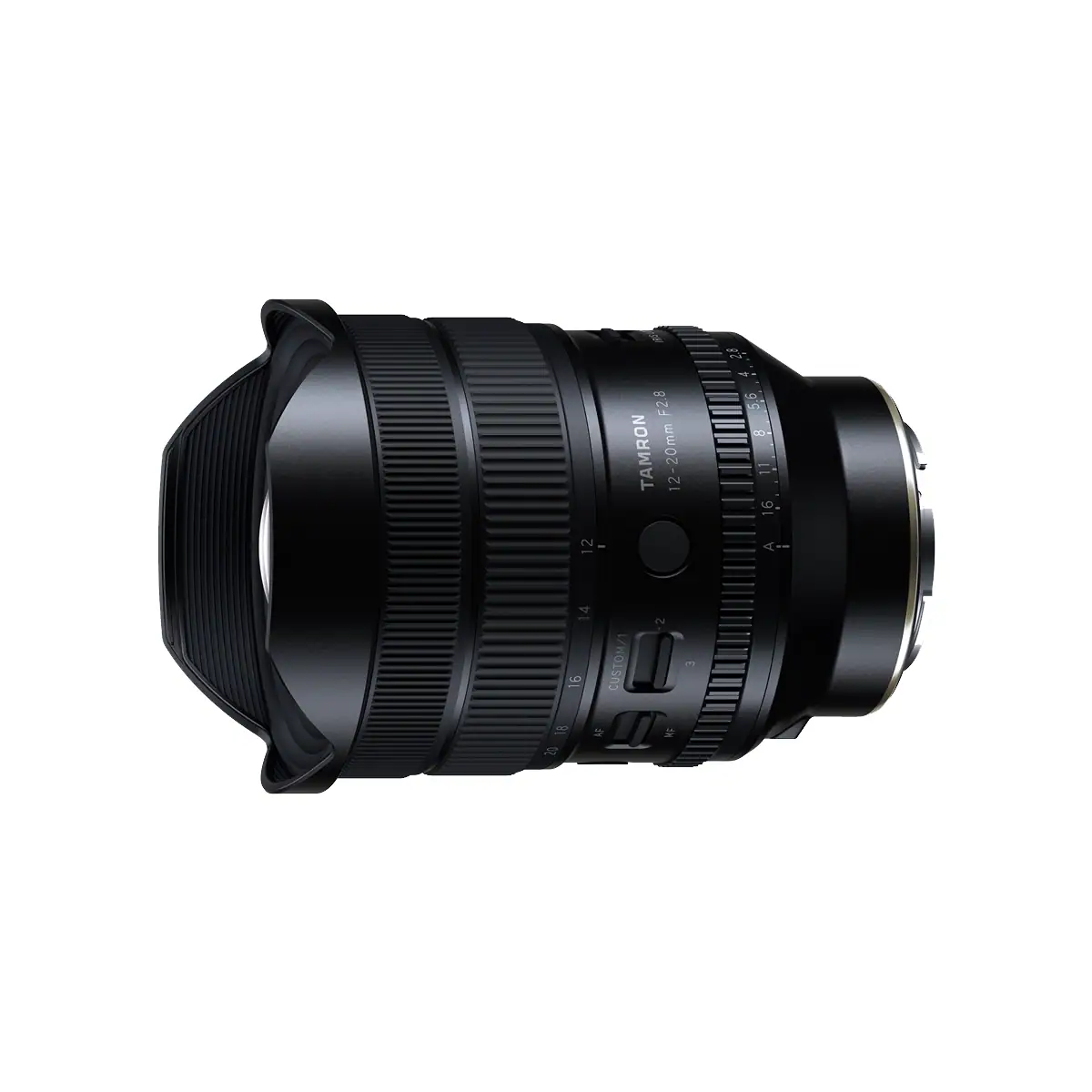
Recently, I had the opportunity to take the new Tamron 12-20mm F2.8 (Model A084) for Sony E-mount out for a field test. My journey took me from the crisp winter skies of Japan to the stunning summer nightscapes of New Zealand.
By Teruyasu Kitayama
In this article, I’ll share my experiences and the results I achieved with this lens, discussing the unique creative potential that only this 12-20mm F2.8 ultra wide-angle zoom lens can offer for astrophotography.
What You’ll Learn in This Review
- How 12mm expands astrophotography compositions
- Real-world aurora photography performance
- Shooting meteor showers with an ultra wide-angle zoom
- Optical performance for stars and nightscapes
- Benefits of Astro FC-L and Focus Set Button functions
- How the lens performs during international astrophotography expeditions
The Locations I Photographed for This Tamron 12-20mm F2.8 Astrophotography Review
The locations featured throughout this review include:
- Jogasaki Coast, Japan
- Lake Yamanaka and Mt. Fuji
- Asagiri Highland
- South Island, New Zealand
- Waipapa Point Lighthouse
- Southern Hemisphere Milky Way locations
- Aurora photography locations throughout New Zealand
12-20mm F2.8 — The Dynamics of Landscape and Astrophotography at 12mm Ultra Wide-Angle
The greatest appeal of the 12-20mm F2.8 (Model A084) is its ability to capture the vastness of the starry sky and the terrestrial landscape in a single, seamless frame. In starry landscape photography, we don’t just shoot the stars — we tell a story by combining them with the environment, whether it’s the terrain, architecture, mountains, or the sea. This makes a lens with such a wide angle of view a formidable weapon in your kit. While our combined peripheral vision spans nearly 180°, our “effective field of vision” — the area we actually focus on — is only about 50° at best. In contrast, the world captured at a 12mm focal length spans approximately 120°. Being able to render such a massive expanse so vividly in a single shutter click allows you to truly feel the dynamism of the world around you.
Another huge plus is that this is a zoom lens. It gives you the flexibility to adjust your angle of view on the fly, moving from the epic, dynamic sweep of 12mm to a tighter, more composed 20mm frame depending on the scene. Furthermore, the bright F2.8 aperture is highly practical for astrophotography; even in low-light environments, it helps you keep the shutter speed fast enough to get a sharp shot.
12mm vs. 20mm: Choosing the Right Perspective for Astrophotography
Capturing the Vastness of the Night Sky at 12mm
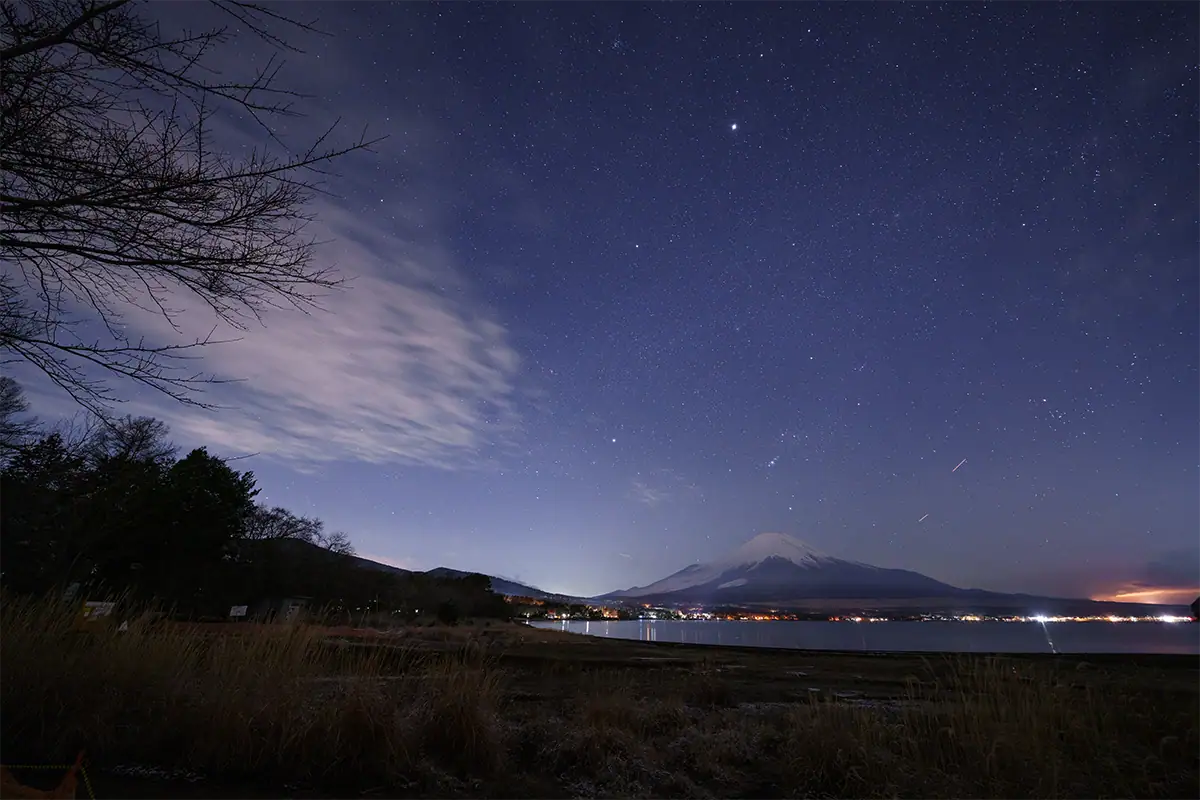
I captured this shot at Lake Yamanaka, featuring the winter constellations setting over Mt. Fuji. By taking advantage of the 12mm ultra wide-angle, I was able to fit everything from the foreground grass and the lake to Mt. Fuji and the starry sky into a single frame, creating a deep sense of perspective. The true appeal of an ultra wide-angle lens is how it captures the dynamic scale of the vast sky and the landscape together in a single shot. This allows you to feel the same immense open space you experience when looking up at the sky. I feel that the ability to create a composition that embraces everything from the immediate foreground to the distant horizon is a unique and powerful characteristic of the 12mm focal length.
Using 20mm to Emphasize Constellations
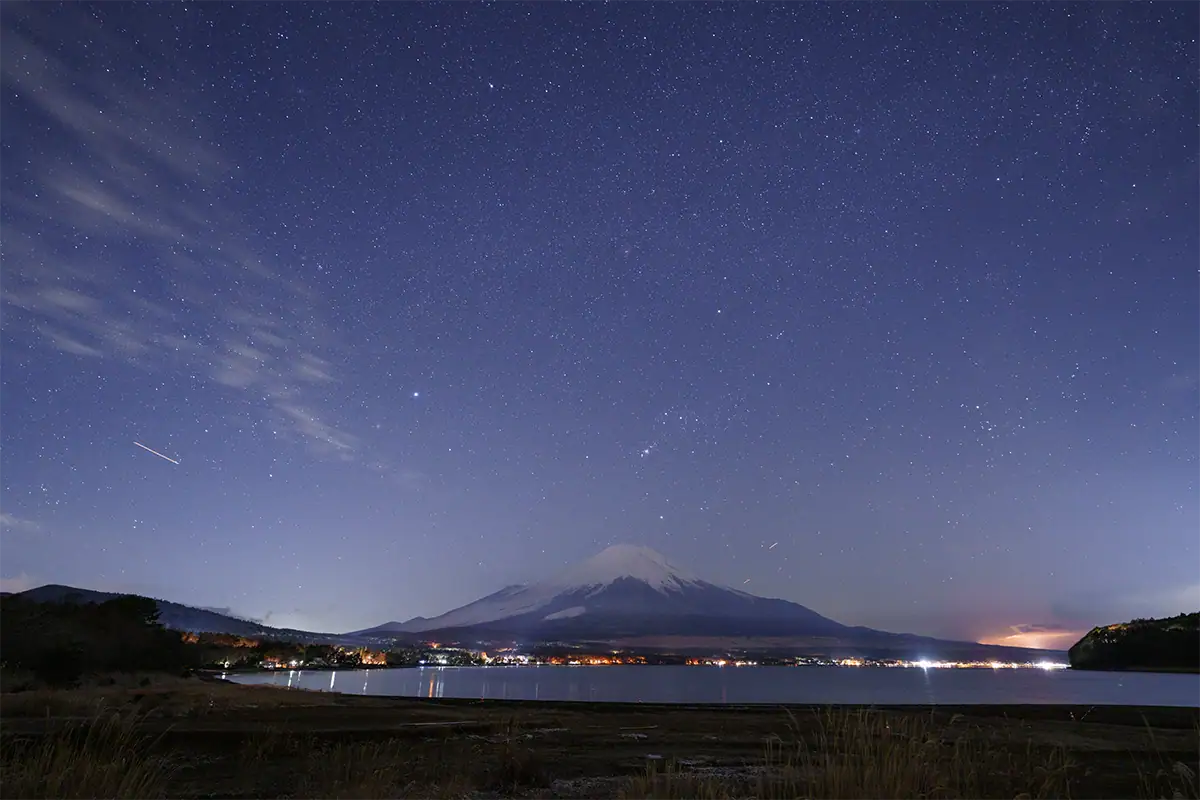
This shot was taken at the same location, but at a focal length of 20mm. Compared to 12mm, the tighter angle of view gives Mt. Fuji and the winter constellations a much stronger presence. This composition makes the brilliance of the starry sky the main subject of the photo. Even though it is still a wide-angle shot, 20mm allows the sky to take up a larger portion of the frame, making the density of the stars and the shapes of the constellations much more impressive. The beauty of this zoom lens is that it lets you choose the perfect angle for your creative intent — ranging from the dynamic landscape at 12mm to a composition like this at 20mm where the stars take center stage..
Building Depth in Astro-Landscape Compositions
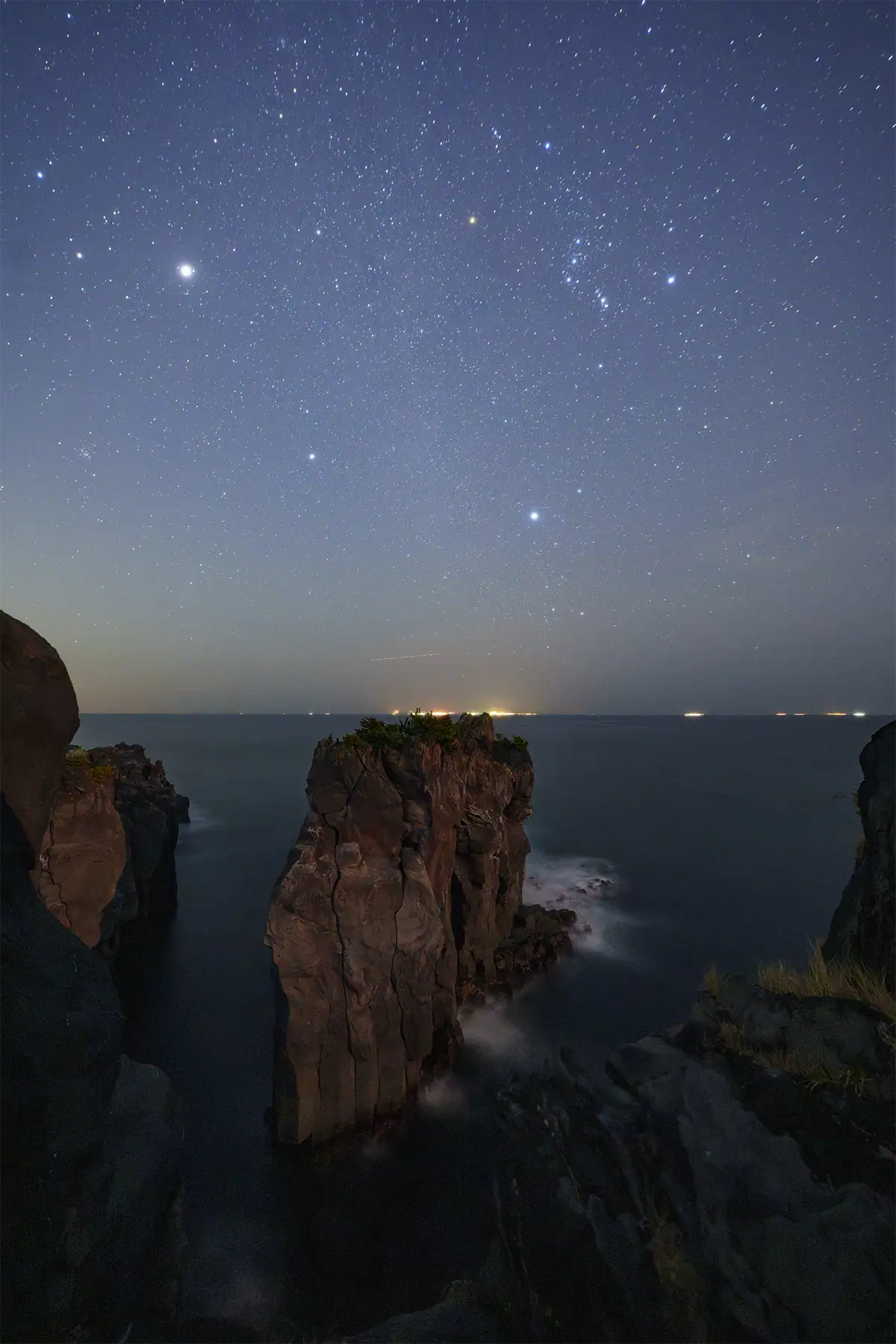
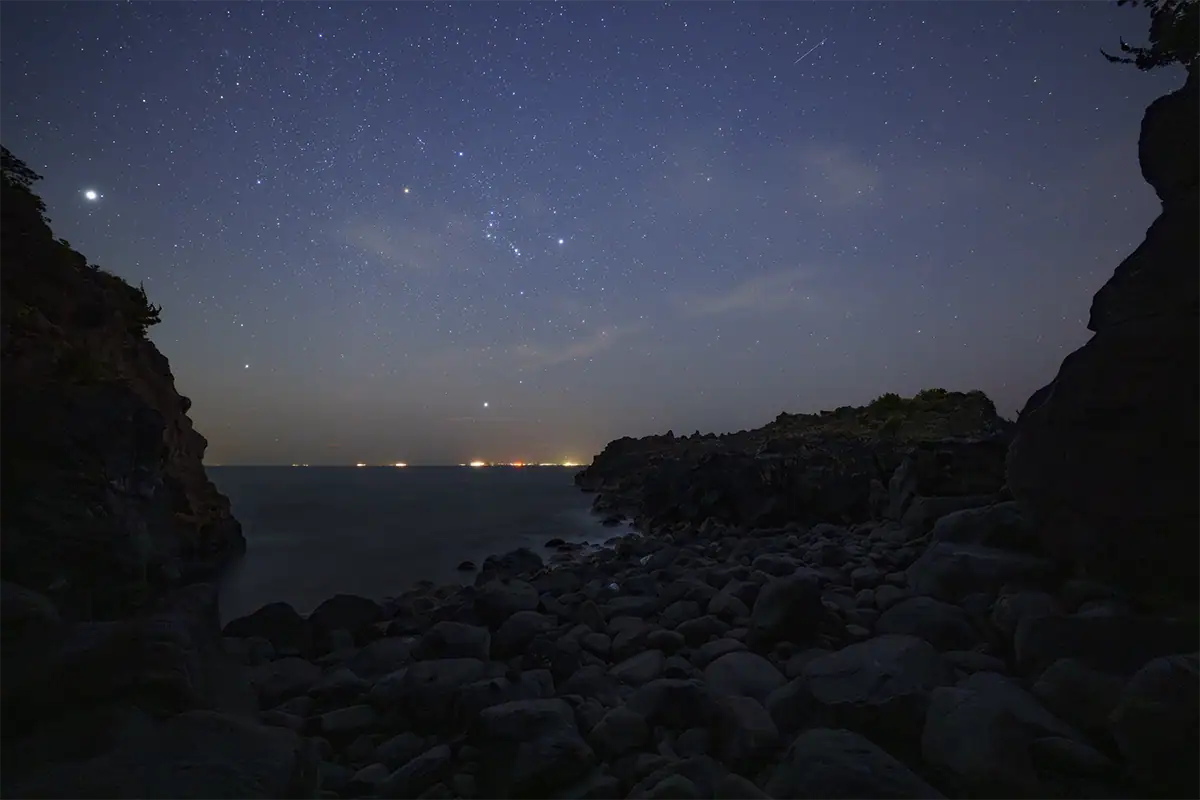
I set up my tripod at the very edge of a cliff on the Jogasaki Coast and tilted the camera sharply downward for this shot. Standing before me was a striking, pillar-shaped rock formation rising about 20 meters out of the sea. Normally, a composition like this would only frame the water and the rocks.
However, thanks to the 12mm ultra wide-angle, I was able to include a vast portion of the sky, even capturing the Winter Triangle within the frame. The ability to express both the dynamic shapes of the rock formations and the starry sky simultaneously is a unique advantage of ultra wide-angle lenses. To make the stars look more prominent and impressive, I used a soft filter.
Balancing Landscape and Celestial Elements
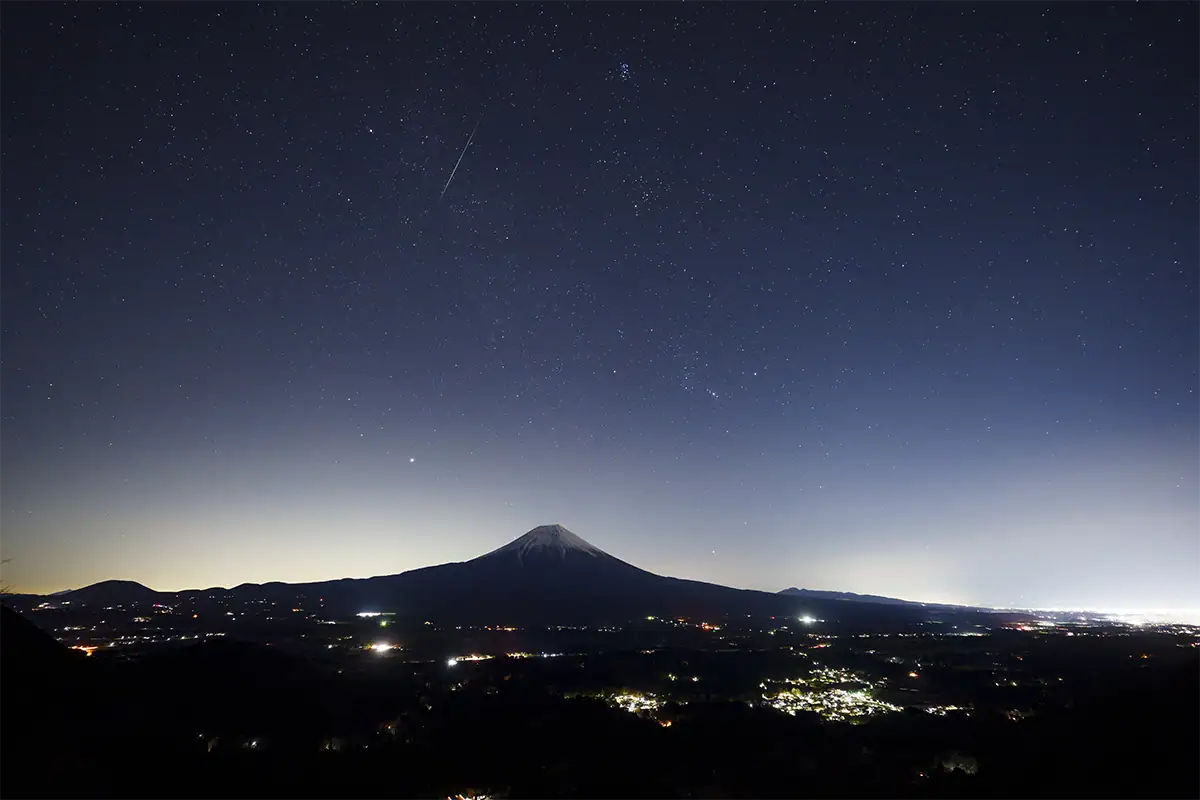
I captured this shot on the peak night of the Geminid meteor shower from a location overlooking Mt. Fuji and the Asagiri Highland area. Since you never know when or where a meteor will appear, an ultra wide-angle lens that can capture the broadest possible range is a huge advantage. The 12mm focal length captures a massive portion of the starry sky in a single frame, significantly increasing your chances of catching a meteor. In this photo, I was able to include the night view of Mt. Fuji and the Asagiri Highland while successfully framing a meteor streaking from the Geminids’ radiant point.
Capturing Southern Hemisphere Stars and Auroras — Enjoying Compositional Freedom with the 12mm to 20mm Zoom Range
In late January 2026, while on an expedition to the South Island of New Zealand, a G-class geomagnetic storm triggered by solar activity reached Earth. I was fortunate enough to capture a magnificent aurora spanning the entire night sky. Geomagnetic storms occur when large amounts of plasma released from the sun collide with Earth’s magnetosphere. When this activity is strong, auroras can appear at lower latitudes than usual. Recently, solar activity has been very high, even making headlines in Japan where “low-latitude auroras” have been observed.
The aurora I saw in New Zealand was massive, covering the entire sky. It was unforgettable — constantly changing shape and pulsing with a steady rhythm, like a heartbeat. Because auroras change second by second, having the widest possible angle of view is a huge advantage for capturing their full scale. The 12mm focal length is truly perfect for aurora photography. Furthermore, while offering a bright F2.8 aperture, this lens is lightweight at approximately 20.2 oz. (570g). Its portability is a major plus for international expeditions, allowing you to carry it easily even during long-distance travel.
Photographing the Milky Way and Aurora at Waipapa Point
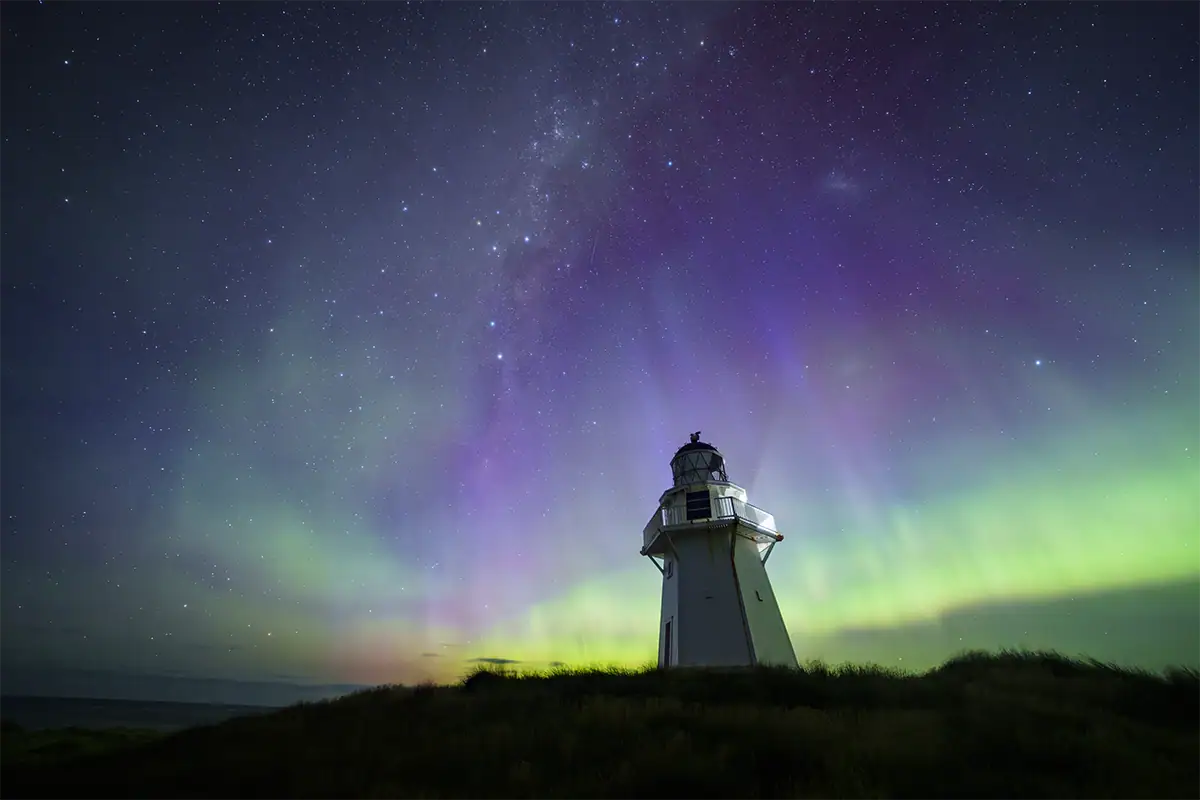
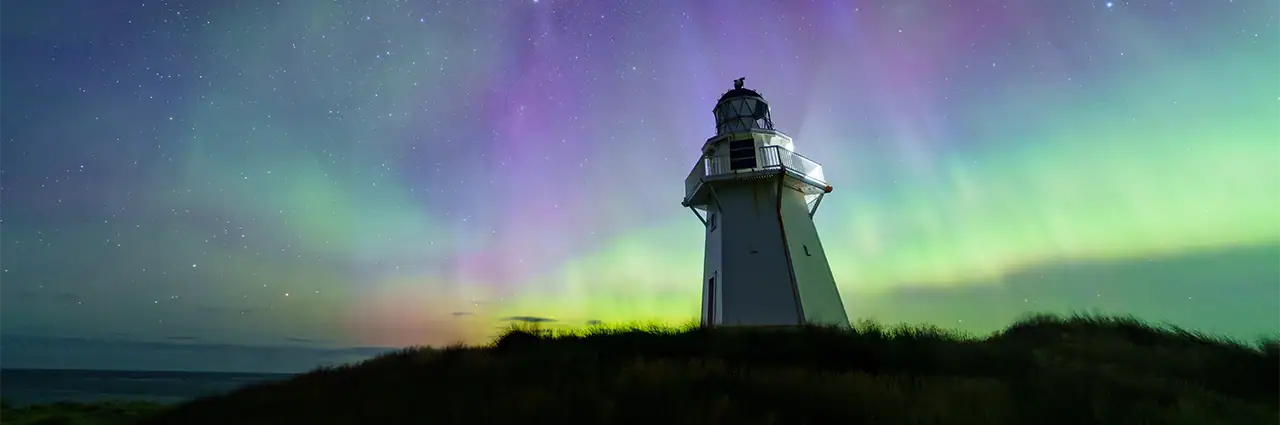
At Waipapa Point, on the southern tip of New Zealand’s South Island, I captured the southern night sky with a beautiful white lighthouse in the foreground. My main goal for this expedition was to photograph this lighthouse under the stars, but I was lucky enough to encounter a G-class geomagnetic storm, which allowed me to capture a massive aurora as well.
While diagonal or circular fisheye lenses are often used for aurora photography, I prefer an ultra wide-angle lens when shooting with an iconic symbol like this lighthouse because it has much less distortion. This shot — combining the dense Milky Way unique to the Southern Hemisphere, the Large Magellanic Cloud, and the aurora — is a truly unforgettable moment in my career as a photographer.
Using 20mm for Aurora and Constellation Photography
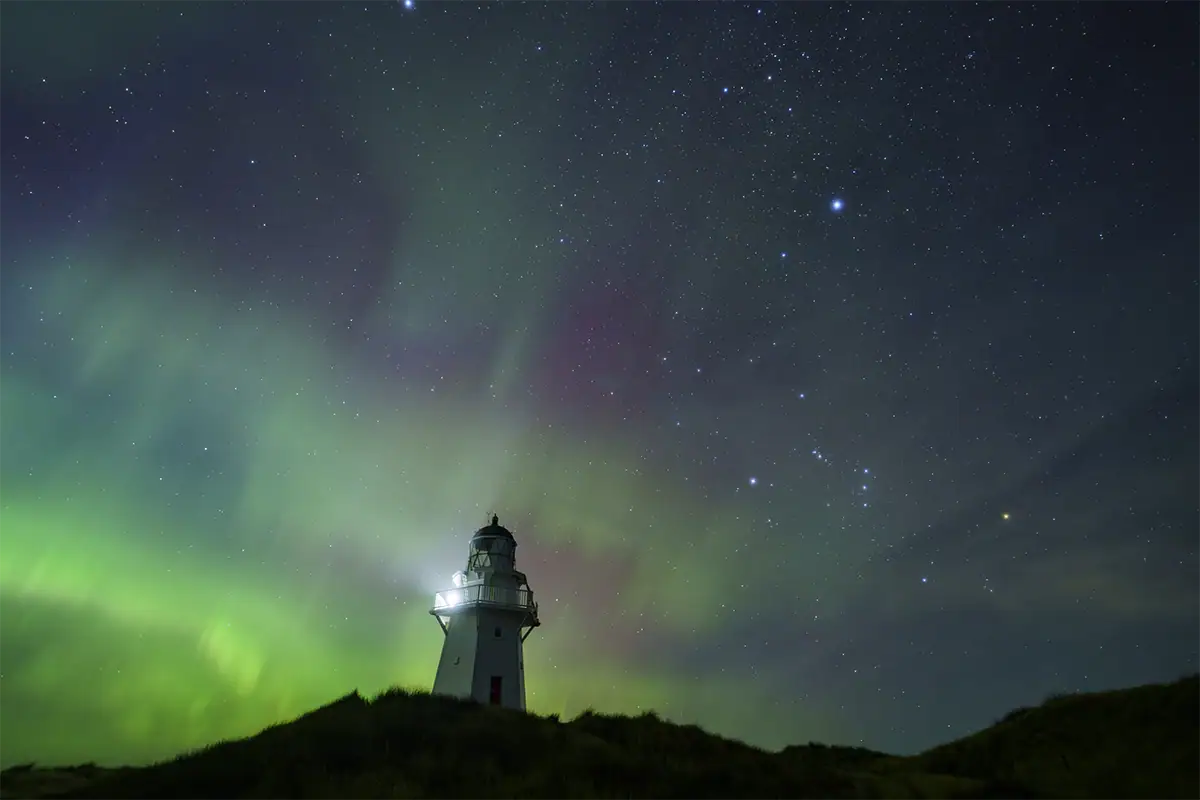
Using the same lighthouse as my subject, I took another shot, this time at a 20mm focal length. While we typically use ultra wide-angle lenses to capture as much of the aurora as possible, a slightly tighter angle — around 20mm — makes it much easier to compose shots when you want to focus on a specific constellation.
In this photo, I captured the aurora alongside Orion, which appears “upside-down” in the Southern Hemisphere. The 12-20mm ultra wide-angle zoom is incredibly versatile; it allows you to switch between capturing the massive scale of an aurora at 12mm and making celestial objects the main focus at 20mm, all within a single lens.
Photographing an Aurora Before Dawn
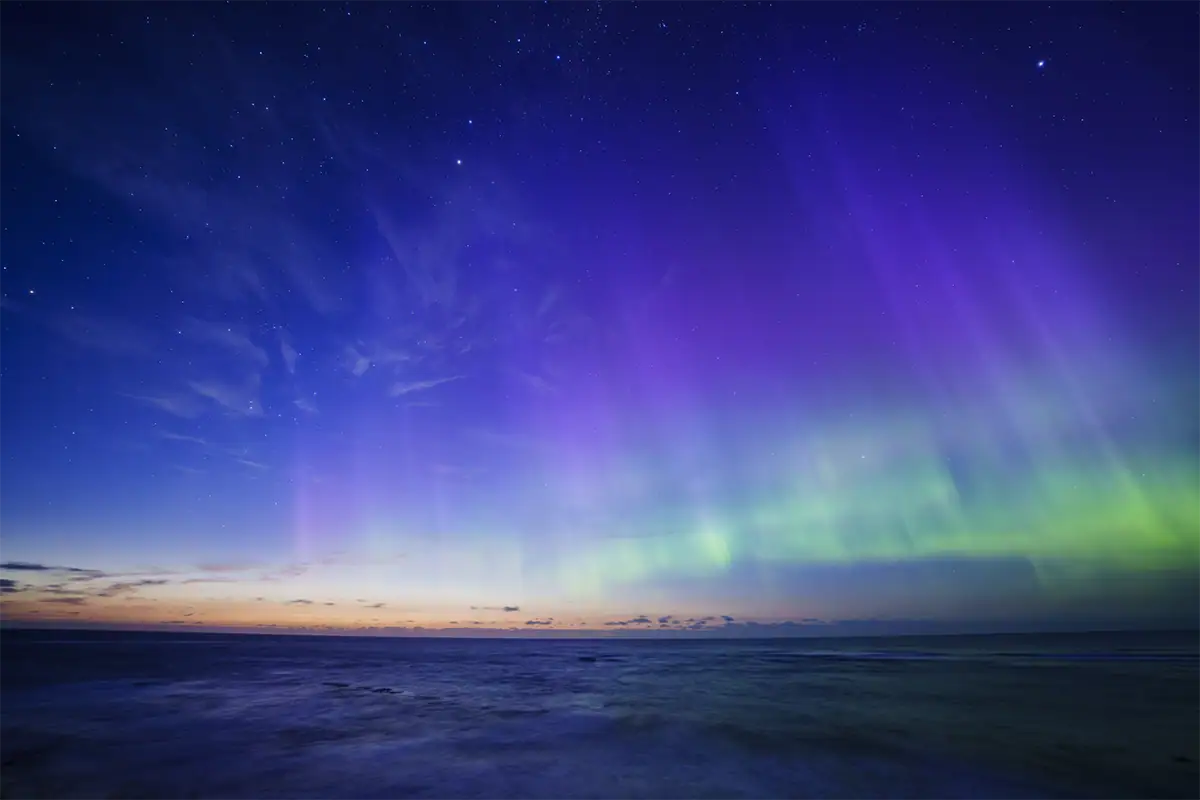
This is the aurora stretching across the sky just before dawn on the same day. As the eastern sky began to brighten slightly, the stars started to fade, but the aurora continued its active, energetic dance. The sight of the approaching dawn over the ocean, overlapping with the pulsing, swaying aurora, was truly unforgettable. Listening to the sound of the crashing waves while gazing at this sky was one of the most memorable moments of my expedition — a special time I wished would never end.
Astro FC-L and Focus Set Button: A Valuable Tool for Night Photography
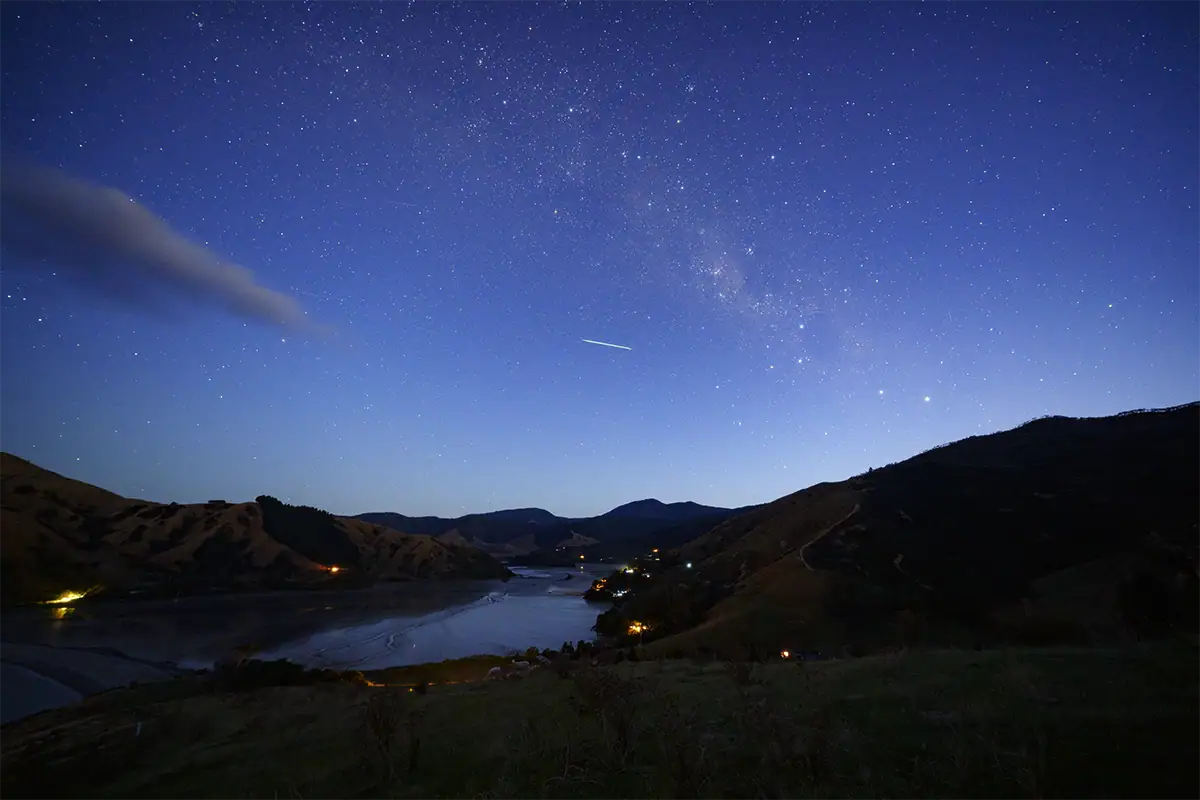
While I was photographing the southern sky in New Zealand just before the end of twilight, a train of Starlink satellites suddenly streaked into my field of view. In starry landscape photography, these unexpected shutter opportunities can happen at any moment. If you spend too much time focusing on the stars, you’ll miss the decisive shot.
The 12-20mm F2.8 features a Focus Set Button. By using the Tamron Lens UtilityTM to assign the Astro Focus Lock (Astro FC-L) function, I can instantly set the focus to infinity with a single press. By eliminating the hassle of manual focus adjustment, I could concentrate entirely on my composition and successfully capture this fleeting moment.
Composing Southern Hemisphere Nightscapes with the 12-20mm Zoom
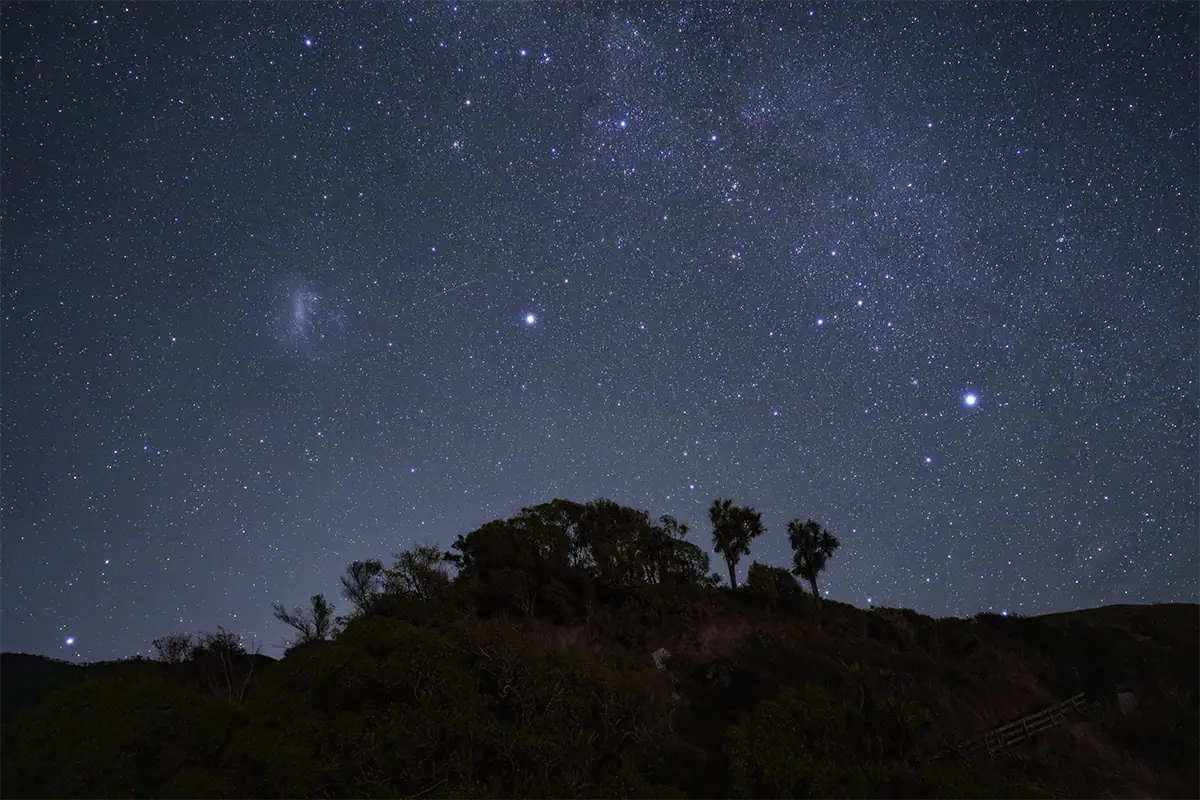
On the right side of the frame is Sirius, with Canopus near the center and the Large Magellanic Cloud on the left. One of the greatest joys of shooting starry landscapes abroad is encountering celestial arrangements that you can’t see in Japan.
Canopus, which appears very low on the southern horizon in Japan, rises high into the sky in the Southern Hemisphere. In this photo, I was able to capture a unique composition that makes it look as if Canis Major is walking across the night sky, leading Canopus and the Large Magellanic Cloud behind it. Spending time exploring the frame and adjusting the angle of view with a zoom lens is one of the true highlights of nightscape photography.
Resolution of the 12-20mm F2.8 — Reliable Imaging Performance for Astrophotography
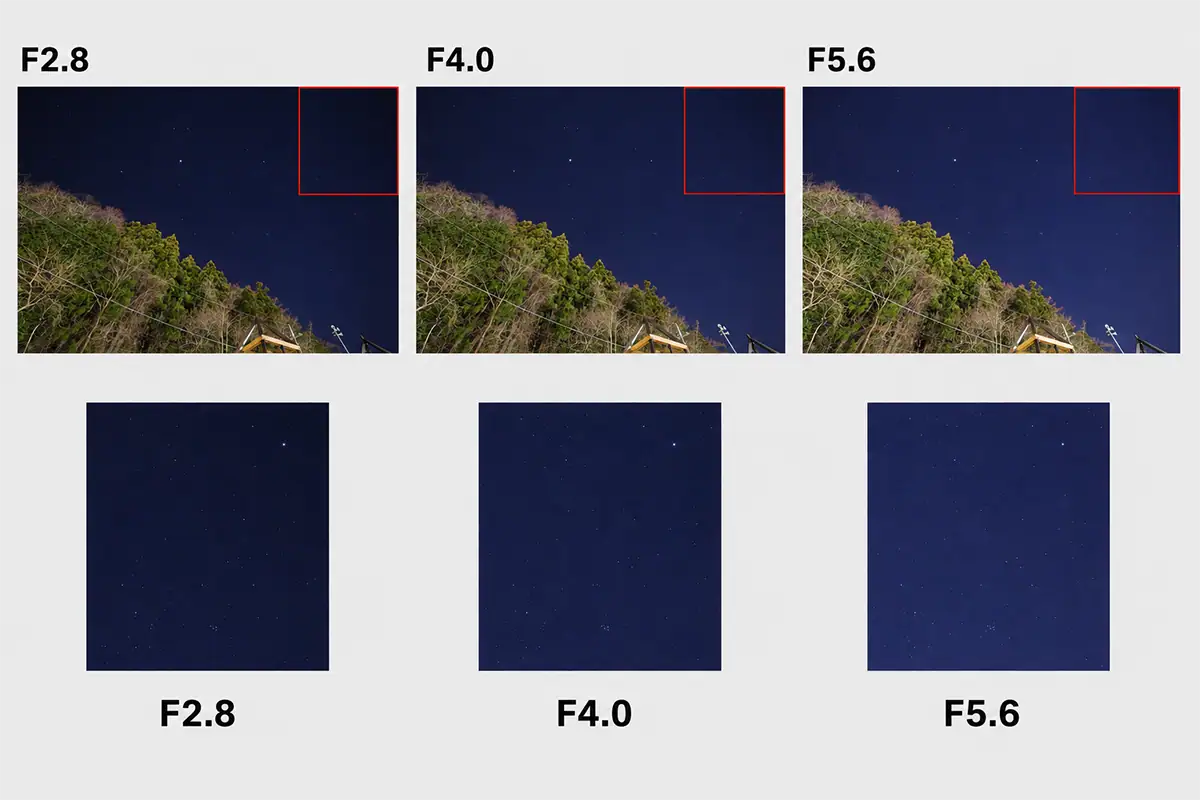
Corner Sharpness, Vignetting, and Sagittal Coma Performance at F2.8
Setting aside the creative works for a moment, I would like to discuss the resolution and optical performance of the 12-20mm F2.8. In astrophotography, we frequently shoot at the maximum aperture, so the degree of vignetting at the corners is always a point of concern. Additionally, we need to check if stars are rendered as sharp points of light and how the lens handles sagittal coma flare1.
Another crucial factor is how the lens manages ghosting and flare when capturing bright light sources. In recent years, as more streetlights switch to LEDs, it’s common for night sky photography to be affected by strong light sources. With ultra wide-angle lenses in particular, light entering from an angle can often cause ghosting. Let’s examine the actual rendering using sample images taken under these conditions.
The images above compare shots taken at F2.8, F4, and F5.6. The top row shows the full-frame images, while the bottom row shows magnified crops of the areas marked in red. At F2.8, there is a slight amount of vignetting, but it improves to a level that is barely noticeable by stopping down just one click to F4. Furthermore, when looking at the stars in the corners, sagittal comma flare is well-suppressed even at the wide-open aperture. As you stop down the lens, the stars become even sharper, cleaner points of light. I felt that this lens offers stable and reliable performance that you can trust for serious astrophotography.
1 Sagittal coma flare: A type of flare in which point light sources — such as stars near the edges of the image — appear to stretch like comets with tails extending radially (in the sagittal direction) from the center, or form shapes resembling birds with outstretched wings around the light source.
Ghosting and Flare Performance with Bright LED Lights
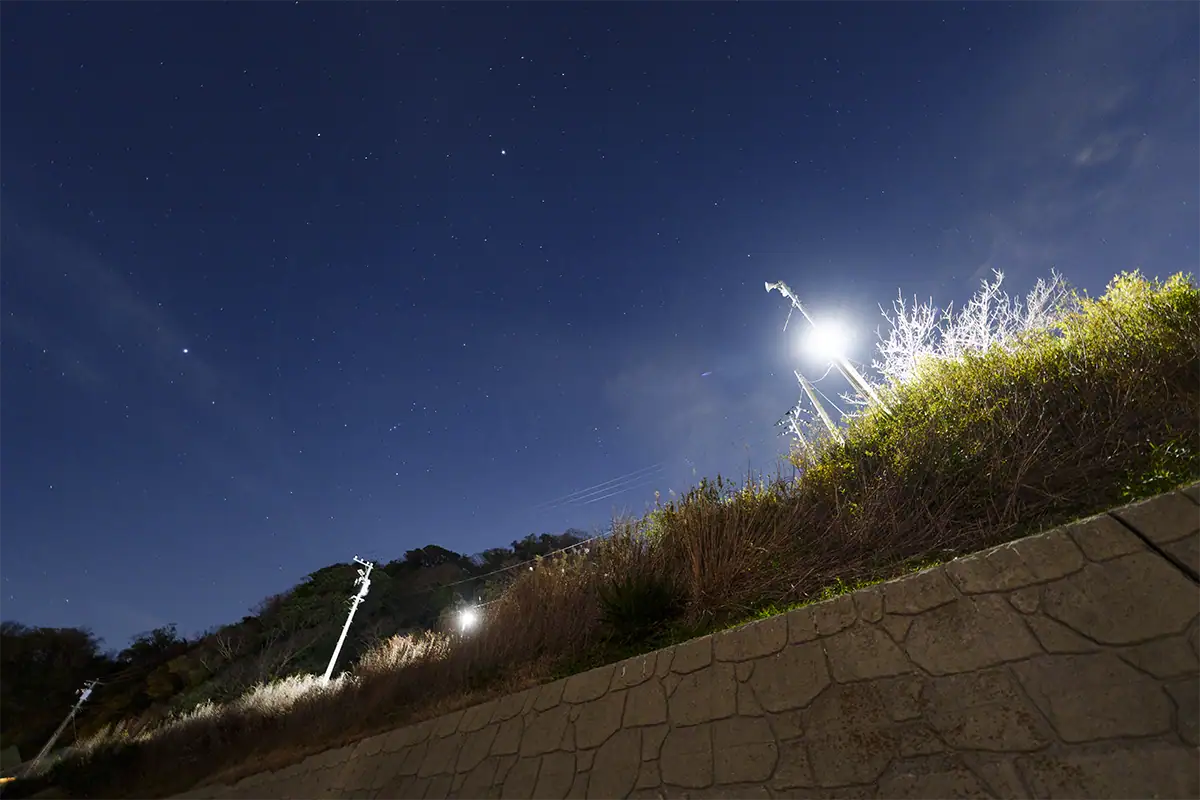
With ultra wide-angle lenses, ghosting and halation caused by strong light sources in the frame are also key concerns. In this test, I intentionally placed a bright LED streetlight within the frame to see how much ghosting and halation would occur. The result showed very faint, concentric ghosting in the diagonal direction from the light source, but the impact was minimal and did not significantly detract from the depiction of the starry sky.
Ghosting and Flare Performance with the Moon in the Frame
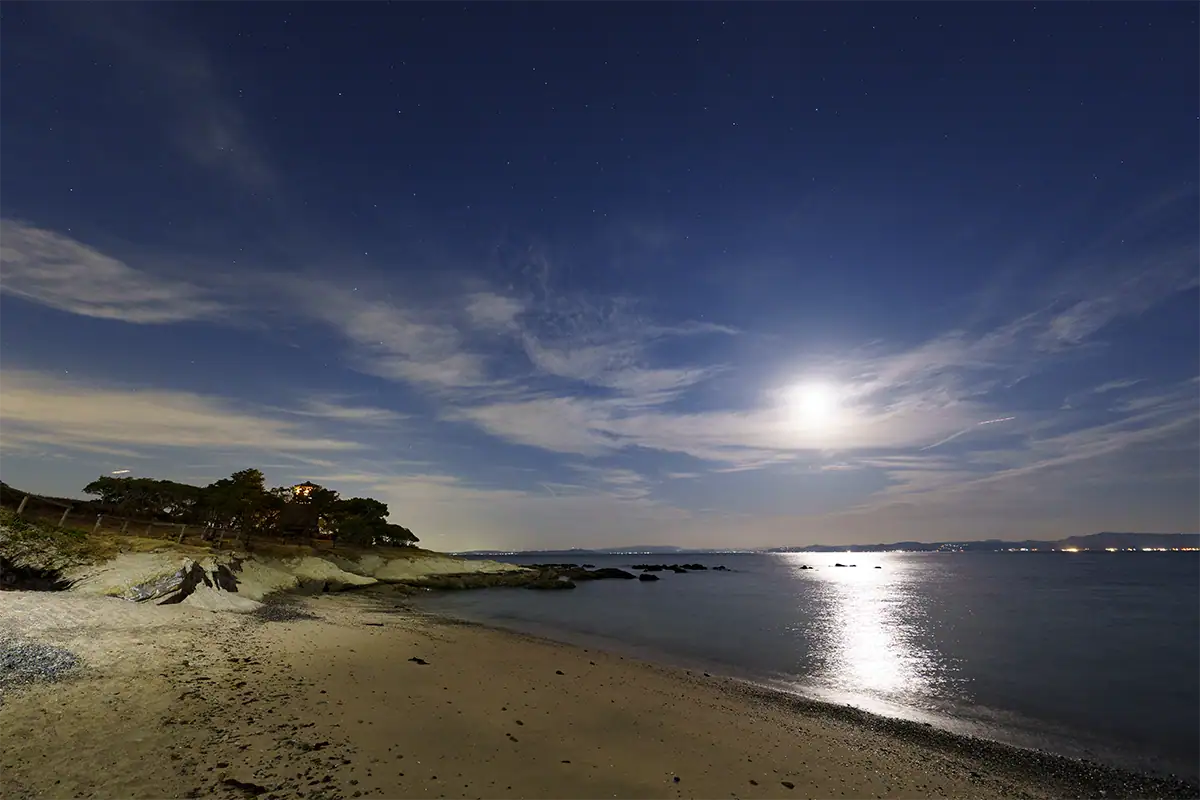
Following the streetlight example, here is a sample shot using the moon as the light source. On this day, a bright moon (18 days old) was in the sky — a challenging condition with a very strong light source inside the frame. Looking at the actual image, while there is a slight flare around the moon, there is very little noticeable ghosting. The night sky and landscape remain clear and undisturbed. I was impressed by the stable rendering even in situations where a powerful light source like the moon is present in the frame.
Final Review: Is the Tamron 12-20mm F2.8 a Good Lens for Astrophotography?
After using the 12-20mm F2.8 (Model A084) for starry landscape photography both in Japan and New Zealand, I have once again realized the incredible breadth of expression that only an ultra wide-angle zoom lens can provide. Its greatest appeal lies in its flexibility: you can capture dynamic scenes that fit the vast starry sky and the terrestrial landscape into a single frame or use the zoom to create a tighter composition that makes specific constellations or subjects the main focus.
Additionally, the combination of the bright F2.8 aperture, the lightweight body, and practical features like Astro FC-L makes for an exceptionally smooth and intuitive shooting experience.
In the world of starry landscape photography — where the sky and the land are expressed as one scene — I feel that the Tamron 12-20mm F2.8 is a lens that significantly expands a photographer’s creative freedom.
Related Reviews & Further Reading
- Landscape Photography with the Tamron 12-20mm F2.8 by Ian Plant
- Tamron 16-30mm F2.8 G2 Lens Review
- Astrophotography: A Complete Guide to Photographing Stars & the Night Sky
- Astrophotography Camera Settings: Baseline Setup and Every Shooting Scenario
- Milky Way Photography: How to Plan, Shoot, and Edit the Galactic Core
- How to Photograph the Moon: Tips, Gear, and Settings
- Shooting the Stars: Best Lens for Astrophotography & Low Light
- Night Skies Photography with the TAMRON Lens Utility™ Astro Focus Lock
- Lunar Eclipse Photography Tips: How to Capture Moon Shots
- How to Photograph the Northern Lights | Best Tips and Tamron Lens Guide
- Our Top Tips and Recommendations for Night Sky Photography
- How to Photograph a Solar Eclipse
Where to Buy Tamron Lenses
Learn more about Tamron lenses at an authorized Tamron dealer near you or shop directly at the official TAMRON Store.
About Teruyasu Kitayama
While studying at the Department of Photography, Nihon University College of Art, a class session using astronomical telescopes ignited a deep passion for the universe in him. After graduation, he moved to Samegawa Village in Fukushima, Japan, where he served as an instructor at the village-run astronomical observatory while beginning his career in serious starry landscape and astrophotography.
Currently based in Yamanashi, he travels both across Japan and internationally to capture miraculous moments, including astronomical phenomena such as auroras and total solar eclipses. In addition to starry landscapes, he is also an energetic chronicler of rocket launches, frequently traveling to Tanegashima and Wakayama to document Japan’s space exploration. Website | Instagram | X
FAQs About Using the Tamron 12-20mm for Astrophotography
Is the Tamron 12-20mm F2.8 good for astrophotography?
Yes. The Tamron 12-20mm F2.8 (Model A084) is well suited for astrophotography thanks to its ultra wide-angle zoom range, constant F2.8 aperture, lightweight design, and strong optical performance. At 12mm, photographers can capture expansive night skies and foreground landscapes, while zooming to 20mm provides more flexibility for emphasizing constellations and other celestial subjects.
How does the Tamron 12-20mm F2.8 perform for aurora photography?
The lens is especially well suited for aurora photography. Its expansive 12mm field of view can capture large portions of an aurora while leaving room for foreground subjects such as mountains, coastlines, or buildings. The bright F2.8 aperture also helps gather light in the low-light conditions common during aurora photography.
How does the Tamron 12-20mm F2.8 perform for Milky Way photography?
The lens provides excellent flexibility for Milky Way photography. At 12mm, photographers can create sweeping astro-landscape compositions that include both the Milky Way and the surrounding environment. Zooming to 20mm allows the Milky Way or individual constellations to become more prominent within the frame.
Does the Tamron 12-20mm F2.8 control sagittal coma flare?
According to Teruyasu Kitayama’s field testing, the lens controls sagittal coma flare well, even when shooting at the maximum F2.8 aperture. Stars near the edges of the frame remain well defined, making the lens a strong option for astrophotography where point-light rendering is important.
How sharp are stars in the corners with the Tamron 12-20mm F2.8?
The lens delivers strong corner performance for an ultra wide-angle zoom. During Kitayama’s testing, stars remained well defined across the frame at F2.8, with sharpness becoming even cleaner as the lens was stopped down.
What is Astro FC-L and how does it help with astrophotography?
Astro Focus Lock (Astro FC-L) is a function available through TAMRON Lens Utility™ that can be assigned to the Focus Set Button. It allows photographers to instantly set the focus to infinity with a single press, helping them react quickly to changing night sky conditions and fleeting celestial events without spending time manually refocusing.
Is 12mm useful for meteor shower photography?
Yes. A 12mm focal length captures a very broad portion of the night sky, increasing the chances of recording unpredictable meteor activity. The wide field of view also allows photographers to incorporate foreground subjects such as mountains, coastlines, or landscapes into meteor shower compositions.
Why use 12mm instead of 20mm for astrophotography?
The two focal lengths offer different creative possibilities. At 12mm, photographers can emphasize the scale of the night sky while incorporating more of the surrounding landscape. At 20mm, celestial subjects such as constellations, the Milky Way, or auroras can occupy a larger portion of the composition. The 12-20mm zoom range allows photographers to switch between these perspectives without changing lenses.
Is the Tamron 12-20mm F2.8 lightweight enough for travel astrophotography?
Yes. At approximately 20.2 oz. (570 g), the Tamron 12-20mm F2.8 is practical for international photography trips, long drives, and other situations where photographers need to keep their astrophotography gear compact and portable.