 Instant Savings
 Rebate Claims
 Support
 Find a Dealer


Vlogging has surged in popularity, transforming from a niche hobby into a mainstream form of content creation. As more people document their lives, share their expertise, and entertain audiences online, the demand for high-quality vlogs has increased. One crucial aspect of producing captivating videos is selecting the right vlogging equipment. Among the various tools at a vlogger’s disposal, lenses play a pivotal role in enhancing video quality and versatility. For those seeking to elevate their vlogs, Tamron offers a range of exceptional camera lenses for vlogging designed to meet the diverse needs of content creators.
Highlights
- Tamron lenses combine compact designs, fast and quiet autofocus, and versatile focal lengths for handheld vlogging, travel videos, tutorials, and everyday content creation.
- For full-frame mirrorless cameras, the Tamron 16-30mm F2.8 G2, 17-50mm F4, and 20-40mm F2.8 offer excellent options for wide-angle and everyday video shooting.
- For APS-C mirrorless cameras, the Tamron 11-20mm F2.8 delivers ultra-wide coverage, the 16-50mm F2.8 A offers exceptional portability and versatility, and the 17-70mm F2.8 combines extended zoom range with VC stabilization.
Tamron’s Top Lens Features for Vloggers
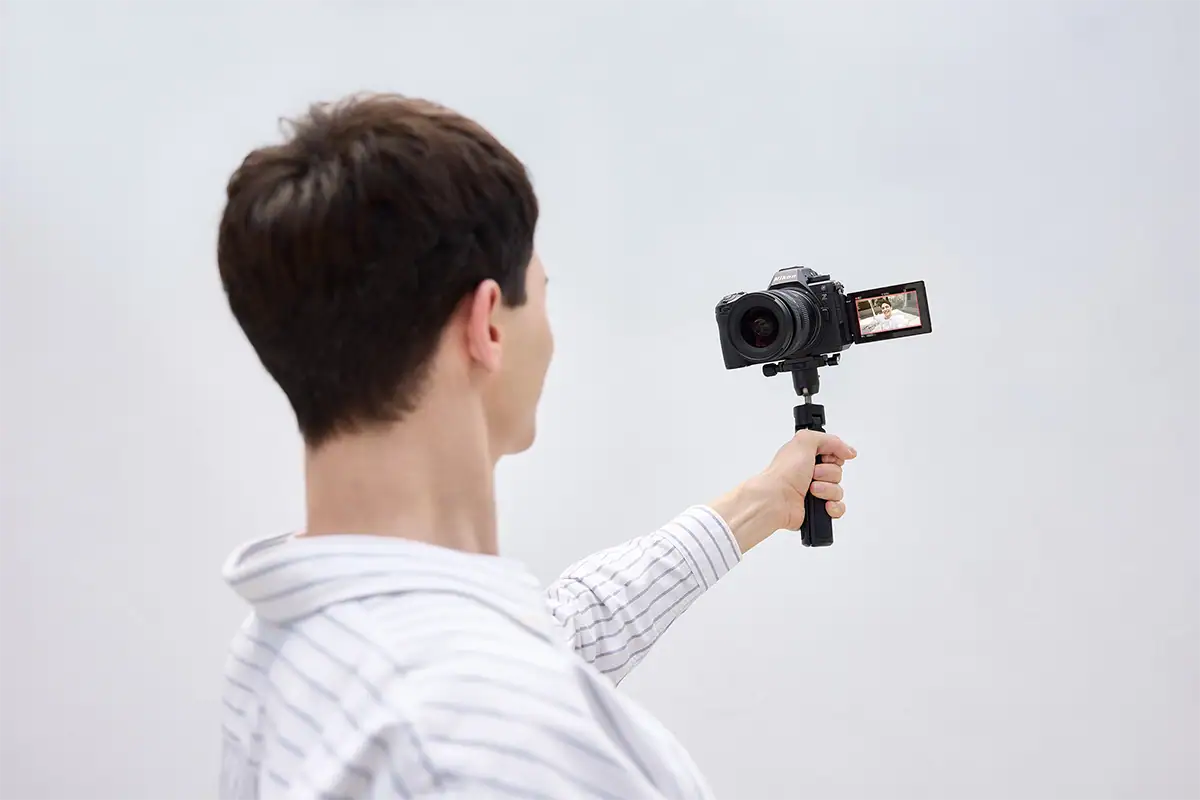
Tamron lenses are designed with portability and performance in mind, making them ideal for vloggers who record on the move. Compact, lightweight designs help reduce fatigue during handheld shooting and make it easier to balance equipment on camera grips, tripods, and gimbals. Fast, quiet autofocus helps keep subjects sharp, while constant-aperture zooms provide consistent exposure settings and creative control over background blur.
Stabilization is another important consideration when choosing camera lenses for vlogging. Select Tamron lenses, including the 17-70mm F2.8 VC, feature built-in Vibration Compensation to reduce camera shake. For lenses without VC, vloggers can take advantage of compatible in-body stabilization, gimbals, or tripods to help capture smoother footage.
Top Tamron Lenses for Your Vlog Kit
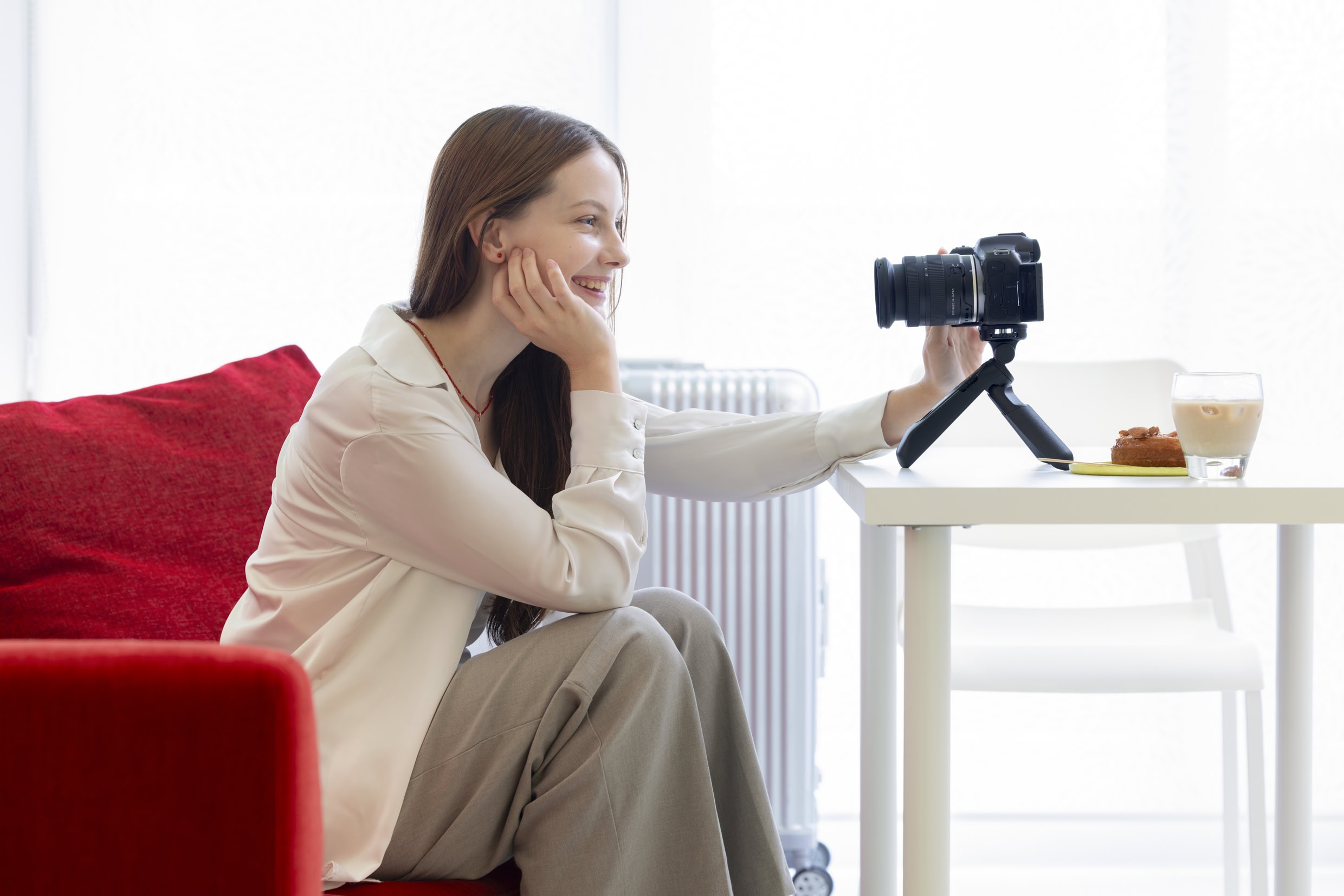
When choosing the best Tamron lenses for vlogging, several models stand out: the 16-30mm F2.8 G2, 17-50mm F4, and 20-40mm F2.8 for full-frame mirrorless cameras, along with the 11-20mm F2.8, 16-50mm F2.8 A, and 17-70mm F2.8 VC for APS-C cameras. Each offers a combination of portability, wide-angle coverage, and autofocus performance to support different vlogging styles.
Choosing the best Tamron lens for vlogging depends on your camera’s sensor format, how you record, and whether you prioritize wide-angle framing, portability, or zoom versatility. Tamron offers excellent options for both full-frame and APS-C mirrorless cameras.
Tamron 16-30mm F2.8 Di III VXD G2 — Ultra-Wide Full-Frame Vlogging
The Tamron 16-30mm F2.8 G2 is ideal for vloggers who need expansive wide-angle coverage for handheld self-recording, travel videos, and immersive environmental footage. Its constant F2.8 aperture supports low-light filming, while quiet VXD autofocus and a compact internal zoom design make it especially well suited for gimbals and camera grips.
Tamron 17-50mm F4 Di III VXD — Versatile Full-Frame Vlogging
The Tamron 17-50mm F4 offers Sony full-frame vloggers a practical combination of ultra-wide and standard focal lengths in one lens. Capture wide establishing shots, everyday activities, and natural-looking talking-head videos without switching equipment. Its constant F4 aperture and quiet VXD autofocus make it a versatile choice for travel and lifestyle content.
Tamron 20-40mm F2.8 Di III VXD — Compact Full-Frame Vlogging
The Tamron 20-40mm F2.8 provides an excellent balance between wide-angle coverage and everyday versatility. Its 20mm wide end works well for handheld vlogs and environmental storytelling, while the 40mm setting is ideal for more natural perspectives and detailed shots. The constant F2.8 aperture, lightweight design, and fast VXD autofocus make it especially appealing for creators who move frequently between shooting locations.
Tamron 11-20mm F2.8 Di III-A RXD — Ultra-Wide APS-C Vlogging
For APS-C vloggers who want to capture themselves and their surroundings at arm’s length, the Tamron 11-20mm F2.8 provides exceptional ultra-wide coverage. Its compact design, constant F2.8 aperture, and quiet RXD autofocus make it particularly useful for handheld travel vlogs, indoor recording, and walk-and-talk videos where a wider field of view is essential.
Tamron 16-50mm F2.8 A — Compact, Versatile APS-C Vlogging
The Tamron 16-50mm F2.8 A is an exceptionally compact and versatile lens for APS-C vloggers. Starting at a wide 16mm, it handles everything from travel videos and everyday vlogs to interviews and close-up product shots. Weighing just 10.8 oz (305g) for Sony E-mount, it combines outstanding portability with a constant F2.8 aperture, attractive background blur, and fast, quiet VXD autofocus. Its lightweight design makes it ideal for handheld shooting and creators who want professional performance without added bulk.
Tamron 17-70mm F2.8 Di III-A VC RXD — Stabilized APS-C Vlogging
The Tamron 17-70mm F2.8 VC gives APS-C vloggers extended zoom versatility, making it ideal for travel storytelling, interviews, product demonstrations, and lifestyle videos. Its constant F2.8 aperture delivers excellent creative control, while built-in VC stabilization helps reduce camera shake during handheld filming. Quiet RXD autofocus provides reliable focusing performance for video creators who need flexibility across different shooting situations.
Vlogging Tips for Better Video Quality
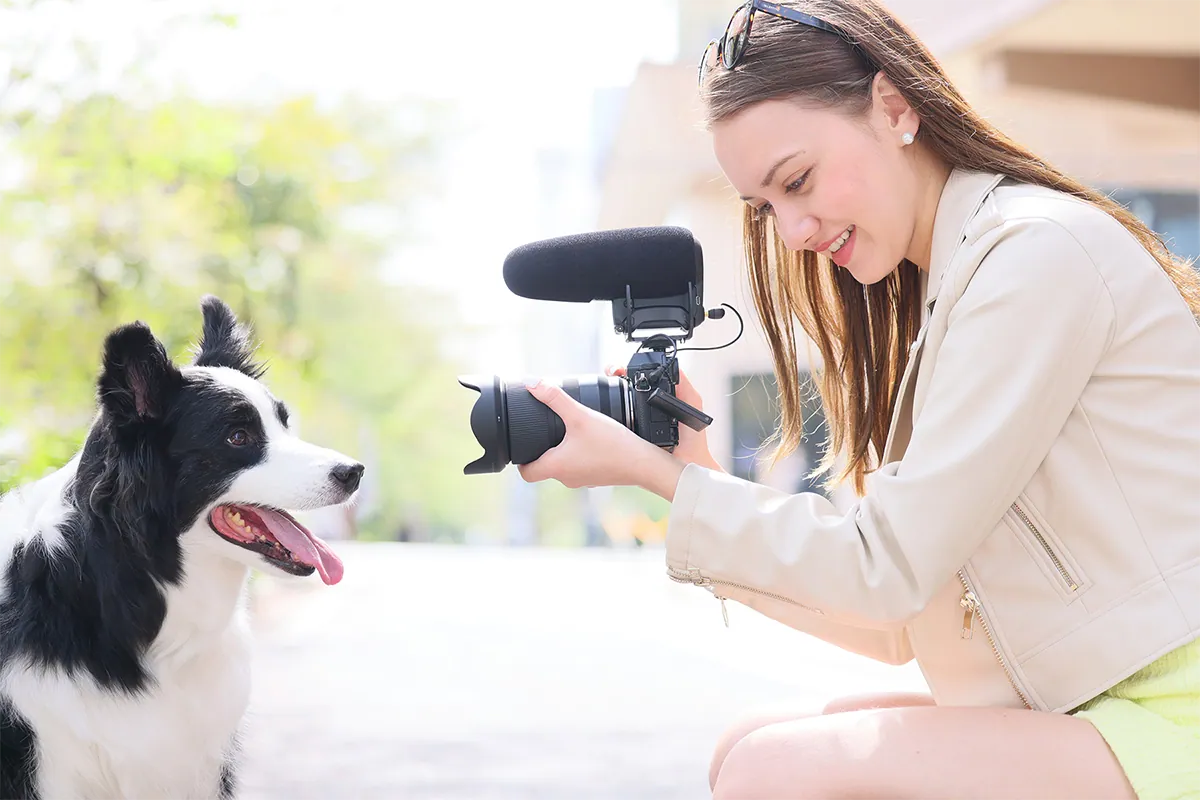
Whether you’re recording travel adventures, tutorials, or everyday moments, a few simple techniques can help improve the quality of your vlogs. If you’re new to video creation, start with our videography tips for photographers and beginners guide for essential camera settings, shooting techniques, and lens recommendations.
1. Use Autofocus to Keep Your Subject Sharp
Fast, accurate autofocus is especially important when vlogging, particularly when recording yourself or moving through a scene. Tamron lenses with advanced autofocus technology can help maintain sharp focus as you move. For additional guidance on camera settings, focusing techniques, and recording video, explore our guide to shooting video with a mirrorless camera.
2. Adjust Camera Settings for Different Lighting Conditions
Lighting conditions can change quickly when vlogging indoors, outdoors, or while traveling. In low light, using a wider aperture or increasing ISO can help maintain proper exposure. In bright conditions, an ND filter can help control exposure while preserving your desired aperture and shutter speed. For more guidance on exposure, frame rates, and shutter speed, see our basic videography techniques article.
3. Practice Smooth Camera Movements
Smooth, deliberate movements make vlogs more comfortable to watch and give your footage a polished appearance. When recording handheld, keep your camera close to your body and avoid sudden movements. A lens with Tamron VC (Vibration Compensation), a compatible camera’s in-body stabilization, or a gimbal can help reduce unwanted camera shake. Learn more about camerawork basics for video shooting to improve your handheld filming techniques.
4. Experiment with Angles and Perspectives
Try filming from different heights, distances, and angles to make your vlogs more visually interesting. Wide-angle lenses are particularly useful for showing your surroundings, while longer focal lengths can emphasize details or create a more intimate perspective. Experimenting with camera position and composition helps make your footage more engaging.
5. Plan a Variety of Shots to Tell Your Story
A compelling vlog includes more than footage of yourself speaking to the camera. Capture wide establishing shots, medium shots, close-ups, and details to create visual variety. Combining these perspectives helps viewers understand your surroundings and follow your story. For more inspiration, explore our beginner’s guide to vlogging to learn how to plan and create more engaging video content.
Elevate Your Vlogs with Tamron
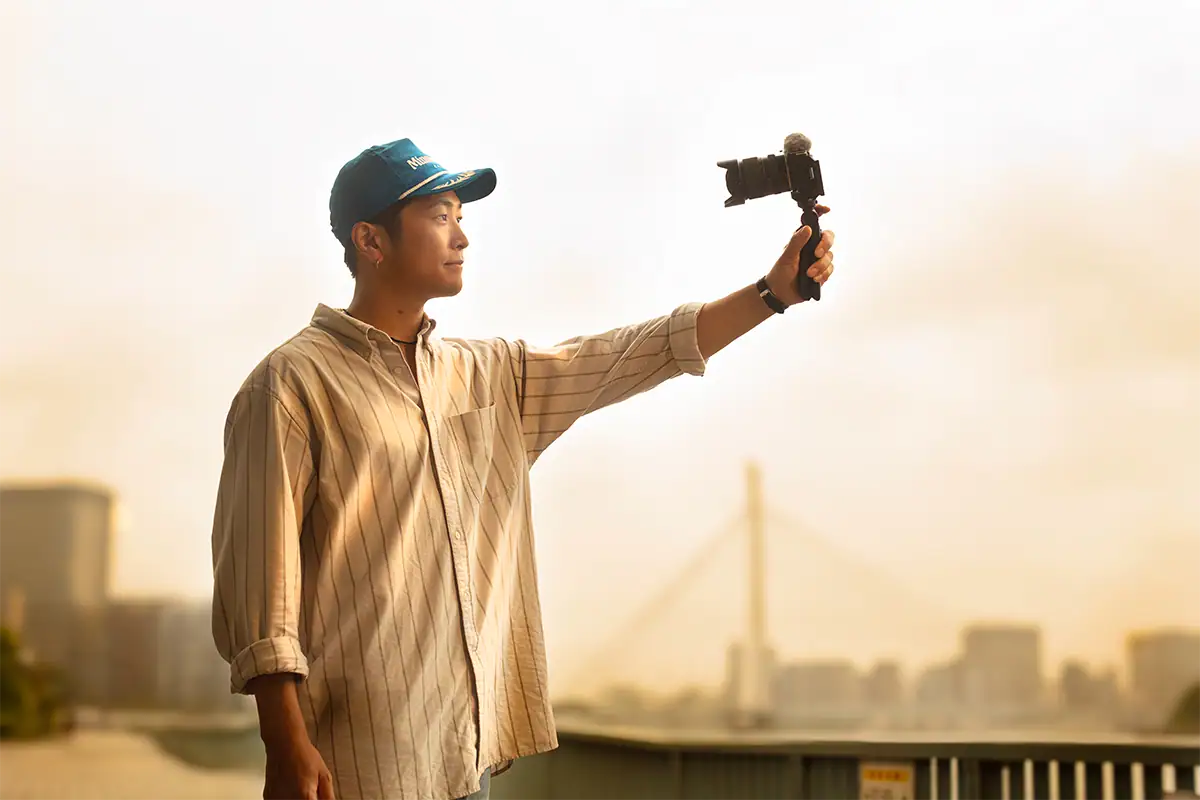
Whether you’re filming travel adventures, creating tutorials, or documenting everyday life, the right vlogging lens helps bring your creative vision to life. From ultra-wide zooms for immersive self-recording to compact standard zooms like the 16-50mm F2.8 A for versatile everyday content, Tamron offers lightweight, high-performance lenses for a wide range of creators. Choose the focal length, aperture, and stabilization features that best fit your camera and filming style.
Where to Buy Tamron Lenses
Visit an authorized Tamron dealer in your area or shop directly at the TAMRON Store today for the right camera lenses for vlogging!
Frequently Asked Questions About Camera Lenses for Vlogging
1. What type of camera lens is best for vlogging?
A wide-angle zoom lens is often the best choice for vlogging because it allows you to capture yourself and your surroundings, even when filming at arm’s length. Tamron lenses such as the 16-30mm F2.8 G2, 20-40mm F2.8, and 17-50mm F4 offer flexible framing for full-frame mirrorless cameras. For APS-C cameras, the 11-20mm F2.8 provides ultra-wide coverage, while the 16-50mm F2.8 A and 17-70mm F2.8 VC offer greater everyday versatility.
2. What focal length is best for vlogging?
For full-frame cameras, focal lengths between approximately 16mm and 24mm are popular for handheld, self-recorded vlogs because they provide a wide field of view. For APS-C cameras, focal lengths around 11mm to 16mm offer similarly wide framing. Longer focal lengths work well for interviews, talking-head videos, and capturing details. The best choice depends on your camera’s sensor size, shooting distance, and filming style.
3. Is an F2.8 lens good for vlogging?
Yes. An F2.8 lens is an excellent choice for vlogging because its wide maximum aperture allows more light into the camera, making it useful for indoor and low-light recording. It also provides greater control over background blur, helping vloggers stand out from distracting surroundings. Tamron offers several constant F2.8 zoom lenses for both full-frame and APS-C mirrorless cameras, including the compact 16-50mm F2.8 A.
4. Do I need image stabilization for vlogging?
Image stabilization is particularly helpful when recording handheld video or walking while filming. Depending on your equipment, stabilization may come from a lens with Tamron VC (Vibration Compensation), your camera’s in-body stabilization, or electronic stabilization. The Tamron 17-70mm F2.8 VC features built-in stabilization, while other lenses can be paired with compatible camera stabilization systems, gimbals, or tripods for smoother footage.
5. Can I use a mirrorless camera for vlogging?
Yes. Mirrorless cameras are popular for vlogging because many offer compact designs, interchangeable lenses, advanced autofocus, and high-quality video recording. Paired with a lightweight Tamron zoom lens, such as the 16-50mm F2.8 A for APS-C cameras or 20-40mm F2.8 for full-frame models, a mirrorless camera provides a versatile setup for travel vlogs, tutorials, interviews, and everyday content creation.
6. Do beginners need an expensive camera lens to start vlogging?
No. Beginners can create high-quality vlogs with a mirrorless camera and a versatile zoom lens. Prioritize a focal length that suits your shooting style, reliable autofocus, manageable weight, and adequate low-light performance. Compact lenses like the Tamron 16-50mm F2.8 A offer excellent versatility for beginners. Learning camera settings, composition, lighting, and audio techniques is just as important as choosing a lens.
7. Is the Tamron 16-50mm F2.8 A good for vlogging?
Yes. The Tamron 16-50mm F2.8 A is an excellent APS-C vlogging lens thanks to its ultra-compact design, versatile focal range, constant F2.8 aperture, and fast, quiet VXD autofocus. Its wide 16mm starting focal length works well for everyday vlogs, while the extended zoom range provides flexibility for travel videos, tutorials, interviews, and close-up product shots.
8. Should I choose the Tamron 16-50mm F2.8 A or 17-70mm F2.8 VC for vlogging?
Choose the Tamron 16-50mm F2.8 A if compact size, lightweight handling, and wider framing are your priorities. The 17-70mm F2.8 VC is better suited for creators who want additional telephoto reach and built-in image stabilization for handheld recording. Both offer constant F2.8 apertures, making them versatile choices for APS-C video creators.
About the Author
 André Costantini is an Emmy Award-winning professional photographer, filmmaker, and educator with more than 30 years of experience in visual storytelling. His work encompasses documentary filmmaking, commercial production, fine art photography, portraiture, and travel. André received a Regional Emmy Award for Ground Intelligence: Covering COVID With John Moore and co-directed the feature documentary Bel Borba Aqui. He has taught photography and filmmaking seminars throughout the United States, Canada, and the Caribbean. Through his articles for the Tamron blog, André shares practical techniques, creative inspiration, and professional insights that help photographers create stronger, more meaningful images. Read André’s full bio>>