Instant Savings
 Rebate Claims
 Support
 Find a Dealer
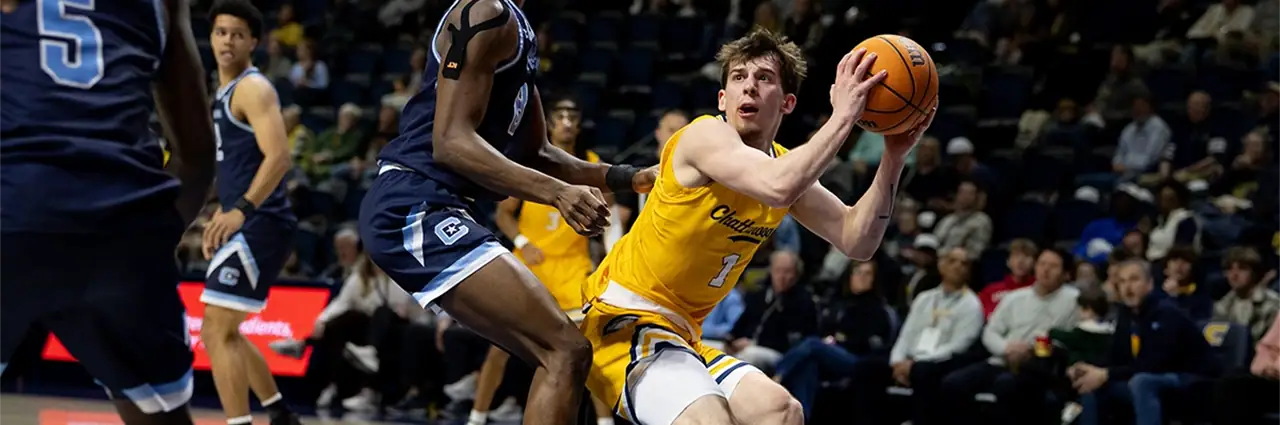
Camera settings for sports photography start with a fast shutter speed, wide aperture, continuous autofocus, burst mode, and Auto ISO. As a baseline, use 1/1000s or faster, f/2.8 to f/4, AF-C or AI Servo, short controlled bursts, and Auto ISO with a minimum shutter speed limit so your camera can adapt as light changes.
Those settings give you a reliable starting point for most sports and action photography, but every sport has different demands. Outdoor field sports may need more reach. Indoor sports require higher ISO and fast apertures. Motorsports may call for either ultra-fast shutter speeds or creative panning. Youth sports often need forgiving settings because the action is unpredictable.
For a complete foundation in sports technique, start with our full sports photography guide, then use the sport-by-sport scenarios below to dial in your camera before the game begins.
Baseline Camera Settings for Sports Photography
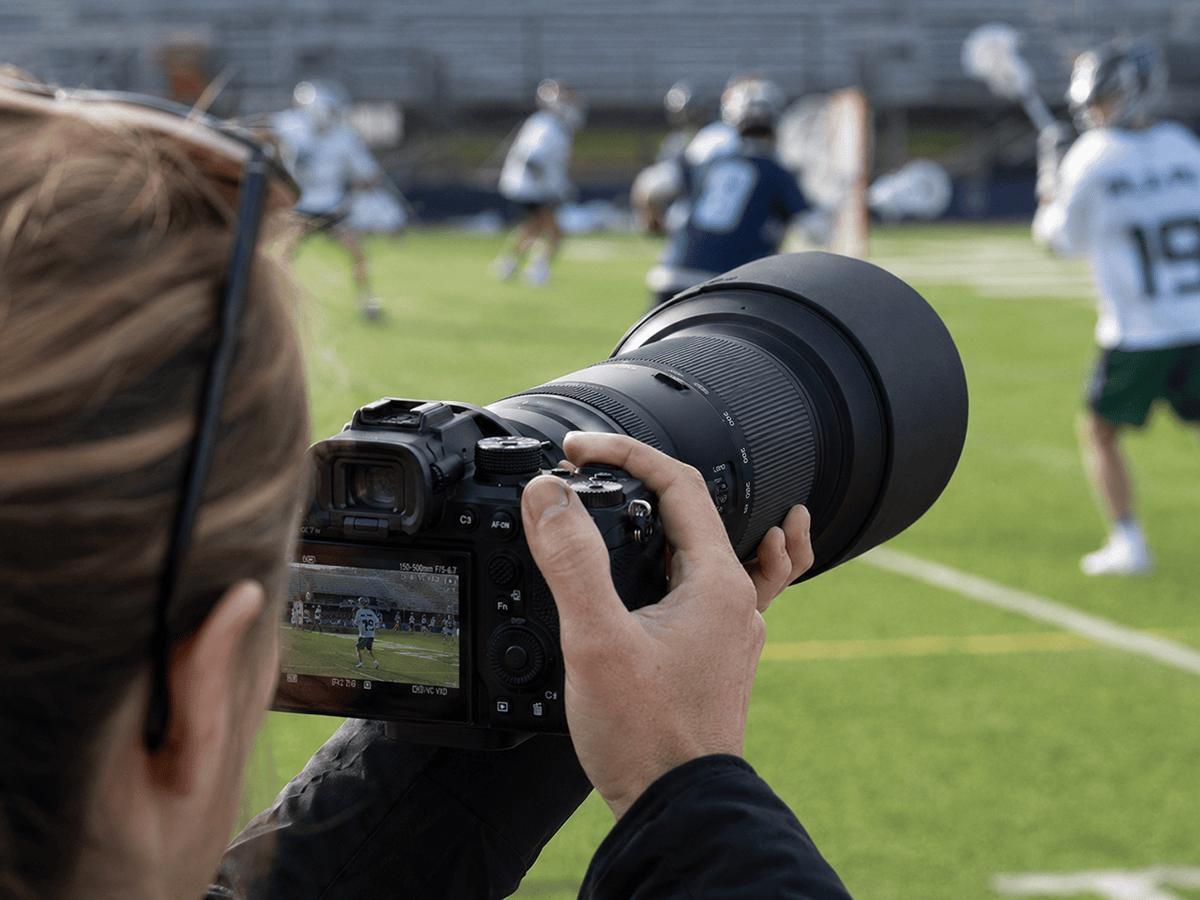
The best baseline sports photography settings are: shutter speed 1/1000s or faster, aperture f/2.8 to f/4, Auto ISO, continuous autofocus, and burst mode. These settings work together: shutter speed freezes motion, aperture gathers light, ISO balances exposure, autofocus tracks movement, and burst mode helps capture the decisive frame.
Use this as your starting setup:
- Shutter speed: 1/1000s for most sports, 1/2000s or faster for very fast action
- Aperture: f/2.8 to f/4 for light gathering and background separation
- ISO: Auto ISO, often ISO 1600-3200 or higher in low light
- Autofocus: AF-C on Nikon and Sony, AI Servo on Canon
- Drive mode: High-speed burst mode in short, controlled bursts
- File format: RAW when lighting is difficult or changing
Shutter speed is the setting to protect first. If the camera wants to lower shutter speed to brighten the image, raise ISO instead. According to Cambridge in Colour’s tutorial on digital camera image noise, higher ISO speeds amplify the image signal but also increase noise, producing random speckles that degrade fine detail. In sports photography that tradeoff almost always favors the higher ISO — a sharp photo with some grain is more useful than a clean image ruined by motion blur.
For deeper explanations, see what is shutter speed, what is aperture in photography, and what is ISO in photography.
Camera Settings for Outdoor Field Sports
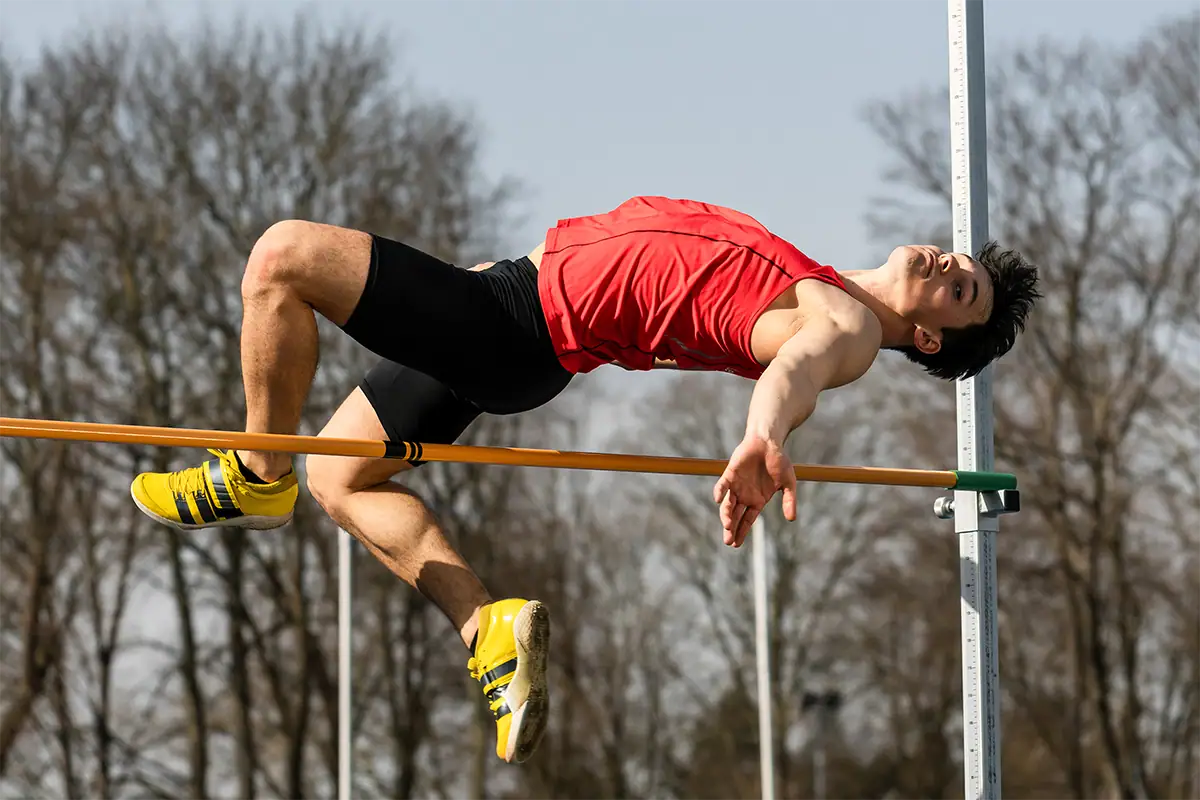
For outdoor field sports such as soccer, football, lacrosse, baseball, and field hockey, start at 1/1000s to 1/2000s, f/2.8 to f/4, continuous autofocus, and Auto ISO. In bright sun, ISO may stay low. In overcast light, Auto ISO helps maintain shutter speed as conditions change.
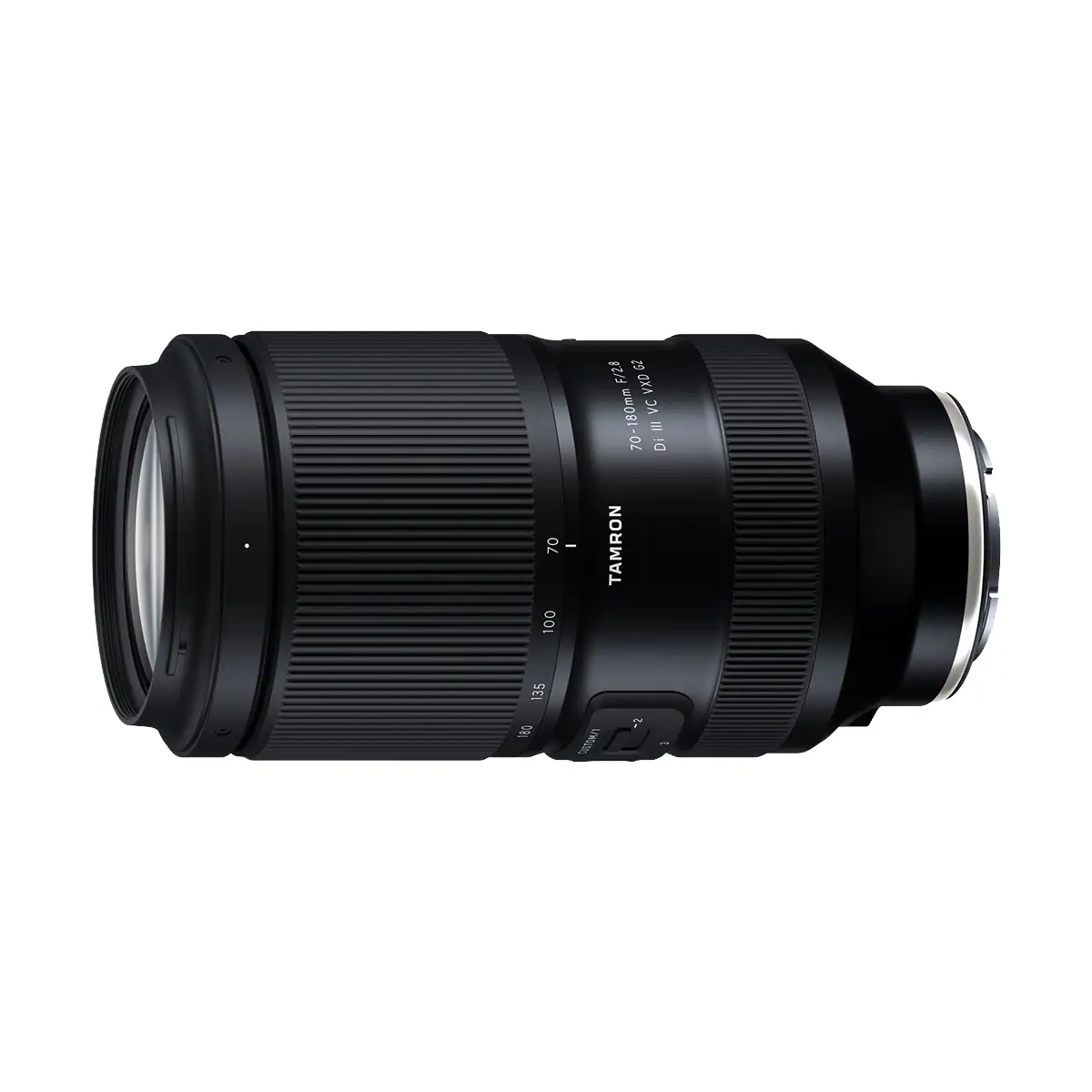
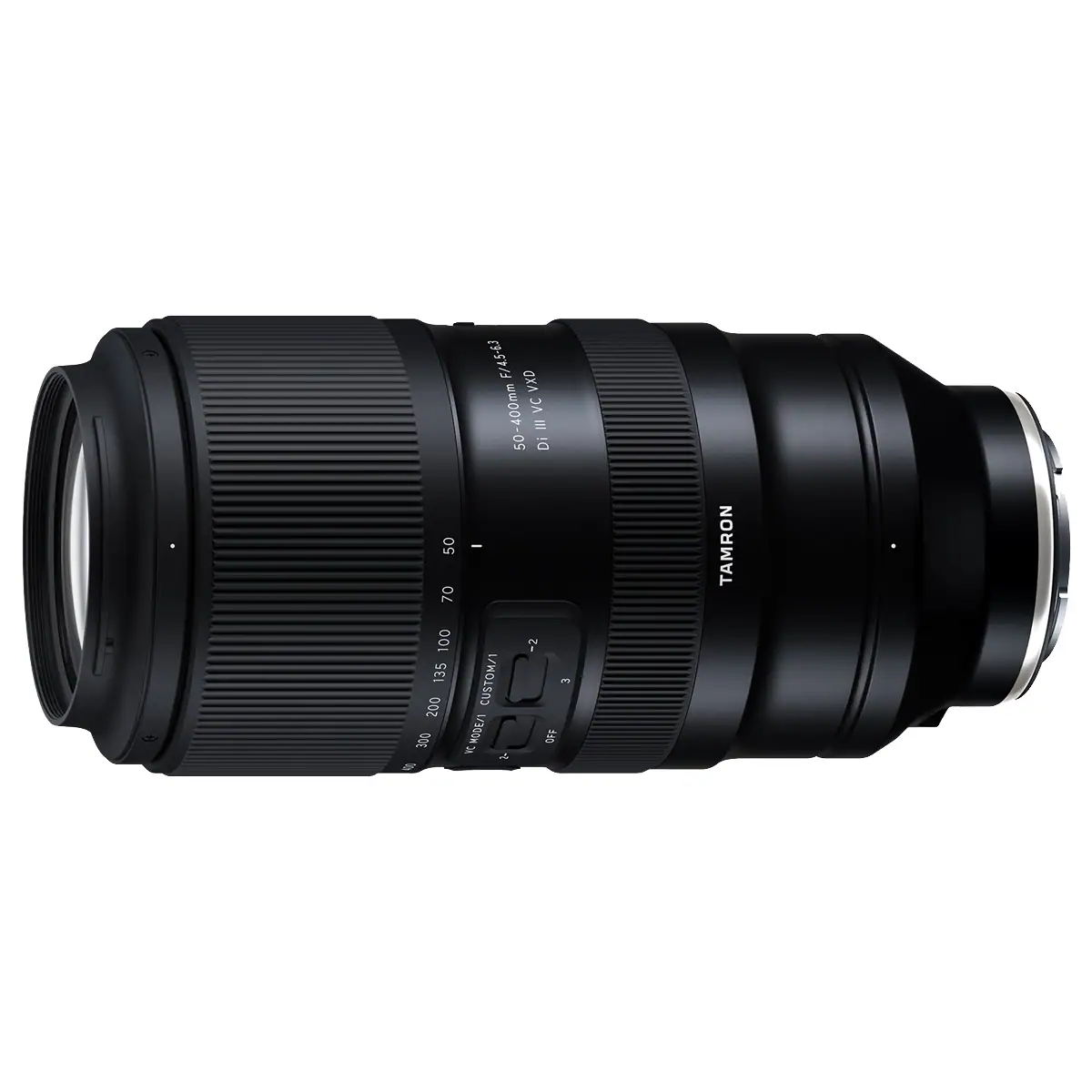
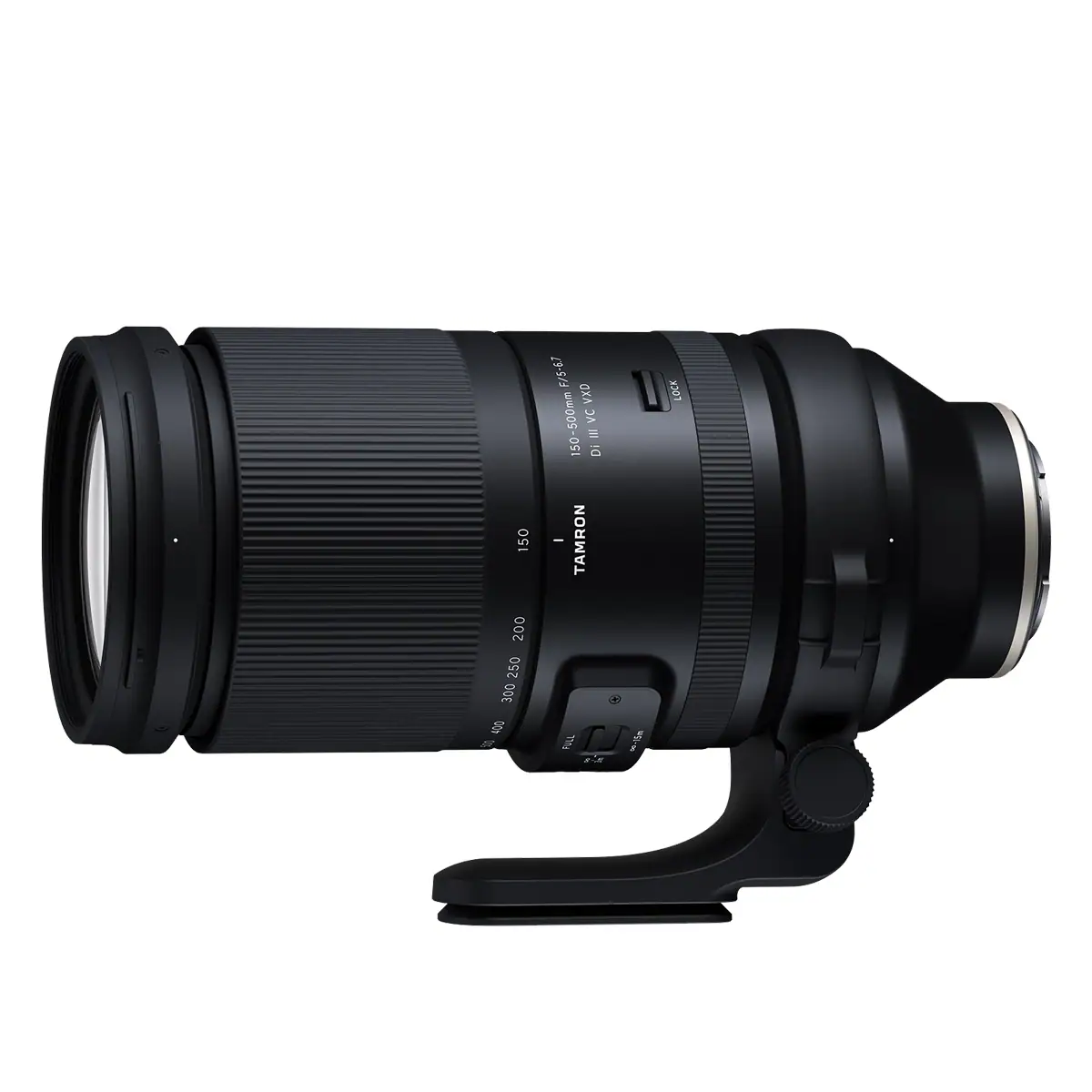
Outdoor field sports usually require longer focal lengths because photographers are often restricted to the sidelines. A 70-180mm, 100-400mm, 50-400mm, or 150-500mm telephoto zoom gives you the reach to fill the frame from a distance. For larger fields, longer reach is often more important than a wider angle.
Use continuous AF with subject tracking or zone AF, especially when athletes run toward or away from you. Keep burst mode ready, but fire in short sequences around predictable moments: a shot on goal, a tackle, a pass reception, a slide, or a finish-line lean.
For lens recommendations, visit our guide to choosing the best sports photography lens.
Camera Settings for Indoor Sports
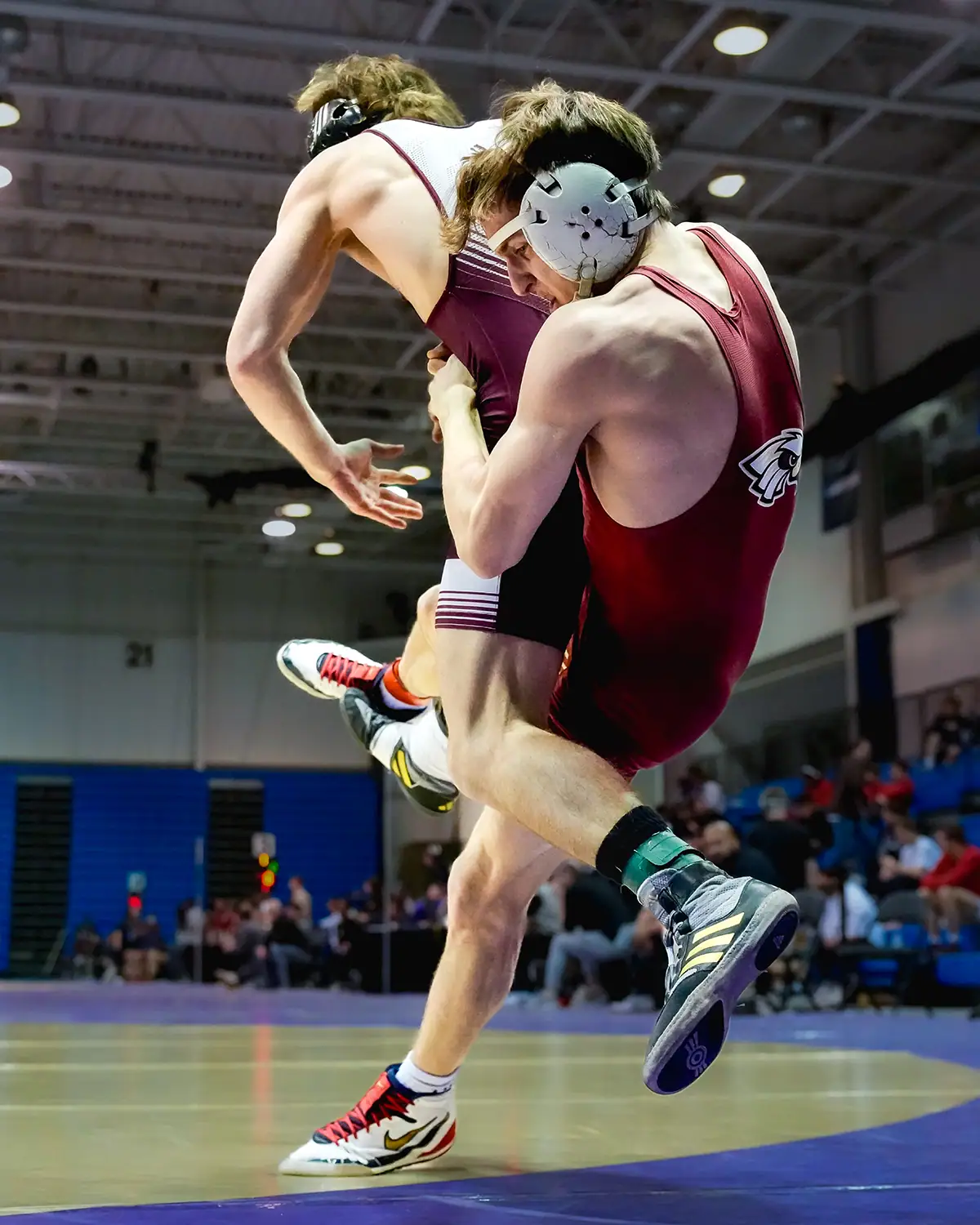
For indoor sports such as basketball, volleyball, gymnastics, wrestling, swimming, and indoor track, start at f/2.8 or your lens’s widest aperture, 1/800s to 1/1000s, and ISO 3200 or higher. Indoor lighting is often dim, uneven, or mixed-color, so shoot RAW and check your exposure early.
Indoor sports are where a fast aperture matters most. A lens such as the Tamron 35-150mm F/2-2.8 Di III VXD can be especially useful from courtside or poolside because it offers flexible framing and a bright maximum aperture. The 35mm end helps capture wider environmental frames, while the 150mm end gives tighter athlete-focused shots without changing lenses.
Use Auto White Balance if the lighting is changing or set a custom white balance if the venue lighting is consistent. If your images show motion blur in hands, feet, or equipment, raise shutter speed and compensate with higher ISO. Do not let the camera choose a slow shutter speed just to keep ISO low.
Camera Settings for Motorsports and Racing
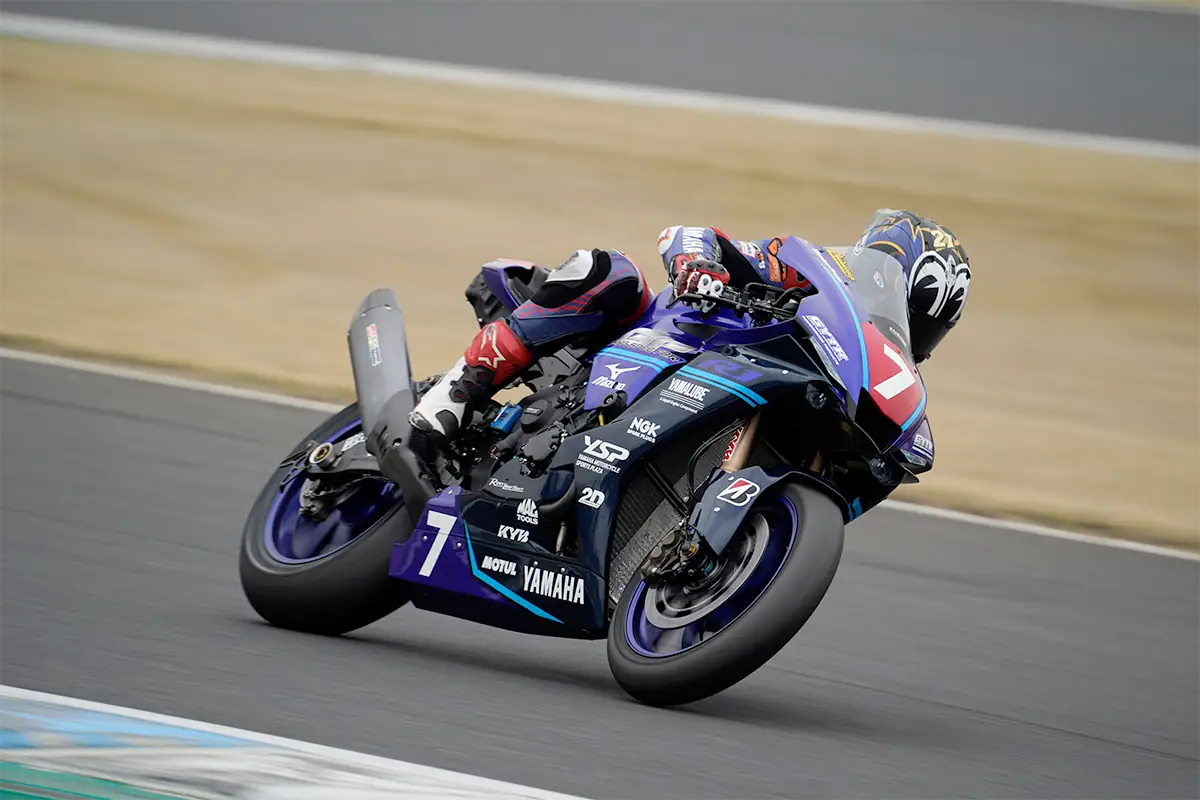
For motorsports and racing, choose your settings based on the look you want. To freeze the vehicle completely, use 1/4000s or faster, continuous AF, burst mode, and a telephoto lens with enough reach for the track. To show speed creatively, use panning at 1/60s to 1/250s and follow the vehicle smoothly through the frame.
A frozen racing image emphasizes detail: the vehicle, driver, dust, water spray, or track surface. A panned racing image emphasizes speed by keeping the subject sharp while blurring the background into directional streaks. Both approaches are useful, but they require different shutter speeds.
Image stabilization can help when panning or handholding longer lenses, especially if your lens or camera offers a dedicated panning mode. According to Wikipedia’s article on image stabilization, IS facilitates shutter speeds 2 to 5.5 stops slower than would otherwise be possible, meaning its value is greatest when light is limited and shutter speed is being pushed — not when you are already shooting at 1/4000s or faster. At very fast shutter speeds, stabilization has less impact on sharpness because the shutter speed is already doing most of the work. For more on this topic, read how to use image stabilization.
Camera Settings for Youth Sports
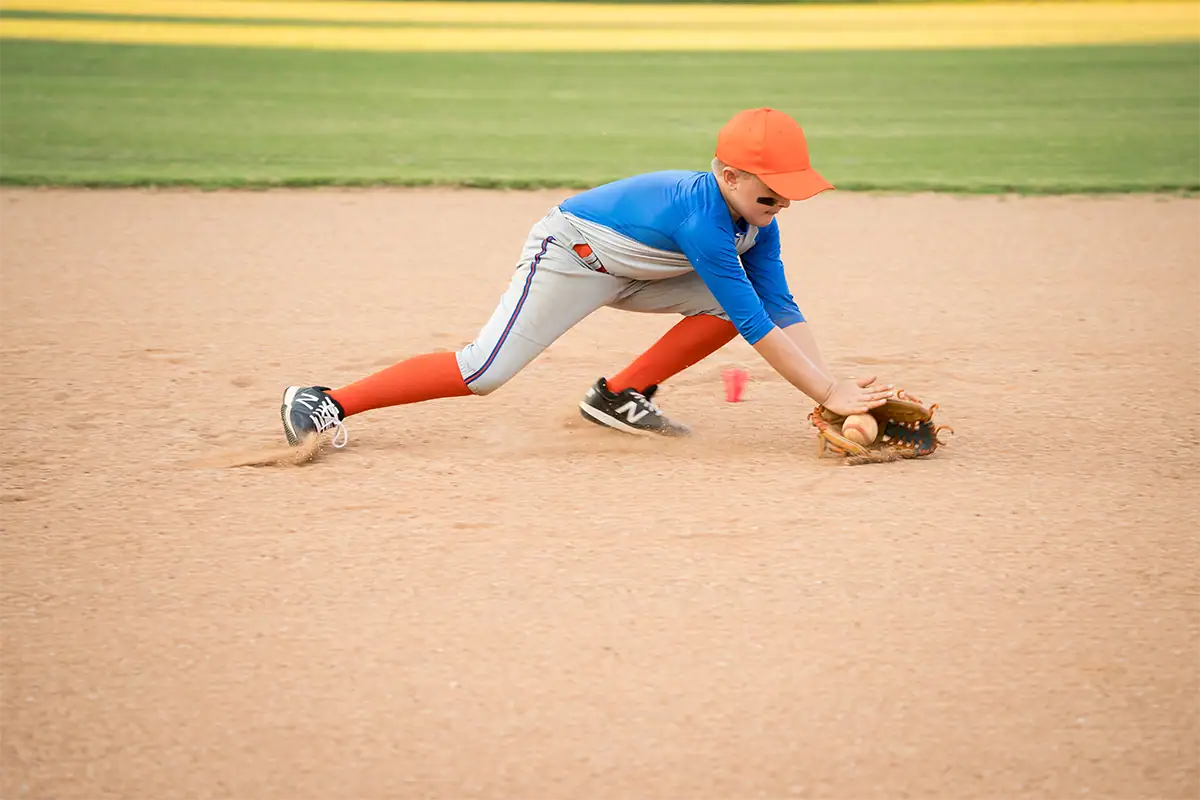
For youth sports, use forgiving settings that help you react quickly: 1/1000s shutter speed, f/2.8 to f/4, Auto ISO, continuous AF, and high-speed burst mode. Youth sports are unpredictable, so your camera should be ready before the play develops.
Parents and beginner sports photographers should focus on three priorities: keep the shutter speed fast, keep the autofocus continuous, and position yourself where the action comes toward you. You do not need to photograph every second of the game. Watch for moments when the athlete is likely to kick, swing, jump, pass, or sprint, then fire a short burst.
A telephoto lens of at least 200mm is helpful for field sports, but closer sports may not need as much reach. For youth basketball, volleyball, swimming, and gymnastics, a fast mid-range telephoto zoom can be easier to use than a very long lens.
Camera Settings for Night and Floodlit Sports
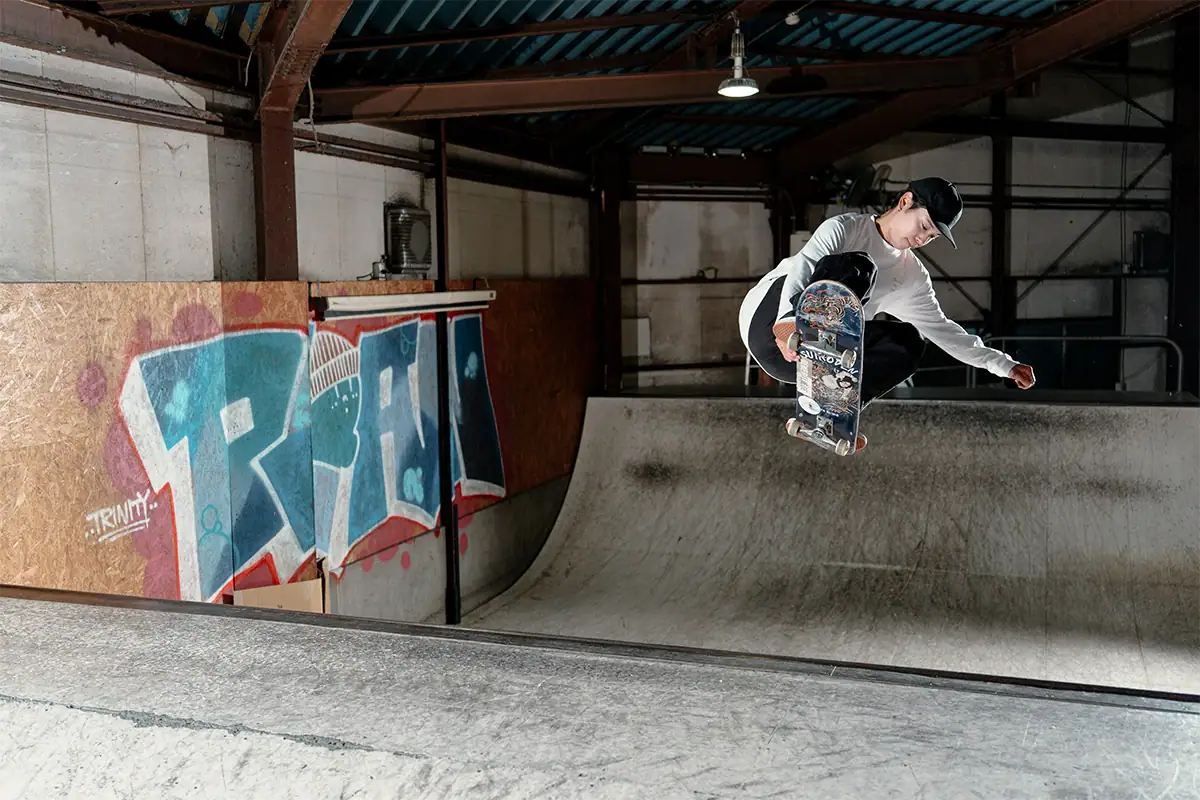
For night and floodlit sports, prioritize a fast shutter speed, a wide aperture, continuous AF, and RAW capture. ISO will vary widely based on the venue: some bright indoor or floodlit locations may allow low ISO, while darker fields and stadiums may require ISO 1600–6400 to maintain 1/1000s or faster. Adjust ISO to preserve shutter speed instead of treating it as a fixed setting.
Floodlights can also create mixed color temperatures and strong contrast between the athlete and the background. Use spot metering or center-weighted metering on the subject if the camera is overexposing players because of a dark background. Check your histogram and review a few early frames to make sure uniforms, faces, and highlights are not blown out.
White balance is especially important at night. If the field lights create yellow, green, or magenta color casts, correct them in post. Shooting RAW gives you more flexibility to adjust color and exposure after the game.
Final Sports Photography Settings Checklist
Before the game starts, check these settings:
- Shutter speed at 1/1000s or faster
- Aperture at f/2.8 to f/4 when available
- Auto ISO enabled with a minimum shutter speed limit
- Continuous autofocus enabled
- Zone AF, expanded AF, or subject tracking selected
- Burst mode active
- RAW selected for difficult light
- Memory card fast enough for burst shooting
- White balance checked for indoor or night sports
The best sports photography settings are the ones that let you stop thinking about exposure once the action begins. Set your camera before the first play, choose the right lens for your distance and lighting, and focus on timing, positioning, and the decisive moment.
For more tips on technique and lens choice, continue with dynamic sports photography tips using telephoto lenses and our full guide to the best sports photography lens.
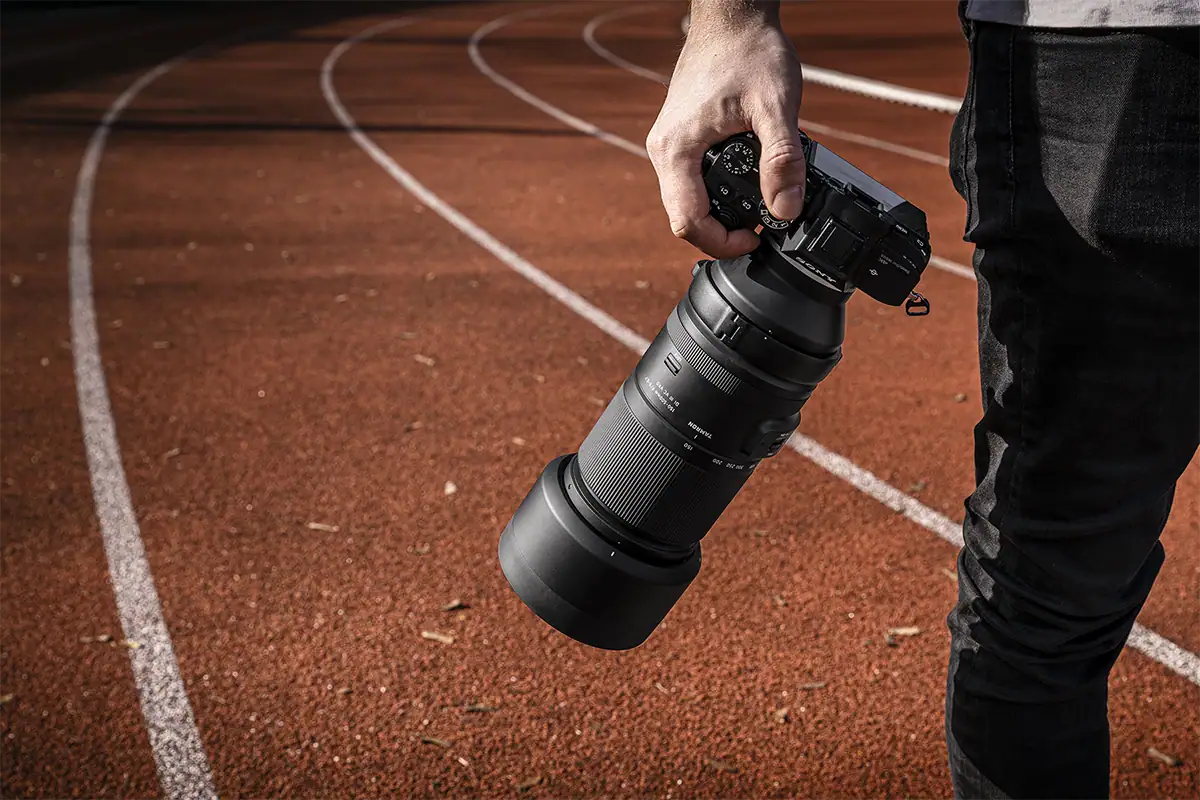
Explore Tamron Lenses for Sports
The right settings help you freeze action, but the right lens helps you reach it. Browse Tamron’s lineup of fast telephoto lenses for sports and action photography to find the focal length, aperture, and portability that fit the way you shoot.
Where to Buy Tamron Lenses
Learn more about Tamron lenses at an authorized Tamron dealer near you or shop directly at the official TAMRON Store.
About the Author
 Stacie Errera is Vice President of Marketing and Communications for Tamron Americas, where she has been with Tamron for more than 36 years. She is also a photography educator who teaches new camera users how to better understand their cameras and photography basics. She leads weekend photography workshops for women. Read Stacie’s full bio >>