Instant Savings
 Rebate Claims
 Support
 Find a Dealer
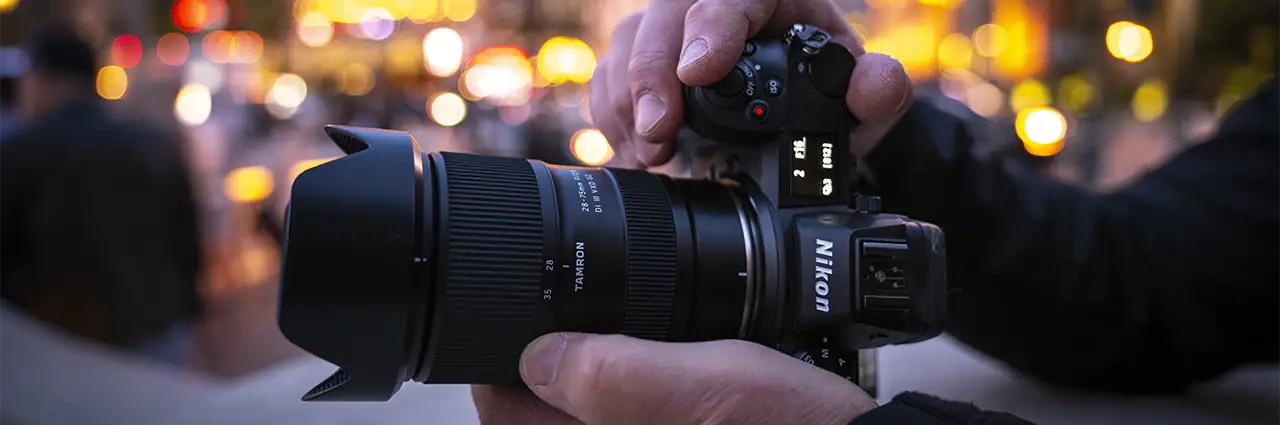
A standard zoom lens is one of the most versatile lenses a photographer can own. Its focal-length range typically extends from a moderately wide view through a natural-looking standard perspective and into the short-telephoto range. This gives photographers the flexibility to capture an entire setting, frame a subject more tightly, or create a flattering portrait without changing lenses.
Because standard zoom lenses work well for so many subjects, they are often used as everyday lenses for family photography, travel, portraits, events, landscapes, street photography, food, and video. A mirrorless standard lens can be especially useful for photographers who want a compact, flexible setup that is easy to carry throughout the day.
In this article, we will explain what a standard zoom lens is, how it differs from other lens types, when to use one, how to use a zoom lens effectively, and what to consider when choosing the best lens for your camera. For a broader introduction to lens categories and terminology, explore our guide to camera lenses explained.
Table of Contents
- What Is a Standard Zoom Lens?
- Standard Zoom Lens Characteristic 1: Flexible Framing Without Changing Lenses
- Standard Zoom Lens Characteristic 2: Natural-Looking Perspective
- Standard Zoom Lens Characteristic 3: Wide Through Short-Telephoto Coverage
- Standard Zoom Lens Characteristic 4: Everyday Portability
- Standard Zoom Lens vs. Other Types of Lenses
- Recommended Uses for a Standard Zoom Lens
- How to Use a Zoom Lens Effectively
- How to Choose a Standard Zoom Lens
- Tamron Standard Zoom Lenses to Consider
- Make a Standard Zoom Lens Your Everyday Creative Tool
- Frequently Asked Questions about Standard Zoom Lenses
What Is a Standard Zoom Lens?
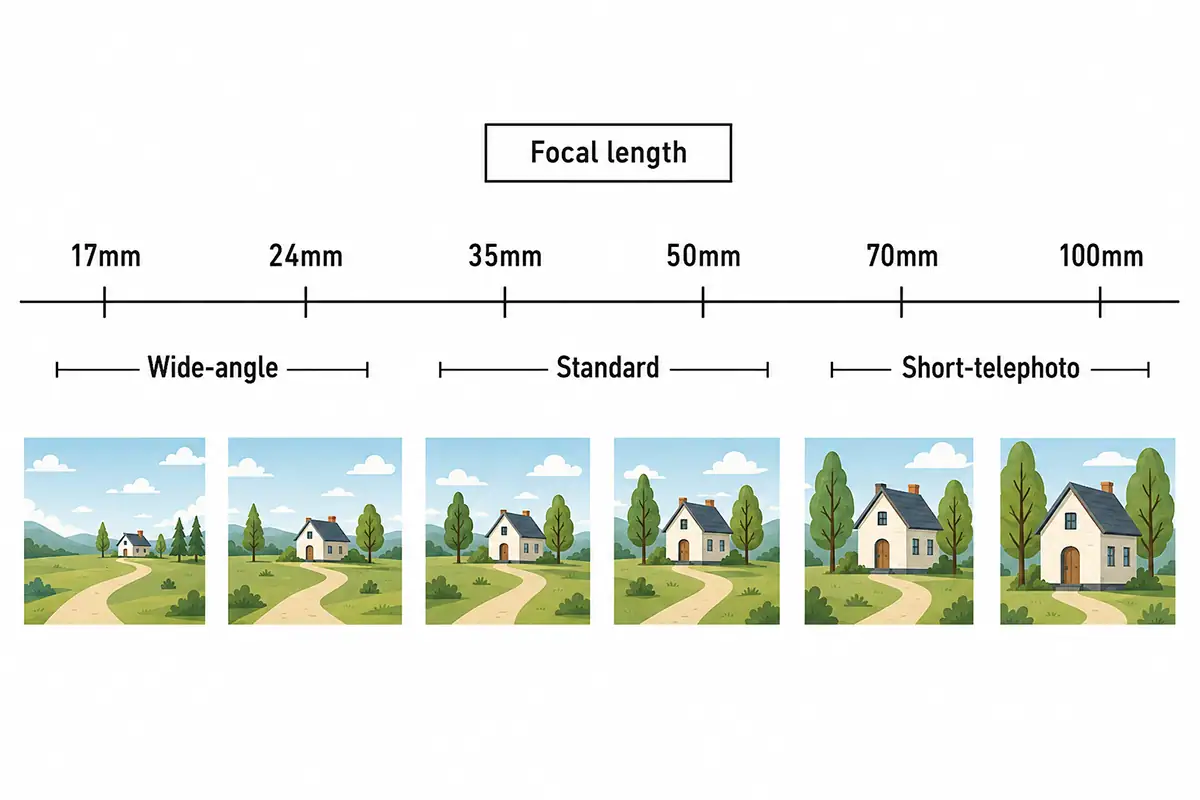
A standard zoom lens is a lens with an adjustable focal length that covers the standard or normal range while generally extending into moderately wide-angle and short-telephoto focal lengths.
On a full-frame camera, familiar standard zoom ranges include approximately 24-70mm, 28-75mm, and 35-100mm. An APS-C standard zoom often begins around 17mm or 18mm because the camera’s smaller sensor creates a narrower field of view than the same focal length would produce on a full-frame camera.
The term “standard” does not mean basic or average in quality. It describes the lens’s central range of focal lengths. At approximately 50mm on a full-frame camera, the field of view often feels balanced and familiar, without the exaggerated space of an ultra-wide lens or the strong magnification of a long telephoto lens.
A standard zoom expands on that familiar perspective by letting the photographer move smoothly between wider environmental views and tighter compositions.
What Is a Zoom Lens?
A zoom lens is any lens that allows the photographer to change focal length without physically changing lenses. Turning the zoom ring changes how much of the scene appears within the frame.
At the wide end of a standard zoom, the lens captures more of the surrounding environment. At the long end, it narrows the field of view and makes the subject fill more of the frame.
Shorter focal lengths produce a wider angle of view, while longer focal lengths produce a narrower view and greater subject magnification. For a more detailed explanation of this relationship, see Adobe’s guide to understanding focal length.
Zoom lenses can be wide-angle, standard, telephoto, or all-in-one zoom lenses. The word “zoom” simply means the focal length can be adjusted. It does not automatically mean the lens is a telephoto lens or that it is designed only to photograph distant subjects.
What Is a Standard Lens?
A standard lens is generally a lens that produces a balanced, natural-looking field of view. On a full-frame camera, a focal length around 50mm is commonly considered standard. On an APS-C camera, a focal length around 30mm to 35mm provides a roughly comparable field of view.
A standard prime lens has one fixed focal length, while a standard zoom lens includes several useful focal lengths surrounding the standard range. This flexibility is one reason a standard zoom is frequently the first lens photographers attach to their cameras and the last one they remove.
Standard Zoom Lens Characteristic 1: Flexible Framing Without Changing Lenses
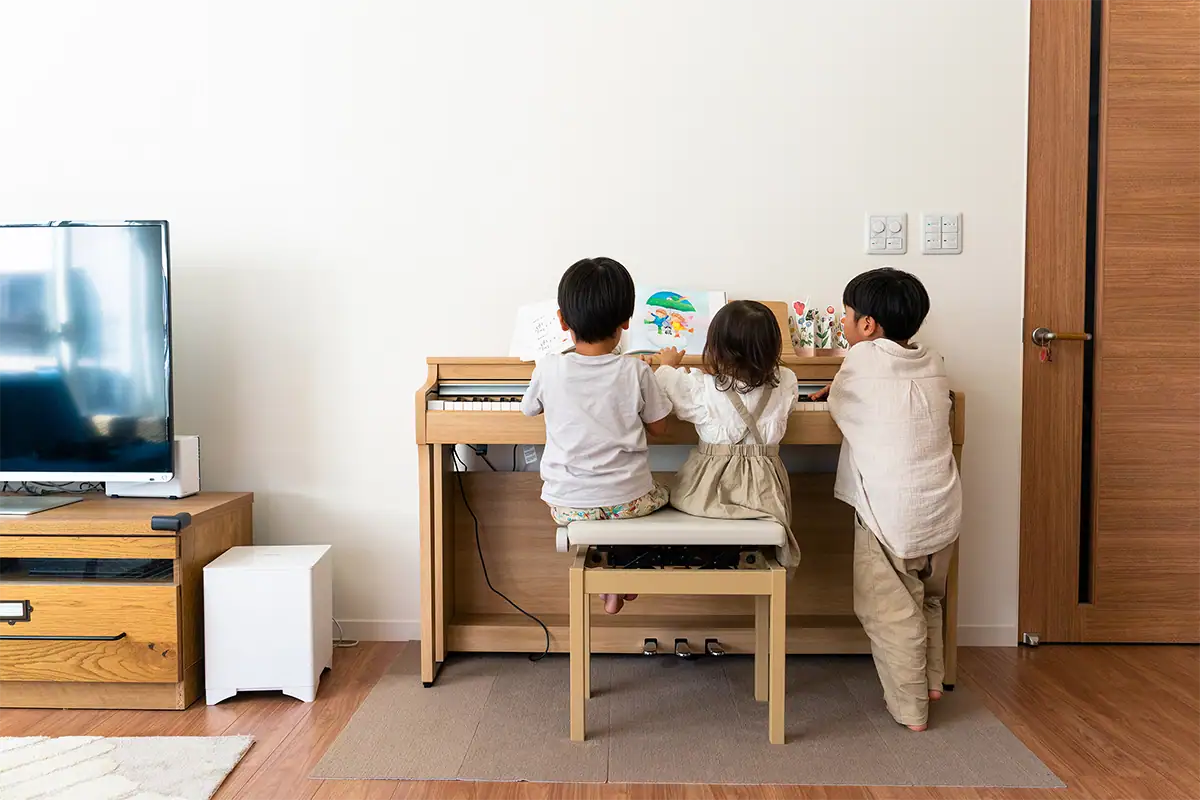
The defining advantage of a standard zoom lens is the ability to adjust the composition quickly. A photographer can capture an entire room, street, landscape, or group at the wide end and then zoom in to photograph a person, architectural detail, or candid moment.
This flexibility is particularly helpful when the photographer cannot easily change position. At an event, for example, moving closer might interrupt the activity. While traveling, a fence, crowd, roadway, or restricted area may limit where the photographer can stand. Adjusting the zoom allows the composition to be refined from the available position.
A standard zoom also reduces the number of lens changes required during a shoot. This can help photographers react more quickly while limiting the risk of dust reaching the camera sensor in windy, sandy, or otherwise challenging environments.
Standard Zoom Lens Characteristic 2: Natural-Looking Perspective
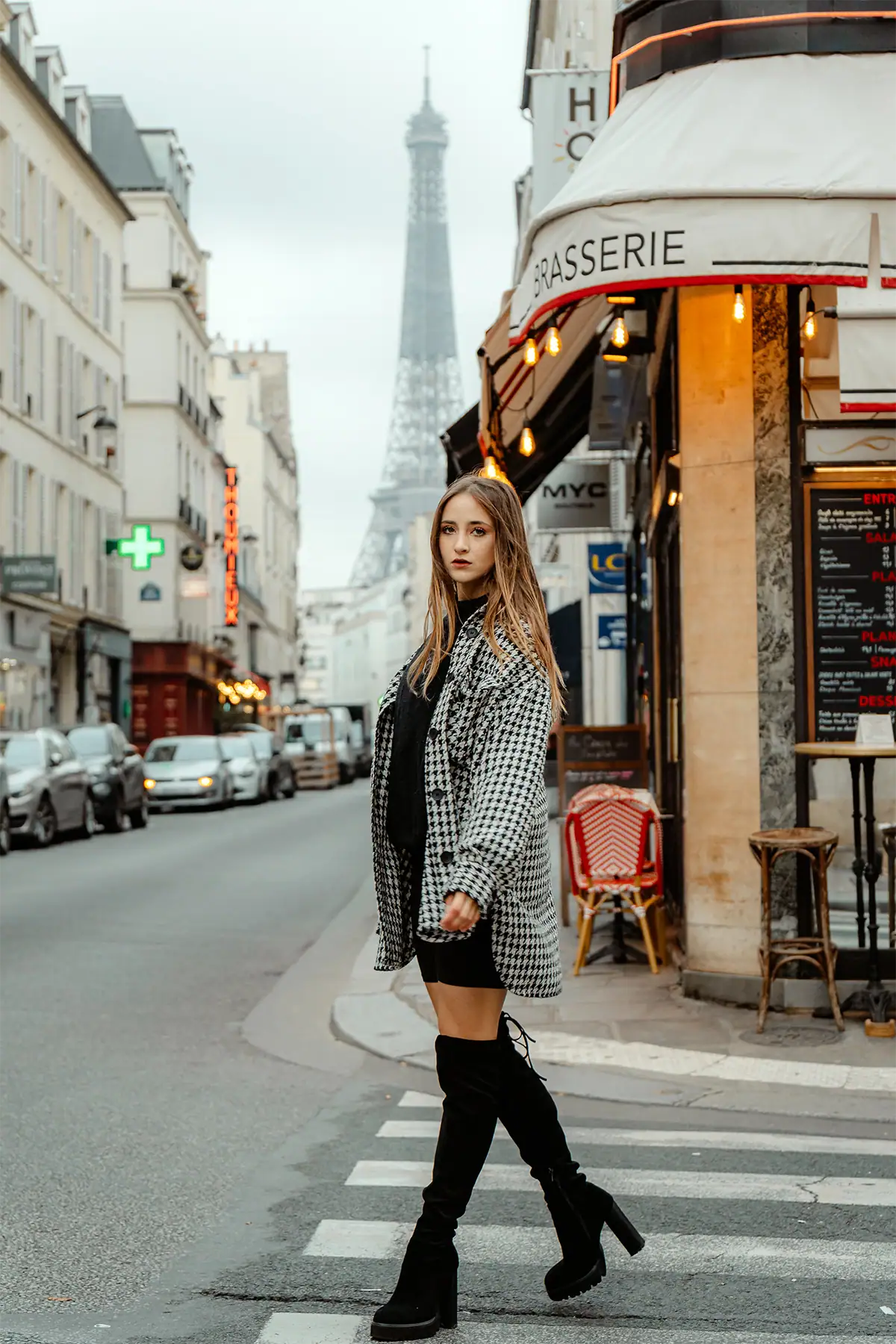
The middle of a standard zoom range produces photographs with a balanced relationship between the subject and the surrounding environment. This makes it well suited to documentary images, everyday moments, environmental portraits, and street photography.
At these focal lengths, people, buildings, and other subjects can be shown without the strongly stretched appearance that may occur when photographing close to a subject with an ultra-wide-angle lens. The background also retains more context than it typically would with a long telephoto lens.
It is important to remember that camera position controls perspective. Changing the focal length changes the framing, while physically moving closer to or farther from the subject changes how the subject and background relate to each other.
A standard zoom gives photographers control over both. They can select an appropriate focal length and then adjust their position when space and circumstances allow.
Standard Zoom Lens Characteristic 3: Wide Through Short-Telephoto Coverage
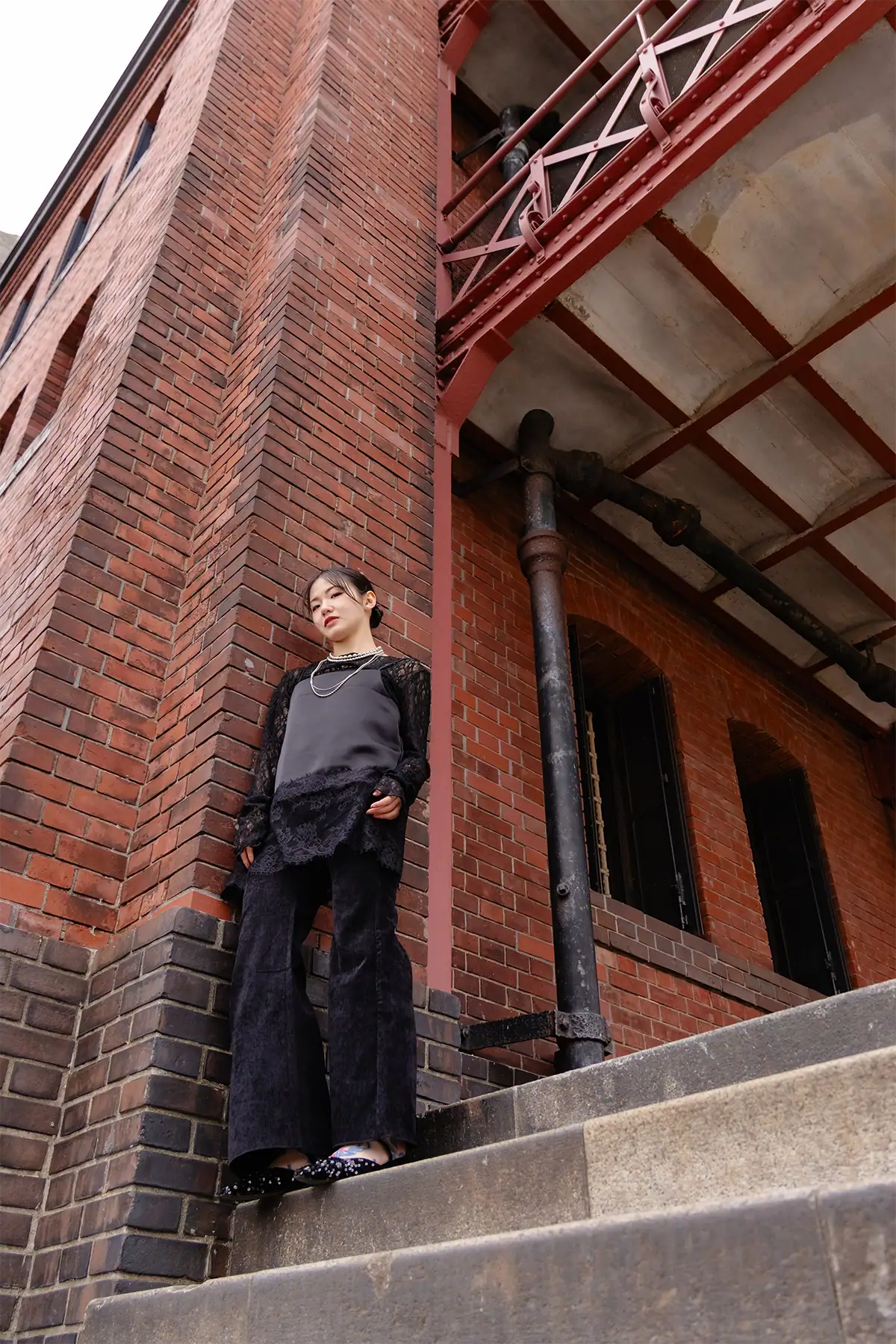
A standard zoom lens usually covers more than one visual style.
At the wide end, it can include the subject’s surroundings, making it useful for interiors, group photographs, landscapes, architecture, and environmental portraits. The middle of the range creates balanced everyday compositions. The longer end provides tighter framing, greater subject isolation, and flattering perspectives for portraits and details.
This means the same lens can be used for an establishing photograph of a location, a medium composition showing the main activity, and a close view of an important detail. For photographers creating a visual story, that variety can help produce a more complete and engaging collection of images.
Some standard zooms extend farther into the short-telephoto or medium-telephoto range. These lenses offer additional reach for portraits, events, candid photography, and subjects that cannot be approached closely.
Standard Zoom Lens Characteristic 4: Everyday Portability

A standard zoom can replace several commonly used prime focal lengths in one lens. Rather than carrying separate wide, standard, and portrait lenses, a photographer can cover many of those compositions with a single zoom.
This makes a compact mirrorless standard lens especially useful for travel, family outings, hiking, city walks, and long event days. A lighter setup may also encourage photographers to carry their cameras more often and continue shooting for longer periods without fatigue.
Using one lens does not mean giving up creative control. The photographer still has access to different angles of view, subject distances, compositions, and levels of background separation throughout the focal range.
Standard Zoom Lens vs. Other Types of Lenses
Understanding how a standard zoom compares with other lenses can make it easier to determine when it is the best choice.
A zoom lens is any lens with an adjustable focal length, while a telephoto lens is defined by its longer focal length and narrower angle of view. A telephoto lens may be a zoom lens, but not every zoom lens is a telephoto lens.
Standard Zoom Lens vs. Prime Lens
A prime lens has one fixed focal length. To change the framing significantly, the photographer must move, crop the photograph, or switch to another lens.
For a more detailed comparison of flexibility, aperture, size, and image-making style, read our guide to prime lens vs. zoom lens.
Prime lenses are often available with very wide maximum apertures, making them useful for low-light photography, shallow depth of field, and strong background blur. Their fixed focal length can also encourage photographers to become highly familiar with one angle of view.
A standard zoom lens emphasizes flexibility. It allows the photographer to move between multiple focal lengths immediately and respond to changing subjects without interrupting the shoot.
The better choice depends on the assignment. A prime may be preferred when maximum aperture or a specific rendering style is the priority. A standard zoom may be more practical when subject distance, composition, and shooting conditions change frequently.
Standard Zoom Lens vs. Wide-Angle Zoom
A wide-angle zoom concentrates on short focal lengths and expansive fields of view. It is particularly helpful for interiors, architecture, night skies, dramatic landscapes, and situations where the photographer is working in a confined space.
A standard zoom does not usually extend as wide, but it provides greater flexibility for everyday subjects. Its longer focal lengths can create tighter portraits and detail images that would be difficult to achieve with a wide-angle zoom alone.
Photographers who regularly photograph both expansive scenes and individual subjects may carry one wide-angle zoom and one standard zoom as complementary lenses.
Recommended Uses for a Standard Zoom Lens
A standard zoom lens can adapt to a broad range of subjects. The following situations demonstrate why it is frequently used as an everyday or primary lens.
Family and Everyday Photography

Family activities can change quickly, leaving little time to switch lenses. A standard zoom lets the photographer capture a group, zoom in for an individual expression, and then widen the composition again as people move around.
The middle focal lengths work well for natural candid photographs, while the longer end can help isolate a person from a distracting background. Wider settings are useful for birthday parties, holiday gatherings, indoor activities, and group photographs.
Portrait and Event Photography

A standard zoom gives portrait and event photographers the freedom to change compositions without constantly repositioning themselves.
Wider focal lengths can show a person within an interesting location or include several people in the frame. Longer focal lengths are useful for head-and-shoulders portraits, candid reactions, speeches, ceremonies, and details.
A standard zoom with a fast maximum aperture can also help photographers create beautiful bokeh effects and maintain practical shutter speeds in dimly lit venues.
Travel and Street Photography

Travel and street photography often require photographers to react to scenes as they develop. A standard zoom can capture an expansive city view, a street portrait, a storefront detail, or a plate of food without requiring a lens change.
Its flexible range can also be helpful in crowded locations where moving forward or backward is difficult. A compact standard zoom keeps the camera setup less conspicuous and easier to carry during long days of walking.
Photographers searching for a Sony standard zoom, for example, may prioritize compact dimensions, fast autofocus, and a focal-length range that works equally well for travel photographs, portraits, and video.
Landscapes, Cityscapes and Architecture

Although wide-angle lenses are often associated with landscape and architectural photography, wider is not always better. Including too much of a scene can make the main subject appear small or leave distracting elements around the edges.
A standard zoom allows the photographer to refine the composition by excluding unnecessary areas. The longer portion of the range can isolate mountain layers, architectural patterns, trees, or distant buildings, while the wider end can still capture an overall view.
When reflections, glare, or washed-out foliage affect an outdoor scene, learning how to use a circular polarizer can help improve color, contrast, and clarity.
Food, Products and Close-Up Details

A standard zoom lens with good close-focusing performance can photograph food, small products, flowers, artwork, and other details without requiring a dedicated macro lens for every situation.
The wide end can create an immersive close-up that includes some of the surroundings. The longer end offers a more compressed composition and can provide additional working distance between the lens and the subject.
This is especially helpful for travel and lifestyle photographers who want to move easily between people, places, meals, and detail photographs.
Video and Hybrid Content Creation
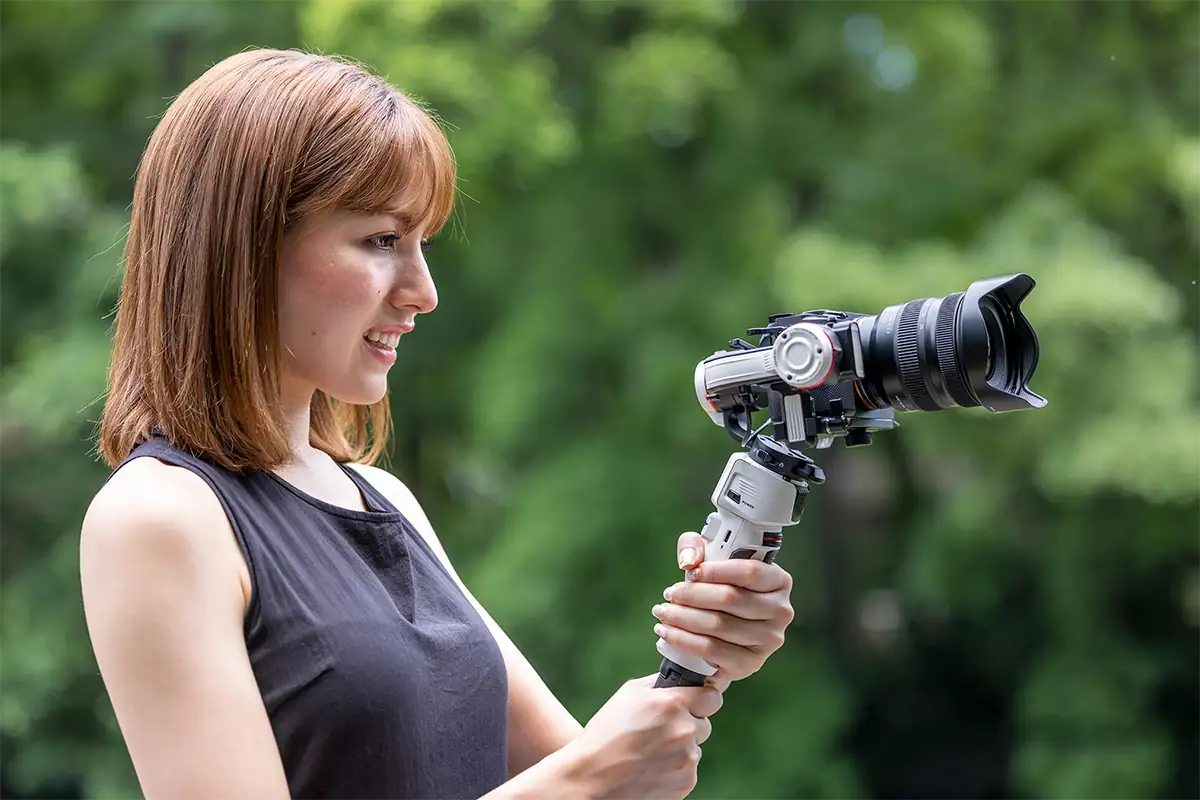
Standard zoom lenses are useful for video because they can cover establishing shots, medium compositions, interviews, close-ups, and detail footage with one lens.
A constant maximum aperture helps maintain consistent exposure while zooming. Quiet autofocus, smooth manual-focus response, manageable weight, and a stable center of gravity can also be important for handheld video and gimbal operation.
For hybrid creators who alternate between still photography and video, a standard zoom can reduce both the amount of equipment required and the time spent changing lenses.
How to Use a Zoom Lens Effectively
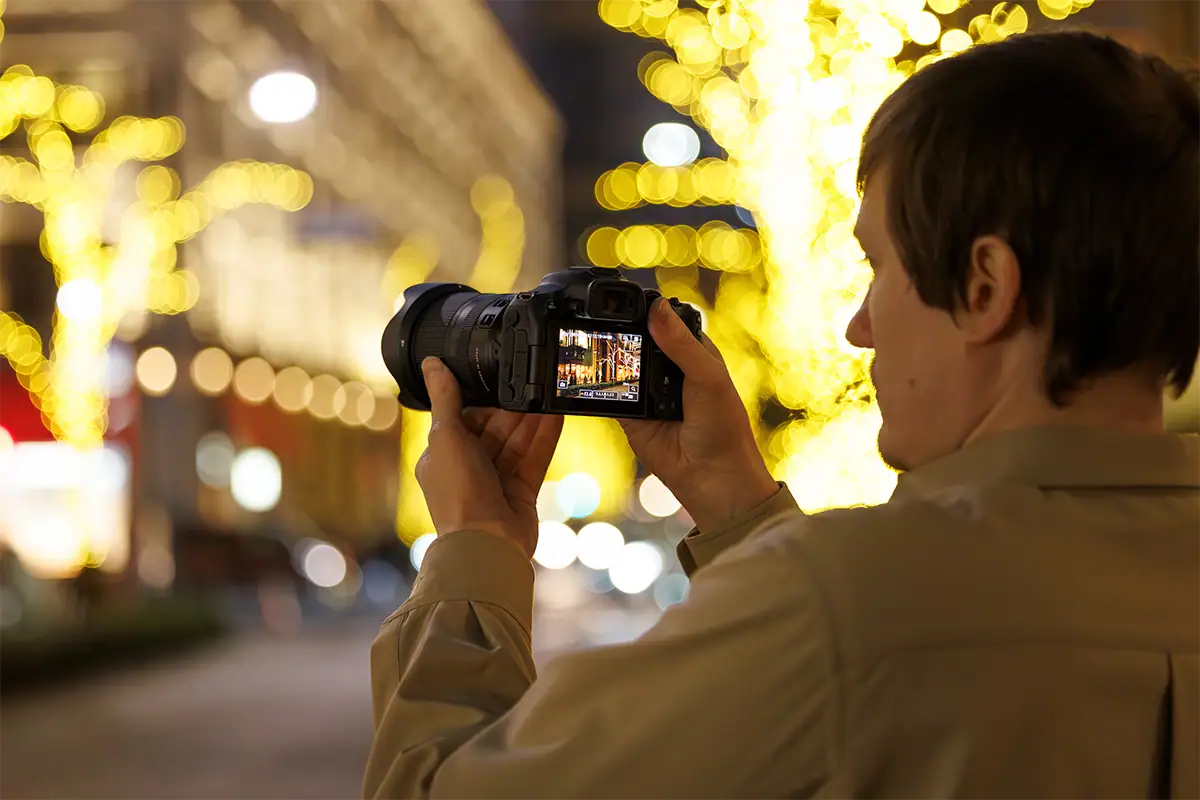
Learning how to use a zoom lens involves more than standing in one location and turning the zoom ring. The best results usually come from combining focal-length adjustments with thoughtful positioning and composition.
- Begin with the purpose of the image: Decide whether the photograph should emphasize the setting, the subject, or a particular detail. This will help determine which part of the zoom range to use.
- Use the wide end to establish context: Wider focal lengths work well when the surroundings contribute to the story. Pay attention to the edges of the frame, where unwanted people, signs, or objects can easily appear.
- Use the middle of the range for balance: Mid-range focal lengths are useful for natural-looking street photographs, documentary images, group photographs, and environmental portraits.
- Use the longer end for isolation: Zooming toward the telephoto end narrows the composition and can make it easier to separate the subject from a busy background.
- Move after choosing a focal length: Do not rely entirely on the zoom ring. Move closer, farther away, or to one side when possible. A change in camera position can improve the relationship between the foreground, subject, and background.
- Watch your shutter speed: Camera movement becomes more noticeable as focal length increases. When shooting handheld at the longer end of the lens, check that the shutter speed is fast enough for both the focal length and the movement of the subject.
- Experiment with distance and aperture: Background blur depends on several factors, including aperture, focal length, subject distance, and the distance between the subject and background. Try changing more than one of these factors rather than relying only on the lowest available F-stop.
How to Choose a Standard Zoom Lens
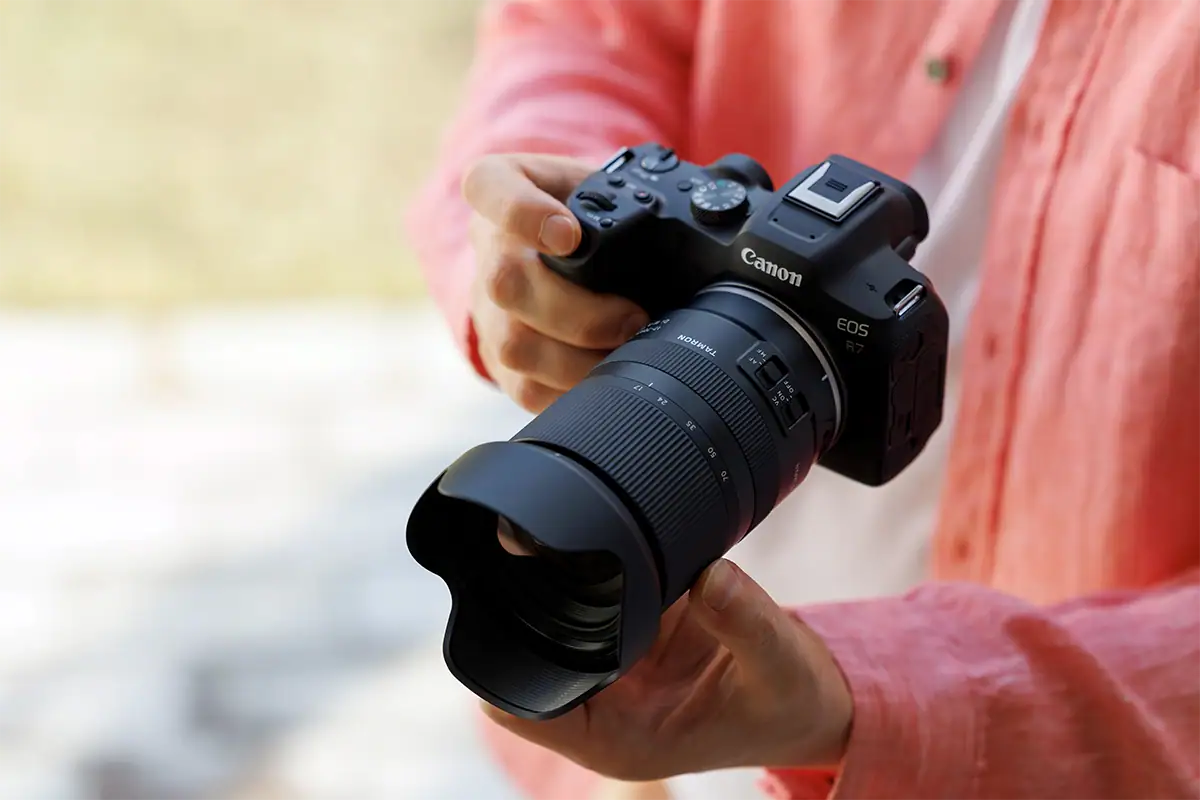
The best standard zoom lens is not necessarily the one with the longest range or widest aperture. It is the lens that fits the photographer’s camera, subjects, working style, and preferred balance between portability and performance.
Camera Mount and Sensor Size
Begin by confirming the camera mount and whether the camera uses a full-frame or APS-C sensor.
A lens designed for an APS-C camera will produce a different effective field of view than the same focal length on a full-frame camera. For example, a 17-70mm APS-C standard zoom covers a range similar to approximately 25.5-105mm on many APS-C systems, although the exact equivalent differs slightly by camera brand.
Sensor format should therefore be considered alongside the numbers printed on the lens.
Focal-Length Range
Consider which focal lengths are most useful for the subjects you photograph.
A lens beginning around 17mm on APS-C or 24mm to 28mm on full frame provides more room for landscapes, interiors, groups, and environmental photographs. A lens beginning around 35mm but extending to 100mm or 150mm prioritizes portraits, events, candid photography, and tighter compositions.
A broader range can reduce lens changes, while a more focused range may allow for a smaller design, faster aperture, or other performance advantages.
Maximum Aperture
The maximum aperture determines how much light the lens can gather when used wide open. A low F-stop such as F2.8 can help in lower light and provide greater control over depth of field.
A constant-aperture zoom maintains the same maximum aperture throughout the focal range. This can be particularly helpful for events, indoor photography, portraiture, and video because the available aperture does not become smaller as the photographer zooms in.
Variable-aperture zooms can often provide a longer range or lighter construction, making them practical when portability and broad focal-length coverage are higher priorities.
Autofocus Performance
Fast, accurate autofocus is valuable for photographing people, pets, events, and moving subjects. Video creators may also want autofocus that operates smoothly and quietly.
Tamron’s VXD linear autofocus motor is designed to provide fast, precise, and quiet autofocus performance in compatible lenses.
Consider how well the lens acquires a subject, tracks movement, and performs in dim or changing light. Compatibility with the camera’s face-, eye-, and subject-detection systems is also important for mirrorless photography.
Vibration Compensation
Image stabilization can help reduce the visible effects of camera movement during handheld photography. It is particularly useful when working at slower shutter speeds, filming handheld video, or using a camera body without built-in stabilization.
Some lenses include stabilization within the lens, while other systems rely partly or entirely on stabilization in the camera body.
Vibration compensation cannot freeze a moving person, animal, or vehicle, so an appropriate shutter speed is still necessary when the subject itself is moving.
Weight and Handling
A standard zoom is likely to spend a great deal of time on the camera. Its size, weight, control placement, and overall balance can therefore have a noticeable effect on the shooting experience.
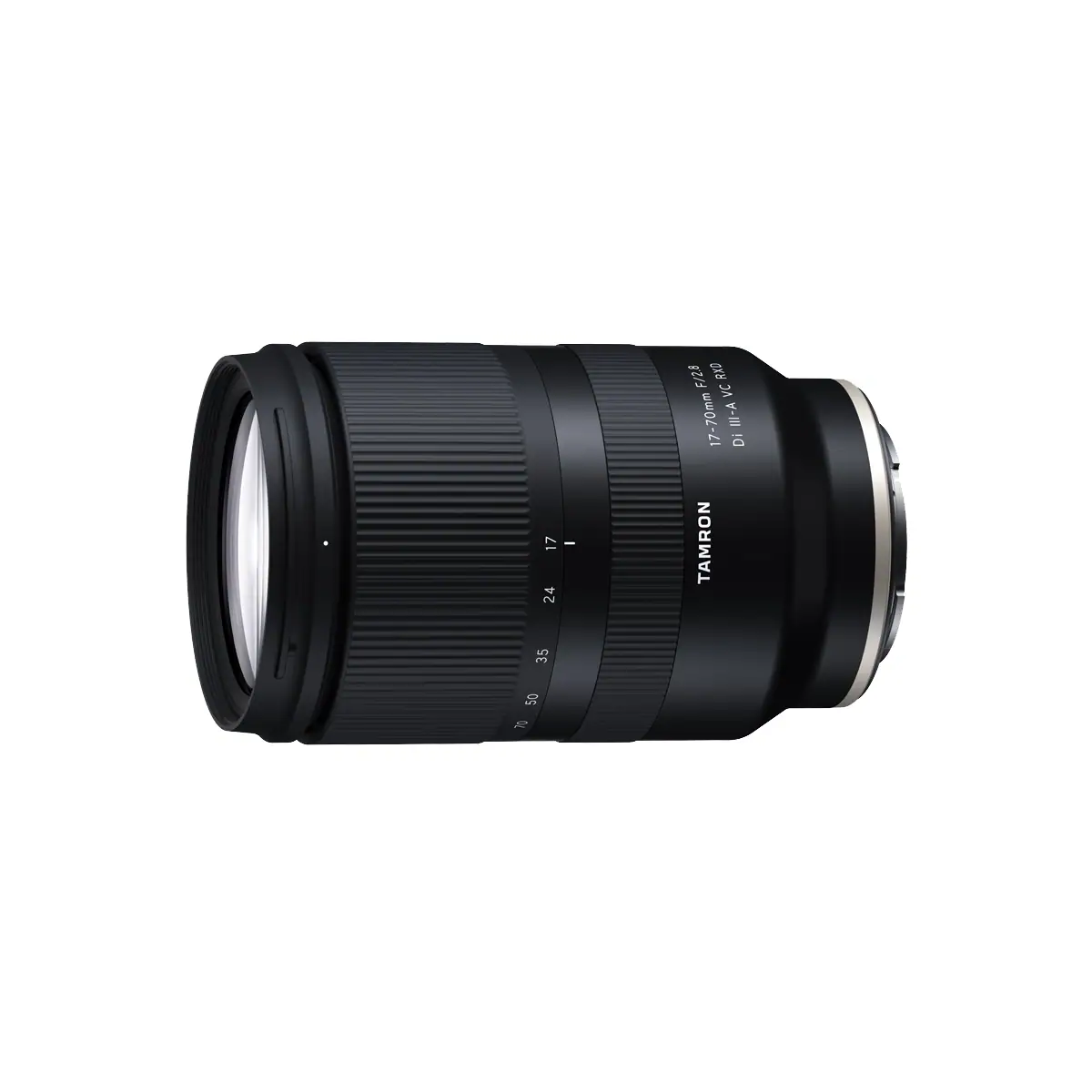
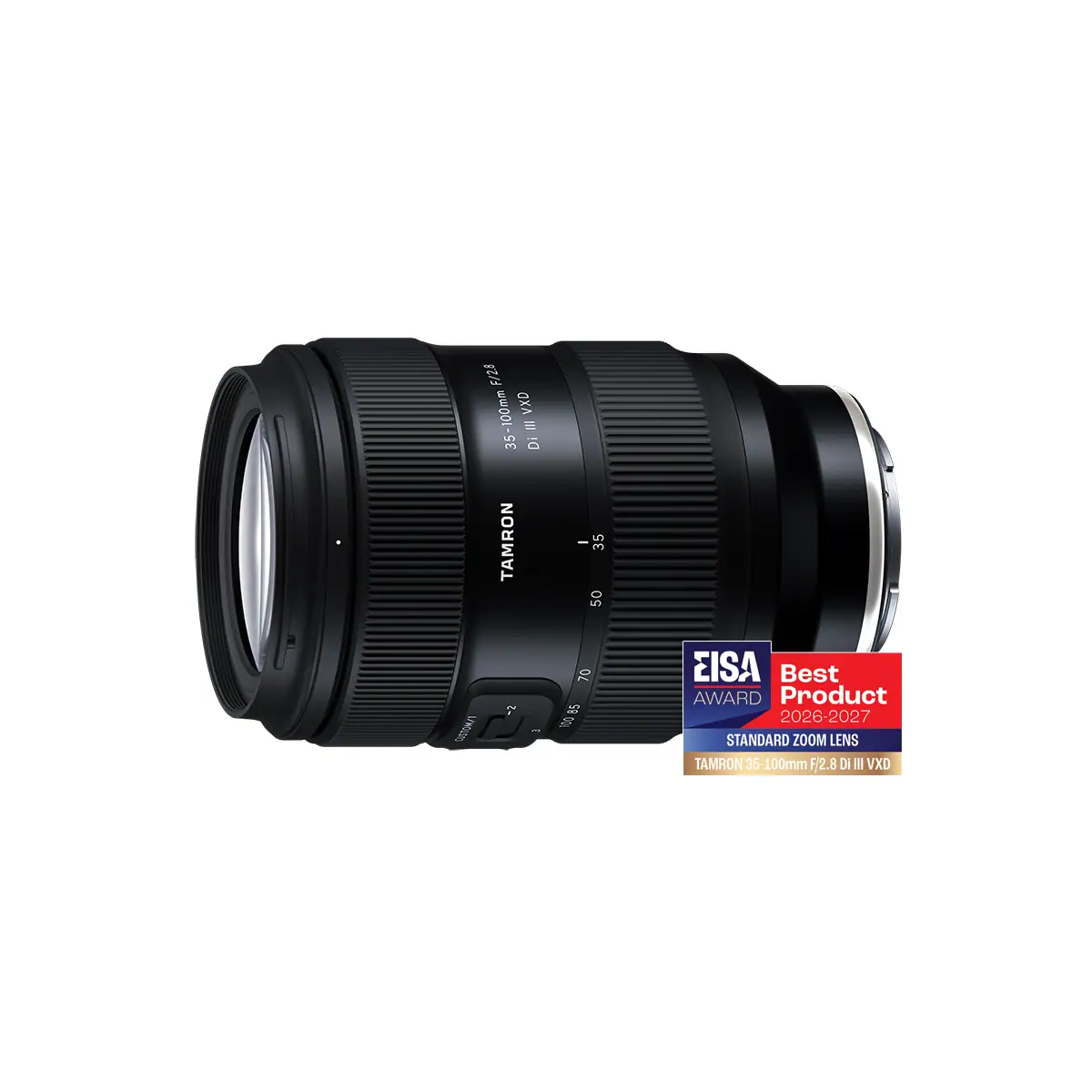
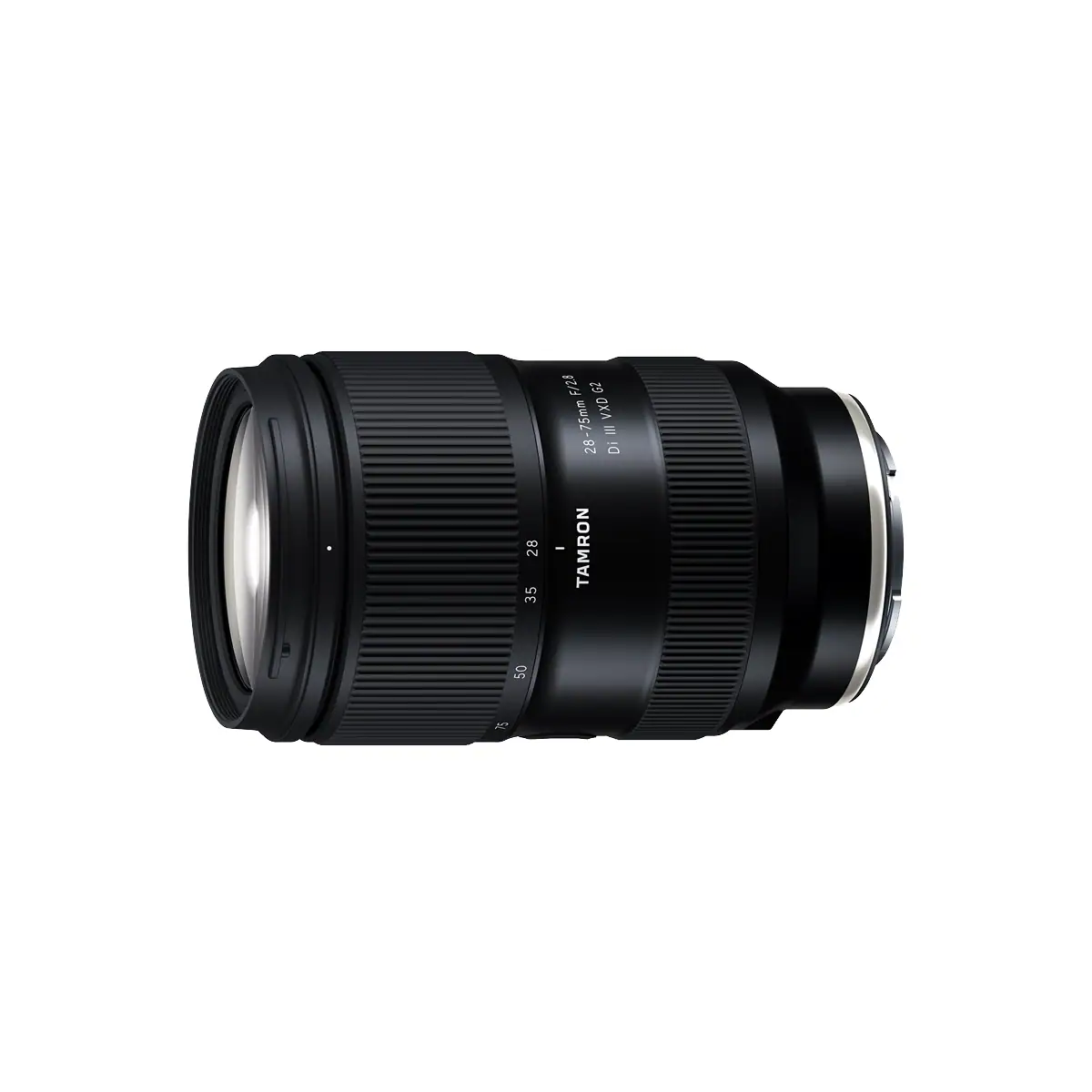
Weight drives whether the lens stays on the camera. Tamron’s fast standard zooms cluster tightly: the 17-70mm F/2.8 weighs 525g, the 28-75mm F/2.8 G2 weighs 540g, and the 35-100mm F/2.8 weighs 565g. All three stay under 120mm long, which keeps a mirrorless kit small enough for travel, hiking, street photography, and gimbal work.
Consider the complete camera-and-lens combination rather than judging the lens separately from the body on which it will be used.
Also consider how accessories affect the complete setup. A camera lens hood can help block stray light and protect the front of the lens, but it also adds to the lens’s packed and operating size.
Close-Focusing Performance
Minimum object distance (MOD) determines how close the lens focuses. A shorter MOD lets you photograph food, flowers, products, textures, and travel details without a dedicated macro lens. Tamron standard zooms range from 0.18m at the wide end on the 28-75mm F/2.8 G2 to 0.22m on the 35-100mm F/2.8.
Maximum magnification ratio matters just as much. The 28-75mm F/2.8 G2 reaches 1:2.7 at 28mm, close enough for wide macro work. The 35-100mm F/2.8 reaches 1:3.3 at 35mm. Two lenses with similar focal ranges deliver very different close-up results.
Strong close-focusing performance makes a standard zoom more versatile and can reduce the need to carry a separate close-up or macro lens for casual detail photography.
Tamron Standard Zoom Lenses to Consider
Tamron offers standard zoom lenses with different combinations of focal-length range, aperture, portability, stabilization, and camera compatibility.
Tamron 17-70mm F/2.8 Di III-A VC RXD (Model B070)
A fast F2.8 standard zoom for APS-C mirrorless cameras. Its 17-70mm range extends from wide-angle through short telephoto, making it well suited to landscapes, travel, portraits, events, video, and everyday photography.
Available for Sony E, Canon RF, Fujifilm X, and Nikon Z APS-C mirrorless cameras.
Tamron 20-40mm F/2.8 Di III VXD (Model A062)
A compact, wide-biased standard full-frame zoom. Its range is useful for travel, street photography, interiors, environmental portraits, vlogging, and handheld video.
Available for Sony E full-frame mirrorless cameras.
Tamron 28-75mm F/2.8 Di III VXD G2 (Model A063)
A fast standard full-frame zoom. The familiar 28-75mm range covers everyday photography, portraits, events, landscapes, families, and travel while maintaining a constant F2.8 maximum aperture.
Available for Sony E and Nikon Z full-frame mirrorless cameras.
Tamron 35-100mm F/2.8 Di III VXD (Model A078)
A compact F2.8 standard full-frame zoom. Its range includes popular 35mm, 50mm, 85mm, and 100mm focal lengths, making it particularly useful for portraits, travel, lifestyle photography, events, and candid moments.
Available for Sony E and Nikon Z full-frame mirrorless cameras.
Tamron 35-150mm F/2-2.8 Di III VXD (Model A058)
A fast standard-to-telephoto zoom for full-frame mirrorless cameras. Its extended range can cover environmental portraits, events, weddings, travel, street scenes, performances, and tighter details without requiring a switch to a separate telephoto lens.
Available for Sony E and Nikon Z full-frame mirrorless cameras.
Tamron’s current standard zoom category includes these mirrorless options along with the SP 24-70mm F/2.8 Di VC USD G2 for compatible DSLR systems. Mount availability and camera format should always be confirmed before selecting a lens.
Final Thoughts: Make a Standard Zoom Lens Your Everyday Creative Tool
A standard zoom lens combines several of photography’s most useful focal lengths in one adaptable lens. It can capture wide environmental scenes, balanced everyday compositions, flattering portraits, and close details without requiring the photographer to stop and change equipment.
That flexibility makes standard zoom lenses valuable for beginners, experienced photographers, and hybrid creators alike. They are suitable for family moments, travel, street photography, landscapes, events, portraits, food, video, and many other subjects encountered in everyday shooting.
By understanding how focal length affects framing, moving thoughtfully instead of relying entirely on the zoom ring, and choosing a lens that fits the camera and intended subjects, photographers can use a standard zoom lens to respond quickly while still creating deliberate, expressive images.
Where to Buy Tamron Lenses
Learn more about Tamron lenses at an authorized Tamron dealer near you or shop directly at the official TAMRON Store.
Frequently Asked Questions About Standard Zoom Lenses
Is a Standard Zoom Lens Good for Beginners?
Yes. A standard zoom lens allows a beginner to experiment with wide, normal, and short-telephoto focal lengths without immediately purchasing several lenses. It can also help a photographer discover which angles of view they use most frequently.
Is a 24-70mm Lens a Standard Zoom?
A 24-70mm lens is generally considered a standard zoom on a full-frame camera. It extends from wide-angle at 24mm through the standard range and into short telephoto at 70mm.
Can You Use a Standard Zoom Lens for Portraits?
Yes. The middle and longer ends of a standard zoom are well suited to environmental, waist-up, and head-and-shoulders portraits. A fast maximum aperture, longer focal length, and sufficient distance between the subject and background can help create attractive background blur.
Can a Standard Zoom Replace a Telephoto Lens?
A standard zoom can handle nearby subjects, portraits, events, and moderately distant details, but it does not provide the reach of a dedicated telephoto lens. Wildlife, birds, field sports, aircraft, and other distant subjects generally require a telephoto or ultra-telephoto lens.
What Is the Best Focal Length on a Standard Zoom?
There is no single best focal length. Wider settings provide context, middle focal lengths create balanced compositions, and longer settings help isolate subjects. The best focal length is the one that supports the story and composition of the photograph.
Are Standard Zoom Lenses Good for Video?
Yes. Their flexible focal ranges make them useful for establishing shots, interviews, medium compositions, close-ups, and detail footage. Video creators should also consider autofocus noise, focus-breathing control, weight, stabilization, and whether the lens has a constant maximum aperture.
About the Author
 Stacie Errera is Vice President of Marketing and Communications for Tamron Americas, where she has been with Tamron for more than 36 years. She is also a photography educator who teaches new camera users how to better understand their cameras and photography basics. She leads weekend photography workshops for women. Read Stacie’s full bio >>