Instant Savings
 Rebate Claims
 Support
 Find a Dealer
Drawn to the Deep
A childhood illness took him out of the ocean. Now he’s back in it, with his Tamron 16-30mm F2.8 G2 ultra-wide-angle lens.
Author: Jenn Gidman
Images: Kyle Soto
Share Article
A childhood illness took him out of the ocean. Now he’s back in it, with his Tamron 16-30mm F2.8 G2 ultra-wide-angle lens.
Growing up along the Florida coast, Kyle Soto spent most of his childhood at the beach. “I was always in the water: exploring tide pools, surfing, snorkeling, free diving,” he recalls. “The ocean was a huge part of my life. Before I ever cared about photography, I loved the ocean and the animals in it, even collecting trading cards of various marine animals.”
Photography for Kyle came later. “When I was a teenager, I was diagnosed with cancer and spent a long period recovering away from the ocean,” he says. “Being forced out of the water gave me a new perspective on just how much it meant to me. When I recovered, getting back in the ocean became a priority.” Shooting first with an old GoPro, Kyle eventually purchased a DSLR, specifically to start shooting underwater.
Today, he’s happily immersed once more in the deep blue, this time with his Nikon mirrorless camera in hand. Accompanying him when he dives under the surface: the Tamron 16-30mm F/2.8 Di III VXD G2 ultra-wide-angle zoom lens. “The autofocus for the 16-30mm is very fast, especially for video, and the constant aperture with no focus breathing makes it very easy to work with,” he says.
The F2.8 maximum aperture is key to Kyle’s imagery, especially underwater, where light doesn’t penetrate the same way it does on land. “Many of my shots end up being in lower-light situations, especially the ones taken around sunrise, so being able to open up to F2.8 is helpful,” he says. “I also love how lightweight the lens is, along with its sharpness and close focusing distance. Underwater animals are unpredictable and sometimes come out of nowhere. Having a lens that can focus quickly at close range is a huge advantage.”
Patience is key to photographing underwater marine life. “The trickiest part of this type of photography is how many variables you’re working against,” Kyle says. “It can mean waking up before dawn, trekking down the beach to find the right reef, swimming in the cold, or waiting for an encounter that may never happen. Underwater photography can push you to some pretty extreme lengths. The challenge is balancing that drive to create exciting images while staying safe and respecting the ocean.”
KYLE’S QUICK UNDERWATER PHOTOGRAPHY TIPS
Lean into the light.
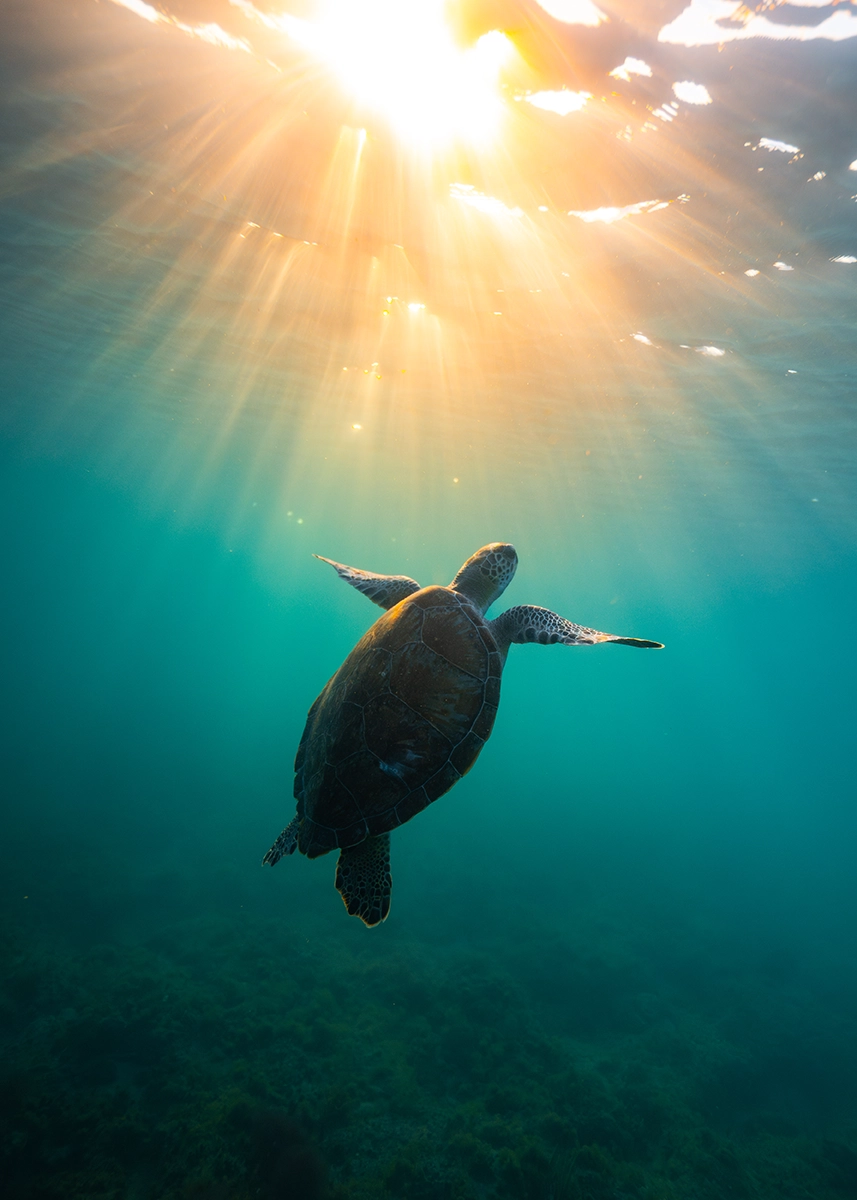
Lighting is one of the biggest things that can make underwater images unique. It’s a major reason why I like shooting at sunrise, when the sun casts a warm orange glow in the water and the beams almost feel like tiny underwater spotlights.
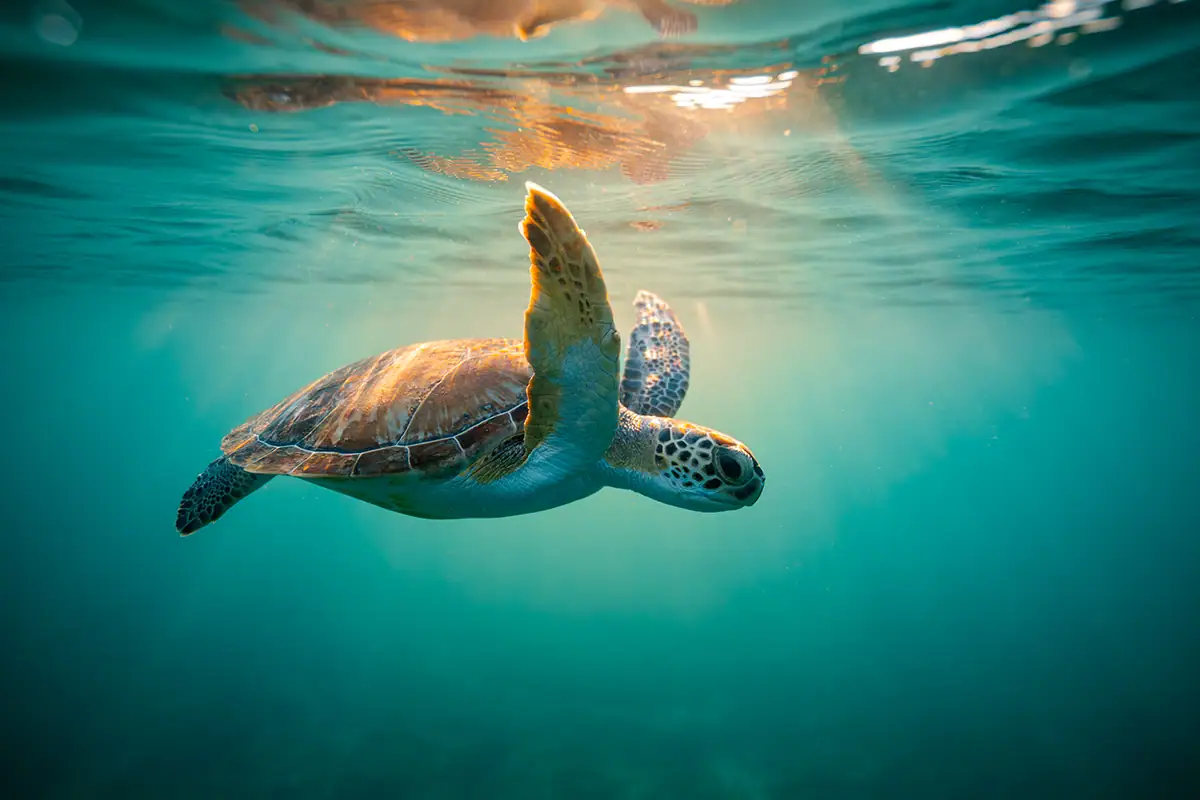
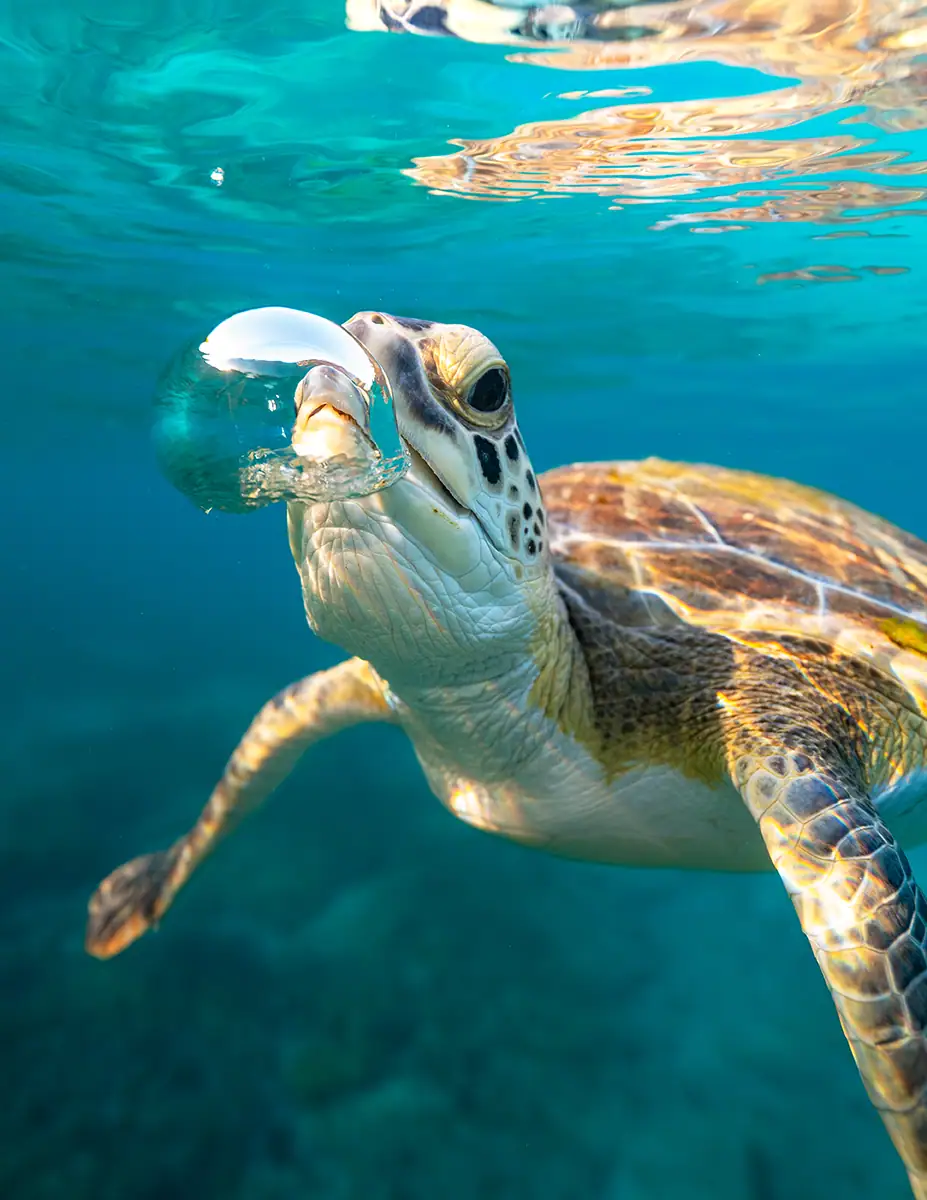
The time of day you shoot affects the colors you achieve in your photos. The turtle image here with the sunbeams streaming down was shot just after sunrise, when some of the best color starts to come into the water and the sunlight creates those natural spotlights from above. The turtle shot with the bubble was taken later that morning, after the sun had risen more, which made the water shift toward a deeper blue instead of that early morning teal and green. The final turtle shot was taken on another morning right at sunrise, with those soft yellows and oranges emerging from the rising sun.
The deeper you go, the more important lighting becomes, because water absorbs color as light fades. For reef or coral shots, I’ll sometimes use a video light to bring some of that color back and make the scene feel closer to what your eye experiences in the water. I usually shoot with natural light underwater, but I do sometimes use flash in the waves at dusk or dawn, which can create a dramatic contrast between the colorful sky and a crisp, flash-lit wave.
Keep it sharp.
Underwater, both you and your subject are moving, so keep your shutter speed fast enough to freeze that motion and avoid blur. For focusing, having a camera and lens that can keep up is important, especially when there are particles, bubbles, seaweed, or other distractions in the water. I typically use a single focus-point area, because I like being able to control exactly where the camera is focusing. If I let the camera choose everything automatically, it might grab a bubble, the surface of the water, or something floating between me and the subject. A single focus point helps me be more intentional with my framing and sharpness.
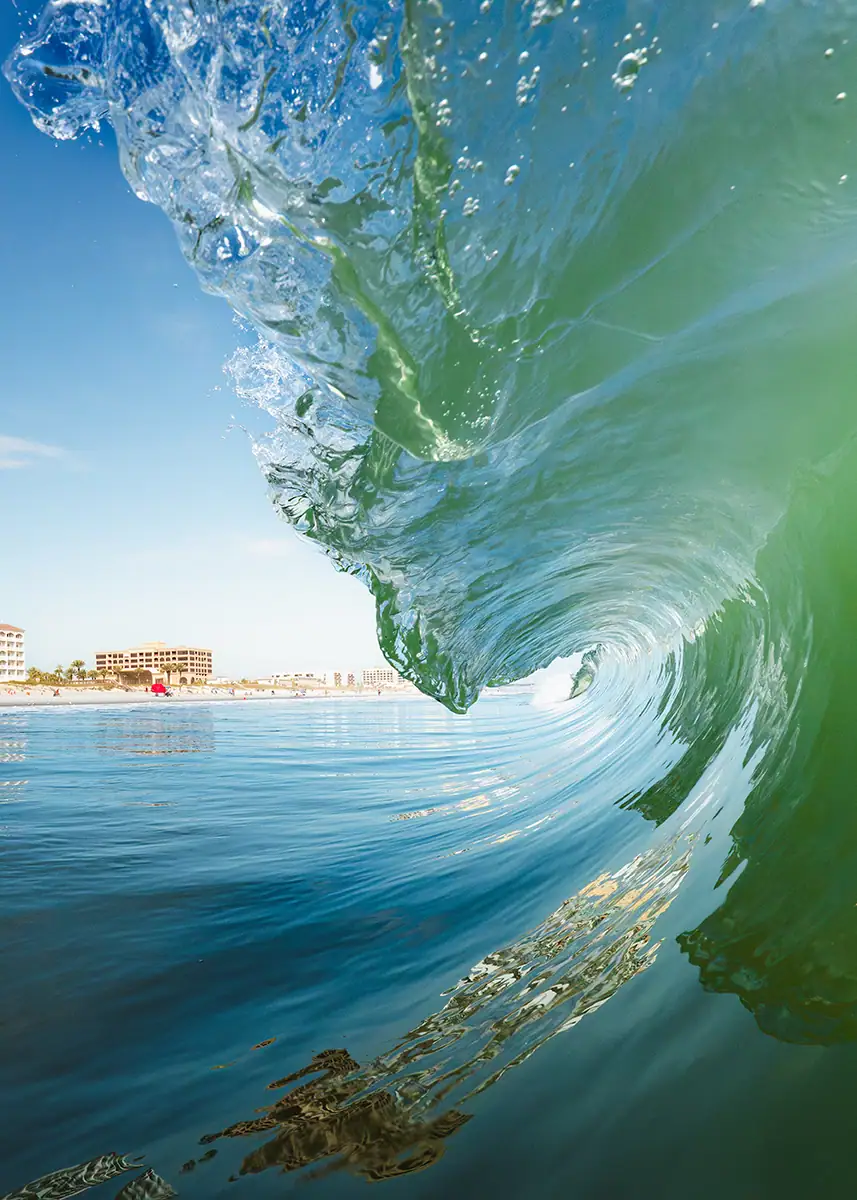
Waves are a little different. For wave shots, I often use back-button focus and prefocus before I’m in position, then keep the focus locked while I shoot. Waves move so quickly that there isn’t always time to refocus in the moment. I’ll also use a smaller aperture to keep more of the scene sharp.
Find the right perspective.
Unique angles are important underwater. I try to shift my mindset from simply capturing what’s in front of me to asking, “How can I make this feel more artistic, or different?” When something amazing is happening, it’s tempting to take the safe, perfectly framed shot. Sometimes, however, you have to give up the chance at a good shot for a small chance at a great one. That usually means trying an angle that feels unusual or even awkward in the moment.
For example, I once photographed a sea turtle coming up to breathe at the surface. Instead of shooting it straight on, I held my housing as high above my head as I could. It felt like I might miss the “normal” shot, but it created a much more unique perspective. Underwater, I try to get as low as possible and shoot up toward my subject. Marine animals are really good at blending into the bottom, so shooting upward with open water behind them helps separate them from the background and makes them pop.
Round out your portfolio.
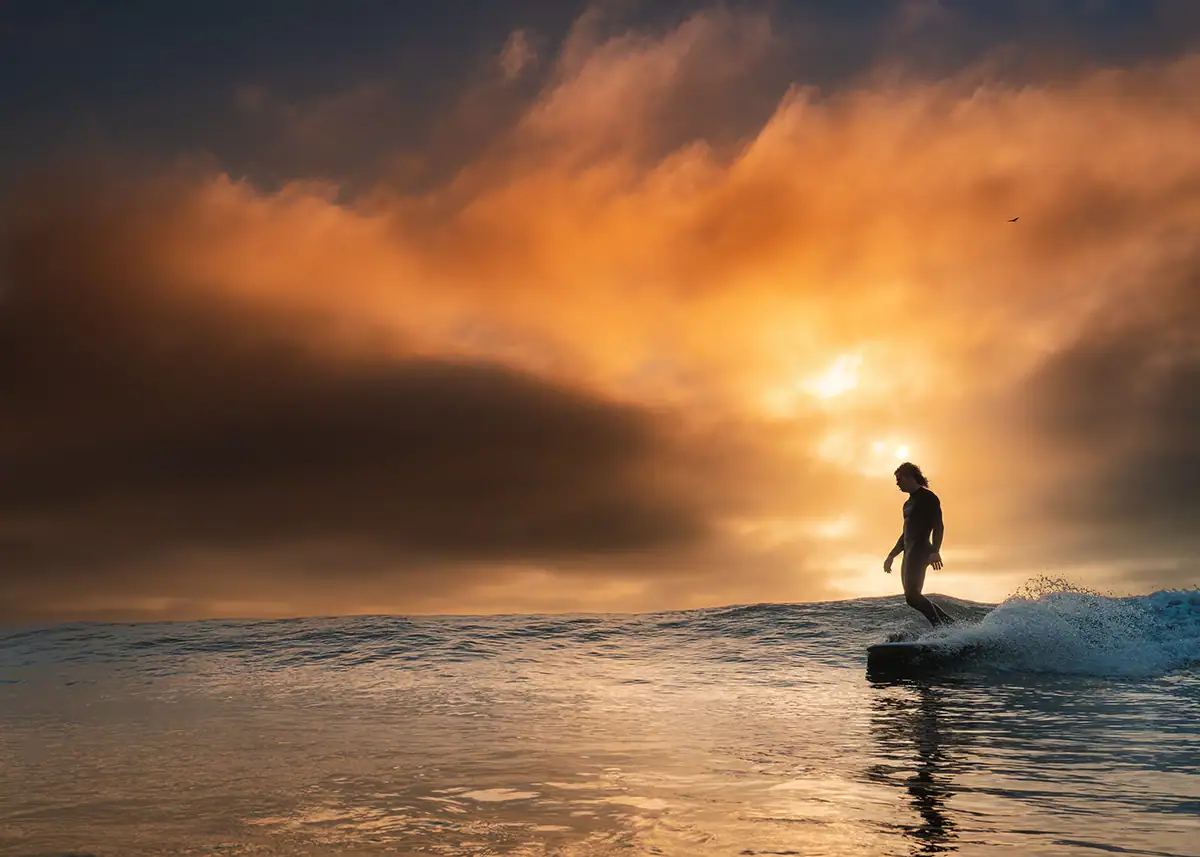
To tell any story properly, offer the full picture. Underwater wildlife is a huge part of that story, but people naturally get curious about everything around that moment, too: what the beach looked like, what the water looked like from above, what the weather was doing, or even what the sky looked like that day. That’s why I like weaving in underwater-adjacent images, like a surfer at sunrise or a wave breaking above the surface, to help put together a bigger narrative about the coastline. Those shots help bring people into my world and show what it really feels like to spend a lot of time in the water.