Carolyn Hinton’s Tamron 50-400mm and 150-500mm VC lenses capture the speed and spectacle at 2 marquee events in the Sunshine State.
Author: Jenn Gidman Images:Carolyn Hinton
Share Article
Carolyn Hinton’s Tamron 50-400mm and 150-500mm VC lenses capture the speed and spectacle at 2 marquee events in the Sunshine State.
For Carolyn Hinton, photographing air shows has always been about more than capturing fast-moving aircraft against a blue sky. Over the years, the Florida photographer’s passion has evolved into documenting the full story of these events—from precision aerobatic performances and historic warbirds to the spectators, pilots, and behind-the-scenes moments that bring aviation to life. That storytelling mindset has only been grown as Carolyn has expanded her work with the Florida Aviation Network, where she combines still photography in a more photojournalistic style with event coverage to preserve the excitement and atmosphere of every show.
The right equipment plays a major role in making all that possible. For Carolyn’s latest collection of air-show images, captured at the recent Cocoa Beach and Sun’n Fun expos, she relied on two Tamron ultra-telephoto zooms for her Nikon mirrorless camera system: the Tamron 50-400mm Di III VC VXD and Tamron 150-500mm Di III VC VXD. The compact, lightweight 150-500mm VC delivers the reach Carolyn seeks for in-flight action, all while remaining easy to carry during long, hot days at the airfield—a welcome advantage over heavier super-telephoto options. “Meanwhile, the versatile 50-400mm is great for closer-quarter shots and for images like plane formations, thanks to its wider reach,” she notes. The Vibration Compensation (VC) technology on both lenses reduces camera shake to ensure her images remain sharp.
Read on for how Carolyn captured some of her favorite photos from these two air shows.
150-500mm (490mm), F6.7, 1/2500, ISO 64
150-500mm (150mm), F5, 1/2500, ISO 64
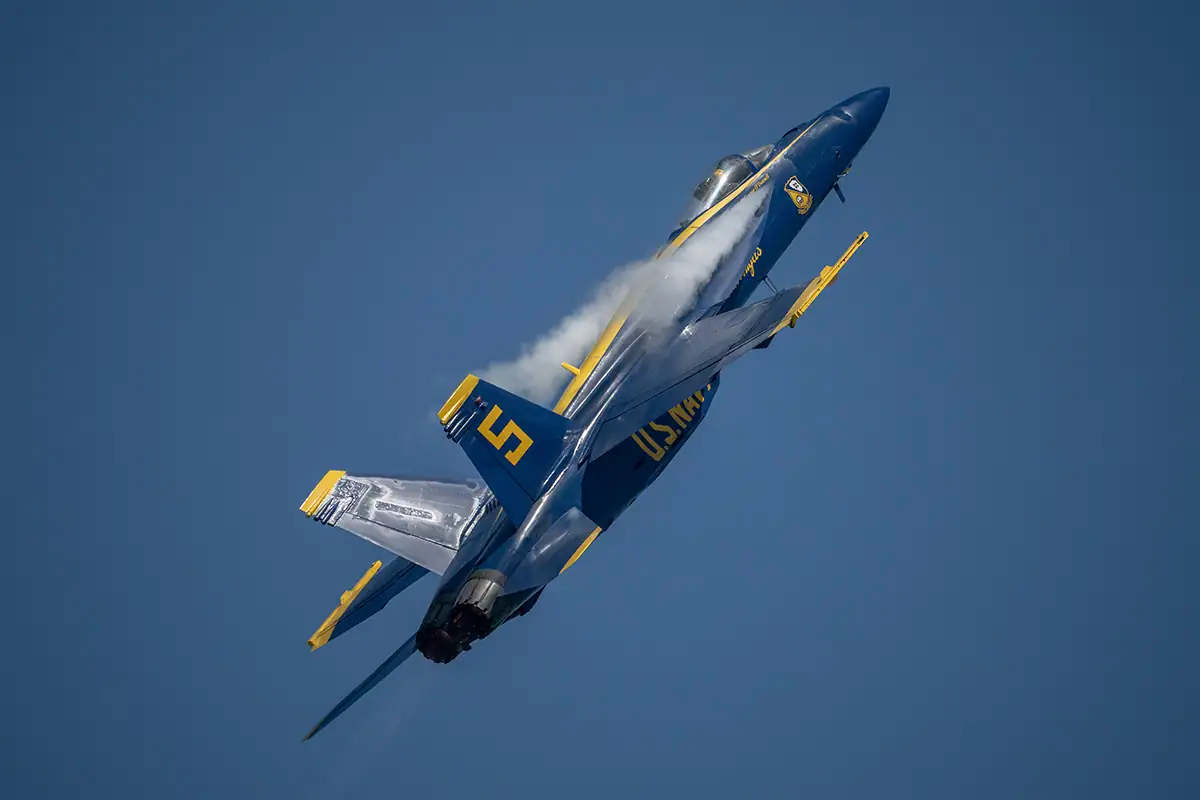
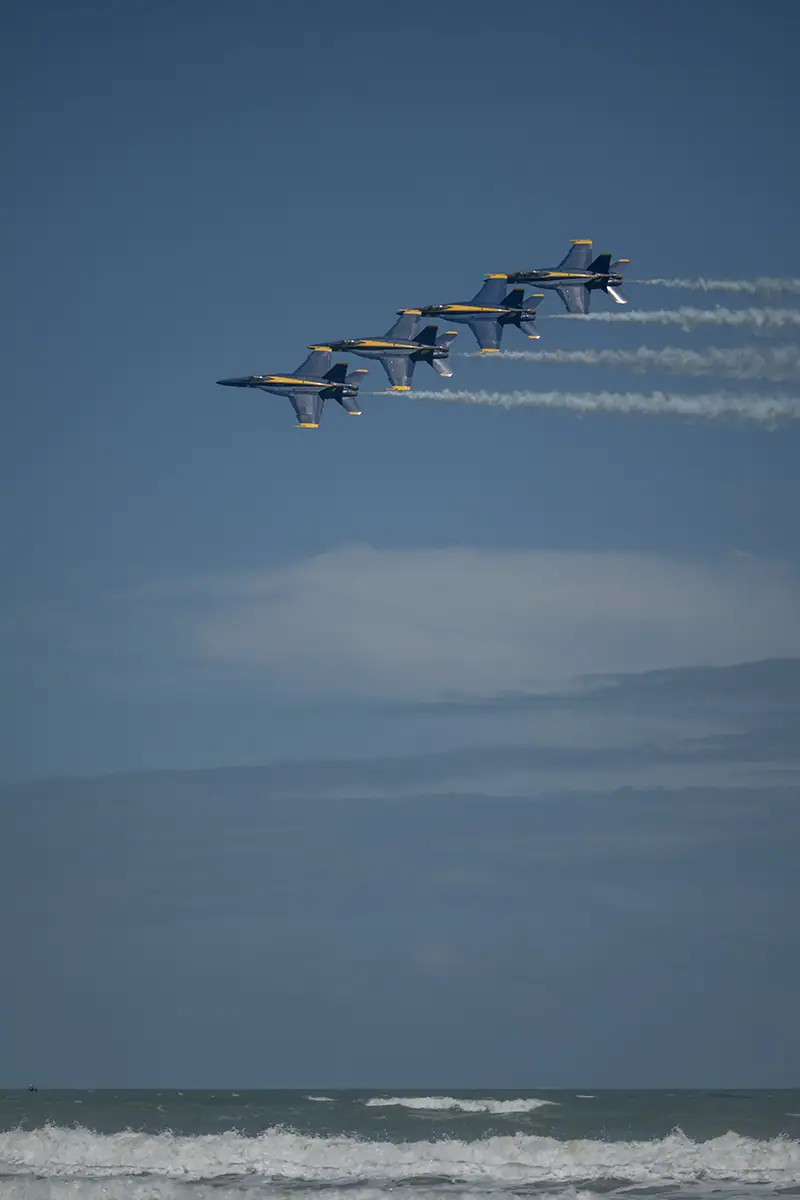
These two Blue Angels images were captured at the Cocoa Beach Air Show, which I shot entirely with my Tamron 150-500mm VC. I was covering the show for the Florida Aviation Network, so I wanted to travel light—that lens gave me all the flexibility I needed. The long reach let me isolate individual aircraft for close-up action shots, like the solo Blue Angel image, where you can really see the jet and the vapor streaming off of it. At the same time, it was easy to pull back for formation shots, and to add a sense of place. The water you can see at the bottom of the second photo helps tell the story of the event by showing we were along the coast.
150-500mm (467mm), F6.7, 1/1600, ISO 64
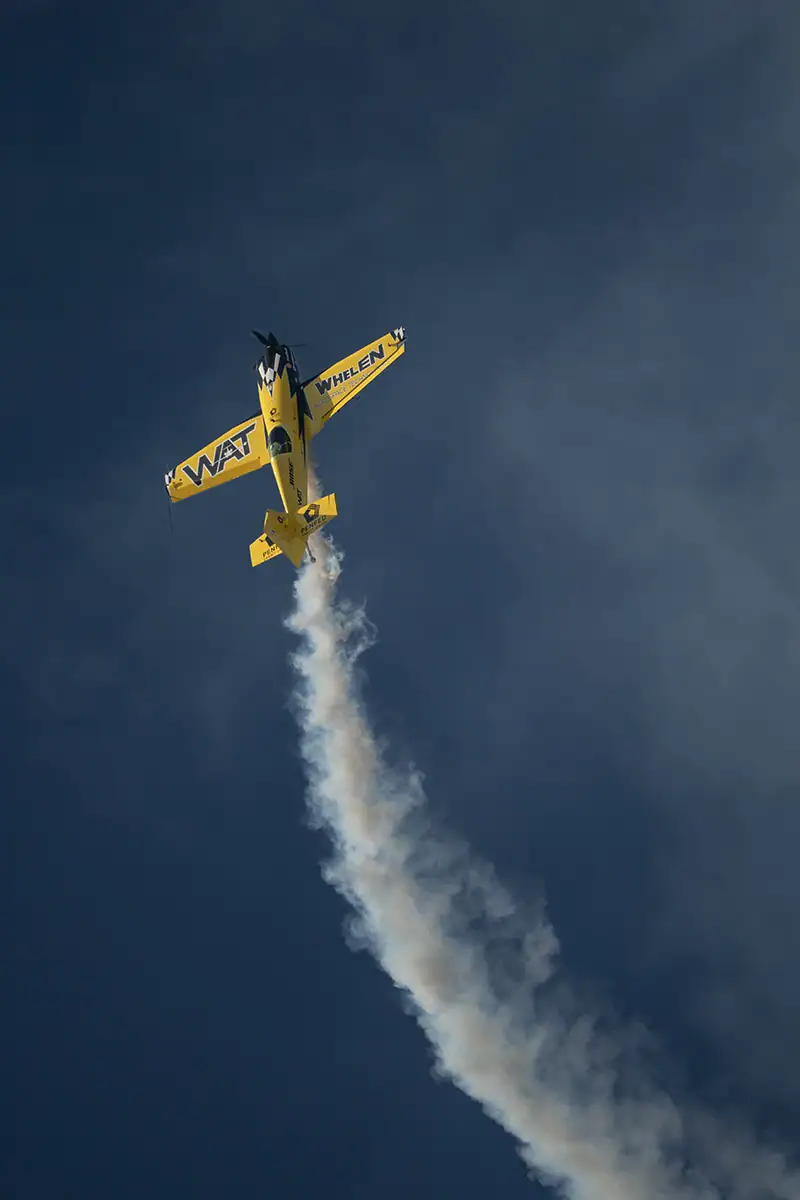
This plane was being flown by Michael Goulian, a well-known aerobatic pilot. I captured this image during Sun ’n Fun’s extended twilight air show, when the lighting becomes especially dramatic. After photographing this event for years, I’ve learned where to position myself at different times of day, so I moved to the east end of the runway to catch the aircraft climbing almost head-on. I knew the yellow plane would really stand out against the darkening storm clouds, especially with the last bit of sunlight illuminating it.
150-500mm (500mm), F10, 1/2000, ISO 64
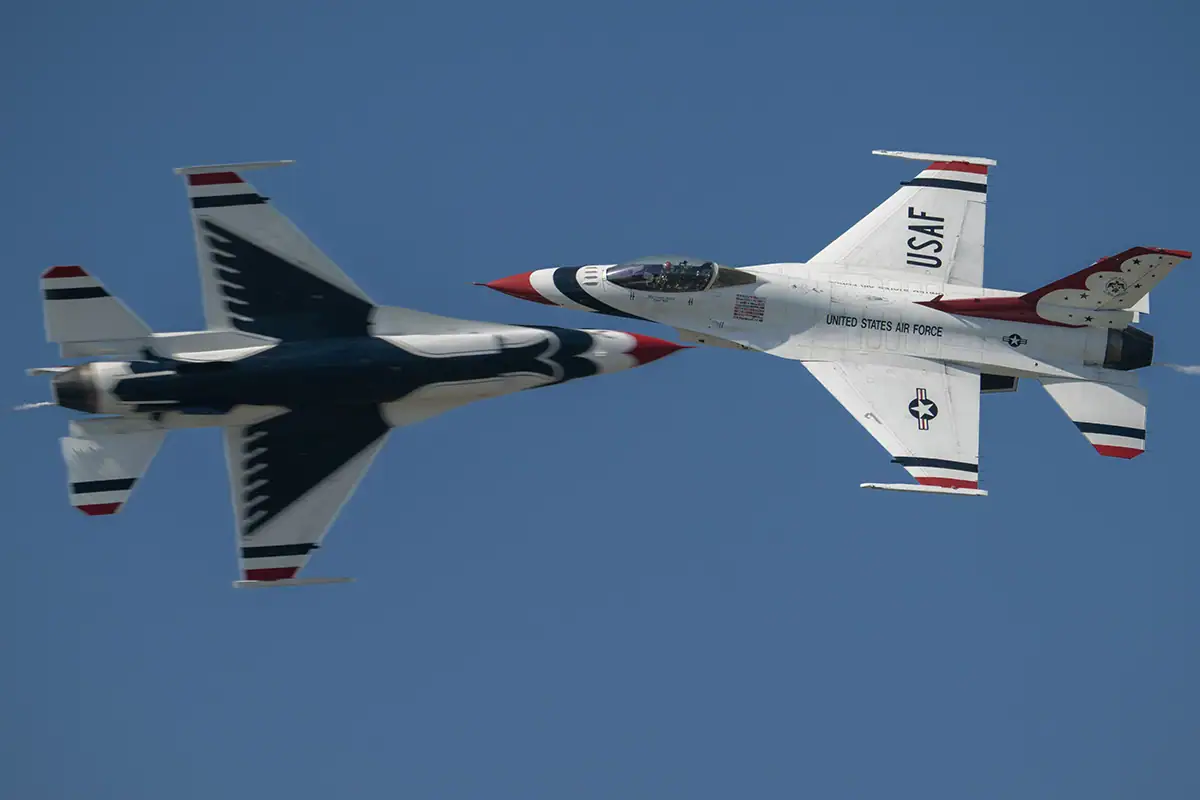
The Thunderbirds’ crisscross maneuver is one of those shots that every air show photographer hopes to capture, because it happens so fast and the timing has to be perfect. I know it’s coming, because I’ve photographed their routine enough times, but there’s still a lot of anticipation involved, and a lot of it comes down to luck. My Tamron 150-500mm VC helped me to frame the action, then keep shooting as the jets crossed visual paths, hoping to catch that split second when they appear almost nose to nose. From the crowd’s perspective, it looks like they’re about to collide, even though there’s more separation than it appears.
150-500mm (150mm), F10, 1/3200, ISO 80
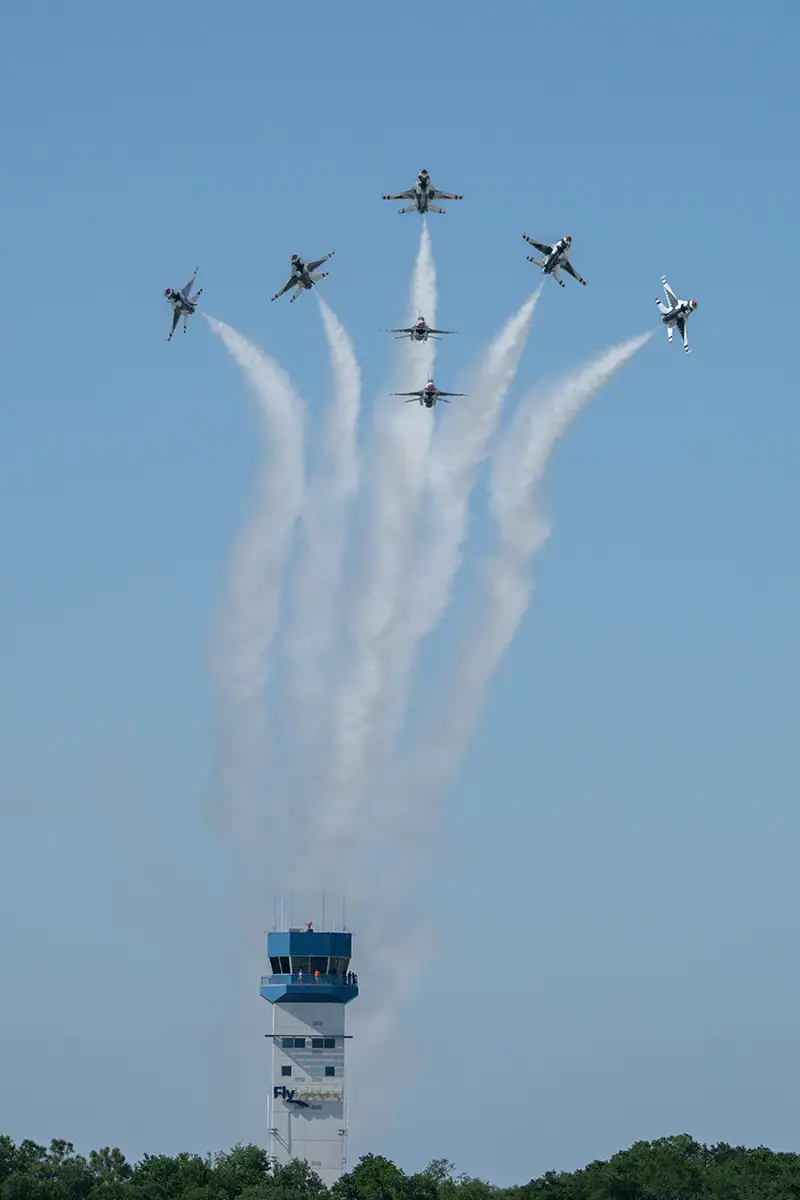
Like I mentioned previously, one of my goals when shooting air shows is to capture images that establish location. This shot here shows a classic maneuver that the planes do, coming out from behind the air traffic control tower. I positioned myself so I could line up the Thunderbirds’ formation with the tower, then used my Tamron 150-500mm to compress the scene and make it look as though the jets were bursting out of the building.
150-500mm (500mm), F9, 1/2000, ISO 1000
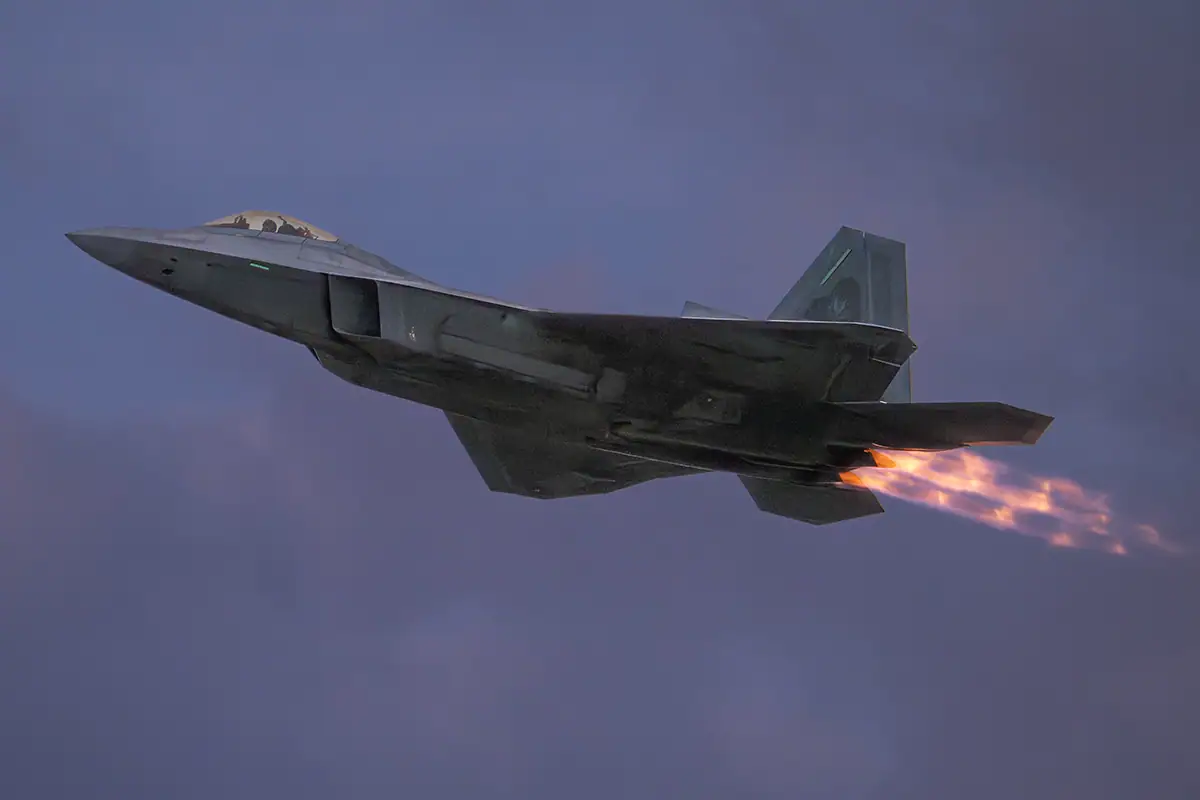
Night performances require a different approach, because the light is constantly changing. As the sun sets, I’m carefully balancing my ISO and exposure so I can preserve the color in the sky without introducing too much noise or blowing out the bright afterburners. For this image, another photographer and I positioned ourselves near the FAA building, because we knew the aircraft would bank in that direction during its routine. When you have lower light like this, those afterburners are going to glow and stand out much more than they do during the day.
50-400mm (400mm), F6.3, 1/800, ISO 64
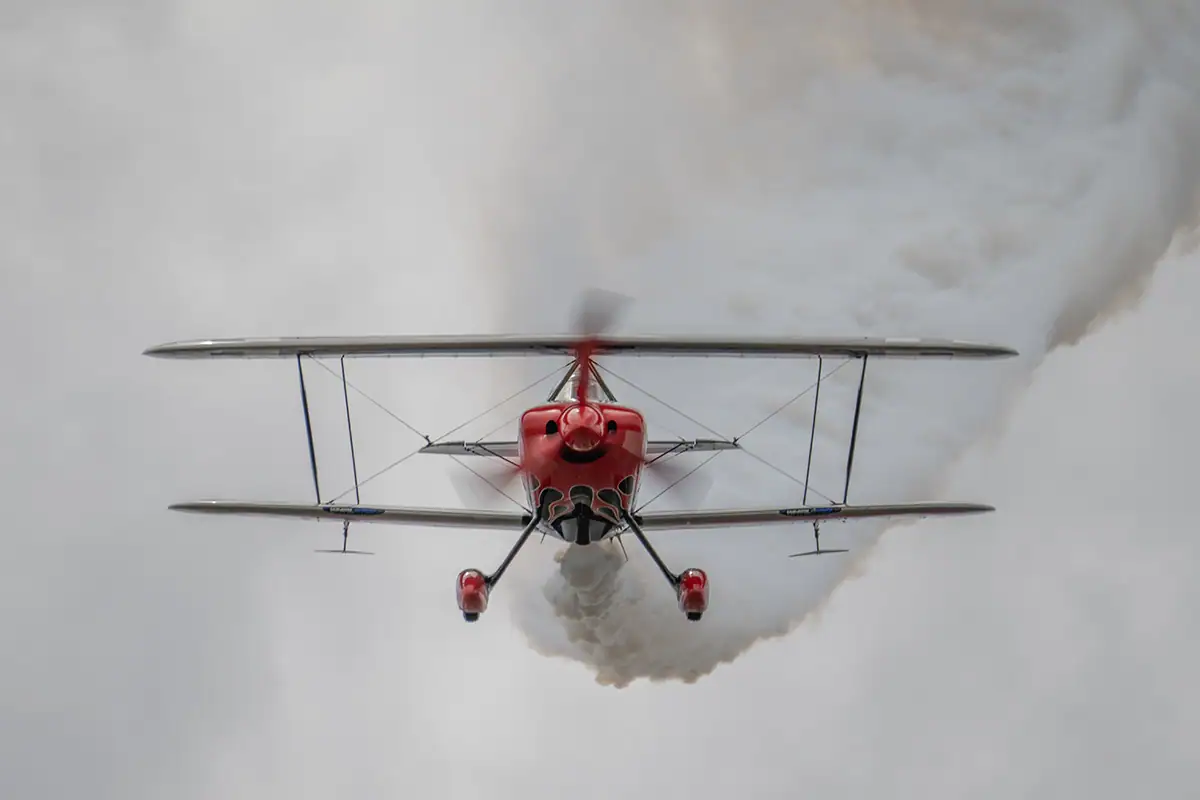
I captured this image with my Tamron 50-400mm VC because its wider zoom range was perfect for this unique perspective. The pilot was performing a ribbon-cutting demonstration, flying just feet above the runway, so photographers had to be in position well before the routine began; I was about 20 feet behind one of the ribbons. The 50-400mm allowed me to include a bit of the surroundings while emphasizing the white-knuckle head-on angle. It was a very fast-paced, high-concentration situation!
50-400mm (400mm), F7.1, 1/2000, ISO 64
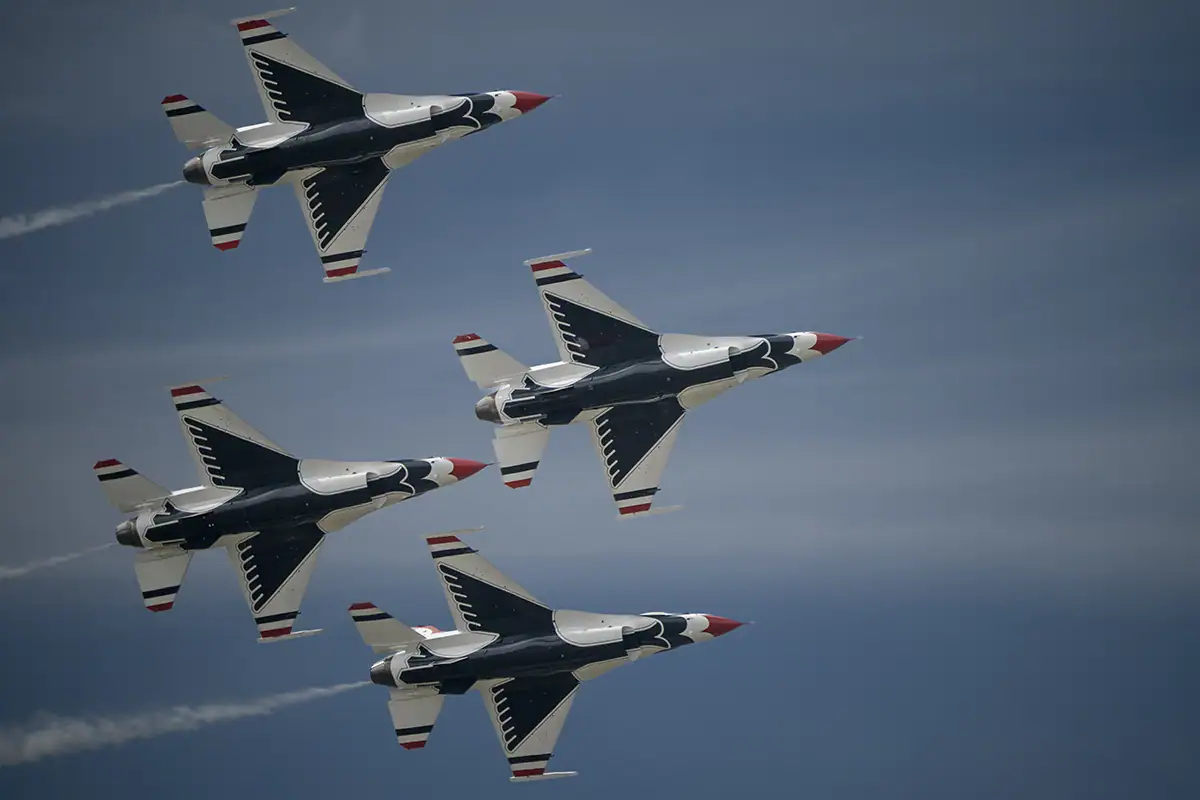
It was the last day of the show, so for this Thunderbirds formation, I wanted to try something different. Instead of photographing from the show’s center, like most people do, a few of us trekked all the way over to the east side of the airfield to capture the jets as they completed their pass and banked back around. One of the things I’ve learned after years of photographing air shows is that some of the most interesting images can emerge from the edges of the venue.
To see more work by Carolyn Hinton, check out her website and Instagram.
 Instant Savings
 Rebate Claims
 Support
 Find a Dealer