Instant Savings
 Rebate Claims
 Support
 Find a Dealer


A telephoto zoom is a lens that magnifies distant subjects across a range of longer focal lengths, so you can change framing without moving or swapping lenses. This guide compares five current Tamron telephoto zooms for mirrorless cameras: the 70-300mm, 50-300mm, 70-180mm F2.8 G2, 50-400mm, and 150-500mm. It also covers older DSLR models, including the 100-400mm, SP 150-600mm G2, and SP 200-500mm.
Whether you need a lightweight telephoto for travel, a versatile zoom for wildlife and sports, or maximum reach for distant subjects, understanding these differences will help you select the right Tamron lens for your camera and shooting style.
Table of Contents
- Which Tamron Telephoto Zoom Fits the Way You Shoot?
- Tamron Telephoto Zooms Compared: Full Specifications
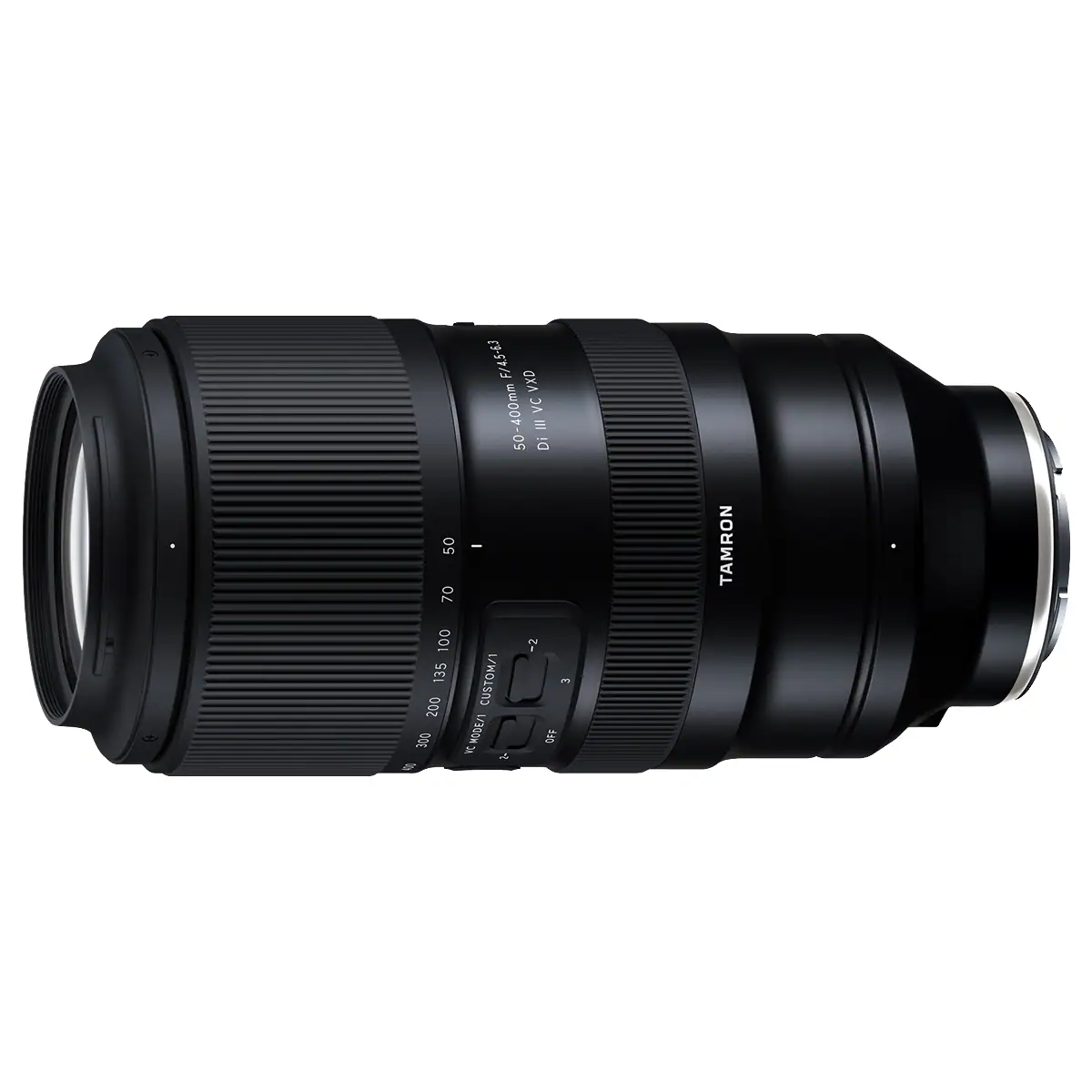
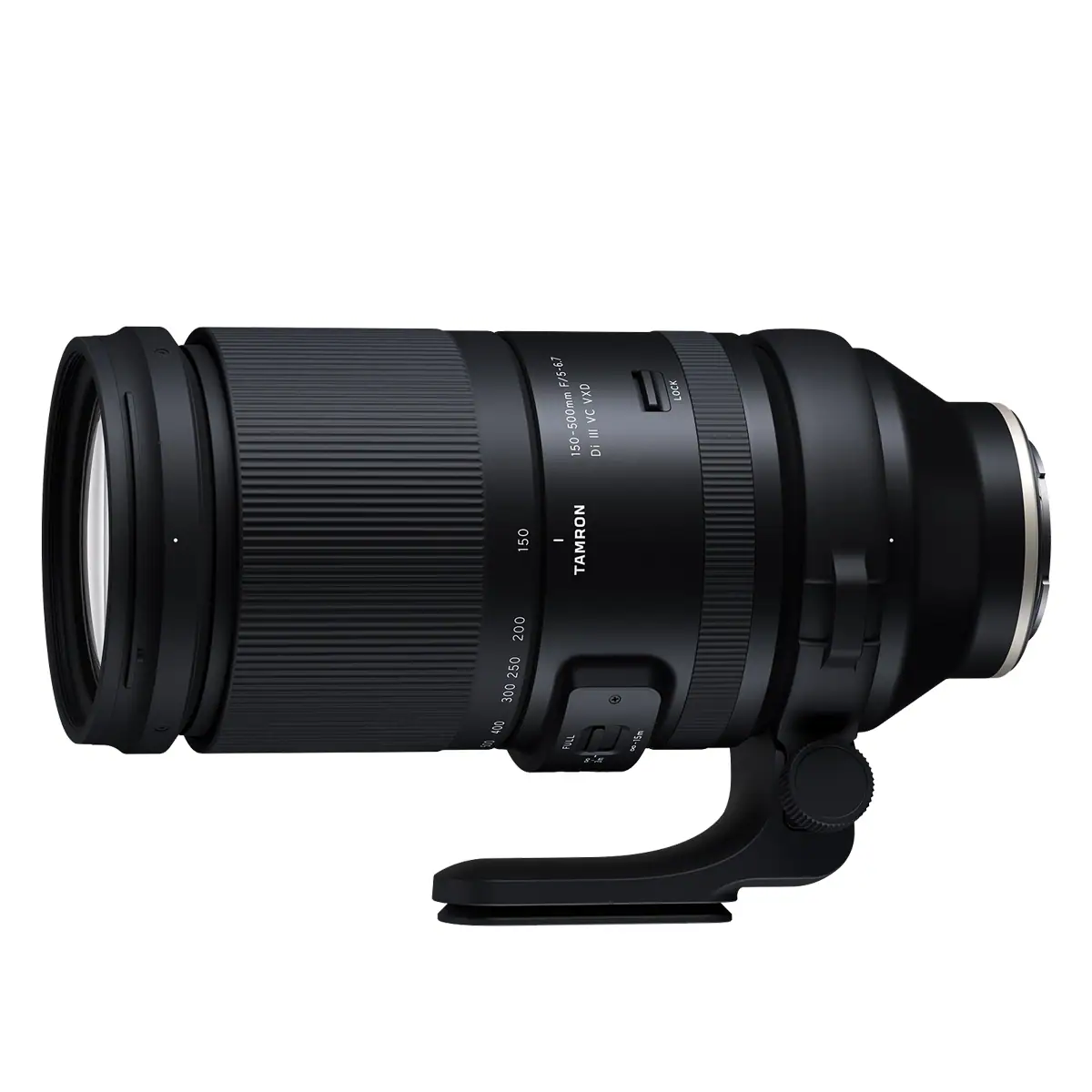
- Tamron 50-400mm vs 150-500mm: Which Should You Buy?
- Comparing the Rest of the Tamron Telephoto Lineup
- Should You Upgrade From an Older Tamron Telephoto?
- Which Tamron Telephoto Zoom Is Right for You?
Which Tamron Telephoto Zoom Fits the Way You Shoot?

Match the lens to how far away your subjects are and how much weight you want to carry. The 50-300mm and 50-400mm cover everyday shooting from 50mm. The 70-300mm is the lightest. The 150-500mm offers the most reach, and the 70-180mm G2 is the only constant F2.8 option.
Here’s how each lens fits:
- The 50-300mm F/4.5-6.3 Di III VC VXD and 50-400mm F/4.5-6.3 Di III VC VXD offer everyday flexibility
- The 70-300mm F/4.5-6.3 Di III RXD is the lightest option
- The 150-500mm F/5-6.7 Di III VC VXD provides maximum reach
- The 70-180mm F/2.8 Di III VC VXD G2 delivers constant F2.8 performance.
If You Want One Telephoto for Travel and General Shooting
The Tamron 50-300mm and 50-400mm are the most versatile choices for photographers who want to cover different subjects without frequently changing lenses. Both begin at 50mm, a standard focal length suitable for portraits, travel scenes, and everyday photography, before extending to 300mm or 400mm for wildlife, sports, and distant details.
That wider starting point makes a practical difference when a subject moves closer. Imagine photographing wildlife during a trip. You need 300mm or 400mm for an animal in the distance, but 50mm when it approaches or you want to include more of its surroundings.
Both lenses also achieve a maximum magnification ratio of 1:2 at 50mm, providing half-macro close-up capability for flowers, textures, and smaller subjects.
For photographers who need an even wider starting focal length, Tamron’s all-in-one zoom lenses provide additional options for traveling with a single lens.
If You Shoot Distant Wildlife, Birds or Field Sports
The Tamron 150-500mm is the reach specialist in this comparison, designed for photographers who regularly capture distant wildlife, birds, aviation, and outdoor sports. Its 150-500mm range emphasizes telephoto photography rather than everyday versatility, allowing photographers to concentrate on subjects that are difficult or impossible to approach.
At 500mm, the lens helps fill the frame with smaller subjects while maintaining a comfortable shooting distance. It incorporates VC (Vibration Compensation) image stabilization and VXD linear motor autofocus to support handheld photography and moving-subject tracking.
An included Arca-Swiss compatible tripod mount provides additional support when working from a tripod or monopod.
The 150-500mm is available for Sony E, Fujifilm X, and Nikon Z mounts. Its main tradeoff is the 150mm wide end, which limits framing for nearby subjects and wider scenes.
If You Need Constant F/2.8
The Tamron 70-180mm F2.8 G2 is the only constant F2.8 aperture lens among the five zooms in this comparison. Unlike variable-aperture telephoto lenses, it maintains its F2.8 maximum aperture throughout the entire zoom range, making it particularly useful for portraits, weddings, events, and indoor sports photography.
The bright aperture provides greater flexibility in lower light and allows photographers to create attractive background blur while separating their subjects from distracting surroundings.
Although its 180mm maximum focal length is shorter than the other telephoto zooms, its combination of constant F2.8, VXD autofocus, and VC stabilization makes it well suited to situations where light-gathering capability takes priority over maximum reach.
Tamron Telephoto Zooms Compared: Full Specifications
The five Tamron telephoto zooms fall into two distinct weight categories. The 70-300mm, 50-300mm, and 70-180mm G2 weigh less than 31.8oz (900g), making them particularly portable. The 50-400mm and 150-500mm are larger lenses designed to deliver extended reach, broader zoom coverage, and additional shooting flexibility.
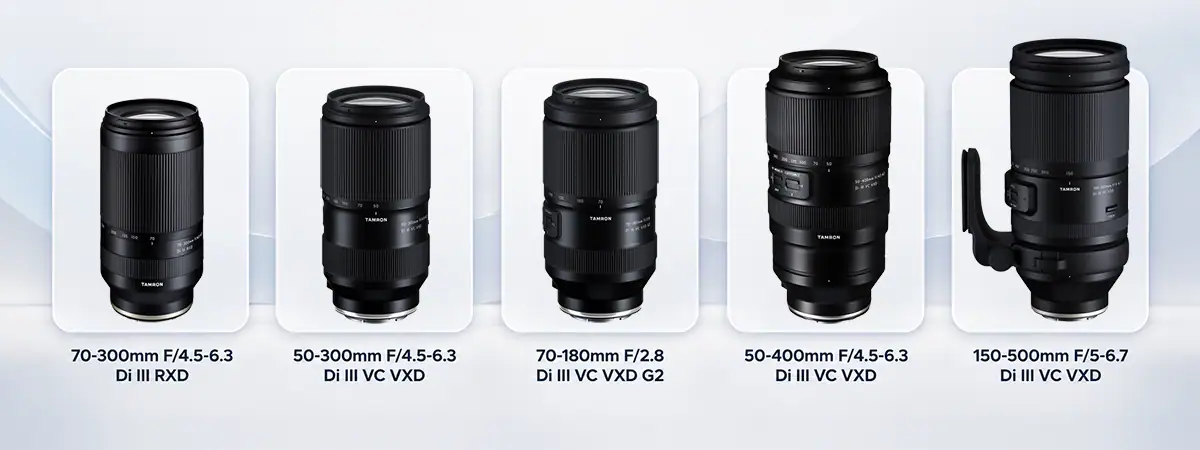
*Length and weight shown are for Sony E-mount versions without optional accessories.
Which Tamron Telephoto Zooms Have VC Stabilization?
Four of the five lenses include Tamron’s built-in VC image stabilization: the 50-300mm, 50-400mm, 70-180mm G2, and 150-500mm. The 70-300mm instead relies on stabilization provided by compatible camera bodies, helping it maintain the lightest and most compact design in the group. On Nikon Z cameras, VC on the 150-500mm is enabled or disabled through the camera menu rather than a switch on the lens.
VC reduces the effects of camera shake, particularly when shooting handheld at longer focal lengths or slower shutter speeds. This becomes especially valuable when photographing wildlife at a distance, capturing details in lower light, or working without a tripod.
What Autofocus Motor Do Tamron Telephoto Zooms Use?
The 70-300mm uses Tamron’s RXD stepping motor for smooth, quiet autofocus, while the other four lenses incorporate VXD autofocus technology, a linear motor system designed for fast, precise focusing and responsive subject tracking.
Which Mounts Is Each Tamron Telephoto Zoom Available In?
The Tamron 150-500mm has the broadest mount availability among these five telephoto zooms, supporting Sony E, Fujifilm X, and Nikon Z cameras. The 50-400mm, 70-300mm, and 70-180mm G2 support Sony E and Nikon Z, while the 50-300mm is currently available exclusively for Sony E-mount cameras.
- 70-300mm F4.5-6.3: Sony E, Nikon Z
- 50-300mm F4.5-6.3 VC: Sony E
- 70-180mm F2.8 VC G2: Sony E, Nikon Z
- 50-400mm F4.5-6.3 VC: Sony E, Nikon Z
- 150-500mm F5-6.7 VC: Sony E, Fujifilm X, Nikon Z
All five are designed for full-frame mirrorless cameras, with the Fujifilm X version of the 150-500mm intended for APS-C cameras. Several models can also be used on compatible APS-C Sony cameras, where the smaller sensor provides a narrower angle of view.
None of these five lenses is currently available in Canon RF mount.
Tamron 50-400mm vs 150-500mm: Which Should You Buy?
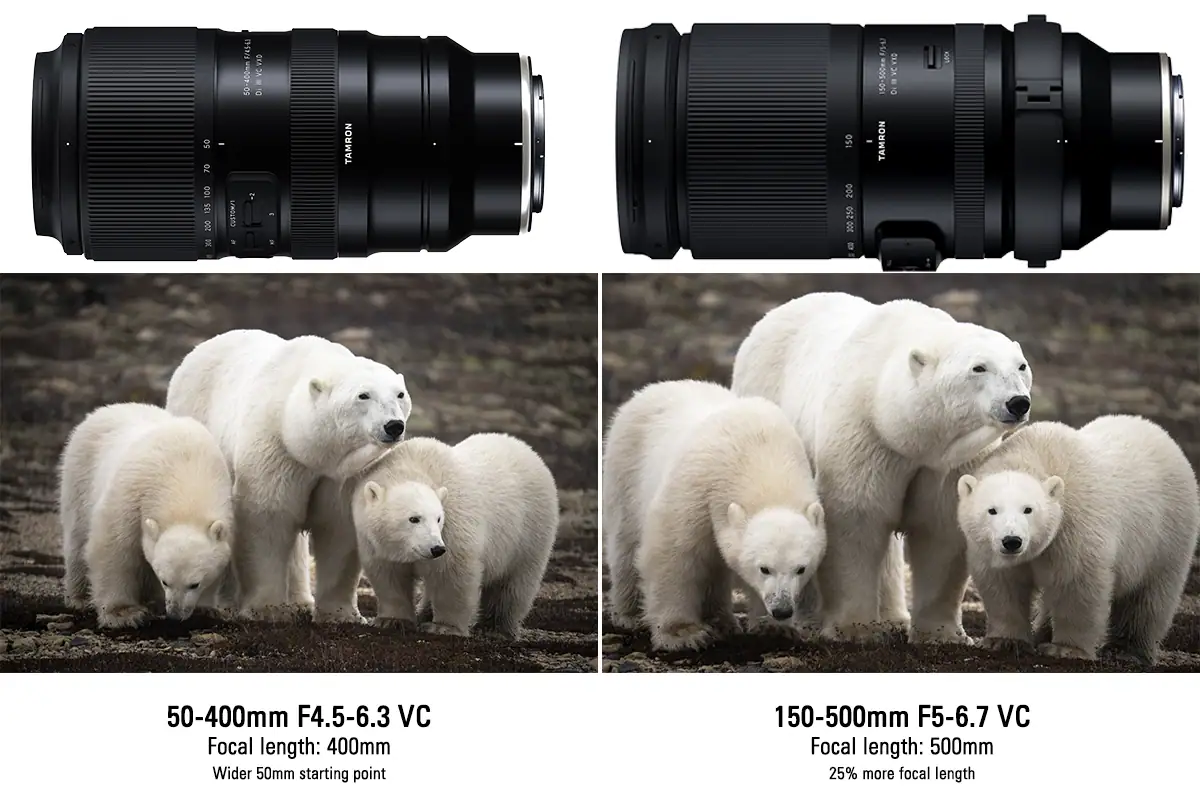
The biggest difference between the Tamron 50-400mm and 150-500mm is whether you need greater versatility or longer reach. The 50-400mm covers everything from standard 50mm framing to 400mm ultra-telephoto shooting. The 150-500mm sacrifices the 50-149mm range to extend maximum reach to 500mm, making it better suited to consistently distant subjects.
The practical choice is whether the additional 100mm at the long end matters more than the 100mm of focal-length coverage the 50-400mm provides between 50mm and 149mm.
Both lenses offer VC stabilization and fast VXD autofocus, so the primary differences are zoom range, portability, and close-focusing capabilities.
How Much Difference Does 100mm of Extra Reach Make?
The 150-500mm provides 25% more focal length at its 500mm maximum compared with the 50-400mm at 400mm. This creates tighter framing from the same shooting position, which helps most when photographing small birds, distant wildlife, aircraft, or outdoor sporting events where moving closer is not possible.
For example, when photographing a perched bird across a pond, that additional reach lets the bird fill more of the frame, so you crop less afterward.
The difference matters less when photographing larger wildlife, animals at closer distances, or subjects where including their surroundings strengthens the composition.
The 50-400mm still provides substantial telephoto reach, making it a versatile choice for photographers who capture wildlife alongside landscapes, on safari, portraits, and travel scenes.
What the 50-400mm’s Wider Start Changes
Starting at 50mm instead of 150mm gives the Tamron 50-400mm an 8x zoom range that extends from a standard focal length to ultra-telephoto. This allows photographers to capture a landscape, environmental portrait, or nearby subject before zooming toward distant wildlife or sports action without changing lenses.
That flexibility is particularly helpful when subjects move unpredictably. A deer may begin at the edge of a field and then walk toward the camera. With the 50-400mm, the photographer can zoom out to maintain the desired framing.
The 50-400mm also focuses as close as 9.8″ (0.25m) at 50mm, achieving 1:2 magnification for detailed close-up photographs of flowers, insects, and textures.
By comparison, the 150-500mm focuses as close as 23.6″ (0.6m) at 150mm and achieves 1:3.1 magnification. Both provide impressive close-up capabilities, but the 50-400mm offers greater flexibility when working with nearby subjects.
Which Is Easier to Carry and Handhold?
The 50-400mm is easier to carry for extended periods because it weighs 40.7oz (1,155g), compared with 60.8oz (1,725g) for the 150-500mm. That’s a difference of 20.1oz (570g). It is also approximately 1.0″ (26.2mm) shorter, making it more convenient for travel and handheld photography.
These differences become noticeable when carrying a camera throughout the day, especially while hiking, exploring cities, or moving between shooting locations.
The 150-500mm remains designed for handheld telephoto photography, with integrated VC stabilization helping reduce camera shake. It also includes an Arca-Swiss compatible tripod mount, which provides convenient support for extended wildlife sessions.
For the 50-400mm, a compatible Arca-Swiss tripod mount is available separately.
If you prioritize portability and broad coverage, choose the 50-400mm. If you regularly work at maximum telephoto distances, the 150-500mm’s extra reach is worth the added weight.
Comparing the Rest of the Tamron Telephoto Lineup
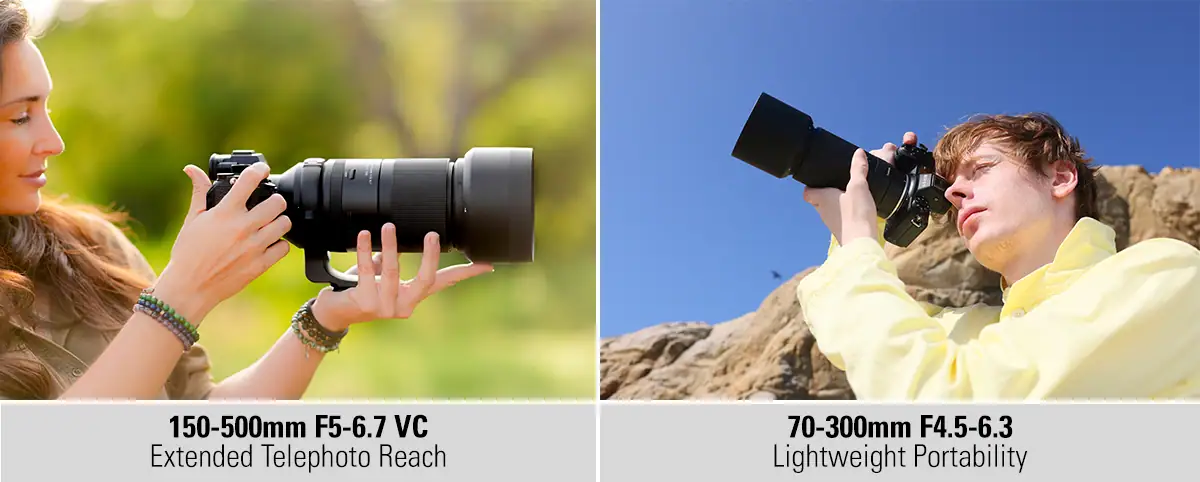
The remaining Tamron telephoto zoom comparisons largely come down to the balance between range, weight, and convenience. Several models share the same maximum focal length, but their starting focal lengths differ significantly. These differences affect how easily photographers can switch between nearby subjects and distant action without changing lenses.
Tamron 50-300mm vs 70-300mm: Which Should You Choose?
Choose the Tamron 50-300mm if you shoot Sony E and want a wider 50mm start, built-in VC stabilization, and 1:2 close-up magnification. Choose the 70-300mm if you want the lightest option or shoot Nikon Z. It weighs 19.2oz (545g), 4.2oz (120g) less than the 50-300mm. Both reach 300mm.
The 50-300mm uses VXD autofocus and focuses as close as 8.7″ (0.22m) at 50mm, producing 1:2 half-macro magnification. This adds flexibility for flowers, food, and other small subjects.
The 70-300mm uses RXD autofocus, which provides smooth, quiet focusing while supporting its compact design. Its minimum focusing distance is 31.5″ (0.8m) at the wide end.
For photographers who prioritize a wider starting focal length, close-up photography, and lens-based stabilization, the 50-300mm offers additional flexibility.
For those who prefer the lightest possible telephoto zoom, or need Nikon Z compatibility, the 70-300mm is a practical alternative.
Tamron 50-300mm vs 50-400mm: How Much Reach Do You Need?
The Tamron 50-300mm and 50-400mm both begin at 50mm and offer 1:2 magnification for close-up photography. The major difference is the 50-400mm’s additional 100mm of telephoto reach. That extension comes with approximately 17.3oz (490g) of additional weight and 1.3″ (33.4mm) of extra length.
At 23.5oz (665g), the 50-300mm is particularly attractive for photographers who want a lightweight lens for family activities, travel, casual wildlife, and outdoor sports.
The 50-400mm weighs 40.7oz (1,155g) but extends to 400mm, providing greater framing flexibility for birds, wildlife, and distant action.
Both lenses offer built-in VC stabilization and VXD autofocus, making them capable choices for handheld photography and moving subjects.
Mount availability also matters: the 50-300mm is available for Sony E, while the 50-400mm supports Sony E and Nikon Z.
Tamron 50-400mm vs 70-300mm: Range or Weight?
The Tamron 50-400mm offers the broadest zoom range of these two lenses, covering 50-400mm with built-in VC stabilization. The 70-300mm emphasizes portability, weighing just 19.2oz (545g) compared with 40.7oz (1,155g) for the 50-400mm. The decision comes down to whether extended range or a lighter camera kit matters most.
The 50-400mm provides 8x zoom coverage, making it suitable for photographers who frequently move between travel scenes, portraits, wildlife, and action photography.
The 70-300mm offers a more compact telephoto experience that is easy to pack and carry while still delivering 300mm reach.
Both support Sony E and Nikon Z cameras, and both are designed to deliver high image quality in portable mirrorless systems.
For photographers who want maximum flexibility without changing lenses, the 50-400mm offers the wider range. If you prioritize minimal weight and comfortable everyday shooting, the 70-300mm is the more convenient choice.
Should You Upgrade From an Older Tamron Telephoto?
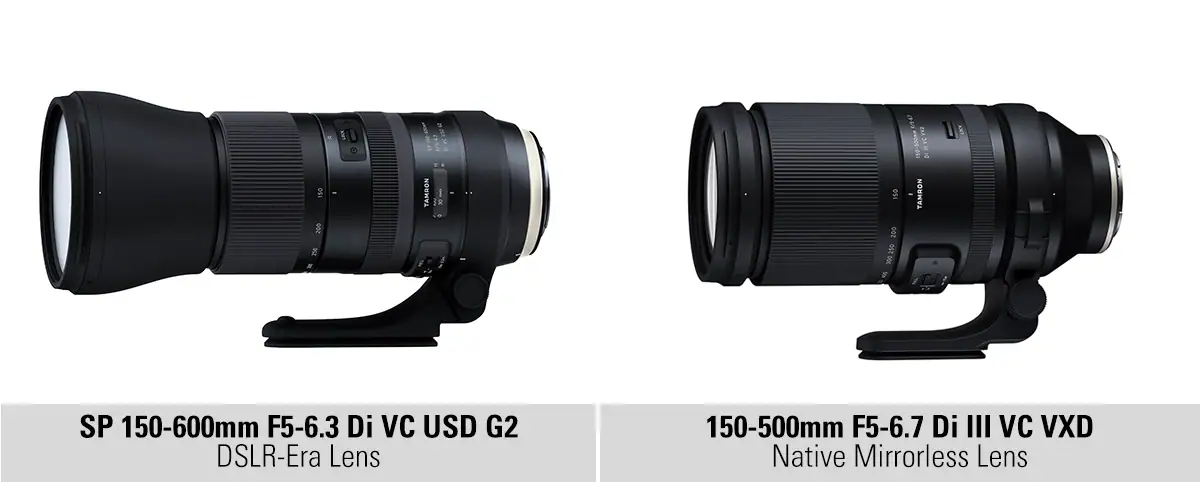
Upgrade if you’ve moved to a mirrorless camera and want a native-mount lens. The 50-400mm and 150-500mm add VXD autofocus and much closer focusing than the earlier 100-400mm and SP 150-600mm G2. If you still shoot Canon EF or Nikon F DSLRs, your older lens remains a capable choice.
Tamron developed the 100-400mm, SP 150-600mm G2, and SP 200-500mm primarily for Canon EF and Nikon F systems.
Many photographers continue to use these earlier lenses successfully, including on compatible mirrorless cameras with appropriate adapters.
The decision to move to a native mirrorless lens depends on the photographer’s camera system, preferred subjects, working distances, and handling preferences rather than focal length alone.
Tamron 50-400mm vs 100-400mm: What Changes
The Tamron 50-400mm and earlier 100-400mm both reach 400mm, but the newer mirrorless lens begins at 50mm rather than 100mm. This doubles the overall zoom ratio from 4x to 8x, allowing photographers to capture standard focal-length scenes and distant subjects with one lens rather than using a more dedicated telephoto zoom.
The earlier 100-400mm F4.5-6.3 Di VC USD (Model A035) was designed for Canon EF and Nikon F DSLR cameras. It uses USD autofocus and incorporates Tamron VC stabilization.
The newer 50-400mm uses VXD linear motor autofocus developed for responsive performance on mirrorless camera systems.
Close-focusing capability is another major difference. The 50-400mm focuses as close as 9.8″ (0.25m) at 50mm with 1:2 magnification, compared with the 100-400mm’s minimum focus distance of 59.1″ (1.5m) and maximum magnification of 1:3.6.
Despite the wider range, the weight difference is relatively small: 40.7oz (1,155g) for the 50-400mm versus approximately 39.3oz (1,115g) for the earlier Nikon F version.
Tamron 150-500mm vs 150-600mm: Which Has More Reach?
The Tamron SP 150-600mm F5-6.3 Di VC USD G2 reaches 600mm, providing 100mm more focal length than the newer 150-500mm F5-6.7 Di III VC VXD. However, the 150-500mm is a shorter, lighter native mirrorless design with significantly closer focusing capability, making these two lenses distinct choices rather than successive versions of the same product.
The 150-600mm G2 (Model A022) was developed for DSLR camera systems and remains capable of photographing distant wildlife, birds, and sports.
Its 600mm focal length helps most when subjects are small or hard to approach.
The 150-500mm uses VXD linear motor autofocus and is available in native Sony E, Fujifilm X, and Nikon Z mounts.
It also focuses as close as 23.6″ (0.6m) at 150mm, achieving 1:3.1 magnification. The earlier 150-600mm G2 has a minimum focusing distance of approximately 86.6″ (2.2m) and a maximum magnification ratio of 1:3.9.
In terms of physical size, the 150-500mm Sony E version measures 8.3″ (209.6mm) and weighs 60.8oz (1,725g), compared with 10.1″ (257.7mm) and 70.2oz (1,990g) for the Nikon F version of the 150-600mm G2.
These differences highlight the tradeoff between maximum reach and a more compact native mirrorless design.
Tamron 100-400mm vs 150-600mm: Reach or Portability?
The earlier Tamron 100-400mm and SP 150-600mm G2 are both DSLR-era telephoto zoom lenses, but they serve different shooting priorities. The 100-400mm provides a more compact package with a wider starting focal length, while the 150-600mm G2 offers an additional 200mm of maximum telephoto reach for distant wildlife and sports.
At approximately 39.3oz (1,115g), the 100-400mm is significantly lighter than the 150-600mm G2, which weighs approximately 70.2oz (1,990g) in Nikon F mount.
Both feature Tamron VC stabilization in their Canon and Nikon DSLR versions, while the larger 150-600mm G2 is better suited to photographers who consistently work with distant subjects.
Photographers transitioning to mirrorless systems can also compare the native-mount 50-400mm and 150-500mm discussed above.
Tamron 200-500mm vs 150-600mm: Which Is Newer?
The Tamron SP AF 200-500mm F5-6.3 Di LD (Model A08) is the older DSLR-era design. The SP 150-600mm G2 (Model A022) was introduced later and extends the focal-length range at both ends, starting at 150mm and reaching 600mm. It also adds VC image stabilization in its Canon and Nikon versions.
Both lenses were designed for earlier camera systems and can still serve photographers using compatible DSLR equipment. Photographers seeking a native mirrorless alternative can explore the current Tamron 150-500mm F5-6.7.
Which Tamron Telephoto Zoom Is Right for You?

Choosing the right Tamron telephoto zoom depends on how you photograph your subjects, how much weight you want to carry, and which camera mount you use. The five lenses in this comparison offer distinct advantages, whether your priority is portability, everyday flexibility, a constant F2.8 aperture, an extended zoom range, or maximum telephoto reach.
- Choose the Tamron 70-300mm if you want the lightest telephoto zoom in this comparison for travel, everyday photography, and occasional wildlife or sports.
- Choose the Tamron 50-300mm if you use Sony E mount and want a portable lens covering standard through telephoto focal lengths with excellent close-focusing capability.
- Choose the Tamron 70-180mm F2.8 G2 if constant F2.8 is your priority for portraits, weddings, events, indoor sports, and low-light photography.
- Choose the Tamron 50-400mm if you want the broadest single-lens zoom range in this comparison, covering everything from standard 50mm photography to distant wildlife.
- Choose the Tamron 150-500mm if you regularly photograph distant birds, wildlife, aircraft, or outdoor sports and want maximum telephoto reach.
The best choice is not necessarily the lens with the longest focal length. It is the lens that provides the right combination of framing flexibility, portability, and performance for the subjects you photograph most often.
Find the Right Tamron Telephoto for Your Camera

With several telephoto zooms offering overlapping focal lengths, choosing the right lens can be challenging. Start by identifying your camera mount and the subjects you photograph most frequently. Then compare zoom range, weight, stabilization, and close-focusing capabilities to narrow your choices before reviewing the full specifications for each lens.
Where to Buy Tamron Lenses
Explore Tamron’s complete selection of telephoto zoom lenses to compare available models, review full technical specifications, and confirm camera compatibility. When you’re ready to buy, visit an authorized Tamron dealer near you or shop directly at the official TAMRON Store.
Frequently Asked Questions About Tamron Telephoto Zoom Lenses
How much difference does 500mm make compared to 400mm?
A 500mm lens provides 25% more focal length than a 400mm lens, allowing tighter framing of distant subjects from the same position. This is particularly useful for small birds, distant wildlife, and aviation photography. However, 400mm still provides substantial telephoto reach for general wildlife photography.
Why choose the Tamron 50-400mm instead of the 150-500mm?
The Tamron 50-400mm is better suited to photographers who want one lens for travel, portraits, wildlife, and sports. Its wider 50mm starting point offers greater framing flexibility, while its 1:2 magnification adds close-up capability. The 150-500mm prioritizes longer reach for distant subjects that are difficult to approach.
Which is lighter, the Tamron 50-400mm or 150-500mm?
The Tamron 50-400mm weighs 40.7oz (1,155g), making it 20.1oz (570g) lighter than the 150-500mm at 60.8oz (1,725g). Its smaller size makes it easier to carry during travel, hiking, and extended handheld shooting. The 150-500mm includes an Arca-Swiss compatible tripod mount for additional support when needed.
What is the difference between the Tamron 50-300mm and 70-300mm?
Both lenses reach 300mm, but the 50-300mm starts at a wider 50mm, includes VC stabilization, and offers 1:2 half-macro magnification. The 70-300mm is lighter at 19.2oz (545g) and is available for Sony E and Nikon Z mounts, while the 50-300mm is available for Sony E.
Should I choose the Tamron 50-300mm or 50-400mm?
Choose the Tamron 50-300mm if lightweight portability is your priority. Both lenses start at 50mm and offer 1:2 magnification, but the 50-400mm provides an additional 100mm of reach for wildlife and sports. The 50-300mm weighs 23.5oz (665g), compared with 40.7oz (1,155g) for the 50-400mm.
Which Tamron telephoto zoom is best for indoor sports and low-light photography?
The Tamron 70-180mm F2.8 Di III VC VXD G2 is the strongest choice among these five lenses when a bright, constant maximum aperture is the priority. Its F2.8 aperture allows greater light-gathering capability throughout the zoom range, making it well suited to indoor sports, events, portraits, and other challenging lighting conditions.
Do all Tamron telephoto zoom lenses have VC image stabilization?
Four of the five lenses compared here feature built-in Tamron VC (Vibration Compensation) stabilization: the 50-300mm, 50-400mm, 70-180mm G2, and 150-500mm. The lightweight 70-300mm does not include lens-based VC and instead relies on in-body stabilization when used with a compatible camera. Stabilization is especially helpful when photographing handheld at longer focal lengths.
Which Tamron telephoto zoom lenses are available for Nikon Z and Fujifilm X cameras?
For Nikon Z, Tamron offers the 70-300mm, 70-180mm G2, 50-400mm, and 150-500mm. The 150-500mm is the only lens in this comparison available for Fujifilm X mount. All five lenses are available for Sony E mount, while none of these five models is offered for Canon RF.
Is the Tamron 150-500mm better than the older 150-600mm G2?
The Tamron 150-600mm G2 provides 100mm more maximum reach, while the 150-500mm offers a shorter, lighter native mirrorless design with closer focusing capability. The 150-600mm G2 was developed for DSLR systems. The better choice depends on your camera mount, preferred working distance, and priorities for reach versus portability.
About the Author
 Stacie Errera is Vice President of Marketing and Communications for Tamron Americas, where she has been with Tamron for more than 36 years. She is also a photography educator who teaches new camera users how to better understand their cameras and photography basics. She leads weekend photography workshops for women. Read Stacie’s full bio >>