Instant Savings
 Rebate Claims
 Support
 Find a Dealer
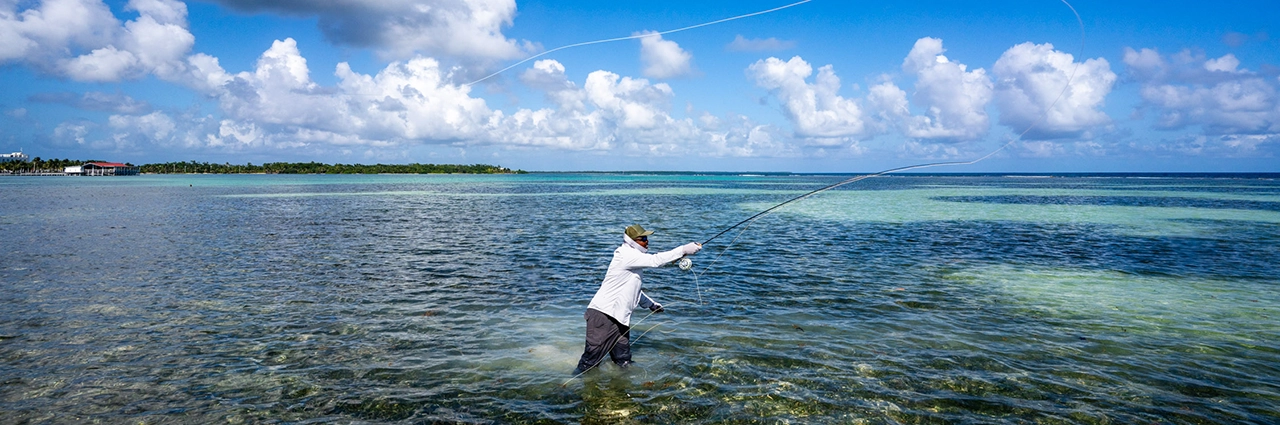
Curious how to improve your fly fishing photography and capture the beauty, action, and mood of the sport? This article explores exactly that. Photographer and filmmaker Dalton Johnson shares his expert approach to storytelling on the water, offering practical tips on composition, gear, camera settings, and creative angles that elevate fly fishing photography from simple snapshots to immersive visual narratives.
Whether you’re an angler who wants to document the experience or a photographer looking to refine your outdoor photography skills, this article breaks down everything you need to create compelling fly fishing photos in any environment.
What You’ll Learn In This Article:
- Grouping images to tell a story about going fly fishing
- The best gear and settings for fly fishing photography
- Tips for capturing fly fishing action photographs
- Creating fly fishing photography that breaks the norm with unique angles
- Blending the craft of photography with that of fly fishing
The Journey Begins: Capturing Fly Fishing Photography in Belize
Just making the weight limit, my camera gear and fly fishing equipment disappeared behind the check-in counter for my flight from San Francisco to Belize. I’m headed to the warm waters of Belize for an assignment capturing fly fishing photography on the Turneffe Atoll while staying at Turneffe Island Resort. The goal is to meet up with a fly fishing guide based at the resort and head out fly fishing for bonefish. If I am lucky, I will get to put the camera down and catch a few fish myself.
Fly Fishing Photography Is Narrative Driven: How To Tell a Story With Your Images
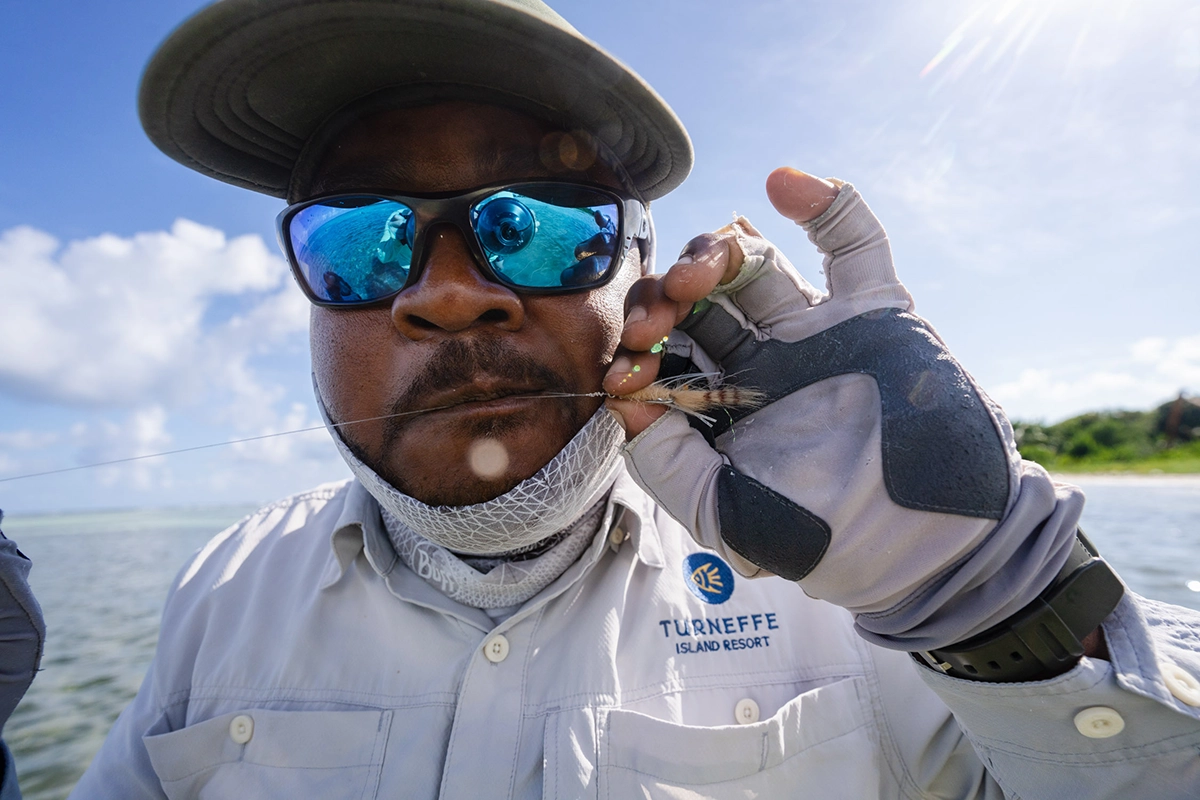
One of the beautiful parts of photography is its ability to capture a story visually and share it with others. And what better way to showcase your fly fishing catch—especially with catch and release—than through a series of images that capture your day?
The easiest way to approach fly fishing storytelling is to map out your day or journey, from packing up to returning home. Decide where your story begins and ends, then fill the in-between with purposeful images.
As the day progresses and you’re photographing fly fishing, capture a variety of shots that build a narrative: wide landscapes for setting, detail shots like the fly selection, and mid-range compositions that show the casting, movement, and moments that define the experience.
Fly Fishing Photography Shot Checklist:
- Set the scene: wide landscape, sunrise, sunset, boat deck, shoreline, riverbank
- Detailed images: selecting flies, packing your fly fishing rod, fish scales, sunglasses reflections
- Mid-range compositions: casting, walking to your spot, fly fishing gear, fish on the line, underwater captures
- Wide shots: angler casting in the landscape, boat traveling to the flats, environment from an elevated viewpoint
Additional Storytelling Ideas:
- A day out fishing
- A weekend destination trip
- A master fly-tyer at work
- The art of the fly fishing cast
- Different fish species and their colors
- Crafting a traditional Japanese fly rod
The Gear You Need To Create Fly Fishing Photographs That Wow
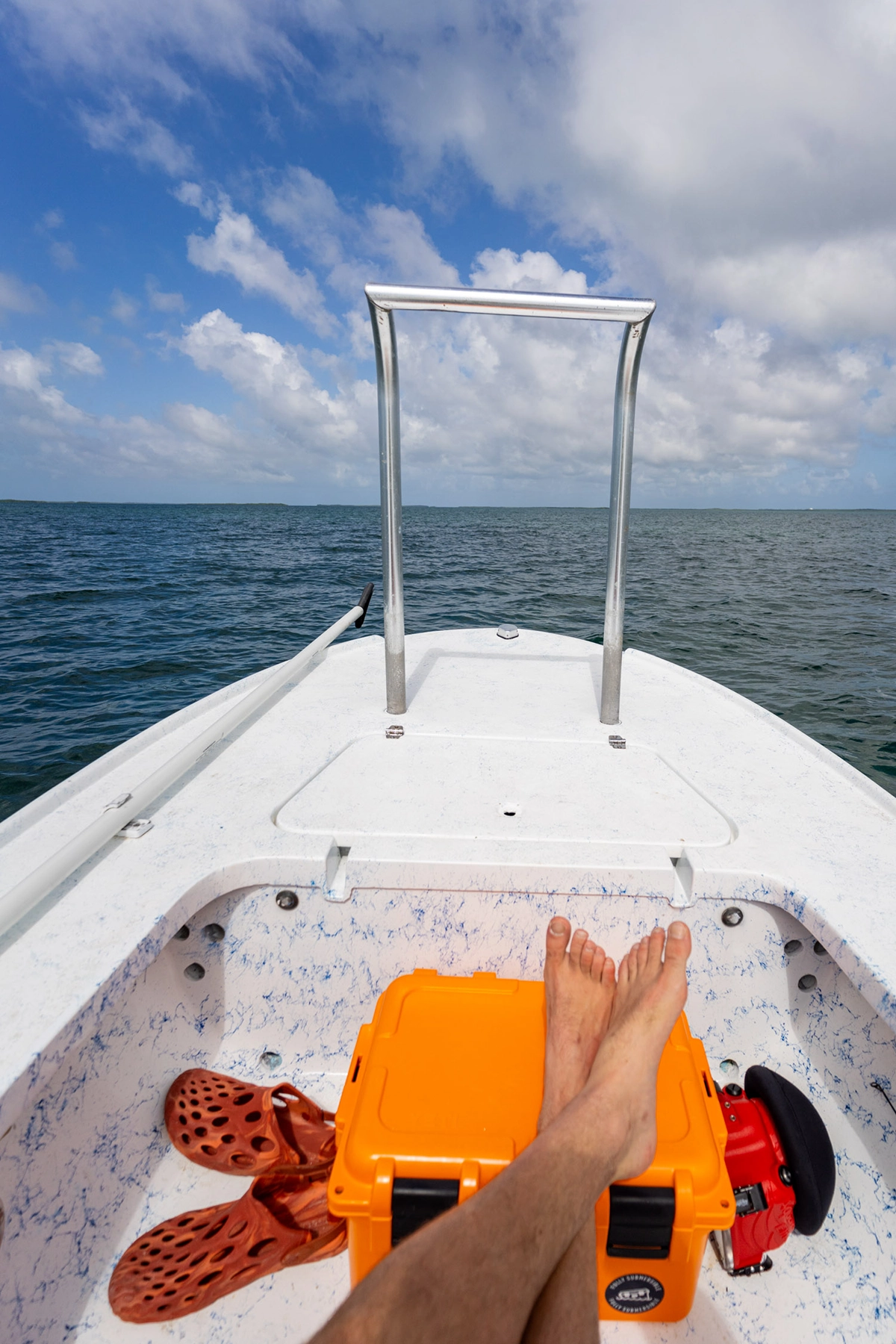
Fishing photography doesn’t require much gear, which is great because you already need to carry your fishing essentials. Below is what I packed for my project in Belize, including a few personal favorites that enhance my workflow.
Fishing Photography Gear Basics:
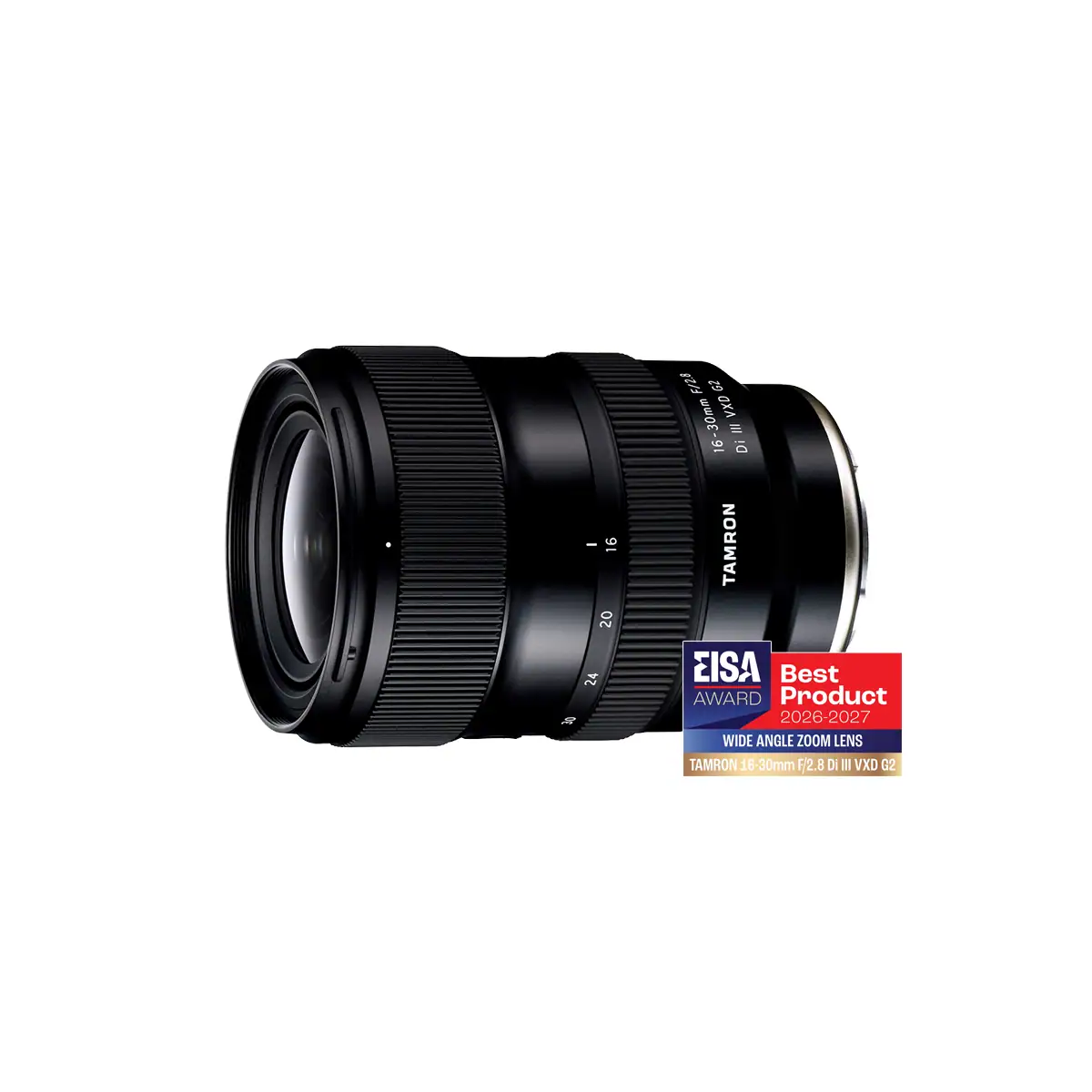
- Wide-angle zoom lens: The Tamron 16-30mm F2.8 G2 (A064) is my new go-to wide lens
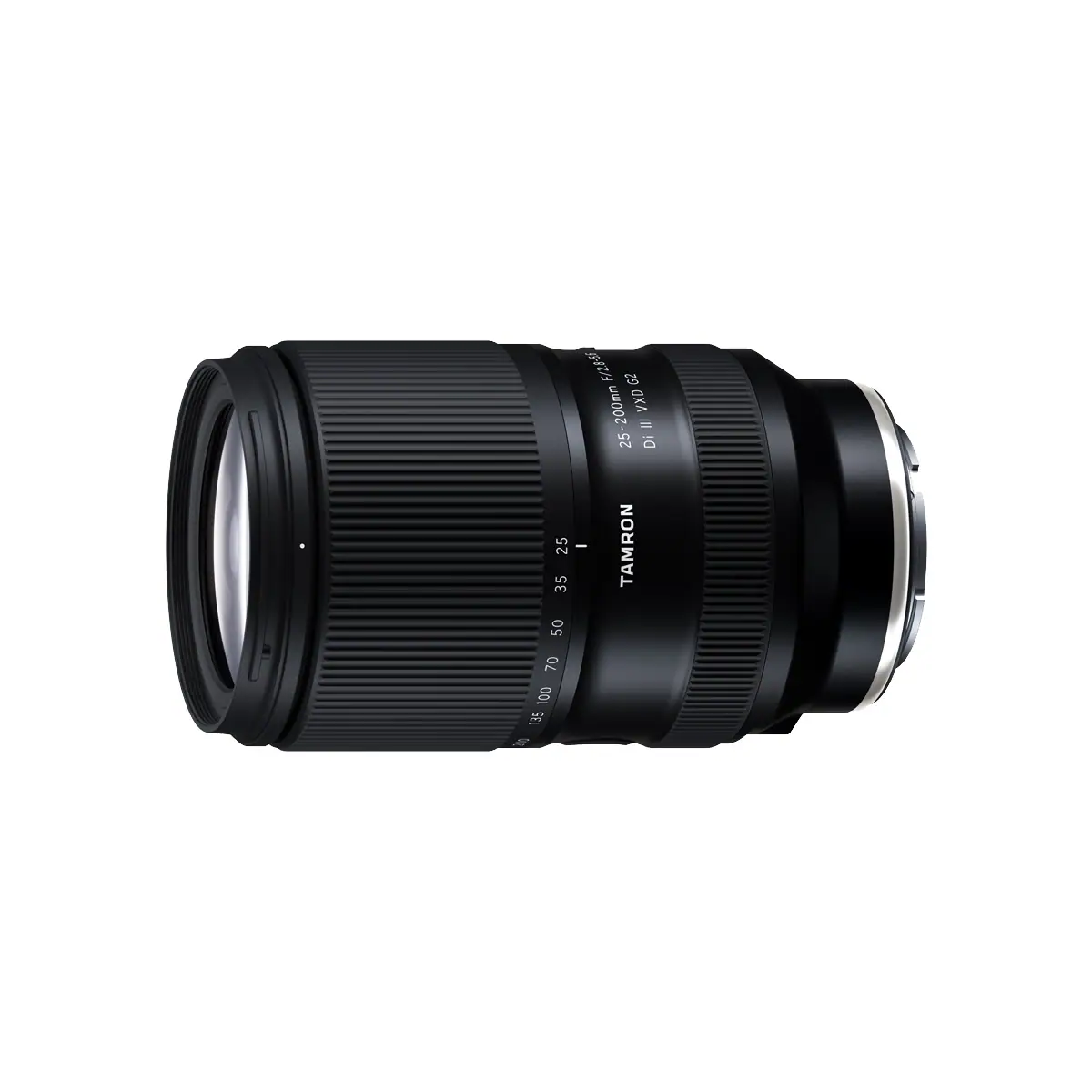
- All-In-One zoom lens: Tamron 25-200mm F2.8-5.6 G2 (A075) offers incredible range for action and landscapes
- Mirrorless camera body (I use the Sony a7r4 or the Sony a7s3)
- Extra Batteries
- Large-capacity memory cards (at least 250GB for burst shooting)
- Waterproof bag to protect your gear
Extra Photography Gear:
- Underwater housing (I prefer Aquatech Housings for ergonomics and safety)
- Circular Polarizer (useful for reducing reflections in bright conditions)
How To Capture Fly Fishing Action Photos
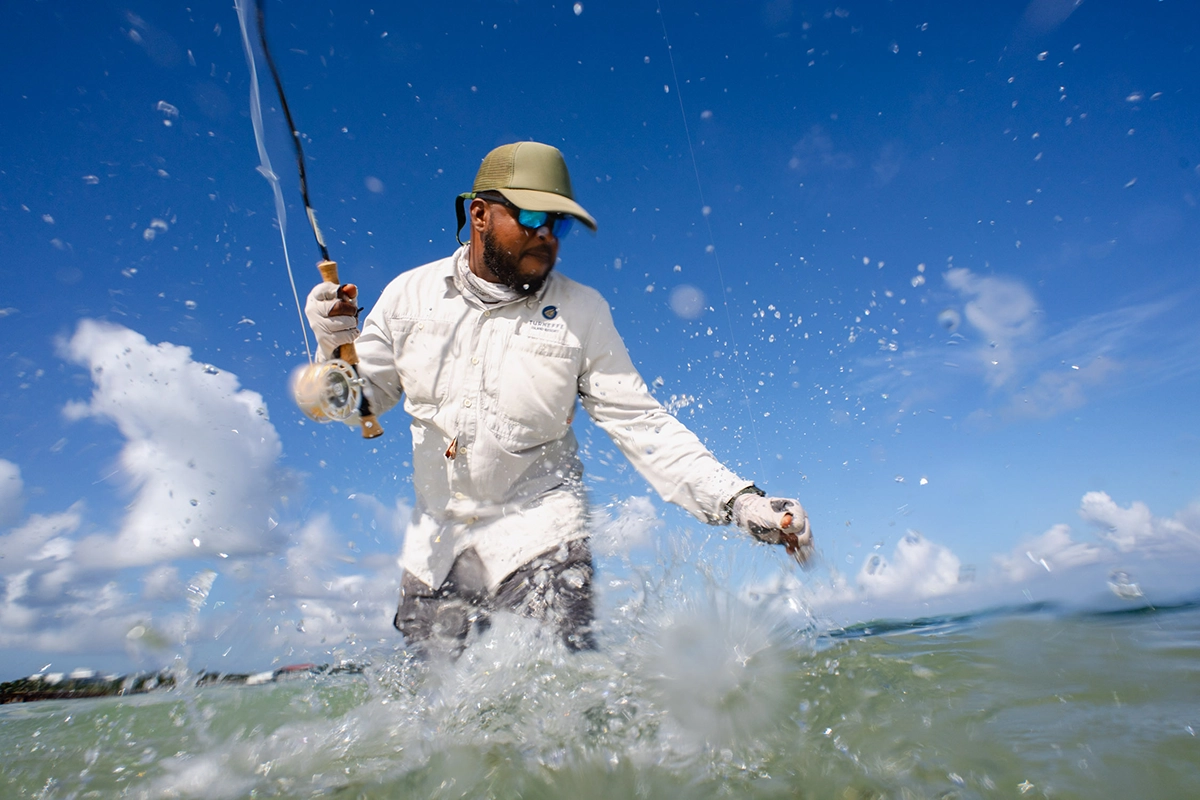
When a fish is on, everything speeds up—splashes, stripping line, the angler moving toward shore, reaching for the net, and landing the catch. These are the moments that make fly fishing photography dynamic. Here’s how to photograph fly fishing action with clarity and intention.
Best Camera Settings for Fly Fishing Action
- Fast shutter speed: 1/1000 or faster
- Deep depth of field: f/8 to f/16 for sharp action
These are the best camera settings for fly fishing photography when motion is involved.
And action is where underwater housing truly shines. Fly fishing action is often wet and unpredictable, and when you’re in the water, you’ll want the protection. Tamron lenses feature strong weather sealing, but saltwater spray is different—use a housing if you’re shooting in the splash zone.
Go Below the Water’s Surface for Unique Fly Fishing Photos
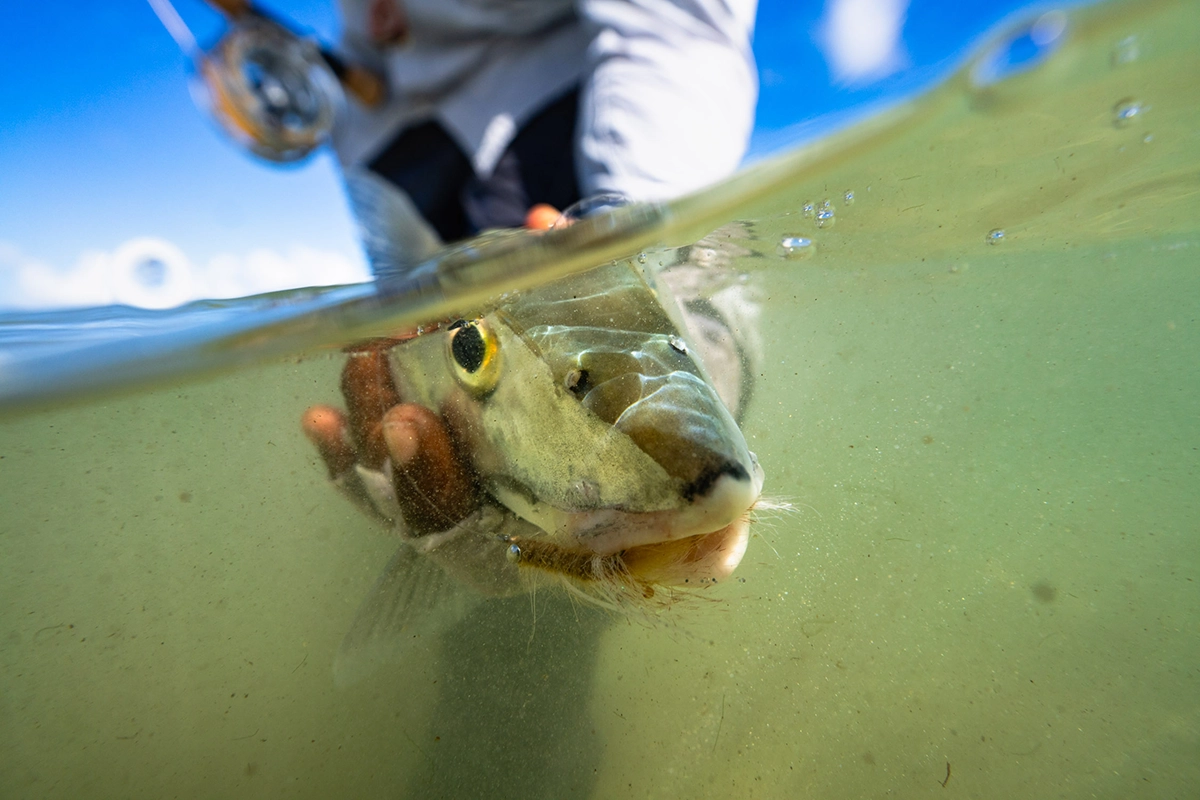
Investing in underwater housing is one of the easiest ways to take your fishing photography from ordinary to extraordinary. By adding underwater angles, you immediately double your creative possibilities.
The water reveals behavior, motion, and tension you can’t capture above the surface. It also lets you use your Tamron lenses to their fullest potential—especially when pairing wide perspectives with underwater compositions.
Not many photographers incorporate underwater storytelling into fly fishing photography, so this is a quick way to stand out.
Find The Beauty In The Small Moments
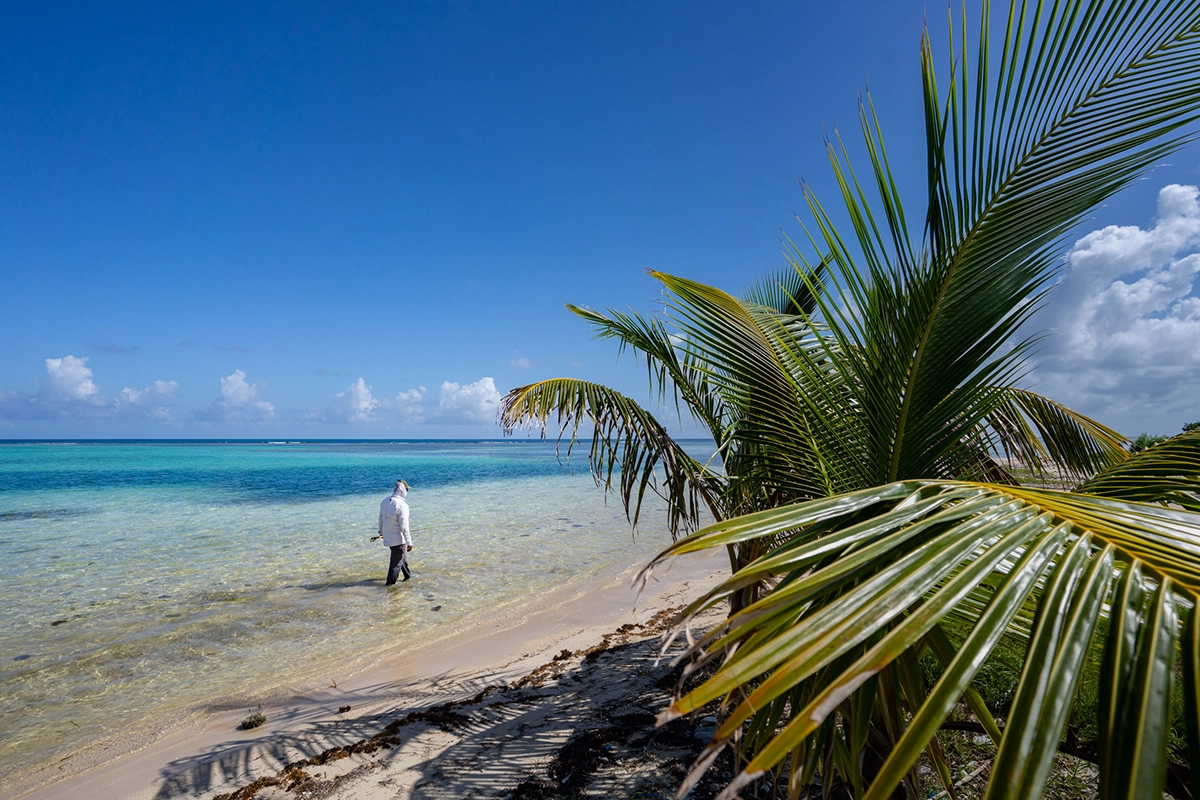
Just like fly fishing, photography can be meditative—slow, observant, intentional. Capture the mood and aesthetic of the sport: the quiet shoreline, a glowing green palm, the subtle movements of an angler spotting fish in the shallows.
These moments are often the ones that define the trip, and they make powerful additions to your fly fishing photographs.
Final Thoughts on Creating Meaningful Fly Fishing Photography
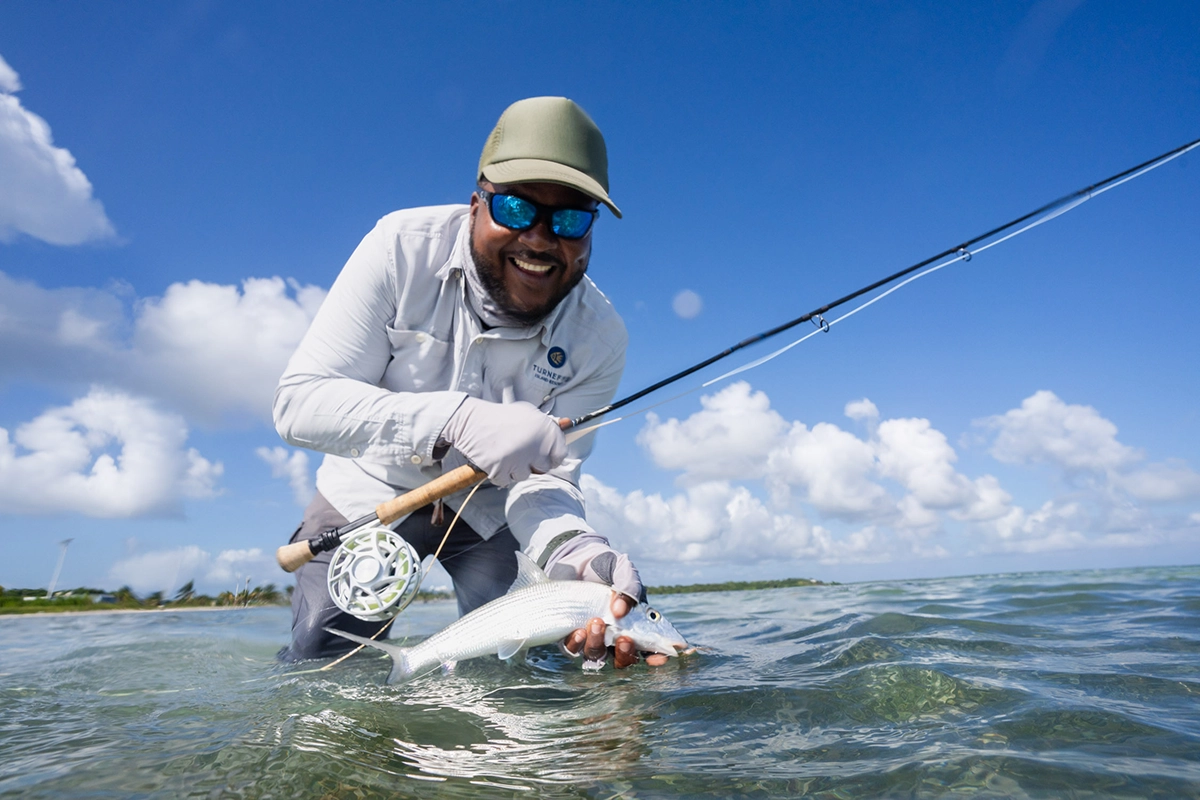
Fly fishing photography is far more than a photo of a person holding a fish. It’s about sharing the story—the small moments, the action, the environment, and the craft. These are not just tips for capturing fly fishing photos but principles that elevate your storytelling. I hope these fly fishing photography tips help on your next outing, just as they supported mine here in Belize.
Oh—and yes, I managed to land a few bonefish during this project.
For more tips on shooting action and fast-moving subjects, see our sports photography guide.
Where to Buy Tamron Lenses
Learn more about Tamron lenses at an authorized Tamron dealer near you or shop directly at the official TAMRON Store.
FAQ: Fly Fishing Photography Tips
1. What camera settings work best for fly fishing photography?
Use a fast shutter speed (1/1000 or faster) to freeze splashes and movement. Pair it with f/8–f/16 for sharp depth of field.
2. What lenses should I use for fly fishing photos?
A combination of wide and telephoto is ideal. The Tamron 16–30mm F2.8 G2 captures sweeping landscapes and close-up casting angles, while the Tamron 25–200mm F2.8–5.6 G2 handles fast-paced action fish fights, portraits, and distant subjects with ease because of its flexible focal range.
3. How do I photograph fly fishing action without scaring the fish?
Stay low, move slowly, and use a longer focal length like 200mm to keep distance. A quiet mirrorless camera and a versatile lens like the 25–200mm G2 help you stay unobtrusive.
4. What gear should I bring for photographing fly fishing trips?
Bring a weather-sealed wide-angle lens, an all-in-one zoom lens, extra batteries, backup memory cards, and a waterproof bag. For underwater angles, have a reliable underwater housing.
5. How can I capture underwater fly fishing photos safely?
Use a dedicated underwater housing to protect your camera and lenses. The Tamron G2 lenses pair well with housings due to their compact design and strong sealing.
6. What makes a good fly fishing photo?
A strong image blends atmosphere, action, and storytelling—wide scene-setters, detailed fly shots, and mid-range compositions of casting or landing a fish.
7. How do I photograph fly fishing in harsh sunlight or reflective water?
Shoot during golden hours when possible or use a circular polarizer to cut glare. A wide lens like the 16–30mm F2.8 G2 handles contrast beautifully in bright environments.
8. Can one lens cover a full day of fly fishing photography?
Yes. The Tamron 25–200mm F2.8–5.6 G2 is an ideal single-lens solution thanks to its range—from wide environmental shots to tight action images.
About the Author
Dalton Johnson is a commercial and documentary photographer, filmmaker, writer, and Tamron Americas Ambassador specializing in authentic outdoor storytelling. Based in South Lake Tahoe, California, he has worked with leading outdoor and lifestyle brands to document adventure, travel, endurance sports, and conservation. Through his articles for the Tamron blog, Dalton shares practical photography techniques, visual storytelling insights, and field-tested advice to help photographers create authentic images that inspire exploration. Read Dalton’s full bio >>