 Instant Savings
 Rebate Claims
 Support
 Find a Dealer
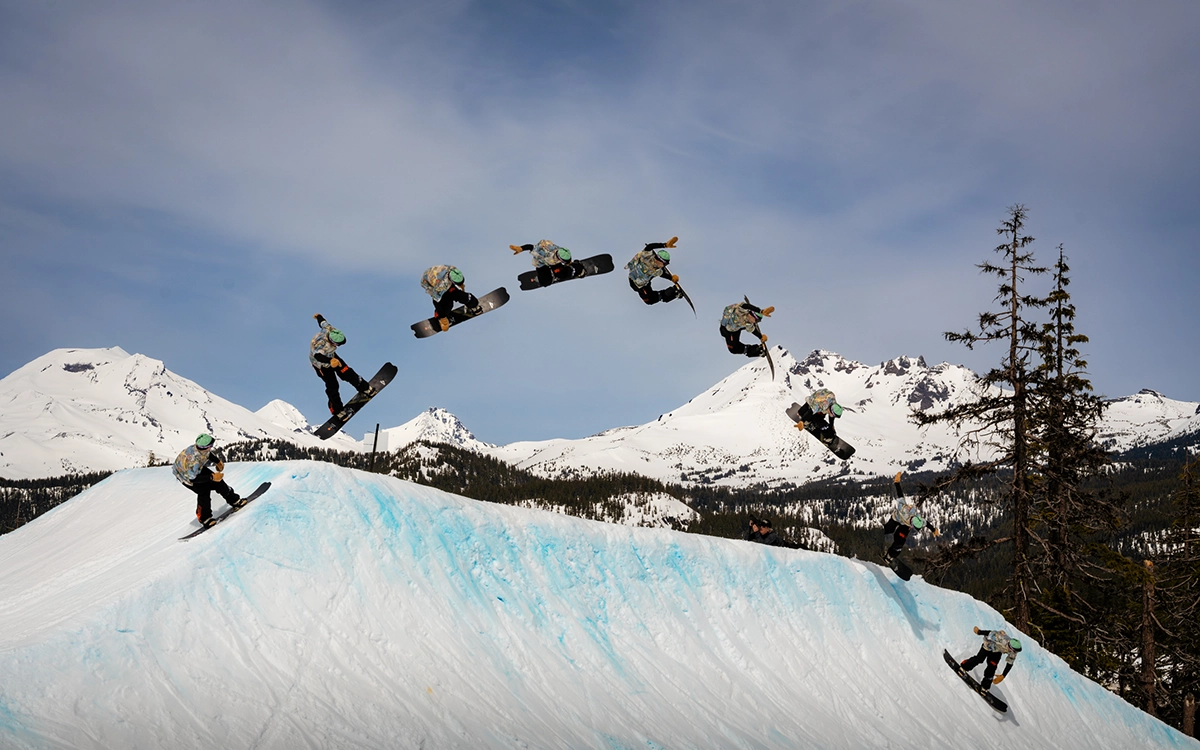
Chasing ‘Flow’
Christian Henkel heads to the slopes for winter action sports photos with the Tamron 28-75mm F2.8 G2 lens.
Author: Jenn Gidman
Images: Christian Henkel
Share Article
Christian Henkel heads to the slopes for winter action sports photos with the Tamron 28-75mm F2.8 G2 lens.
From rock climbing to snowboarding, Christian Henkel has long lived the adventurer’s life. A few years back, he even morphed into a nomad for a bit, traveling up and down the West Coast in his van to document the landscapes he saw along the way. These days, Christian is a bit more stationary, settled in Bend, Oregon, where there are still plenty of adrenaline-inducing activities in the winter ready to unfold before his camera—from deep in the backcountry to the popular Mt. Bachelor ski resort.
“Shooting winter action sports hits on every level for me,” he says. “As a snowboarder myself, there’s an instant connection to what the athletes are feeling—the commitment, the risk, and the reward. Anyone who participates in action sports understands the idea of ‘flow state,’ that feeling of being completely immersed and intensely focused, and where time almost stands still. Photographing someone doing the thing they’re most passionate about puts me in that same headspace.”
To help him capture a series of recent photos in Central Oregon—”an area I know extremely well, which allows me to focus less on logistics and more on timing, light, and creative angles when conditions line up”—Christian tapped into his Tamron 28-75mm F/2.8 Di III VXD G2 standard zoom. “The 28-75mm F2.8 G2 has become one of my most used lenses for my action sports work,” he says. “The focal range is wide enough at 28mm to establish environment and scale, but long enough at 75mm to isolate athletes and achieve nice compression. The constant F2.8 aperture is huge for winter shooting, whether I’m dealing with flat light, heavy snowfall, or trying to separate a rider from a busy background. I also love how lightweight and compact it is. When you’re hiking, riding snowmobiles, or moving fast around the mountain, every ounce matters.”
For Christian, creating these types of photos is equal parts meditative and adrenaline rush. “You’re fully immersed in these beautiful environments, completely locked into the moment, while constantly adapting to fast-moving action and unpredictable conditions,” he says. “The feeling I get capturing a perfect shot is very similar to the feeling I get when landing a trick I’ve been practicing for ages.”
CHRISTIAN’S QUICK TIPS
Add in a human element.
That’s essential in my work. Many of the landscapes I work in can be visually stunning on their own, but adding a person immediately introduces scale, story, and emotion. I’m always thinking about how small we are compared to these environments, and I like showing that contrast—a single rider or athlete moving through an otherwise massive, untouched space. It makes the scene feel more relatable and gives viewers a point of entry into the image.
Incorporate white space.
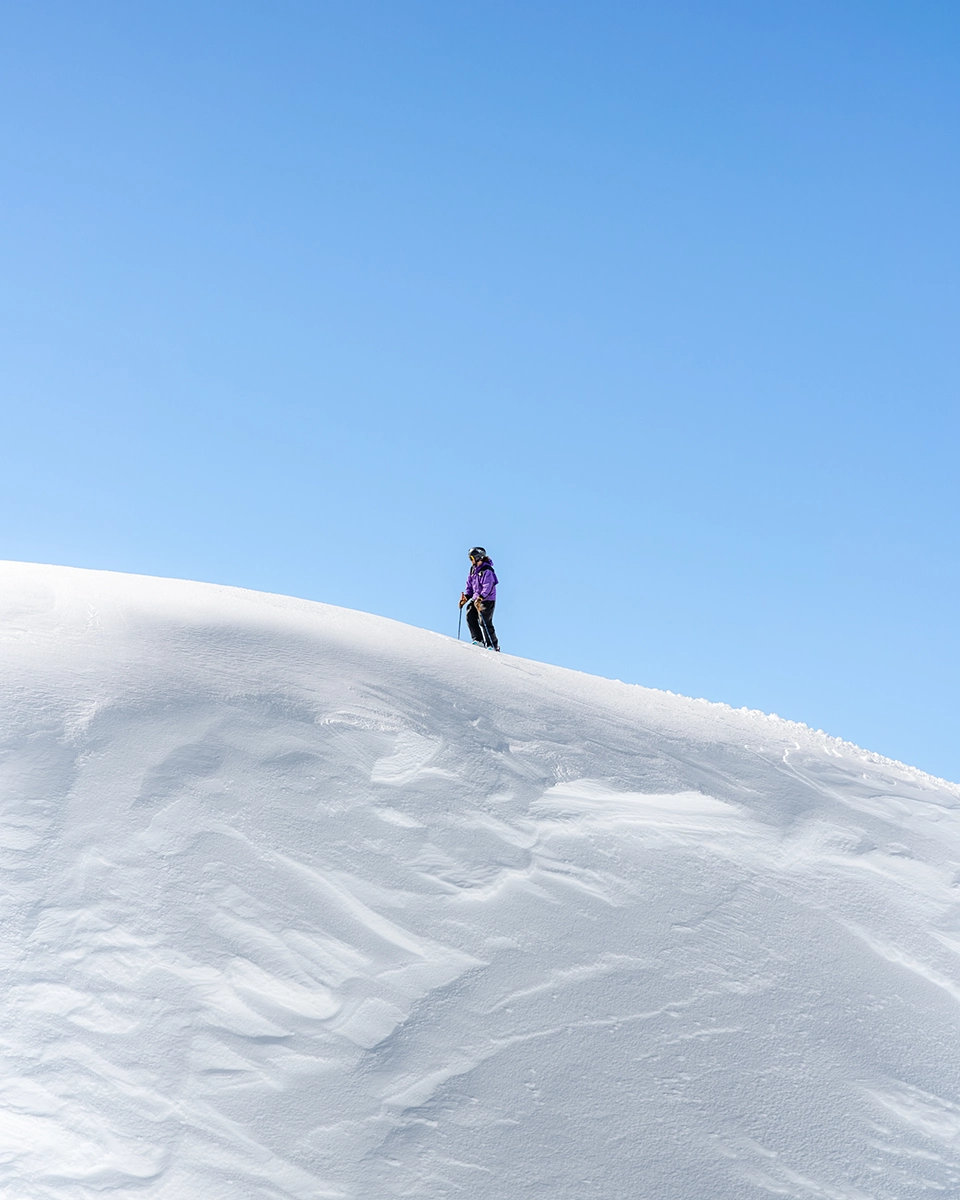
Snow can naturally act as negative space, and I like to lean into that for certain shots. A clean, white background simplifies the frame and lets the subject really stand out, especially when they’re wearing bold colors. That white space also helps guide the viewer’s eye directly to the action without distractions.
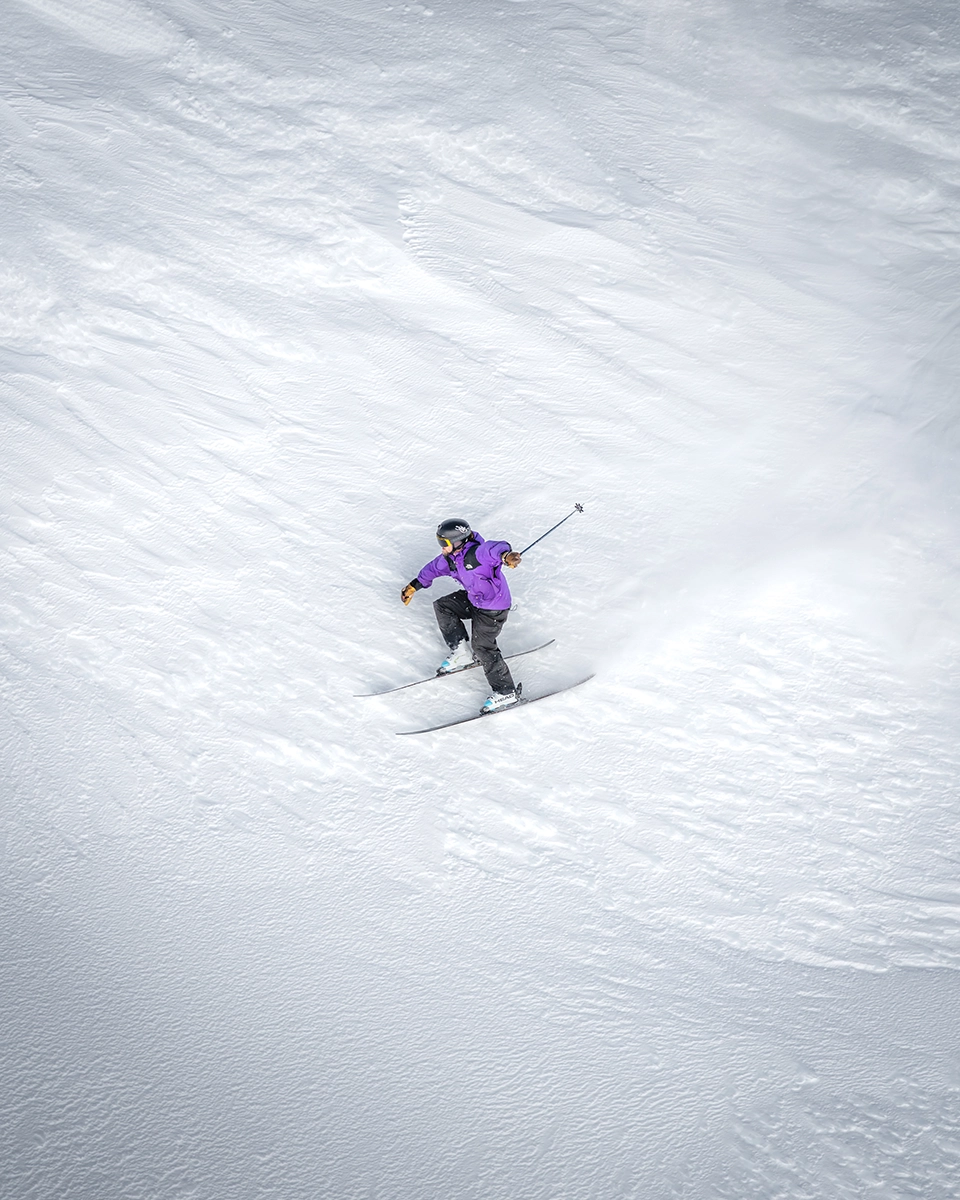
For the image you see here of local skier Miles Kemph riding down a near-vertical face, I shot it at 75mm from a high point across the way, almost perfectly at eye level. I love how the angle and the steepness of the face make it appear as if he’s lying sideways—almost like the photo was taken straight down from a drone. It’s also a great example of how the snow can act as negative space. The blank white background naturally pulls your eye straight to the subject.
Be cognizant of your angles.
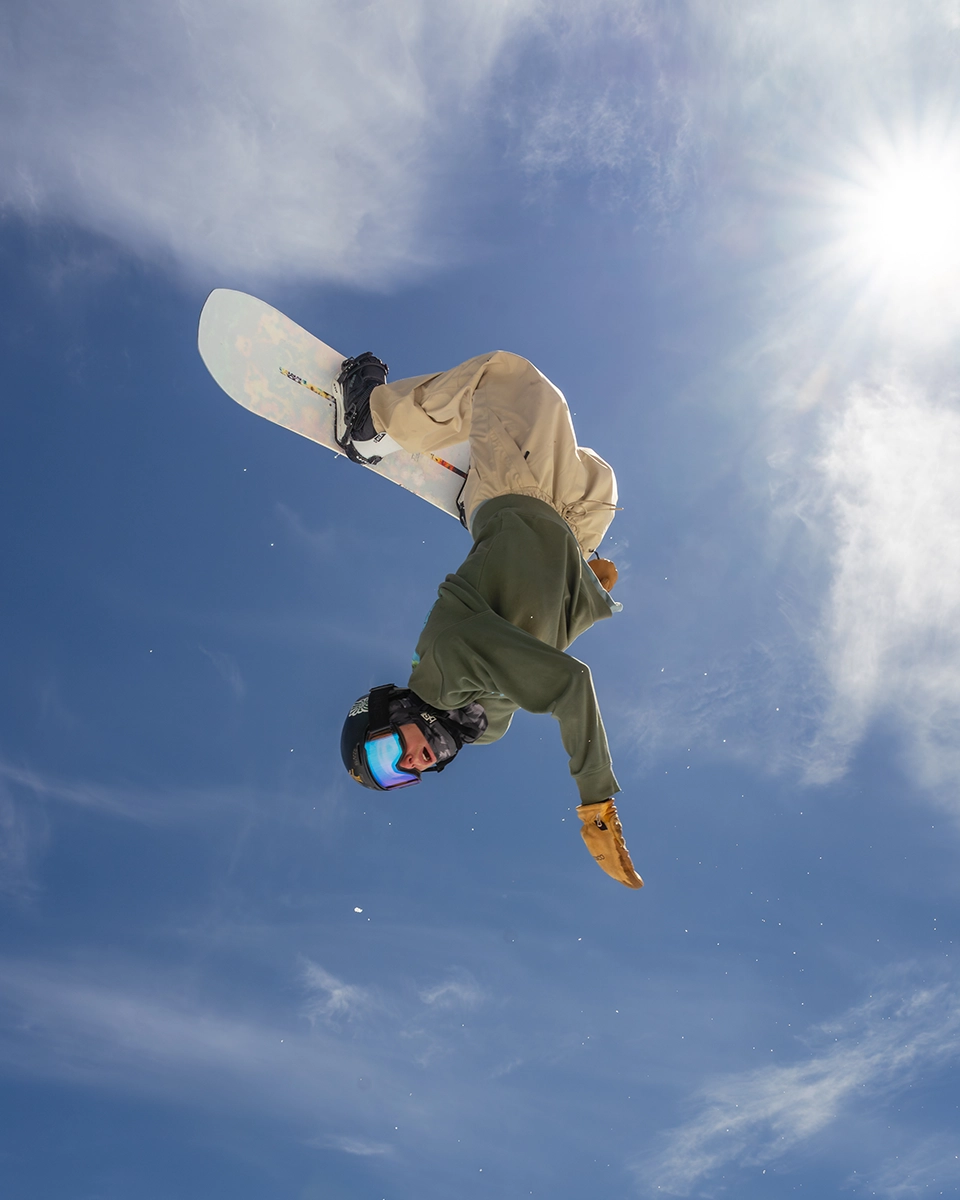
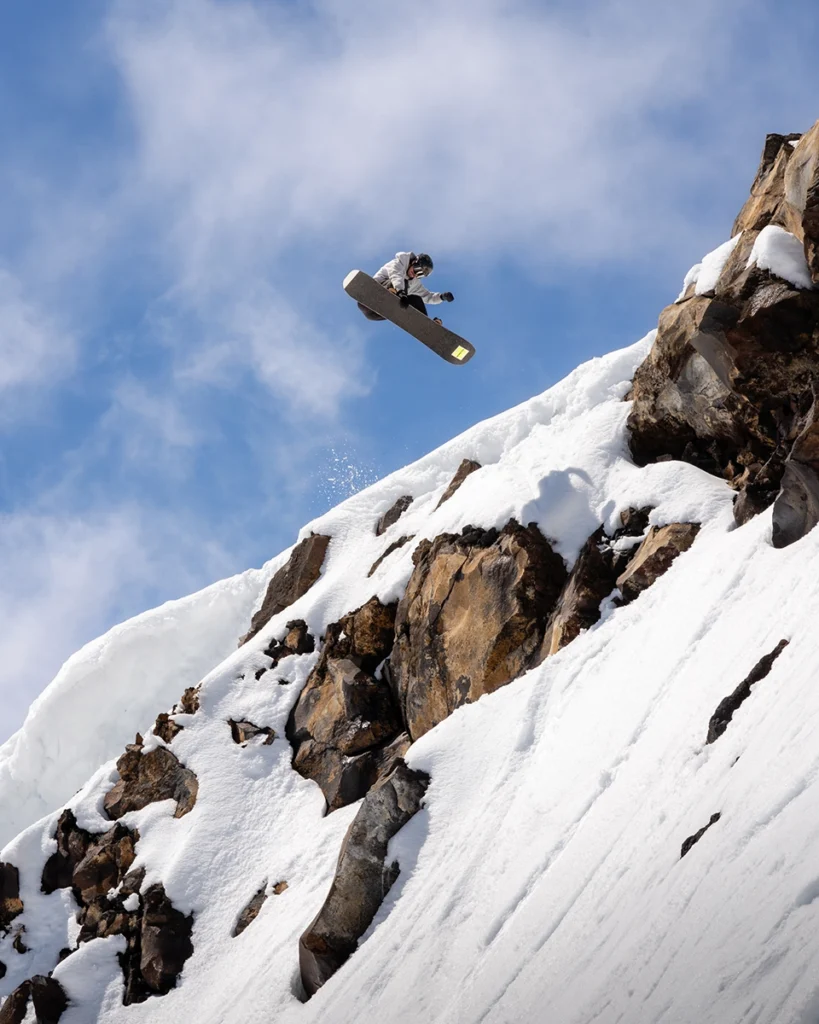
Angle choice is huge in action sports photography. Shooting close with a wide focal length puts the viewer right in the action and helps emphasize speed and power. Shooting from above can highlight lines and terrain, while shooting from below exaggerates height and airtime. I try to mix all of those perspectives throughout a shoot so the final set feels dynamic and immersive rather than repetitive.
Aim for the right light.
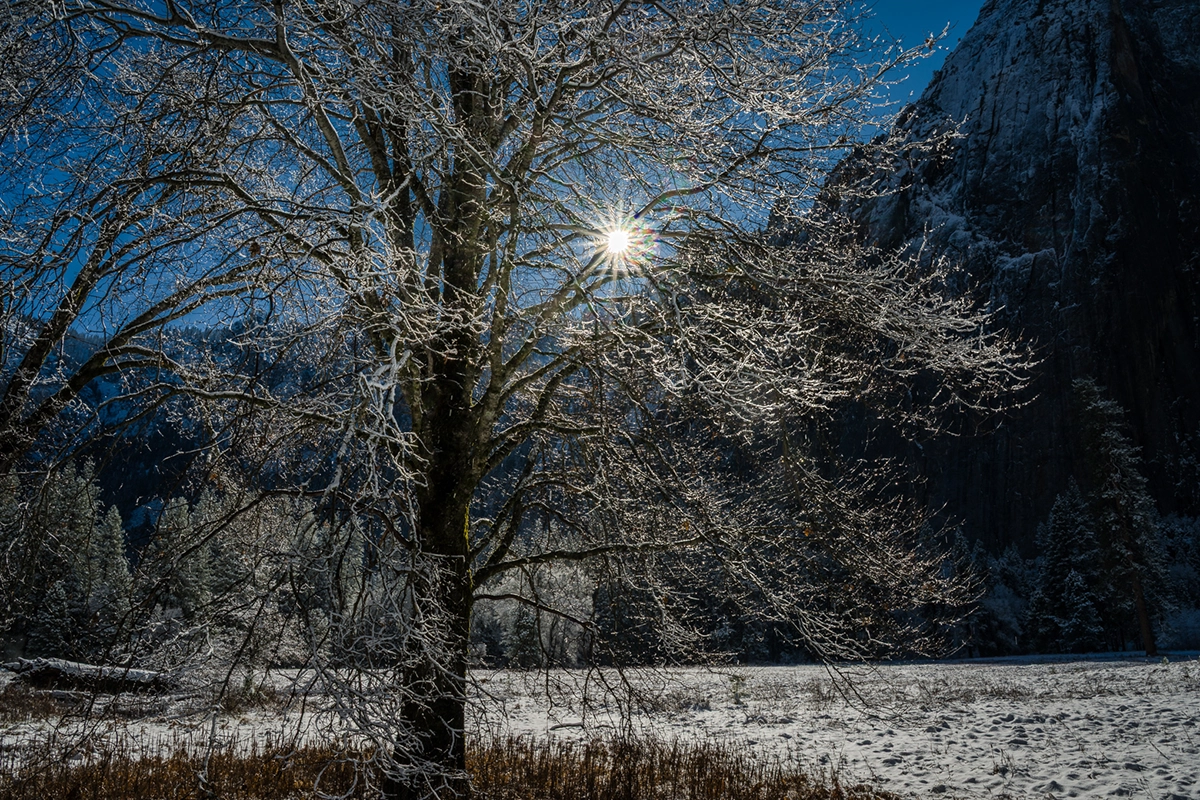
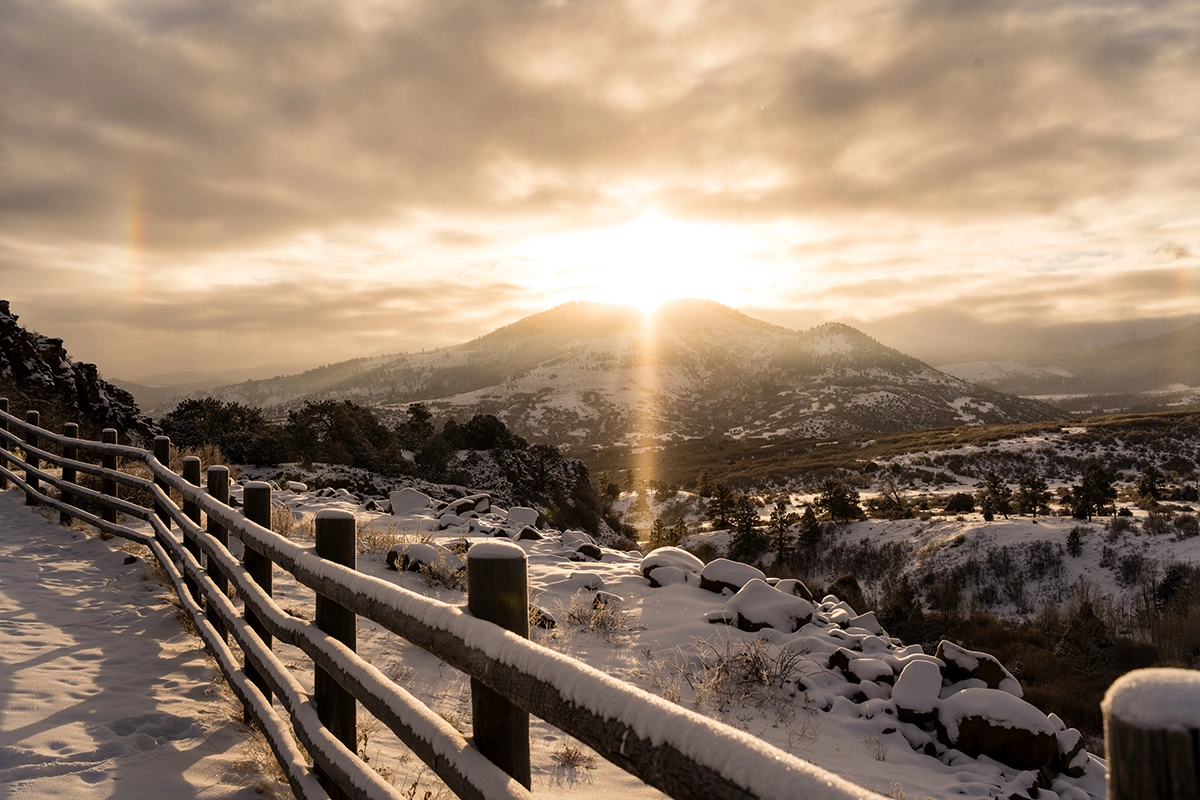
Early morning and late afternoon are ideal for these kind of shots. Low-angle light helps add texture to the snow, creates longer shadows, and gives everything more depth. Midday light can also work, but it’s usually harsher and flatter, so I have to be more intentional with angles and composition to keep the images from feeling one dimensional.
Nail that exposure.
Shooting in the snow can make proper exposure tricky. I usually underexpose slightly. If light conditions are changing quickly during a shoot, I’ll often use auto ISO and adjust the exposure compensation dial to –0.3 to –0.7 EV. It’s much easier to pull detail out of shadows than to recover blown highlights in the snow. I’m constantly checking my histogram to make sure I’m preserving highlight detail while still keeping the snow clean and white. Shooting in RAW is also critical, as it gives you far more flexibility to fine tune exposure, highlights, and shadows in post.
Ensure sharp action shots.
Shutter speed is key. Unless I’m intentionally trying to introduce motion blur, I’m typically shooting at 1/1600 of a second or faster to freeze the action, especially when there’s snow spray involved. Continuous autofocus tracking is essential, and I try to anticipate the peak of the action rather than react to it.
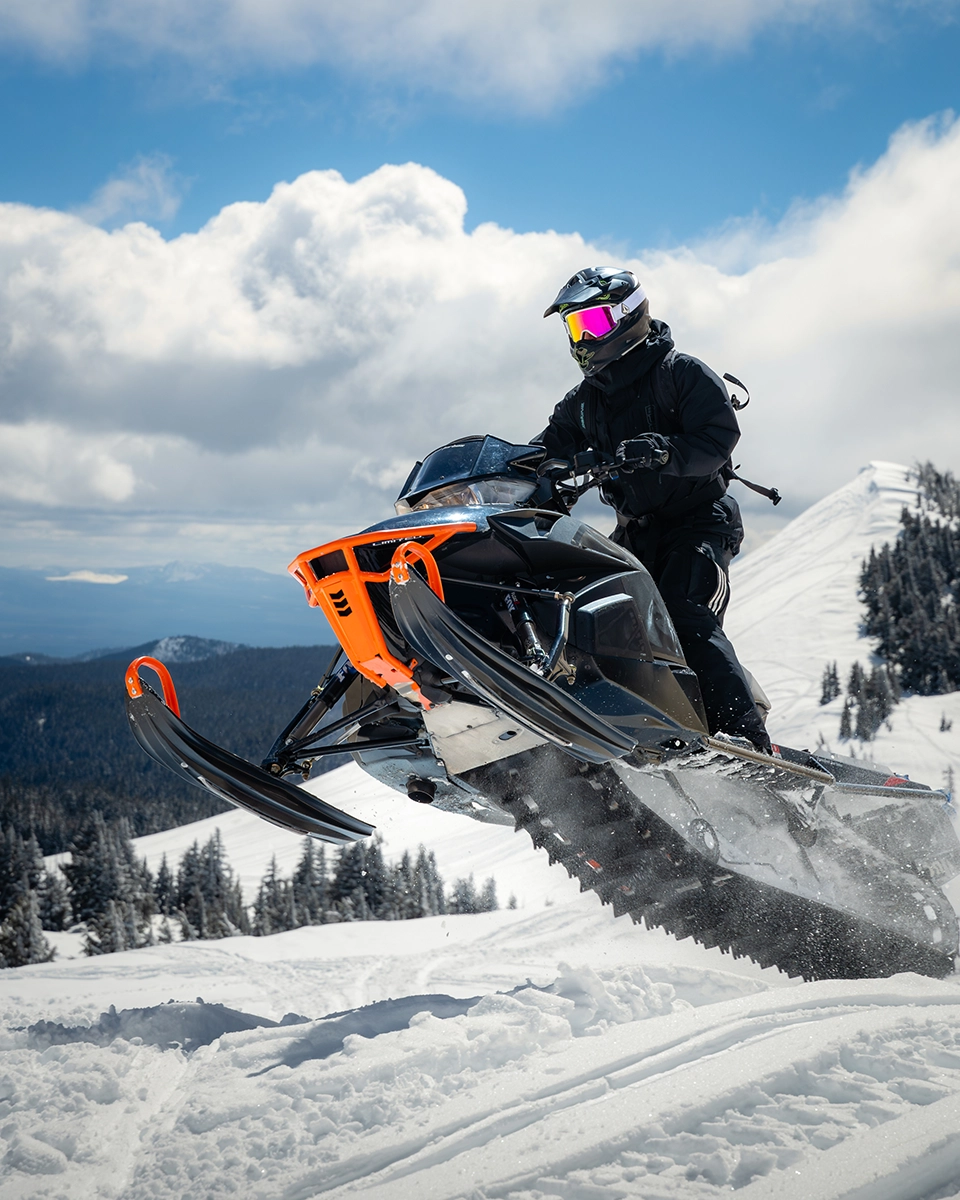
Being in the right position ahead of time and understanding how the athlete moves is just as important as camera settings. The athletes I’m working with will often take a few test runs—not only to dial in their speed, but so I can anticipate exactly where they’ll be at the peak of the action. If test runs aren’t possible, I’ll use natural reference points like a specific rock or tree to time the shot and make sure the frame is sharp and composed properly.
 English
  Spanish
  French
  Portuguese