Instant Savings
 Rebate Claims
 Support
 Find a Dealer
Layers of Light and Landscape
Through thoughtful composition and her trio of Tamron zoom lenses, Tiffanie Yang creates images rich in depth, color, and atmosphere.
Author: Jenn Gidman
Images: Tiffanie Yang
Share Article
Through thoughtful composition and her trio of Tamron zoom lenses, Tiffanie Yang creates images rich in depth, color, and atmosphere.
For Tiffanie Yang, a lifelong love of travel eventually evolved into a passion for landscape and adventure photography. That journey for her began years ago with her father, whose work-related travels often took the family around the world. “My dad always had a camera with him,” Tiffanie says. “Whenever we traveled, I would steal it and start taking pictures.”
It wasn’t until a cross-country move from Long Island to Seattle in 2019 that Tiffanie’s photography truly began to flourish. “After I went on my first hike, I knew it was going to be a life-changing move,” she says. “It’s so beautiful out here. I couldn’t stop taking photos.”
Those adventures also shaped Tiffanie’s approach to gear. Because most of her photography happens while carrying everything she needs on her back, versatility and portability are key. For the images featured here, Tiffanie relied on three Tamron lenses: the 17-28mm F/2.8, 28-75mm F/2.8 Di III VXD G2, and 28-200mm F/2.8-5.6 Di III RXD. “I love my 28-75mm F2.8, but recently, I’ve also leaned on the 28-200mm F2.8 for its expanded reach,” she says. “I can shoot in the 28-75mm range, but then zoom all the way out to 200mm when I want more image compression. That’s especially useful in the Pacific Northwest, with all of its mountain ranges.”
Meanwhile, the 17-28mm F2.8 has become Tiffanie’s go-to lens for wider shots and for night photography. “The fast aperture on all three lenses allows me to shoot at any time and in practically any lighting conditions—also very useful when I’m sometimes doing very early morning hikes or shooting after the sun goes down,” she says.
Read on for how Tiffanie created some recent photos with her Tamron lens trio.
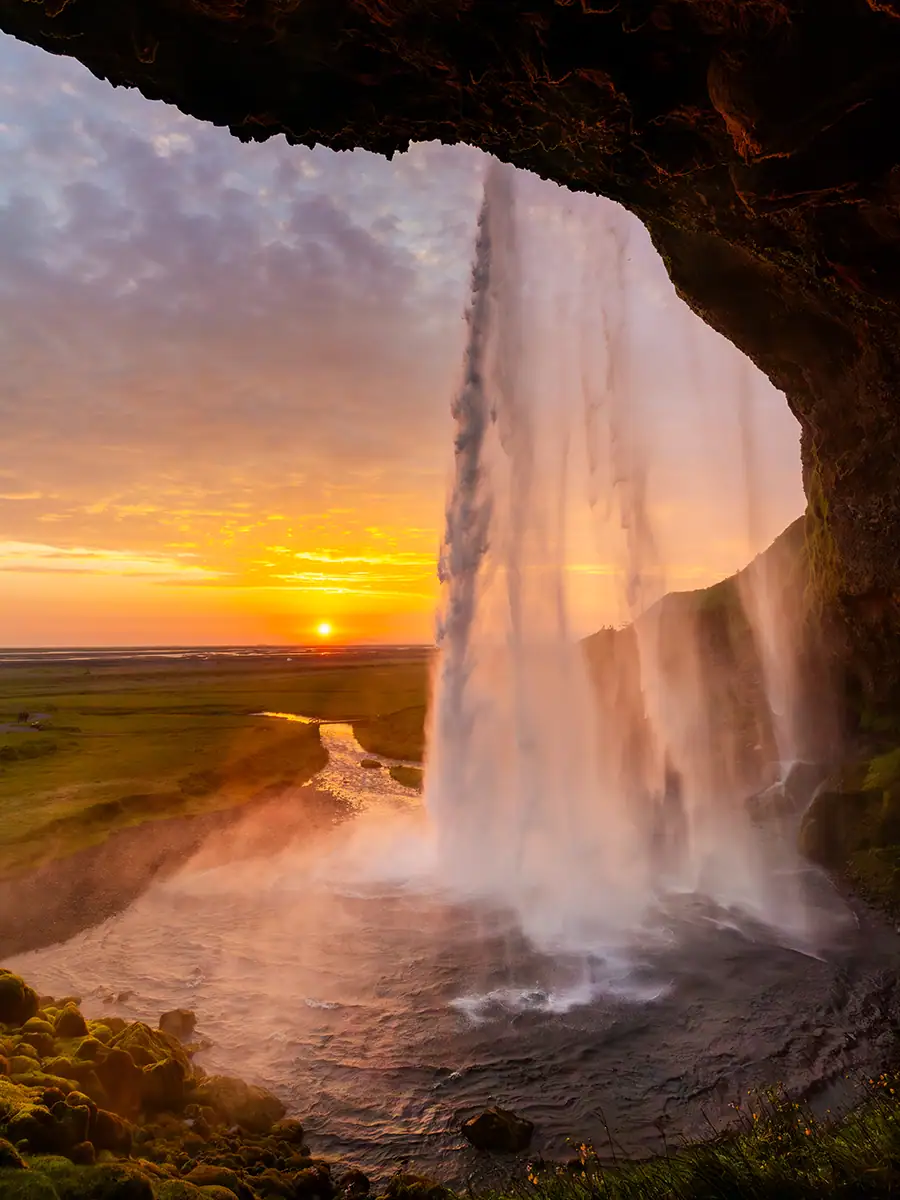
I captured this image during a family trip to Iceland, during what’s known as the midnight sun. In the summer, Iceland experiences nearly 24 hours of daylight, with “sunset” occurring close to midnight, and “sunrise” shortly after. I convinced my parents to stay out late one night, and it was worth it. This photo was taken from behind a popular waterfall just as the sun was setting, casting a beautiful glow across the landscape. It wasn’t easy—wind was blowing water everywhere, and I was constantly wiping droplets off my lens. Despite challenging conditions, getting to experience and photograph the midnight sun made this image especially meaningful.
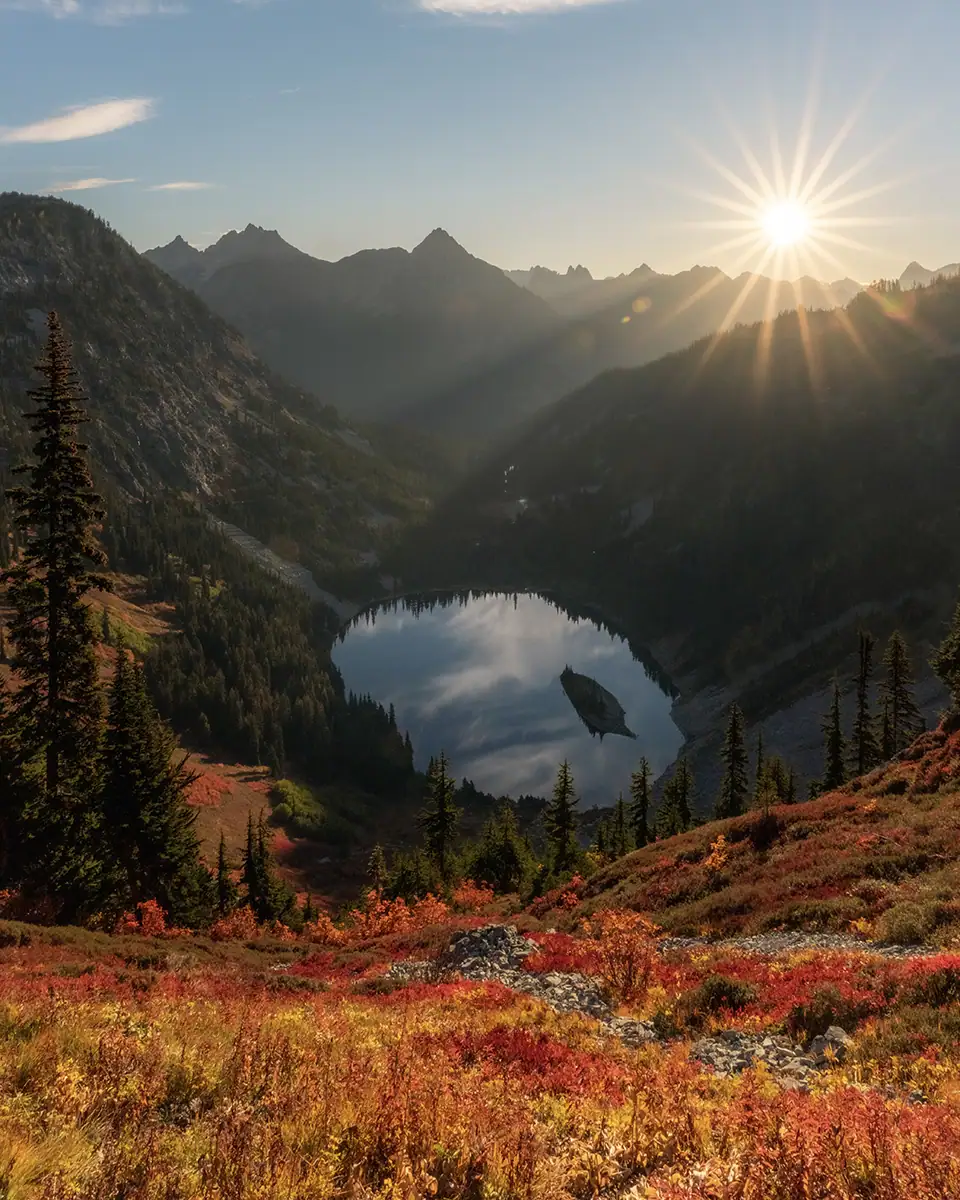
For this image, captured during a sunrise hike in Washington’s North Cascades National Park, I left Seattle around 12:30 a.m. and drove nearly three hours through the night. My friends and I started hiking well before dawn so we could reach this viewpoint in time for sunrise.
This photo is a great example of what I’m looking for in landscape photography: layers within the terrain that lead the viewer’s eye through the frame. The colorful fall foliage in the foreground naturally frames the lake, while the lake itself draws your attention toward the mountains and the sunburst in the distance. I’m constantly searching for those kinds of natural framing elements, because they help create depth and a stronger sense of place.
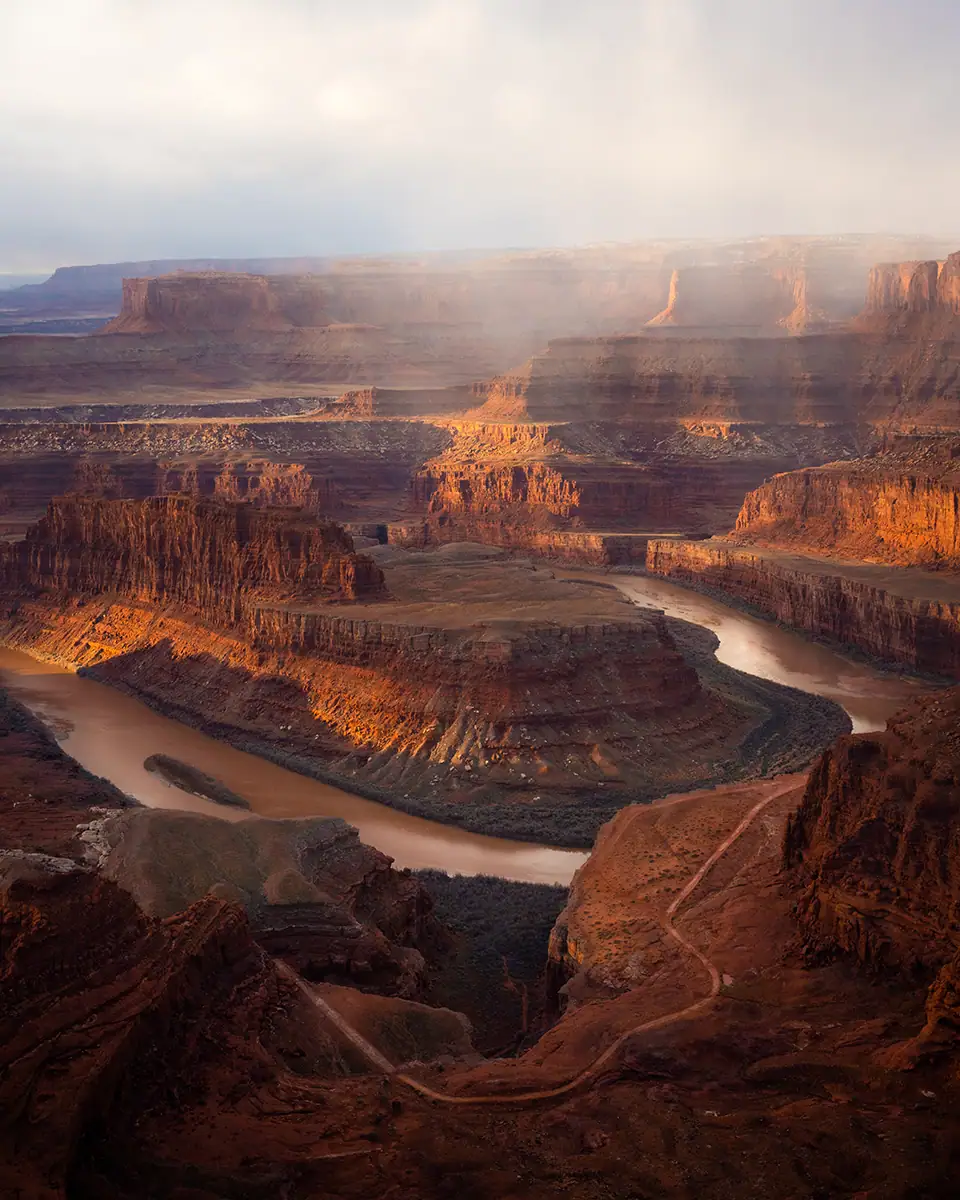
This photo in Dead Horse Point State Park in Utah was captured during a Southwest road trip with one of my best friends, Sonya, also a photographer. Incredible landscapes don’t always require a strenuous hike to access—this overlook is just a short walk from the parking area, yet the view is breathtaking.
That morning, the weather was constantly changing. We experienced heavy clouds, snowfall, and shifting conditions that made it difficult to predict what the scene would look like from one moment to the next. Then, briefly, the clouds parted and sunlight streamed into the canyon, illuminating portions of the rock formations while mist and storm clouds lingered overhead.
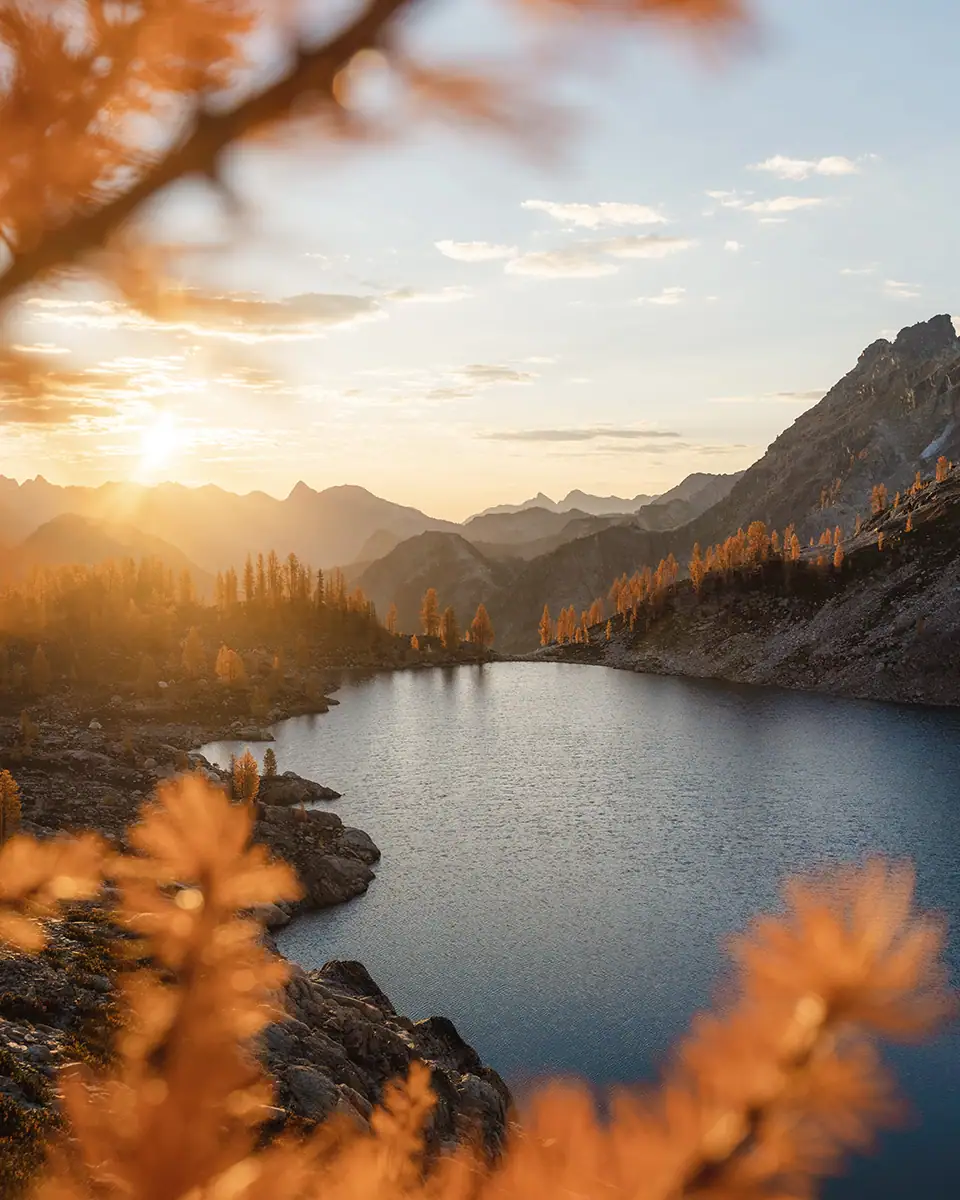
I captured this image in the North Cascades, taken during an October backpacking trip, right as the larches were reaching their peak fall color. Larches are unusual, in that they’re one of the few conifer trees that lose all of their needles annually, transforming from green to brilliant shades of gold and orange before shedding them for the winter. Their color peak only lasts for a short window, and I was fortunate to hit it just right. I used the colorful larches in the foreground to naturally frame the scene and draw the viewer’s eye toward the water and surrounding peaks.
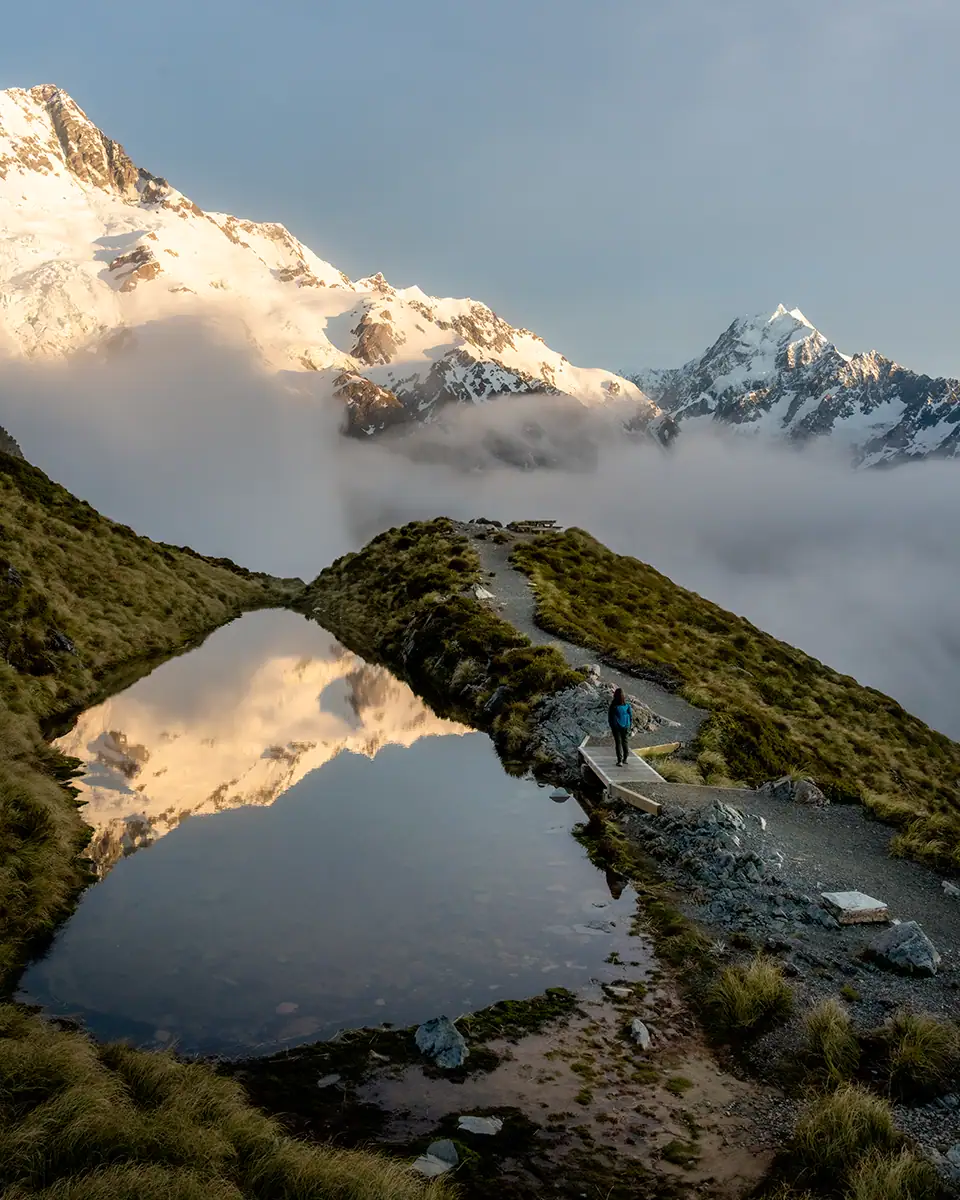
This photo was taken during a sunrise hike in New Zealand’s Mount Cook National Park with two close friends, including Yasmeen, who often serves as a willing model for my photography adventures. We started the hike at an ungodly hour to reach the viewpoint before sunrise, and the effort was well worth it. As we climbed, low clouds began forming in the valley below, and I worried they might completely obscure the landscape. Fortunately, they stayed low enough to preserve the reflection on the water while adding atmosphere to the scene. By the time we reached higher elevations, the entire valley had filled with clouds.
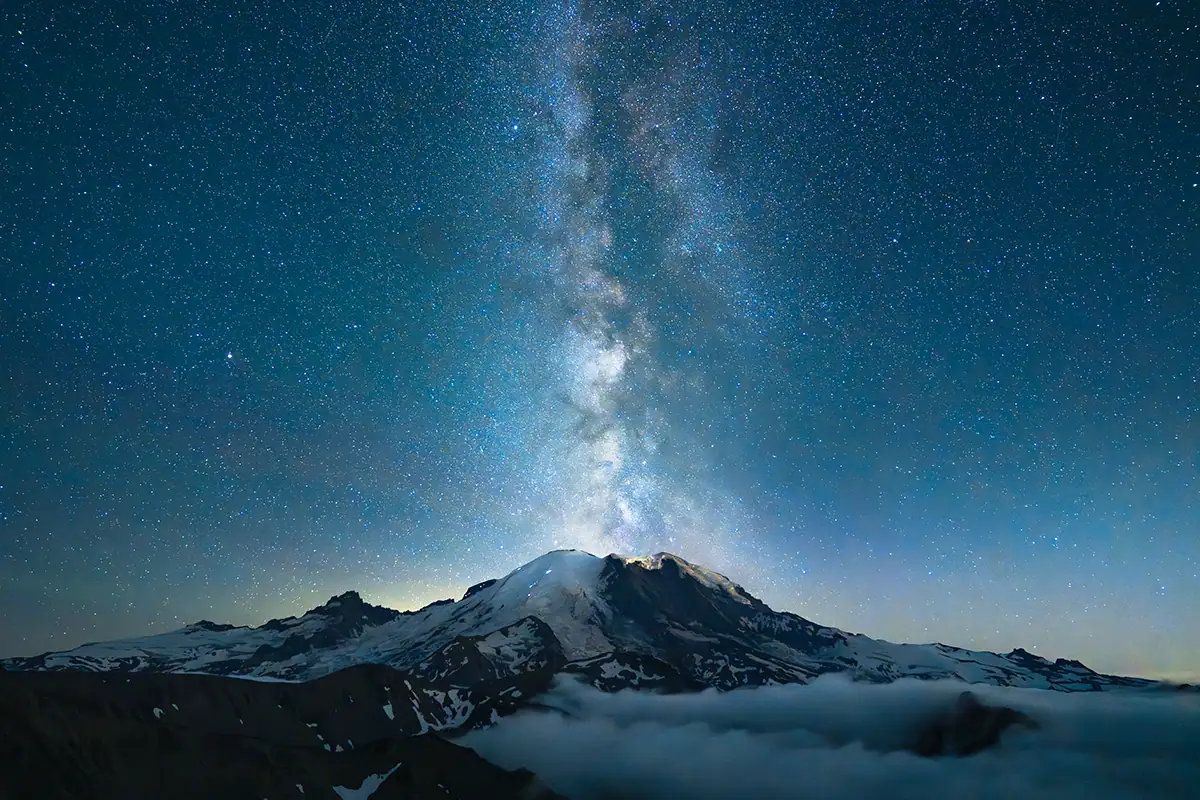
I captured this Milky Way image, with Washington’s Mount Rainier in the background, during an overnight trip. After hiking up to a fire lookout, I spent several hours in the dark, using my camera’s interval shooting mode and a tripod to create a time-lapse of the Milky Way as it moved across the sky. The conditions were far from perfect: Low clouds kept drifting through the scene, sometimes obscuring the mountain and stars entirely, and because it’s a popular hike, there was a steady flow of visitors passing by with bright headlamps. Fortunately, the changing weather ended up adding a lot of atmosphere to the image. Using a wide-angle lens with a fast aperture allowed me to capture both the Milky Way and the mountain landscape in a single frame.
To see more of Tiffanie Yang’s work, check out her website and Instagram.