Ultra-Telephoto Unpredictability
Samuel Angers’ Tamron 150-500mm VC lens helps him stay on the ready while on safari in Namibia.
Author: Jenn Gidman
Images: Samuel Angers
Share Article
Samuel Angers’ Tamron 150-500mm VC lens helps him stay on the ready while on safari in Namibia.
For Samuel Angers, the road to becoming an outdoor and travel photographer began in an old-school high school darkroom. “We were developing our own photos using vintage equipment,” he recalls. Those early photography classes sparked something deeper, and years later, as Samuel began traveling more extensively and embarking on long-distance hikes that sometimes stretched hundreds of miles, his photography evolved from a casual interest into a way of preserving and sharing the wild places he encountered along the way.
“Some of those spots required real commitment to reach, as they’re only accessible by foot,” Samuel explains. “That’s what really drew me into photographing landscapes.” From there, he gravitated toward the broader world of outdoor and adventure photography. “It aligned with what I already loved doing: exploring, hiking, and spending time in nature,” he says.
Samuel recently embarked on a 17-day journey through Namibia, where vast landscapes and unpredictable wildlife encounters pushed both his creativity and technical skills. Traveling through destinations like Etosha National Park, the Namib Desert, Walvis Bay, and Damaraland, Samuel photographed everything from rhinos and giraffes to flamingos at sunset against the country’s striking terrain.
To capture it all, Samuel relied on the compact yet powerful Tamron 150-500mm Di III VC VXD ultra-telephoto zoom lens. This versatile lens allowed Samuel to isolate distant wildlife one moment and compress Namibia’s expansive landscapes into dramatic compositions the next. “Having an ultra-telephoto lens is the most useful tool for this type of photography,” he says. “You need to keep a safe distance from the animals, but you still want to create images that place the viewer inside the scene.”
Samuel appreciates the sharpness and image quality achievable with the 150-500mm VC, as well as its light weight (just under 61 ounces) and compact size. “It’s quite rare to have a lens in this focal range that remains this portable, which is important to me since I move a lot from place to place,” he says.
It’s Tamron’s proprietary Vibration Compensation technology, however, that has really sold Samuel on the 150-500mm VC. “The VC is essential, because I don’t always have a tripod or monopod with me,” he says. “I often shoot handheld, usually in fast-moving situations, so having the VC helps me keep my shots as stable and sharp as possible. It makes a huge difference in keeping my images usable in those unpredictable moments when I might suddenly spot an animal while on safari and have to stop the vehicle.”
Read on for how Samuel used his Tamron 150-500mm VC ultra-telephoto zoom lens on his adventures in the Namib desert.
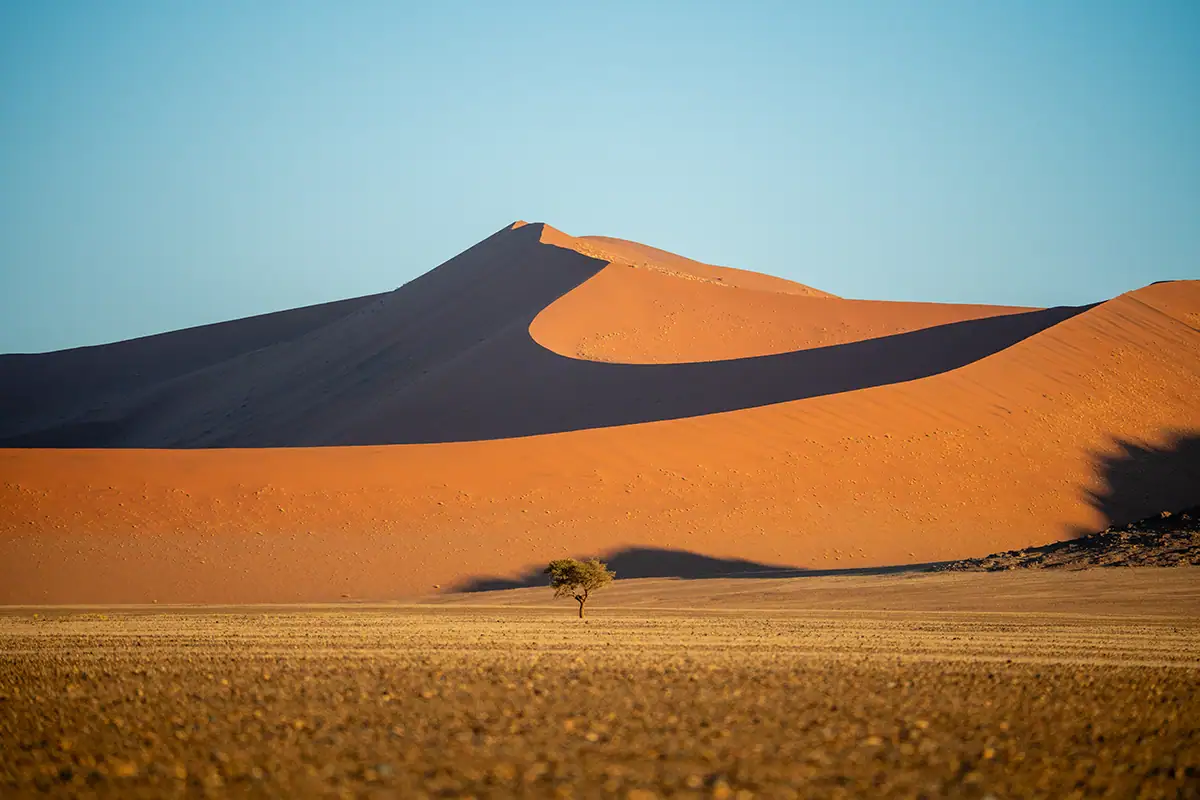
I was driving out of Namib-Naukluft National Park right before the gates closed when I noticed a lone tree perfectly aligned with the top of a dune. I also liked how the sunset light was creating a warm orange tone across the dune, with strong shadows revealing its curves. I lowered my position slightly to include some foreground, and with the 150–500mm, I was able to zoom in and compress the landscape, bringing the tree and the dune closer together to enhance the visual effect.
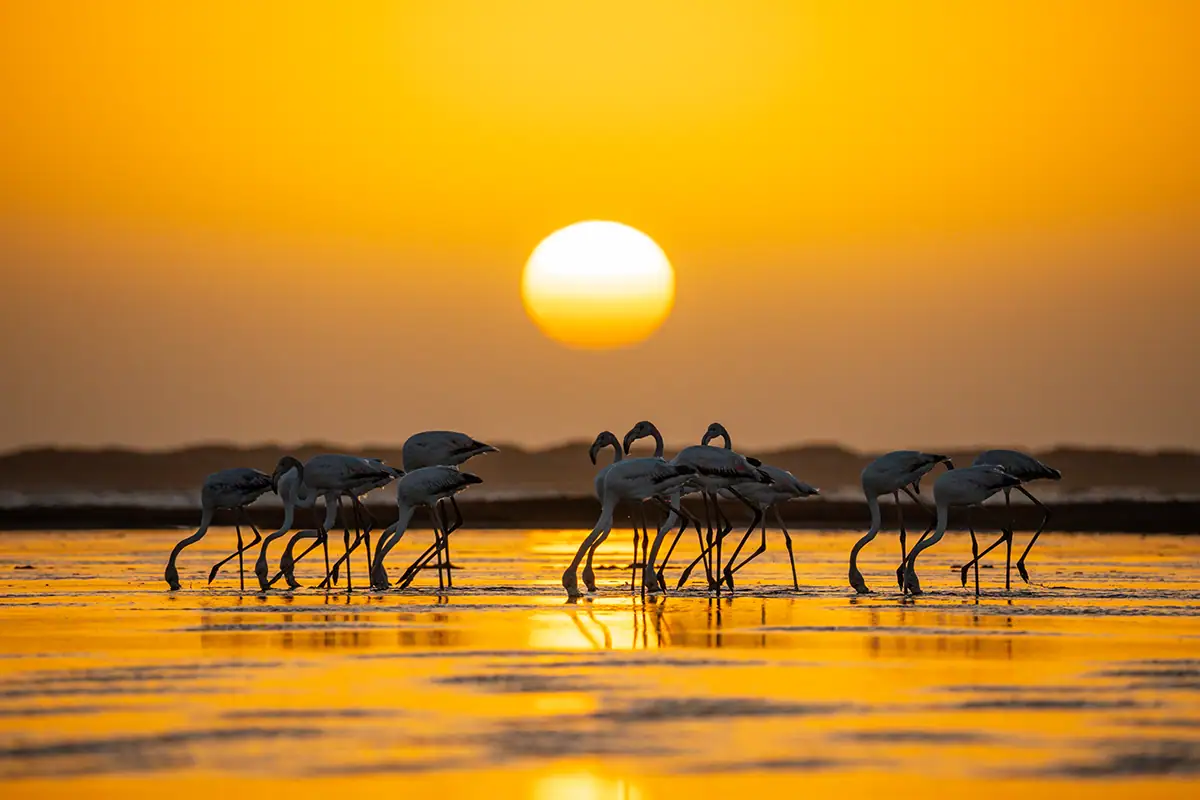
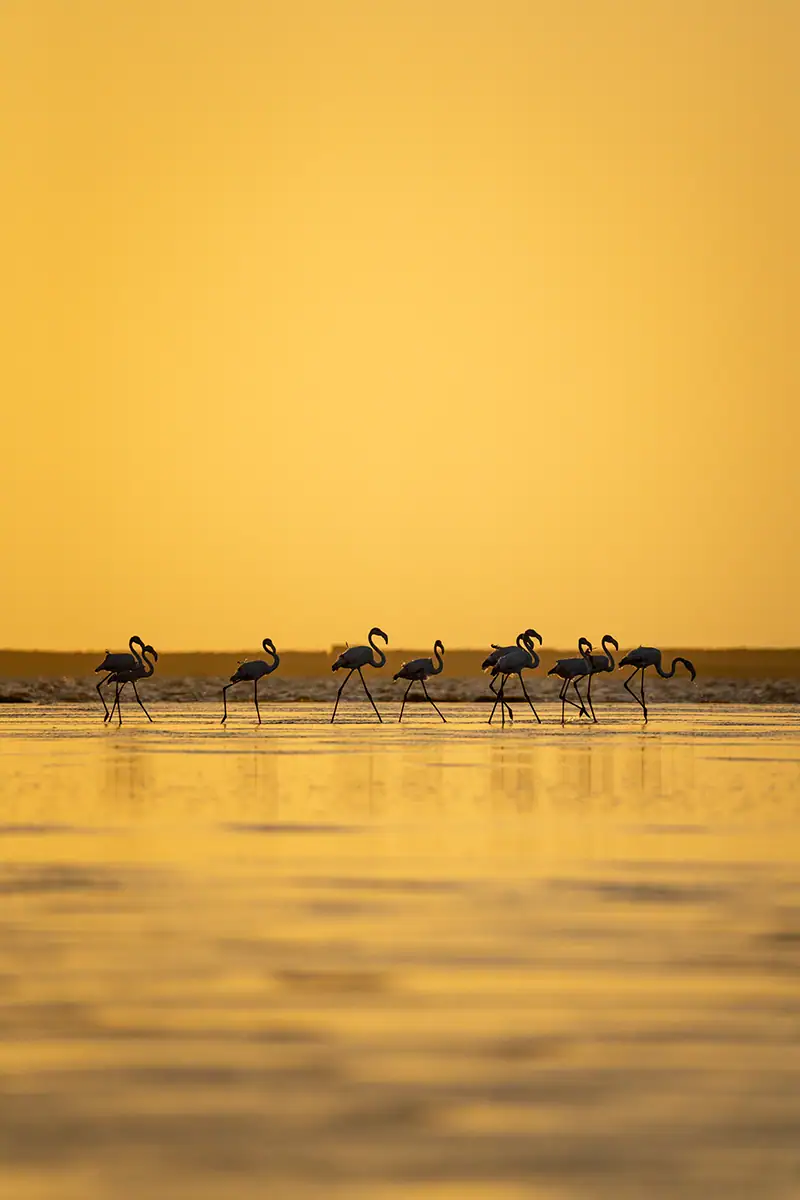
We’d been on the road all day, with a goal to reach Flamingo Lagoon in Walvis Bay in time for sunset so we could photograph flamingos in the evening light. I remember walking barefoot in the water trying to find the perfect composition with the flamingos and the sunset directly behind them. That’s the image where you can see the sun in the frame. The other photo, where you don’t see the sun but just the orange glow in the sky, was taken slightly to the right of the sunset. It was the same light, however, creating that warm orange tone across the sky.
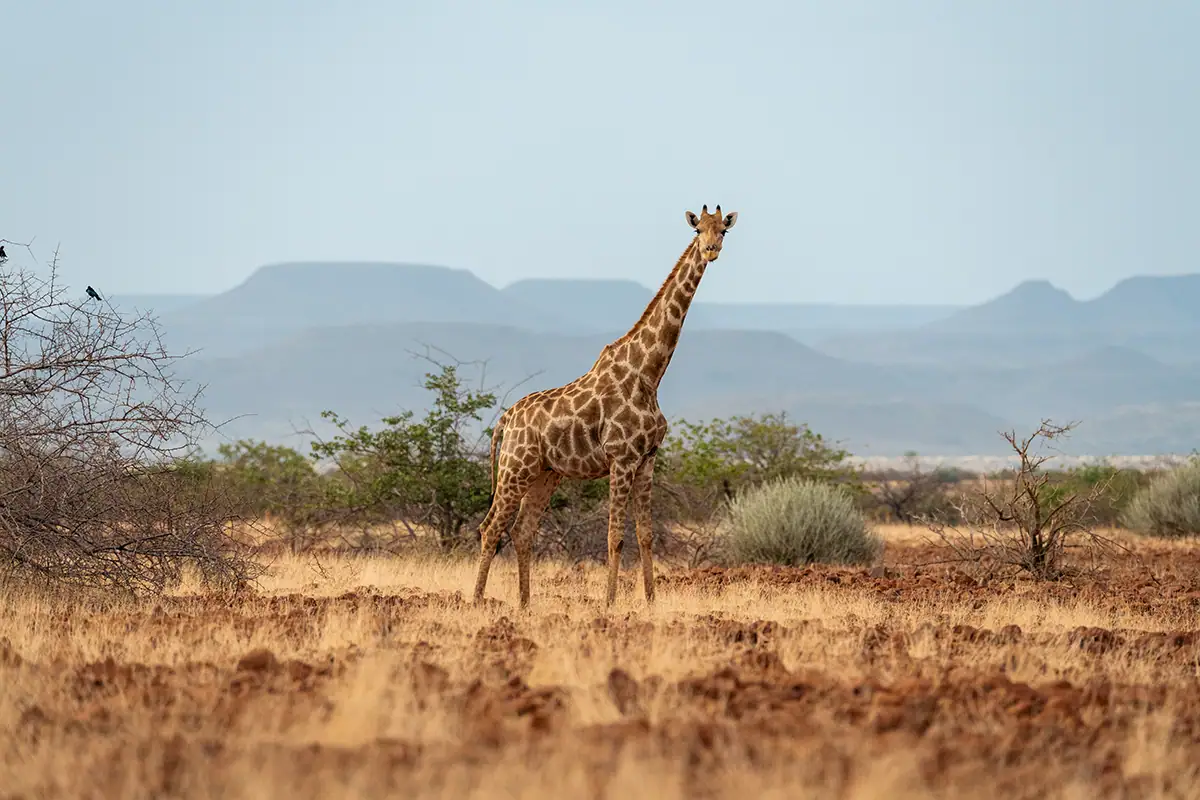
This photo was taken the first time we saw giraffes in Namibia, which made it a special moment. We were heading toward our campsite in the rugged, mountainous region known as Damaraland, just a little before sunset, when we spotted two giraffes on the side of the road, which they ended up crossing. We stopped to observe them, and they noticed us as well, a bit curious and staring in our direction.
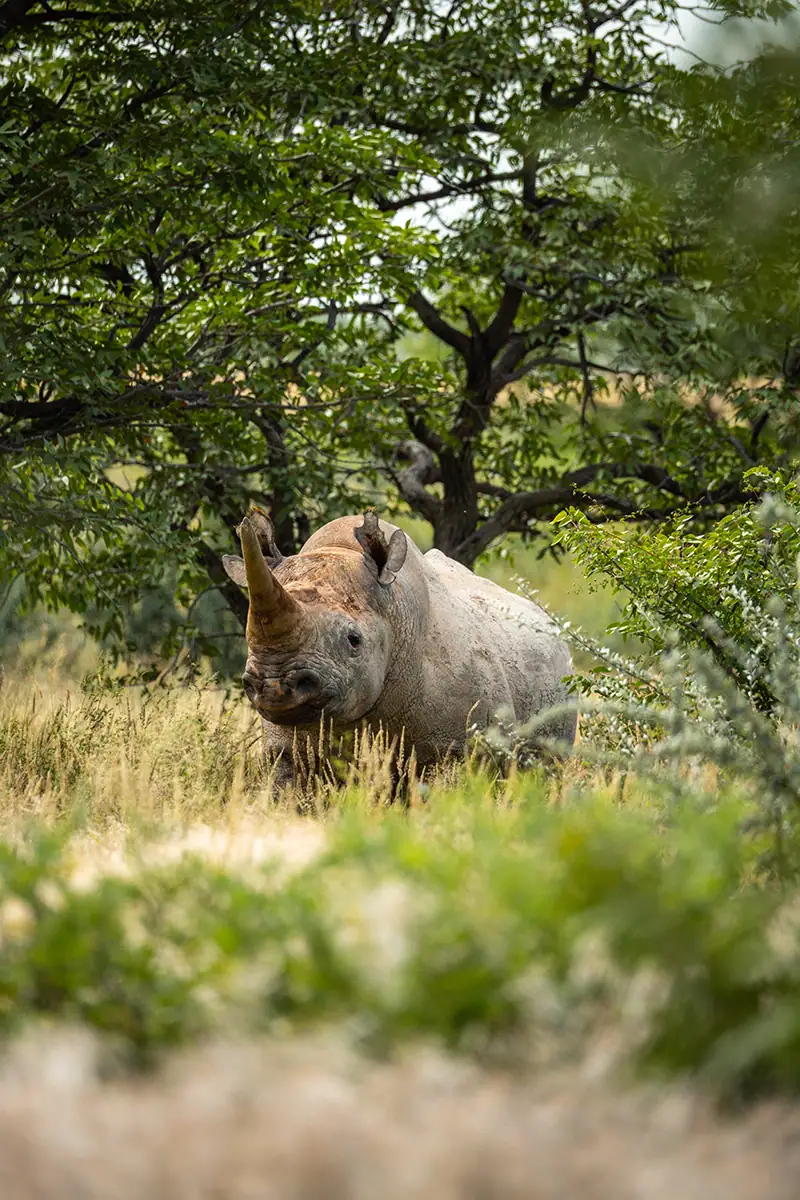
The rhinoceros photo was a unique but brief moment. We were driving along the road when we noticed a gray shape in the bush, so we reversed to see what it was. That’s when we realized it was a rhino. We actually made eye contact with it, which was really amazing. I had just enough time to take a few photos of it while it was still partially hidden in the trees. After only a few shots, it started moving and walking deeper into the savanna, until we eventually lost sight of it. We were very lucky to have seen it in the first place.
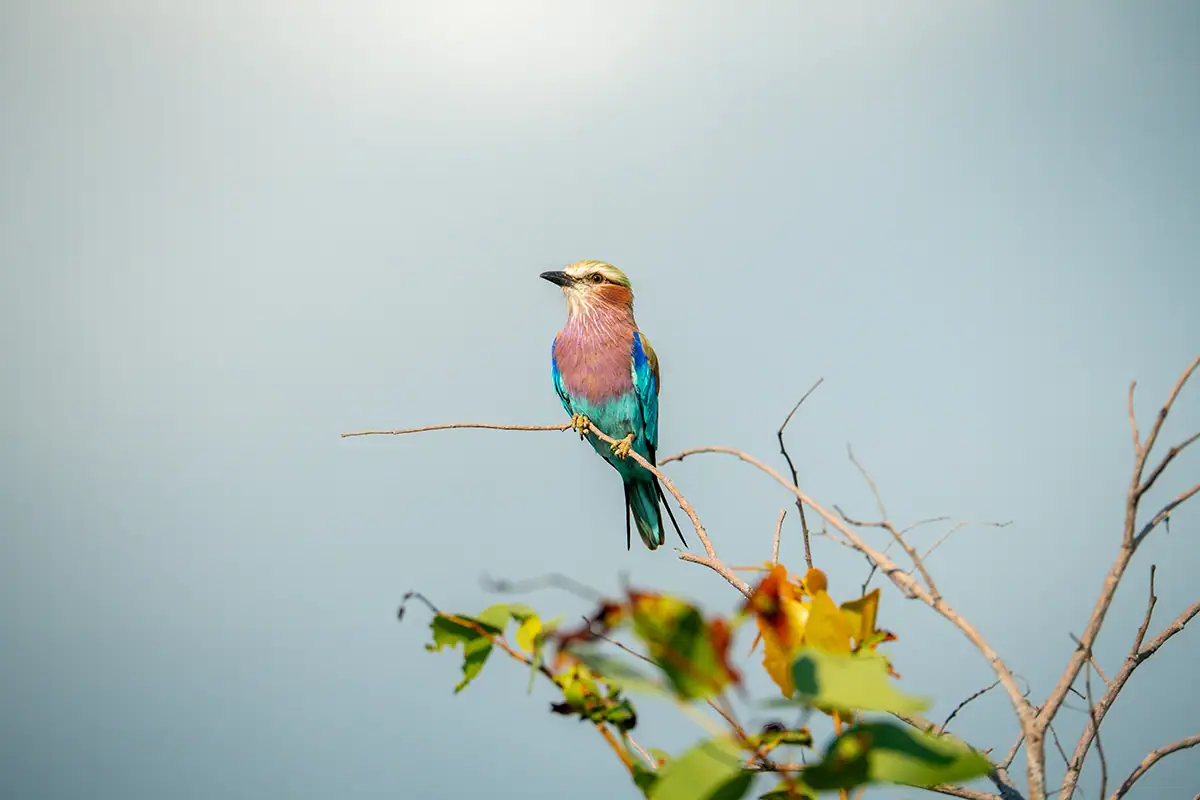
I’d come across a few lilac-breasted rollers before, but I never got close enough to get a proper shot. On this particular morning, however, I spotted one on the side of the road. The bird was only a few meters away from me, and I had a nice foreground with some leaves to set it against, along with the soft morning light, which really brought out the bird’s colors.
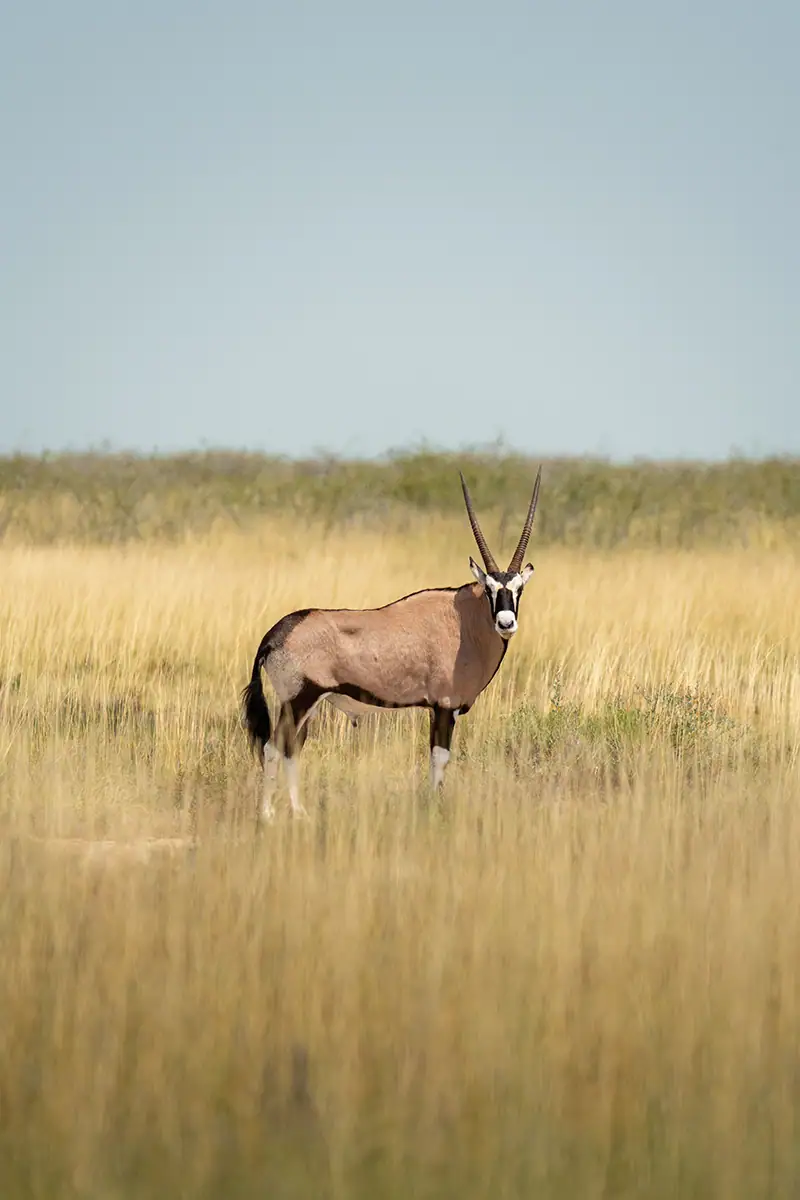
I took this shot of the oryx, a type of antelope, in midday, right in the middle of the savanna. The yellow grass with the animal in the center helped my subject stand out. When I positioned myself for the shot, I waited for the oryx to turn its face toward me, and that’s the moment I took the photo I’d been visualizing. I’d wanted to capture an image of it looking at me, so I could clearly show its horns.
To see more of Samuel Angers’ work, check out his Instagram.