 Instant Savings
 Rebate Claims
 Support
 Find a Dealer
Exploring the Macroverse
Fast autofocus, a super-close working distance, and gorgeous bokeh make the Tamron 90mm F2.8 lens essential to Claudio Briones’ insect photography.
Author: Jenn Gidman
Images: Claudio Briones
Share Article
Fast autofocus, a super-close working distance, and gorgeous bokeh make the Tamron 90mm F2.8 lens essential to Claudio Briones’ insect photography.
Photography has been part of my life since I was a young child. My uncle was a social-event photographer, and he’d sometimes let me play around with his camera. Later, while studying graphic design, I took an analog photography course that immediately drew me in. What started as something I enjoyed as a hobby gradually became my full-time career.
Macro photography always caught my attention, but for a long time I didn’t have a macro lens, so I used close-up filters instead. Those filters weren’t the best for what I wanted to achieve, but I did what I could with them. Eventually, I had the chance to try out an older-generation Tamron lens, and that’s when I was really able to practice, learn more, and explore this type of photography.
I appreciate this genre because it changes the way you take pictures. It makes you more observant and spurs you to pay closer attention to small details so you can discover micro worlds full of subjects to explore.
Macro photography also helps me capture details that might otherwise go unnoticed. There are a large number of insects about which we know very little, either because we don’t pay attention to them or because in large cities, there tend to be fewer species and less variety. I like that my photographs awaken people’s curiosity so they can see and enjoy these small animals in a different way.
I especially enjoy photographing bees—they fascinate me, especially their process of collecting honey and pollen. Bees are attracted by the color, scent, and nectar of flowers, and thanks to this, you can take photos in different types of flowers and even use the shape and color of the flower to compose your image.
One of my favorite lenses for this type of photography, which I used for the images shown here, is the Tamron 90mm F/2.8 Di III VXD M1:1 mid-telephoto macro lens. This lens has gone through several generations, and now, designed for today’s mirrorless camera technology, it offers exceptional performance. One highlight is its incredibly fast autofocus, which is essential when photographing insects, especially those that move quickly.
The Tamron 90mm F2.8 macro lens includes a focus limiter switch so that the lens only searches within the range of your subject, making it much easier to capture the shot. This lens is also compatible with Tamron’s Lens Utility software and app, which allows you to customize the button functions according to your needs and update the lens whenever new firmware becomes available for ongoing improvements.
Another standout feature is the 90mm F2.8’s minimum object distance (MOD), which allows you to get extremely close to the insects you’re photographing. For the photo shown here of a bee collecting nectar on a wildflower, the MOD of the Tamron lens helped immensely, because I was able to get very close and achieve strong background blur to isolate the scene. The bokeh produced by this lens is truly beautiful, leading your close-up subjects to stand out cleanly from the background.

I was also able to test out the MOD during my visit to a small town in Mexico, where I was surprised to find a beehive inside of an old water heater. The Tamron 90mm F2.8 allowed me to get super close through the heater opening and photograph them with no issues.

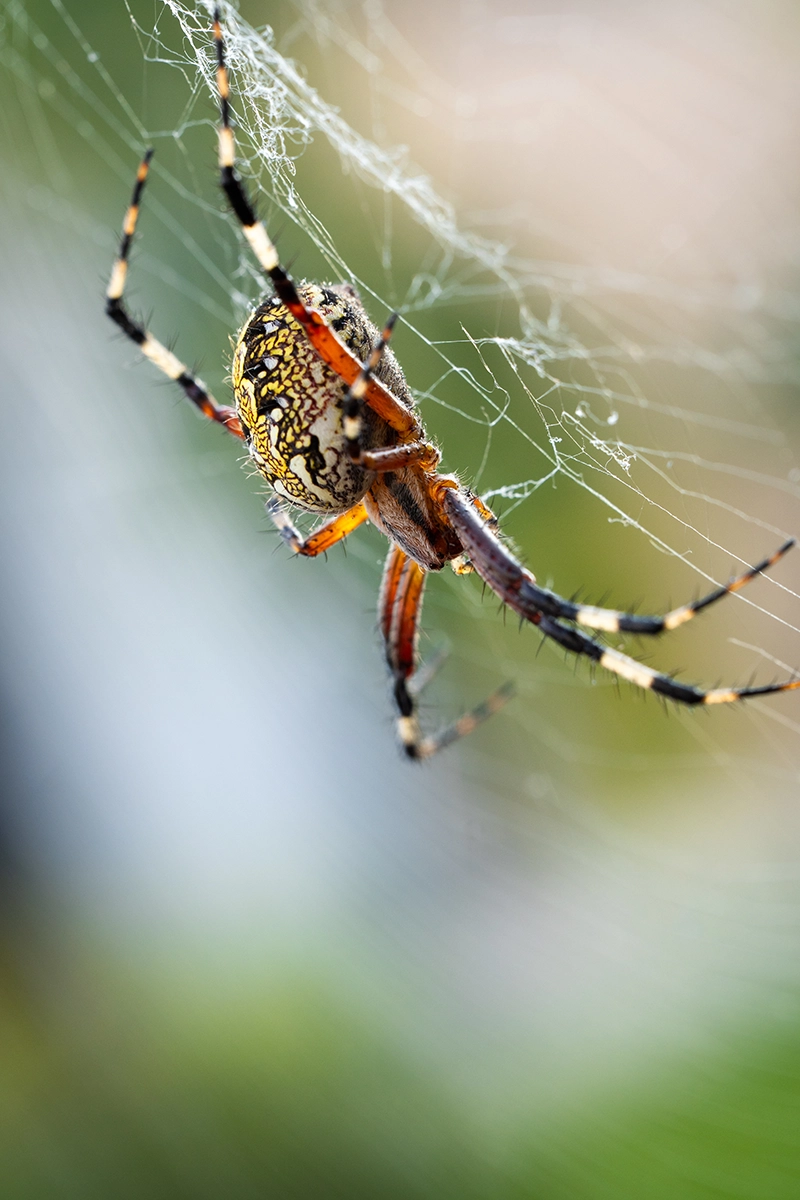
Usually when I know I’m going to set out to do some macro photography, I’ll find an insect that catches my attention, then focus on its details and start searching for a decent composition. I also pay attention to the colors of the insect and its surroundings. Sometimes with insects like bees, you can look for an interesting frame and then wait for your subject to arrive—patience will always reward you with great photos. This garden orb weaver had spun its web between some trees in a garden. Since it didn’t seem afraid of me, it allowed me to take several shots until I found a composition that contrasted nicely with the plants in the background.
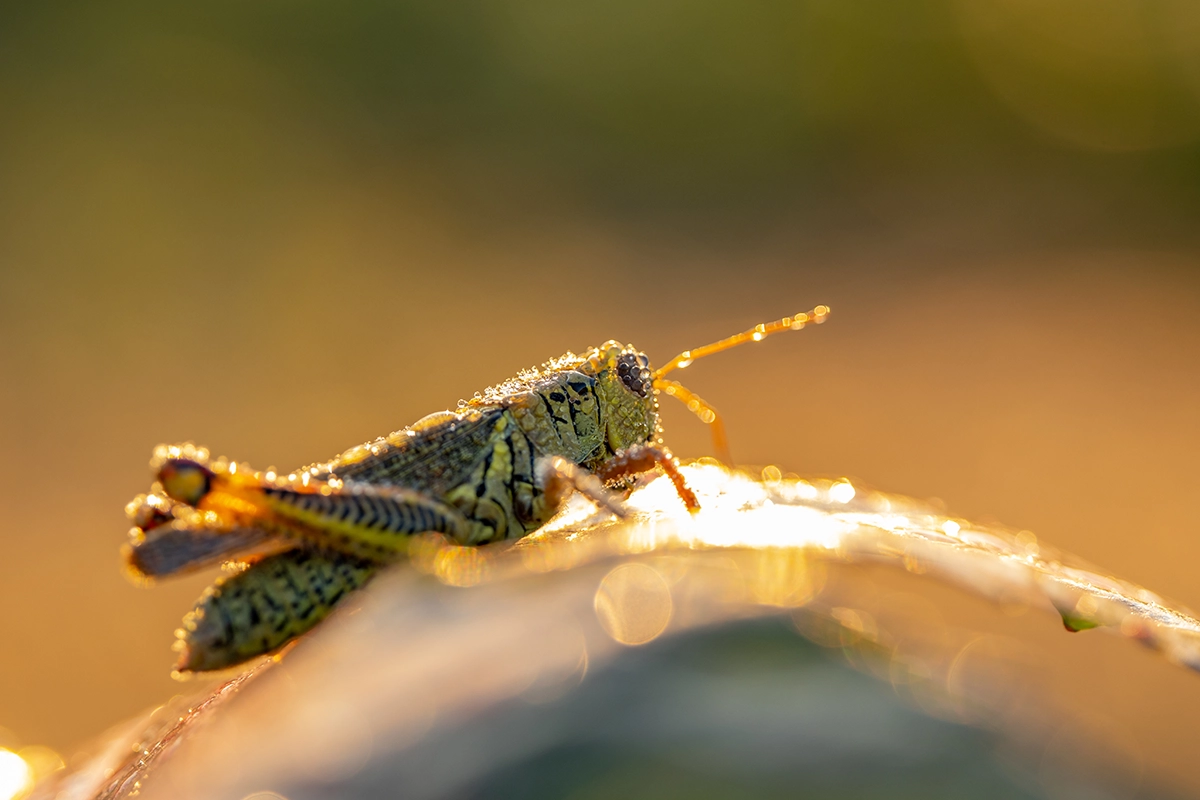
For most of my photographs, I use all-natural light. I like cloudy days the most because they act as a large light diffuser without generating harsh shadows. One morning at sunrise, I found this grasshopper standing out from the rest, with its body covered in small dew droplets that sparkled with the first rays of sunlight. At some point, I’d like to use flashes and special diffusers for macro photography to capture bees in flight.
My biggest challenge with up-close photography like this is often focusing, but the Tamron 90mm F2.8 lens helps me out immensely with that, thanks to its very fast and accurate focusing system. This allows me to concentrate more on simply framing and capturing the moment.
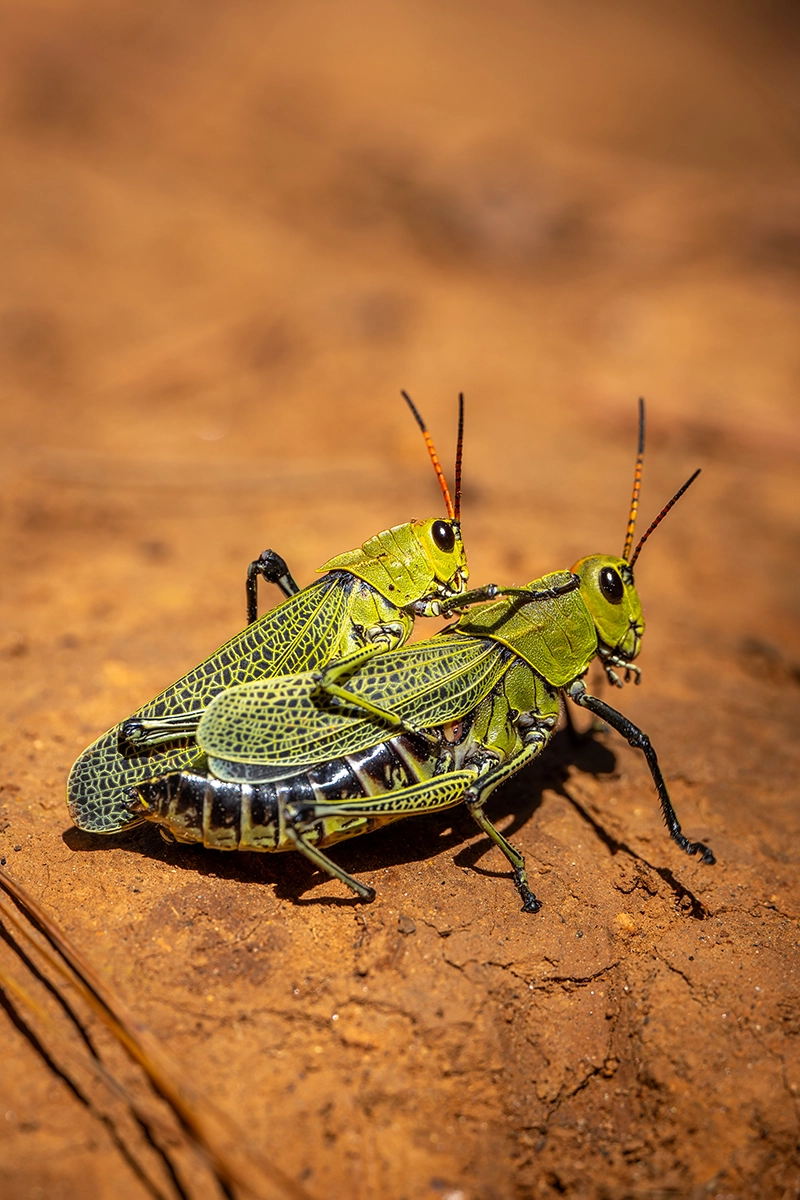
Another important thing to remember when doing photography like this is to know a bit about the insects or animals you’re photographing. If you know their characteristics and behavior, it helps you know when they’re most active, where you’re most likely to find them, and what seasons are best for insect photography. For example, if you’re aware of key stages in their life, such as mating season or when migration takes place, you’ll be able to capture even more of these special moments.
 English
  Spanish
  French
  Portuguese