Instant Savings
 Rebate Claims
 Support
 Find a Dealer
Ultra-Wide Southwest
Dion VanBoekel’s Tamron 16-30mm F2.8 G2 lens helps him create story-driven landscape images in awe-inspiring Arizona and Utah.
Author: Jenn Gidman
Images: Dion VanBoekel
Share Article
Dion VanBoekel’s Tamron 16-30mm F2.8 G2 lens helps him create story-driven landscape images in awe-inspiring Arizona and Utah.
When Dion VanBoekel was in his early teens, annual trips to visit an aunt in Southern California proved to be the inspiration for his eventual photographic passion. “I gradually became more interested in photography by seeing her incredible work,” he says. “When I started college, I bought a DSLR and spent my free time convincing friends to let me take portraits of them around West Michigan. I focused on portrait photography for a few years before moving to Boston, where I began branching out into cityscapes and eventually exploring the White Mountains for some landscape work.”
Four years ago, Dion took his first dedicated landscape photography trip across the US to Hanksville, Utah, and he’s been hooked ever since. “My style is story-driven, even within a single location,” he says. “Instead of focusing solely on the ‘hero shot,’ I try to capture a fuller narrative around it. The goal is to give viewers a stronger sense of what it actually felt like to be there, not just what it looked like.”
Dion recently embarked on a three-week road trip out West, driving 24 hours from Michigan to hit Utah, then Arizona. “My goal was to explore new locations, while also revisiting a few places I’d been before,” he says. “It also didn’t hurt to trade Michigan weather for the desert for a few weeks.”
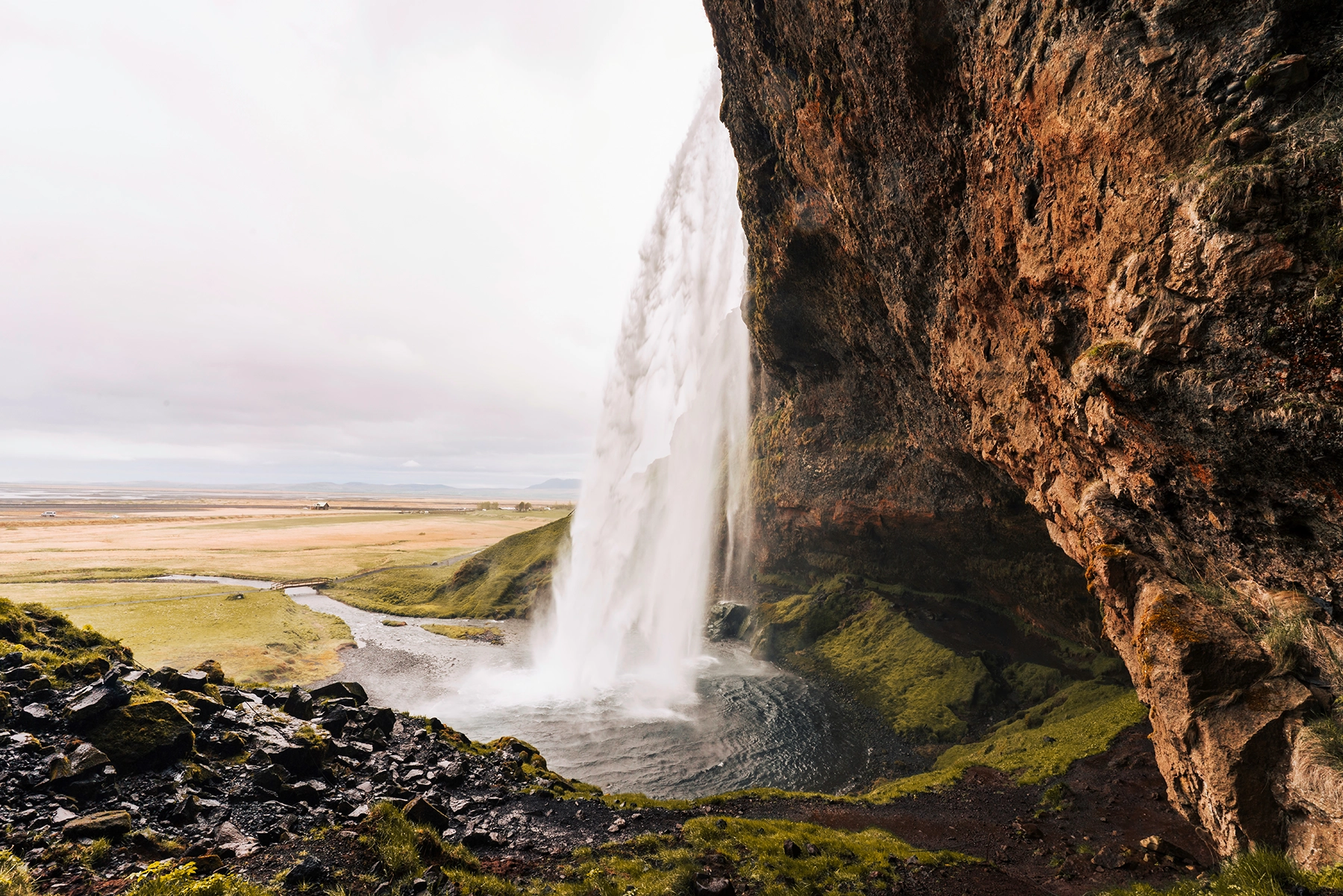
Accompanying him on his cross-country adventure was the Tamron 16-30mm F/2.8 Di III VXD G2 ultra-wide-angle lens for his Nikon mirrorless camera. “I needed a wider-angle lens for more expansive scenes, and the 16-30mm F2.8 G2 fit the bill,” he says. “Shooting at 30mm gives me just enough compression when I want to include a person in the scene for photo or video, while being able to get all the way down to 16mm lets me capture an entire landscape in a single frame.”
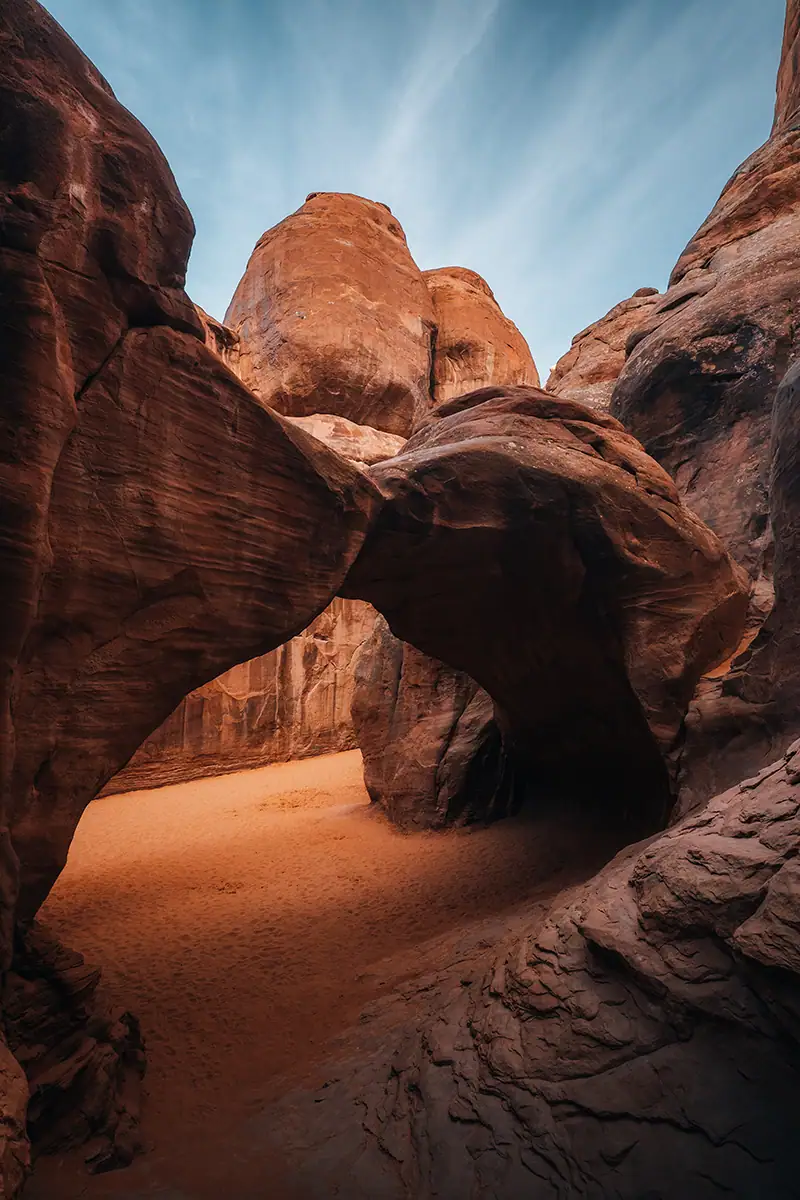
For the photo shown here with the orange-tinged sand, Dion and his friends had to use a 4WD vehicle with high clearance to navigate some rock crawling and deep sand. “My friends and I made the off-road journey to the trailhead and hiked up what felt like a never-ending rocky slope,” he says. “At the top was a carved-out section of rock with bright orange sand inside. Without the 16mm, I couldn’t have captured the entire scene in one shot.”
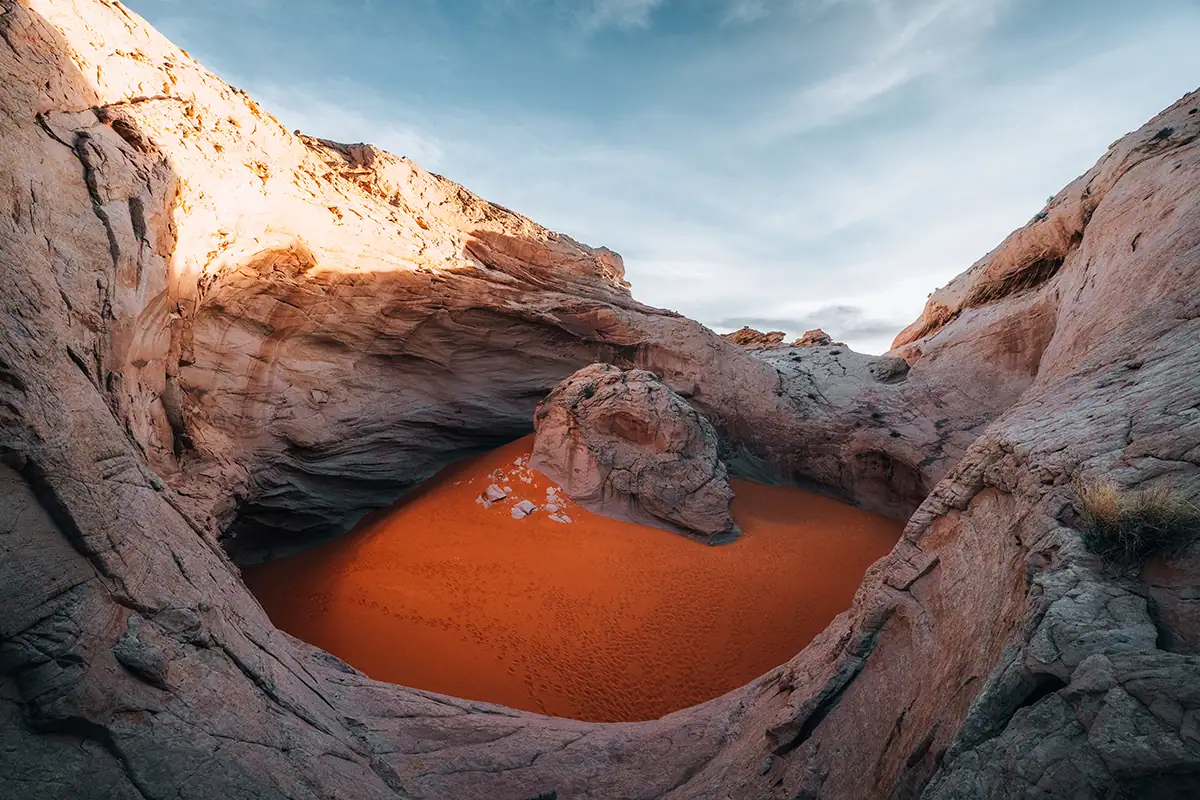
Beyond the 16-30mm F2.8 G2’s versatile focal range, its compact size and light weight (less than 16 ounces) are also a huge advantage for Dion. “It’s compact enough that I can toss it in my bag without a second thought,” he says. “The constant F2.8 aperture is also great for low-light conditions, and the overall sharpness makes it reliable in just about any situation.”
For Dion, the appeal of his work lies in both the journey and the story behind each shot. “Some locations are easy—you can drive right up and take the photo—but the ones that stand out are the ones with experiences behind them,” he notes. “It’s the early mornings, like waking up at 2 a.m., driving to the trailhead with friends who are just as exhausted as you are but still fully committed, and hiking into the mountains, hoping for a great sunrise. The uncertainty of what we’re going to find is part of what makes it so rewarding.”
DION’S QUICK LANDSCAPE PHOTOGRAPHY TIPS
Let the light guide you.
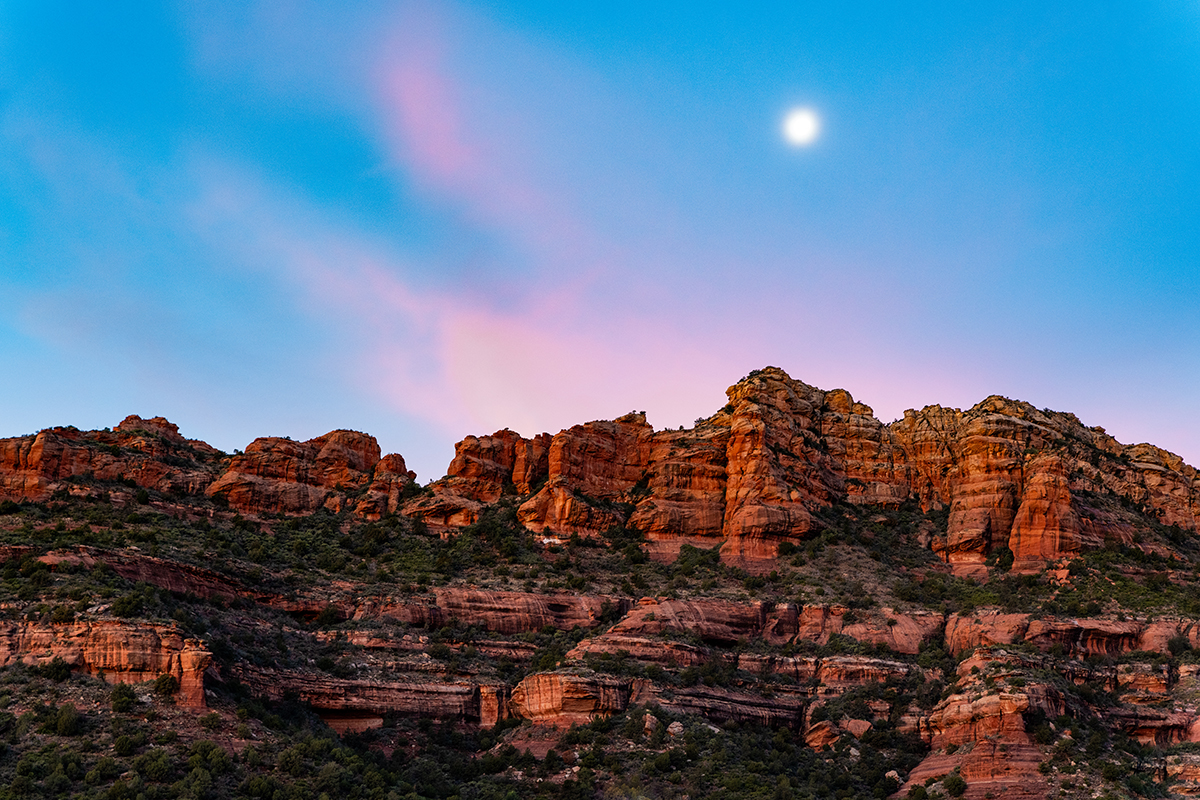
About 99% of my photography happens at sunrise, sunset, or during the blue hour on either end. Sunrise is probably my favorite, though. Everything feels more peaceful—there are fewer people around, and the light tends to be softer and a bit more “dreamy.” With the tones I use in my editing, blue hour is also a perfect window. It gives me extra time to capture landscapes with cooler tones and more even, balanced lighting.
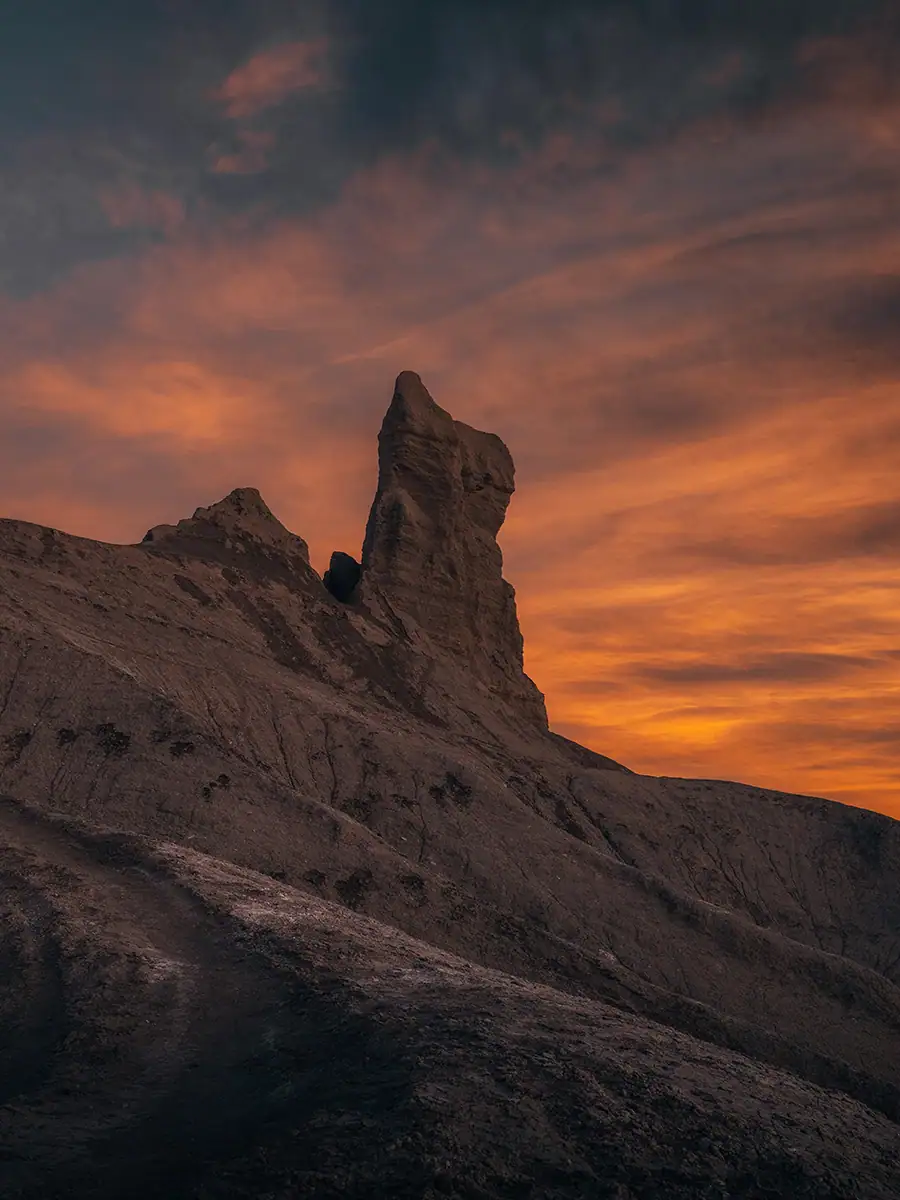
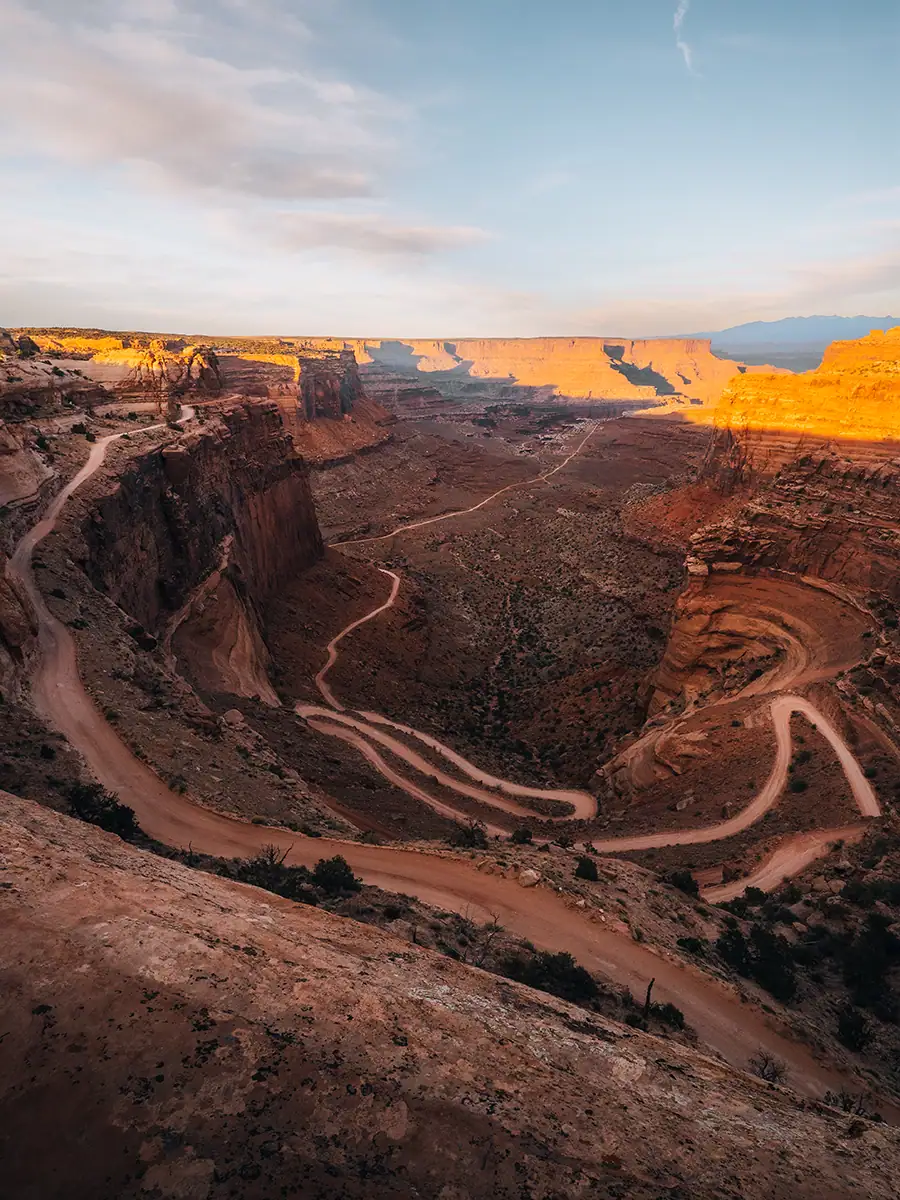
For the photo you see here of the spire in Southern Utah, however, we waited for sunset. While I captured video on my other camera, I had the 16-30mm F2.8 G2 on my photo camera set up on a tripod to shoot the spire as the sky changed colors. Meanwhile, for my photo taken in Canyonlands National Park, showing all of the winding roads below, choosing between sunrise and sunset was tough, but I opted for sunset again, preferring the glow across the canyon walls while the deeper areas took on rich, darker-orange hues.
Keep a constant lookout.
For me, there are two sides to capturing attention-grabbing scenes. On the one hand, I’ll often head to a location with a specific shot in mind. Once I get that photo, I’ll let my eye wander and look for additional compositions that help tell a more complete story of the scene. On the other hand, if I’m heading out without a set composition in mind, I’ll focus on building a visual narrative through smaller details, like textures, light, mountain peaks, and subtle moments. Those types of shoots often turn into “stacked” posts, where I’ll combine multiple frames to create a more cohesive, immersive story.
Frame intentionally.
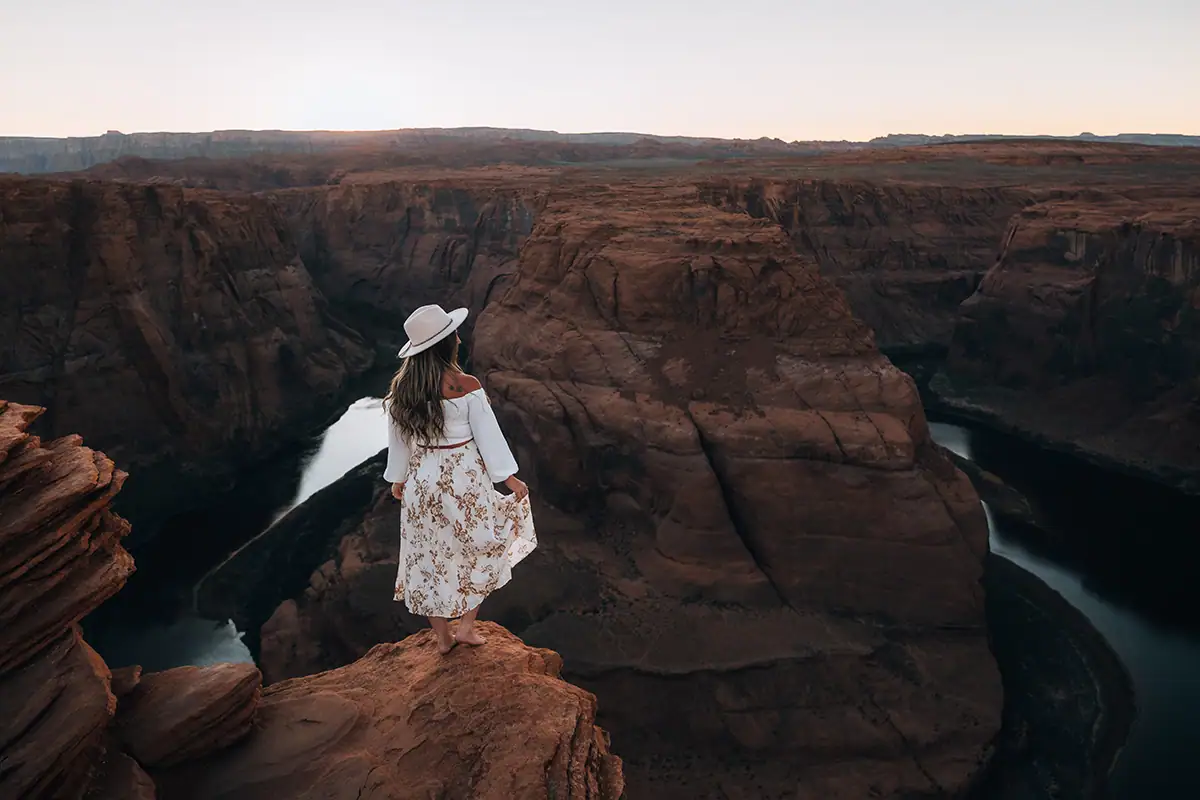
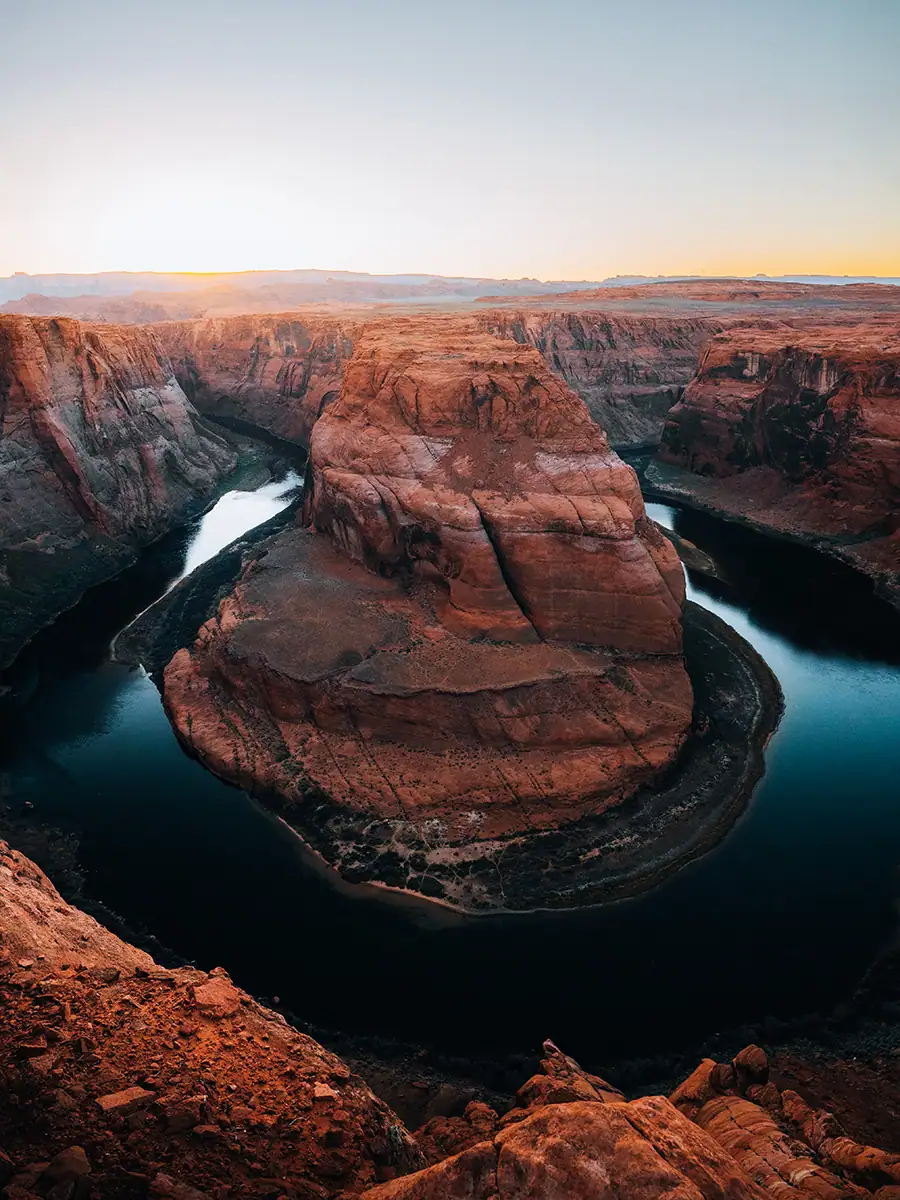
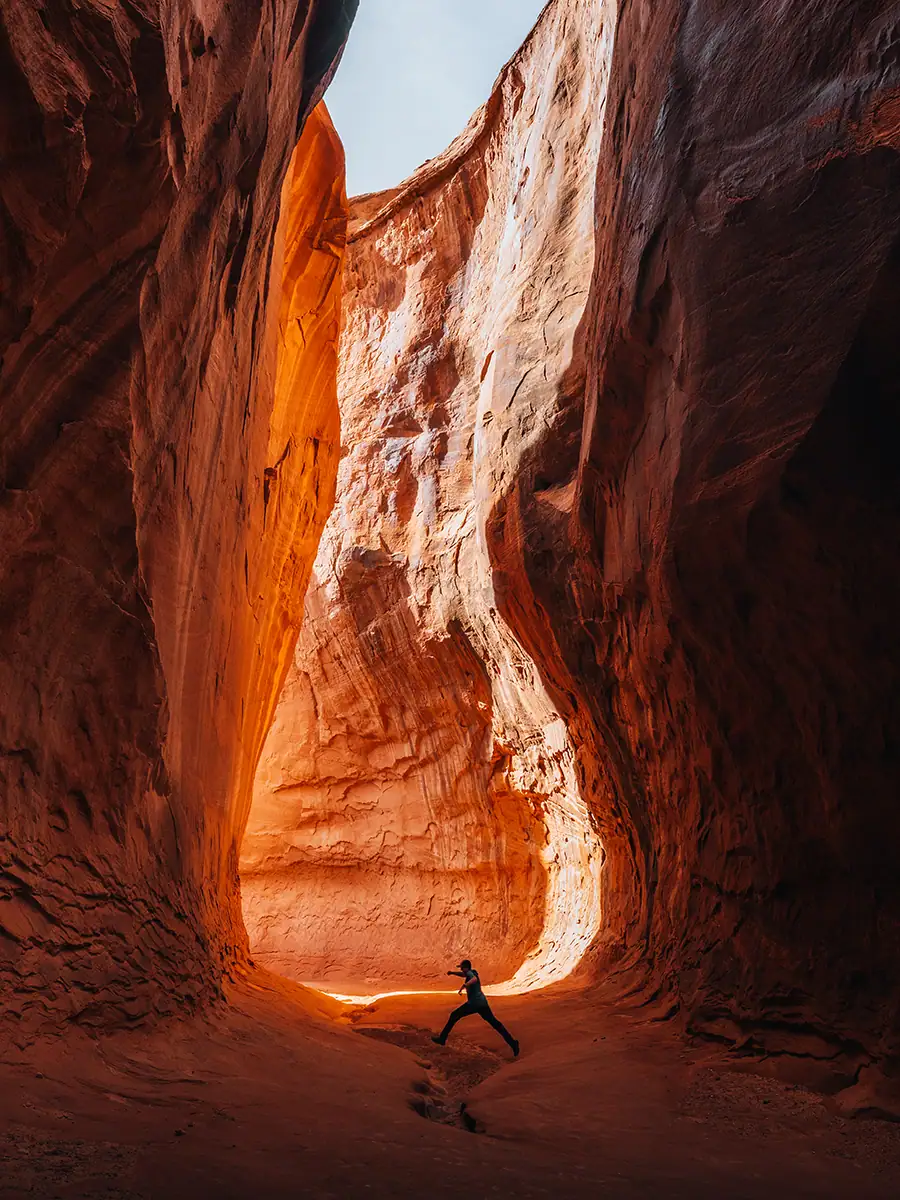
It’s one of the simplest ways to make a vast landscape more interesting. Rather than just standing in one spot and taking the photo, I’m always looking around for elements like brush, trees, rocks—anything that can add depth and create a strong foreground. If I’m with someone, incorporating them into the frame can also make a huge difference. You can see that in my photo of a slot canyon in southern Utah with that beautiful hourglass shape, and of the woman on the cliff in Horseshoe Bend, Arizona. It adds a sense of scale and gives the viewer a better feel for the size and impact of the landscape.
Know that conditions won’t always be perfect.
It’s tough when you travel somewhere you’ve never been, see an incredible landscape for the first time, and the conditions just don’t cooperate. Enjoy the moment regardless. That’s been one of the most important things I’ve learned as I’ve grown as a landscape photographer.
To see more of Dion VanBoekel’s work, check out his website and Instagram.