 Instant Savings
 Rebate Claims
 Support
 Find a Dealer
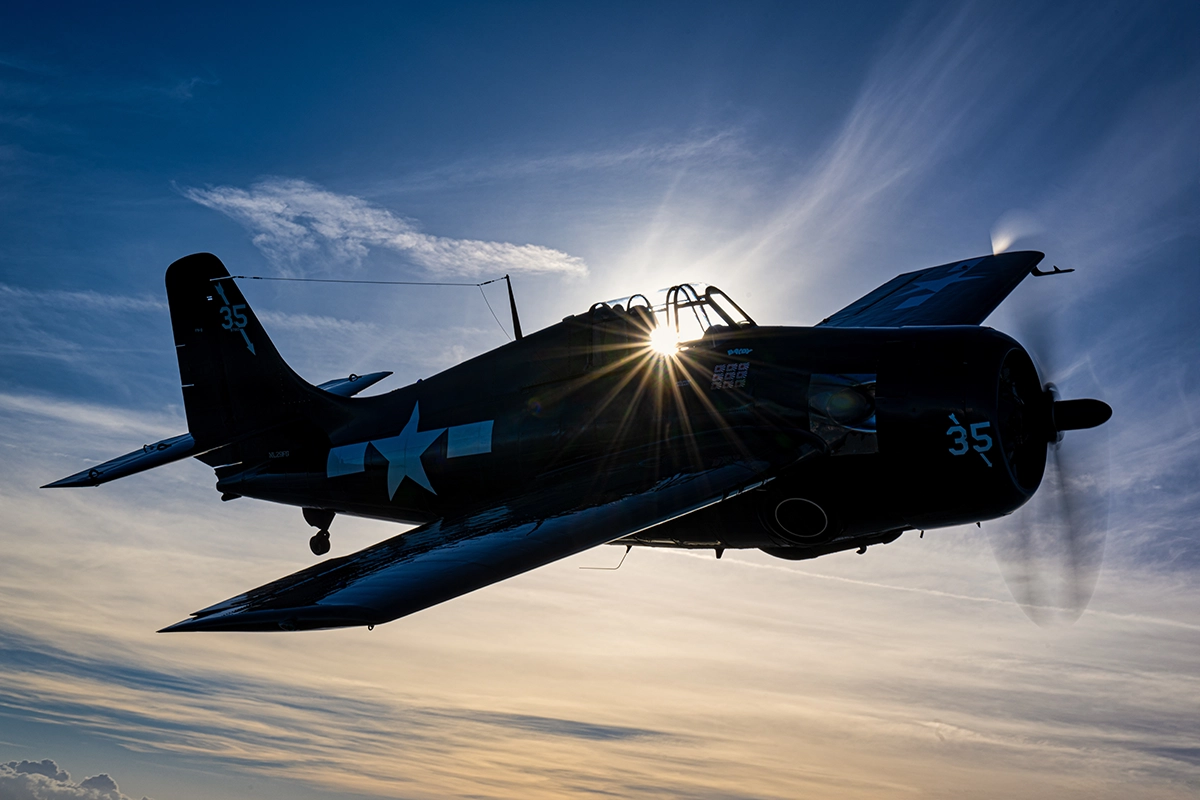
Maneuvers at Mach Speed
With the compact power of the Tamron 35-150mm F2-2.8 lens, Jose Ramos takes his open-cockpit aerial photos to new heights.
Author: Jenn Gidman
Images: Jose Ramos
Share Article
With the compact power of the Tamron 35-150mm F2-2.8 lens, Jose Ramos takes his open-cockpit aerial photos to new heights.
Jose Ramos has been captivated by the thrill of flight since childhood. An ‘80s kid inspired by Top Gun, he dreamed of getting close to fighter jets—a fascination that eventually led him into his niche of aviation photography, where he combines his airborne passion with the technical mastery required to capture high-speed maneuvers, intimate pilot portraits, and awe-inspiring aircraft in carefully choreographed formations.
Nearly four decades after he first witnessed Maverick, Goose, and the gang “turning and burning” through the skies in their F-14A Tomcats, Jose now documents that adrenaline rush from the up-close vantage point of the cockpit that he dreamed of. “It’s a very dynamic and noisy environment when you’re up there,” he says. “In warbirds, you’ve got nine cylinders in front of you firing and reverberating throughout the aircraft as wind whips around you while you’re trying to compose the shot. In jets, you’re strapped into an ejection seat, shooting through scratched plexiglass, as the g-forces try to crush you.”
Jose has recently begun to weave Tamron lenses into his aviation workflow, which began at Florida’s Sun ’n Fun Aerospace Expo in April, where Tamron is a sponsor. Shooting an event like Sun ’n Fun requires a lens that can adapt instantly—and for Jose, the Tamron 35–150mm F/2-2.8 Di III VXD hit the sweet spot. This superfast, supersharp, versatile all-in-one-zoom is wide enough for environmental shots and static displays, yet long enough to isolate aircraft in flight without constantly swapping lenses.
“Not only is the 35-150mm F2-2.8 the ideal portrait lens for photographing pilots,” Jose says. “Shooting air-to-air in the open cockpit of a T-6, this lens has a ruggedness to it, which is really important when taking pictures in this kind of extreme environment. I captured so many more keepers with this lens, in this environment, than I had with other options.”

JOSE’S QUICK AERIAL PHOTO TIPS
Prep for the skies
Briefing with the pilots is critical. You can’t just hop in an airplane, saddle up next to a random airplane, and start shooting—you have to plan every move in advance. “I sit down with my pilot and the subject pilot or pilots to discuss exactly what I want to achieve,” Jose explains. “Meaning the kind of shots I’m aiming for and how I envision the planes maneuvering. I’ll often put together kneeboard cards—diagrams showing the desired formations and a shot list, so everyone has a clear visual reference of where they’re supposed to be during any setup and how the event will flow.”
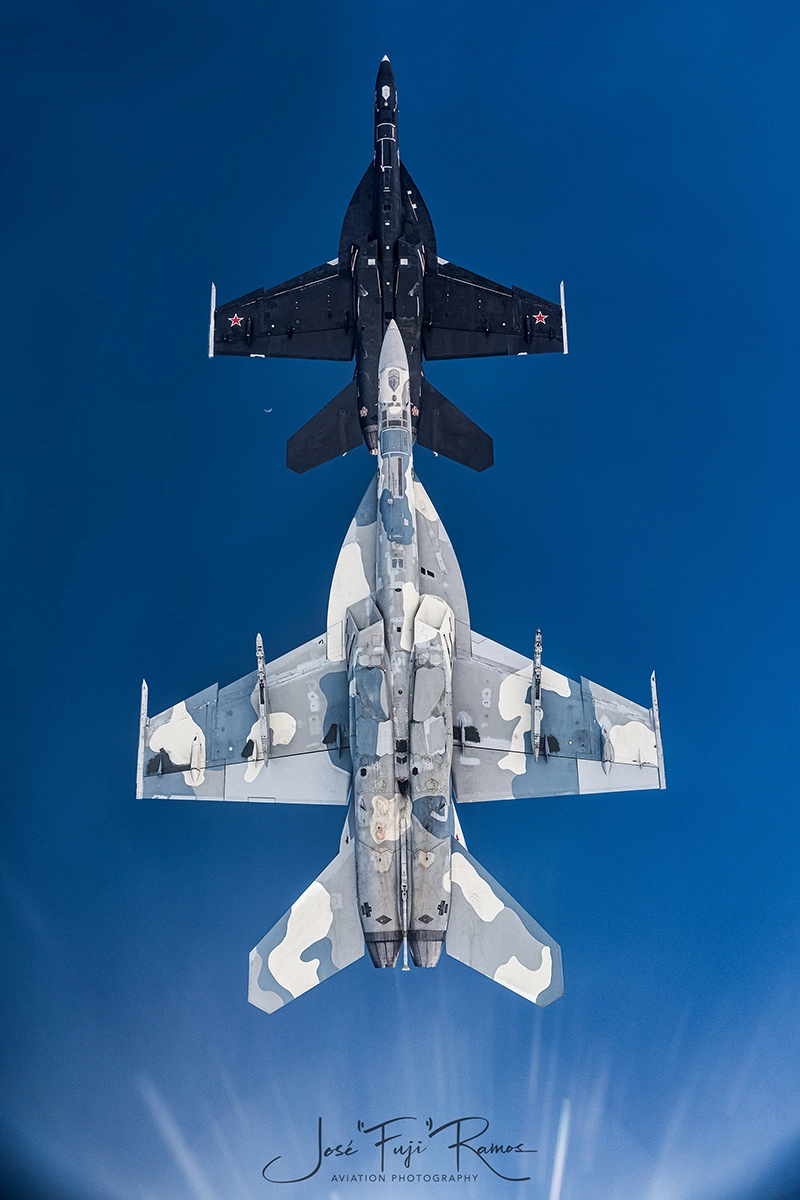
Setting up for success.
When I’m shooting propeller-driven airplanes in an open cockpit, I usually stick to Shutter Priority mode so I can select the exact shutter speed I need. I typically like to use slower shutter speeds to achieve a nice prop blur; you don’t want to freeze a propeller’s motion completely. For jets, I’ll switch to Aperture Priority mode and open the aperture wide to let in as much light as possible. This gives me the fastest shutter speed, which is crucial when the aircraft are moving at hundreds of miles per hour. Lately, I’ve been letting the camera adjust the ISO automatically.
Keep it steady.
Shooting in an open cockpit is a challenge, because you’re constantly getting shaken by the wind and aircraft vibration. And while in most other situations it makes sense to brace your arms against something near you to help yourself stabilize, it’s hard to do that in this case. If you brace against any part of the plane, you’re going to actually introduce more vibration into your shooting.
The key for me is to lock in my three points of contact as much as possible: pressing my face against the viewfinder, gripping the camera firmly with my hands, and using my shoulders and arms to act as a smoothly pivoting gimbal of sorts to absorb as much of the vibration as possible. I also used the sturdiness of the Tamron 35-150mm F2-2.8 to my advantage. It’s solid in my hands, and that’s the type of lens you want in this environment—not one that can get jostled around too easily.
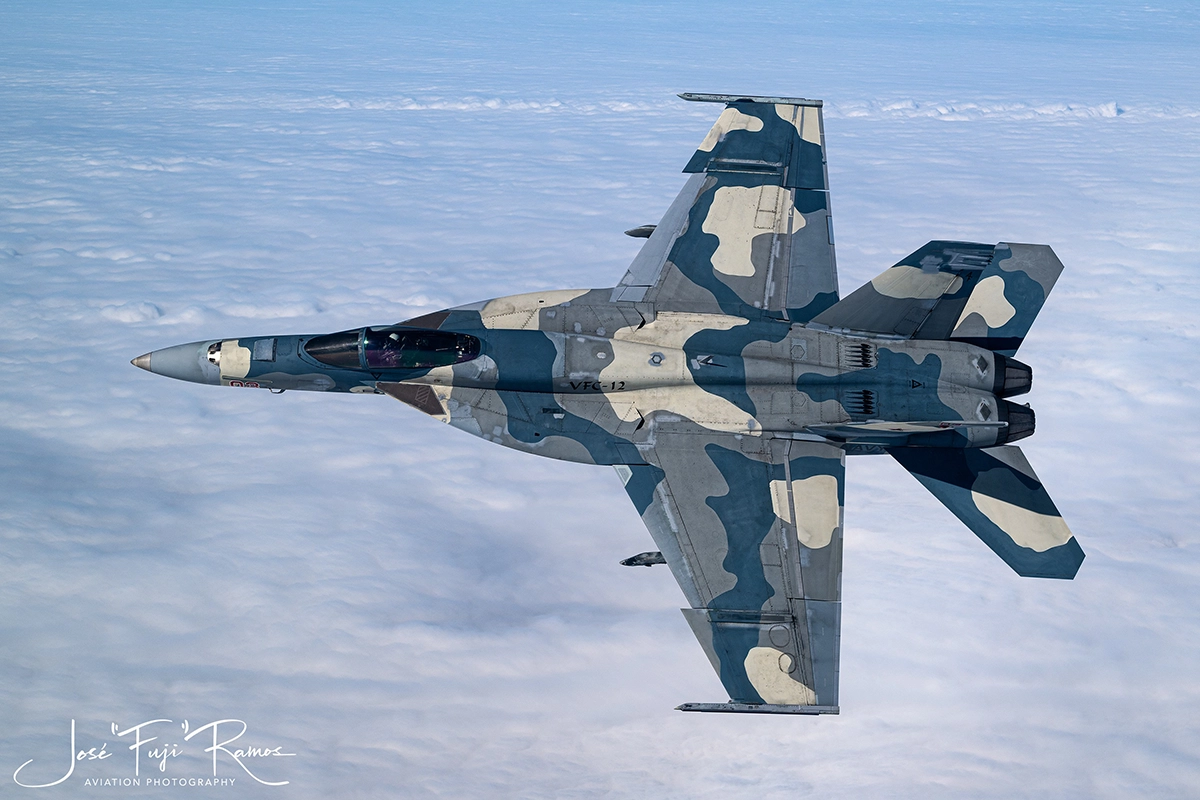
Line ‘em up.
Capturing precise formations in flight is all about anticipation, rapid shooting, and constant tweaking. I’m often firing off frames like a machine gun, continually adjusting my camera to keep what I want to see in my viewfinder as the aircraft maneuvers. Meanwhile, the entire time I’m in contact with my pilot, asking him or her to adjust our position so I’ll have the perspectives I want—all while trying to avoid “trading paint.” It’s pretty intense. I’ve luckily never gotten sick!
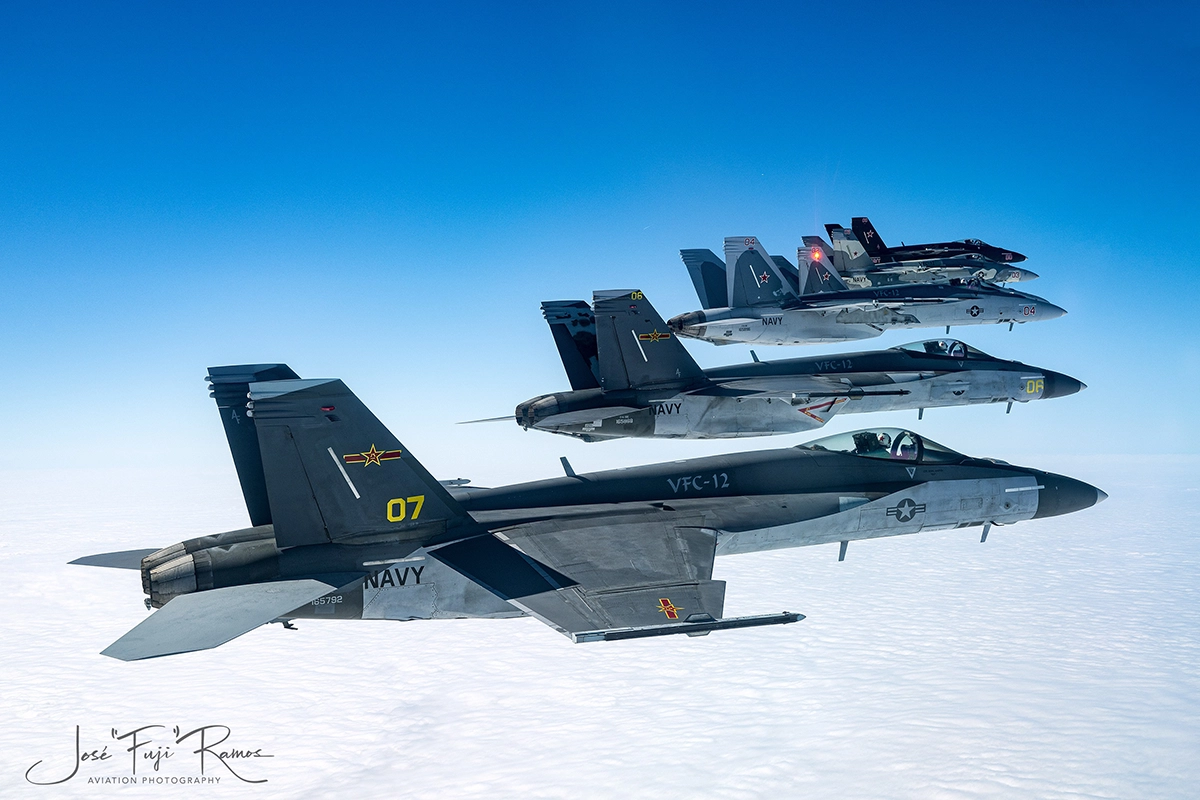
To see more of Jose Ramos’ work, check out his Instagram.
 English
  Spanish
  French
  Portuguese