Instant Savings
 Rebate Claims
 Support
 Find a Dealer
Hi. I’m Ken Hubbard and in this review, I’m looking at the fast, ultra-lightweight Tamron 16-50mm F2.8 A lens and how it performed for visual storytelling and documentary photography on a road trip from South Hero, Vermont, to Bethlehem, Easton, Strasburg, and Lancaster County, Pennsylvania.
My portrait and landscape photography has been exhibited in galleries nationwide, and I teach photography enthusiasts how to improve their skills at workshops across the country. I’m also the Field Services Manager for Tamron, where I oversee Tamron’s popular consumer workshop series. See my work on Instagram.
Designed for APS-C mirrorless cameras, this wide-angle-to-standard zoom delivers a full-frame equivalent of approximately 24-75mm on Sony E-mount. That range is especially useful for visual storytelling, where you may need to capture the entire setting, create a natural mid-range composition, and then move in for the smaller details that give the story meaning. A standard zoom lens provides exactly that kind of flexibility.
At 16mm, I could establish the scale of the Bethlehem Steel Stacks in a single frame and set the scene. At 50mm, I could move in and pick out the textures of the rusting industrial structures—the smaller details that help tell the story of what these places once were.
The constant F2.8 aperture gave me room to work across a wide range of conditions, from dim interiors to scenes where I wanted shallow depth of field to isolate a subject and direct the viewer’s eye. The lens’s close-focusing capability also let me get in tight on small details that add depth to a visual narrative.
With subjects ranging from rural landscapes and farmers markets to industrial relics and railroad history, I needed to move quickly from wide establishing shots to intimate details without missing a moment. This lens let me do that without stopping to swap gear.
Building a Complete Visual Story from Wide Scenes to Fine Details
A strong visual story needs variety. Wide establishing images tell viewers where they are, tighter compositions draw attention to important elements, and detail photographs reveal textures and clues that might otherwise go unnoticed. The 16-50mm range gave me all three perspectives without changing lenses.
Start Wide to Establish Place and Scale
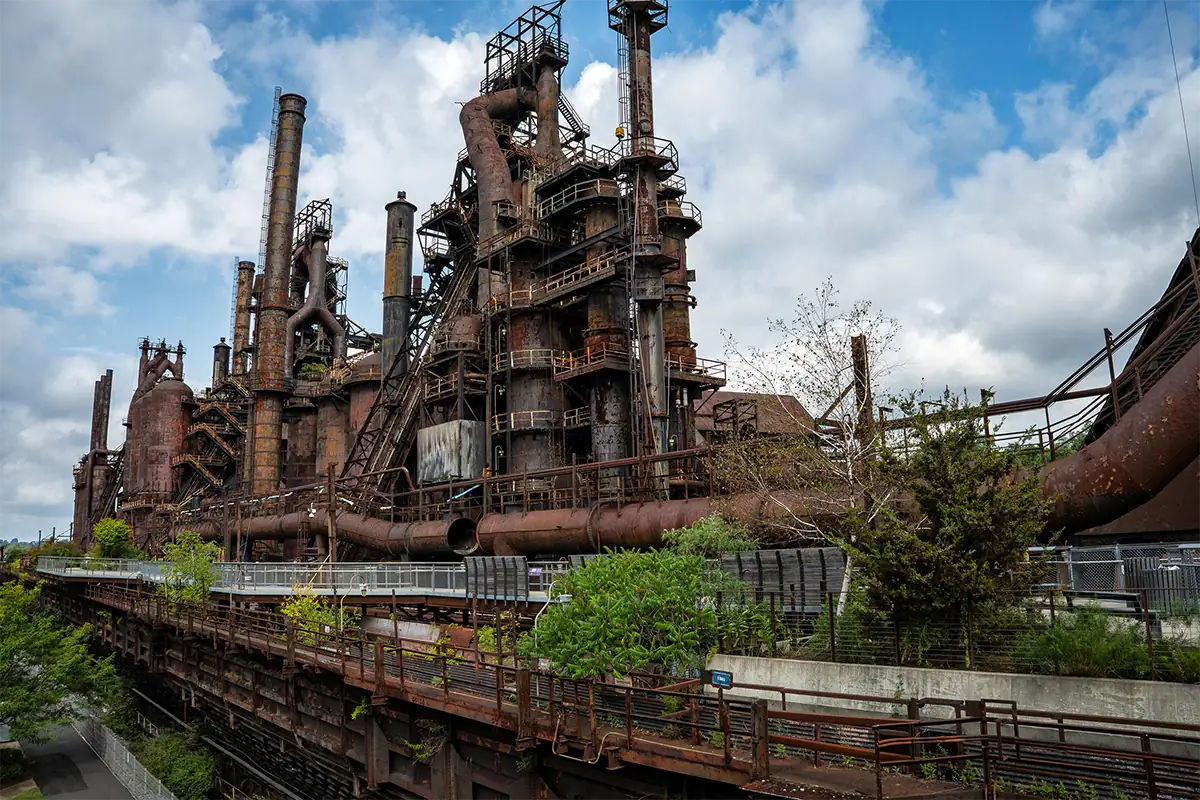
I shot this image at 16mm to show the complete environment of the SteelStacks complex in Bethlehem, Pennsylvania. The tubing and rails entering from the right create a leading line that draws the eye toward the giant rusting structure. The lens controls distortion remarkably well for such a compact design, allowing me to shoot this wide with confidence.
Elements such as pipes, roads, fences, and architectural edges can become leading lines in photography, guiding the viewer through the frame and helping organize a visual story.
The SteelStacks arts and cultural campus occupies part of the former Bethlehem Steel site in Bethlehem, Pennsylvania, connecting this image to the city’s industrial history.
Move Tight to Reveal Texture and Detail
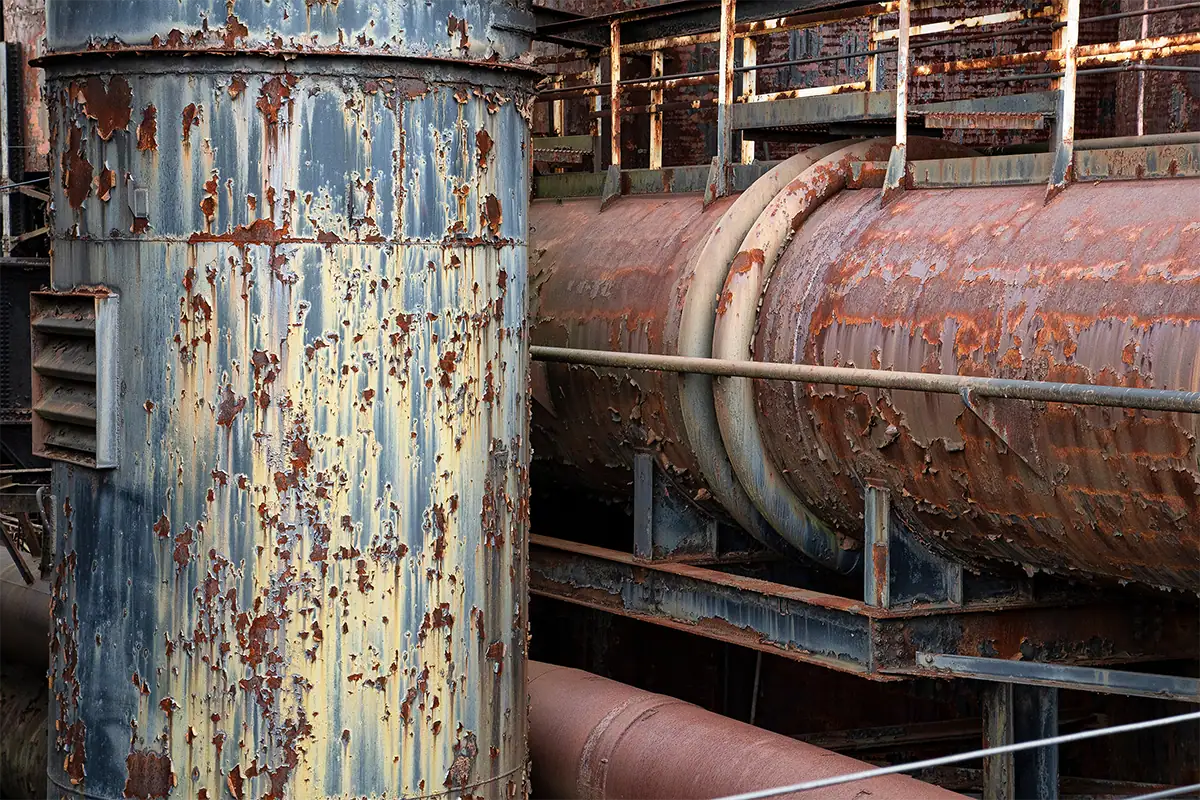
At the 50mm end of the lens, I zoomed in to capture some of the interesting details of this slowly rusting complex. The lens delivers very good corner-to-corner sharpness, so fine detail holds up across the frame.
Combined with the rich textures in the scene itself, that sharpness helps make this image pop. More importantly for storytelling, the peeling paint and rust reveal something about the history and character of the place that the wide establishing image alone cannot show.
Use Lines, Patterns, and Repetition to Add Structure
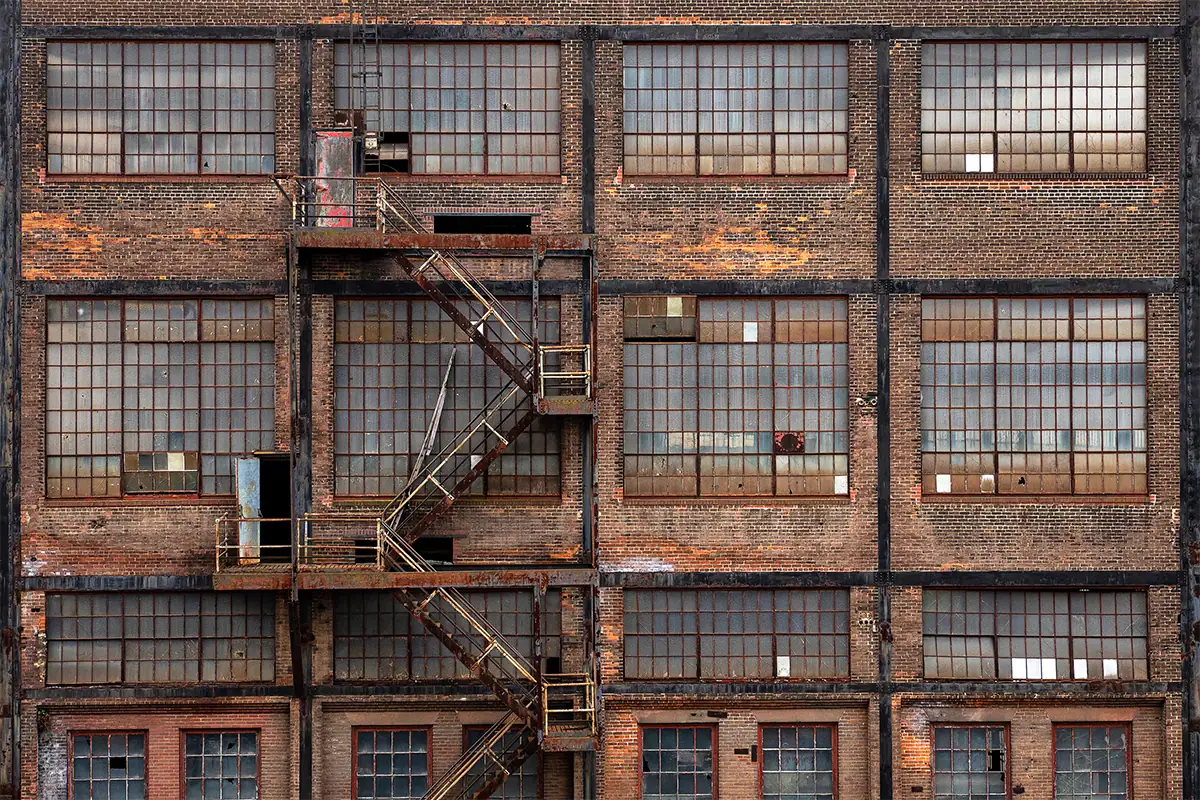
This straight-on shot of the factory facade across the street from the Steel Stacks shows how well the 16-50mm F2.8 is corrected for distortion. The vertical and horizontal lines stay true, while sharpness and illumination remain consistent across the frame.
I especially like how the zigzag of the fire escape breaks up the repetition of the square windows and gives the eye a place to land. That combination of repetition and interruption adds another visual layer to the story of the industrial landscape.
Visual Storytelling in Vermont: Context, Details, and Fleeting Moments
While in South Hero, Vermont, I used the 16-50mm F2.8 to move between very different kinds of storytelling images—from a broad view toward Lake Champlain to farmers market details, flowers, and a bee searching for pollen.
The key wasn’t simply having 16mm and 50mm available. It was having every focal length between them so I could choose exactly how much context each photograph needed.
Use a Natural Mid-Range View to Preserve Context
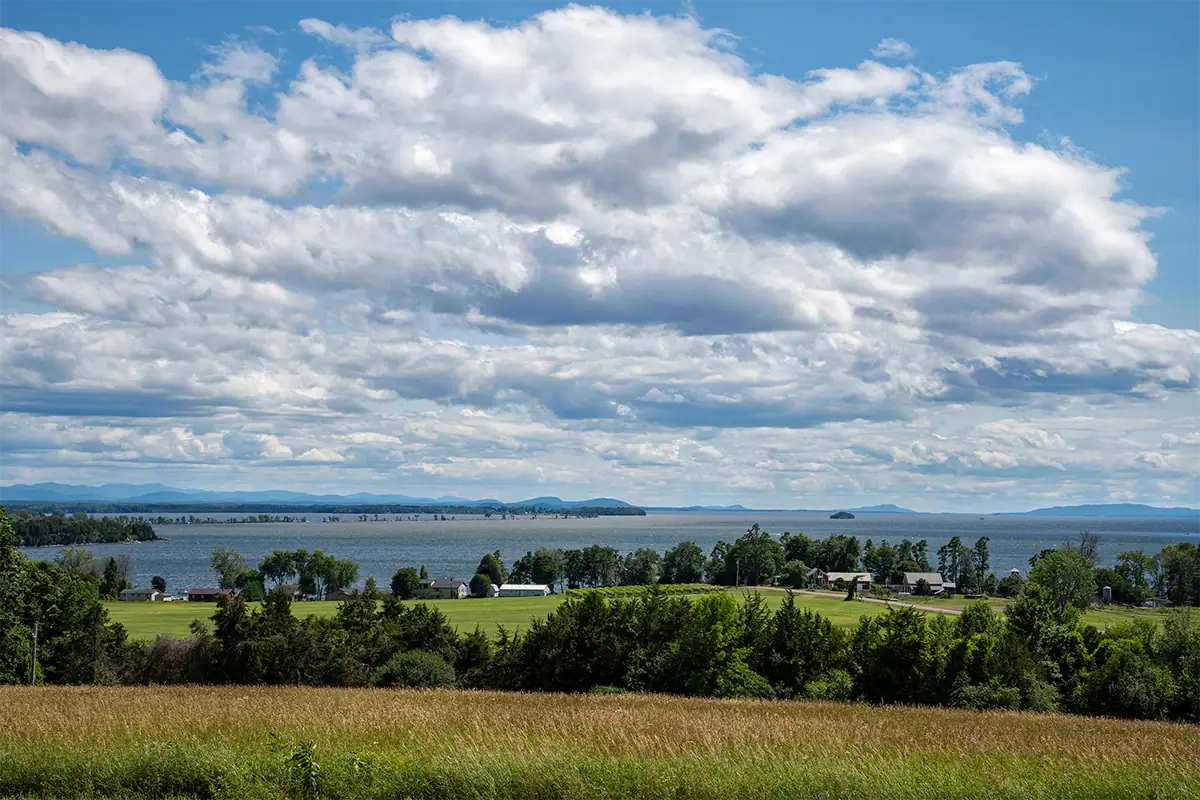
For this image, I wanted the view to feel natural—not too wide and not too telephoto. I chose 39mm, which allowed me to keep everything in the composition, from the foreground and farms to Lake Champlain, the distant landscape, and the clouds above.
That perspective provides context without making the landscape feel exaggerated, which is important when the photograph is intended to describe a place rather than simply create a dramatic effect.
Get Close to the Small Details That Complete the Story
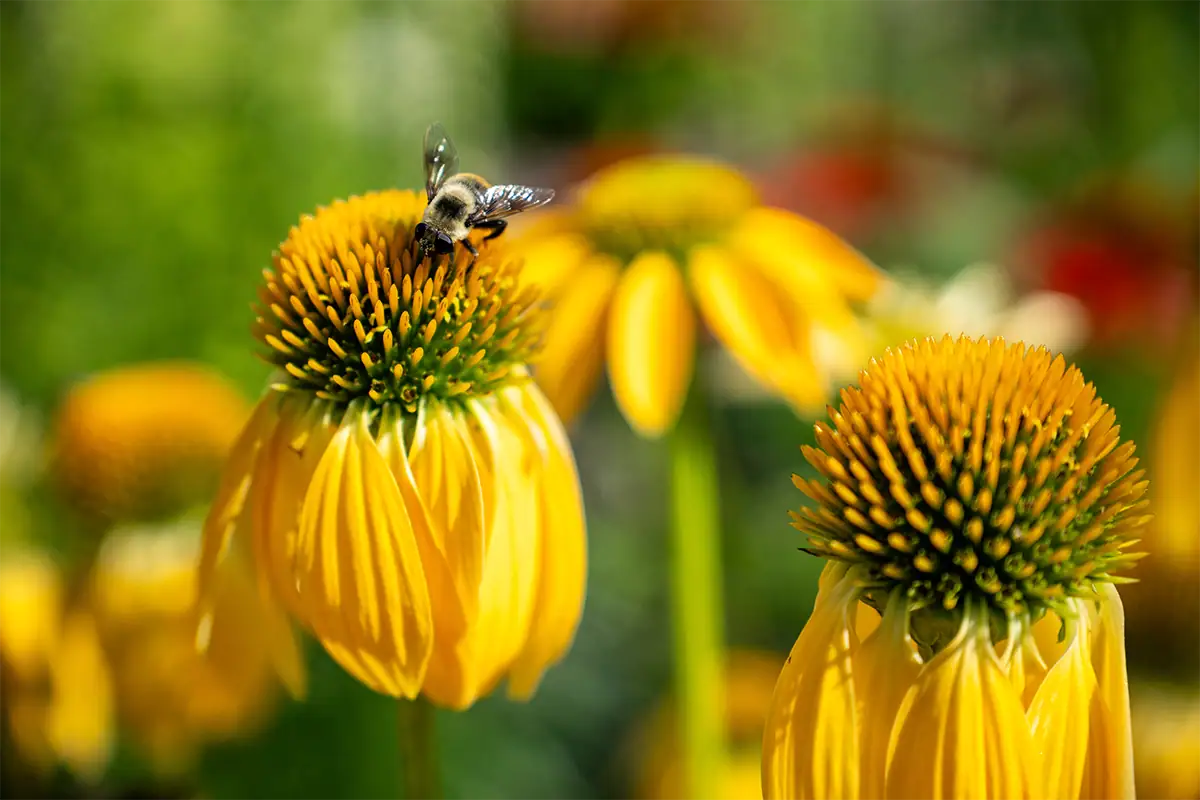
The combination of an 11.5″ (0.29m) minimum object distance (MOD) at 50mm and the fast F2.8 aperture let me capture this shallow-focus image of a bee searching for pollen. The lens also focuses as close as 6″ (0.15m) at the wide end.
Working this close at 50mm isolates the bee from its surroundings, while the background melts into a soft, creamy blur. The smooth bokeh keeps the viewer’s eye on the bee—where the story is—instead of on the clutter behind it.
Being able to move this close without reaching for another lens is valuable because small details can be just as important to a visual narrative as the wide scene that establishes the location. For more techniques, see these close-up photography tips.
Freeze a Fleeting Detail with Fast Autofocus
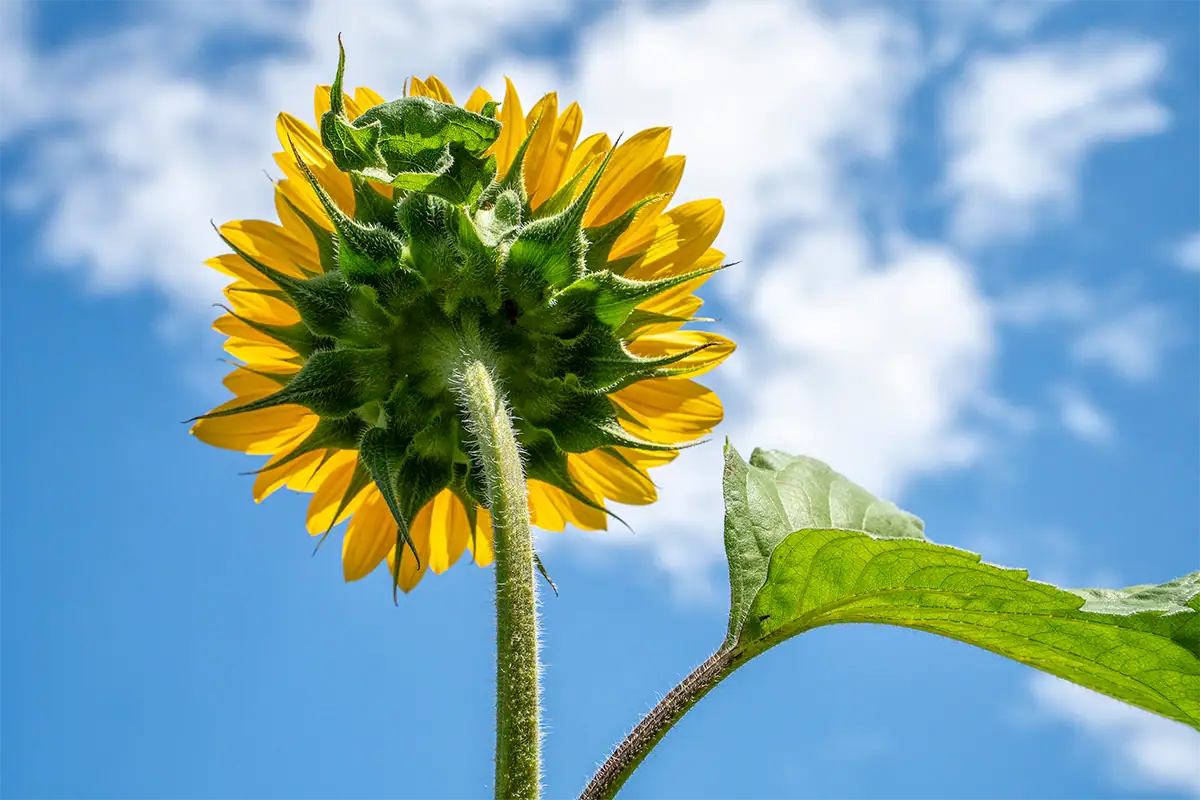
The image of the back of a sunflower may seem like an easy, straightforward shot, but a constant breeze kept the flower swaying back and forth.
Fortunately, the 16-50mm’s fast VXD autofocus locked onto the sunflower without hesitation and maintained focus on the moving subject, while the 1/1600 sec. shutter speed froze the motion.
Together, they let me capture the fine texture of the petals and sepals in crisp focus, even though the flower never stopped moving.
Stay Small and Unobtrusive in a Crowded Farmers Market
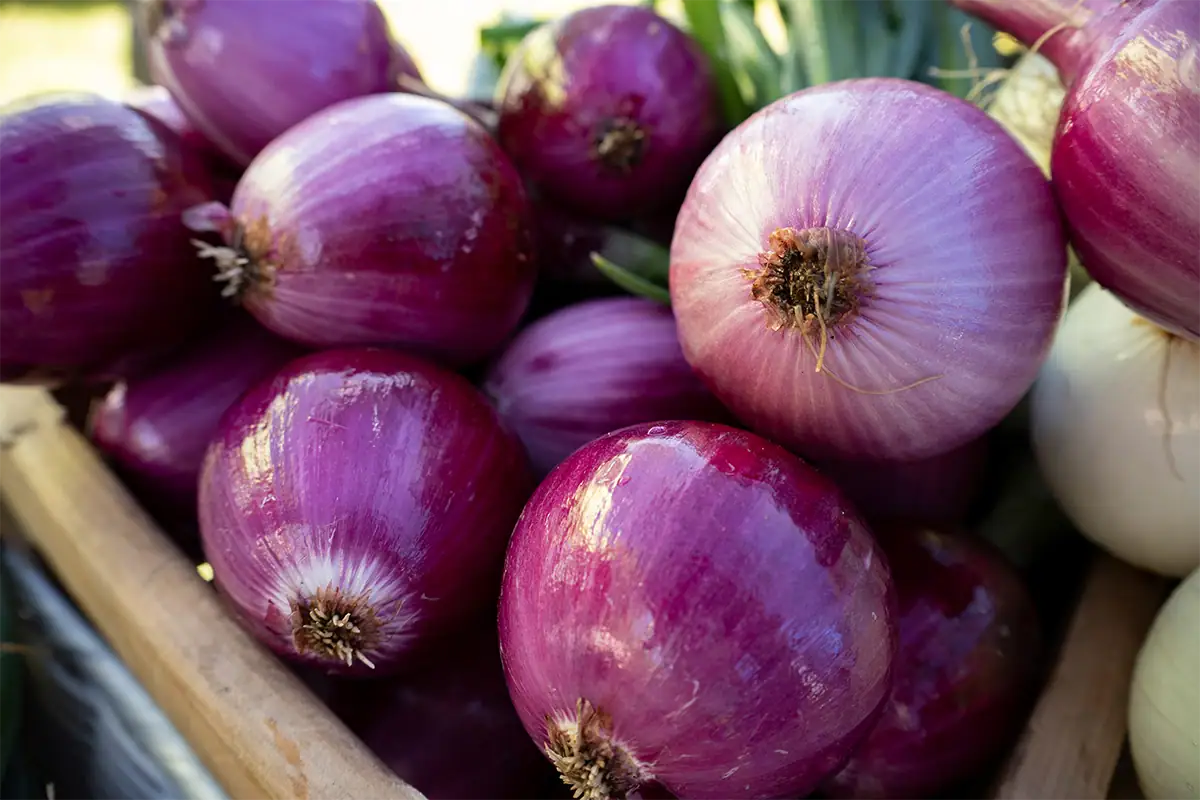
With flowers in every color and dozens of varieties of vegetables everywhere, farmers markets can be amazing places to photograph. The flip side is how crowded they can become, and this is where the compact design of the 16-50mm played an important role.
At only 3.2″ long and 10.8 oz. (305g), the lens let me move in and out of the crowds quickly without bothering other customers or vendors. Its small, unobtrusive size also made it easier to work naturally around the market.
With one lens covering wide through mid-range perspectives, I could photograph an entire stand and then move in on a single detail without changing lenses or losing my place in the crowd.
Visual Storytelling on the Road: Staying Ready as the Scene Changes
When you’re documenting an area, you never know when a photographic opportunity will appear around the next corner. Your gear needs to be ready to grab and simple enough that it doesn’t interrupt the experience.
As I continued through Easton, Strasburg, and Lancaster County, Pennsylvania, the 16-50mm F2.8 stayed on my camera and within reach. Its 24-75mm full-frame equivalent range covered nearly everything I encountered, while the constant F2.8 aperture and fast VXD autofocus helped me adapt quickly when the light or subject changed.
Work Handheld in Low Light at the Railroad Museum of Pennsylvania
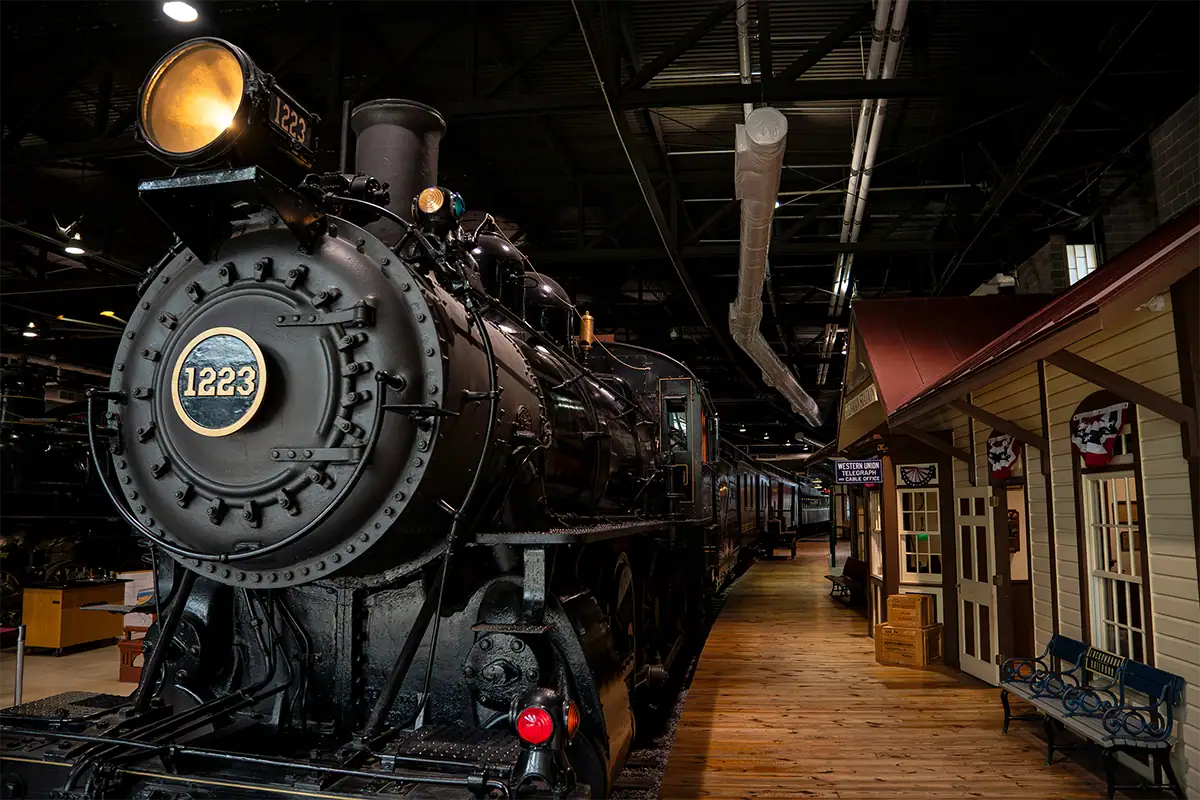
The constant F2.8 aperture across the entire 16-50mm range let me capture details inside the Railroad Museum of Pennsylvania in Strasburg without pushing the ISO too high just to obtain a usable shutter speed.
In this shot, taken at 16mm and F2.8, I was able to work at 1/100 sec. and ISO 500. That was fast enough to handhold the camera and lens confidently, so I didn’t need to use a tripod in the museum’s tight, dimly lit spaces.
Being able to shoot handheld at a relatively low ISO is a real advantage when you’re moving quickly between exhibits and building a sequence of images. For more technique, see Tamron’s low-light photography guide.
The Railroad Museum of Pennsylvania is located in Strasburg, Lancaster County, Pennsylvania, and preserves a large collection of historically significant locomotives, rail cars, and railroad artifacts.
Use Golden-Hour Light to Show Time and Mood
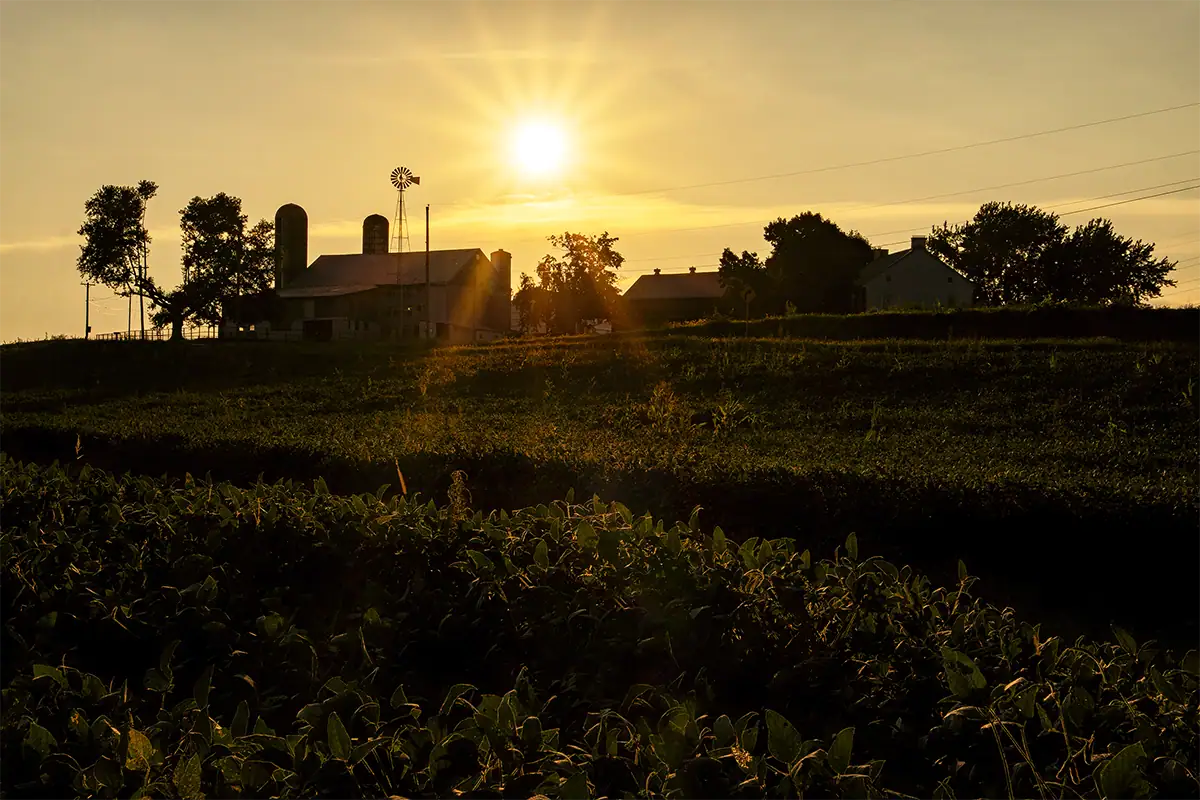
Silhouettes and sunbursts are two elements that can make for a dramatic sunset image, but here they also help tell the story.
As the sun sinks low over the farmhouse, the working day winds down: the last chores are done, the equipment is put away, and the land settles into evening. That quiet moment is what I wanted to capture.
Stopping down to F11 or F16 forces the sunlight through a smaller opening, creating a more defined sunburst. The challenge is that shooting directly toward the sun can introduce flare. The Tamron 16-50mm’s BBAR-G2 coating minimized distracting flare, allowing the focus to remain on the story of the day’s end on the farm.
React Quickly When Light and Landscape Come Together
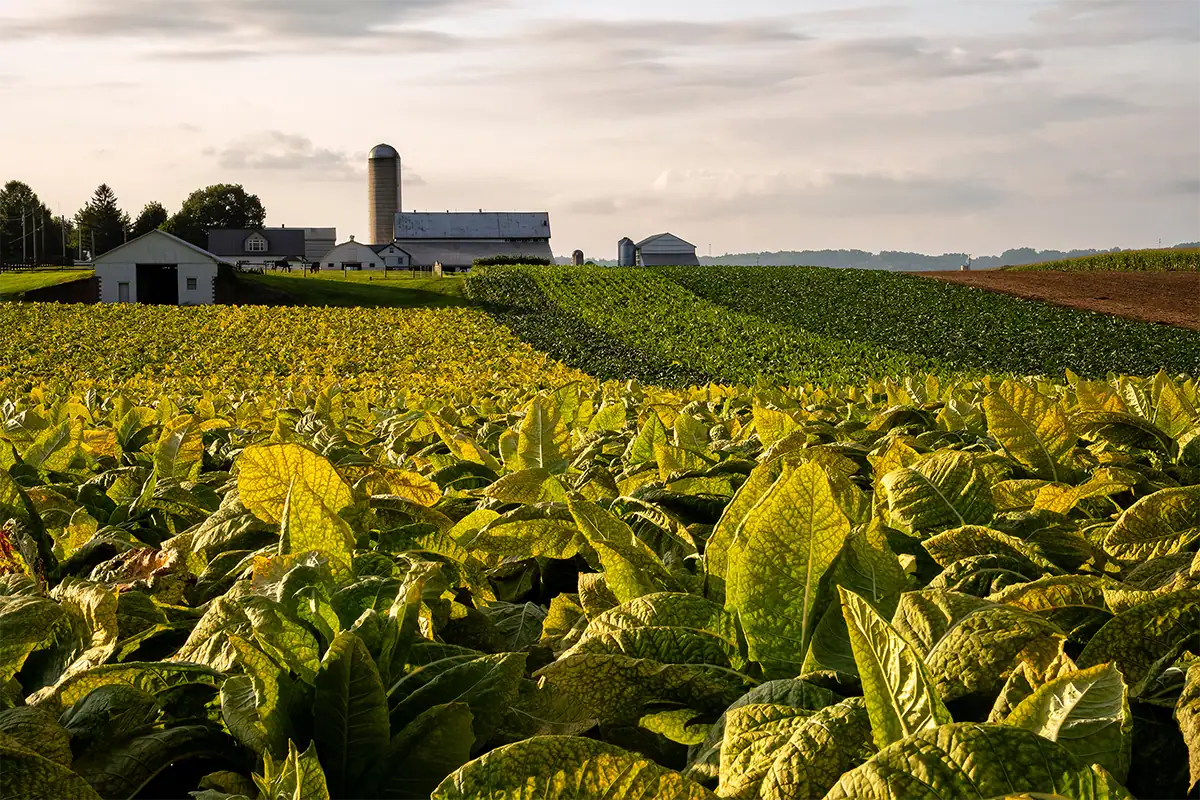
When you’re driving around documenting an area, you need to keep your eyes open and react quickly. This image called for exactly that.
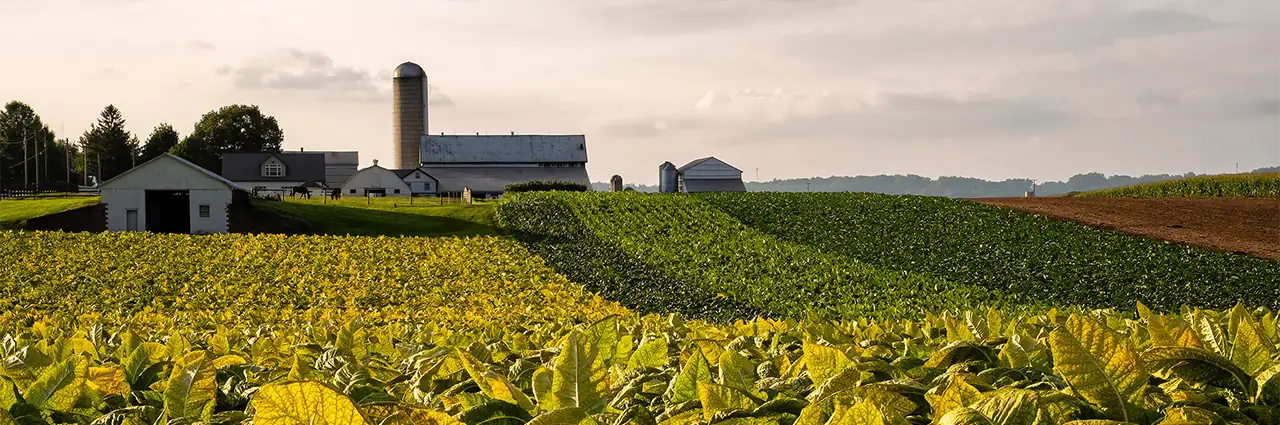
The sun was beginning to drop, and the warm, low light created dramatic highlights and shadows across different shades of crops. Those patterns became natural leading lines toward the farmhouse in the background, making this an effective overview image of a Lancaster County farm.
With the camera ready beside me, I could grab it and go as soon as I saw the scene. Because the lens is so small and light, it was effortless to make the shot before the light changed.
At 50mm, the farmhouse remained prominent without flattening the entire scene. The moderate compression preserved depth in the crop rows while directing attention toward the farm.
Stay Unobtrusive and Ready for the Next Scene
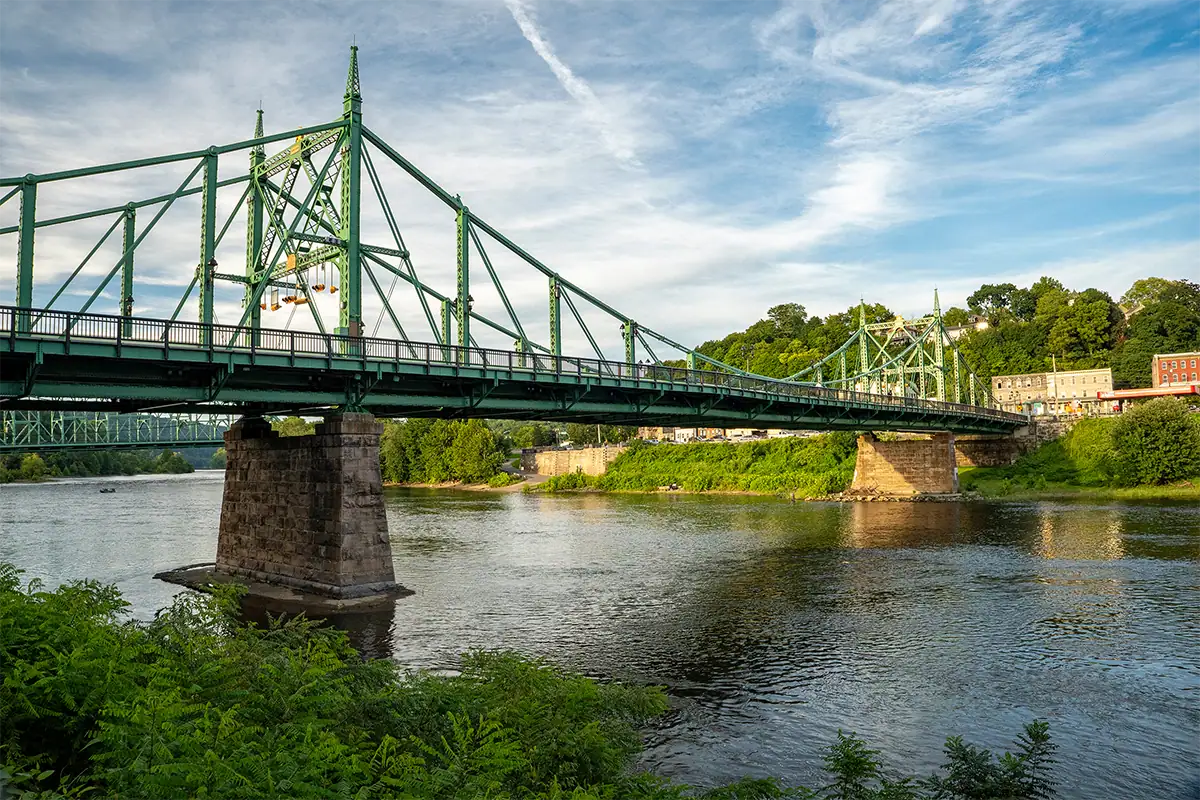
Traveling with a camera doesn’t have to mean hauling a large bag or looking like a photographer. The 16-50mm F2.8 is small and light enough to slip into a compact backpack alongside the rest of my gear. Mounted on a compact APS-C mirrorless body, it also doesn’t draw much attention.
While walking along the river in Easton, Pennsylvania, I photographed the bridge the way a storyteller approaches a subject. I started wide to show how the bridge spans the river and connects the two sides of town.
What impressed me most is how little I gave up for that portability. I still had a constant F2.8 aperture, fast VXD autofocus, sharp results, and a 24-75mm full-frame equivalent range that covered everything from wide establishing photographs to close details.
For documentary and visual storytelling work, that means one small lens can stay on the camera all day and remain ready for whatever comes next.
Conclusion: Tamron 16-50mm F2.8 A for Visual Storytelling Photography
After photographing locations from South Hero, Vermont, to Bethlehem, Easton, Strasburg, and Lancaster County, Pennsylvania, the Tamron 16-50mm F2.8 A proved to be an excellent tool for visual storytelling and documentary photography.
Its versatile 24-75mm full-frame equivalent range let me move from wide establishing shots, such as the Bethlehem Steel Stacks and Lancaster County farmland, to intimate supporting details like rusting steel, a sunflower moving in the breeze, and a bee searching for pollen. Every focal length in between had a purpose and having them all in one lens meant I could keep building the story without interrupting the shooting rhythm.
The performance matched that versatility. The constant F2.8 aperture gave me clean handheld images inside the railroad museum and smooth bokeh for close-up subjects, while the fast VXD autofocus locked on quickly even when subjects were moving. Sharpness held up across the frame, distortion was well controlled, and the lens handled direct sunlight at sunset without distracting flare.
What made it work especially well for this type of photography was its size. It was small and light enough to stay on the camera, remain ready between stops, and move through crowded environments without getting in the way.
For visual storytellers, the real advantage is simple: instead of thinking about which lens to reach for next, I could concentrate on finding the establishing scene, the supporting details, and the fleeting moments that bring the complete story together.
Where to Buy Tamron Lenses
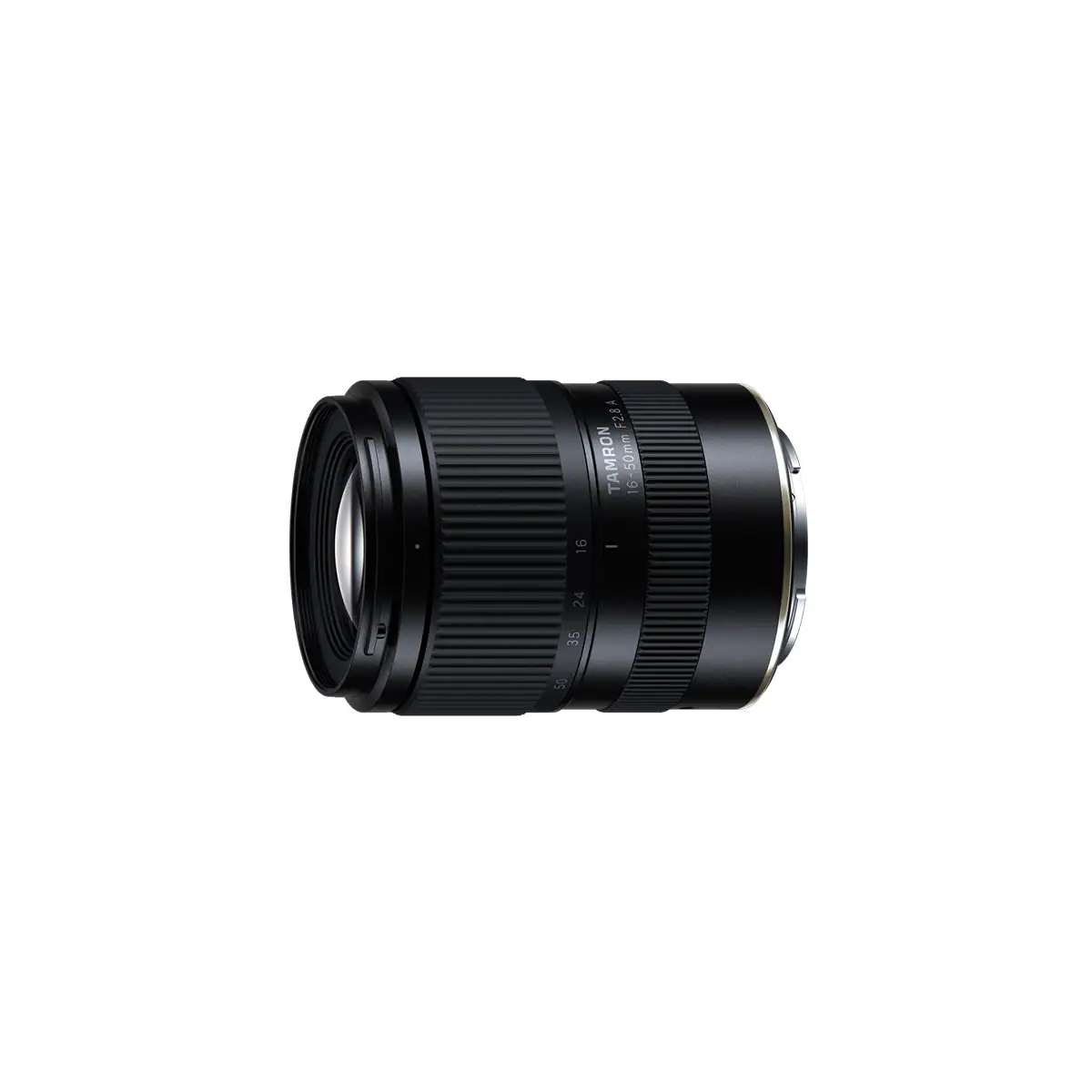
Learn more about the Tamron 16-50mm F2.8 A (Model B091) for Sony E, Canon RF, Fujifilm X, and Nikon Z mounts and more Tamron lenses at an authorized Tamron dealer or shop directly at the TAMRON Store.
Frequently Asked Questions About the Tamron 16-50mm F2.8 A for Visual Storytelling Photography
The following FAQs address common questions about using the Tamron 16-50mm F2.8 for documentary and visual storytelling photography, including focal length, close focusing, low light, autofocus, and portability.
Is the Tamron 16-50mm F2.8 good for visual storytelling photography?
Yes. In this review, Ken Hubbard used the 16-50mm F2.8 to create wide establishing photographs, natural mid-range compositions, tight details, close-ups, low-light images, and landscape context. That range of perspectives makes it possible to build a more complete visual narrative with one lens.
Why is a 16-50mm zoom useful for documentary photography?
On a Sony APS-C camera, the 16-50mm range provides an approximately 24-75mm full-frame equivalent angle of view. The wide end can establish location and context, the middle focal lengths provide a natural-looking perspective, and the 50mm end allows tighter framing of details without changing lenses.
Can the Tamron 16-50mm F2.8 photograph close-up details?
Yes. The minimum object distance is 6″ (0.15m) at the wide end and 11.5″ (0.29m) at the telephoto end. Hubbard used the 50mm end at F2.8 to isolate a bee on a flower against a softly blurred background, demonstrating how close-up details can become part of a broader visual story.
Is F2.8 useful for documentary photography?
A constant F2.8 aperture provides greater flexibility in limited light and remains available throughout the zoom range. During this review, Hubbard used F2.8 to photograph handheld inside the Railroad Museum of Pennsylvania and to create shallow depth of field for close-up subjects.
How does the autofocus perform with moving subjects?
Hubbard found the VXD autofocus fast and responsive. When photographing a sunflower moving continuously in the wind, the lens locked focus without hesitation while a fast shutter speed froze the motion and retained fine detail.
Is the Tamron 16-50mm F2.8 compact enough for documentary photography?
At approximately 3.2″ long and 10.8 oz. (305g), the lens is compact enough to remain mounted on a camera throughout the day or fit into a small backpack. Hubbard found the smaller setup particularly useful when moving through crowded farmers markets and when keeping the camera ready for unexpected scenes.
Can the 16-50mm F2.8 be used for landscapes as part of a visual story?
Yes. A visual story often benefits from wide or mid-range environmental photographs that establish where events are taking place. Hubbard used 39mm for a natural-looking view across South Hero, Vermont, toward Lake Champlain and 50mm to frame Lancaster County farmland while preserving depth in the scene.
What is visual storytelling photography?
Visual storytelling photography uses a sequence of images—such as wide establishing photographs, mid-range contextual views, close details, patterns, textures, changing light, and spontaneous moments—to communicate a fuller sense of a place, subject, or experience. Each image plays a different role, allowing the collection to tell more of the story than any single photograph could.
About the Author
 Ken Hubbard is a Technical Representative for Tamron Americas and an experienced wildlife photographer and educator. He regularly teaches photography techniques and equipment selection through workshops, seminars, and industry events. Read Ken’s full bio >>