 Instant Savings
 Rebate Claims
 Support
 Find a Dealer
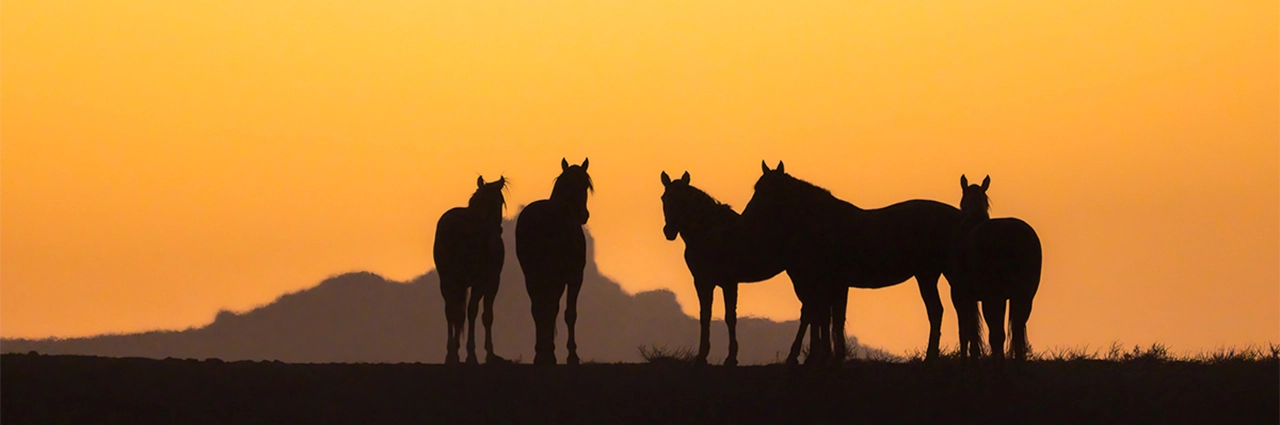
Photographing wild horses is a captivating challenge that blends the beauty of nature with the thrill of untamed motion. These majestic creatures, roaming freely across vast landscapes, offer photographers a rare opportunity to capture raw power, grace, and freedom in its purest form. However, successfully photographing wild horses requires a keen eye, patience, and the right equipment to adapt to unpredictable movements and varying lighting conditions.
Understanding how to photograph wild horses in motion and changing environments is key to capturing compelling images. And knowing where to photograph wild horses and how to anticipate their movement will dramatically improve your results.
In this blog, we’ll dive into the techniques and settings you’ll need to master, and how Tamron lenses can help you achieve stunning shots of wild horses in their natural habitat, bringing their spirit and vitality to life.
Images and tips by Tamron Ambassador Alyce Bender
Where to Photograph Wild Horses in the Wild
Knowing where to photograph wild horses and where to find them is just as important as understanding how to photograph them. Wild horses typically inhabit open landscapes such as deserts, coastal regions, grasslands, and protected public lands where they can roam freely.
In the United States, some of the most well-known locations include barrier islands, western rangelands, and federally protected areas. Coastal environments, in particular, offer unique opportunities to photograph wild horses against dramatic backdrops of dunes, marshes, and ocean shorelines.
If you’re planning a trip, researching specific locations ahead of time can significantly improve your chances of success. For example, you can learn more about where to photograph wild horses in places like Assateague Island by visiting the National Park Service guide to wild horses.
Why Telephoto Lenses Are a Must for Photographing Wild Horses
Photographing wild horses requires both distance and precision—two things a quality telephoto zoom lens provides in spades. Wild horses are naturally wary of humans, and approaching too closely can stress them or put you at risk. That’s why telephoto lenses are essential for safely capturing intimate, high-impact images without disturbing the herd.
Versatile zoom options like the Tamron 50-400mm F/4.5-6.3 VC VXD for Sony E and Nikon Z mount, or the Tamron 150-500mm F/5-6.7 Di III VC VXD, available for Sony E, Fujifilm X, and Nikon Z mounts, give you the reach to photograph wild horses from afar while still filling the frame. These lenses allow you to adapt quickly to changing scenes—from a stallion charging across the plains to quiet moments among a foal and its mare—all without needing to swap lenses in dusty, rugged environments.
Their optical vibration compensation (VC) helps ensure sharp shots even when you’re handholding at the long end of the zoom, and their compact, lightweight build makes them ideal for hiking out to remote locations. If your goal is capturing dynamic equine motion and the raw essence of untamed wilderness, a telephoto lens is your most powerful tool.
Wildlife Photography Tips for Photographing Wild Horses
TIP 1: Watch the Ears – Read Body Language for Better Wildlife Photography
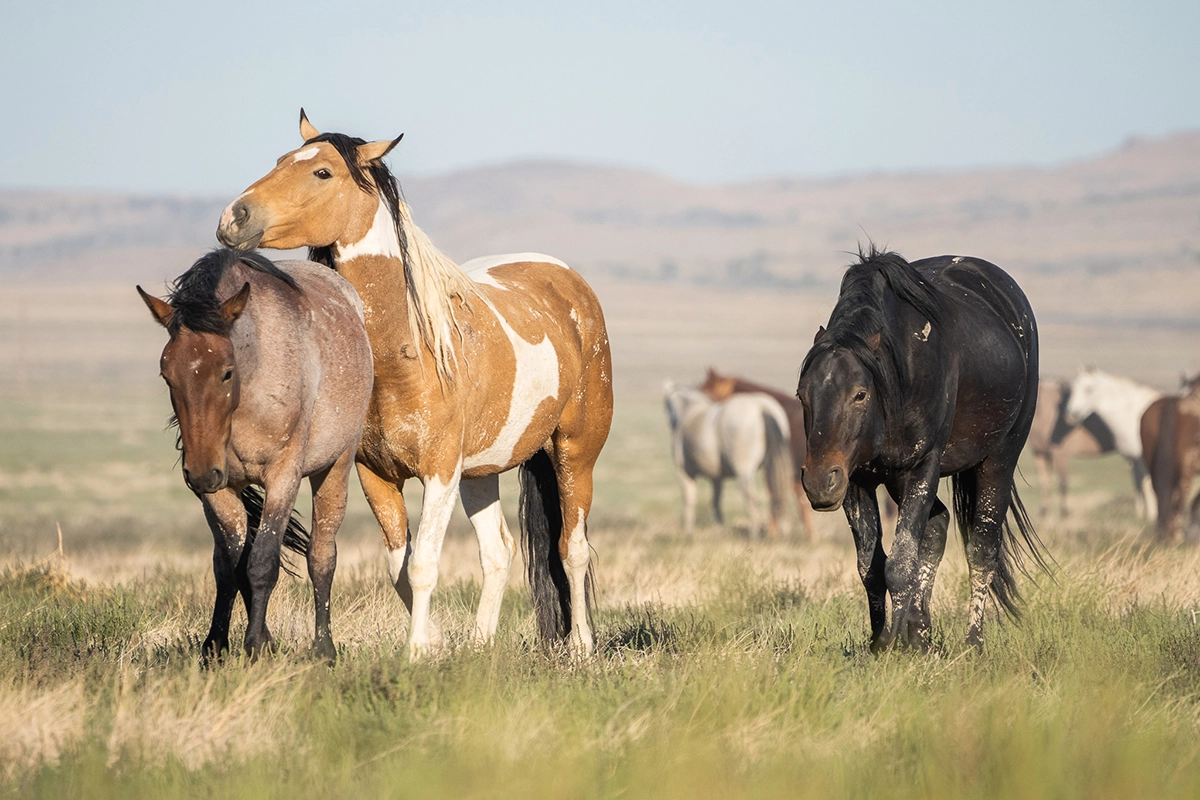
In wild horse photography, reading body language is just as critical as timing your shot. A horse’s ears are a primary indicator of mood and attention. Are they relaxed, swiveling, pinned back in irritation, or alert to movement in the distance? These signals offer insight into behavior before it escalates into action, making them invaluable for photographers. If you’re photographing horses in the wild, anticipating action through ear movement allows you to pre-focus and frame more compelling images. Set a fast shutter speed—1/1250 or higher—and track subjects with a telephoto lens for wildlife, such as the Tamron 150-500mm or 50-400mm, to ensure sharp results when the action breaks loose.
TIP 2: Best Times to Photograph Wild Horses – Golden Hour and Soft Light Tips
Timing is everything in wild horse photography. The soft, golden light at dawn and dusk not only flatters the landscape but also highlights the form and movement of wild horses as they become more active in cooler temperatures. If you’re photographing wildlife in arid regions like the Western U.S., these “shoulders of the day” offer the best lighting and activity conditions. These are also ideal conditions for capturing movement in wildlife photography, especially when horses are most active. This is also when using a telephoto lens for wildlife pays off—Tamron’s vibration compensation (VC) in lenses like the 150-500mm ensures you capture sharp images even when light is limited and subjects are in motion.
TIP 3: Capture the Full Story – Photographing Wild Horse Behavior Beyond Action Shots
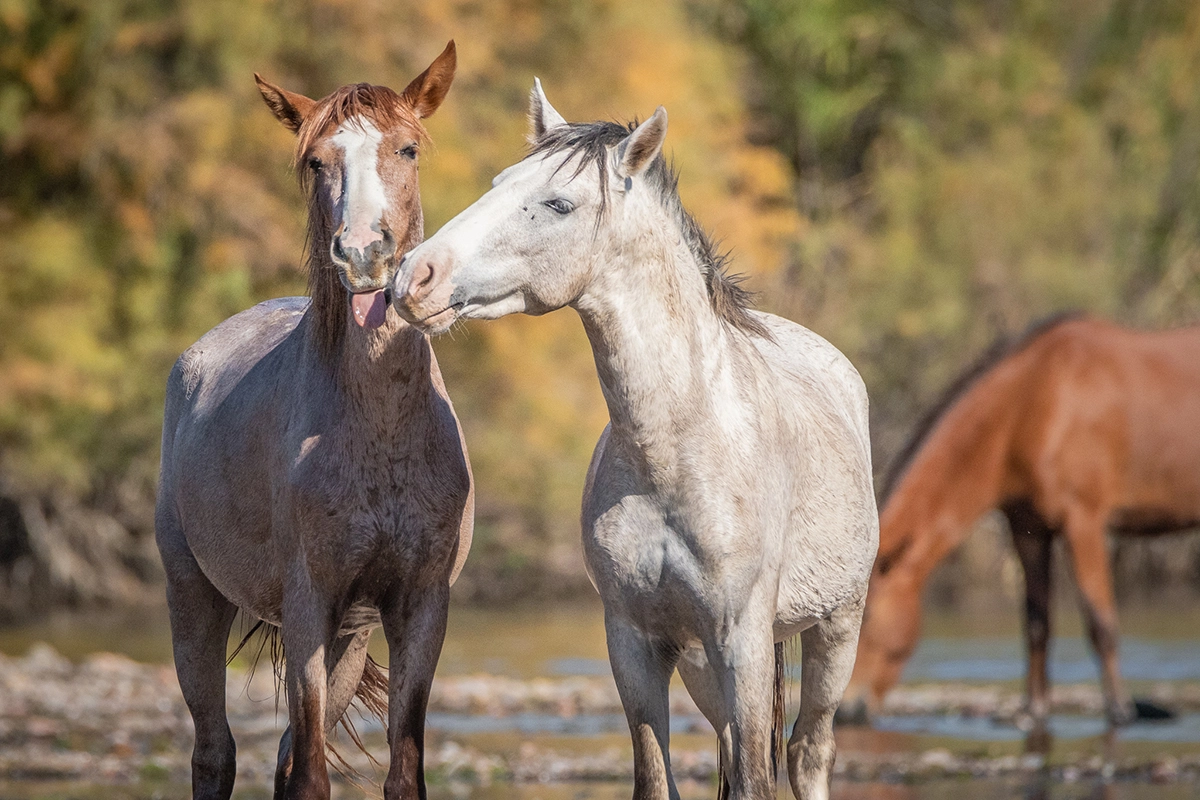
Wild horse photography is about more than just high-action drama—it’s about telling the complete story of herd life. In every band or group, there are tender moments, quiet interactions, and subtle displays of emotion. Capturing these softer scenes when photographing horses in the wild reveals the complex social structures within the herd and creates emotionally resonant images. Observing herd behavior and interaction patterns also helps you anticipate movement and position yourself more effectively. Whether you’re new to photographing wildlife or building a professional wildlife portfolio, these nuanced moments provide depth and diversity to your work.
TIP 4: Use Telephoto Zooms to Photograph Wild Horses Safely and Effectively
A long-range zoom is crucial for photographing horses in the wild safely and respectfully. Wild horses tend to be elusive and move quickly across rugged terrain, often placing natural barriers—like water or sagebrush—between themselves and observers. That’s where a telephoto lens for wildlife photography, such as the Tamron 50-400mm or 150-500mm, becomes essential. These lenses allow you to keep a respectful distance while still achieving tightly framed compositions, whether you’re isolating a single stallion or engaging in horse herd photography. Their dust-resistant design and compact size make them ideal tools for shooting in the unpredictable environments wild horses roam.
TIP 5: Backlighting and Silhouettes – Create Artistic Images with Dramatic Light
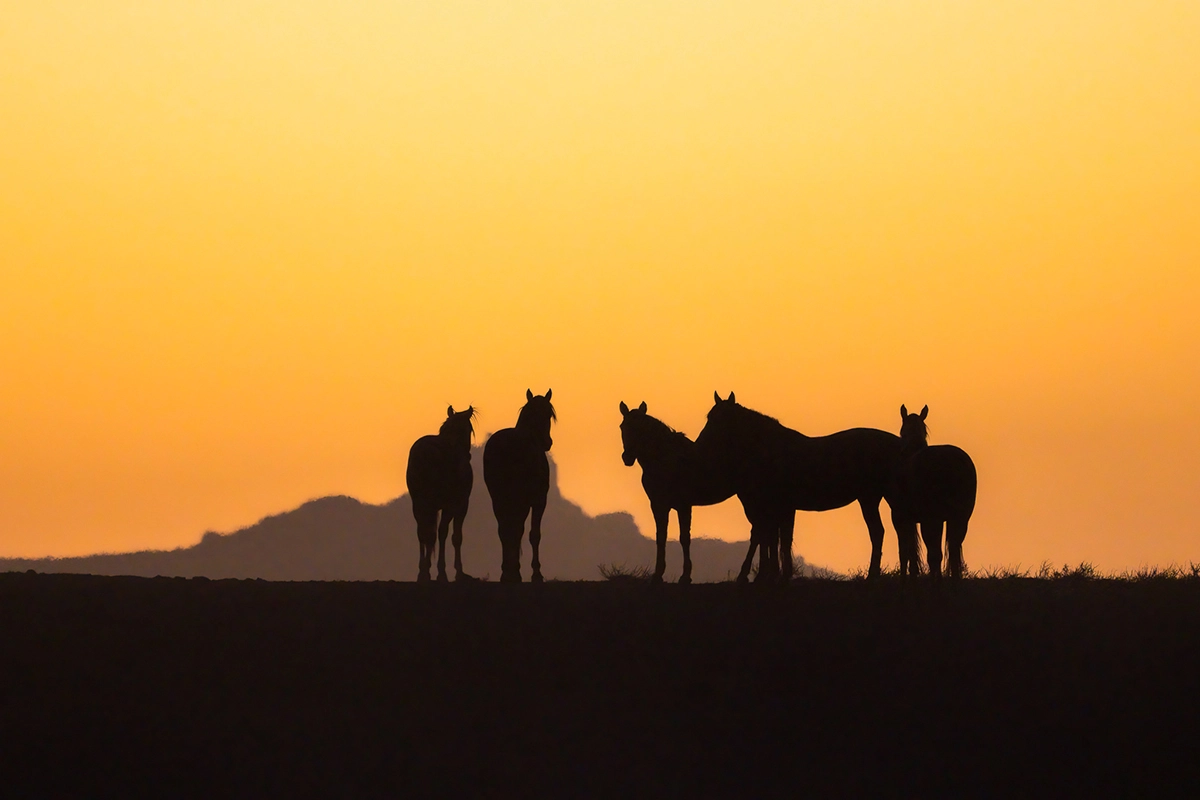
Photographing wildlife at sunset can produce some of the most iconic and artful images in your portfolio—especially with wild horses. Backlighting these majestic animals creates striking silhouettes that emphasize their powerful forms. Because horses have such a universally recognized profile, silhouettes resonate deeply with both wildlife enthusiasts and general audiences. Whether you’re building a print collection or capturing images for editorial use, use your telephoto lens for wildlife to compress the scene and enhance the drama. Expose for the background, allow the horses to fall into shadow, and watch a simple moment become cinematic.
Dust conditions created by moving horses can further enhance backlit scenes, adding atmosphere and depth to your images.
Capturing Motion in Wildlife
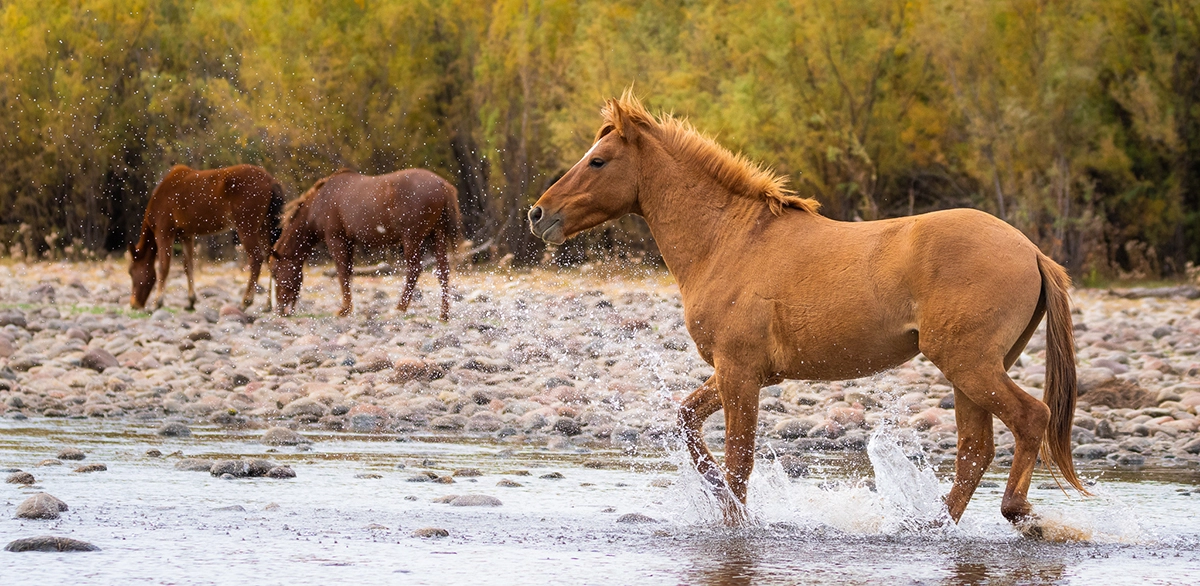
Photographing wild horses often means working with fast, unpredictable movement. Mastering motion is essential when learning how to photograph running horses and capturing dynamic scenes in the wild.
- Use fast shutter speeds (1/1600–1/2500) to freeze motion
- Use burst shooting to capture peak action moments
- Continuous autofocus (AF-C) helps track moving subjects
- Experiment with panning to introduce motion blur and convey speed
These wildlife motion photography tips will help you improve consistency when photographing animals in motion and capturing movement in wildlife photography.
Positioning for Herd Movement
Positioning is everything when photographing wild horses, especially when working with groups. Understanding herd behavior allows you to anticipate direction and create stronger compositions.
- Position yourself ahead of movement rather than chasing from behind
- Look for natural pathways or open terrain where horses are likely to travel
- Use layers within the herd to add depth to your images
- Anticipate dust trails and backlighting opportunities for more dramatic results
Learning where to stand and how to anticipate herd movement is a critical part of how to photograph running horses effectively.
People Also Ask About Photographing Wild Horses
What is the best shutter speed for photographing wild horses?
A fast shutter speed of 1/1600–1/2500 is ideal for freezing motion when photographing wild horses in action.
How do you photograph running horses in the wild?
Use continuous autofocus, burst mode, and anticipate movement patterns to capture sharp images of running horses.
What lens is best for photographing wild horses?
A telephoto zoom lens like 150-500mm allows you to keep distance while capturing detailed, frame-filling images.
What time of day is best for photographing wild horses?
Early morning and late evening provide the best light and increased activity for photographing wild horses.
How do you capture motion in wildlife photography?
Use fast shutter speeds to freeze motion or panning techniques to create motion blur and convey movement.
Conclusion: Elevate Your Wildlife Images with the Right Gear and Timing
Photographing wild horses is a rewarding endeavor that blends patience, skill, and the right tools. From reading body language to capturing golden hour silhouettes, every tip here is designed to help you grow as a wildlife photographer—especially when working in the dynamic world of horse herd photography.
By choosing the right telephoto lens for wildlife, such as the Tamron 50-400mm or 150-500mm, you’ll be better equipped to document the spirit and motion of wild horses from a safe and creative distance. Whether you’re just getting started with photographing wildlife or refining your craft, these pro tips will help you tell stronger, more authentic stories from the wild.
For more guidance on fieldcraft and behavior, explore our wildlife photography animal tracking guide and wildlife photography tips to continue building your skills.
Where to Buy Tamron Lenses
Learn more about Tamron lenses at an authorized Tamron dealer near you or shop directly at the official TAMRON Store.
FAQs About Photographing Wild Horses
1. What is the best way to photograph wild horses safely?
Use a telephoto lens to maintain a safe distance and avoid disturbing the herd while still capturing detailed images.
2. How do you photograph wild horses in motion?
Use fast shutter speeds, continuous autofocus, and burst shooting to capture sharp images of horses running or interacting.
3. What settings should I use for photographing wild horses?
Start with a shutter speed of at least 1/1250, use continuous autofocus, and adjust ISO to maintain proper exposure.
4. Where can you photograph wild horses in the wild?
Wild horses can often be found in open landscapes such as deserts, plains, and protected public lands in the Western U.S. as well as Assateague Island in Maryland and Virginia, and throughout the North Carolina’s Outer Banks.
5. How do you capture herd behavior in photography?
Observe movement patterns, position yourself ahead of the herd, and look for interactions that tell a story.
 English
  Spanish
  French
  Portuguese