 Instant Savings
 Rebate Claims
 Support
 Find a Dealer
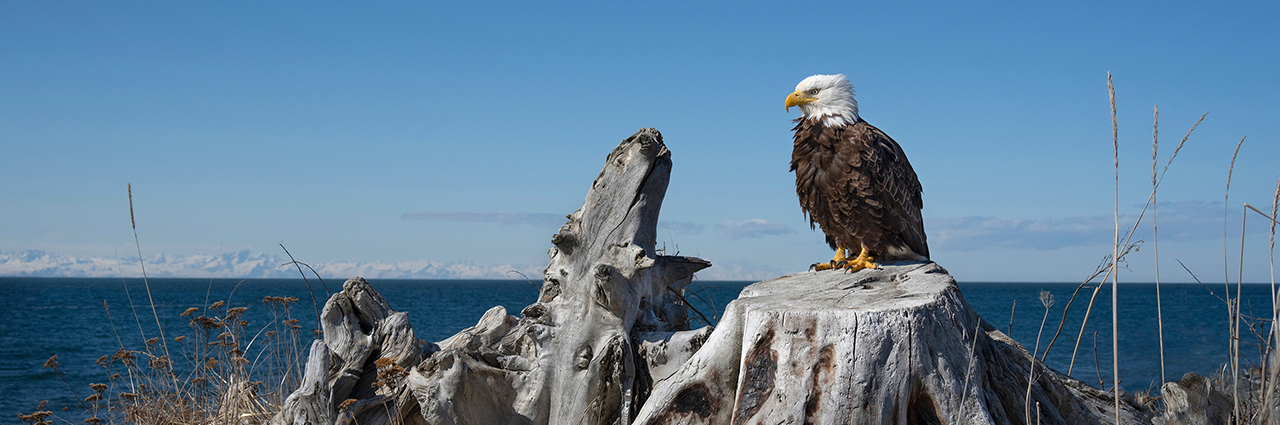
Bird photography is quickly becoming one of the most popular genres. And with avian subjects readily available around the world, you have unlimited opportunities to practice and grow in this rewarding photographic genre.
Once you understand the fundamentals, experimenting with more creative bird photography techniques can help you make images that feel more expressive, artistic, and memorable. From dramatic silhouettes to painterly panning, small shifts in light, composition, and timing can completely transform how a bird is portrayed.
Images and Tips by Tamron Image Master Lisa Langell
Professional wildlife photographer Lisa Langell, equipped with her versatile Tamron telephoto zoom lenses, shares her favorite creative bird photography techniques through five signature approaches she uses to create distinctive bird images.
In this article, Lisa will explain:
- How to photograph birds in flight with the right settings, focus modes, and techniques
- Tips for capturing birds in silhouette using light, contrast, and clean compositions
- Panning techniques to create dynamic, motion-filled images of birds on the move
- How to showcase birds in their environment to tell a richer, more natural story
- High key photography methods to produce bright, ethereal bird portraits
When to Use Creative Bird Photography Techniques
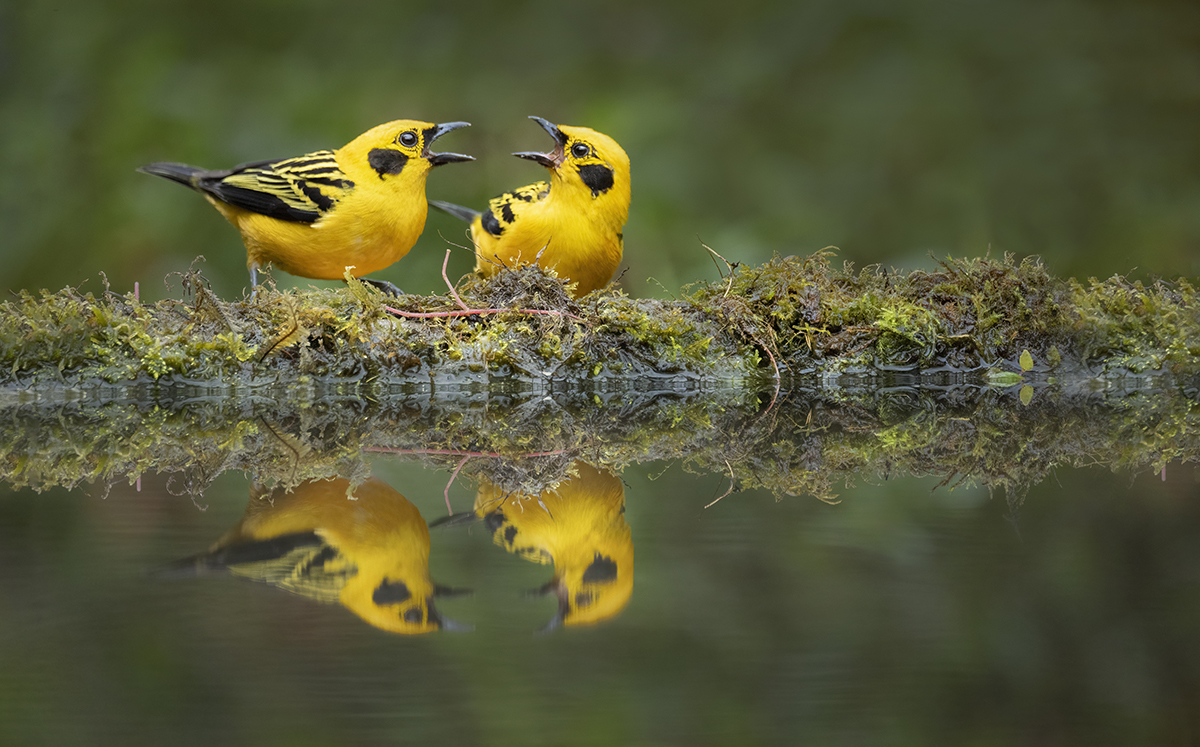
Sometimes a sharp, well-exposed bird portrait is exactly the right choice. But there are also moments when you want your image to do more than document the subject. You may want to emphasize motion, mood, habitat, gesture, or the emotional feel of a scene.
That is where creative bird photography techniques come in. These approaches are especially useful when the light is dramatic, the behavior is interesting, or you want to move beyond a standard field-guide style image and create something more interpretive. They can also help you build variety in your portfolio while still honoring the bird and its environment.
For a broader foundation on bird photography settings and techniques for birds in flight and perched birds, start with our bird photography tips for birds in flight and perched birds .
Approach 1: Birds in Flight
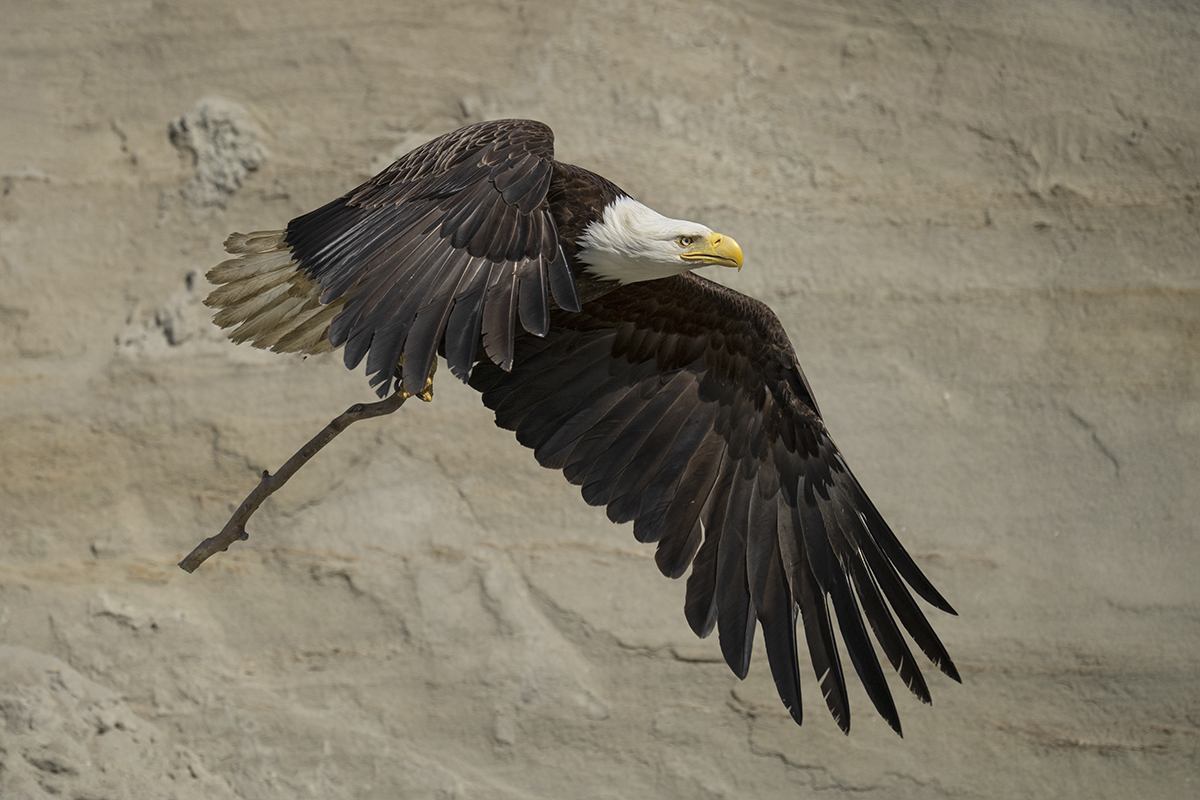
Photographing birds in flight is one of the toughest bird photography challenges. Obtaining consistently high-quality images typically requires good technique, quality gear, the right settings, and cooperative birds.
Try these bird photography tips to improve your images of birds in flight.
Shutter Speed
Choose a shutter speed appropriate for the bird in flight. Estimated shutter speeds are as follows:
- Faster birds: Ducks, terns, passerines: +/- 1/2500 to 1/3200 second
- Slower birds: Cranes, herons, eagles: +/- 1/1200 to 1/1600 second
Aperture
For most situations, apertures of f/4 to f/6.3 will work best to create subject/background separation and let in the most light, enabling the faster shutter speeds with lower ISO settings.
ISO
If you’re just getting your feet wet with manual settings, leave your ISO on “Auto” if your camera allows for it. This will enable you to prioritize the shutter speed and aperture, giving you two important design choices for the look of your image and subject, leaving the ISO to “float” into place. Just keep an eye on the ISO. Every camera varies, but as the ISO goes up, so does the noise in your images.
Focus Settings
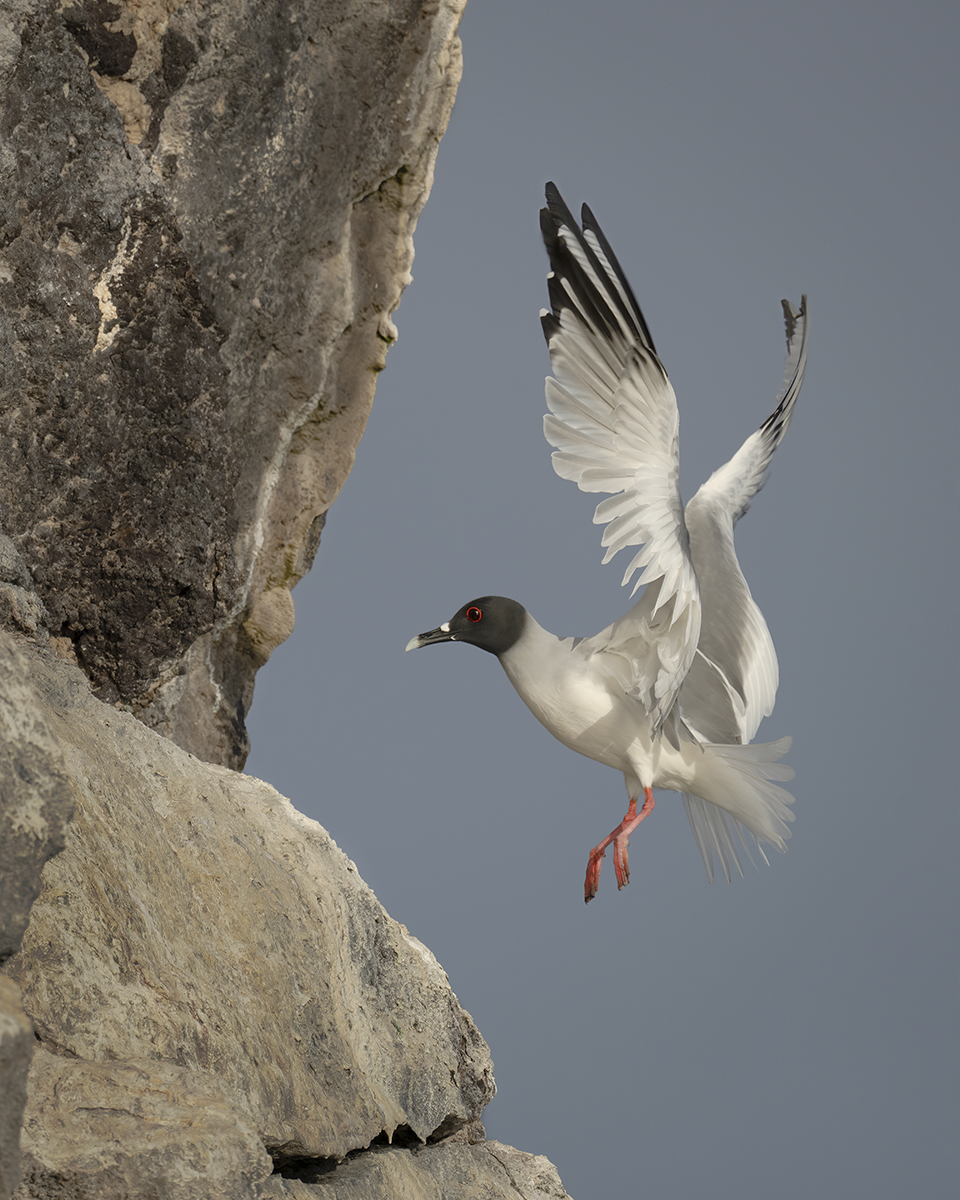
Setting will vary depending on your camera format.
- DSLR Cameras: AI Servo (Canon), Autofocus Continuous (AFC) or Continuous Auto Focus: Cameras vary on the nomenclature used, but make sure your camera is set to autofocus on a continuous basis. AF-C or AI-Servo are the most common terms. This must be ON for your camera to track the subject while half-pressing the shutter button.
- Mirrorless Cameras: The focus settings are a bit more complex here, but most will have an eye-tracking setting for animals. Ensure this is turned on. Check your manual or review online tutorials for your brand and model of camera for details on supporting settings for tracking animals.
Focus Points
I prefer the 9-point “box” for autofocus. That said, each camera is different and may offer you different options. My least favorite is single-point (one square, or box) which makes it more difficult to keep that single little box on the subject when tracking.
Burst Mode / High Speed Shutter
This setting will allow you to maximize the frames-per-second for your camera, essential for photographing birds in flight and capturing the many wing positions provided.
Image Stabilization / Vibration Compensation (VC)
These ultra-telephoto lenses form Tamron offer VC Image stabilization:
- Tamron 50-400mm F/4.5-6.3 Di III VC VXD (Model A067) lens for Sony E and Nikon Z
- Tamron 150-500mm F/5-6.7 Di III VC VXD (Model A057) for Sony E, Fujifilm X and Nikon Z
Vibration Compensation image stabilization can dramatically improve sharpness in an image as it compensates for natural shake when hand-holding or swinging your camera across the sky when mounted to a gimbal head on a tripod.
VC often has three modes: 1, 2, and 3. Mode 1 is for stationary subjects where you are hand-holding your camera to capture perched birds that are fairly still. Mode 2 is for capturing subjects when panning across the sky, such as the case with birds in flight. It stabilizes for vertical jitter, but not horizontal—meaning that you are panning across as your bird flies. The camera/lens will not correct for left-right movement/shake. Mode 3 is for significant shake. This is typically needed when photographing from a boat or other unstable conditions. For birds in flight, you will typically want to set your VC to Mode 2. If you do not have a Mode 2, turn VC to “On.” These settings are suggestions to get started. You may vary them as needed to your taste.
Freezing the action in-flight means looking for unique moments to capture. It could be a bird catching prey, flying to its nest, or fighting with other birds. Action and story-telling are often a key ingredient to successful images of birds-in-flight.
Approach 2: Birds in Silhouette
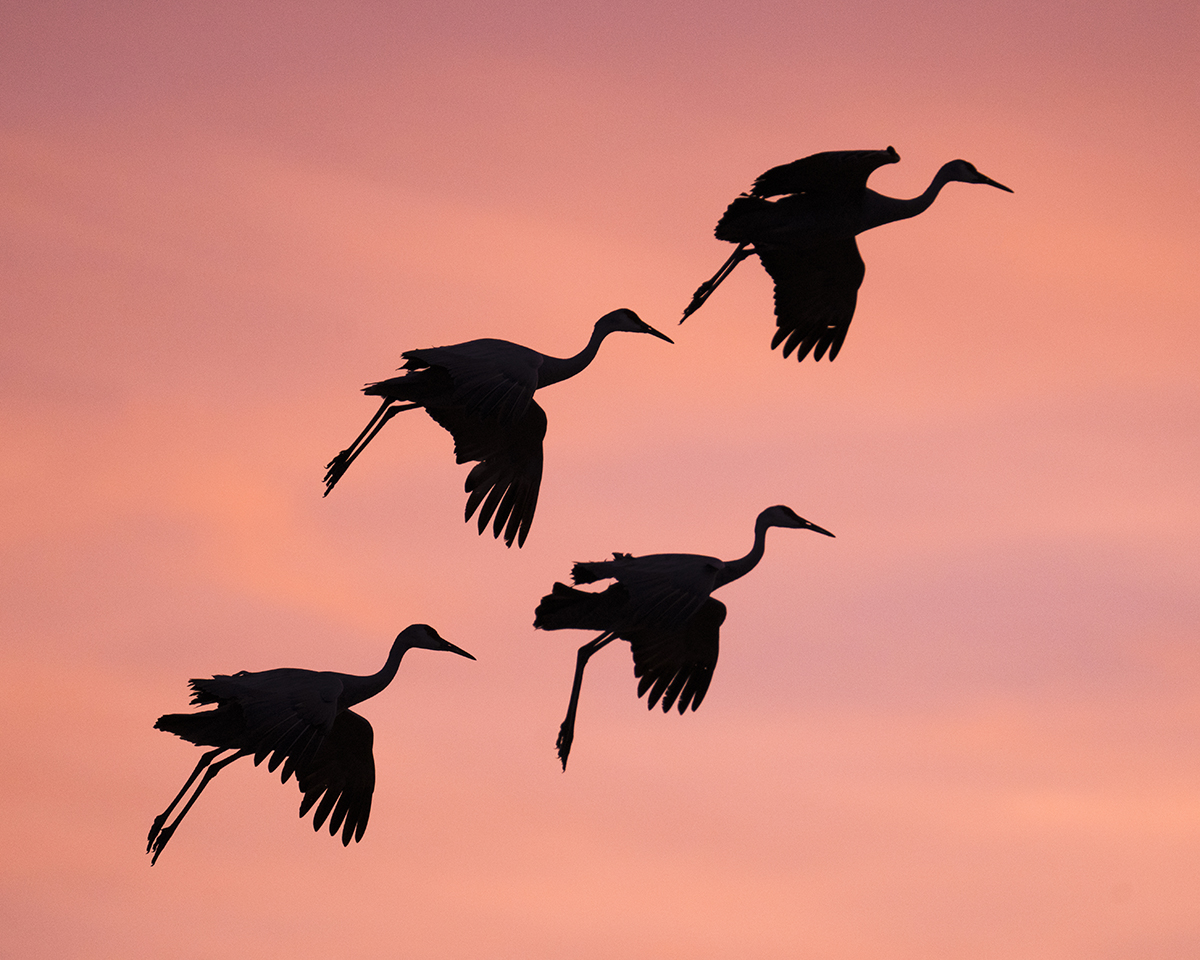
Photographing birds in silhouette is a fantastic way to maximize the available light to create dramatic, evocative images. Done well, silhouettes capture the hearts of your audience and demonstrate your ability to “see” images that others often do not.
Requirements for bird silhouettes:
- Uncluttered / clear backgrounds and foregrounds.
- A subject that is free from merging into any foreground or background elements (e.g., a stick or trunk crossing in front of or behind the bird).
- Strong contrast between the nearly-black subject and the background. Typically skies or water must be vivid, much brighter than the subject, and dramatic in nature. Capturing silhouettes just before sunrise or just after sunset can create the best color and light.
- Position yourself so that you are facing the light source (i.e., the sun). Expose for the sky, not the subject (this is essential). Compose so that your subject is in, or very near, the brightest part of the sky.
- Focus on the bird, but keep your exposure set for the sky.
- Use a shutter speed that is appropriate for your subject. Your aperture can remain wide open if/as needed (e.g., f/4 to f/6.3) and take the image!
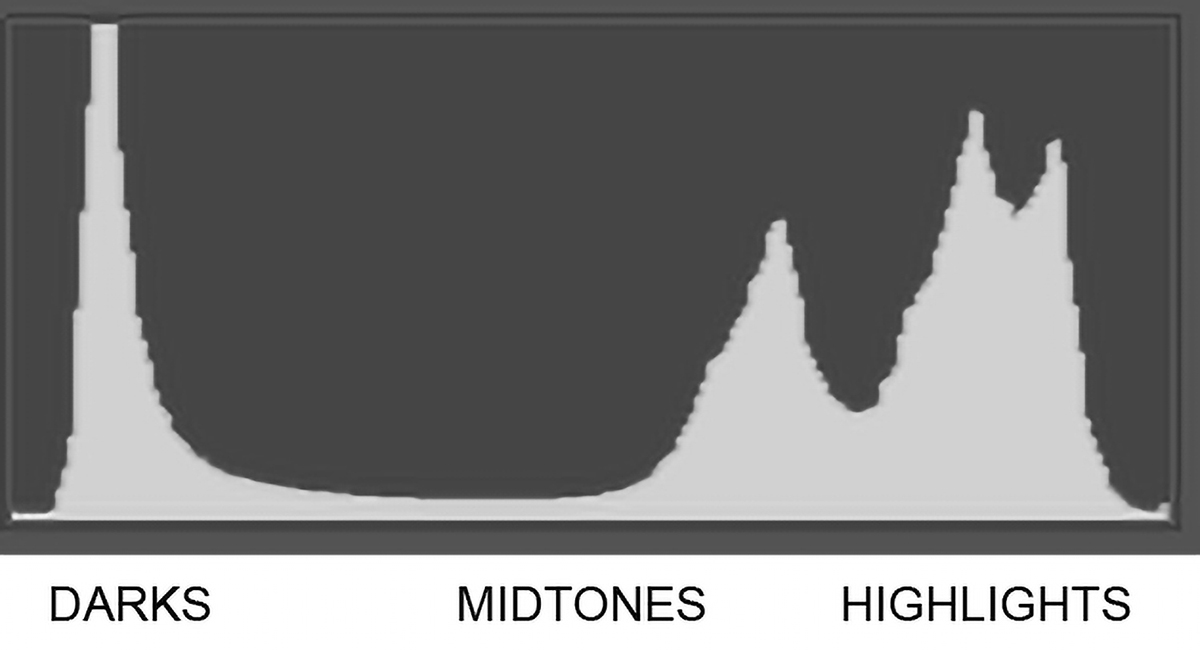
- Your histogram will approximately look like below. Note the strong upswing with the darker tones and then another upswing with the highlights.
Approach 3: Panning
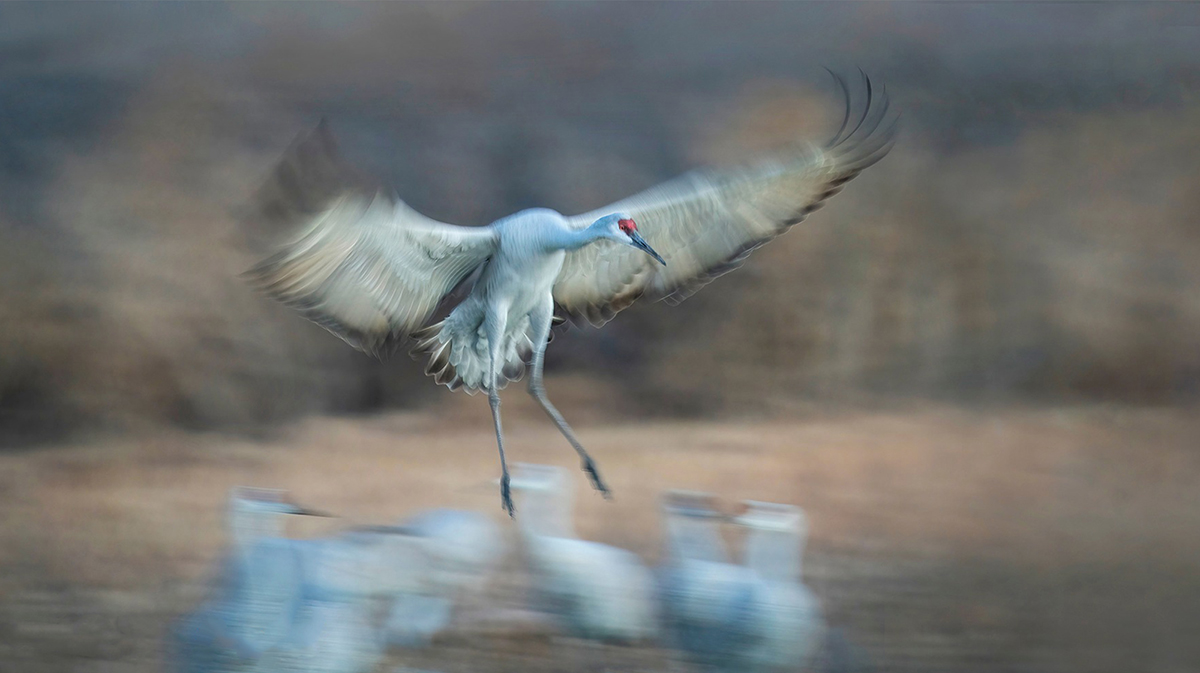
Panning while using a slow shutter speed is a special type of bird-in-flight photography. It emphasizes the sense of motion, creating ethereal, painterly styled images. The images that typically look the best are those where the head of the bird is acceptably sharp, or at least recognizable, while the body and wings are blurred to various degrees. There is a lot of individuality in what photographers perceive as correct with this artistic genre.
This type of photography carries with it a “low-hit-rate.” This means you must give yourself grace and be forgiving as perhaps only 1/100 images may turn out successfully. Both the bird and photographer must cooperate for it to work.
Lighting is critical for this type of photography. Avoid sunny, bright days. The best light is typically heavily overcast daylight, abundant open shade, or blue-hour.
Suggested settings for panning are:
- Shutter speed: For slower birds (cranes, herons, egrets) use 1/15th to 1/25th second; for faster birds (ducks, terns, geese) try 1/40th to 1/60th second
- Aperture: Close-down your aperture to the f-stop needed to allow your shutter to be open at the above settings. Typically, you may be at up to f/22 to f/45 unless you are taking images in very low-light conditions (e.g., blue hour or heavily overcast days).
- ISO: Most often, the ISO will need to be set at 100 or so. Rarely will it need to go above ISO 800 unless you are photographing in extremely low light conditions.
- Focus: AI Servo (Canon) or AF-C (Continuous Focus – Auto)
- Eye tracking: On for animals
- Image stabilization/ Vibration Compensation (VC): With the Tamron 150-500mm or 50-400mm lenses, you will want to set VC to: Mode 2, depending on your lens. Mode 2 compensates for vertical vibration but allows you to swing your camera/lens combo horizontally without stabilizing it. This prevents your camera/lens from correcting for the exact motion you are trying to create with panning. If you do not have a Mode 2, turn your VC OFF.
- High speed shutter/ Burst Mode: On
The key to this type of photography is to track your subject in a way that it always stays in the exact same spot in the frame the entire time you are panning across the scene, continuously focusing, and taking images at a high rate per second. If you track faster than the bird, or the bird flies faster than you track it, your bird will move to a different place in the grid.
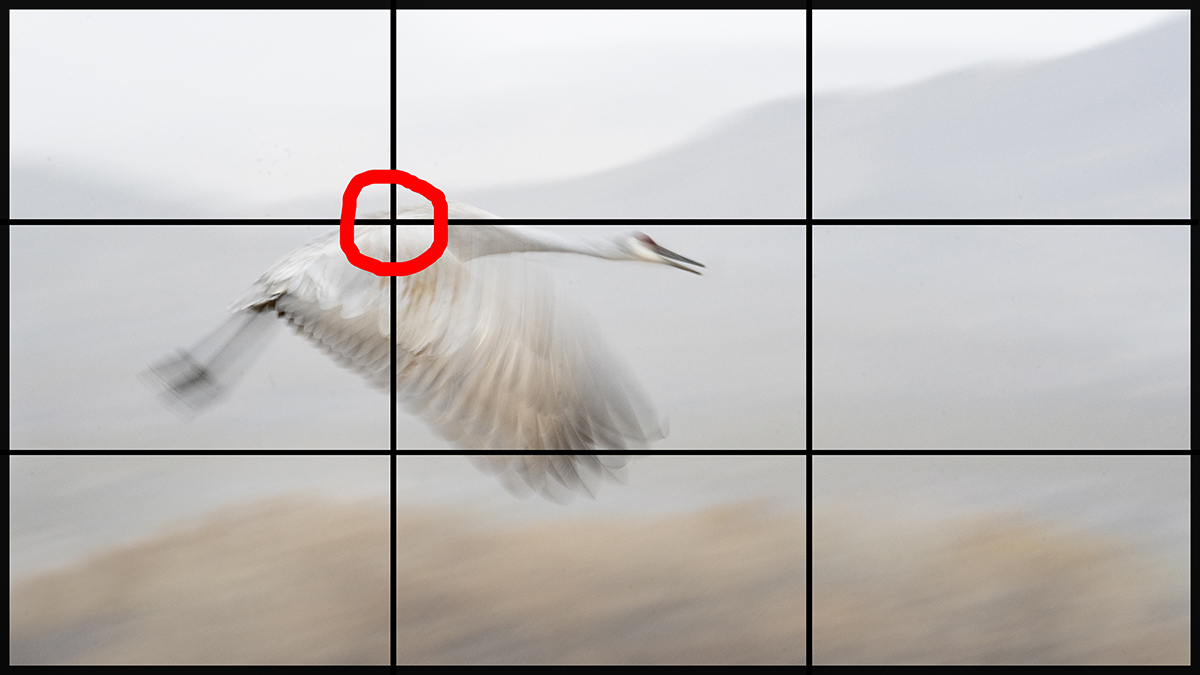
This results in a “ghosting” effect (e.g., it will appear as though the bird has two heads, two sets of wings, or other artifacts). Every single image must remain in the same location in the frame for your panning images to be successful. Careful practice and timing results in success.
Approach 4: Birds in Their Environment
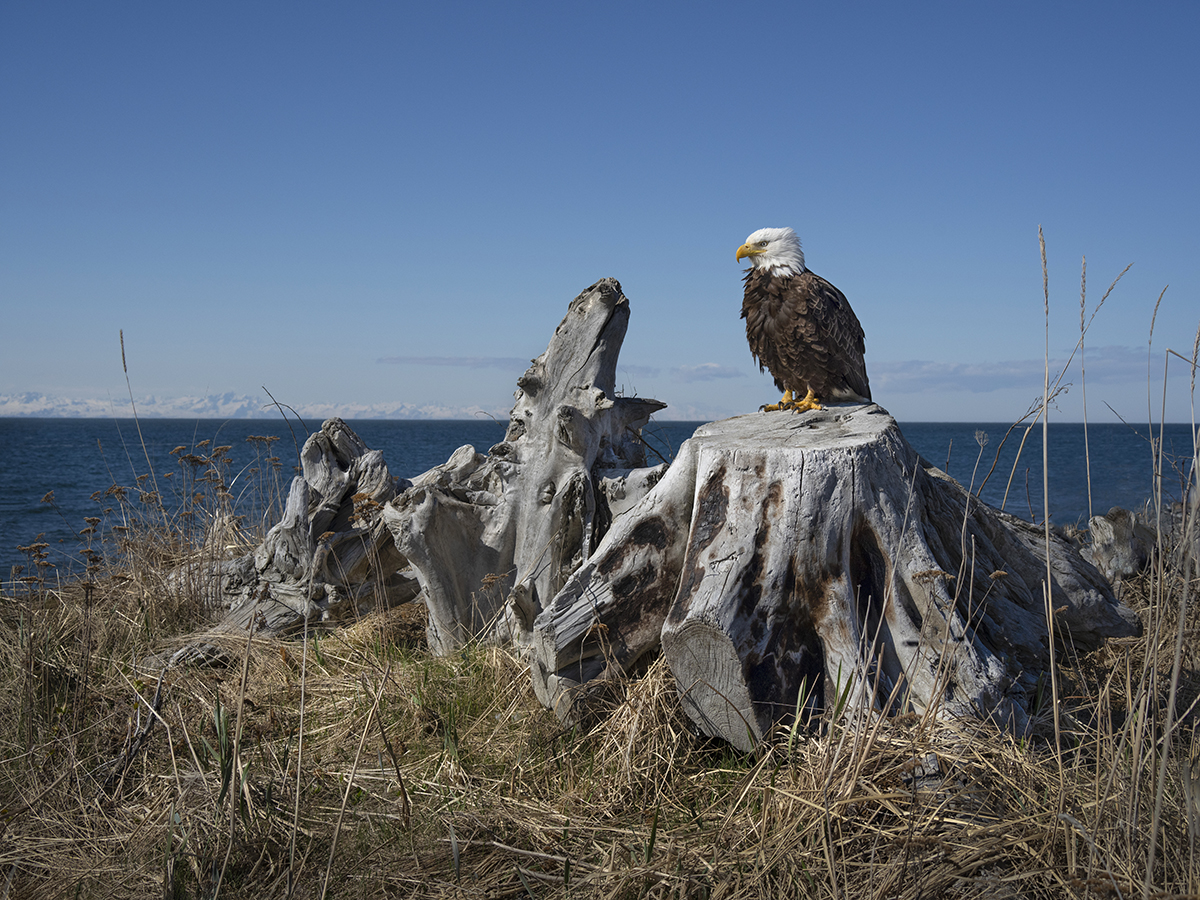
Not all bird photography needs to fill the frame with feathers or be captured in the traditional “close up” style. Positioning the bird in its environment is incredibly beautiful when done well, plus it tells more of a story about the bird and where it lives.
Composition is crucial for these images to be pleasing to the eye. Using the rule of thirds and putting the bird in the “power point” (any of the 4 areas where the lines intersect) and fill the rest of the frame with the background.
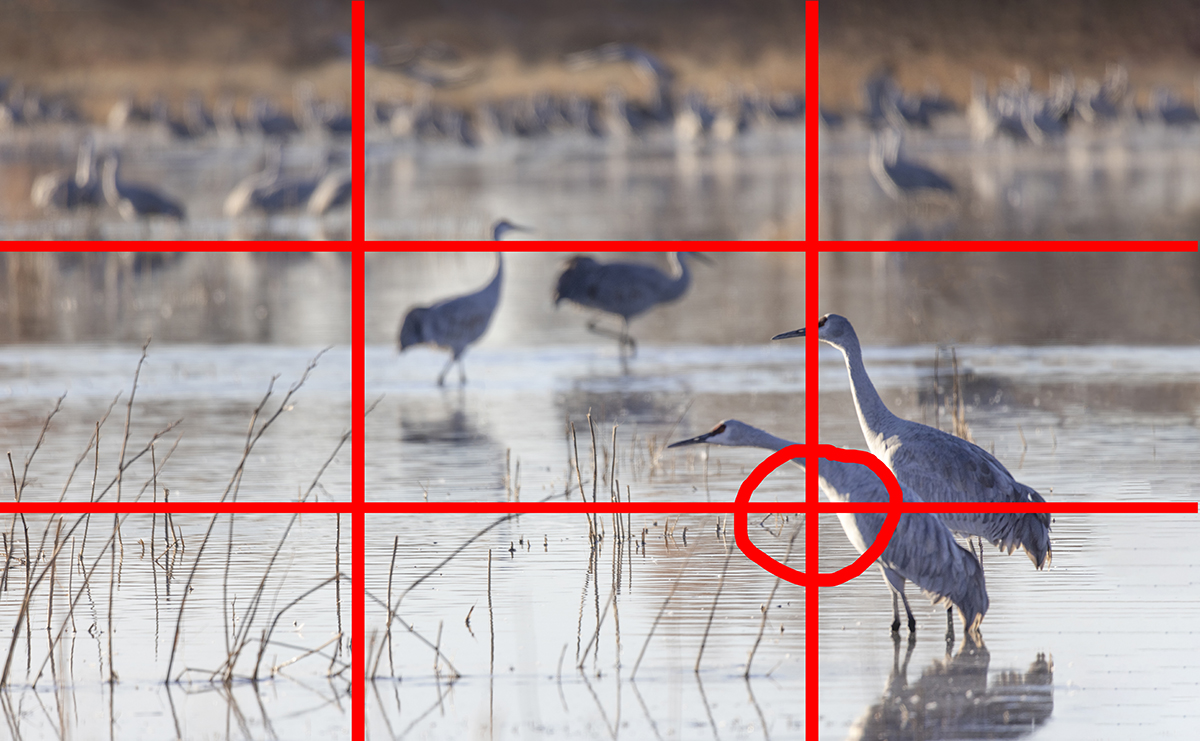
One of the best bird photography tips is to build layers in the image to help tell the story. Notice how the two cranes in the foreground are about to take off. The two birds in the middle are exploring their surroundings while the birds in the back give the viewer information about the expanse of birds in this pond.
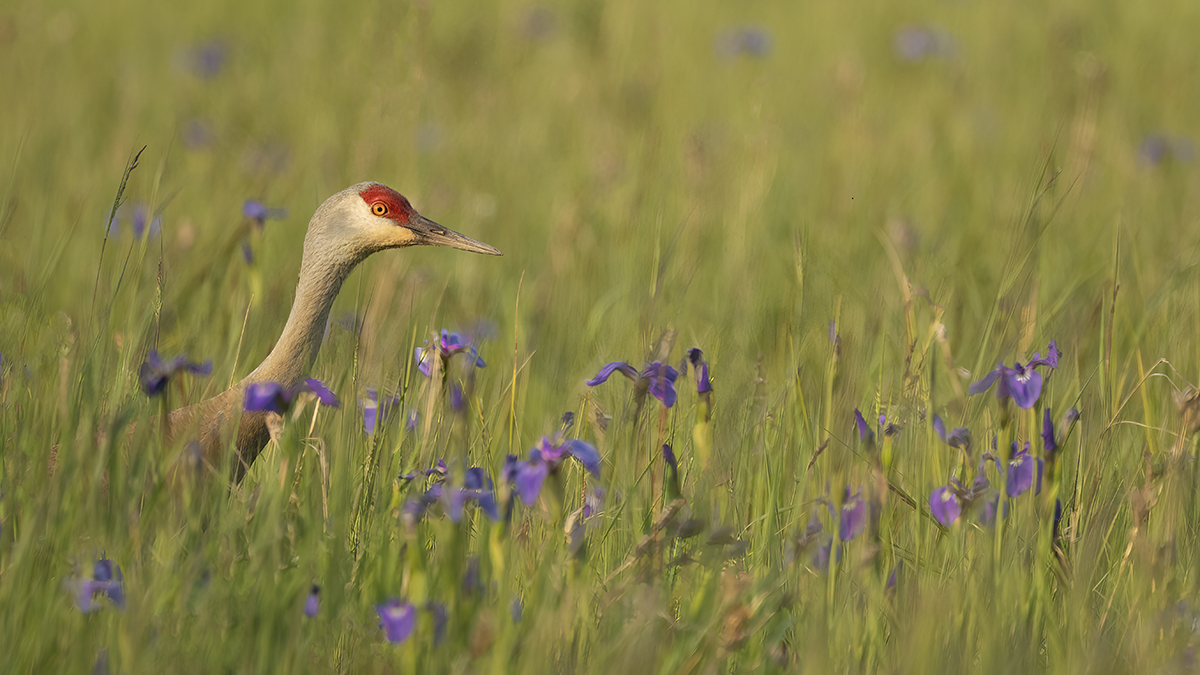
In the image above, the sandhill crane is poking its head out above the tall grasses and wild irises. A tight head-shot simply would not illustrate the story as clearly nor beautifully as this image does. Additionally, it was composed using both the rule of thirds and a 16×9 aspect ratio to highlight the many iris in the marshy area in which this bird is living.
Approach 5: High Key
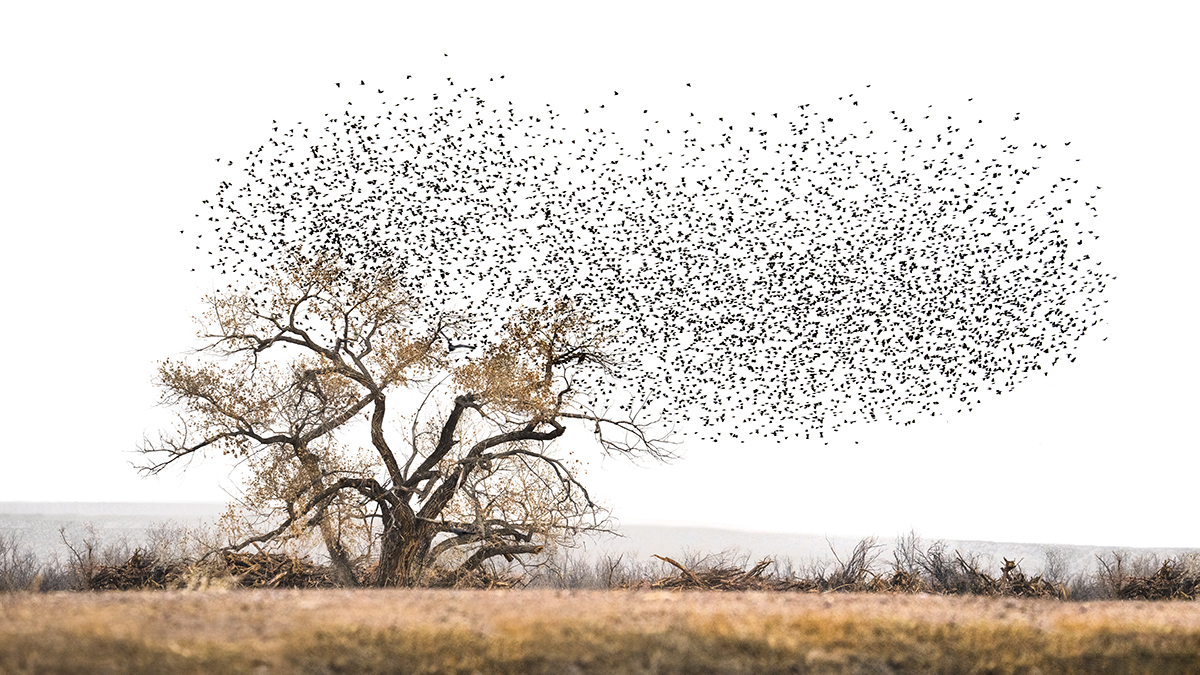
High key imagery is my favorite style of photography. The light, bright, ethereal imagery is emotionally evocative, clean, and often simplifies the color palate used in a photograph.
Capturing birds in high-key style can be exceptionally challenging. The light must be just exactly right. At the same time, the bird needs to be doing something interesting, the settings need to be correct in the camera, and more.
Follow these bird photography tips to start out photographing in high-key style :
Light
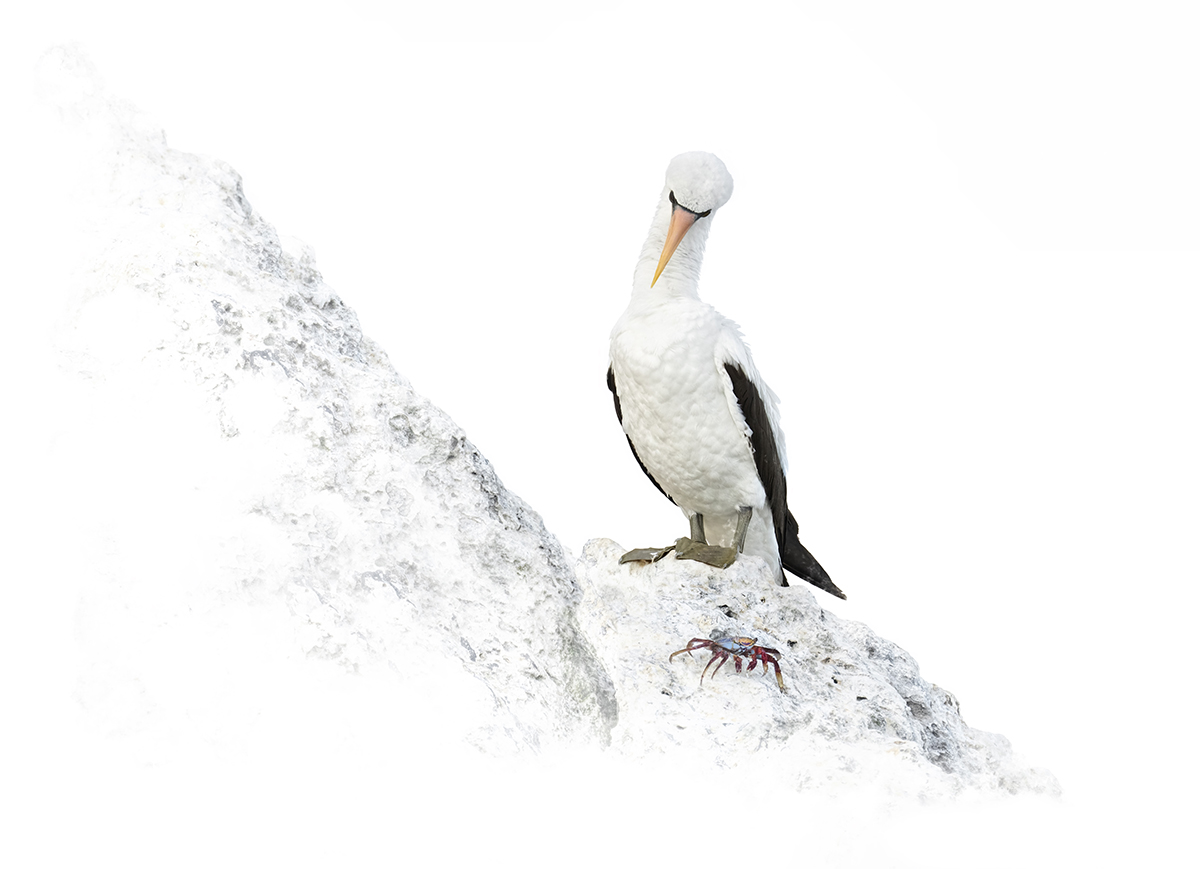
Look for backlit subjects where the subject is much darker than the sky or background. You do not want it to be a silhouette, but you do want the light to create a much darker bird with a bright background. The light must also be diffused (never use front or side light or you will have issues with exposure). An overcast day is perfect for this type of photography. Just put your subject between you and the brightest part of the sky.
Settings
- Use settings exactly as you would to photograph a bird normally.
- Next, over-expose between 1-3 stops. Using Exposure Compensation is an easy way to consistently ensure you are over-exposing enough.
- Turn on your histogram in live-view or playback mode.
- Turn on your highlight alerts (often called “blinkies” or “zebras”)
- You are attempting to blow out your background and/or foreground while maintaining an exposure that properly exposes the bird. You may need to bracket in order to ensure you have the correct exposure.
- White balance set to cloudy (if you use RAW images, you may also adjust this during post-processing).
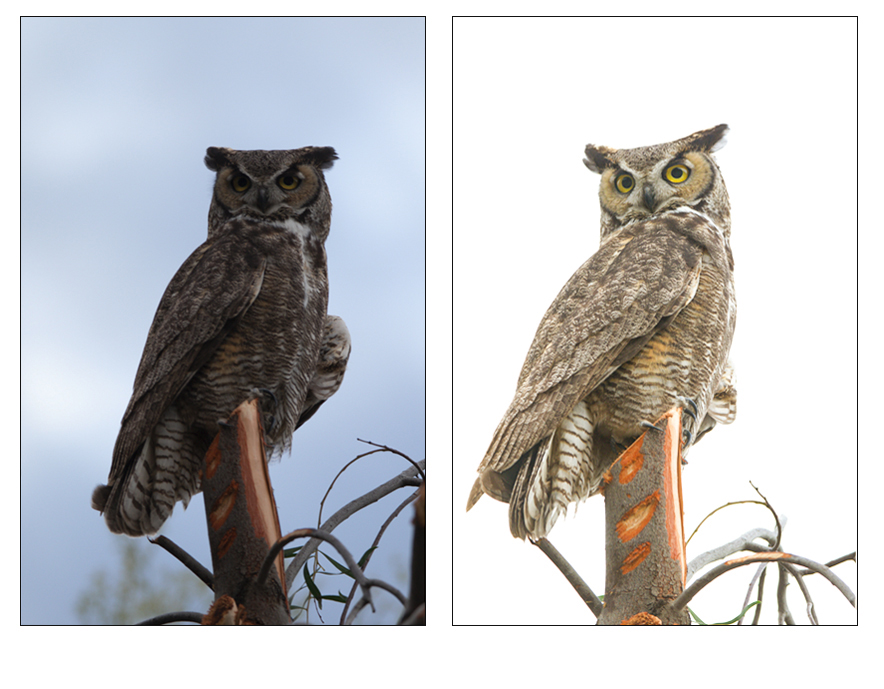
(Left) The great horned owl is exposed as your camera would “see” it. The camera takes in all the light in the brighter sky and under-exposes the bird. Spot metering can help correct this problem, but it is not typically successful in producing quality high-key images alone. You must over-expose at the level needed to produce white backgrounds, as shown on the sister image (right). This image was over-exposed by 2.7 stops.
During post-processing, you may need to ensure your skies remain white and that your white balance is accurate.
NOTE: Though it is possible during post-processing to select the subject, copy it, and paste it onto a white background, or otherwise make the background white, I find it still will look artificial unless you have incredibly diffused light on your subject. Even then, the look does not typically hold up as well as one done naturally in-camera.
How to Choose the Right Creative Approach for the Scene
Each of these creative bird photography techniques brings a different feeling to the final image.
- Choose birds in flight when behavior, action, and timing are the story.
- Choose silhouettes when the light is dramatic and the shape of the bird is strong enough to carry the composition.
- Choose panning when you want to convey motion, energy, and a more artistic feel.
- Choose environmental portraits when the habitat matters and you want to show where the bird lives, feeds, or interacts.
- Choose high key when the light is soft and bright, and you want a minimalist image with an airy, emotional quality.
The more you practice, the more instinctive it becomes to recognize which creative approach best suits the bird, the light, and the story unfolding in front of you.
Final Thoughts on Lisa’s Creative Bird Photography Techniques
With these five thoughtfully crafted creative bird photography techniques from professional wildlife photographer Lisa Langell, you have a strong foundation to expand both your skills and your artistic vision behind the lens. Each approach, whether it is freezing the action of birds in flight, creating dramatic silhouettes, mastering the art of panning, telling a story through environmental context, or exploring the ethereal beauty of high key imagery, offers a unique way to connect with and portray your avian subjects.
Armed with the right knowledge, your camera, and the versatile performance of Tamron telephoto zoom lenses, you will be well equipped to capture beautiful images of birds in a wide range of conditions. Practice, patience, and persistence will help you refine these techniques and discover your own artistic voice in this incredibly rewarding genre. Nature is waiting—go out and explore the endless creative possibilities of bird photography with confidence and curiosity.
Where to Buy Tamron Lenses
Learn more about Best Tamron Lenses for Bird Photography at an authorized Tamron dealer near you or shop directly at the official TAMRON Store.
About Lisa Langell
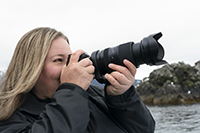
Tamron Image Master Lisa Langell is a full-time, award-winning photographer whose work has appeared in numerous prestigious publications, galleries and more. Whether it was working as a master floral designer, a licensed psychologist, an adjunct university instructor, an international consultant in K-12 education, the Chief Business Development Officer of an education technology company, a researcher, a writer, or artist—she succeeded with each challenge. Still, her calling was photography since childhood when bird watching ignited her lifelong love of nature and the camera. In 2010, she turned her passion for photography into a business. This challenge has been Lisa’s favorite – she loves combines her diverse skills into her photographic art and instruction, like providing these bird photography tips. Bringing joy to others brings joy to her! She thrives on creating joyful learning experiences that enrich, invigorate, and expand photographers’ minds emotionally, creatively, and intellectually!
Instagram @langellphoto
Watch Tamron Birding Videos
Wildlife and Nature Photographer Lisa Langell with the Tamron 50-400mm Di III VC VXD (Model A067)
Ken Hubbard with the 150-500mm F/5-6.7 Di III VC VXD (Model A057) zoom lens for Sony mirrorless
Kristofer Rowe on Assignment
More Photo Tips | Watch Videos | Learn More About Tamron Lenses | Photo Gallery
 English
  Spanish
  French
  Portuguese