 Instant Savings
 Rebate Claims
 Support
 Find a Dealer
Wildlife, Unscripted
Alexander Augustin explores the unpredictability of wildlife photography with his Tamron 150-500mm VC ultra-telephoto and 28-75mm F2.8 G2 zoom lenses.
Author: Jenn Gidman
Images: Alexander Augustin
Share Article
Alexander Augustin explores the unpredictability of wildlife photography with his Tamron 150-500mm VC ultra-telephoto and 28-75mm F2.8 G2 zoom lenses.
Alexander Augustin has spent much of his photographic career immersed in ’scapes: landscapes, cityscapes, seascapes, and the like. “It’s the type of photography where you can take your time and carefully build the scene, since nothing is moving,” he says. With his more recent adventures in wildlife photography, he’s finding the opposite. “You have no control over your subjects, so the only thing you can do is wait and hope the animal eventually moves into the position you envisioned,” he notes.
To assist with his latest passion, Alexander turns to the Tamron 150-500mm Di III VC VXD ultra-telephoto lens and the 28-75mm F/2.8 Di III VXD G2 zoom. “As someone still relatively new to wildlife photography, the Tamron 150-500mm VC is a very approachable lens,” he says. “What stands out is its balance between reach and portability. Many super-telephoto lenses are large and heavy, but this one is compact enough to hand-hold comfortably, making it much easier to react quickly when animals move. The Vibration Compensation (VC) technology also helps keep shots sharp at longer focal lengths, especially when tracking birds or other unpredictable wildlife.”
The Tamron 28-75mm F2.8 G2, meanwhile, comes in handy when Alexander is trying to weave in more of the scene. “I used it for the flamingo photo here to highlight one bird as the subject while still showing the rest in the background,” he says. “Its constant F2.8 aperture lets in more light and creates nice subject separation, and it delivers excellent sharpness and strong image quality. I generally reach for the 150-500mm VC when I want tight wildlife shots from a distance, and the 28-75mm F2.8 G2 when I want a wider perspective that shows both the animal and its environment.”
Read on as Alex does a deep dive on some of his favorite photos from recent zoo excursions in Florida. “Venues like these, with natural-looking habitats, are a great place to get your feet wet in wildlife photography,” he says. “You can practice observing animal behavior, anticipating movement, and working on composition in a setting that still feels close to nature.”

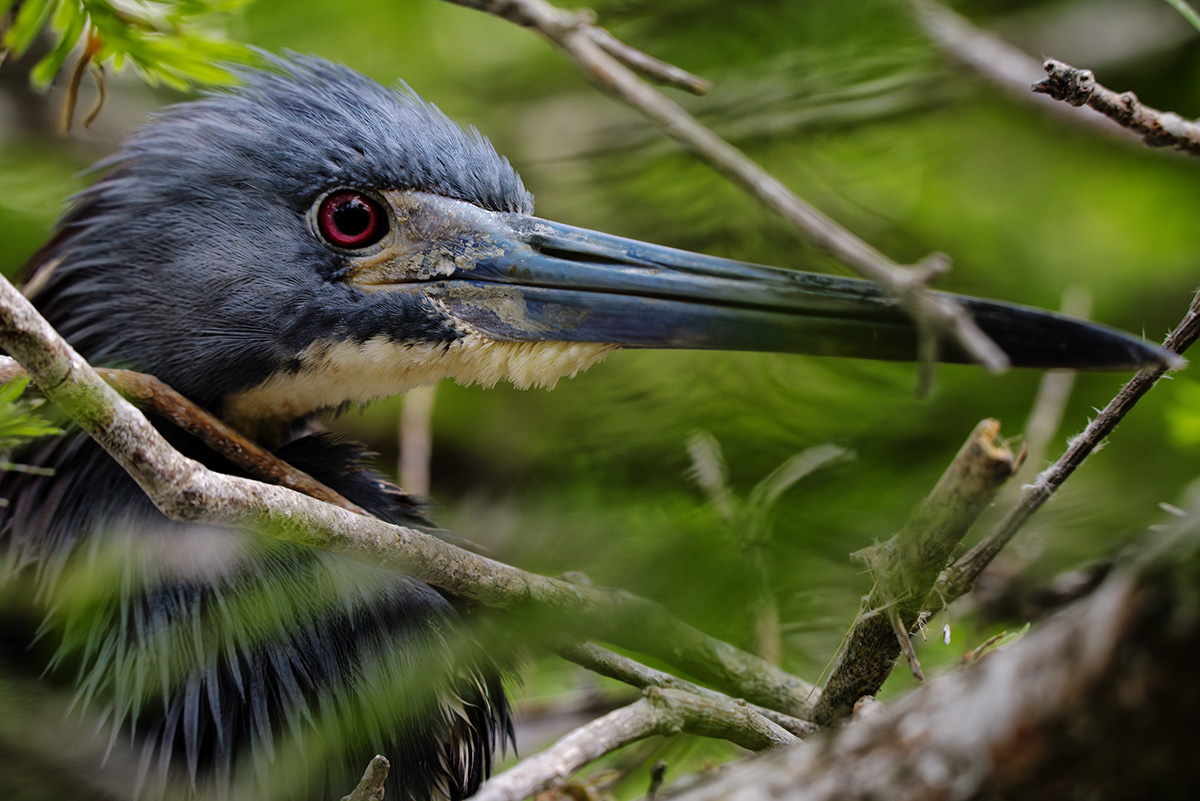
Birds have probably been my favorite animals to photograph, though they’re also some of my most challenging subjects, because they’re small and fast. Getting a sharp shot often means tracking fast movements and reacting quickly when they take off—a situation where the Tamron 150-500mm VC comes in very handy. I can move quickly with this lens, due to its compact size and portability, repositioning when a bird changes direction and tracking them more easily while they’re flying or hopping around.
For the parrot image, this was actually my first time attempting wildlife photography with the Tamron 150-500mm VC lens, and that session is what really got me excited to pursue wildlife photography more seriously. This great green macaw was an incredibly photogenic subject. Its vibrant green feathers, mixed with the blue accents on its wings, create a really striking color combination that stands out beautifully. I tried to position myself so the background stayed dark and soft, which helped the bird’s colors pop even more.
When I press the shutter, I’m usually looking for a moment where the subject, the composition, and the behavior all come together. I’m often waiting for small moments, like when the animal turns its head toward the light, pauses briefly, or moves into a spot where the background becomes cleaner. I also try to capture the animal at an angle where it’s easily recognizable, rather than hidden or facing away from the camera.
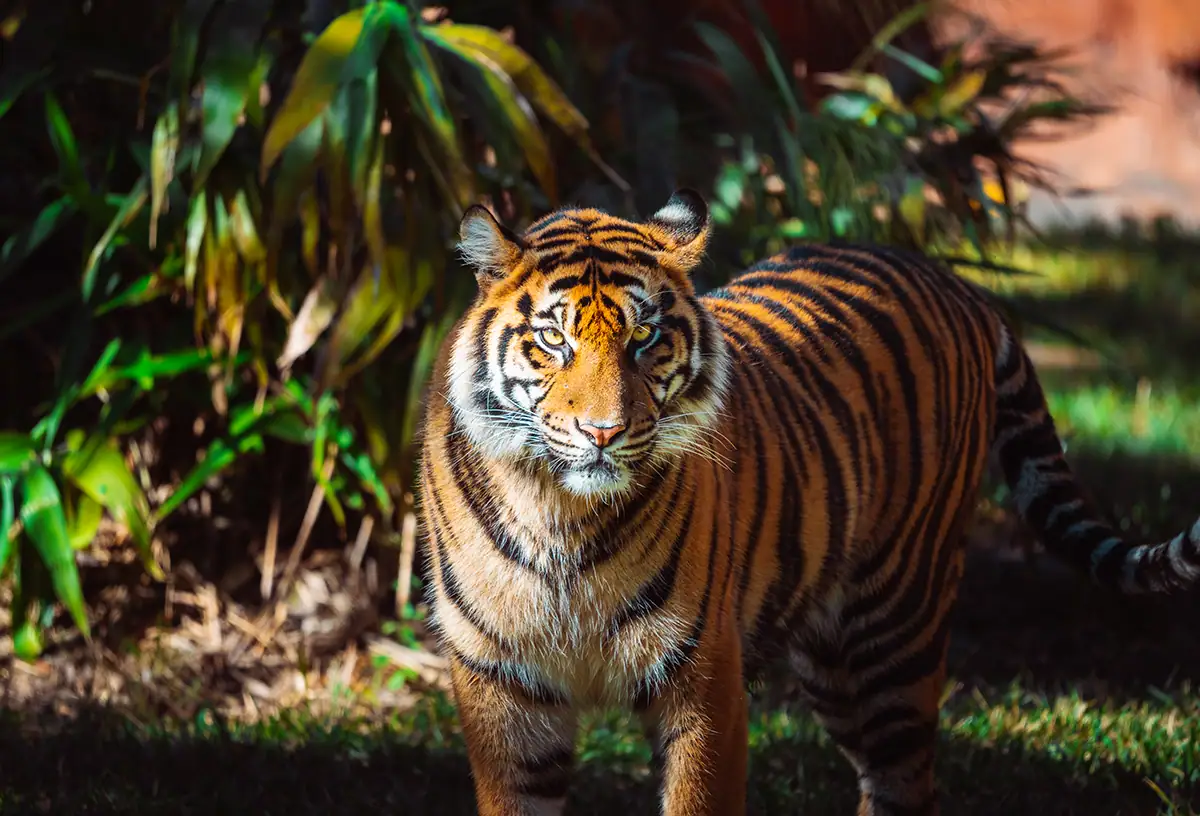
For this tiger photo, it was a very sunny, hot day, and when I first arrived, the tiger was lounging deep in the shade, facing the opposite direction, which made it tough to capture a strong shot. After waiting a bit, I decided to come back later. When I returned, the tiger was still mostly in the shade, but this time it stood up, turned around, and briefly glanced my way. That moment created the opportunity for the shot. What I like most about this image is the tiger’s eye contact and posture, which lend the photo a lot of character.

This giraffe image is one of my favorites. The giraffe in front became the main subject, captured in a clean side profile, so its shape and pattern are easy to recognize. At the same time, another giraffe moved into the background, which added depth and balance to the scene without distracting from the main subject. I spent about 30 minutes observing the giraffes and following them around to get this shot, waiting for the right positioning between the two animals. Moments like this are where the Tamron 150-500mm VC really helps. Its portability made it easy for me to move around and quickly adjust my position while tracking them, so I was ready when the composition finally came together.

For the elephant image, my approach was a little different. Elephants are one of the easier subjects to photograph, because they move slowly and often stay in one place for a while, which gives you more time to observe the scene and work on your composition. At this particular moment, the elephant was busy eating, which made things even easier. Since it was focused on feeding, it stayed in roughly the same spot for a bit, giving me enough time to carefully frame the shot and capture a clean side profile.
When photographing wildlife, I typically shoot in manual mode and focus on controlling my shutter speed. Wildlife can make abrupt movements, so keeping my shutter speed high is a priority to avoid missing any moments or ending up with motion blur. If the animal isn’t moving much, like this elephant, I’ll lower the shutter speed a bit, usually somewhere around 1/500 sec. to 1/1000 sec.
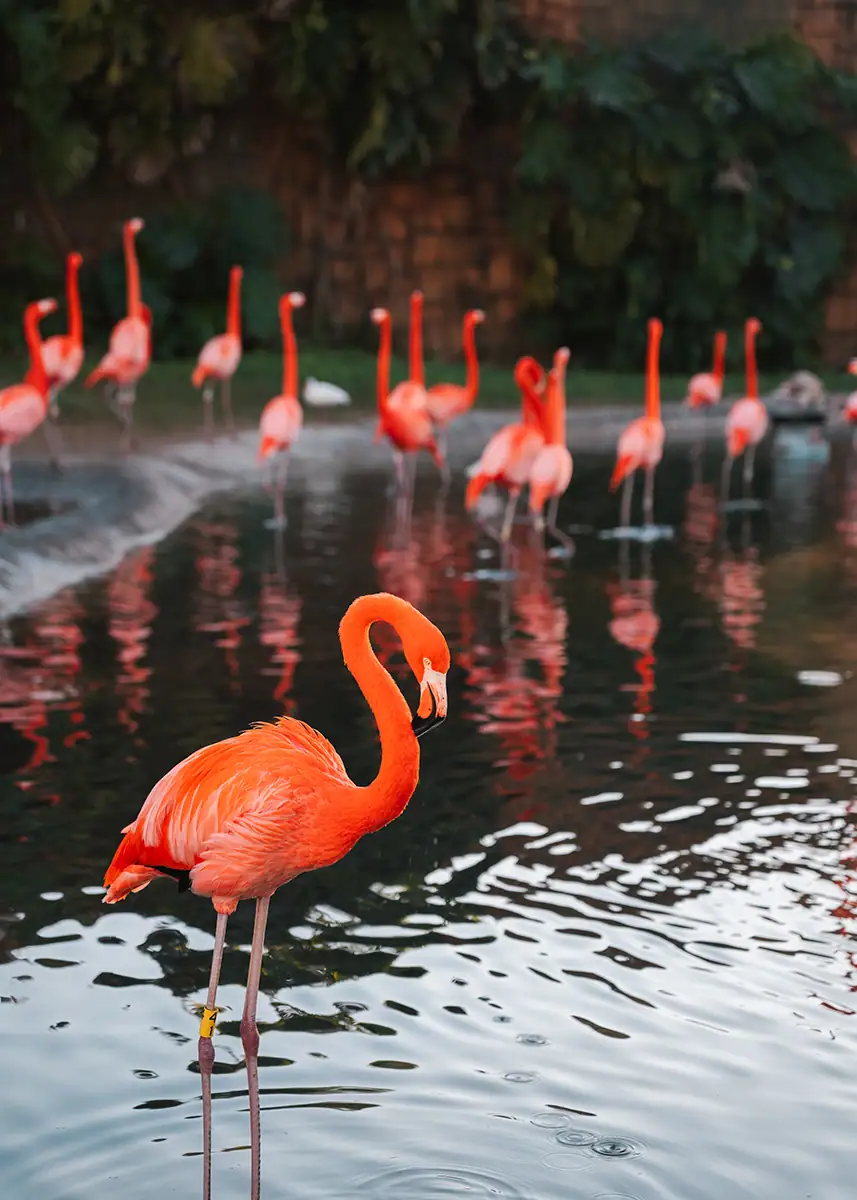
Most of the time, I don’t start out with a strict shot list. I prefer to let the scenes unfold, then react to interesting moments as they happen. With the flamingo image, that unfolding was one of those times where patience made all the difference. I took an initial close-up shot around 11:30 a.m. The wider composition you see here didn’t come together until around 6 p.m., however, when one flamingo finally moved into the position I wanted. I waited until that one flamingo moved slightly away from the group and stepped closer to the front. That little bit of separation made the shot work. The reflections in the water also helped add texture and balance to the frame.
To see more of Alexander Augustin’s work, check out his website and Instagram.
 English
  Spanish
  French
  Portuguese