 Instant Savings
 Rebate Claims
 Support
 Find a Dealer
One All-in-One Zoom, 6 Wintry Scenes
Lewis Kemper’s versatile Tamron 25-200mm F2.8 zoom lens helps him capture Yosemite after a fresh snowfall.
Author: Jenn Gidman
Images: Lewis Kemper
Share Article
Lewis Kemper’s versatile Tamron 25-200mm F2.8 zoom lens helps him capture Yosemite after a fresh snowfall.
When a winter storm is forecast for Yosemite National Park, Lewis Kemper pays attention. Even after decades of photographing the park—including 10 years living on its outskirts—he knows that snow has the power to transform the familiar into something fleeting and new. So when a recent weather report hinted at a midweek snowfall, Lewis booked a campsite and headed to the park, hoping conditions would align.
When Lewis woke up the next morning, prospects initially looked gloomy. “There was only an inch or two of snow on the ground,” he says. That turned out to be just enough, however, as the tree branches were lightly frosted and the granite rock formations, including the formidable El Capitan, became softened by the white. “I’d brought my cross-country skis to get around on, but I didn’t even need to pull them out,” he says. “It was easy enough to walk around taking pictures in my boots.”
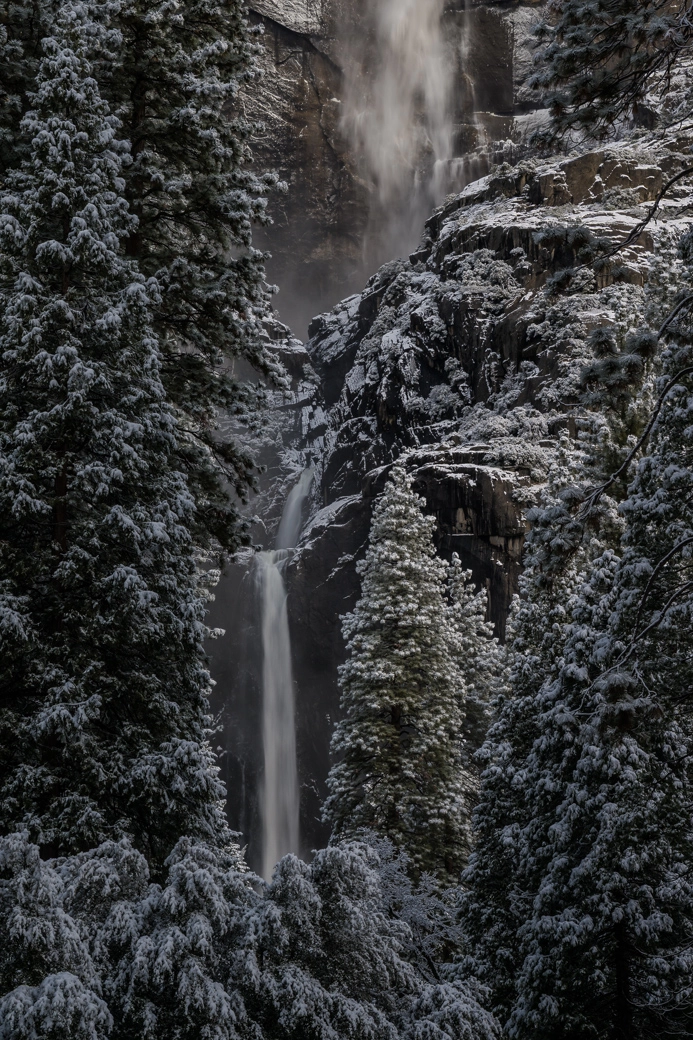
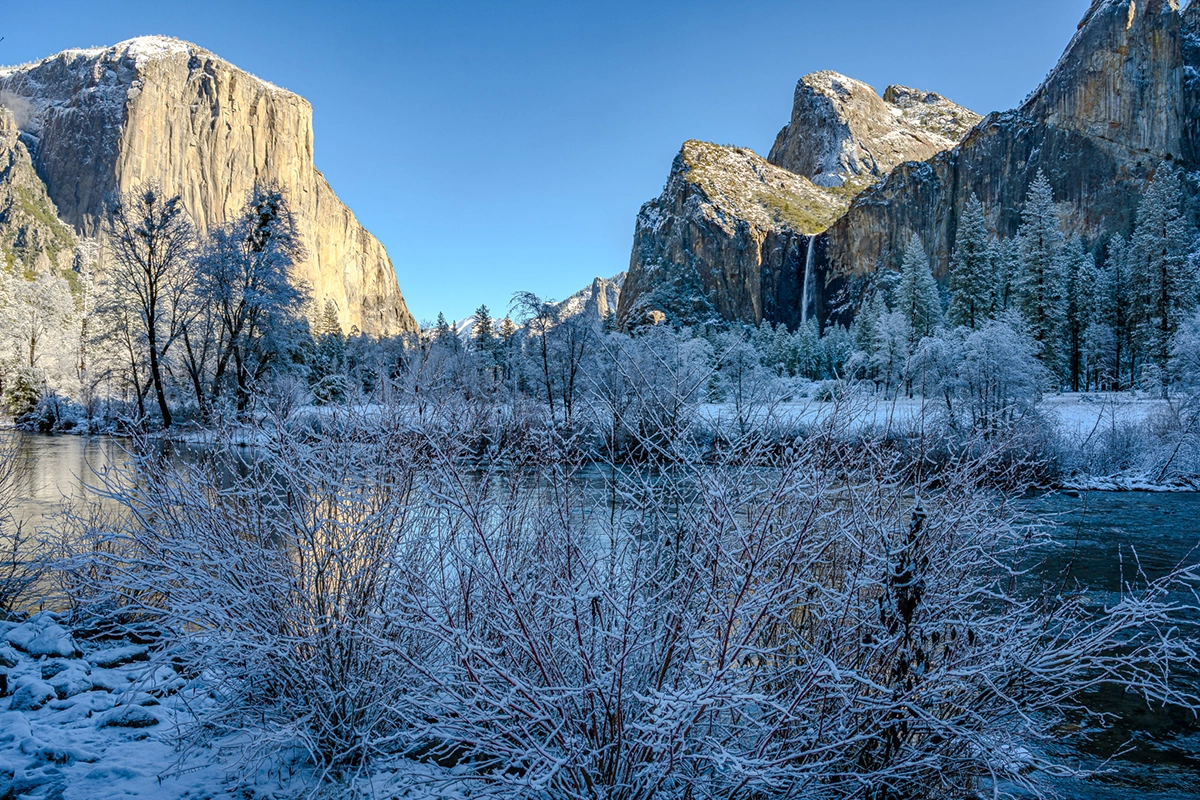
Mounted on Lewis’ camera for most of his icy adventure was Tamron’s new 25-200mm F/2.8-5.6 Di III VXD G2 all-in-one zoom lens. “This lens covered everything I needed to do,” he says. “I could capture a sweeping panorama at Yosemite’s iconic Tunnel View, then zoom in tight on Half Dome without changing lenses.” That flexibility, combined with the 25-200mm’s compact and lightweight design and fast F2.8 aperture—“I could stay past sunset and do astrophotography with it if I wanted to”—proved invaluable in the frigid conditions, where minimizing lens swaps meant less exposure to the elements.
LEWIS’ QUICK TIPS
Take advantage of the zoom range.
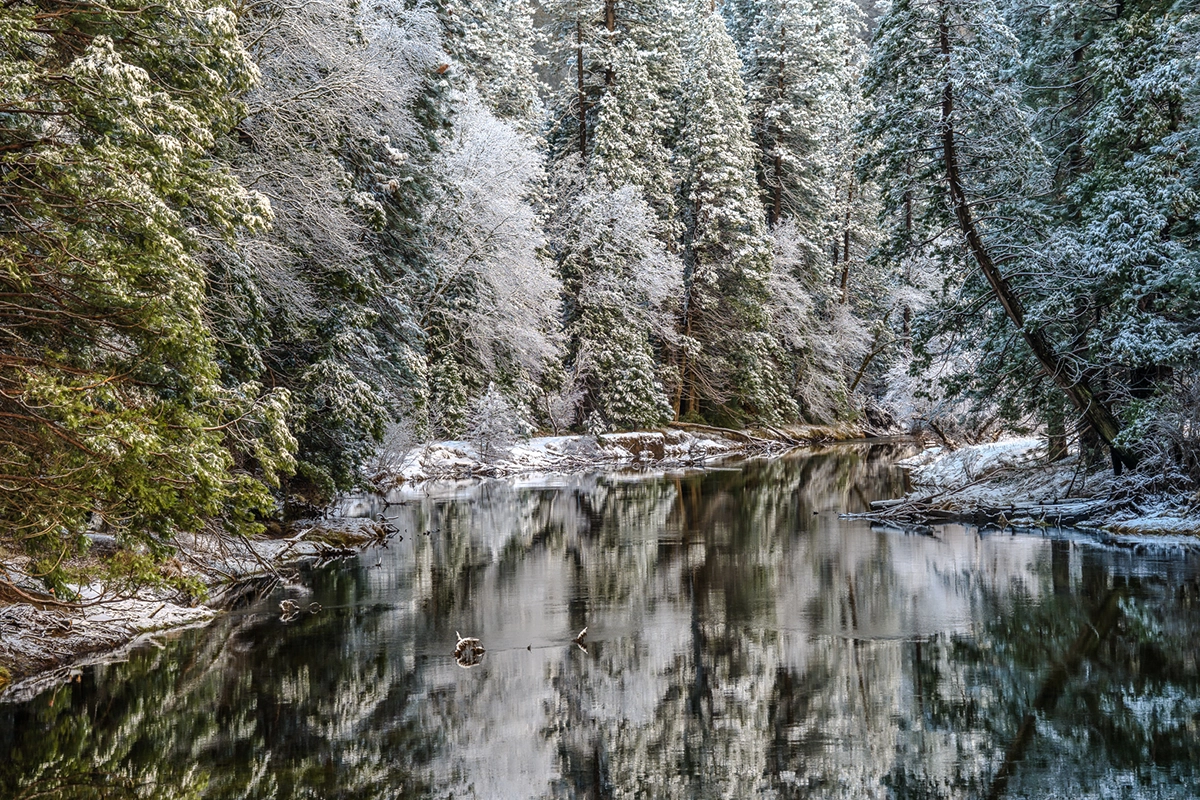
One of the things I appreciate about the 25-200mm is how it lets me fine-tune my compositions without having to move around too much. In the reflection image here, the water was perfectly calm, with no wind at all to cause it to ripple. The light was even and consistent, so taking the best photo was simply a matter of zooming in and out to see what felt right. When you do that, you start to see relationships and shapes you maybe didn’t notice at first glance.
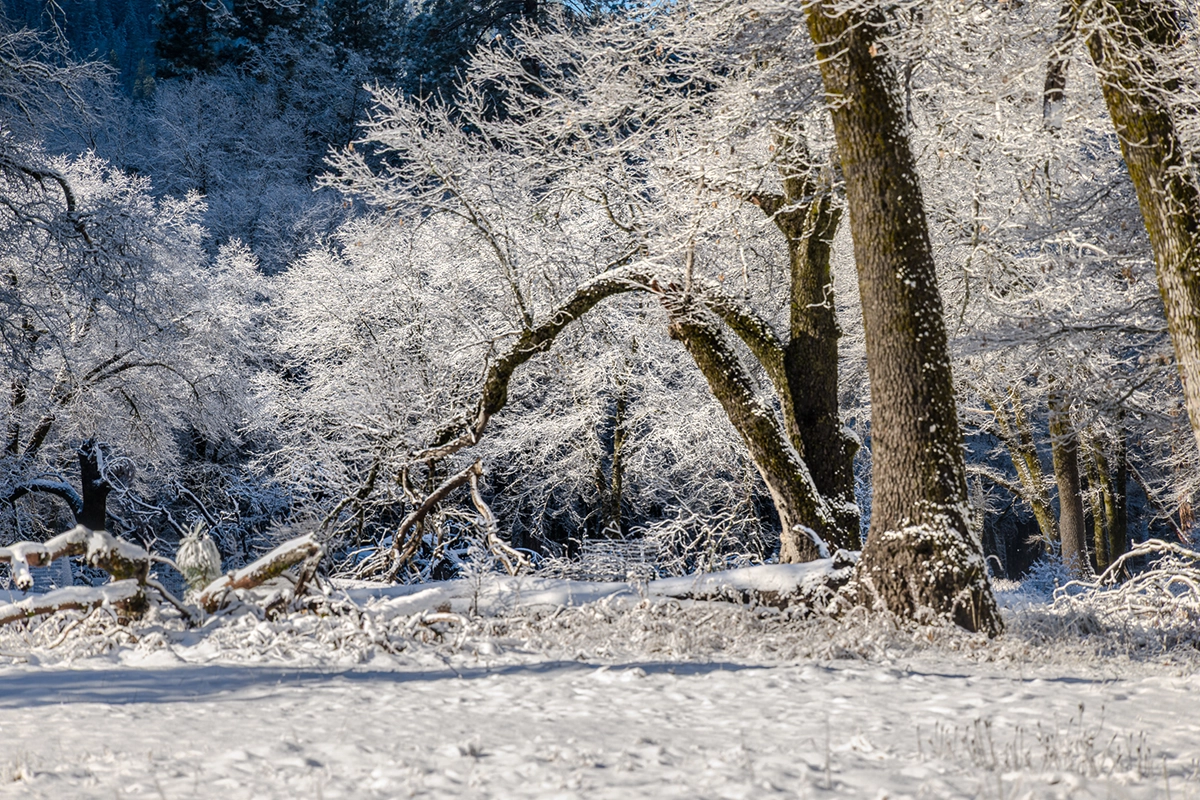
The curved branch photo is a nice example of how the longer reach on the 25-200mm lens can completely change the feel of an image. I was standing in a meadow when I spotted this scene, and my first thought was that I’d have to walk a bit to set things up the way I wanted to. Then I realized I could simply zoom in with the 25-200mm F2.8, instead of moving closer. I was able to compress the scene and bring more of that soft, wintry background into the frame.
Brave the morning cold.
I almost always recommend getting out early, especially if there’s been snow overnight. Once the temperature starts rising or the sun hits the trees for too long, the ice and snow will begin to melt and fall off the branches. I’m a morning person anyway, and as a color photographer, I love that warm golden-hour light. In a place like Yosemite, which is essentially a steep canyon, the early light is even more dramatic: One side of the valley will be lit up while the other remains in shadow, so you can work with backlit subjects against dark cliffs or turn around and shoot in softer, more even light.
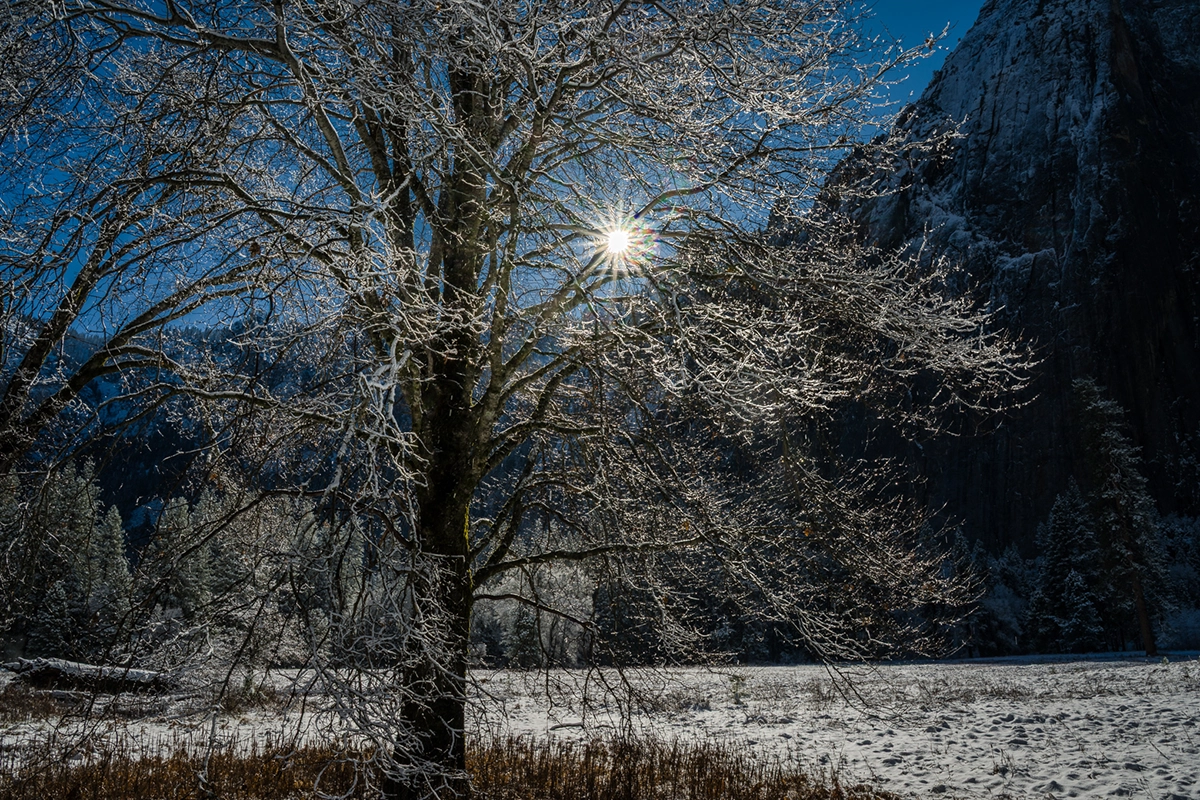
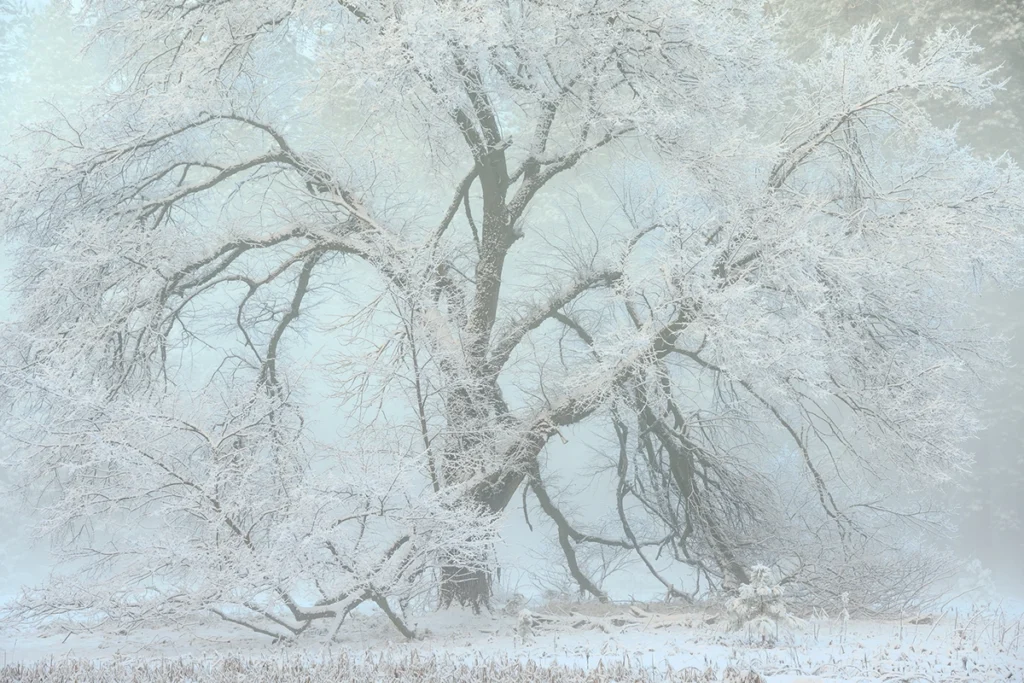
The snow-covered elm tree in Cook’s Meadow, a famous tree in the park, is a perfect example of why morning matters. As the sun rose and began to hit the cliffs behind it, there was fog lifting off the meadow, and it picked up this subtle bluish glow in the background. I even pushed the exposure slightly, knowing I could recover highlight details in HDR processing and really bring out that luminous blue tone.
Show off the snow.
Winter often brings strong contrasts, especially if you’re shooting more toward midday, with bright snow, bright light, and sometimes deep shadows. In some scenes, I’ll use dark shadows as graphic elements against white snow. In others, like the foggy tree image, I may slightly push the exposure, knowing I can retain highlight detail and open up shadows in post. I also rely on auto white balance with a setting that preserves warm tones, so your whites remain white, but the early-morning light doesn’t get corrected into something too cool.
Look for interesting elements to weave in.
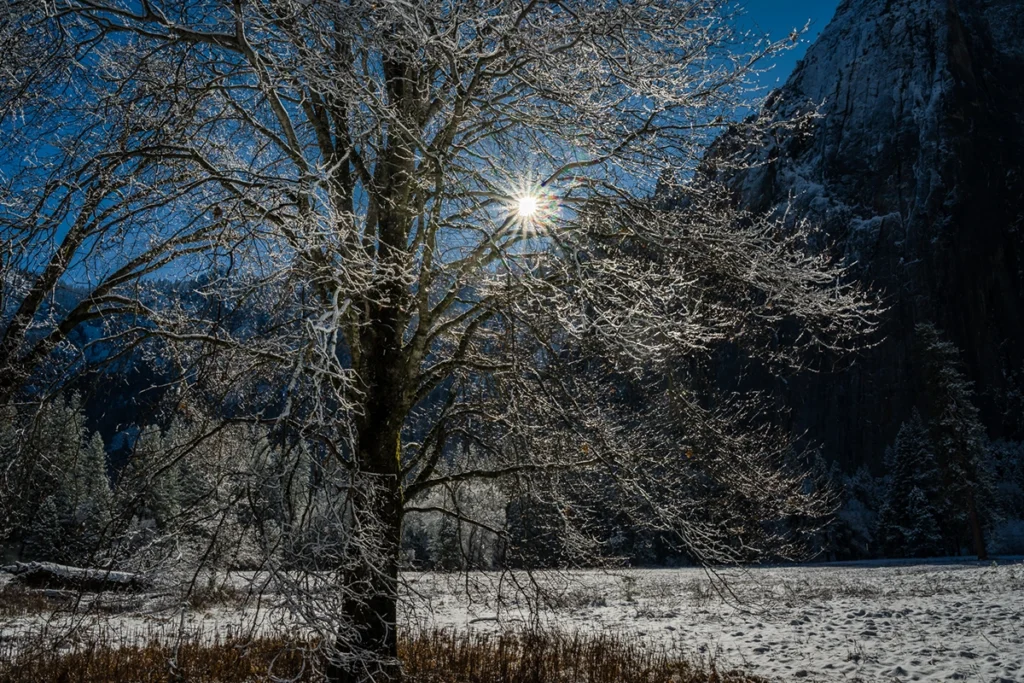
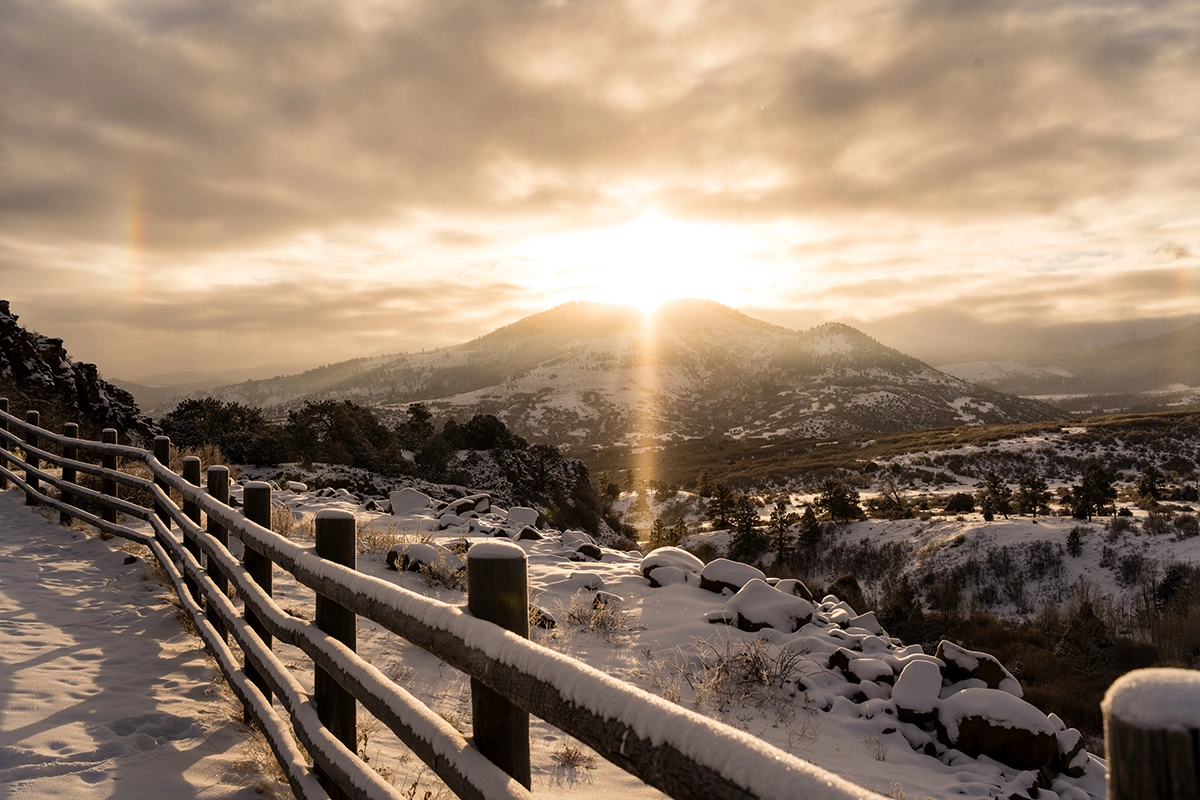
In winter, when everything can feel gray and flat, I’m always looking for something that adds a spark—literally or figuratively—to the scene. Dramatic light is usually what catches my eye first. With the sunburst image here, I headed into that meadow knowing the sun would be rising that way, behind that tree, so I was already thinking about positioning things to create a star effect. What made that particular photo work was the bright sparkle of sunlit snow and ice against the backdrop of deep shadow, as previously mentioned.
 English
  Spanish
  French
  Portuguese