Instant Savings
 Rebate Claims
 Support
 Find a Dealer
Fast Glass for Fast Breaks
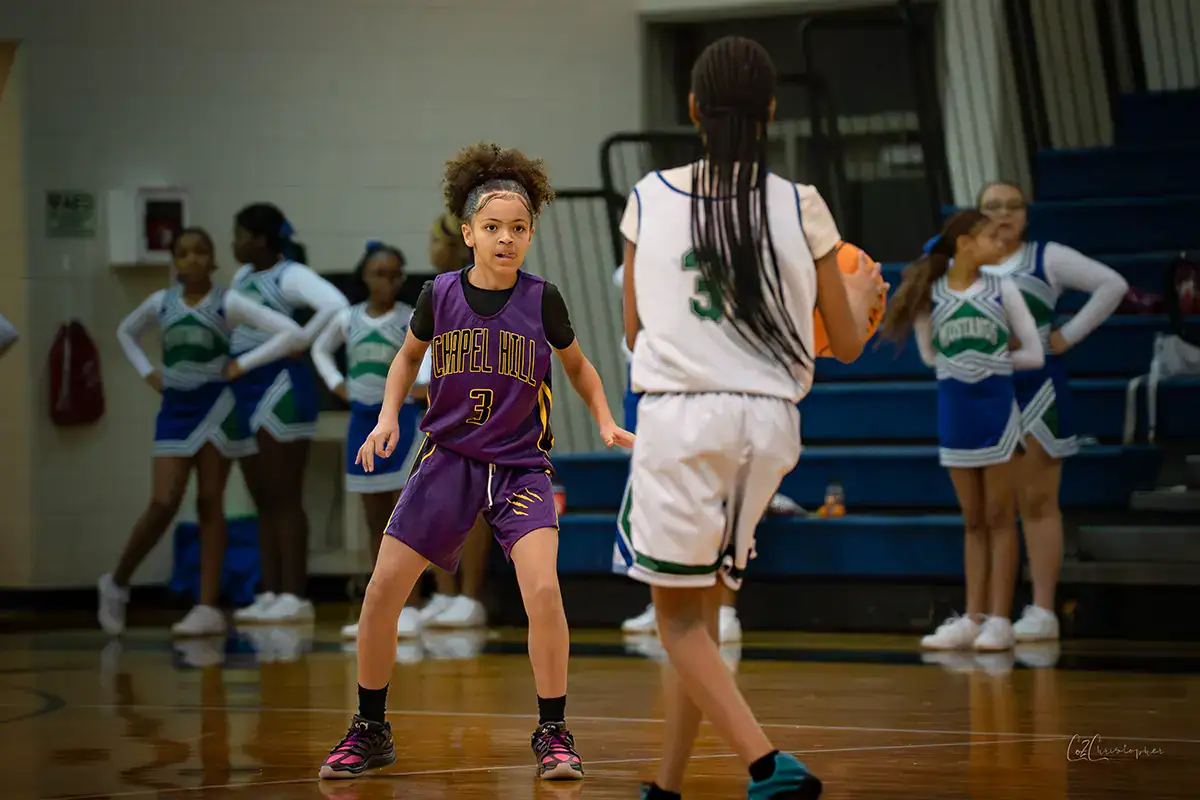
Christopher Cosey doesn’t miss a sprint or slam dunk in youth sports with his Tamron 35-150mm F2-2.8 all-in-one zoom.
Author: Jenn Gidman
Images: Christopher Cosey
Share Article
Christopher Cosey doesn’t miss a sprint or slam dunk in youth sports with his Tamron 35-150mm F2-2.8 all-in-one zoom.
When Christopher Cosey was growing up, a local photographer would occasionally take some pictures of him playing sports. “I grew up in a really rural area, with not a lot of visibility or exposure,” Christopher says. “When I saw those photos of myself from a professional photographer, it was the first time I had confidence in myself as an athlete. I ended up going to college to play both basketball and football, partly due to Mr. Thomas Hanson taking photos of me doing track, football, and basketball.”
When Christopher had his own kids many years later and they started playing sports at a higher level, he wanted to offer that same empowering experience for them. As an online content creator, he’d already amassed a good amount of high-end camera gear, so segueing to youth sports photography seemed like a natural move. “Emotion is the biggest thing I’m trying to capture when I’m shooting a sports event,” he says.
To make sure he doesn’t miss a single white-knuckle moment of gameplay, Christopher taps into the Tamron 35-150mm F/2-2.8 Di III VXD all-in-one zoom lens for his Sony mirrorless camera system. “I was getting frustrated with the previous lens I was using for cross-country, as it wouldn’t let in enough light for me to capture the photos I really wanted,” he says. “Once I got my hands on the 35-150mm F2-2.8, I instantly fell in love with it. It offers me that fast aperture while still letting me achieve a very high shutter speed, which in turn allows me to retain the depth of field and bokeh I want.”
The biggest advantage of the 35-150mm F2-2.8 lens for Christopher is its versatility. “That focal-length flexibility allows me to be on the sidelines, in the coach’s box, or underneath the basket, then still have enough reach to shoot all the way down the courts from my spot in the stands. With the Sony’s APS-C mode, it allows me to effectively shoot at 225mm. You don’t always know what access you’re going to have at a game or meet, so I love the fact that this Tamron lens offers me the ability to be able to shoot from practically anywhere.”
CHRISTOPHER’S QUICK YOUTH SPORTS PHOTOGRAPHY TIPS
Let your expertise guide your composition.
First, understand the environment, whether it’s a sun-washed soccer field in the middle of the day or a fluorescent-lit gymnasium for an evening basketball game. In outdoor situations especially, you need to first understand where the light is. Then, find a framing that works for you and take advantage of that composition before the light disappears. The Tamron 35-150mm F2-2.8 is a perfect lens for this type of work, because it’s fast and versatile enough to take on any environment.
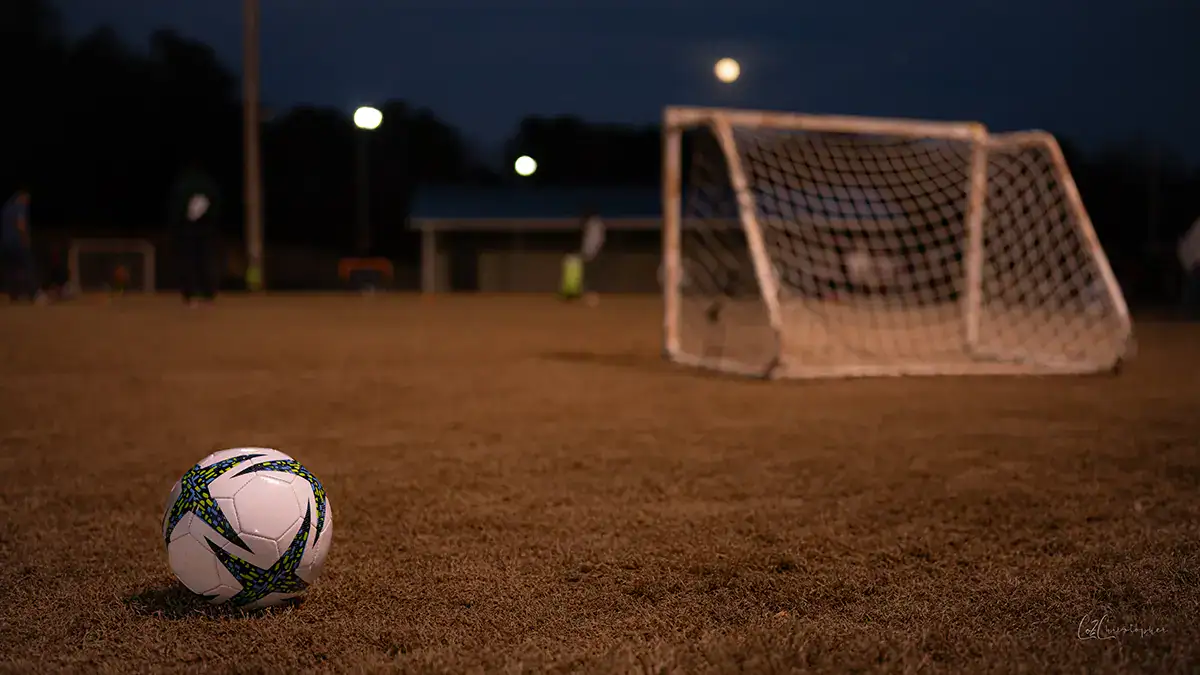
Second, once you’re situated and have the lighting down and all of your settings ready, understanding where gameplay is going to go is vital. From my experience as a basketball player and coach, I often know what to look for, which allows me to anticipate for those movements. Understanding what happens after a foul shot in basketball, or that there will be three volleys before a ball is sent back over the net in volleyball, will help you understand the story you’re trying to tell, because you’re going to know where to be to capture the information you need to tell that story.
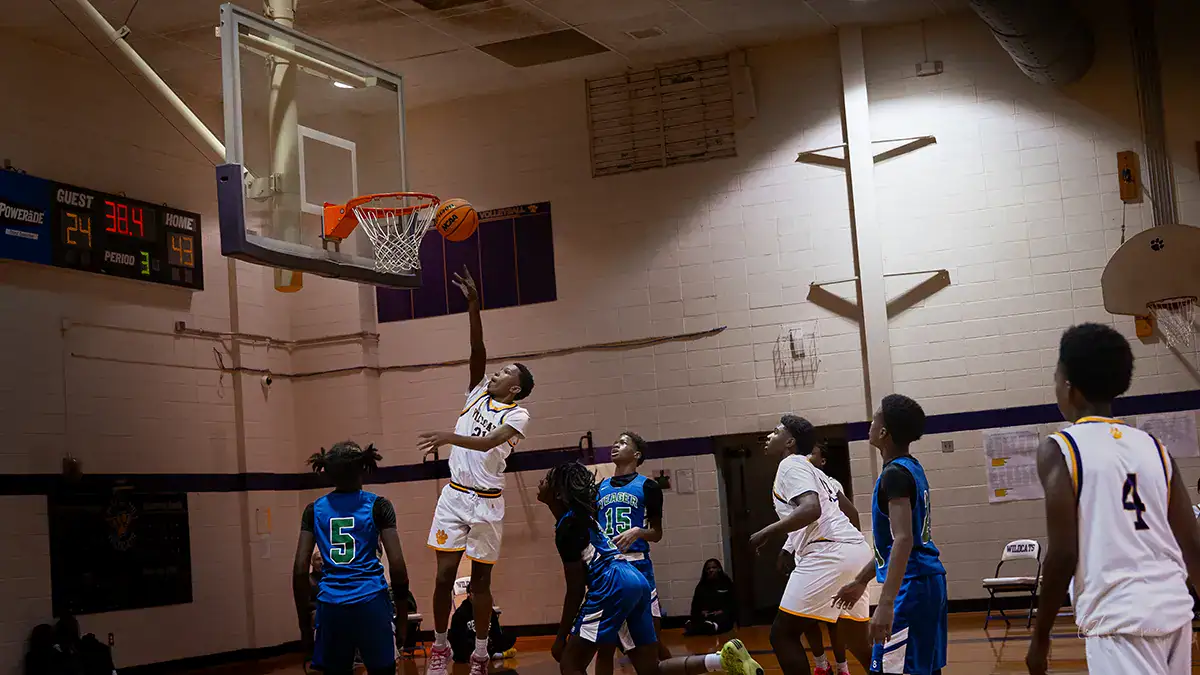
Keep those fast-moving shots sharp.
Shooting cross-country, I’ve learned to take photos using center focus, but with a really small center-focus square, which I use in combination with the Eye Autofocus feature on my Sony camera. For example, you might have hundreds of people competing in one cross-country race. By using that center focus with a really small square, as well as continuous Eye Autofocus, it allows me to place the square on the person that I want, even in a crowd.
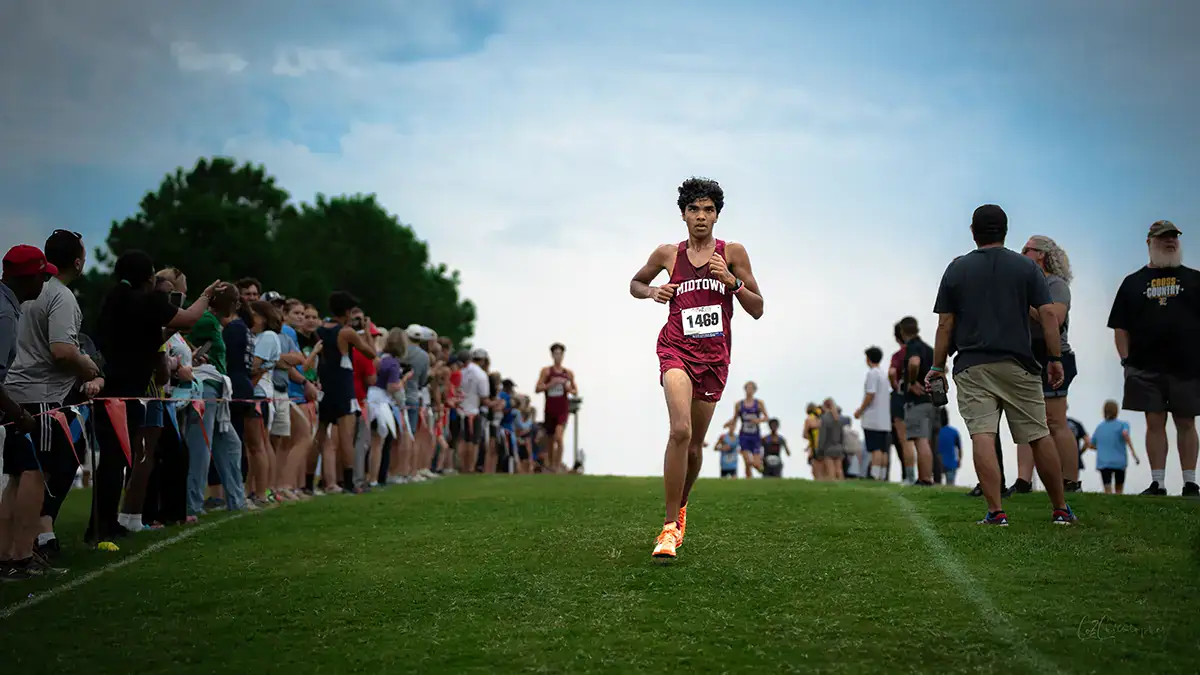
Create little “giants.”
I like to get down low and shoot up at my young athletes, because when they see that photo, I want them to have that same experience I had as a kid when Mr. Hanson would take my picture. I want them to feel tall. I want them to feel like giants. I want them to feel the gravity of who they are, and to feel larger than life, in the same way that the cheering, admiring crowd does when they’re watching them play.
It’s not just about the money shots.
In youth sports photography, the action isn’t always the most important element—the journey and the experience are important, too. I like to especially focus on pivotal moments in games, as well as the moments before and after. In the photo here of the basketball team dressed in all white, huddled together on the court, with the light streaming through the windows, it was a very close game. I wanted to capture that moment of them coming together and trying to figure out how to get over the hump and finish the game out.
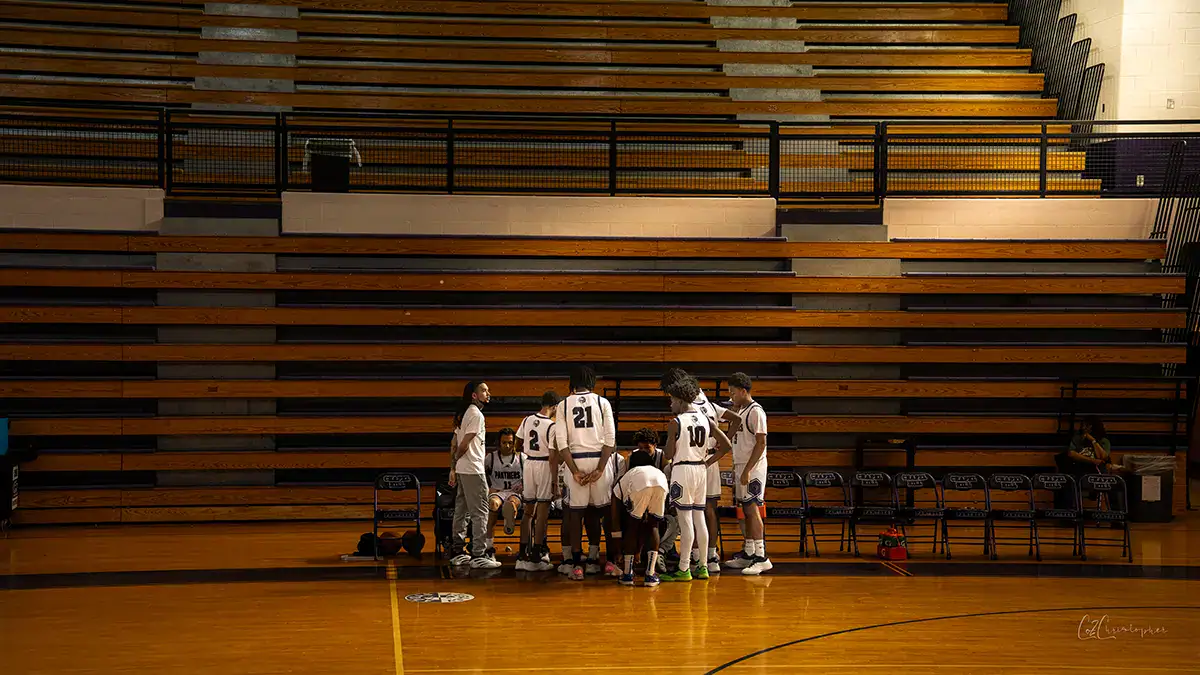
Capturing emotion in the coaches is important, too. I’m a coach, so I understand those special moments in a game when they’re trying to get the best out of those kids, sometimes pulling more out of them than they even thought themselves capable of.

That holds true even if it seems obvious the game is going to end in defeat. A coach might say to a demoralized team, “Let’s execute these last couple of plays so we can leave on a high note,” or “let’s give some of the players who don’t get a lot of time a chance on the court.” Those are some of the other types of situations, and emotions, that I’m looking for when I’m taking photos, not just the big wins.
To see more of Christopher Cosey’s work, check out his Instagram and YouTube channel.