Instant Savings
 Rebate Claims
 Support
 Find a Dealer
Finding Story in Quiet Details: 5 Tips for Moody Black and White Photography With my Tamron
Black and white photography has a remarkable ability to reveal the essence of a scene through light, shadow, texture, and composition.
Author & Images: Tony Shepherd
Share Article
Black and white photography has a remarkable ability to reveal the essence of a scene through light, shadow, texture, and composition. For photographer Tony Shepard, creating compelling monochrome images is about slowing down, observing the details others might overlook, and allowing mood to take center stage. Using the TAMRON 16-30mm F/2.8 Di III VXD G2 and TAMRON 35-150mm F/2-2.8 Di III VXD, Shepard shares five practical tips for finding powerful visual stories in everyday moments and transforming quiet scenes into striking black and white photographs.
TIP 1: Use Leading Lines to Pull the Viewer into the Frame
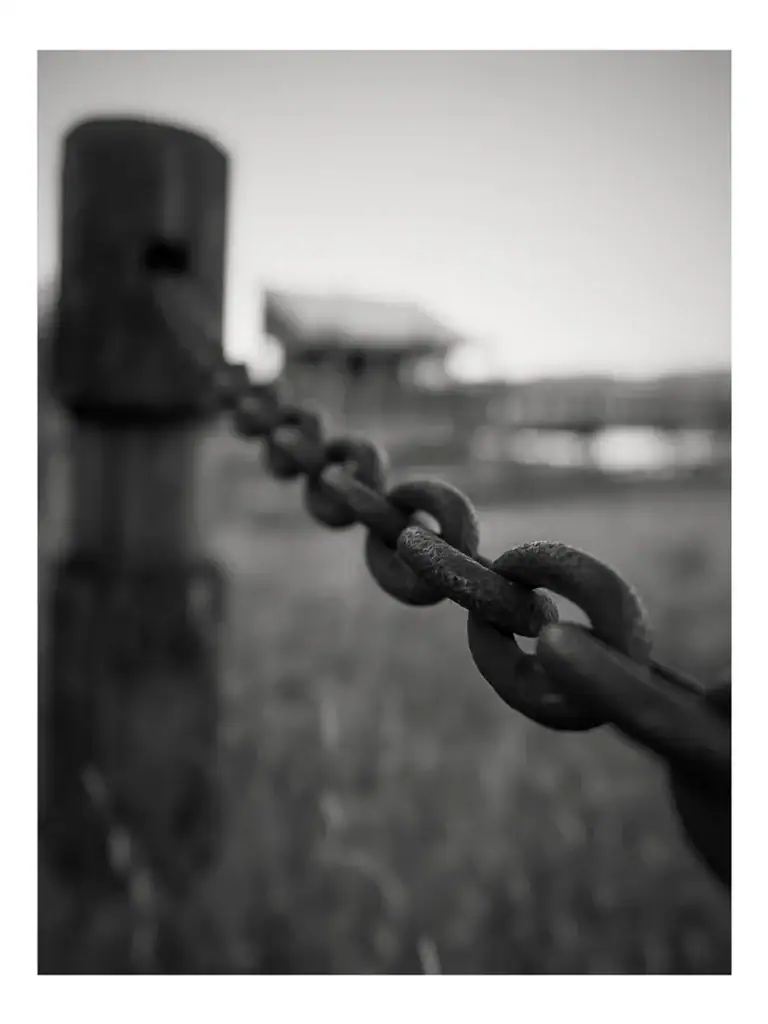
One thing I’m always looking for is a line that can quietly do some of the visual work for me. In this image, the chain is not just an object in the scene; it becomes a path that pulls the viewer’s eye from the foreground into the background. That kind of visual movement is especially helpful in black and white photography, where shape, tone, and direction often matter more than color. The TAMRON 16-30mm F/2.8 Di III VXD G2 gave me enough width to hold the environment, but enough sharpness and close-focus character to make the chain feel tactile and intentional. Whether you’re newer to photography or more experienced, a strong leading line can turn a quiet detail into an image with depth, rhythm, and direction.
TIP 2: Build Black and White Images Around Shape, Light, and Contrast
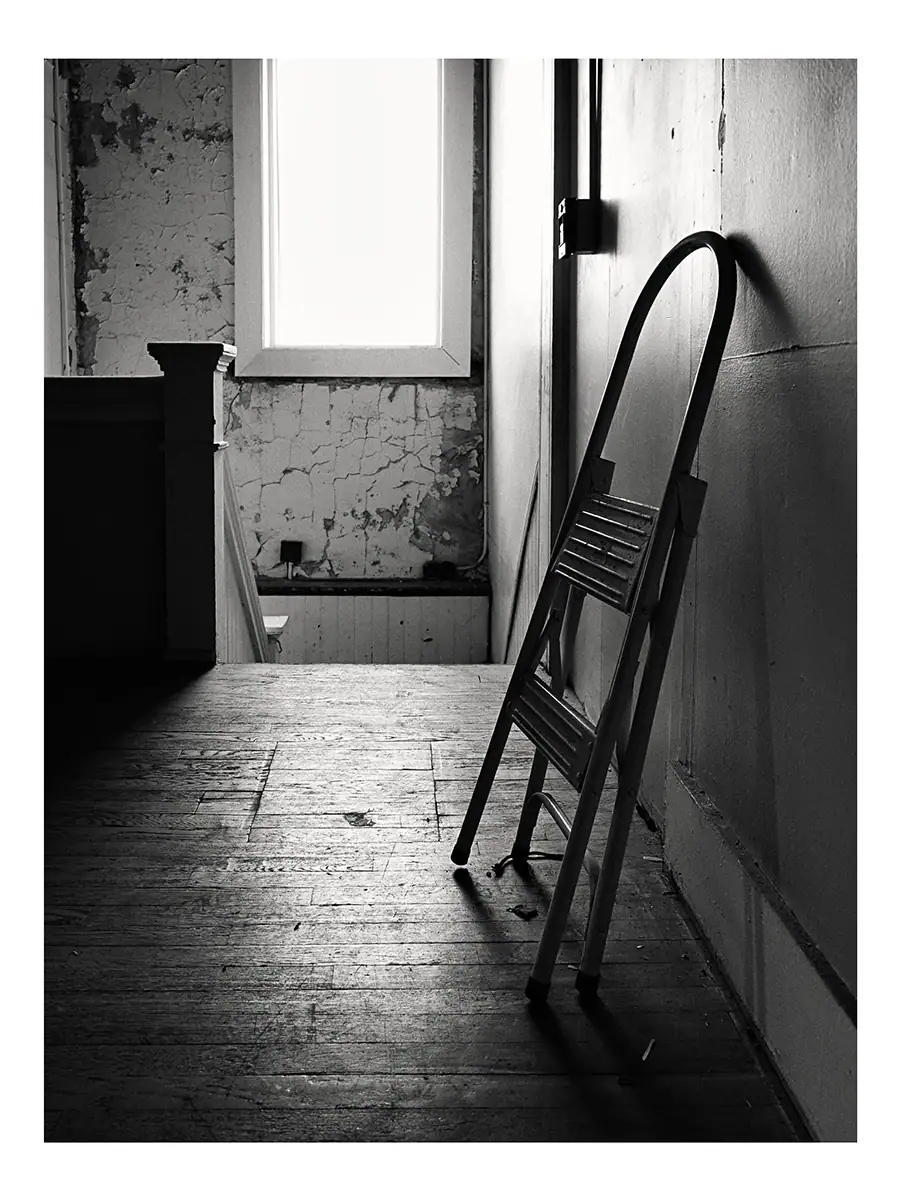
When I’m shooting black and white, I’m thinking less about color and more about whether the frame has enough structure to stand on its own. This scene worked because the ladder gave me a clean graphic shape, while the bright window created a strong tonal anchor in the background. In a space like this, it would be easy for the frame to feel cluttered, so I tried to let the main elements breathe: the ladder, the wall, the window, and the light across the floor. A lens like the TAMRON 16-30mm F/2.8 Di III VXD G2 is especially useful indoors because it lets me show the full environment without losing control of the composition. Quality glass matters in black and white because the whole image depends on clean contrast, edge definition, and the way light transitions across the frame.
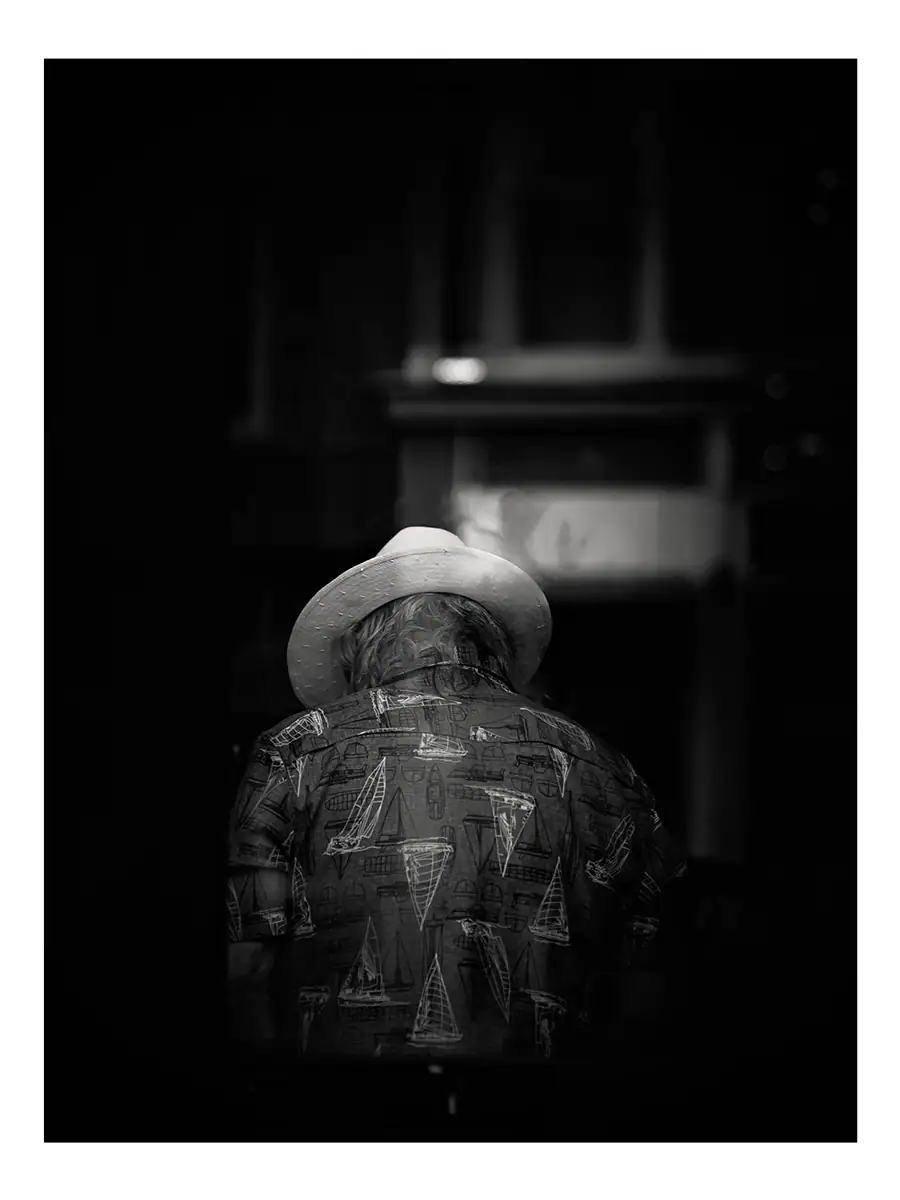
TIP 3: Use Distance and Layering to Create Mystery
Not every portrait has to explain everything. Sometimes the strongest frame is the one that feels discovered rather than staged, and that often comes from using distance, layering, or shooting through something already in the scene. In this image, the subject’s posture, hat, and patterned shirt say enough without needing eye contact or a full reveal. The TAMRON 35-150mm F/2-2.8 Di III VXD helped compress the scene and isolate the subject, which allowed me to stay out of the moment while still making the frame feel intimate. For newer photographers, this is a reminder that you don’t always have to move closer physically; for experienced shooters, it’s a reminder that restraint can often create more emotional weight than over-explaining the scene.
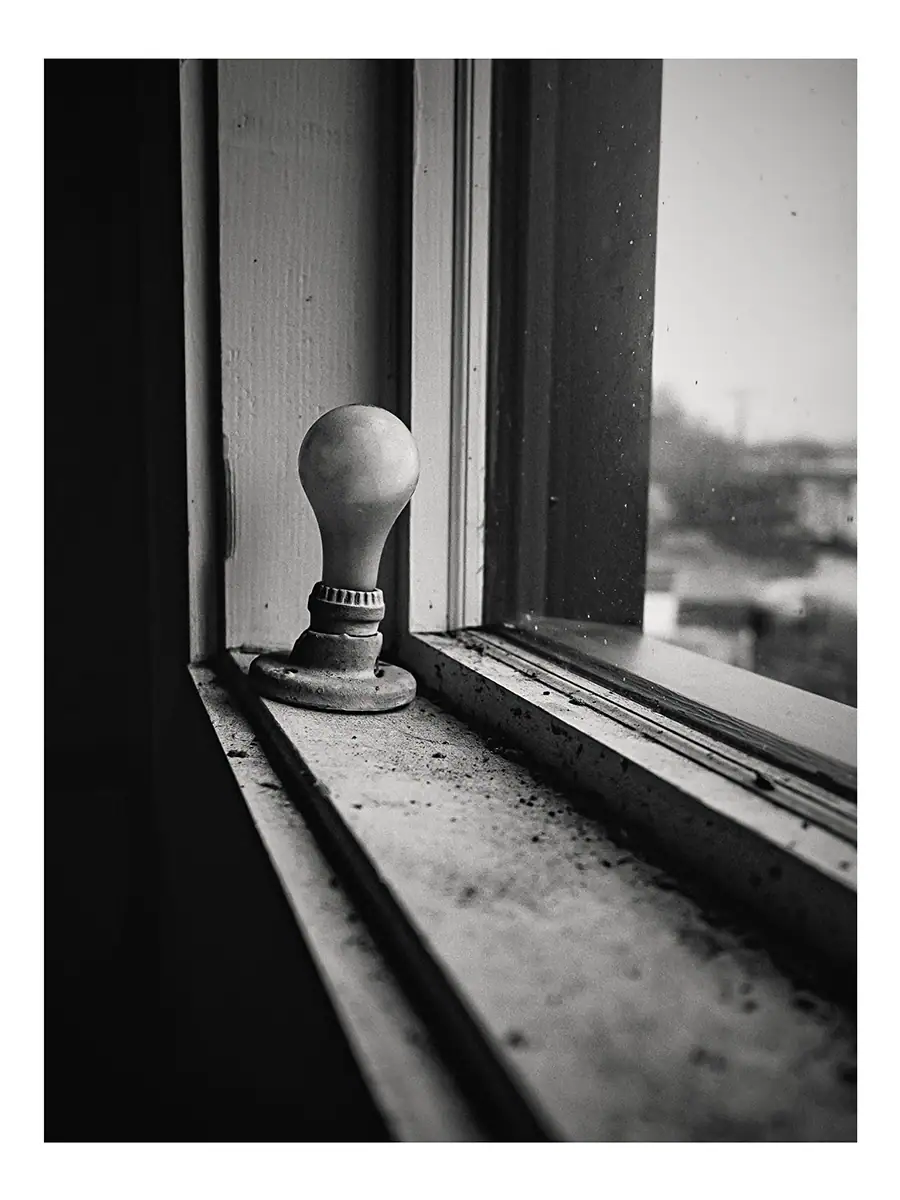
TIP 4: Let Window Light Reveal Texture and Mood
I love working with window light because it gives you direction, mood, and texture all at once. In this image, the subject is simple, but the light is what gives the frame its feeling by revealing the dust, the worn surface of the sill, and the small imperfections around the window. In black and white photography, those details matter because texture often becomes the emotional language of the image. The TAMRON 16-30mm F/2.8 Di III VXD G2 gave me the flexibility to stay close to the bulb while still including enough of the window frame to make the scene feel lived-in. Good glass helps here because black and white images rely heavily on tonal separation, micro-contrast, and the way fine detail holds together from highlight to shadow.
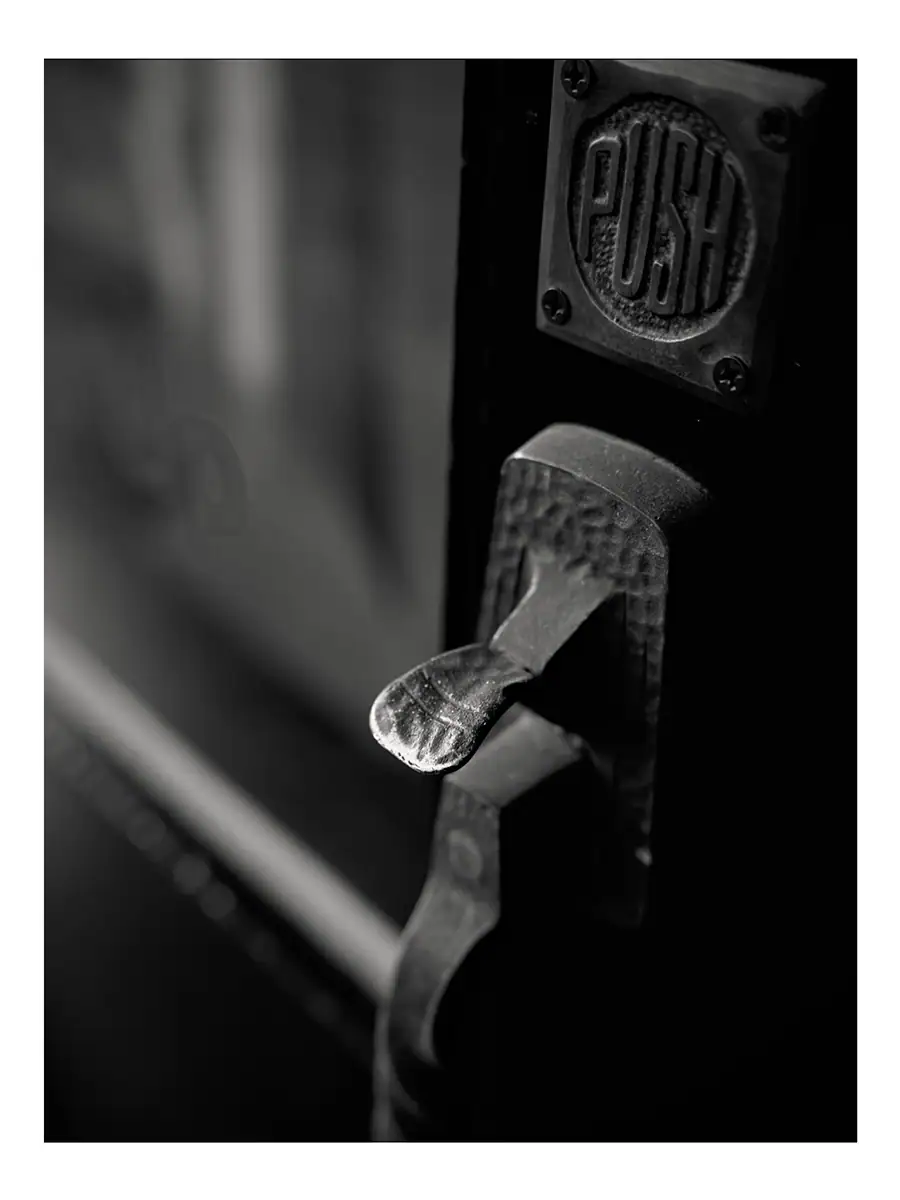
TIP 5: Isolate Texture Through Focus, Contrast, and Depth
When I’m photographing quiet details, I’m often looking for something that has been touched, used, worn down, or shaped by time. This push handle caught my attention because it had texture, contrast, and a little history built into it. By focusing closely and allowing the surrounding elements to fall softer, the image becomes less about documenting a door and more about noticing the character of the object itself. The TAMRON 35-150mm F/2-2.8 Di III VXD gives me a lot of flexibility here because even at 35mm, I can work close, isolate the subject, and still hold onto a sense of place. In black and white, that kind of sharpness and tonal control really matters because texture becomes something the viewer can almost feel.