 Instant Savings
 Rebate Claims
 Support
 Find a Dealer
Photography has always been about discovering new ways to interpret the landscape. Whether photographing auroras in Iceland, frozen lakes in Minnesota, slot canyons in Utah, or glacial ice caves in Alaska, I am always searching for tools that expand creative possibilities.
Tamron’s new ultra wide-angle zoom lens 12-20mm F2.8 (Model A084) for Sony E-mount full-frame mirrorless cameras is a lens I have been eagerly waiting for. The lens is also available for Nikon Z mount shooters.
What You’ll Learn in This Review
- How a 12mm focal length transforms landscape compositions
- Why ultra wide-angle lenses excel at near-far photography
- Real-world performance for aurora and nightscape photography
- Optical quality across the zoom range
- Close-focusing capabilities for dramatic foregrounds
- Whether the Tamron 12-20mm F2.8 deserves a place in your landscape photography kit
Why the Tamron 12-20mm F2.8 Stands Out for Landscape Photography
I’m a wide-angle devotee, and I just love the way the world looks from behind an ultra wide lens. But for full-frame mirrorless cameras, the widest Tamron lens has been the 16-30mm F/2.8 Di III VXD G2 (Model A064). But my wait is finally over, and with the 12-20mm F2.8 lens, Tamron finally goes deep into ultra wide territory. It may not sound like much, but the difference between 16mm and 12mm is considerable, and being able to use an ultra wide focal length can open to you all types of new creative opportunities.
How I Tested the Tamron 12-20mm F2.8
To put the lens through its paces, I used it in a wide range of landscapes and lighting conditions, from narrow canyons and enclosed ice caves to expansive skies and nighttime scenes. These real-world tests gave me a clear sense of how the lens performs when composition, light, and working space are constantly changing.
Landscape Photography Test Locations
I photographed a variety of landscapes while testing this lens, including:
- Aurora Borealis in Iceland
- Frozen lakes in Minnesota
- Slot canyons in Utah
- Glacial ice caves in Alaska
- Desert landscapes at sunrise and sunset
- Nightscape scenes requiring fast apertures and wide fields of view
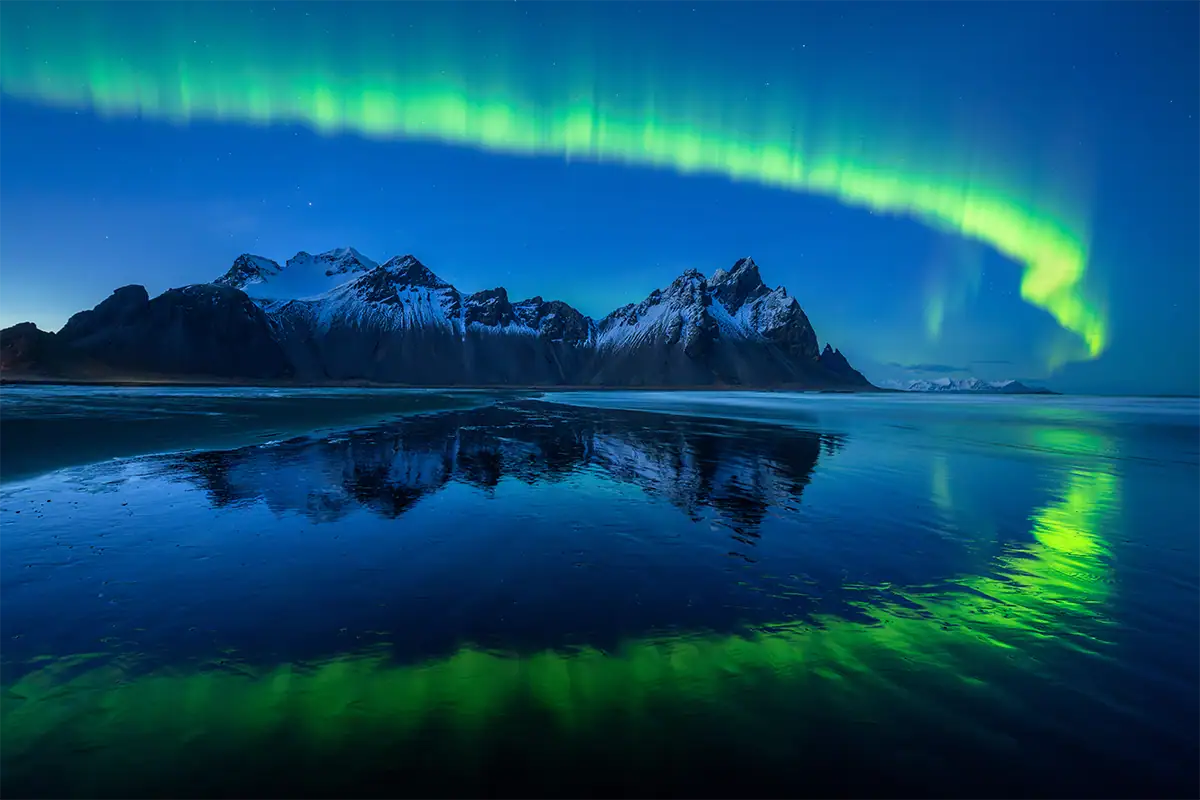
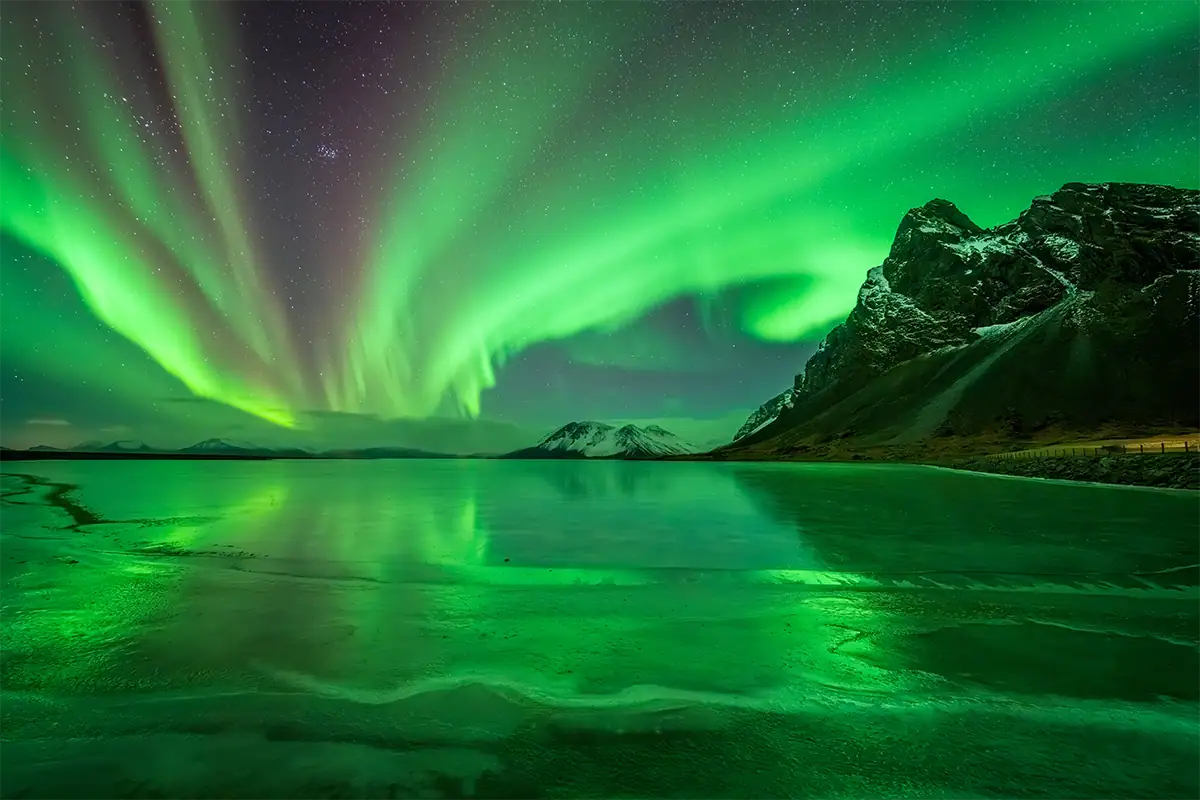
I took this photo of a stunning aurora at twilight in the Eastern Fjords of Iceland. The ultra wide 12mm angle of view allowed me to include the entire sweeping curve of the aurora as well as its reflection in the shallow water. Ultra-wide lenses such as the Tamron 12-20mm F2.8 are perfect to scenes such as this, as traditional wide angle focal lengths just aren’t wide enough to capture everything all at once.
Ultra Wide Landscape Photography with the Tamron 12-20mm F2.8
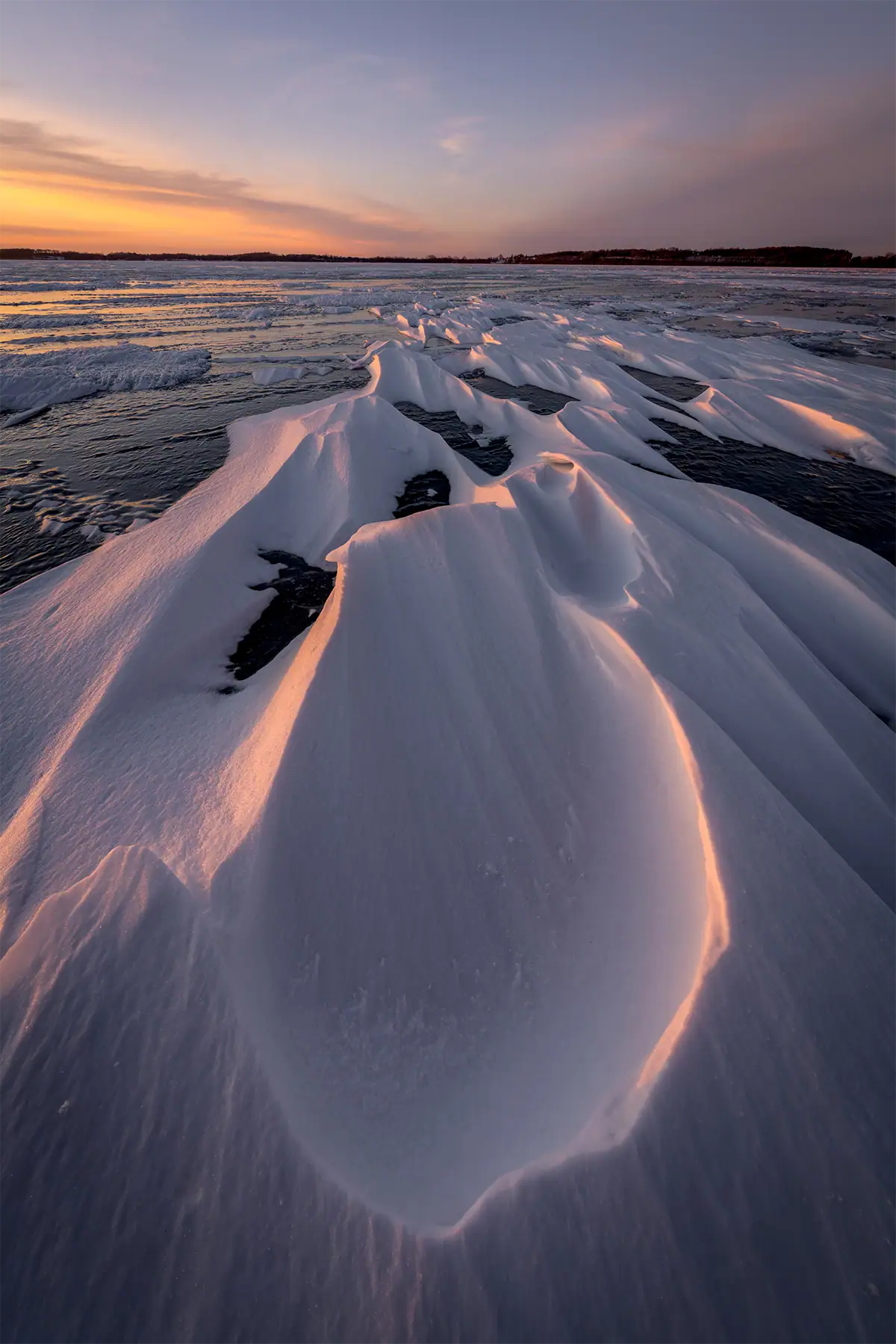
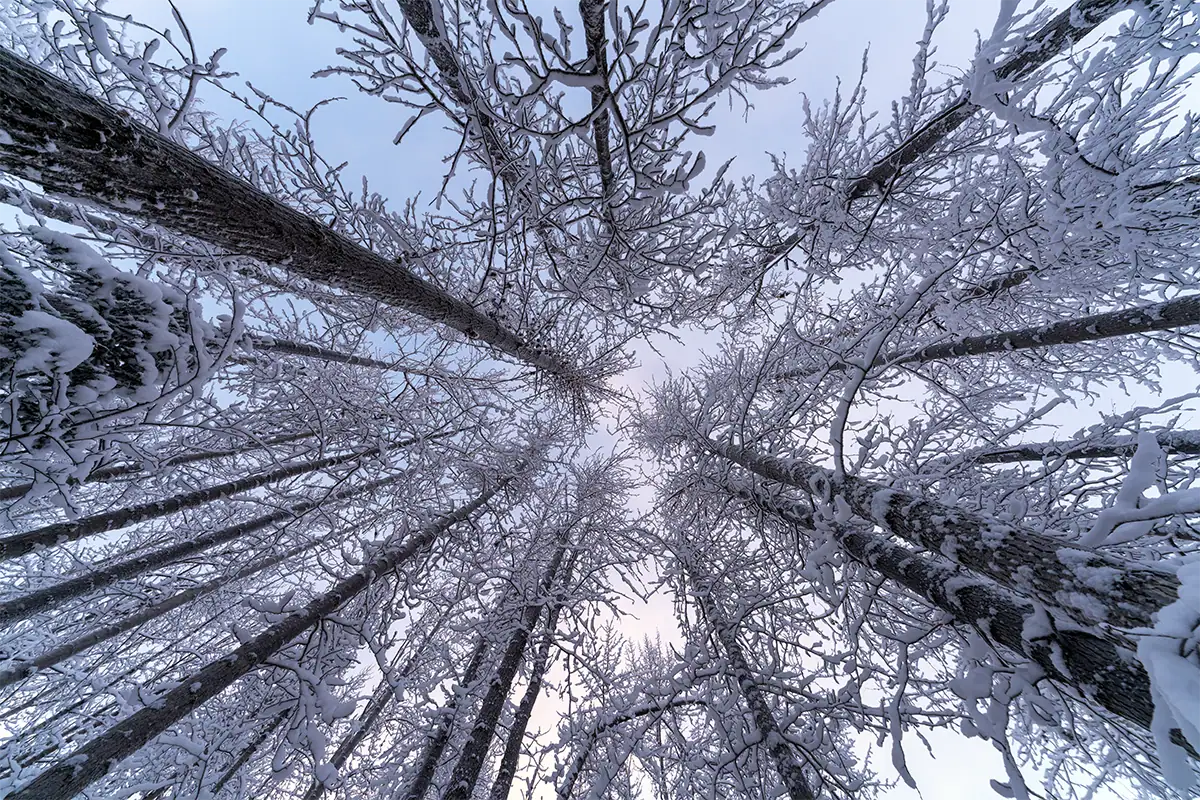
Compositional complexity increases when working with wide angle lenses, and you must figure a way to simplify the design to make it effective. One strategy I use is to incorporate “visual anchors” into my compositions, which are bold, eye-catching shapes that attract the viewer’s eye. For most landscape compositions, the visual anchor is a foreground object. For example, for this photo taken on a frozen lake near my home in Minnesota, I got low and close to the foreground with the TAMRON 12-20mm F2.8 lens. By getting close with a wide-angle lens, you can exaggerate the size and importance of the foreground, like the snow patterns, giving the composition depth and visual energy.
Creating Depth with Near-Far Landscape Compositions
When working with wide-angle lenses, objects close to the lens appear abnormally large relative to more distant objects, and distant objects appear abnormally small. Not only does this exaggerate scale differences and thus enhance the appearance of depth, but it also helps simplify the composition. The viewer focuses their attention on what’s relatively big, and by making your foreground large by getting close, you draw the viewer’s eye to the visual anchor, which in turn can lead the eye to the background.
How a 12mm Field of View Changes Landscape Photography
Photographing Expansive Landscapes at 12mm
The Tamron 12-20mm F2.8 goes deep into ultra wide territory — 12mm on a full frame camera offers a very wide field of view. So wide, in fact, that you need to take extra care to ensure that tripod legs, your feet, or other photographers don’t accidentally intrude into the image frame! Its wide field of view makes it perfect for several photography applications, including near-far landscape composition, interiors, and nightscapes.
Using a 12mm Lens in Slot Canyons and Tight Spaces
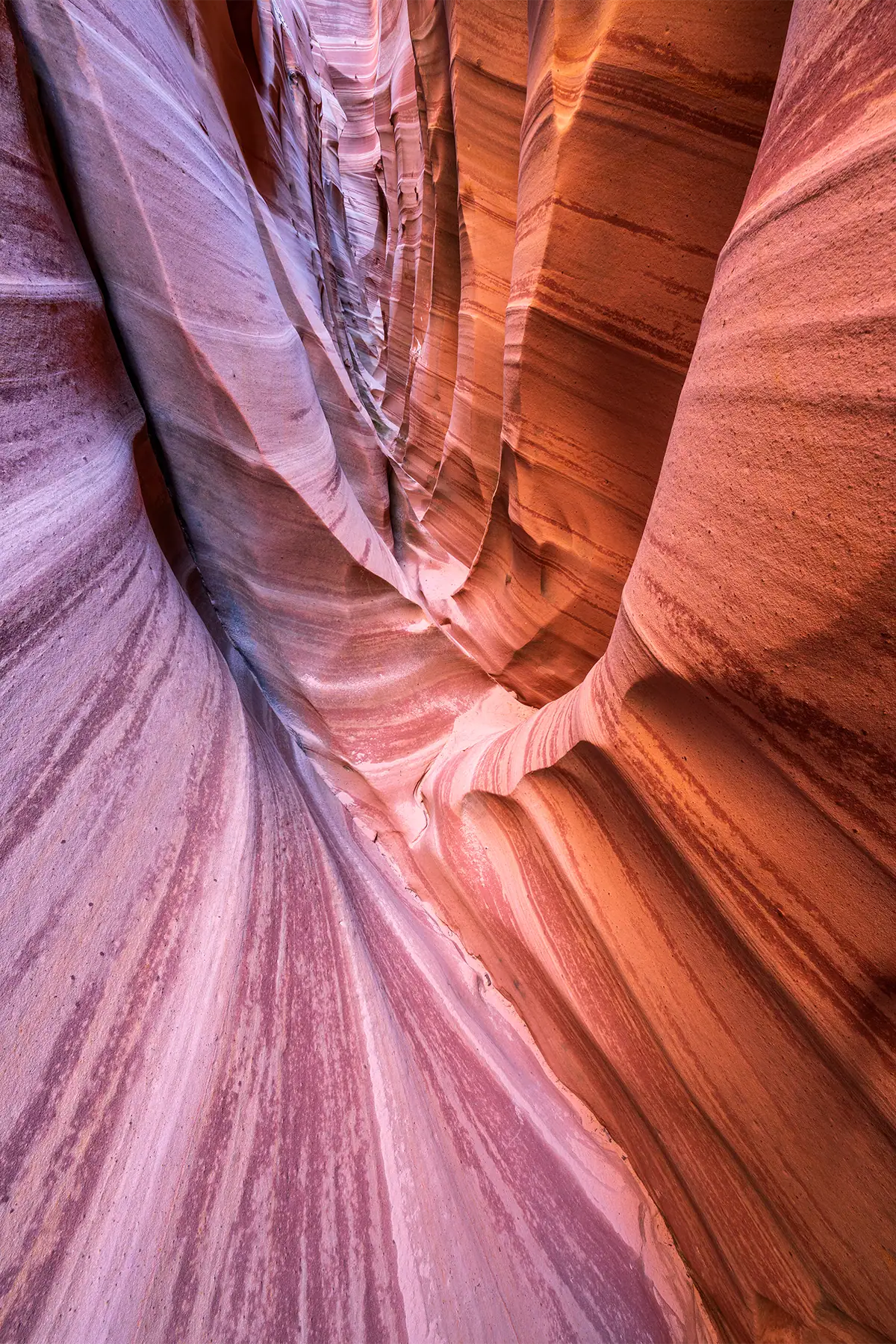
When photographing landscapes, I reach for an ultra wide whenever I have dramatic skies at sunrise, sunset, or at night. An ultra wide is also my preferred lens when working in cramped spaces, such as the narrow slot canyon featured above.
I used the Tamron 12-20mm F2.8 lens to photograph inside of this narrow slot canyon in the Utah desert. The ultra wide angle of view playfully distorts the striations in the sandstone walls, stretching them diagonally so that they appear to converge in the distance. This perspective distortion creates a dynamic visual effect that helps pull the viewer into the composition.
Is the Tamron 12-20mm F2.8 Good for Nightscape and Aurora Photography?
Photographing the Northern Lights at 12mm
Although for most landscape compositions I stop down my aperture to extend depth of field to ensure that everything from near to far is sharp in the photo, when photographing at night, wide apertures may be necessary to capture faint light. The Tamron 12-20mm F2.8 lens offers a bright, wide open aperture of F2.8, making it ideal for capturing night images and starry landscape scenes. The lens delivers excellent optical performance throughout its aperture range, so even at F2.8, you’re getting high quality results.
Low-Light Performance at F2.8
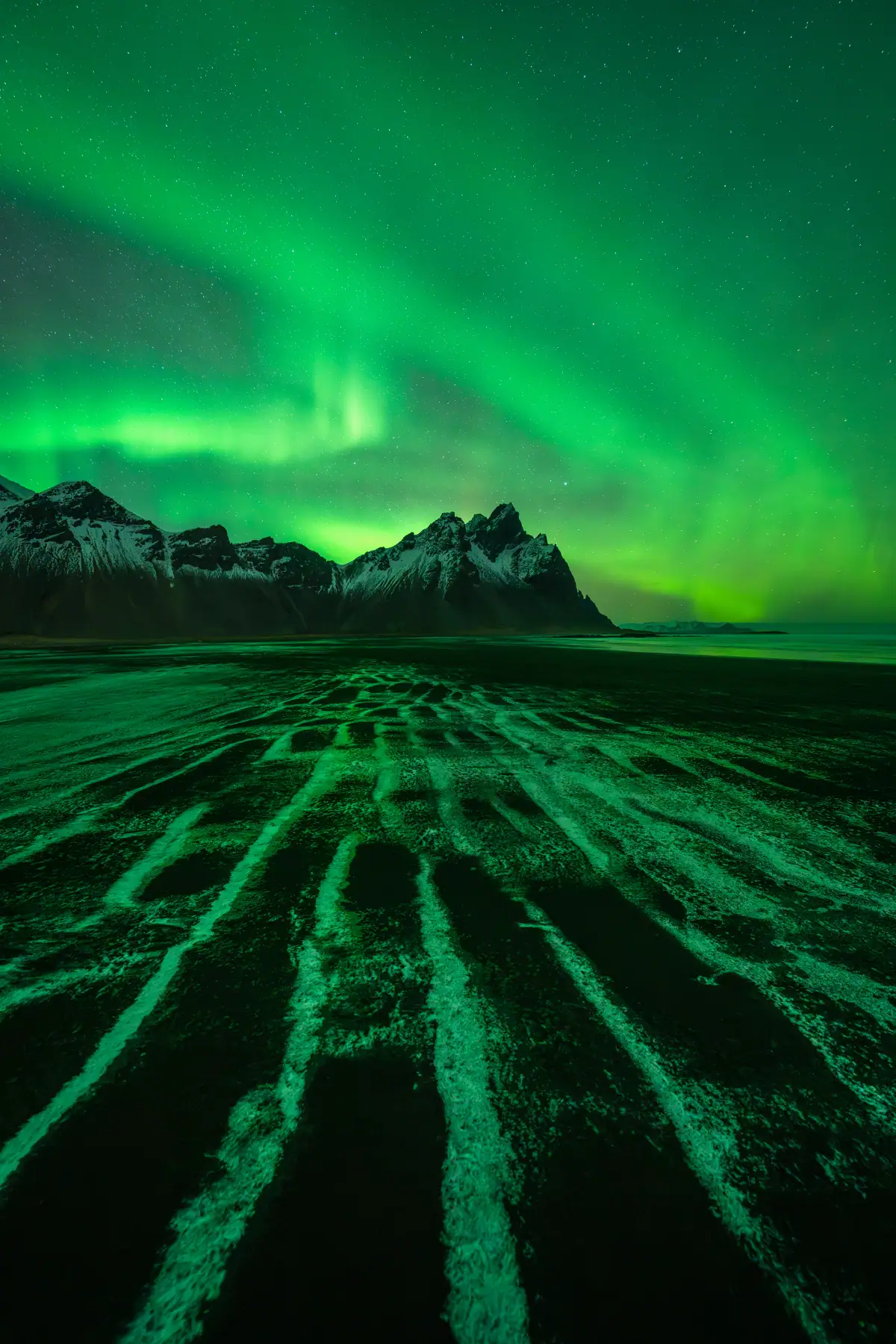
The Tamron 12-20mm lens’ maximum aperture of F2.8 was critical when chasing the Northern Lights in Iceland. Even shooting wide open, I still had to raise my ISO to 3200 and use a 15-second shutter speed to capture the faint light of the aurora. Shooting at 12mm allowed me to include plenty of foreground (icy patterns on a frozen pond reflecting the aurora) along with the dancing aurora in the sky above.
Size, Weight, and Field Handling
Maintaining high optical quality with an F2.8 ultra wide zoom lens is no easy feat, and it necessitates a “popeye” lens design with a curved, bulbous front glass element. As a result, lenses in this class tend to be larger and heavier than traditional wide-angle zooms. That said, the Tamron 12-20mm F2.8 is compact and lightweight compared to other lenses in this class, measuring 4.7” (119.3mm) in length and weighing 20.2 oz. (570g).
Why the 12-20mm Zoom Range Keeps the Lens Compact
Part of the reason the Tamron 12-20mm F2.8 is smaller and lighter was the decision to end the zoom range at 20mm, rather than 24mm. This is a tradeoff I fully endorse, since I find myself mostly using the widest end of the focal range when working with this lens. I’m always looking for ways to save space in my camera bag and cut down on gear weight, which means I can focus more energy on being creative. That said, the ability to zoom in to almost 2x factor is useful in certain circumstances, but I don’t really miss the extra 4mm of focal length on the long end.
Can You Use Filters with the Tamron 12-20mm F2.8?
Integrated Rear-Filter Holder
Tamron 12-20mm F2.8 is equipped with a rear-filter holder, providing a practical way to use filters despite the lens’s curved front element. Filters are cut from sheet material and inserted into the holder at the rear of the lens. Many photographers will use this system with neutral density filter sheets for controlling exposure in bright conditions or creating longer exposures.
Tamron provides a link to filter dimensions on the product page so photographers can cut filter sheets to the correct size. This rear-mounted system is especially useful for an ultra wide lens because it avoids the need for a large and bulky front-filter setup.
Limitations of the Bulbous Front Element
One thing to keep in mind is that popeye lens designs make filter use difficult. There’s no filter thread on the front of the lens, and although there are specialty oversized filter systems made for these types of lenses, they are expensive and bulky.
If filter use is important to you, then be aware that the 12-20mm F2.8 lens might not be your best choice. Of course, very few ultra wide lenses have a flat front design. If you want a fast wide-angle zoom that can easily accept filters, you’re better off with a traditional wide-angle like the 16-30mm F2.8 G2.
Tamron 12-20mm F2.8 Image Quality and Optical Performance
When using a wide-angle lens, you’re capturing a broad view of the scene in front of you, and all parts of the composition are important. As a result, performance in the corners becomes just as important as sharpness in the center.
Corner-to-Corner Sharpness Across the Zoom Range
The Tamron 12-20mm F2.8 delivers outstanding optical performance, maintaining high resolving power across the image frame and the entire zoom range. Even when shooting wide open at F2.8, the results are satisfying — and stopping down slightly renders the entire frame razor-sharp.
Flare and Chromatic Aberration Control
The lens effectively suppresses various aberrations and controls ghosting and flare, which can often occur in backlit situations. This makes it a highly versatile performer that can handle diverse lighting conditions with ease.
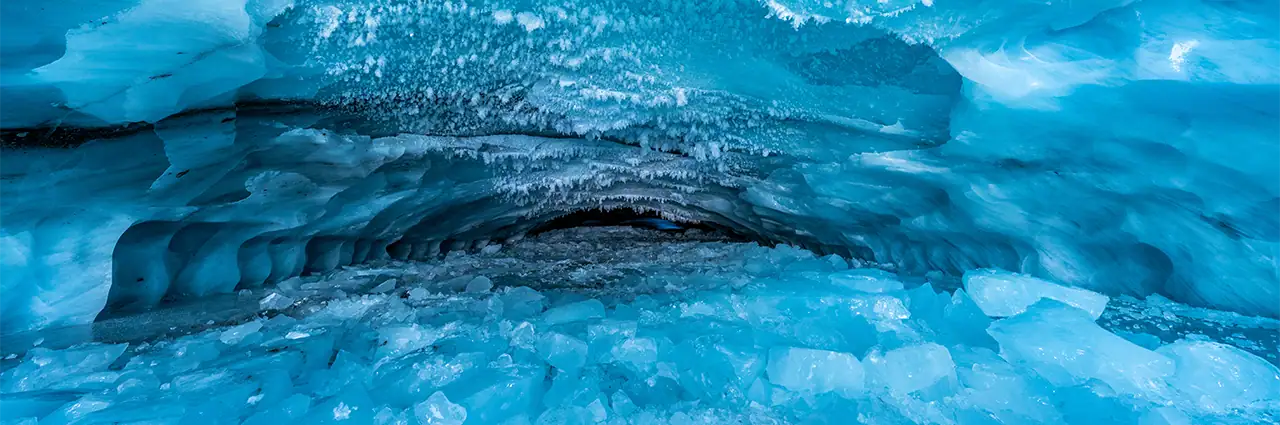
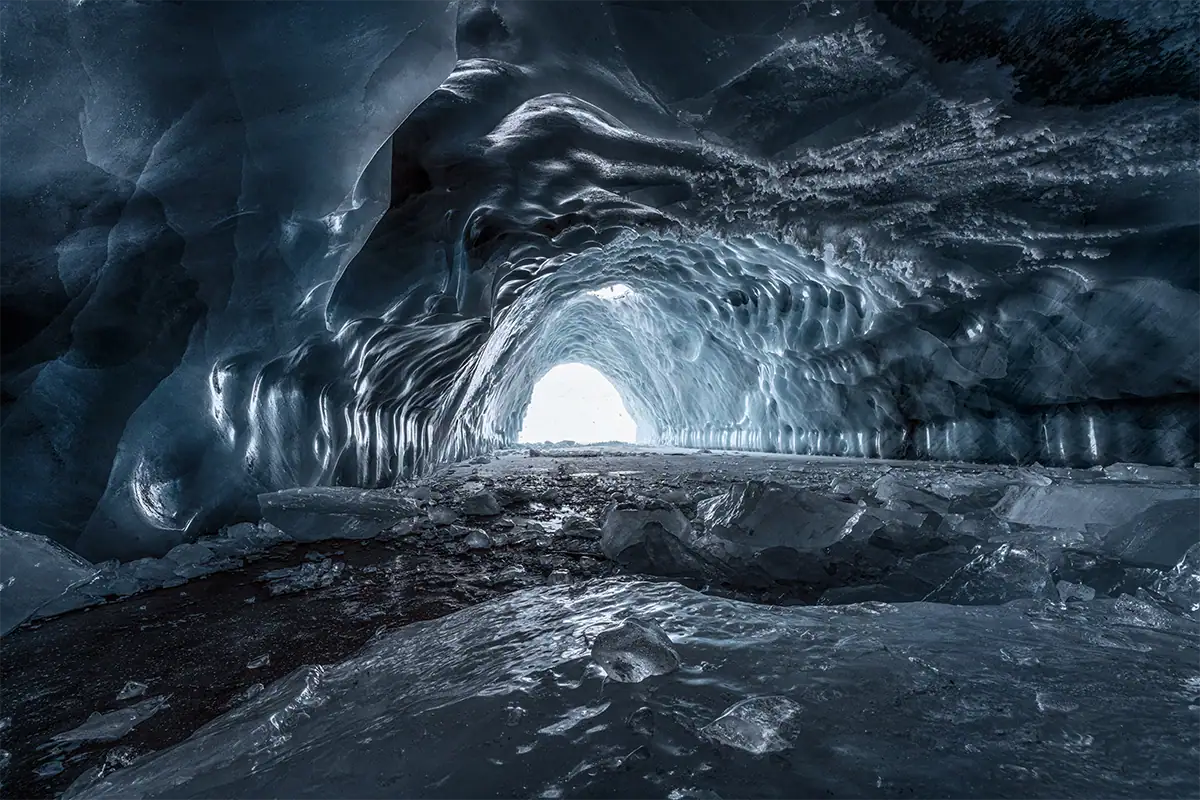
I made this photo inside a glacial ice cave in Alaska. The Tamron 12-20mm F2.8’s impressive optical quality ensures sharp performance across the entire image — from center to edge, corner to corner. The interior of the cave was fairly dark, and I was aiming the lens towards the bright entrance of the cave, but nonetheless the lens ably suppressed chromatic aberration, ghosting, and flare.
How to Create a Starburst with the Tamron 12-20mm F2.8
Why the 12-Blade Aperture Creates a 12-Point Starburst
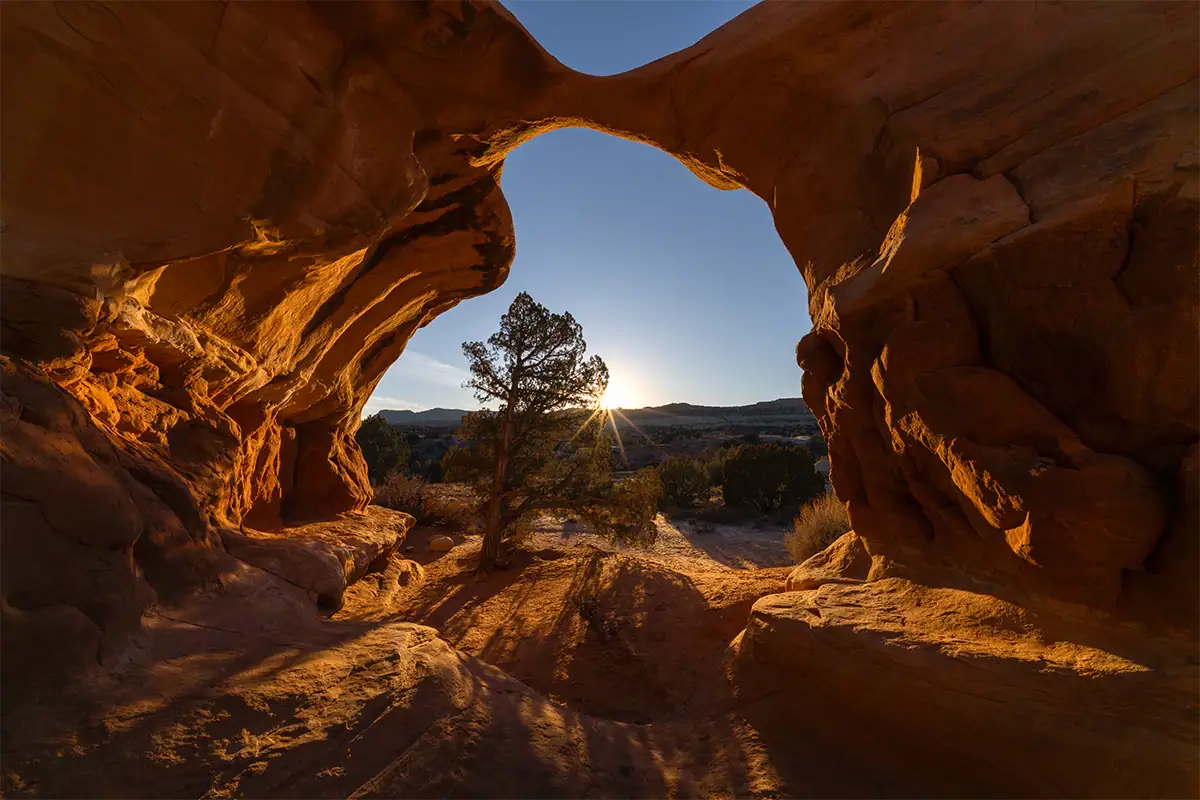
I love to shoot into the light whenever I can. When including the sun in the image frame with a wide-angle lens, you can stop down to a small aperture to get a “starburst” effect (which is caused by lens diffraction). The Tamron 12-20mm F2.8 has 12-aperture blades, creating a pleasing 12-spike starburst.
Because of the lens’ bulbous front element, you must be extra careful about lens flare when pointing at the lens in the direction of the sun. I always make sure to partially block the sun with something, such as a tree limb or distant mountain, to minimize or eliminate lens flare. When the sun is just peeking out from behind the object, you can get an attractive sun star without creating flare.
I stopped down to F16 when photographing the sun setting through a sandstone arch in the Utah desert. By partially blocking the sun with a tree in the distance, I was able to eliminate lens flare while still getting an attractive burst effect. Because it can be difficult to perfectly line up the sun for images like these, I prefer to shoot them handheld rather than using a tripod.
Quick Steps to Create a Starburst Effect:
- Use a small aperture, such as F11 or F16.
- Position the sun so it is partially blocked by a tree, mountain, building, or other object.
- Adjust your position until only a small point of sunlight is visible.
- Watch for flare and slightly change your angle if distracting reflections appear.
- Focus carefully and take several frames as the light and sun position change.
Close-Focusing Performance for Near-Far Landscapes
Minimum Object Distance at 12mm and 20mm
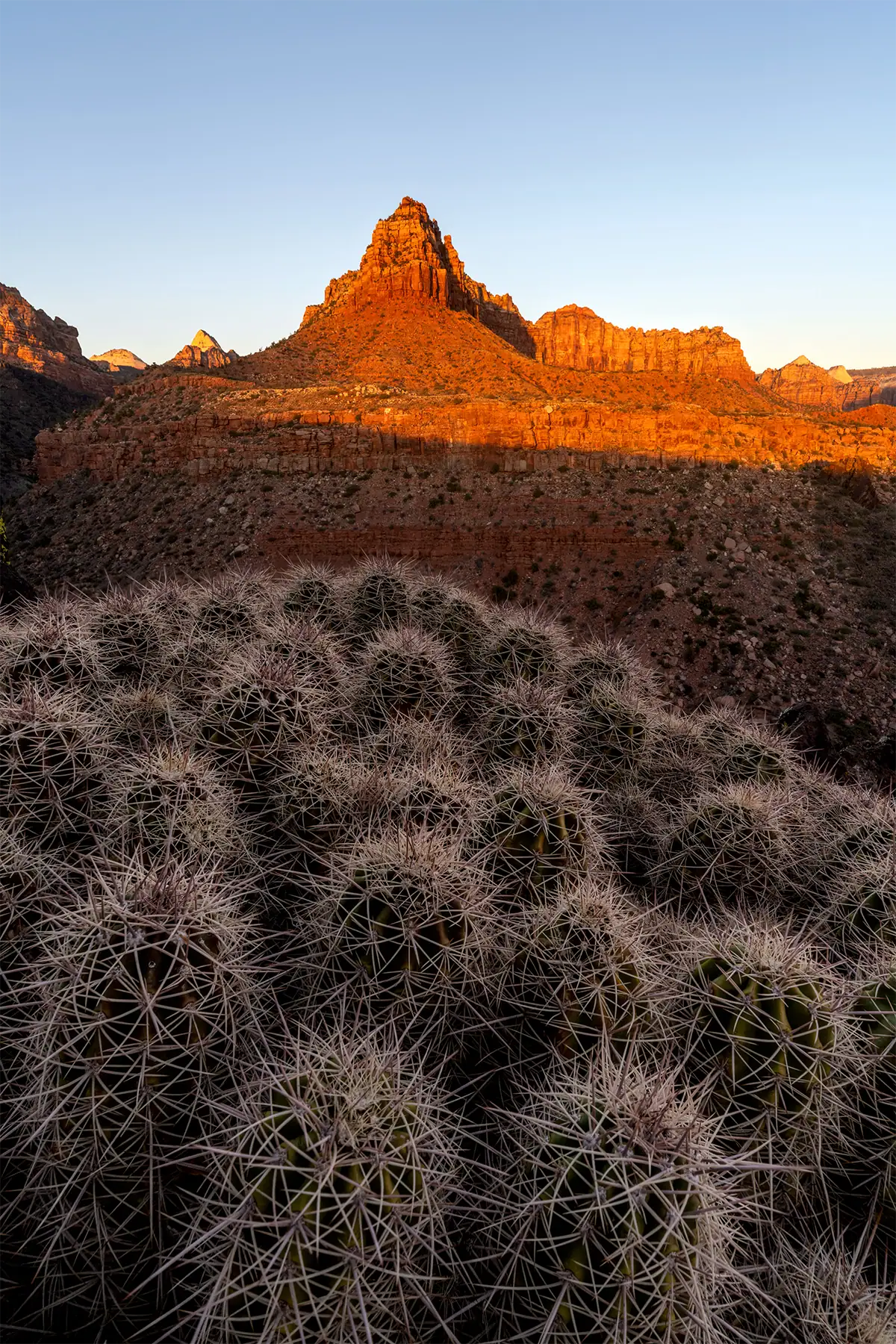
The MOD (Minimum Object Distance) for the Tamron 12-20mm F2.8 is an impressive 7.1” (0.18m) at the wide end and 11.1” (0.28m) at the longer end. Now, you might be wondering, why have such a close focusing distance for a wide-angle lens? It’s not like these lenses are typically used for macro photography. True, but one primary use for an ultra wide lens is creating dramatic near-far compositions. The closer you can get to a small subject, the larger you can make it appear, making the near-far juxtaposition more dramatic. While it is not necessary to get extremely close to large foreground objects, a close focusing distance can allow you to make small foreground objects appear much larger. The result can be striking when done right.
Focus Stacking for Extreme Near-Far Perspectives
I was almost at the MOD (Minimum Object Distance) for the Tamron 12-20mm F2.8 lens when I took this photo in the Utah desert. Getting this close allowed me to make the small cacti in the foreground look massive in the final photo. When working with such extreme perspectives, achieving sharp near-far focus is impossible even when using small apertures. Focus stacking is required to ensure that everything is sharp within the image frame. I used a ground-level tripod to get my camera low and close enough to be inches away from the closest cacti.
Verdict: Is the Tamron 12-20mm F2.8 Good for Landscape Photography?
This ultra wide zoom lens for full-frame mirrorless cameras is packed with compelling features. The Tamron 12-20mm F2.8 will be my go-to lens for near-far landscape compositions, capturing dramatic sunrise and sunset skies, and nighttime landscape scenes. High optical performance across the entire zoom range makes it highly capable for such work, meaning I will capture every detail of the landscape with sharp clarity. The bright F2.8 maximum aperture will make this an excellent choice for starry landscape photos and other nightscape scenes.
I plan to pair the 12-20mm F2.8 with the Tamron 25-200mm F/2.8-5.6 Di III VXD G2 (Model A075), which will allow me to easily go from ultra wide for sweeping grand scenes, to short telephoto focal lengths for intimate landscape perspectives. These two lightweight and compact lenses will be all I need for most shooting situation, allowing me to simplify my gear kit while maintaining professional performance and exceptional optical quality.
Tamron 12-20mm F2.8 Review: Key Takeaways
The Tamron 12-20mm F2.8 is best suited to landscape photographers who want an extremely wide 12mm field of view, a constant F2.8 aperture for night photography, close-focusing capability for near-far compositions, and strong edge-to-edge image quality. Its bulbous front element limits conventional front-filter use, but the lens includes a rear-filter holder.
Where to Buy Tamron Lenses
Learn more about the Tamron 12-20mm F2.8 lens at an authorized Tamron dealer near you or shop directly at the official TAMRON Store.
FAQs About the Tamron 12-20mm F2.8 for Landscape Photography
Is the Tamron 12-20mm F2.8 good for landscape photography?
Yes. Its ultra wide 12-20mm focal range is well suited to sweeping landscapes, dramatic skies, confined spaces, and near-far compositions. The lens also delivers strong corner-to-corner sharpness, which is especially important when details throughout the frame contribute to the composition.
What is the advantage of using 12mm for landscape photography?
A 12mm focal length captures a significantly wider field of view than a traditional 16mm wide-angle lens. It allows photographers to include more of an expansive scene, emphasize foreground subjects, and create a stronger sense of depth and scale.
Is the Tamron 12-20mm F2.8 suitable for nightscape and aurora photography?
Yes. The constant F2.8 maximum aperture helps gather more light when photographing auroras, stars, and other low-light landscapes. Its ultra wide field of view also makes it easier to include both the night sky and an interesting foreground in the same composition.
Can the Tamron 12-20mm F2.8 create dramatic near-far compositions?
Yes. The ultra wide perspective exaggerates the size of objects placed close to the lens while making the distant background appear smaller. Its close-focusing capability also allows small foreground subjects to become prominent visual anchors.
Does the Tamron 12-20mm F2.8 accept front filters?
The lens has a bulbous front element and does not accept conventional screw-in front filters. It includes an integrated rear-filter holder, although photographers who frequently use traditional circular or rectangular filters may prefer a wide-angle lens with a flat front element.
How close can the Tamron 12-20mm F2.8 focus?
The minimum object distance is 7.1 inches at 12mm and 11.1 inches at 20mm. This close-focusing performance is particularly useful for emphasizing small foreground subjects in ultra wide landscape compositions.
Is focus stacking necessary when using the Tamron 12-20mm F2.8?
Not for every photograph. However, focus stacking may be needed when the camera is positioned extremely close to a foreground subject and both the foreground and distant background must remain sharply focused.
Who is the Tamron 12-20mm F2.8 best suited for?
The lens is especially well suited to landscape, nightscape, aurora, architecture, interior, and travel photographers who want an expansive field of view, a constant F2.8 aperture, and professional optical performance in a compact lens
About the Author

Ian Plant is a professional nature and travel photographer, author, and educator with more than 20 years of experience inspiring photographers worldwide. A Tamron Americas Ambassador, Ian is known for his striking landscape, wildlife, and aerial photography, as well as his engaging educational programs. He is the founder of Photo Masters and leads photography workshops around the globe. Through his articles for the Tamron blog, Ian shares practical techniques, creative inspiration, and professional insights to help photographers of all skill levels create stronger, more compelling images. Read Ian’s full bio >>